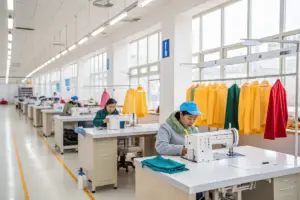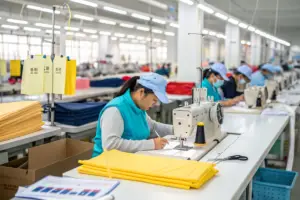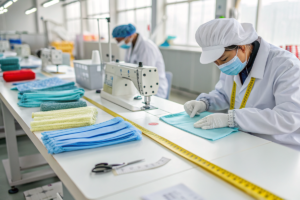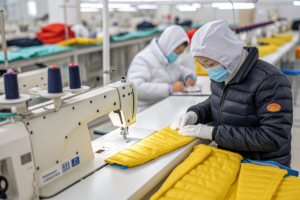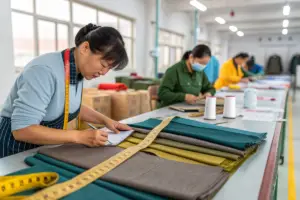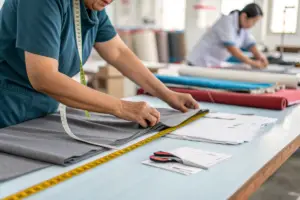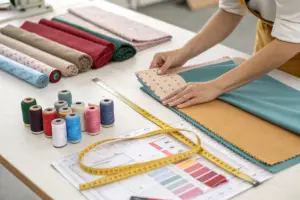
I have been in this industry for 15 years. I have seen honest factories and I have seen scammers. The sad truth is that scams exist. I have helped clients avoid losing thousands of dollars to fake suppliers. The good news is that most scams are easy to spot once you know what to look for. In this guide, I will share the red flags I have learned. I will also tell you how to verify a factory before sending any money. I have organized this guide into four sections. Each section covers a different aspect of scam prevention.
The most common scams when sourcing clothing from China are fake factories that collect deposits and disappear, trading companies that pose as manufacturers, suppliers using fake certificates, and bait and switch where delivered goods do not match the sample. All of these can be avoided with proper verification.
I will walk you through the most common scams and how to avoid each one. I will share verification methods that work. I will also give you a checklist to use when evaluating any new supplier. The information in this guide comes from real experience. I have seen these scams firsthand. I have helped clients avoid them. Use this knowledge to protect your business.
What Are the Most Common Sourcing Scams?
The first step to avoiding scams is knowing what they look like. I have seen many types over the years. Some are obvious. Others are clever. But they all share common patterns. Once you know these patterns, you can protect yourself before any money changes hands. I will explain each one clearly so you never fall for them.
The most common sourcing scams include fake factories with no physical location, trading companies posing as manufacturers, suppliers demanding full payment upfront, factories using fake certificates, bait and switch where delivered goods do not match the sample, and ghost suppliers who disappear after receiving the deposit.
Here is a summary of the most common scams and their warning signs. Keep this checklist handy when evaluating any new supplier.
| Scam Type | How It Works | Red Flags | How to Avoid |
|---|---|---|---|
| Fake factory | No real factory, only an office | Cannot do video call, address is residential | Verify business license, request video tour |
| Trading company | Middleman posing as manufacturer | Vague about production capacity | Ask for factory photos, check Alibaba badge |
| Full payment scam | Demand 100% payment upfront | No deposit terms, pressure to pay fast | Never pay 100% upfront |
| Fake certificate | Show false BSCI or OEKO-TEX | Certificate number does not verify | Check on official website |
| Bait and switch | Good sample, poor bulk quality | Refuses third-party inspection | Use AQL inspection before shipment |
How to Spot a Fake Factory on Alibaba?
Alibaba is the most common platform for finding Chinese suppliers. But it also has fake listings. The first thing to check is the supplier type. Look for Verified Manufacturer badge. Avoid trading companies if you want to work directly with a factory. Check the Gold Supplier status. At least 2 to 3 years is a good sign. Check the factory assessment report. This is a third-party verification of the factory. It shows the factory size, location, and equipment. Also check the number of reviews and their content. Be wary of suppliers with very few reviews or reviews that seem generic. Real reviews mention specific products and experiences. At Fumao Clothing, we have been on Alibaba for over 10 years. We have Gold Supplier status and a verified factory assessment. Learn about supplier verification at Alibaba and Global Sources. Another way to spot a fake factory is to check their product range. A real factory specializes in certain product types. A t-shirt factory does not also make leather jackets. If a supplier claims to make everything, they are probably a trading company. Real factories have limitations. They have specific machines for specific products. They cannot just switch to a completely different product type overnight. Ask about their specific experience with your product type. A real factory can tell you about the fabrics, trims, and processes they use. A fake factory will give vague answers. Another clue is the response time. A real factory may take 24 to 48 hours to respond because they are busy producing. A fake factory often responds within minutes because they are just sitting at a computer waiting for inquiries. This is not always true, but it is a pattern I have noticed.
Why Should You Never Pay 100% Upfront?
This is the most important rule in sourcing. Never pay the full amount before shipment. The industry standard is 30% deposit and 70% balance before shipment. Some factories offer 30/70 after inspection. Some offer L/C for large orders. If a supplier demands 100% upfront, that is a major red flag. Walk away. Legitimate factories need the deposit to buy raw materials. But they do not need the full payment until the goods are ready. The balance payment is made when you are satisfied with the quality. At Fumao Clothing, we use standard 30/70 terms for all new clients. For repeat clients, we offer net 30 or net 60. We believe in building trust through fair business practices. Learn about payment methods at Trade.gov and Sourcing Journal. The standard payment terms exist to protect both parties. The 30% deposit covers the raw material cost. The factory needs this to buy fabric and trims. The 70% balance is paid before shipment. This protects the factory because they have already spent the money on production. It also protects you because you only pay when the goods are ready to ship. Some buyers worry about paying the balance before seeing the goods. This is understandable. You can request photos and videos of the finished goods before paying. A good factory will send these. You can also arrange a third-party inspection before payment. The inspector checks the goods and issues a report. If the goods pass inspection, you pay the balance. This system works well for both parties.
How to Verify a Factory Before Sending Money?
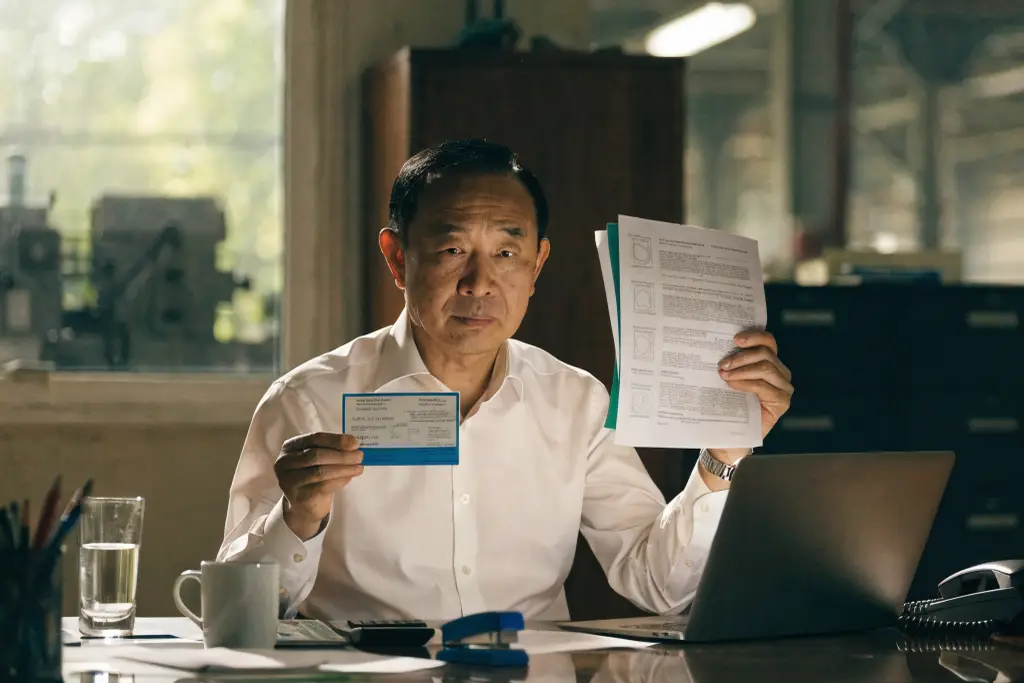
Verification is the most important step in avoiding scams. I have seen buyers skip this step and regret it. Verification does not have to be complicated. A few simple checks can save you from losing thousands of dollars to a fake supplier. I will explain each one clearly so you never fall for them.
To verify a factory, request a video call to see the facility, ask for their business license, check their business license number on the Chinese government website, verify their certifications on the official websites, and ask for client references. A real factory will be happy to provide all of these.
Here is a verification checklist to use with any new supplier. Keep this checklist handy when evaluating any new supplier.
| Verification Method | What to Check | How to Do It | Red Flag |
|---|---|---|---|
| Video call | Factory floor, equipment, workers | Request live video via WeChat or Zoom | Refuses or gives excuses |
| Business license | Registered name, address, scope | Request copy, verify on Chinese gov site | Address is residential |
| Certifications | BSCI, OEKO-TEX, ISO numbers | Check on official verification website | Number does not verify |
| Client references | Past buyer experience | Contact 2 to 3 past clients | Cannot provide any references |
| Third-party audit | Factory capacity and conditions | Request SGS or Bureau Veritas report | Refuses audit |
How to Conduct a Video Call to Verify a Factory?
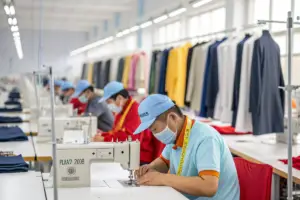
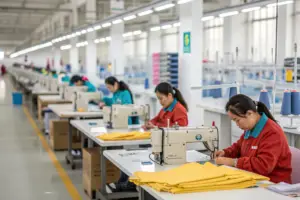
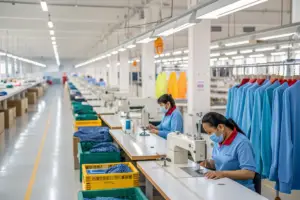
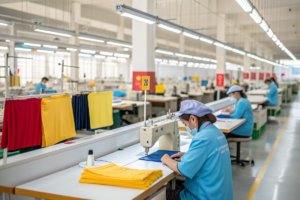
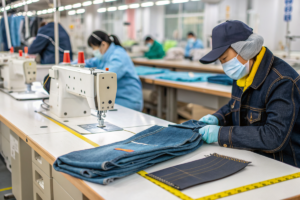
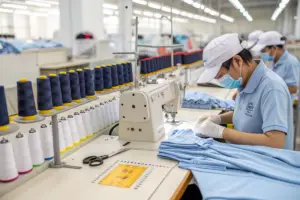
A video call is the best way to verify a factory exists. Ask to see the production floor, the cutting room, the sewing lines, and the finished goods area. A real factory will be happy to show you around. A fake factory will make excuses. They might say the camera is broken. They might say the factory is too messy. They might offer to send photos instead. If they refuse a video call, move on. At Fumao Clothing, we welcome video calls from all potential clients. We give virtual tours of our factory. We show our production lines, QC team, and warehouse. We have nothing to hide. Learn about factory verification at SGS and Bureau Veritas. Client references are an underused verification tool. A real factory with years of experience has happy clients. They can provide contact information for past clients. You can reach out and ask about their experience. Was the quality good? Was delivery on time? Was communication clear? Would they work with the factory again? If a factory cannot provide any references, that is a red flag. At Fumao Clothing, we can provide references from clients we have worked with for years. Some of our clients have been with us for over 10 years. They are happy to share their experience. This is the strongest form of verification. A reference from a real client is worth more than any certificate or document.
How to Check a Chinese Business License?
Every registered factory in China has a business license. Ask for a copy. Check the registered name, address, and business scope. The business scope should include garment manufacturing. If the scope does not include manufacturing, the company may be a trading company. Cross-check the address on Google Maps or Baidu Maps. If the address is a residential building, it is probably not a real factory. Real factories are located in industrial areas. You can also check the business license number on the Chinese government business registration website. At Fumao Clothing, we provide our business license to all clients. Our address is in an industrial zone in Shanghai. We encourage clients to verify our information. Learn about Chinese business verification at Trade.gov and USITO. A third-party audit is the gold standard for verification. Companies like SGS, Bureau Veritas, and Intertek can inspect the factory and provide a detailed report. The report covers the factory size, equipment, capacity, quality control systems, and working conditions. This is the most reliable way to verify a factory. If a factory refuses a third-party audit, that is a major red flag. Real factories welcome audits because they have nothing to hide. At Fumao Clothing, we have regular audits from SGS and Bureau Veritas. We provide the audit reports to our clients. This transparency is why clients trust us.
What Red Flags Should You Watch For?

Over the years, I have learned to spot red flags quickly. Some are obvious. Others are subtle. But they all point to the same thing. The supplier is not what they claim to be. Trust your instincts. If something feels wrong, it probably is. I will explain each one clearly so you never fall for them.
Major red flags include prices that are too good to be true, pressure to pay quickly, refusal to do video calls, vague answers about production capacity, lack of certifications, and poor English that makes communication difficult. Any one of these should make you cautious.
Here are the most important red flags to watch for when evaluating a supplier. Keep this checklist handy when evaluating any new supplier.
| Red Flag | What It Looks Like | Why It Is Dangerous | What to Do |
|---|---|---|---|
| Price too low | 50% below market average | Will cut corners or disappear | Compare with other quotes |
| Rush to payment | Pressure to pay deposit today | Wants your money before you verify | Slow down and verify first |
| No video call | Excuses, offers photos instead | May not have a real factory | Insist on live video |
| Vague answers | Cannot describe production process | Lacks manufacturing knowledge | Ask specific technical questions |
| Too perfect | Everything sounds too easy | May be a well-rehearsed script | Ask unexpected questions |
What Does a Price That Is Too Good to Be True Mean?
If a price is significantly lower than other quotes, be suspicious. A legitimate factory has real costs. Fabric, labor, overhead, and profit all add up. If someone quotes 30% to 50% below market, they are either planning to cut corners or they are not a real factory. I have seen clients choose the cheapest quote and regret it. The factory delivered poor quality or disappeared after receiving the deposit. The cheapest option is rarely the best value. Get quotes from 3 to 5 factories. Compare them. If one is much cheaper, ask why. A legitimate factory can explain their pricing. At Fumao Clothing, our prices are competitive but not the cheapest. We focus on value. We use quality materials and pay our workers fairly. Learn about pricing at Sourcing Journal and Just Style. A question that reveals a fake factory is to ask about their production line details. Ask how many sewing machines they have. Ask what types of machines they use. Ask about their daily production capacity. Ask about their quality control process. A real factory can answer these questions easily. A fake factory will hesitate or give vague answers. You can also ask about specific technical details related to your product. This is a fast way to separate real factories from fakes. The more specific your questions, the harder it is for a fake to bluff their way through.
How to Protect Yourself When Sourcing from a New Supplier?
Always start with a small test order. Do not place a large order with a new factory. Order 50 to 100 pieces first. Test their quality, communication, and delivery. If they perform well, you can increase your order size gradually. Use a secure payment method. T/T with 30% deposit is standard. Never pay 100% upfront. Use L/C for large orders. Request a third-party inspection before shipping. This adds a layer of protection. At Fumao Clothing, we welcome small trial orders. We understand that new clients want to test our quality. Contact our Business Director Elaine at elaine@fumaoclothing.com to start with a small trial order. Learn about risk management at Trade.gov and Sourcing Journal. Working with a factory that has been in business for many years reduces your risk significantly. A factory that has been around for 10 or 15 years is not going to scam you for a small deposit. They have too much to lose. Their reputation is their most valuable asset. New factories with no track record are riskier. They may be inexperienced. They may cut corners. They may disappear. This does not mean all new factories are bad. Some are excellent. But you need to do extra verification. At Fumao Clothing, we have been in business for 15 years. Our longevity is proof of our reliability. We have built our reputation over thousands of orders. We protect it with every order we fulfill.
How Does Fumao Clothing Protect Your Order?

I have spent 15 years building a reputation for honesty and quality. I know that trust is the most valuable thing in this business. That is why I am transparent about everything we do. I want you to know exactly what to expect when you work with us. I will explain each one clearly so you never fall for them.
Fumao Clothing protects your order through transparent communication, verified certifications, standard payment terms, regular production updates, third-party inspection welcome, and a dedicated account manager. We have nothing to hide and we welcome all verification.
Here is how we ensure a safe and transparent sourcing experience. Keep this checklist handy when evaluating any new supplier.
| Protection | What We Offer | Benefit to You |
|---|---|---|
| Verified factory | Business license, video tours | You know we are real |
| Certifications | BSCI, OEKO-TEX, ISO 9001 | You can verify online |
| Fair payment | 30% deposit, 70% before shipment | Your money is protected |
| Production updates | Weekly photos and videos | You see your order being made |
| Open to inspection | Welcome SGS, Bureau Veritas, Intertek | Independent quality check |
What Makes Fumao Clothing a Trusted Partner?
We have been in business for 15 years. We have helped hundreds of American brands manufacture their clothing. We hold BSCI, OEKO-TEX, and ISO 9001 certifications. We welcome video calls and factory visits. We provide our business license to all clients. We use standard 30/70 payment terms. We send regular production updates. We welcome third-party inspections. We have never had a dispute go to arbitration. We have never disappeared with a client deposit. Our reputation is our most valuable asset. We protect it by being honest and transparent. If you are looking for a trustworthy manufacturing partner, contact our Business Director Elaine at elaine@fumaoclothing.com. Another way to spot a fake factory is to check their product range. A real factory specializes in certain product types. A t-shirt factory does not also make leather jackets. If a supplier claims to make everything, they are probably a trading company. Real factories have limitations. They have specific machines for specific products. They cannot just switch to a completely different product type overnight. Ask about their specific experience with your product type. A real factory can tell you about the fabrics, trims, and processes they use. A fake factory will give vague answers. Another clue is the response time. A real factory may take 24 to 48 hours to respond because they are busy producing. A fake factory often responds within minutes because they are just sitting at a computer waiting for inquiries. This is not always true, but it is a pattern I have noticed.
How to Start Your First Order Safely?
Start by contacting us for a quote. We will ask about your product and requirements. We will provide a detailed quote with all costs. We will arrange a video call to discuss your project. You can see our factory and meet our team. We will send you samples for approval. Once you are satisfied, we start production. We send regular updates. Before shipping, we do a final inspection. We can arrange a third-party inspection if you want. Your payment is protected by standard terms. Your order is protected by our quality system. Contact us today to start your first order safely. Learn about safe sourcing at Trade.gov and Sourcing Journal. The standard payment terms exist to protect both parties. The 30% deposit covers the raw material cost. The factory needs this to buy fabric and trims. The 70% balance is paid before shipment. This protects the factory because they have already spent the money on production. It also protects you because you only pay when the goods are ready to ship. Some buyers worry about paying the balance before seeing the goods. This is understandable. You can request photos and videos of the finished goods before paying. A good factory will send these. You can also arrange a third-party inspection before payment. The inspector checks the goods and issues a report. If the goods pass inspection, you pay the balance. This system works well for both parties.
Conclusion
Scams exist in every industry. Clothing sourcing is no different. But they are easy to avoid if you know what to look for. Verify the factory before sending money. Never pay 100% upfront. Start with a small test order. Use third-party inspections. Work with a factory that is transparent and welcomes verification. At Fumao Clothing, we have been doing this for 15 years. We are open, honest, and transparent. We welcome all verification. If you want to source clothing without the risk of scams, contact our Business Director Elaine at elaine@fumaoclothing.com. Let us show you how safe and easy sourcing can be.