A buyer for a boutique chain in Charleston called me in January with her spring coat buy sheet open on her screen. She was staring at her numbers from the previous spring and shaking her head. She had bet heavily on a lightweight version of the wool wrap coat that had been her fall bestseller. The coat was beautiful—same silhouette, same camel color, just in a lighter 350gsm wool. It bombed. The customers who walked into her stores in March and April were not looking for a lighter version of their winter coat. They were looking for a completely different garment. They wanted something that felt like spring. Not a winter coat on a diet. A spring coat.
The best lightweight women’s coat types for Spring 2026 are the unlined cotton trench coat with removable storm collar, the oversized linen-blend blazer coat in neutral and pastel tones, the cropped utility jacket in washed cotton twill, and the longline duster in Tencel or lyocell blend, all designed from the ground up as warm-weather layers rather than de-contented winter coats.
The spring coat is its own product category with its own rules. It is not a winter coat made thinner. It is a garment engineered for the specific conditions of spring: temperatures that swing from 50 to 70 degrees in a single day, sudden rain showers, the desire to shed the heaviness of winter and wear something that feels fresh and new. At Shanghai Fumao, we have developed spring coat programs for US brands across the contemporary and premium segments. I have seen which silhouettes the customer reaches for when the cherry blossoms appear. Let me walk you through the four spring coat types that will drive your seasonal sell-through and how to build each one correctly.
Why Is the Unlined Cotton Trench the Undisputed Spring Coat Champion?
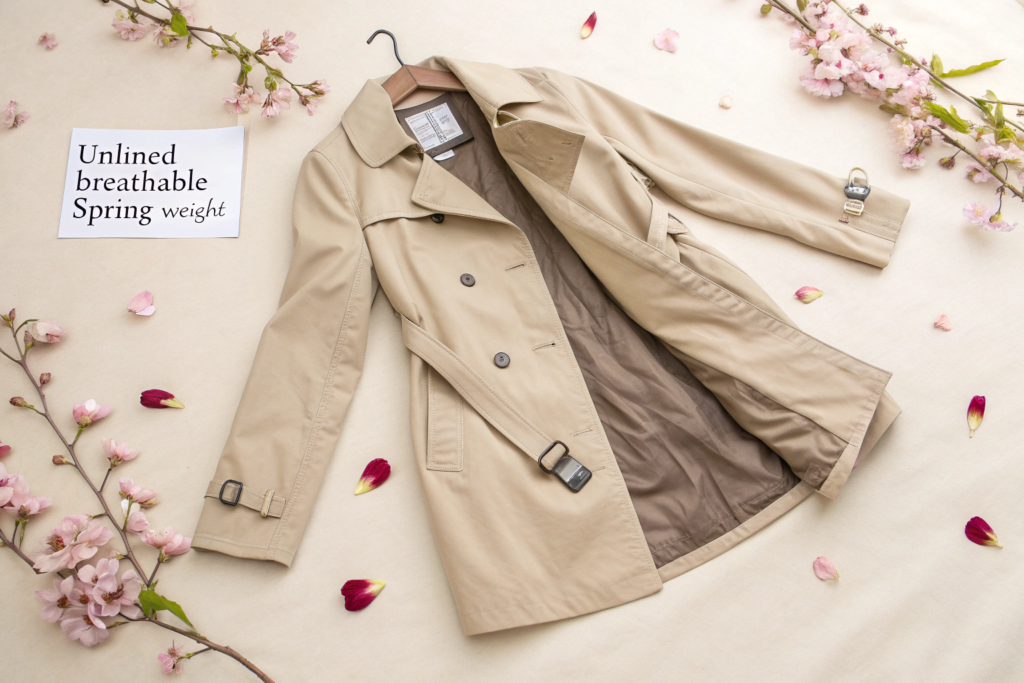
The trench coat is a year-round icon, but the spring trench is a distinct product from the fall trench. The fall trench is often lined, sometimes with a removable quilted liner, and is built from a heavier cotton gabardine. The spring trench is unlined, built from a lighter weight cotton or cotton-blend, and designed to be thrown over a t-shirt or a light sweater on a 60-degree day. The customer who buys a spring trench is not looking for warmth. She is looking for a lightweight layer that provides rain protection, wind protection, and a polished finish without adding heat.
The unlined spring trench coat dominates the spring outerwear category because it solves the season’s specific problem—unpredictable rain and wind without overheating—in a silhouette that reads as polished and intentional, achieving the highest spring sell-through rates of any lightweight coat type at 80-85% full-price across DTC and wholesale channels.
A brand we manufacture for launched an unlined spring trench two seasons ago. The shell was a 180gsm water-resistant cotton-nylon blend with a DWR finish. The coat was completely unlined with clean bound seams. It had a removable storm collar that could be detached for a cleaner look on sunny days. It retailed for $195. It sold out in six weeks. The customer feedback mentioned "perfect weight for spring" and "exactly what I needed for April showers." The coat was not a de-contented winter trench. It was engineered for spring.
What Fabric Weight and Construction Define a Spring Trench?
The spring trench uses a shell fabric in the 160 to 220 grams per square meter range—significantly lighter than the 280-350gsm fabrics used in fall and winter trenches. The fabric is typically a cotton-nylon blend with a durable water repellent finish rated for light to moderate rain. The coat is unlined, which reduces weight, improves breathability, and keeps the FOB lower. The seams are clean-finished with binding or French seams. The construction eliminates the removable quilted liner that is standard on fall trenches. The spring trench may include a removable storm collar or a lightweight hood that can be packed into the collar. The overall garment weight is approximately half that of a winter trench. The customer can wear it comfortably at temperatures from 50 to 70 degrees. The technical specifications for lightweight water-resistant fabrics are available from textile resources like Cotton Incorporated.
How Does Color and Styling Differentiate the Spring Trench from the Fall Version?
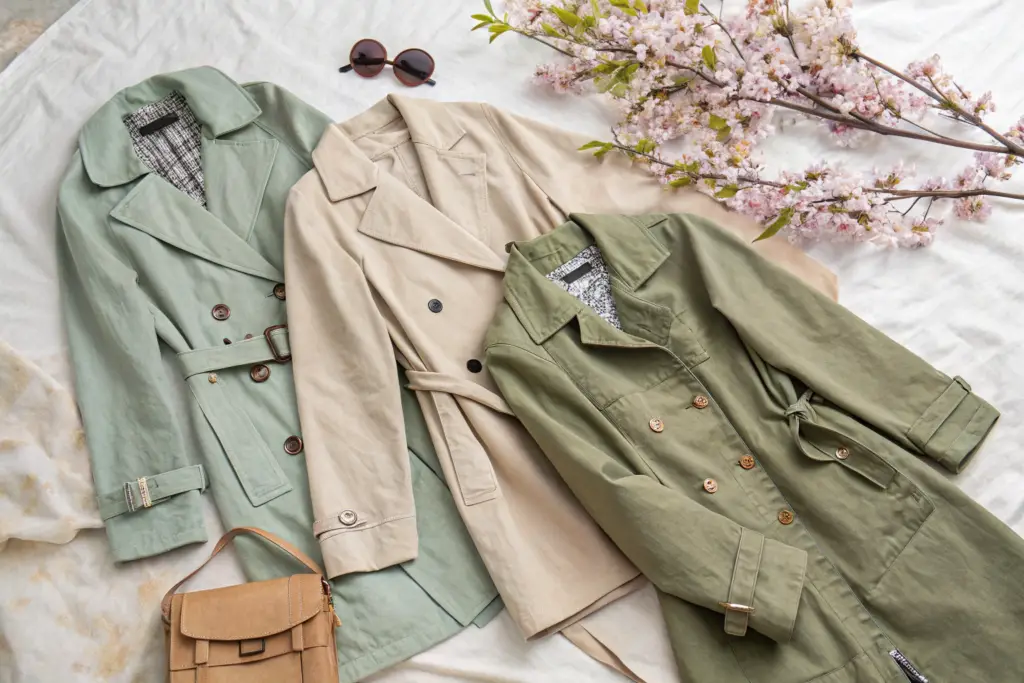
The fall trench is khaki, khaki, and more khaki. The spring trench expands the color palette into lighter, fresher tones. Stone, sand, and cream are the new neutrals. A pale sage green, a soft sky blue, or a warm blush pink can serve as the seasonal accent color that signals "spring" to the customer. The styling should show the trench worn open over a simple tee and relaxed trousers, or over a lightweight knit dress. The imagery should communicate ease and lightness. The fall trench is belted and buttoned. The spring trench is open and effortless. The product photography should reflect the different energy of the seasons.
Why Is the Oversized Blazer Coat the Fastest-Growing Spring Silhouette?
The blazer coat—essentially an oversized, longline blazer designed to be worn as a lightweight coat—has been the fastest-growing spring outerwear silhouette for three consecutive seasons. Its growth is driven by the same forces that have made the oversized wool wrap coat the dominant winter silhouette: it is comfortable, versatile, and communicates a relaxed polish that works across casual and smart-casual occasions. The blazer coat is the spring version of the wrap coat. It provides structure without stiffness. It elevates a simple jeans-and-tee outfit without making the wearer feel overdressed.
The oversized blazer coat in linen, Tencel, or lightweight cotton blends is the fastest-growing spring silhouette because it bridges the gap between a tailored blazer—which feels too formal for post-pandemic lifestyles—and a casual jacket, providing structure, polish, and an effortless aesthetic that the customer can wear to the office, to brunch, and to evening events with equal ease.
A brand we manufacture for launched a linen-blend blazer coat in three colors—cream, soft sage, and a warm sand—last spring. The coat was unstructured, with no shoulder pads, no lining, and a relaxed fit. It retailed at $178. It sold out in four weeks. The brand’s DTC data showed the blazer coat was being purchased by the same customer who had bought the wool wrap coat in the fall. She was building a year-round outerwear wardrobe within the brand. The blazer coat was the spring chapter of the story the wrap coat had started in the fall.
What Fabrics and Construction Techniques Define the Spring Blazer Coat?
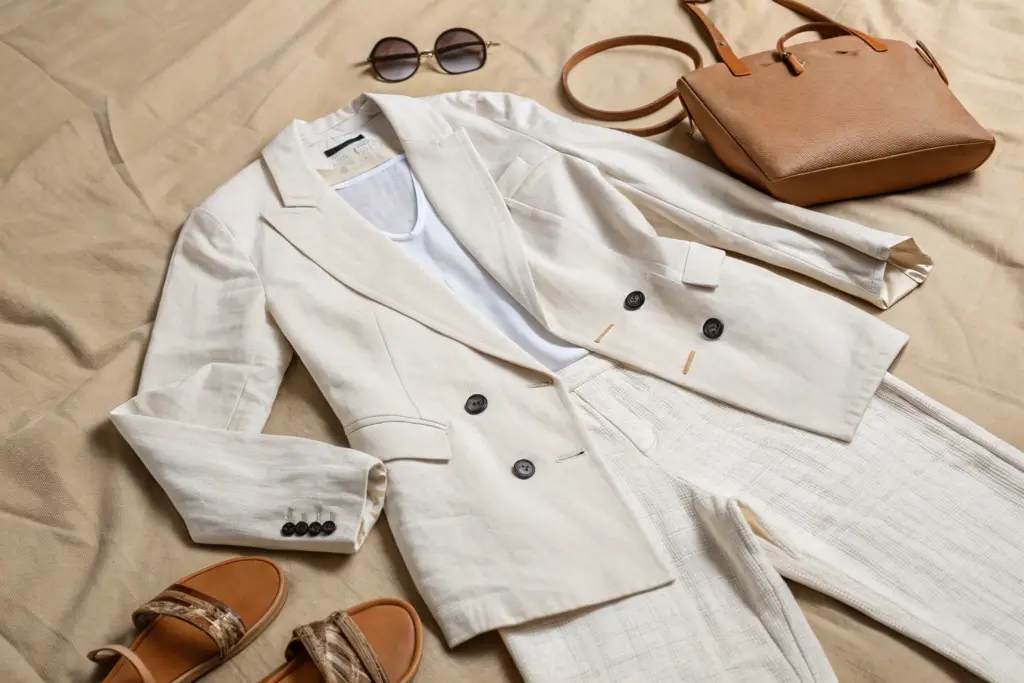
The spring blazer coat is defined by what it does not have. It does not have shoulder pads. It does not have a structured chest canvas. It does not have a full lining. It is constructed like an oversized shirt with a blazer’s collar and lapel. The fabric is a lightweight linen, linen-cotton blend, Tencel twill, or lightweight cotton poplin in the 150 to 250gsm range. The construction is intentionally deconstructed—the interior seams may be bound or left raw for a casual aesthetic. The shoulders are soft and slightly dropped. The sleeves are generous, often with a turn-back cuff. The length falls to the mid-thigh or just above the knee. The overall effect is a garment that has the visual language of tailoring but the physical comfort of a cardigan.
How Should the Blazer Coat Be Styled and Merchandised for Spring?
The blazer coat should be styled as the "third piece" in a spring outfit—the layer that pulls a simple look together. The product imagery should show it worn over a white tank and relaxed jeans, over a slip dress, over tailored shorts and a knit top. The versatility is the selling point. The retail sales associate should be trained to demonstrate how the blazer coat can be worn to the office, to brunch, and to evening events. The copy on the product page should use words like "effortless," "throw-on," and "all-day." The blazer coat is not a special-occasion garment. It is the everyday spring coat. The merchandising should communicate that it belongs in the customer’s life, not just in her closet.
Why Are the Cropped Utility Jacket and Longline Duster Essential for Completing the Spring Assortment?
The trench coat covers rain protection and polish. The blazer coat covers smart-casual versatility. The cropped utility jacket and the longline duster cover the remaining spring use cases: the casual, functional weekend layer and the elegant, lightweight evening layer. A brand with only a trench and a blazer coat has a strong spring assortment. A brand that adds a utility jacket and a duster has a complete spring assortment that covers every customer, every occasion, and every aesthetic preference.
The cropped utility jacket serves the casual, functional spring customer with a workwear-inspired silhouette in washed cotton twill, while the longline duster serves the elegant, lightweight-layer customer with a flowing, open-front silhouette in Tencel or lyocell, together capturing the relaxed weekend and refined evening segments that the trench and blazer coat do not fully address.
A brand we manufacture for initially launched their spring collection with only a trench and a blazer coat. The collection sold well, but the customer service team kept receiving the same request: "Do you have something more casual, like a field jacket?" and "Do you have something lighter, more like a cardigan coat?" The brand added a utility jacket and a duster the following spring. The utility jacket became their best-selling casual coat. The duster became their best-selling piece for the over-50 customer segment. The four-coat spring assortment covered the full market.
What Design Features Define the Spring Utility Jacket?
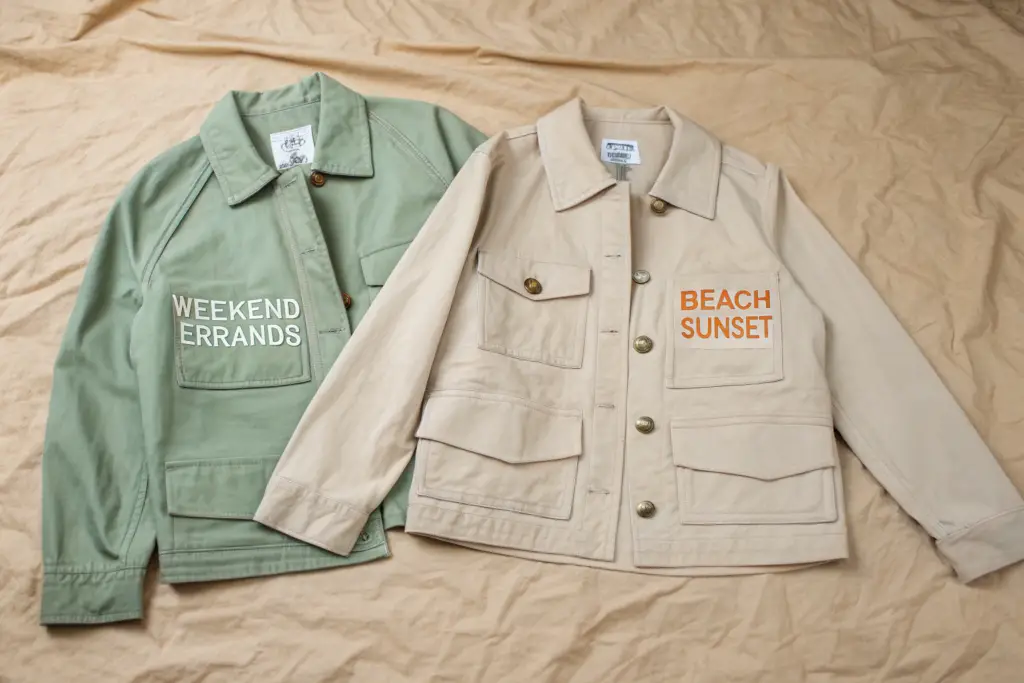
The spring utility jacket is a hip-length, unlined jacket in washed cotton twill, typically 200-280gsm. It has a shirt collar, a button or snap front closure, and oversized patch pockets on the chest and hips. The silhouette is relaxed and slightly boxy. The fabric is garment-washed for softness and a worn-in look. The color palette is rooted in workwear and military references: sage green, khaki, stone, and a faded navy. The utility jacket is the casual alternative to the blazer coat. It pairs with jeans, cargo trousers, and sneakers. It is the coat the customer reaches for on a Saturday morning. It typically retails between $120 and $180, making it an accessible entry point for new customers.
What Fabric and Silhouette Define the Spring Duster?
The spring duster is a longline, open-front coat in a fluid, drapey fabric—Tencel, lyocell, modal blends, or a lightweight wool-crepe blend. It falls to mid-calf or ankle. It has no closure—it is designed to be worn open and flow as the wearer moves. The silhouette is oversized and relaxed. The fabric weight is 150-200gsm. The duster is the elegant, lightweight layer. It is worn over a dress for an evening event, over a tank and wide-leg trousers for a resort look, over a swimsuit as a beach cover-up. It is the coat that adds drama and movement without adding warmth. The duster typically retails between $140 and $190. It serves a customer who wants polish without structure, elegance without formality.
Conclusion
The best lightweight women’s coats for Spring 2026 are four distinct silhouettes, each engineered for the specific conditions and occasions of the season. The unlined cotton trench provides polished rain protection for the unpredictable spring weather. The oversized blazer coat delivers the relaxed, versatile polish that the modern customer wants for everyday wear. The cropped utility jacket serves the casual, functional weekend wardrobe. The longline duster provides an elegant, lightweight layer for evening and resort occasions.
The brand that launches all four silhouettes in a coordinated spring color palette—stone, sand, cream, sage, and a soft sky blue—covers the full spring outerwear market. The trench and blazer coat will drive the volume. The utility jacket and duster will expand the customer base and capture the casual and elegant niches. The spring coat is not a winter coat made lighter. It is its own product, with its own construction, its own fabrics, and its own emotional promise. The customer who has spent the winter in heavy wool is ready to feel light again. The spring coat delivers that feeling.
If your brand is planning its Spring 2026 outerwear assortment, we can help you develop the four silhouettes that will drive sell-through. At Shanghai Fumao, we produce spring coats in lightweight cotton, linen blends, Tencel, and washed twills, with the construction techniques and fabric finishes that define the spring category. Contact our Business Director, Elaine, at elaine@fumaoclothing.com to request our spring fabric swatch book and a sample costing for your target silhouettes. Let’s build the coats that make your customer feel light again.