A brand founder from London called me last September, her voice tight with stress. She had just received her first bulk shipment of wool coats from a factory she had found on a sourcing platform. The pre-production sample had been beautiful. The bulk order was a disaster. The wool was lighter than the sample. The sizing was inconsistent across colors. The buttons were a different shade than what she had approved. She had paid 70% of the invoice before the shipment left the factory. She had no leverage. She was staring at 800 coats she could not sell at full price. She asked me, "How was I supposed to know? They seemed professional. They had a good website. They answered my emails quickly."
The hard truth is that a good website, responsive communication, and a beautiful pre-production sample do not guarantee a reliable manufacturer. They are the entry ticket to a conversation, not proof of capability. Choosing the right coat manufacturer in China requires a structured verification process that goes beyond surface impressions. It requires checking certifications, contacting references, understanding the factory's actual specialization, and structuring the purchase agreement to protect your investment.
Choosing the right women's coat manufacturer in China requires verifying the factory's social compliance and quality management certifications, confirming coat-specific production capability through a live video tour, checking at least two current client references who produce similar coats, evaluating the factory's fabric sourcing network for your specific material requirements, and structuring the sampling, payment, and quality inspection terms to protect your order from the risks of miscommunication and quality drift.
At Shanghai Fumao, we have onboarded dozens of US and European brand partners through exactly this process. We encourage prospective clients to audit us, to call our references, to tour our production floor by video, and to structure their purchase orders with clear quality and delivery terms. A legitimate factory welcomes scrutiny. A factory that resists scrutiny is a factory with something to hide. Let me walk you through the five steps that will lead you to a manufacturing partner you can trust.
How Do You Verify a Factory's Certifications and Compliance Credentials?
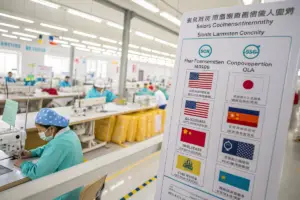
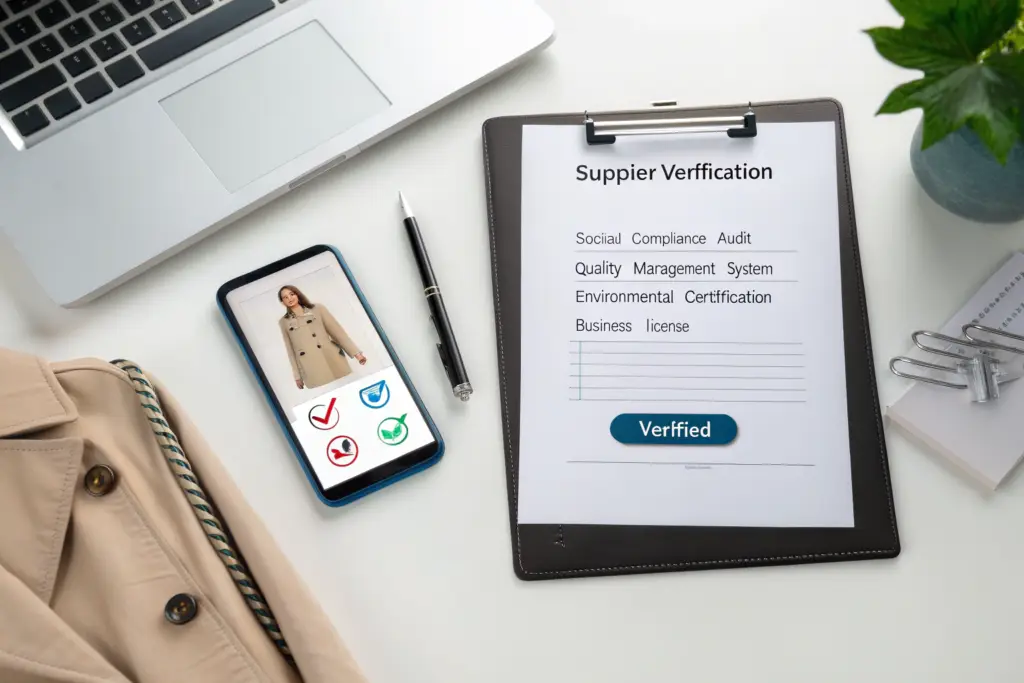
A factory's certifications are the starting point of verification, not the end. A certificate is a PDF. PDFs can be forged. The verification process involves checking the certificate number against the issuing organization's online database, confirming the certificate is current and unexpired, and verifying that the certificate covers the specific factory address where your coats will be made. A factory that claims to have a SMETA audit but cannot provide a valid certificate number that checks out on the Sedex database is a factory that is not being honest about its compliance status.
The three non-negotiable certifications for a women's coat manufacturer are a social compliance audit from a recognized scheme like SMETA, BSCI, or WRAP, a quality management system certification like ISO 9001, and, for manufacturers handling down or wool, the relevant material-specific certifications like the Responsible Down Standard or Responsible Wool Standard, all verified directly on the issuing organization's public database.
I walked a prospective client through this verification process last quarter. We provided our SMETA 4-Pillar audit report with the certificate number clearly visible. The client navigated to the Sedex database during our video call, entered the certificate number, and confirmed that our factory name, address, and audit date matched the report. The verification took three minutes. It established a foundation of trust that the rest of the sourcing conversation was built on. A factory that refuses to provide a verifiable certificate number, or whose certificate does not appear in the database, is a factory you should not do business with.
What Is the Difference Between a SMETA, BSCI, and WRAP Audit?
SMETA 4-Pillar is the most comprehensive social compliance audit. It covers labor standards, health and safety, environmental performance, and business ethics. It is the preferred standard for European brands and is administered through the Sedex platform. BSCI is a similar standard focused on the amfori framework, common among European retailers. WRAP is a twelve-principle standard that is widely recognized in the North American market. All three are legitimate, independent, third-party audit schemes. A factory should hold at least one current audit from a recognized scheme. The specific scheme matters less than the fact that the audit was conducted by an accredited third party and the certificate is current. Detailed information on each audit standard is available from the respective organizations, including the Sedex platform for SMETA audits.
Why Is ISO 9001 Certification Relevant for Coat Manufacturing?
ISO 9001 certifies that the factory has a documented quality management system. It means the factory has written procedures for incoming material inspection, in-process quality checks, final inspection, and corrective action when defects are found. A coat is a complex garment with many components. A factory without a documented quality system is relying on individual operator skill and supervisor memory. A factory with ISO 9001 has a system that operates independently of any individual. The certification does not guarantee that every coat will be perfect, but it guarantees that the factory has a documented process for catching and correcting defects before they reach the customer. The certification is verified through the ISO organization's member body database.
How Do You Confirm the Factory Has Actual Coat-Making Expertise?
A factory that makes beautiful t-shirts cannot necessarily make a beautiful wool coat. A coat requires specialized equipment—industrial steam presses capable of shaping wool, needle detectors for safety, armhole measuring jigs, and pressing bucks for tailored collars. It requires skilled workers who understand coat construction—how to set a sleeve with the correct ease, how to pad-stitch a lapel, how to attach a lining without twisting. It requires a supply chain that can source wool coating, viscose lining, horn buttons, and the dozens of other components that go into a coat. The factory's website may claim "outerwear expertise." You need to verify that claim with your own eyes.
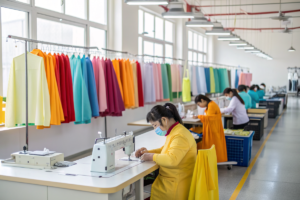
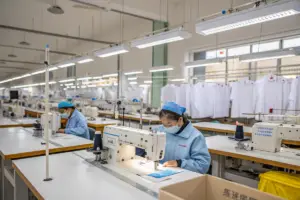
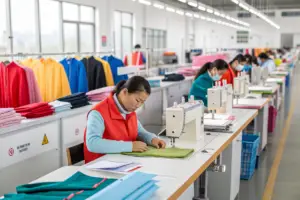
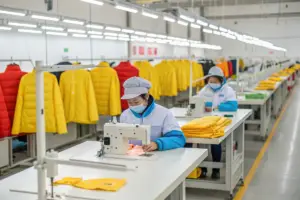
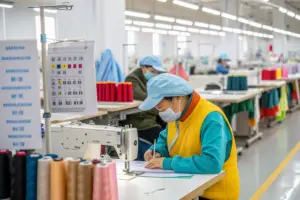
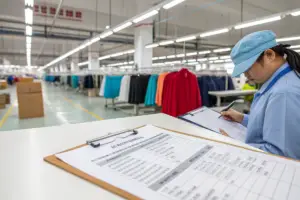
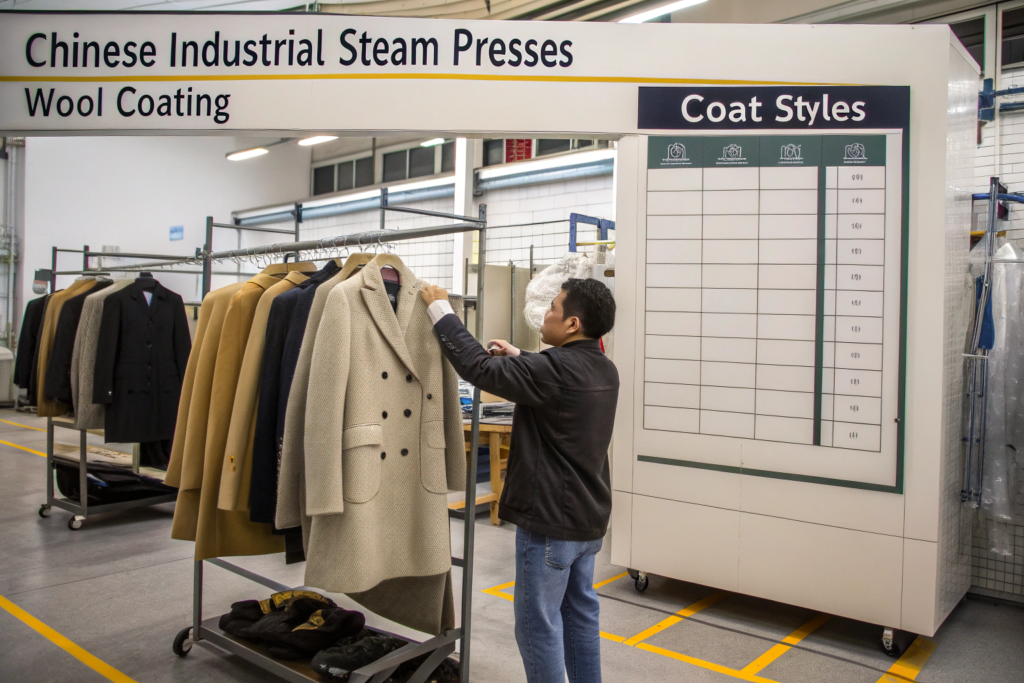
Confirm coat-making expertise through a structured live video tour that shows the cutting room set up for multi-layer fabric spreading, the sewing line equipped with specialized coat machinery, the pressing and finishing area with industrial steam presses and coat forms, and the quality control station with coat-specific measurement tools, while also requesting to see a current production order for a coat similar to yours actually on the production line.
I conducted a video tour for a prospective brand partner last month. I walked them through our dedicated outerwear line. I showed them the automatic cutting machine spreading four layers of wool coating. I showed them the sewing stations with the specialized machines—the buttonhole machine, the blind-stitch machine for hemming, the overlock machines for internal seams. I showed them the pressing area with the industrial steam presses and the coat forms. I showed them a rack of wool coats in production for another US brand. The brand partner later told me they had toured three other factories that claimed to make coats but had no specialized pressing equipment and were running lightweight jackets on their production lines.
What Specific Equipment Should a Coat Factory Have?
A coat factory should have industrial steam presses with vacuum tables that can shape and set wool fabric. It should have a needle detector conveyor that every finished coat passes through. It should have specialized pressing bucks—forms shaped like a coat collar, a sleeve, and a shoulder—that allow operators to press curved seams without creating creases. It should have automatic cutting equipment capable of handling the thick, multi-layer spreads required for wool coating. A factory that lacks this equipment can still assemble a coat, but the pressing will be inadequate, the seams will not lay flat, and the coat will look homemade rather than professionally finished. The equipment is the physical evidence of coat-making capability. The video tour should show the equipment in operation, not parked in a corner.
What Questions Should You Ask About the Factory's Current Production?
Ask what coat styles are currently on the production line. Ask for the brand names, if the factory is permitted to share them. Ask to see a production order on the line—the bundle ticket with the style number, the quantity, and the delivery date. Ask how many coats the factory produces per month and what percentage of total production is outerwear versus other garment categories. A factory that produces 80% lightweight jackets and 20% coats has a very different capability profile than a factory that produces 80% coats year-round. The answers to these questions reveal whether coats are a core competency or an occasional side business for the factory.
How Do You Evaluate the Factory's Fabric and Trim Sourcing Network?
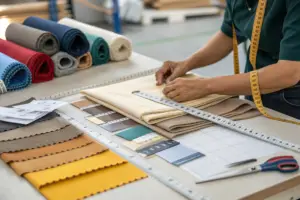
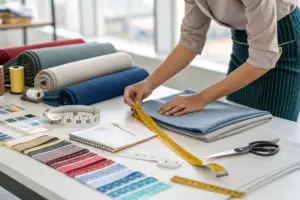
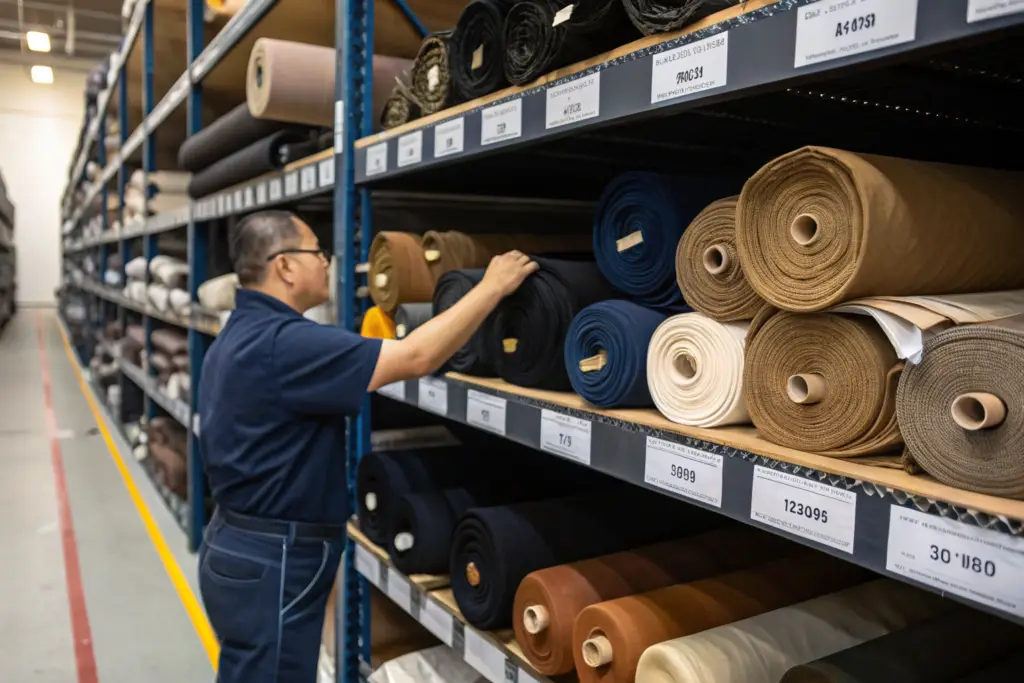
A coat is fabric first. The shell fabric represents 40-50% of the coat's FOB cost and 90% of the customer's first impression. The factory that can source premium wool coating from reputable mills, at competitive prices, with certified traceability, is a factory that can produce a coat worth retailing. The factory that sources fabric from a commodity market with no mill certification is a factory that will struggle to match your approved sample in bulk production. The fabric sourcing network is the invisible infrastructure that determines the quality ceiling of the factory's output.
Evaluate the factory's fabric sourcing by requesting their mill supplier list, verifying that the mills have their own certifications, asking to see fabric lot traceability documentation from a recent coat order, and requesting the factory to provide fabric swatch books and lab dip capabilities for custom colors, with the understanding that a factory with direct mill relationships will offer better pricing, quality consistency, and lead time reliability than a factory buying through intermediaries.
A brand we manufacture for was previously sourcing from a factory that bought fabric through a trading company. The trading company added a markup. The fabric lot traceability was nonexistent—the factory could not tell the brand which mill the wool came from. When the brand requested RWS certification for the wool, the factory could not provide it because the trading company could not trace the fiber back to the farm. We sourced the same quality wool coating directly from an RWS-certified mill at a lower price per meter, with full lot traceability from the mill to the finished coat. The direct mill relationship eliminated the intermediary markup and provided the certification the brand needed for wholesale placement.
Why Does Direct Mill Access Matter for Pricing and Consistency?
Every intermediary between the mill and the factory adds a markup. A trading company adds 5-15%. An agent adds another 3-5%. A factory that buys through intermediaries is paying more for the same fabric than a factory that buys direct. That higher fabric cost either raises the FOB or pressures the factory to substitute a cheaper fabric to protect its margin. Direct mill access eliminates the intermediary markup and gives the factory direct communication with the mill about quality specifications, color matching, and lot consistency. The factory that buys direct can also reserve fabric lots for future reorders, ensuring color consistency across production runs. This is a significant advantage for brands that plan to reorder bestselling styles.
What Certifications Should the Fabric Mills Hold?
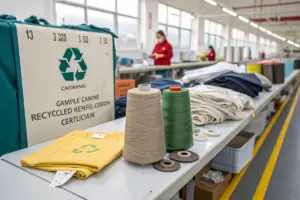
The fabric mill's certifications should align with the brand's sustainability and quality requirements. For wool coating, the Responsible Wool Standard certification verifies animal welfare and land management practices. For organic cotton trench coats, the Global Organic Textile Standard certification verifies organic fiber content. For recycled polyester linings, the Global Recycled Standard certification verifies recycled content. For chemical safety, OEKO-TEX Standard 100 certification verifies that the fabric is free from harmful substances. The factory should be able to provide the mill's current certificates for any fabric they propose to use in your coats. A factory that cannot provide mill certifications is sourcing from uncertified suppliers and cannot substantiate any sustainability claims the brand may want to make.
How Do You Structure the Sampling, Payment, and Inspection Terms?
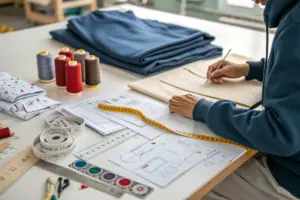
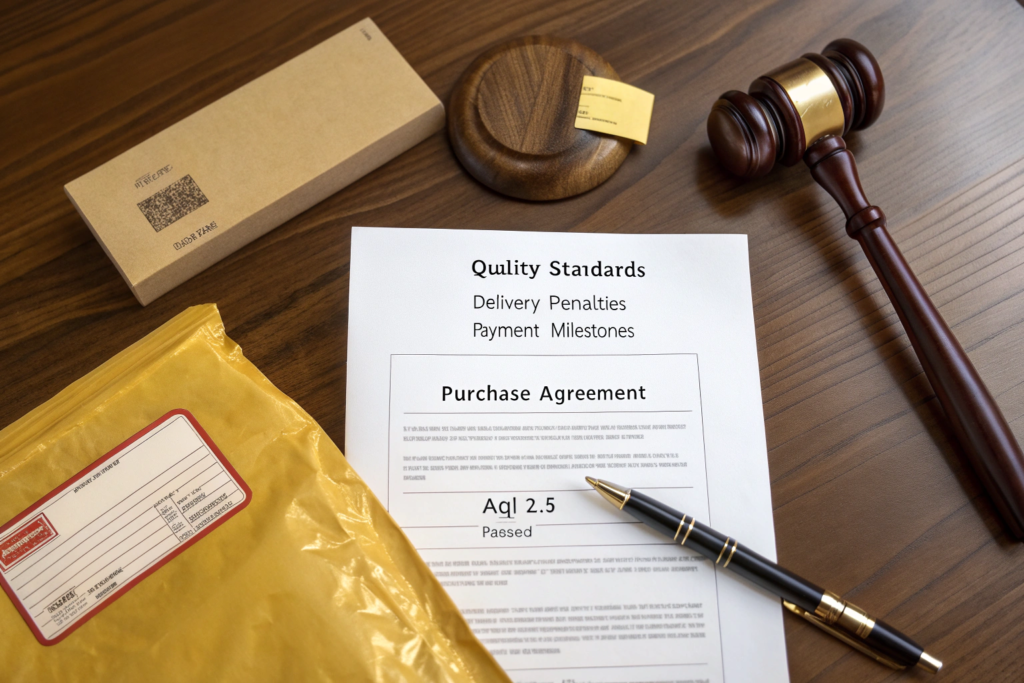
The purchase agreement is your protection. It must specify the quality standard, the delivery date, the payment terms, and the consequences if the factory fails to meet those terms. A handshake agreement over email is not enforceable. A detailed purchase agreement, signed by both parties, that references a sealed golden sample as the quality standard, specifies an AQL 2.5 third-party inspection before final payment, and includes a penalty or discount clause for late delivery, is enforceable. The factory that is willing to sign such an agreement is a factory that is confident in its ability to meet its commitments.
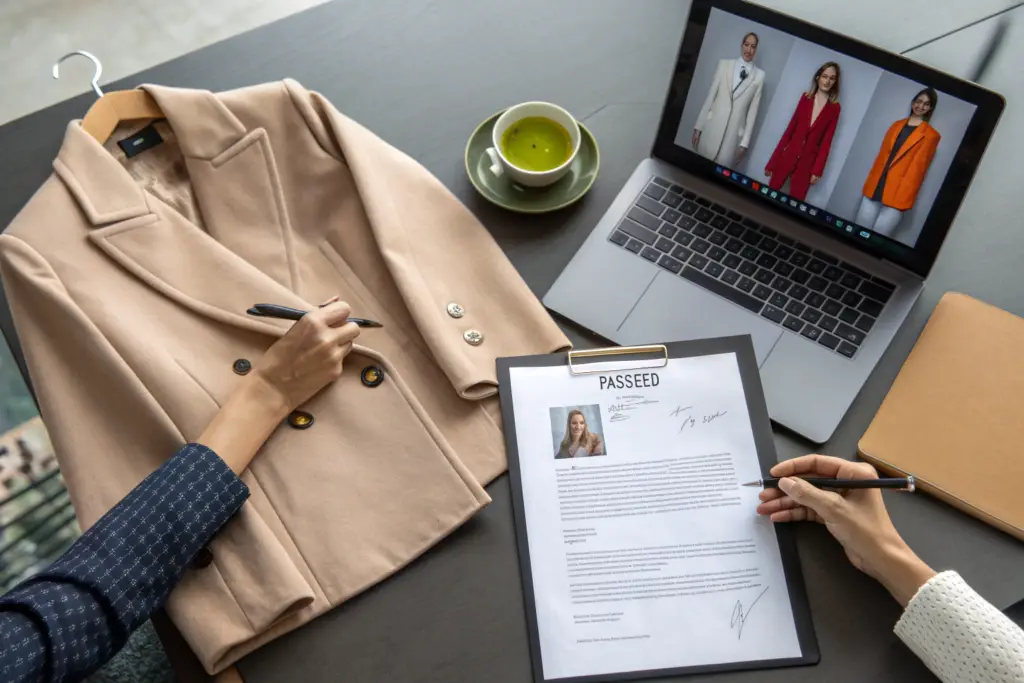
Structure the deal with a 30% deposit to initiate production, a 70% balance paid only after a passed third-party AQL 2.5 inspection on the packed shipment, a sealed and signed golden sample as the legal quality reference, a specified delivery date with a defined penalty or discount for late shipment, and a clear procedure for handling quality disputes, with all terms documented in a bilingual purchase agreement signed by both parties.
A brand we work with had a quality dispute with their previous factory. The coats arrived with the wool fabric 50gsm lighter than the approved sample. The coats looked and felt thinner. The brand had no sealed golden sample. The factory argued the coats were "commercially acceptable." The brand had no leverage and had to accept the shipment at a negotiated discount. When they moved production to us, we sealed a golden sample for each style and size, attached the fabric weight specification to the purchase agreement, and included a clause that allowed the brand to reject the shipment if the bulk coats did not match the sealed sample. The protection was not a sign of distrust. It was a sign of professionalism. Both parties understood the standard, and both parties were protected.
Why Must the Golden Sample Be Sealed, Signed, and Dated?
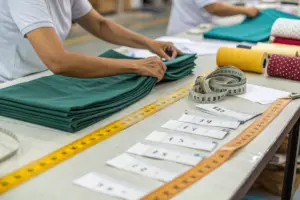
The golden sample is the physical standard that defines what the bulk production should look like. It must be sealed in a tamper-proof bag, signed by both the brand representative and the factory quality manager, and dated. The seal protects the sample from being altered after approval. If a dispute arises—the brand says the bulk coat sleeve is too short, the factory says it is correct—the sealed sample is opened, and the measurements are compared. The sealed sample is the referee. Without it, a quality dispute becomes a he-said-she-said argument with no objective resolution. The sealed sample protects both parties. It protects the brand from quality drift. It protects the factory from unreasonable rejection.
How Do Third-Party Inspections Fit Into the Payment Schedule?
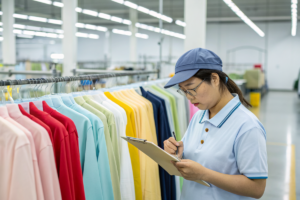
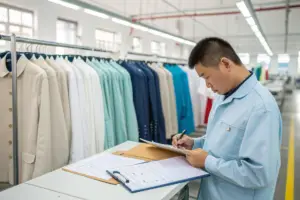
The final 70% payment should be contingent on a passed third-party inspection. The inspection is conducted on the packed, ready-to-ship cartons by an accredited company like SGS, Bureau Veritas, or Intertek. The inspector pulls a random sample, measures the coats against the specification sheet, checks for visual and construction defects, and verifies the packaging and labeling. The inspection is conducted against the AQL 2.5 standard. If the shipment passes, the inspection report is issued, the brand releases the final payment, and the factory ships the goods. If the shipment fails, the factory must rework the defective coats and submit for re-inspection at their own cost. The brand does not pay the final balance until a passed report is in hand. This payment structure gives the factory a powerful financial incentive to maintain quality throughout production. Resources on inspection standards and procedures are available from organizations like the International Trade Centre.
Conclusion
Choosing the right women's coat manufacturer in China is a process, not a single decision. It begins with verifying certifications on the issuing organization's database, not just accepting the PDF. It continues with a structured live video tour that reveals the factory's actual equipment, workflow, and current production. It requires evaluating the fabric sourcing network to ensure the factory has direct mill relationships that can deliver quality, consistency, and traceability. It culminates in a purchase agreement structured with a sealed golden sample, a third-party inspection contingency, and a payment schedule that protects your investment.
The factory that welcomes this level of scrutiny—that provides verifiable certifications, that conducts a transparent video tour, that shares mill supplier information, and that signs a detailed purchase agreement—is a factory that is confident in its capabilities and committed to a long-term partnership. The factory that resists, deflects, or cannot provide verifiable evidence for its claims is a factory to walk away from, regardless of how attractive the initial quote appears.
If you are searching for a women's coat manufacturer and want to work with a factory that meets the standards described here, we invite your scrutiny. At Shanghai Fumao, we provide our certifications for verification, our production floor for video tours, our mill supplier list for review, and our sealed sample and inspection procedures for your protection. Contact our Business Director, Elaine, at elaine@fumaoclothing.com to begin your verification process. Let's build a partnership based on proven capability, not just promises.