You have designed a beautiful garment. The silhouette is perfect. The color is on-trend. But you launch it in July, and the reviews come back: "Feels like a sauna." Or you launch it in December, and the feedback is: "Too thin, I froze." You realize you made a critical error: you chose the wrong fabric weight for the season. A brand owner told me, "I used to think fabric weight was a minor technical detail. Then I launched a heavy fleece hoodie in May. I learned my lesson the hard way."
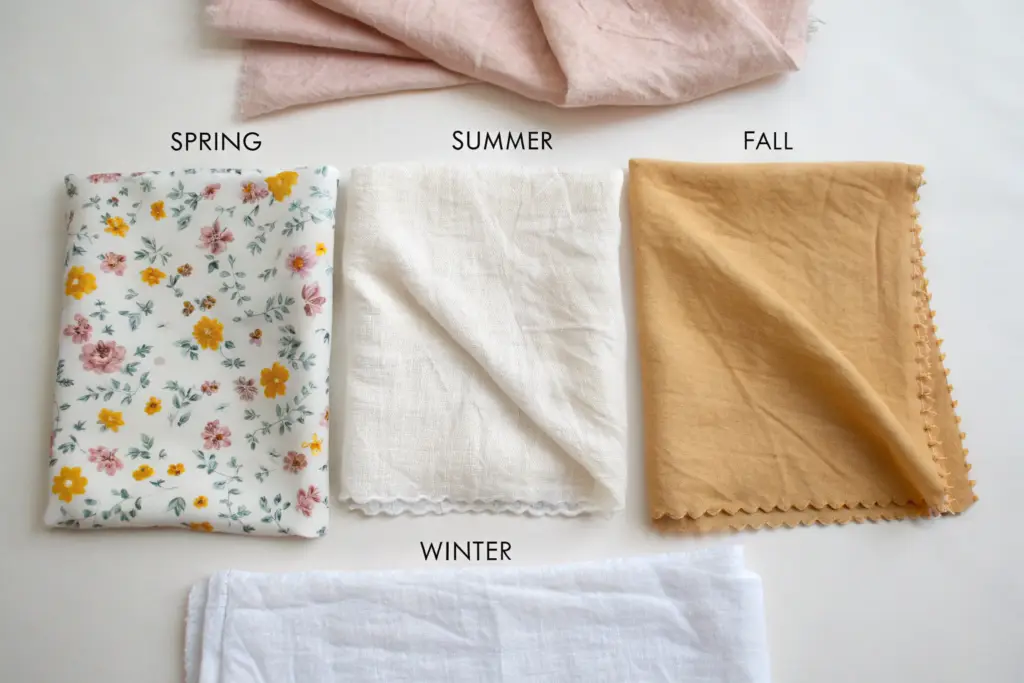
Choosing the right fabric thickness for different seasons is about understanding the interplay of fiber content, fabric weight (GSM), and weave. For Spring/Summer, prioritize lightweight, breathable fabrics (100-180 GSM) like linen, cotton voile, and Tencel. For Fall/Winter, focus on mid-to-heavyweight fabrics (200-400+ GSM) that provide insulation and structure, such as brushed cotton, wool blends, and heavy fleece. The key is to match the weight to the garment's intended use and the customer's comfort expectations for that time of year.
At Shanghai Fumao, we guide our B2B partners through this essential selection process every season. We know that getting the weight right is just as important as getting the design right. Let me break down the science of seasonal fabric weights, giving you a practical, actionable guide to selecting the perfect materials for your Spring/Summer and Fall/Winter collections.
What Fabric Weights (GSM) Are Ideal for Spring and Summer Collections?
When the temperature rises, the priority for fabric shifts entirely to breathability and lightness. The goal is to create garments that allow air to circulate, wick moisture away from the skin, and feel weightless against the body. A heavy, dense fabric in the summer is a recipe for discomfort and returns. Understanding the ideal weight range and the best fibers for warm weather is essential.
For Spring and Summer collections, the ideal fabric weight range is 100-180 GSM (Grams per Square Meter). Fabrics in this range are lightweight and breathable. The best fiber choices are natural or cellulosic: Linen (120-180 GSM) for its exceptional breathability and crisp texture; Cotton Voile or Lawn (100-140 GSM) for a soft, semi-sheer, and airy feel; and Tencel Lyocell (140-180 GSM) for a fluid, cool-to-the-touch drape.
A women's wear client of mine designed a beautiful tiered maxi dress. Her first sample was made from a 220 GSM cotton poplin. It was heavy, hot, and the skirt didn't flow. She was disappointed. We suggested switching to a 140 GSM Tencel Twill. The difference was night and day. The dress became light, breathable, and moved with a beautiful, liquid drape. It became a summer best-seller. The lesson was clear: the right weight transformed the garment. This is the kind of guidance we provide as part of our fabric sourcing expertise.
What Is the Difference Between Cotton Voile, Lawn, and Poplin for Summer?
These are all lightweight cottons, but they have distinct personalities:
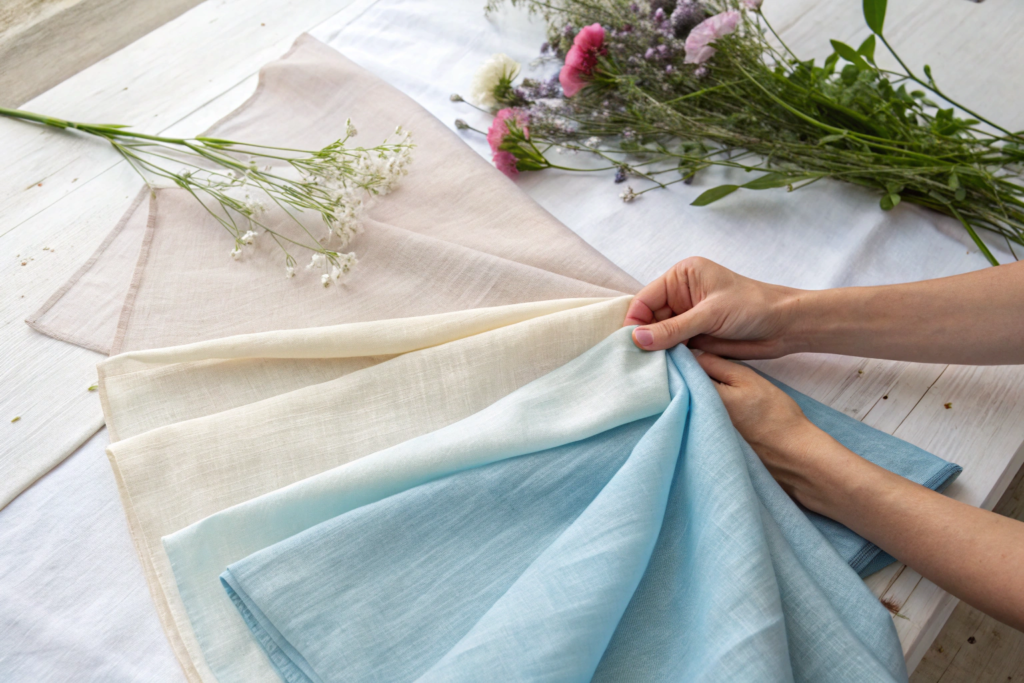
- Voile (100-120 GSM): Very lightweight, soft, and semi-sheer. Has a beautiful, fluid drape. Perfect for blouses and lined dresses.
- Lawn (120-140 GSM): Slightly more crisp and opaque than voile, with a smooth, silky finish. Ideal for shirts and summer dresses.
- Poplin (140-180 GSM): The heaviest of the three. Has a crisp, structured feel and a subtle sheen. Good for shirts, skirts, and lightweight trousers that need more body.
Choosing between them depends on the desired drape and opacity of the final garment. We guide our clients through these nuances.
Why Is Linen the Undisputed King of Summer Fabrics?
Linen's breathability is unmatched. The flax fibers are hollow, allowing air to circulate freely and wicking moisture away from the body. It is also incredibly strong and durable. While it is famous for wrinkling, this is often seen as part of its relaxed, "lived-in" charm. For summer, a lighter weight linen (120-180 GSM) is best, as it is softer and less prone to heavy creasing than a heavier 250+ GSM linen. A blend, like linen/Tencel, can also offer the best of both worlds: the texture of linen with improved drape and wrinkle resistance.
What Are the Best Mid-to-Heavyweight Fabrics for Fall and Winter?
As the temperature drops, the role of fabric shifts from cooling to insulating. The goal is to trap body heat, provide protection from the wind, and create a feeling of cozy comfort. This requires a move to heavier weights and often, fibers with natural thermal properties or brushed, lofted textures. The right winter fabric feels like a warm hug.
For Fall and Winter collections, mid-to-heavyweight fabrics in the 200-400+ GSM range are ideal. Key choices include: Brushed Cotton Flannel (200-280 GSM) for soft, cozy shirts and pajamas; French Terry and Fleece (280-400+ GSM) for sweatshirts and loungewear; Wool and Wool Blends (250-500+ GSM) for tailored coats and suiting; and Corduroy and Heavy Twill (250-350 GSM) for durable, warm trousers and jackets.
A men's wear brand we work with designs a popular "shacket" (shirt-jacket) for fall. They initially used a 180 GSM cotton twill, and customers complained it was too light for the intended use. We helped them switch to a 280 GSM brushed cotton flannel. The new version was substantial, warm, and had the cozy handfeel customers expected. It flew off the shelves. The increased weight perfectly matched the product's function and the customer's seasonal expectation. This is why we always ask our partners about the intended use of a garment when discussing seasonal fabrics .
What Is the Difference Between French Terry and Fleece?
Both are knit fabrics used for cozy apparel, but they are different:
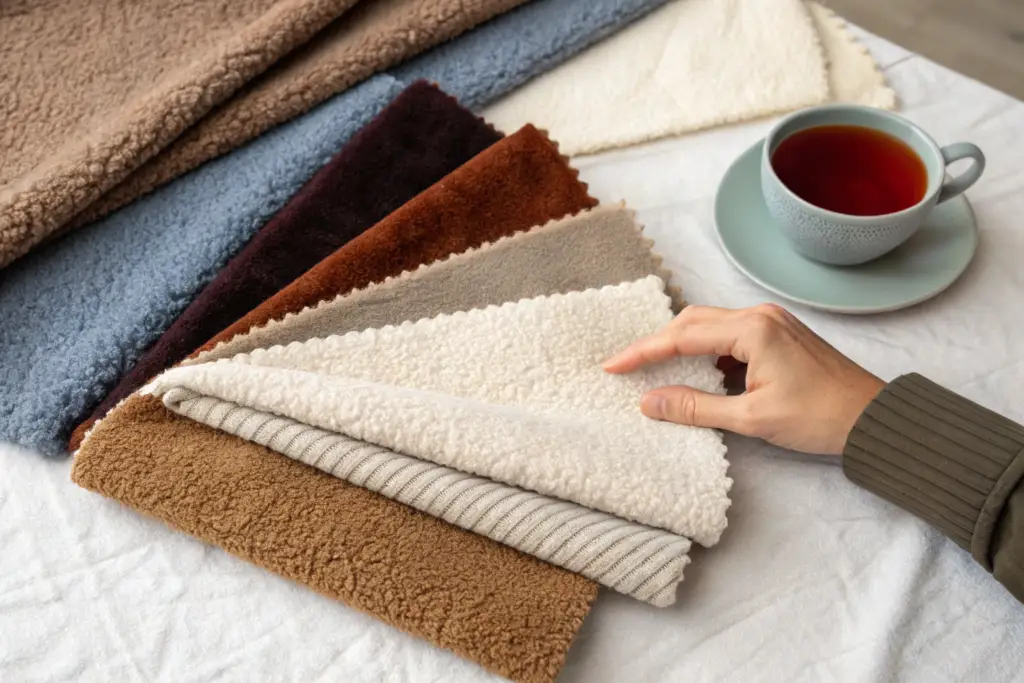
- French Terry (280-350 GSM): Has a smooth, flat face and a looped, absorbent back. It is lighter, more breathable, and drapes well. It is perfect for lightweight hoodies, joggers, and year-round loungewear.
- Fleece (300-450 GSM): Is made by brushing the looped back of French Terry (or a similar knit) to create a soft, fluffy, insulating pile. It is heavier, warmer, and cozier. It is the classic material for a heavy winter sweatshirt.
The choice depends on the desired level of warmth and the overall weight of the garment.
How Do You Choose a Wool Weight for Coats and Suiting?
Wool weight is a world unto itself. It is measured in grams per meter or ounces per yard.
- Lightweight Wool (200-300 GSM / 6-9 oz): Ideal for year-round suiting and tailored trousers. Drapes beautifully and breathes.
- Midweight Wool (300-400 GSM / 9-12 oz): The workhorse for standard fall/winter suiting and sports coats. Offers good warmth and structure.
- Heavyweight Wool (400-600+ GSM / 12-18+ oz): Used for outerwear and heavy overcoats. Provides maximum warmth and a substantial, structured silhouette.
The weight you choose depends entirely on the climate and the formality of the garment. This is a nuanced area where our product development expertise is invaluable.
How Do Fiber Blends Optimize Comfort and Performance Across Seasons?
While 100% natural fibers have their charm, the modern textile industry has mastered the art of the blend. By combining two or more fibers, we can engineer a fabric that takes the best properties of each and mitigates their weaknesses. This is especially powerful for creating trans-seasonal pieces or for solving specific performance challenges. Blends are not about "cheating"; they are about intelligent design.
Fiber blends are used to optimize comfort and performance. A Linen/Tencel blend offers the breathable texture of linen with the soft, fluid drape and reduced wrinkle of Tencel. A Cotton/Spandex blend (e.g., 98/2) provides the soft comfort of cotton with the shape retention and "memory" of spandex, perfect for fitted garments. A Wool/Polyester blend can offer the warmth and luxury of wool with added durability and wrinkle resistance for travel.
A brand specializing in travel apparel uses a Wool/Polyester blend for their core suiting. It has the look and feel of fine wool, but it resists wrinkles, recovers its shape, and is more durable for life on the road. This would not be possible with 100% wool. Another client uses a Cotton/Spandex blend for their fitted poplin shirts, which gives the crisp, classic look of cotton but with enough "give" to be comfortable for all-day wear. These strategic blends allow brands to offer products with enhanced functionality. This is the kind of material science we leverage in our fabric innovation .
What Is the Advantage of a Linen/Tencel Blend for Summer?
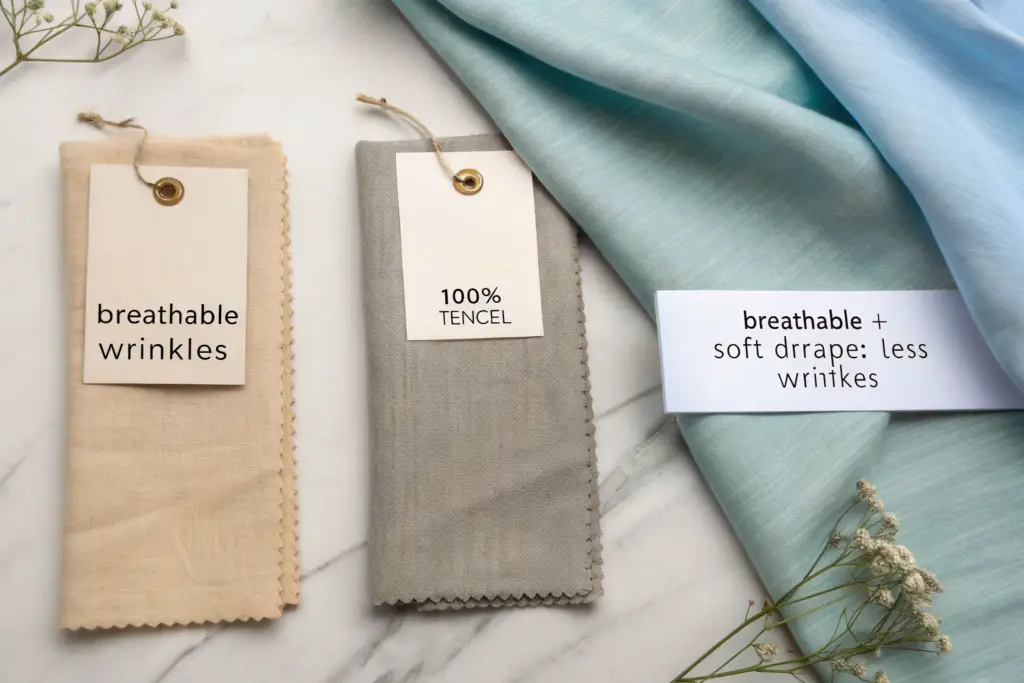
This is a match made in textile heaven. The blend takes the beautiful, breathable texture of linen and combines it with the soft, fluid drape and wrinkle resistance of Tencel. The result is a fabric that has all the summery, natural vibe of linen but is softer against the skin, drapes more elegantly, and does not look like a crumpled paper bag after an hour of wear. It is a premium, high-performance summer fabric.
Why Add a Small Percentage of Spandex to Woven Cottons?
Even a small amount of spandex (2-3%) in a woven cotton like poplin or twill adds "mechanical stretch" . This makes a fitted shirt, a pair of chinos, or a structured dress infinitely more comfortable to wear. It allows the garment to move with the body without losing its tailored shape. It is a small addition that has a massive impact on the wearer's comfort and the garment's longevity. This is a key consideration in design for comfort .
How Does Fumao's Expertise Guide You to the Perfect Seasonal Fabric?
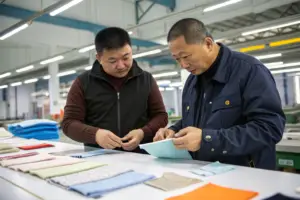
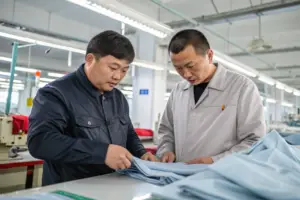
The world of fabric is vast and can be overwhelming. You should not have to become a textile engineer to make smart seasonal choices. That is where a knowledgeable manufacturing partner becomes essential. Our role is to curate the options, translate the technical specs into practical performance, and guide you to the perfect material for your specific design, season, and brand aesthetic.
Fumao's expertise guides you by first understanding the specific garment, its intended season, and your brand's aesthetic. We then curate a selection of appropriate fabrics from our library, presenting them with clear, comparative information on weight (GSM), handfeel, drape, and performance. We explain the "why" behind each choice, empowering you to make a confident, informed decision that ensures your garment will be loved and worn in its intended season.
A new brand founder came to us wanting to make a "lightweight fall jacket." She had no idea where to start with weight. We showed her three options from our library: a 220 GSM cotton twill (too light), a 350 GSM heavy fleece (too warm), and a 280 GSM brushed cotton flannel. We explained the use case for each. She felt the swatches and immediately knew the 280 GSM flannel was exactly what she envisioned—substantial but not overly heavy. She told us, "I would have never known the numbers. I just knew the feeling." That is our goal. To translate the technical into the tangible. This is the value of our curated fabric library and expert guidance.
What Is a "Fabric Story" Board and How Does It Help?
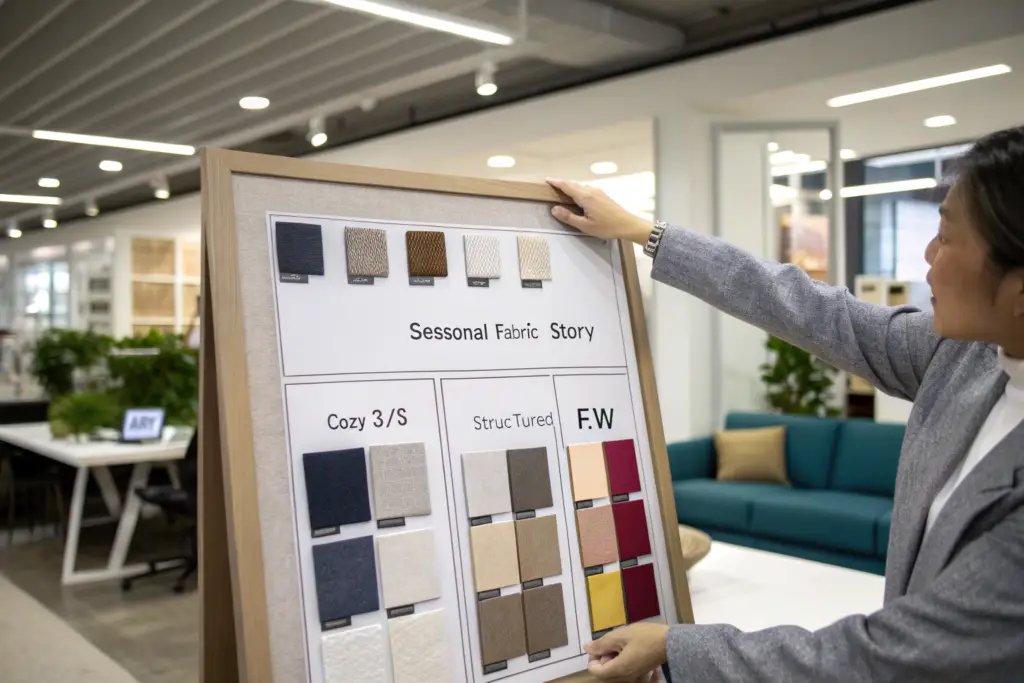
A Fabric Story Board is a physical or digital board we create for clients. For a specific design, it might show a few fabric options that work for that silhouette and season, paired with a color palette and trim suggestions. It is a curated, tactile, and visual tool that helps the designer see how all the elements will come together. It moves the conversation from abstract specs to a concrete, sensory experience. This is a key part of our collaborative development process.
How Do We Help You Avoid Costly Seasonal Fabric Mistakes?
We act as a safeguard. If a client wants to use a 320 GSM heavy fleece for a "summer hoodie," we will gently guide them. We will say, "That fabric will be incredibly warm. It's perfect for winter. For summer, you might consider this 240 GSM French terry, which is much lighter and more breathable." We present the options and the trade-offs, allowing the client to make the final decision, but ensuring they do so with full knowledge of the consequences. This proactive guidance prevents costly production mistakes and protects the brand's reputation. This is our commitment to being a true strategic partner .
Conclusion
Choosing the right fabric thickness for different seasons is a fundamental skill in building a successful apparel brand. It is about understanding the science of weight (GSM), the properties of different fibers, and, most importantly, the customer's comfort expectations. The airy lightness of a summer voile and the cozy warmth of a winter fleece are not just different materials; they are essential components of a well-designed, seasonally appropriate collection.
At Shanghai Fumao, we do not just supply fabric. We provide the expertise to help you navigate the vast world of textiles and make the perfect choice for every garment, in every season. Our curated library, our technical knowledge, and our collaborative approach ensure that your designs are not only beautiful but also perfectly suited for the time of year they are meant to be worn.
If you are planning your next seasonal collection and want expert guidance on fabric weights and choices, let's talk. Our Business Director, Elaine, can share our seasonal fabric lookbooks and help you select the perfect materials. Please email Elaine at: elaine@fumaoclothing.com.