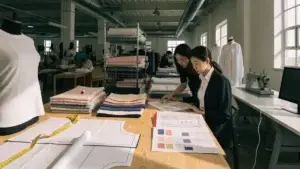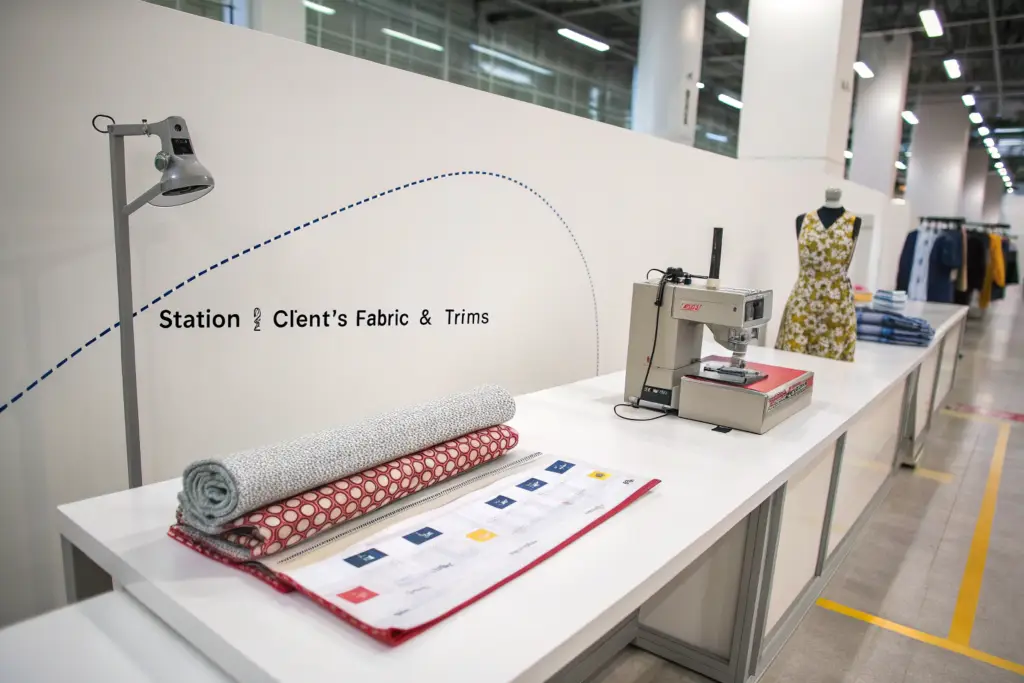
You have sourced the perfect fabric. You have collected all the necessary trims—the custom buttons, the labels, the zippers. You have a detailed Tech Pack. Now, you are ready to hand your precious materials over to a CMT (Cut, Make, Trim) factory. But what exactly happens next? What is the journey your raw materials take to become finished garments? A brand owner told me, "I used to ship my materials off and just hope for the best. I had no idea what the factory was actually doing with them. Understanding the CMT steps gave me back a sense of control."
The CMT manufacturing process is a disciplined, multi-step workflow that transforms client-supplied raw materials into finished garments. The key steps are: 1) Incoming Material Inspection & Inventory, 2) Pattern Making & Grading (if not provided), 3) Cutting & Bundling, 4) Sewing & Assembly ("Make"), and 5) Finishing, Quality Control, and Packing ("Trim"). Each step is a critical gate for quality and accuracy.
At Shanghai Fumao, we specialize in providing transparent, expertly managed CMT services for B2B partners. We believe our clients should understand exactly how their valuable materials are being handled. Let me walk you through our meticulous CMT process, step by step, so you can have complete confidence in where your garments are in the pipeline and how they are being made.
What Happens First: Incoming Material Inspection and Inventory?
The CMT process begins long before the sewing machine starts. It begins the moment your materials arrive at our loading dock. This first, critical phase is all about verification and protection. We are taking custody of your valuable assets. Our job is to ensure that what you sent is exactly what we received, in perfect condition, and that it is stored and tracked with absolute precision. This is the foundation of trust in a CMT partnership.
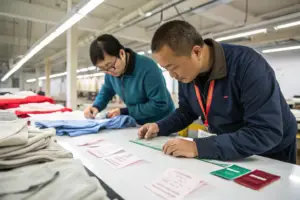
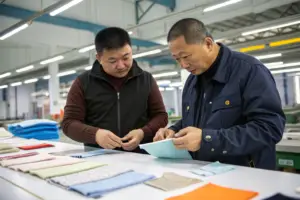
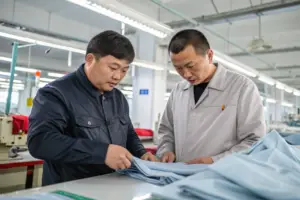
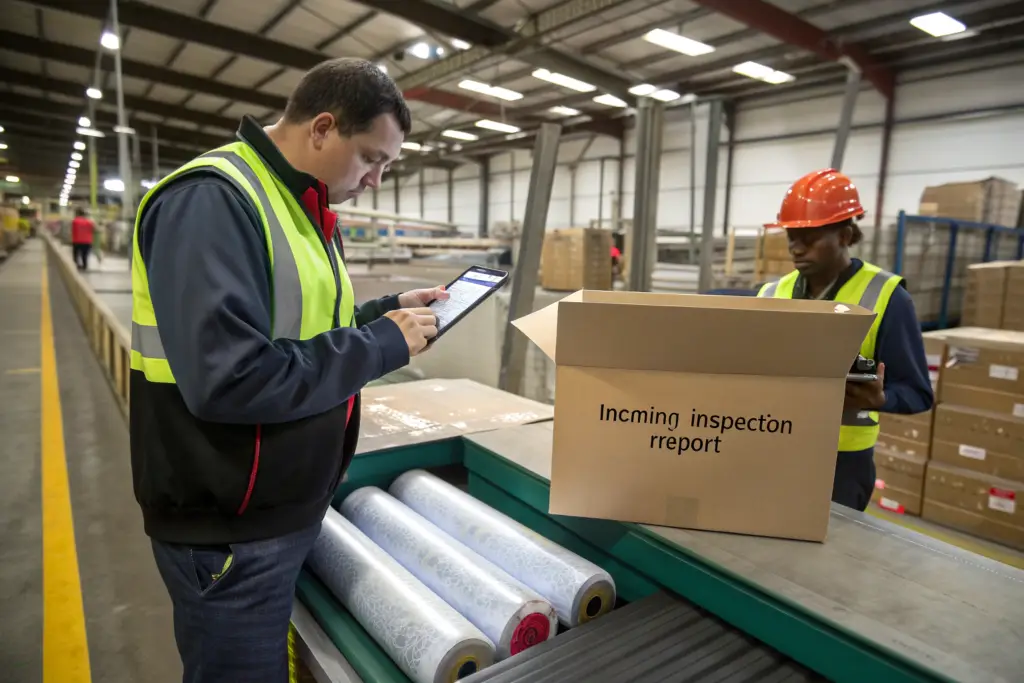
The first key step is rigorous Incoming Material Inspection and Inventory. Every roll of fabric is checked for quantity, visible defects, and shade consistency. Every box of trims is counted and verified against the packing list and the client's Bill of Materials (BOM). All materials are then logged into our inventory system with a unique barcode, ensuring they are tracked throughout the entire production process. This step protects the client from using flawed materials and provides a clear, auditable record of their assets.
I recall a women's wear client who shipped us a beautiful, expensive silk charmeuse for a CMT order. During our incoming inspection, our team discovered a subtle, but consistent, watermark-like stain across several yards on one of the rolls. It was invisible under warm light but clear as day under our daylight inspection lamps. We immediately stopped, photographed the issue, and sent a detailed report to the client. She was able to file a claim with her fabric supplier and secure a replacement before production started. Without this step, we would have cut into the flawed silk and produced dozens of defective, unsellable blouses. This is the invaluable protection of a thorough incoming inspection. This is a standard part of our CMT quality assurance .
What Specific Checks Are Performed on Client-Supplied Fabric?
Our inspection is methodical. We check for:
- Quantity: Do the yardage and roll counts match the packing list?
- Weaving/Knitting Defects: Holes, slubs, barre marks, and inconsistent tension.
- Dyeing/Printing Defects: Color streaks, uneven saturation, print misregistration.
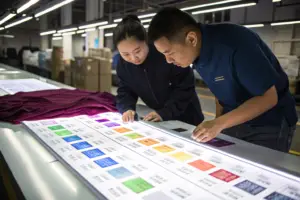
- Shade Continuity: We check the color against the approved lab dip and also check for shade variation within the roll (center to selvage) and between rolls.
We use a backlit inspection table and standardized D65 lighting to ensure no flaw goes undetected. This process is the cornerstone of our material handling protocols .
How Are Client Trims Counted, Checked, and Securely Stored?
Trims are just as important as the fabric. Our team opens every box of buttons, zippers, and labels. We count them and check a sample against the client's approved standard. Are the buttons the correct size and color? Does the zipper tape match the Pantone specification? Once verified, all trims are logged into our Trim Tracker system and stored in a secure, designated area of our warehouse, separate from other clients' materials. This ensures nothing is lost or mixed up. This is a key part of our inventory management for CMT .
How Does the Cutting Phase Work in a CMT Workflow?
Once the fabric has passed inspection, it moves to the cutting room. This is where the 2D material begins its transformation into 3D garment pieces. In a CMT arrangement, this phase is critical because the fabric belongs to the client, and we have a fiduciary responsibility to maximize its utilization and minimize waste. Precision here determines the fit and quality of the final product.
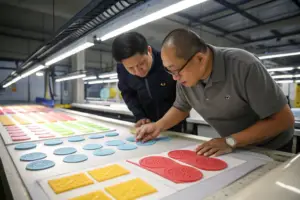
The cutting phase in CMT involves creating an optimized marker (pattern layout) to maximize fabric yield, precisely spreading the client's fabric in tension-free layers, and then cutting the panels using automated, laser-guided cutters. The cut pieces are then sorted, bundled by size and color, and labeled with a bundle ticket that contains all the critical information for the sewing line. This ensures that the correct pieces are sewn together and that every part of a single garment comes from the same fabric roll and dye lot.
A men's wear brand we work with in a CMT capacity is obsessive about the fit of his trousers. He uses a very specific, expensive wool suiting from an Italian mill. Our cutting team uses his graded patterns to create a marker using specialized software. The software calculates the absolute tightest arrangement of the pattern pieces to minimize waste. We use a tension-free spreading machine to lay the fabric, ensuring it is not stretched. This is crucial; stretched fabric will later relax, causing the finished garment to shrink and distort. The laser-guided cutter ensures every piece is cut with microscopic precision. The result is a perfectly fitting trouser and minimal waste of his precious wool. This level of care is what defines expert CMT cutting services .

What Is a "Bundle Ticket" and Why Is It So Important?
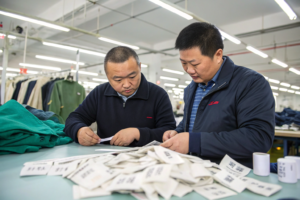
As the cut pieces are sorted, they are tied into bundles. Attached to each bundle is a Bundle Ticket. This small piece of paper is the passport for that batch of parts. It contains essential information:
- Style Number & PO Number
- Size & Color
- Fabric Roll Number: This ensures that all parts for a single garment (e.g., left sleeve, right sleeve, front body) come from the same roll and same dye lot, preventing shade variations within a single piece.
- Operation Sequence: It lists the steps the bundle must go through on the sewing line.
The bundle ticket is the central nervous system of the factory floor, ensuring the right parts come together at the right time. This is a key part of our production tracking .
How Do You Ensure Shade Consistency Across All Cut Panels?
We use a process called Shade Banding. Even within a single dye lot, color can vary slightly from roll to roll. Before cutting, we evaluate all the client's fabric rolls under a lightbox and group them into "light," "medium," and "dark" bands. The cutting plan then ensures that all panels for a single garment are cut from rolls within the same shade band. This prevents the "patchwork" effect where a sleeve is a slightly different shade than the body. This is a detail that defines a premium-quality garment .
What Happens During the "Make" and "Trim" Phases on the Factory Floor?
Once the fabric is cut and bundled, it moves to the heart of the factory: the sewing floor. This is where the "Make" and a portion of the "Trim" happen. It is a carefully orchestrated sequence of operations, where skilled operators transform the flat pieces of cloth into a three-dimensional garment. In a CMT model, the client's trims—their unique brand identifiers—are integrated at this stage.
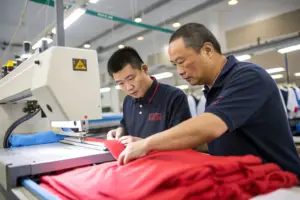
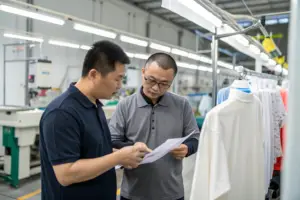
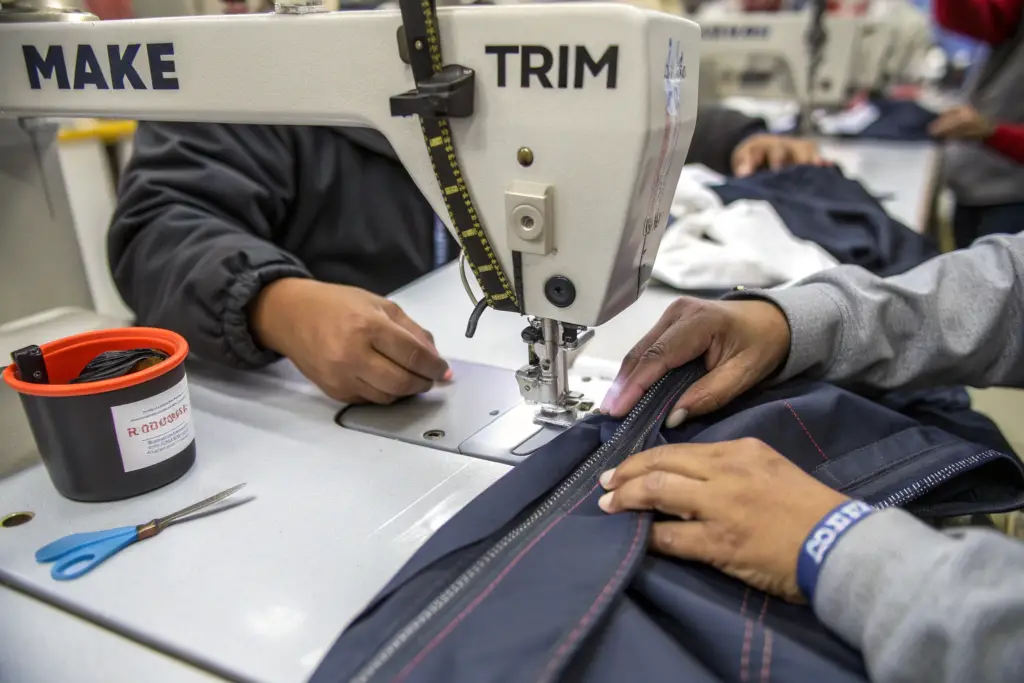
The "Make" phase is the assembly of the garment. Bundles of cut pieces travel through a sequence of specialized workstations on the sewing line. Operators, each skilled in a specific task, join the pieces together according to the client's Tech Pack specifications. The "Trim" phase involves the final application of all client-supplied components: sewing in labels, attaching buttons, and inserting zippers. Throughout this process, In-Line Quality Control inspectors audit the work to catch any defects in real-time.
A brand we work with uses a beautiful, custom-engraved corozo button on their CMT-produced shirts. This button is a key part of their brand identity. During the "Trim" phase, our operators carefully attach each button using a specialized machine and a specific cross-stitch thread, exactly as the client specified. Our in-line QC inspector checks the attachment on every few units to ensure the tension is correct and the buttons are secure. The client's unique trim is applied with the same care and precision as the rest of the garment. This is the attention to detail that defines our CMT assembly services .
How Is the Client's Unique Trim Handled on the Sewing Line?
We use a "Kit System" for trims. Before the cut bundles reach the sewing line, our warehouse team assembles a "Production Kit" for that specific batch. The kit contains the exact quantity of the client's unique buttons, labels, and zippers needed for that run. The kit travels with the bundles. This ensures the sewing line has the correct, client-specific trims at their fingertips and eliminates the risk of mix-ups. This is a critical part of our brand protection in CMT.
What Does an "In-Line QC" Inspector Look for During Sewing?
Our roving QC inspectors are a constant presence on the floor. They are checking for:
- Stitch Quality: Correct SPI, no skipped stitches, no puckering.
- Seam Alignment: Are seams meeting correctly? Are stripes or plaids matching?
- Correct Trim Application: Are the right buttons being used? Is the label placement correct?
- Measurement Spot-Checks: They randomly measure critical POMs on semi-finished garments to catch any sizing drift early.
This proactive inspection prevents small errors from becoming large-scale defects. This is the foundation of our quality control culture.
What Are the Final Steps: Finishing, QC, and Packing in CMT?
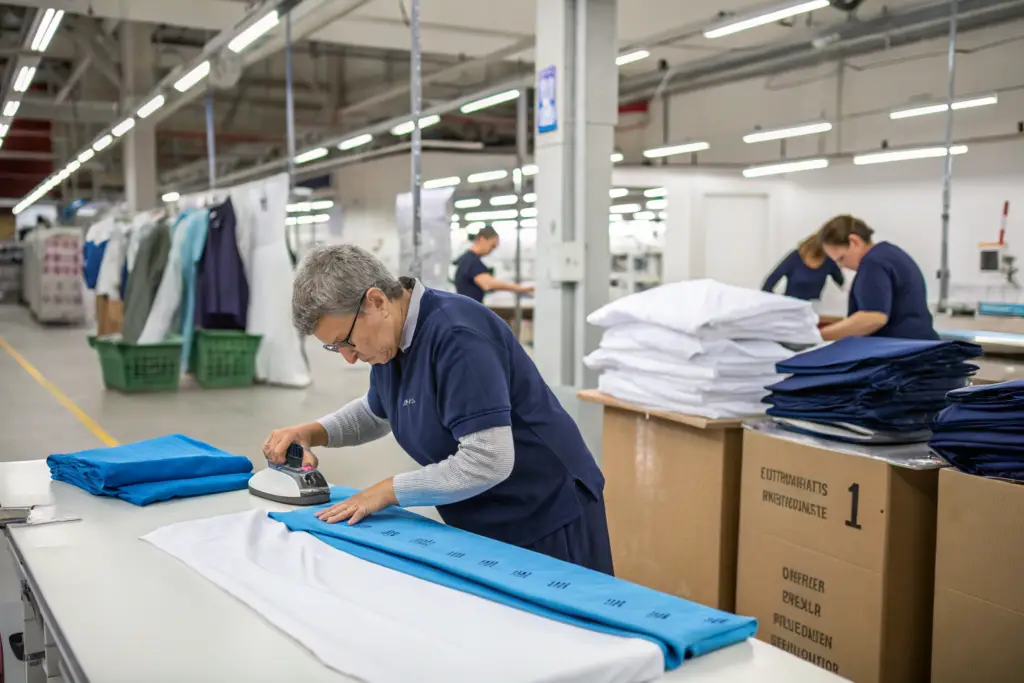
After the last stitch is sewn, the garments are not yet ready for the client. They must go through a final series of steps to ensure they are presented perfectly and meet the agreed-upon quality standards. This is the final polish before the goods are packed and prepared for their journey back to the brand owner. This is where the entire production run is validated.
The final steps in CMT are Finishing, Final Quality Control (AQL Inspection), and Packing. Finishing involves trimming all loose threads and pressing the garments to remove wrinkles. Final QC is a formal AQL statistical sampling inspection of the finished, packed goods to ensure the entire lot meets the agreed-upon quality level. Once passed, the goods are folded, polybagged, and packed into cartons according to the client's specifications. A final reconciliation report details all material usage and remnants.
After a CMT run for a women's wear client, our final AQL 2.5 inspection revealed a slightly higher than acceptable rate of loose threads on a batch of blouses. Instead of shipping, we halted the shipment. Our finishing team re-inspected the entire batch, meticulously clipping every loose thread. The re-inspection passed with flying colors. The client received a flawless shipment. This is the value of a rigorous final QC gate. It protects the client from receiving goods that would disappoint their customers. The final step is providing the client with a detailed CMT Closeout Package, including a Fabric Reconciliation Report and a Trim Reconciliation Report, showing exactly how their materials were used. This transparency is the hallmark of a professional CMT partner .
What Happens to Leftover Fabric and Trims After CMT Production?
This is a critical part of the CMT agreement. The leftover fabric and trims belong to the client. Our reconciliation report details exactly what remains. We offer the client three options:
- Return to Client: Packed and shipped with the bulk order.
- Hold for Future Order: Stored securely in our warehouse for a nominal fee.
- Responsible Disposal/Recycling: With the client's written permission.
We never assume ownership of client materials. This is a non-negotiable part of our CMT ethics .
What Is Included in the Final CMT Closeout Package?
This package provides a complete financial and operational audit trail. It includes:
- Fabric Reconciliation Report: Yardage received, consumed, and remaining.
- Trim Reconciliation Report: Quantities of each trim received, used, and remaining.
- Cutting Yield Analysis: Achieved marker efficiency.
- Final AQL Inspection Report: The statistical quality audit results.
This transparency allows the client to close their books on the project with complete confidence. This is the standard of our transparent CMT reporting .
Conclusion
The CMT manufacturing process is a disciplined, transparent journey that transforms a brand's own carefully sourced raw materials into finished, saleable garments. From the crucial first step of incoming inspection to the final polish of finishing and packing, each phase is a critical gate for quality, accuracy, and accountability. It is a partnership built on trust and precise execution.
At Shanghai Fumao, we have mastered this workflow. We provide the skilled labor, the rigorous systems, and the transparent communication that gives our B2B partners complete confidence in our CMT services. We treat your materials as if they were our own, and we provide the detailed reporting to prove it.
If you are looking for a CMT partner who will handle your valuable materials with expertise and transparency, let's talk. Our Business Director, Elaine, can walk you through our process in detail and answer any questions you have. Please email Elaine at: elaine@fumaoclothing.com.