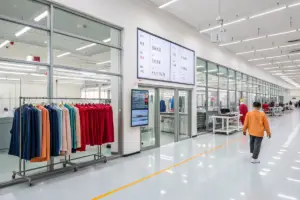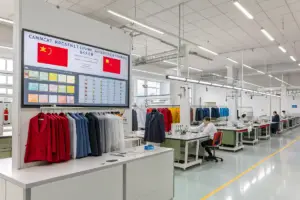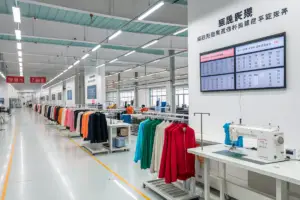
I received an email two years ago that made my stomach drop. A client forwarded me a link to a small activist blog. The headline read: "Is Your Favorite Boutique Brand Made in a Sweatshop?" The blog had photos of a factory in another province—not our factory—but the article vaguely referenced "suppliers in Shanghai." My client’s brand was not named, but the fear was real. She had built her entire business on a foundation of female empowerment and ethical fashion. If that association stuck, her business was over. She asked me a simple question: "Prove to me that this isn’t happening where my clothes are made." I spent the next 72 hours compiling documentation. I realized that in the modern world, trust is not given. It is audited.
Ensuring your manufacturer follows ethical standards requires a three-part strategy: verifying third-party certifications, conducting independent or semi-announced audits, and establishing direct, transparent communication channels with factory management. You cannot rely on a single PDF certificate.
The days of a framed ISO certificate on the wall being enough are over. Modern buyers and their customers demand proof of life. They want to know that the person who sewed the sleeve hem was paid a living wage, worked in a safe building, and was not a child. At Shanghai Fumao, we have built our operations around meeting this demand for verification. Let me walk you through the practical steps you can take, even from thousands of miles away, to ensure your supply chain aligns with your brand’s values.
What Are The Most Credible Ethical Manufacturing Certifications?
Walking into the world of ethical certifications can feel like reading a bowl of alphabet soup. WRAP, BSCI, SA8000, Fair Trade, Sedex. They all sound important, but they mean very different things. Some cover labor rights. Some cover environmental impact. Some cover both.
The most credible certifications for a U.S. apparel brand to look for are WRAP (Worldwide Responsible Accredited Production) and BSCI (Business Social Compliance Initiative). These are widely recognized by American retailers and focus specifically on the factory floor conditions.
A certification is only as good as the auditor who issued it. You need to know what each one actually verifies. Let’s break down the two heavy hitters in the industry.
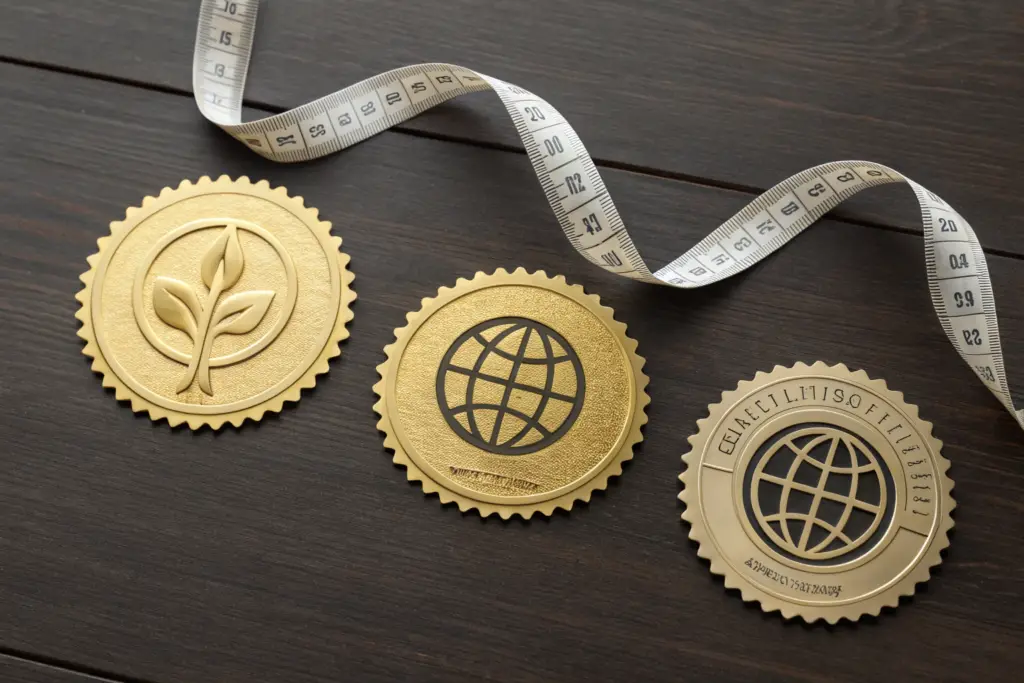
Why Is WRAP Certification The Gold Standard For US Importers?
WRAP is the certification most requested by mid-to-large U.S. brands and department stores. It is based on 12 principles that align closely with U.S. labor law expectations.
These principles cover:
- Child Labor: Zero tolerance.
- Forced Labor: Zero tolerance (including prison labor and human trafficking).
- Harassment or Abuse: Zero tolerance for physical or verbal abuse.
- Compensation: Overtime must be voluntary and paid at a premium rate.
- Hours of Work: Cannot exceed local legal limits (usually 60 hours/week max).
- Health and Safety: Fire exits unblocked, proper lighting, clean restrooms.
I had a client who was onboarding with a major online retailer. The retailer’s compliance team would only accept a WRAP Gold Certificate. That is the highest level, meaning the factory has been audited and found fully compliant for three consecutive years.
We maintain our WRAP certification actively. It is not a piece of paper we hang up and forget. The audit process involves the auditor walking the floor, interviewing workers privately (without managers present), and reviewing payroll records for the last 12 months. If a factory is cutting corners on overtime pay, WRAP will find it. You can verify any factory’s WRAP status on the official WRAP Compliance database. This is the first thing I tell a skeptical buyer to check.
How Does BSCI Differ From SA8000 In Scope And Focus?
This is a common point of confusion. Both are good. They just have different origins and focuses.
- BSCI (Business Social Compliance Initiative): This is a European-led initiative. It is a System Audit. It checks if the factory has the management systems in place to ensure ethics (e.g., Do they have a grievance mechanism? Do they have a written HR policy?). It is very popular with European brands, but increasingly required by U.S. brands sourcing from multiple Asian countries.
- SA8000: This is an Outcome Audit. It is more rigorous and expensive. It is based on International Labour Organization (ILO) standards and requires the factory to actually demonstrate performance improvement year over year. It is less common but considered more stringent.
At Shanghai Fumao, we maintain BSCI certification because it covers the broadest range of our client requirements. The BSCI audit uses a 13-point performance area checklist. A key part of BSCI that I appreciate is the requirement for Supply Chain Mapping. We must disclose who our subcontractors are. This prevents the hidden homework scenario. You can read more about the specific BSCI Code of Conduct on the Amfori BSCI website.
How Can Remote Buyers Verify Factory Working Conditions?
You cannot fly to Asia every month. Even if you could, a scheduled visit is often a staged performance. The factory knows you are coming. They sweep the floor. They hide the overtime records. They tell the workers to smile.
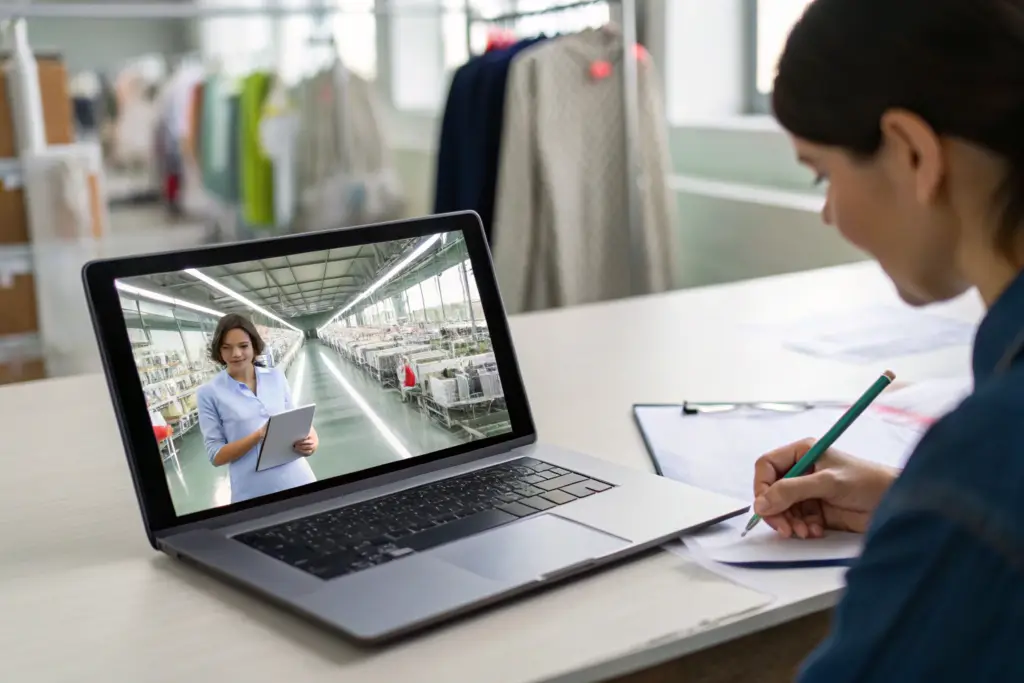
Remote verification relies on real-time video audits and third-party unannounced inspections. Technology allows a buyer to see the “Tuesday afternoon reality” rather than the “Thursday morning showroom tour.”
This is how we help our clients bridge the gap between their office in the U.S. and our floor in Shanghai.
What Specific Questions Should You Ask During A Live Video Audit?
A live video walkthrough is the single most powerful tool you have. But you cannot just say, “Show me around.” You need to direct the camera operator to specific areas that reveal the truth.
Here is the script I recommend to any buyer doing a video call with a new factory:
- “Take me to the Fire Exit door right now. Do not go there ahead of me. Walk there from where you are standing.”
- What to look for: Is the path blocked by boxes of fabric? If yes, that is a major red flag. This is the most common safety violation in apparel factories.
- “Show me the inside of the restroom.”
- What to look for: Is there soap? Is there toilet paper? Are the walls clean? A factory that does not provide basic dignity in the restroom does not respect its workers.
- “Show me the bulletin board where you post the overtime hours.”
- What to look for: Is it blank? Is it in a language the workers can read? Is it updated this week?
- “Can I speak to one of the QC inspectors? Ask them how long they have worked here.”
- What to listen for: If the answer is vague or the manager answers for them, you are not getting the full picture.
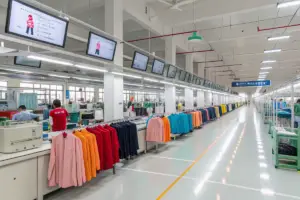
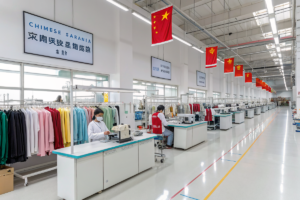
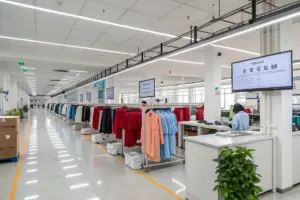
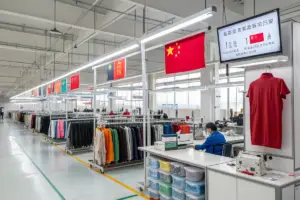
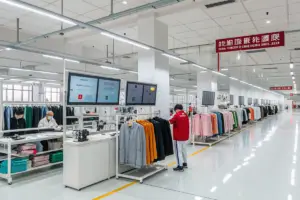
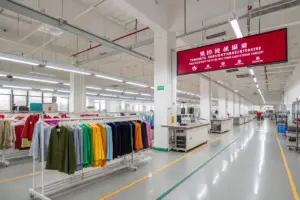
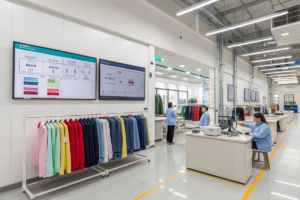
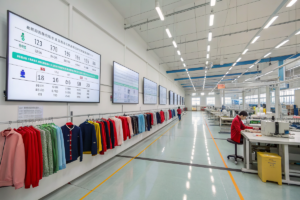
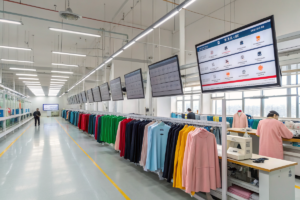
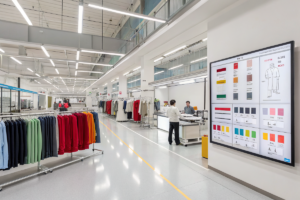
I do these walkthroughs for clients monthly. It takes 15 minutes. It proves that the factory is not hiding anything. At Shanghai Fumao, we have a policy: you can call for a “Spot Check Video” with 30 minutes’ notice. If we are not willing to show you the floor at a moment’s notice, we are not a transparent partner. This level of access is what modern ethical sourcing requires.
Why Are Third-Party Audit Reports Sometimes Misleading?
This is a controversial topic, but it is true. A factory can pass a third-party audit and still be a terrible place to work. How? Because some factory owners treat the audit like a college exam. They cram for it.
I have seen factories where the management hires a consultant specifically to “Pre-Audit” the factory and fix only the items on the checklist for the day of the inspection. They hide the real overtime logs and show a fake set. They give the workers a script to read if the auditor interviews them.
This is called “Audit Fraud.”
How do you protect against this?
- Check the Audit Scope: Was it a Fully Announced audit (weeks of notice) or a Semi-Announced (window of time)? Semi-Announced is better.
- Look for “Shadow Learning”: Ask the factory: “What corrective actions did you take after the last audit? Show me the evidence.” If they cannot show you photos of a new fire alarm they installed, the audit was just a piece of paper.
- Cross-reference with Worker Voice Tech: There are new platforms like Ulula or LaborVoices that allow workers to anonymously report issues via their mobile phones. This data bypasses management completely.
I encourage my clients to look beyond the “Pass” stamp. Read the findings section of the report. If it says “No issues found,” that is suspicious. Every factory has some minor issues. A clean report with zero findings is often a sign of a whitewashed audit. You can learn more about audit integrity from the Clean Clothes Campaign.
What Are The Red Flags Of Unethical Subcontracting Practices?
This is the dirtiest secret in garment manufacturing. You do a great job vetting Factory A. They have the beautiful showroom and the WRAP certificate. You place a $100,000 order. But Factory A is busy. So they quietly send your cut parts to Factory B—a small, unregulated workshop down the street with no fire exits and no overtime pay.
Unauthorized subcontracting is the primary way that ethical violations hide in the supply chain. It allows a compliant factory to take on more volume than they can ethically handle.
You need to know the signs that your goods are not being made where you think they are.

How Can You Detect If Your Order Was “Homemoved”?
“Homeworking” or “Homemoving” is when a factory sends sewing work to individual homes. A worker picks up a bag of cut pieces, sews them on a domestic machine in their living room, and brings them back. This is illegal in most export manufacturing zones because of the difficulty in controlling quality and verifying child labor.
Here is how I teach buyers to spot it:
- The Production Timeline Mismatch: You visit the factory floor and see 20 sewing lines. But based on the output quantity they claim to ship, they would need 40 lines to produce that volume in that time. The math does not add up. The missing 20 lines are somewhere else.
- Inconsistent Stitching Quality: A factory floor has industrial machines that are calibrated. Home machines are not. If you see a mix of perfectly straight seams and slightly wavy, uneven seams in the same shipment, it is a sign of multiple, unapproved production points.
- The Trim Leak: As I mentioned in the IP article, if you control your trims and ship exactly 1,000 zippers, it is hard to subcontract. But if you use generic zippers, the factory can easily send those to a home worker.
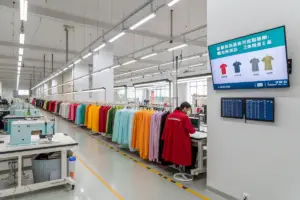
At Shanghai Fumao, we operate with a “Four Walls” Policy for ethical production. All cutting and sewing happens under our roof. We do not subcontract cut-and-sew operations. If we take an order, we have the capacity to make it ourselves. If we are full, we tell the client the lead time is longer. We do not farm it out to meet an unrealistic date. This is a commitment that limits our growth slightly, but it protects our clients’ brands. You can read more about supply chain mapping from the U.S. Department of Labor Bureau of International Labor Affairs.
Why Does A Factory’s Overtime Policy Matter For Brand Ethics?
Many buyers only care about the finished garment price. They do not care how the factory hits that price. But if the factory hits that price by forcing workers to work 100-hour weeks for straight pay (no overtime premium), that is a form of wage theft.
I had a client who kept pressing for a 10% price reduction on a style. We held firm. He went to another factory who gave him the lower price. Six months later, that factory was in the news for labor protests over unpaid overtime. His goods were held up for weeks. The cheap price cost him his season.
An ethical overtime policy means:
- Voluntary Overtime: Workers are not punished for refusing overtime.
- Premium Pay: Overtime is paid at 1.5x or 2x the regular hourly rate.
- Reasonable Limits: Total hours do not exceed 60 per week.
I share our Working Hours Policy with any client who asks. It is a dry, boring document. But it proves that our cost structure includes legal labor costs. A factory that quotes a price 20% lower than the market average is almost certainly cutting corners on labor. There is no magic efficiency that makes up that gap.
How To Build A Long-Term Partnership Focused On Worker Wellbeing?
Ethics is not just about avoiding bad press. It is about building a stable, motivated workforce that makes better quality garments. High turnover is the enemy of consistent sizing and stitching. Happy workers stay longer and sew better.
A long-term partnership focused on wellbeing involves investing in the factory’s social infrastructure—things like training programs, grievance mechanisms, and health initiatives.
This is the advanced level of ethical sourcing. It moves beyond “Do No Harm” to “Do Some Good.”
Why Does Low Worker Turnover Lead To Higher Garment Quality?
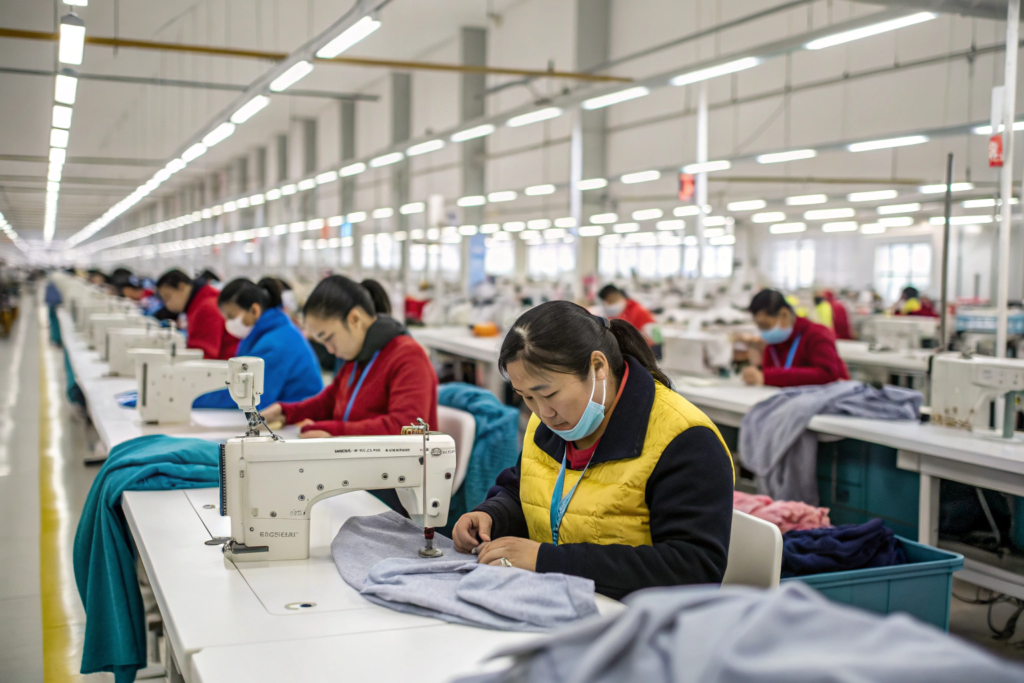
This is a direct, measurable link. When a new sewer starts, they have a learning curve. They make mistakes. They sew crooked seams. They break needles. It takes about 3-6 months for a sewer to become truly proficient on a specific operation.
If a factory has 100% annual turnover, they are in a constant state of training. The quality will be inconsistent. The defect rate will be high.
At our facility, we have a core team where many sewers have been with us for over 5 years. How do we keep them?
- On-Time Pay: Sounds simple, but many factories delay wages.
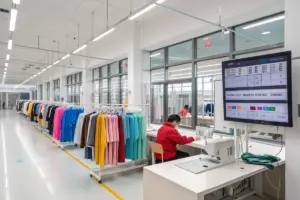
- Air Conditioning: Shanghai summers are brutal. We invested in cooling for the sewing floor. It costs more in electricity, but productivity does not drop in August.
- Respect: Managers do not yell.
When you visit our factory, I can point to a sewer and say, “She has made over 100,000 of your brand’s shirts. She knows the seam allowance in her sleep.” That is the kind of expertise you cannot buy with a low price. It comes from treating people like assets, not costs. You can find studies linking employee wellbeing to productivity on the SHRM website.
How Can Brands Support Factory Social Programs?
You do not have to be a charity. But small gestures build incredible loyalty on both sides.
One of our women’s wear clients noticed that many of our female sewers had young children. The client offered to fund a small On-Site Playroom with a part-time caregiver. It cost them $3,000 to set up and $500 a month to run. They put a small plaque in the room: “This playroom is provided by [Brand Name] for the children of the talented women who make your clothes.”
The impact was huge. The sewers felt seen and valued. The client uses the story in their marketing. The Return on Investment (ROI) for that $3,000 in terms of brand story and worker retention is immeasurable.
This is the future of ethical manufacturing. It is not just a compliance checklist. It is a human partnership. At Shanghai Fumao, we are open to these kinds of collaborative initiatives. They make our factory a better place to work, which makes it a better place to produce your brand.
Conclusion
Ensuring your apparel manufacturer follows ethical standards is an active, ongoing process. It is a verb, not a noun. It starts with choosing a partner who has the credible certifications—like WRAP and BSCI—and verifying those certifications yourself on the issuing body’s website. It continues with using technology to your advantage, conducting live video audits that go beyond the showroom to check the fire exits and the restrooms. You must stay vigilant for the red flags of subcontracting, that hidden practice that undermines all your good intentions.
But the ultimate goal is to move beyond policing and toward partnership. When you work with a factory that values its workforce, you get more than just a compliant box checked. You get a stable, skilled team that produces higher quality, more consistent garments. You get a story of positive impact that resonates deeply with today’s conscious consumer.
If you are ready to build a supply chain that you can be proud to show off, not hide, let’s have a transparent conversation. At Shanghai Fumao, our doors are open, our certificates are current, and our team is ready to walk you through the floor. Reach out to our Business Director, Elaine, at elaine@fumaoclothing.com. She can schedule a live video audit so you can see for yourself how your next collection will be made.