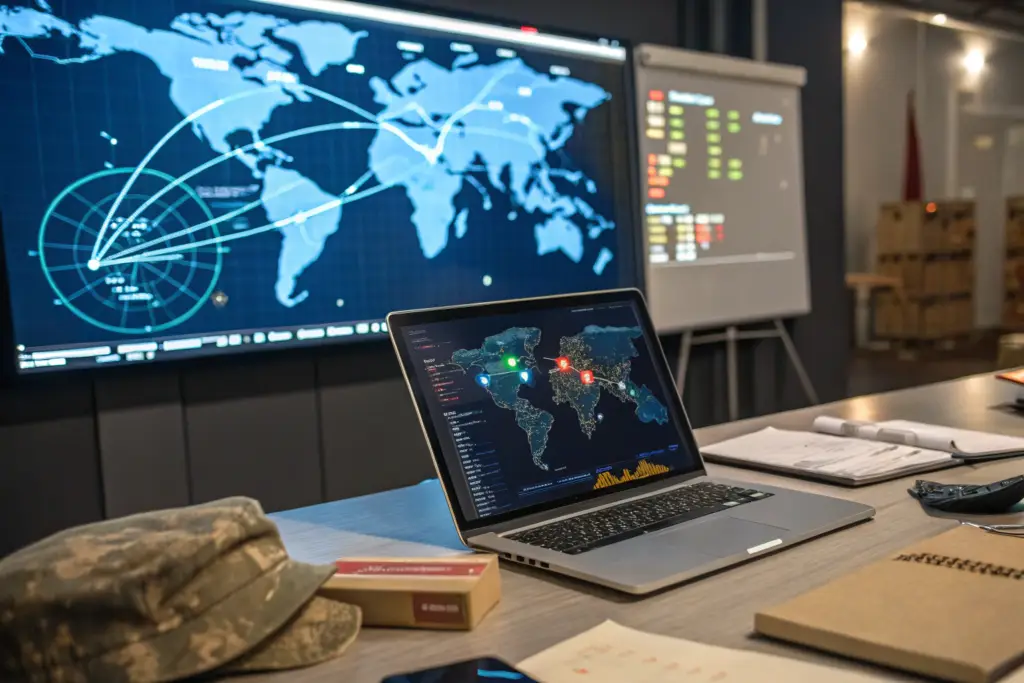
Three years ago, I had a client who nearly walked away from a million-dollar business. He was sourcing fabric from India, zippers from Japan, and cut-and-sew from China. He was coordinating it all from a home office in New Jersey using a messy Google Sheet and a WhatsApp group with 47 participants. One day, the zippers landed in Shanghai, but the fabric was stuck in customs in Mumbai. The factory in China sat idle for 17 days. He paid idle labor fees. He paid air freight to catch up. He lost two retail accounts because the goods arrived late. He was a great salesman, but he was a terrible supply chain manager. He had built a complex machine with no one at the controls.
Efficient management of a multi-country apparel supply chain hinges on centralizing communication, building time buffers into the critical path, and strategically positioning raw material ownership. It is less about finding the absolute cheapest factory and more about creating a system that is resilient to the daily chaos of international trade.
The appeal of a global supply chain is obvious. Indian cottons, Japanese denim, Chinese sewing efficiency. The cost of managing that complexity is less obvious, but it is real. At Shanghai Fumao, we act as that central control tower for many U.S. distributors. We consolidate the chaos so they see one timeline, one invoice, and one point of contact. Let me share the framework we use to keep the gears turning without grinding to a halt.
What Are The Biggest Bottlenecks In Cross-Border Apparel Logistics?
Before you can fix a supply chain, you have to know where it breaks. And it almost always breaks in the same three places. It breaks in customs clearance, in the handoff between mills and factories, and in the final mile of ground transport.
The biggest bottlenecks are not the 14-day ocean voyage. They are the 4-day wait for customs release and the 3-day wait for a trucking appointment at the port.
These delays are invisible to the end consumer, but they are the difference between a 45-day lead time and a 75-day lead time. Understanding where these pinch points live allows you to plan around them.
Why Is Customs Clearance The Primary Source Of Unpredictable Delays?
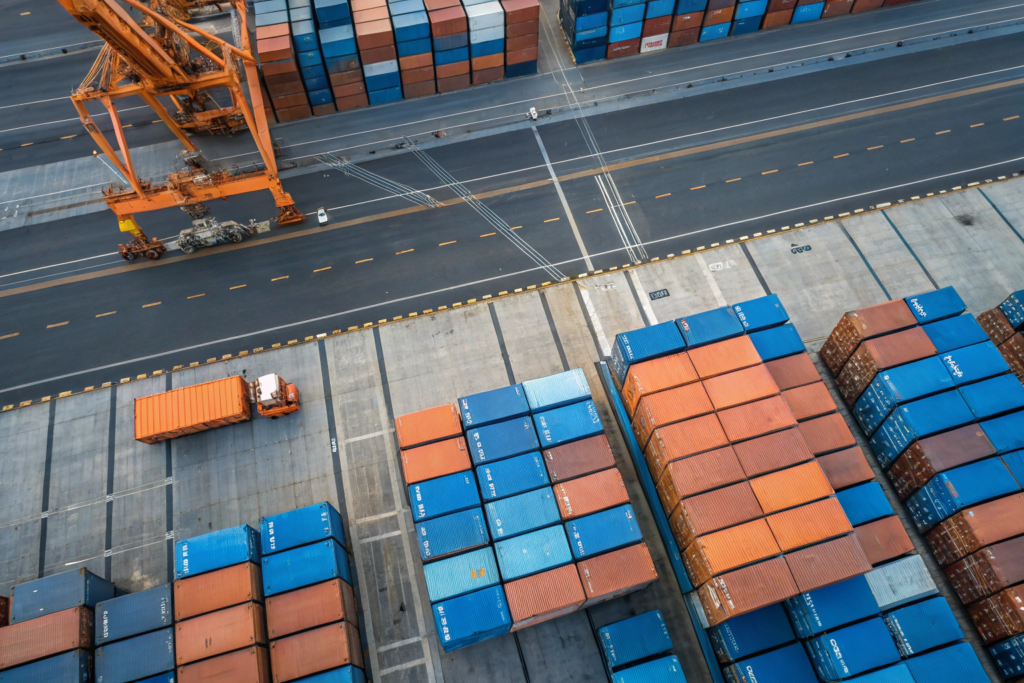
I will give you a concrete example from a shipment we handled last November. Two containers left Shanghai on the same vessel. They arrived at the Port of Los Angeles on the same day.
Container A: Cleared customs in 2 days.
Container B: Held for Intensive Exam by CBP. Cleared in 19 days.
Same factory. Same product category. Different outcome. Why? Container B was flagged for a random tailgate exam. CBP physically opened the box and inspected the contents. This happens to about 3-5% of apparel shipments.
You cannot prevent a random exam. But you can prevent the other causes of customs holds:
- Incomplete Documentation: The commercial invoice didn't match the packing list exactly.
- Vague Descriptions: "Woven Garment" is a red flag. "Women's 100% Cotton Woven Blouse" is better.
- Missing Country of Origin: This is the number one reason for hold for new importers.
We use a software called Integration Point (now part of Descartes) to file our entries. It cross-references the Harmonized Tariff Schedule (HTS) codes and flags inconsistencies before the ship even sails. For brands managing this themselves, I advise investing in a good customs broker who specializes in textiles. Do not use the cheapest broker you find on Google. Use one who knows Chapter 61 and 62 of the HTS like the back of their hand. You can check the official HTS search tool to see how specific you need to be.
How Does Raw Material Transit Time Impact Total Lead Time?
This is the hidden calendar eater. Let's say you are making a garment in China, but the fabric is from a mill in India.
The factory in China cannot just start cutting when they feel like it. They need the fabric in their warehouse. Here is a realistic timeline for that fabric journey:
- Week 1: Fabric finishing in India.
- Week 2: Inland trucking to Nhava Sheva Port.
- Week 3: Ocean freight to Singapore (Transshipment hub).
- Week 4: Feeder vessel from Singapore to Shanghai.
- Week 5: Customs clearance in China and trucking to factory.
That is 35 days of transit time before the cut-and-sew process even begins. If you are not tracking that, you will promise a delivery date based on a 4-week sewing time, completely forgetting the 5-week fabric voyage.
At Shanghai Fumao, we manage this by pulling the trigger on fabric orders much earlier than the cut ticket. We use a Critical Path Management (CPM) chart that starts with the "In-Hands Date" (when you want the goods in your U.S. warehouse) and works backward. The fabric transit time is a fixed, non-negotiable block on that calendar. You can learn more about supply chain visibility tools that track this in real-time.
Why Is Centralized Communication Vital For Multi-Country Sourcing?
I mentioned the WhatsApp group with 47 people. That is a disaster waiting to happen. Someone sends a PDF of the new pocket placement. It gets buried under 50 "Good morning" GIFs. The factory uses the old version. 2,000 units get made with the wrong pocket.
Centralized communication eliminates version control errors and ensures that the factory in Vietnam, the trim supplier in Korea, and the brand manager in New York are all looking at the same information at the same time.
In our operation, we enforce a strict "No WhatsApp for Technical Specs" rule. Here is why.

How Can A Single Point Of Contact Prevent Costly Specification Errors?
In many supply chains, a brand owner might talk to a fabric agent, a trim supplier, and a factory production manager. The brand becomes the translator. This is where mistakes happen.
I had a client who was very hands-on. He loved talking directly to the factory floor manager. That is great for morale, but bad for accuracy. He told the manager on a call, "Hey, let's shorten the cuff by just a hair, maybe an eighth of an inch."
The manager wrote down "Shorten cuff 1.5 inches." He heard "eighth" but thought "one and a half." The sample came back with a bracelet-length sleeve. It was a complete waste of a sample round.
This is why we assign a dedicated Merchandising Manager to each account. This person is the only channel for technical changes. All communication goes through them. They translate the brand's intent into a Tech Pack Revision Form. The form is dated, numbered (Rev 1.2), and requires a signature confirmation from the brand before it goes to the cutting room.
This adds a small layer of bureaucracy, but it eliminates the "he said, she said" that leads to rework. For more on effective communication protocols, the Project Management Institute has excellent resources.
What Project Management Tools Work Best For Apparel Timelines?
We do not use Google Sheets for production tracking. It is too easy to accidentally overwrite a cell or forget to save. We use specialized apparel ERP (Enterprise Resource Planning) software. There are many options out there, from ApparelMagic for smaller brands to BlueCherry for large enterprises.
The key feature you need is Time and Action (T&A) Calendar. This is a shared, cloud-based calendar that shows:
- Target Date: When a task should be done.
- Actual Date: When a task was done.
- Variance: The number of days behind or ahead.
I give my clients read-only access to this T&A calendar. You can log in at 2:00 AM from your home in Texas and see: "Ah, fabric inspection was completed yesterday. It is on schedule." That transparency reduces the number of "Just checking in" emails by 90%. It keeps the focus on problem-solving, not status updates. You can explore a comparison of apparel management software to see what fits your business size.
How To Mitigate Currency Fluctuation Risks In Global Sourcing?
When you source from multiple countries, you are not just managing factories. You are managing currencies. The U.S. Dollar against the Chinese Renminbi (RMB) has been relatively stable. But the Dollar against the Vietnamese Dong or the Indian Rupee can move.
Currency risk mitigation involves locking in exchange rates for the duration of the production cycle. Failing to do so can result in a profitable order becoming a loss-maker by the time the final payment is due.
This is a part of the business that fashion designers hate to talk about, but it pays for their next collection.

Why Is Payment In USD Not Always A Currency Hedge For Factories?
Many U.S. buyers think: "I pay in USD. I have no currency risk. That is the factory's problem." That is a short-sighted view. If the local currency strengthens significantly against the USD after the price is quoted, the factory is getting paid less in local terms than they budgeted.
What happens next? The factory might delay your shipment to prioritize a higher-margin European client who pays in Euros. Or, they might cut corners on quality to recover the lost margin. You do not see the currency fluctuation on your invoice, but you feel it in the late delivery or the loose threads.
I remember in late 2022, when the RMB was fluctuating, some factories tried to renegotiate prices mid-production. We avoid this by working with our banking partners to use Forward Contracts. When we quote a price that is valid for 90 days, we are not guessing. We have already locked in the exchange rate for the cost of the raw materials we need to buy locally. This allows us to honor the quoted price even if the market moves against us. This is a level of financial sophistication that separates a stable vendor from a trading company. You can read more about foreign exchange risk management from the U.S. Department of Commerce.
How Do Tariff Changes Impact Landed Cost Calculations?
This is the big one for American buyers right now. The U.S. tariff landscape is dynamic. What was duty-free last year might carry a 7.5% or 25% tariff this year.
You cannot just guess at the tariff rate. You must know the exact HTS Code for your garment. Is it a men's knit shirt (6105.10.0010) or a women's woven blouse (6206.30.3041)? The difference in duty rate can be significant.
At Shanghai Fumao, when we provide a DDP (Delivered Duty Paid) quote, we are absorbing that tariff risk. We monitor the Federal Register for Section 301 updates. We build a small contingency into our pricing to cover fluctuations.
If a buyer is working on FOB terms and managing their own customs, I advise them to always calculate the Landed Cost with a Worst-Case Tariff Scenario. If you think the duty is 8%, run a second calculation at 25%. Can your retail price still support the margin? If the answer is no, you are overexposed. You need to either re-engineer the garment to use a different fiber (changing the HTS) or source from a different country of origin. The Office of the U.S. Trade Representative is the definitive source for current tariff actions.
What Are The Best Practices For Quality Control Across Borders?
When your supply chain spans multiple countries, you cannot be everywhere at once. You cannot fly to India to check the fabric and then fly to Vietnam to check the sewing. You need a system of proxies and protocols that ensures the quality standard is maintained at every handoff point.
Best practices for cross-border quality control rely on a combination of accredited third-party inspections at raw material origin and in-line production audits at the assembly point.
This creates a "chain of custody" for quality, just like there is a chain of custody for the goods themselves.
How Does In-Line Inspection Differ From Final Random Inspection?
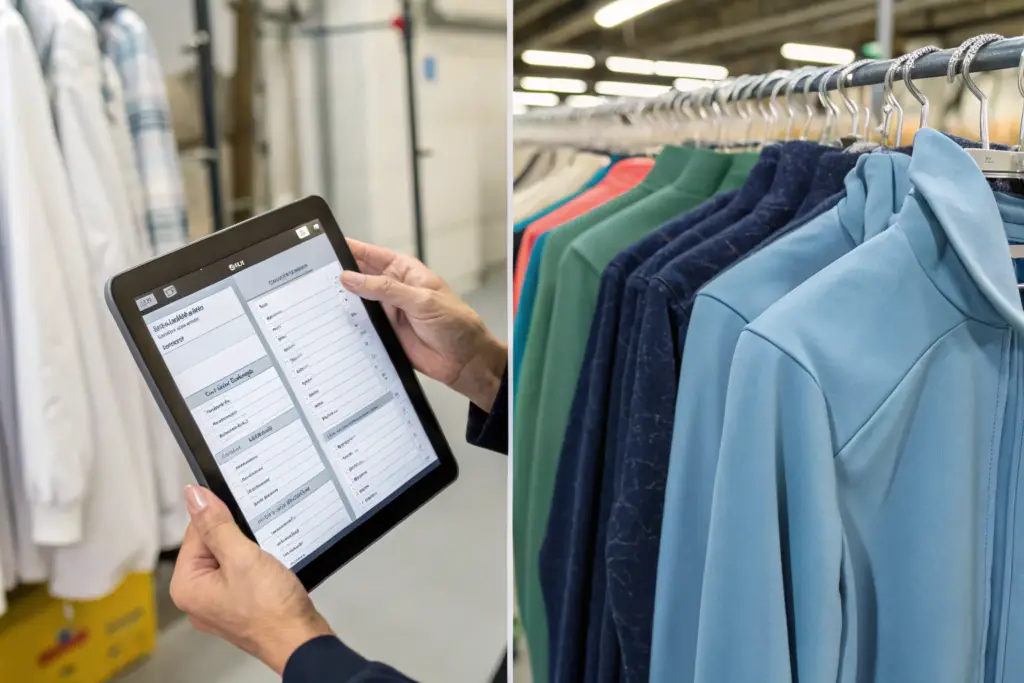
Many brands only do a Final Random Inspection (FRI) . This is when the goods are 100% packed and ready to ship. An inspector opens a few boxes, checks a few pieces, and gives a Pass/Fail.
Here is the problem with FRI: If the inspector finds that the collar is crooked on 20% of the sample, you have a big problem. The entire order of 5,000 units is already packed. To fix it, you have to unpack everything, un-pick the stitches, and re-sew. This adds weeks of delay.
In-Line Inspection happens when only 20-30% of the order is sewn. The inspector goes to the sewing line while the machines are running. They catch the crooked collar issue when only 500 pieces are made. The factory stops the line, adjusts the guide on the sewing machine, and fixes the issue for the remaining 4,500 pieces.
At Shanghai Fumao, we mandate in-line inspections for any order over 1,000 units. It costs a bit more in inspection fees upfront, but it saves tens of thousands in rework and air freight on the back end. It is the single most effective way to ensure consistency across a large volume. You can review the inspection standards set by the American Society for Quality.
Why Is A "Golden Sample" Essential For Offshore Production?
I touched on this in the sizing article, but it is the cornerstone of cross-border quality. The Golden Sample is the physical garment that both the brand and the factory have signed off on. It is the standard.
We keep one Golden Sample in our Shanghai QC office. The brand keeps one in their U.S. office.
When a buyer asks, "Is this shade of red correct?" I do not look at a Pantone book. I walk to the QC shelf, pull the Golden Sample, and hold it next to the production piece. The light in Shanghai is different than the light in New York. A photo on an iPhone is useless for color approval. The physical artifact is the only truth.
This is especially critical when you have fabric from one country and sewing in another. The fabric mill in India sends a Handloom (a small sample cut). We match it to the Golden Sample. If it passes, we release the bulk fabric. This prevents the scenario where 5,000 yards of fabric arrive in China and it is 10% lighter than expected. That is a disaster you cannot fix. The Golden Sample is the anchor that keeps the entire global project aligned.
Conclusion
Efficiently managing an apparel supply chain across different countries is not about micromanaging every single detail. It is about building a framework that can absorb shocks. You must identify the bottlenecks—like customs exams and raw material transit—and plan your calendar around them, not against them. You must centralize communication so that the left hand (the mill in India) knows what the right hand (the factory in China) is doing. You must protect your financial model from currency swings and tariff surprises by using the correct Incoterms and payment structures. And you must deploy quality control resources at the source of the problem, not just at the finish line.
The brands that succeed in this environment are the ones who partner with manufacturers that operate as supply chain integrators. At Shanghai Fumao, our job is to make the complexity of global sourcing feel like a simple, domestic transaction for you. We handle the logistics, the documentation, and the coordination so you can focus on design and sales.
If you are feeling overwhelmed by the moving pieces of your current supply chain, let's simplify it. You do not need a WhatsApp group with 47 people. You need one point of contact. Reach out to our Business Director, Elaine, at elaine@fumaoclothing.com. She can walk you through how we consolidate multi-country sourcing into a single, streamlined DDP delivery to your door.