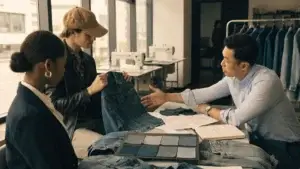
I sat in a coffee shop in the Garment District of Los Angeles about six years ago with a distributor who had just received his third cease-and-desist letter in two years. He was buying trendy streetwear pieces from overseas, keeping the original factory tags on them, and selling them to boutiques. The original brand—a small but litigious European label—found out and threatened to sue. He was not trying to sell counterfeits. He just did not understand the value of what he was sitting on. He had great product. He had the distribution network. He had zero brand protection. That conversation changed how I advise every American buyer I work with.
American clothing distributors prefer rebranding imported garments because it allows them to capture higher wholesale margins, build long-term equity in a proprietary brand name, and most importantly, avoid the legal and pricing conflicts inherent in selling open-market goods. It transforms a commodity transaction into a brand asset.
When you rebrand, you are no longer just a middleman moving boxes from Point A to Point B. You become the owner of the product story. You control the retail price. You control the distribution channel. You are not competing against 15 other distributors selling the exact same shirt on Faire or Tundra. At Shanghai Fumao, we manufacture for dozens of distributors who have built seven-figure businesses on this exact model. Let me unpack the economics and the logistics that make this the preferred path for serious players in the U.S. wholesale market.
How Does Private Labeling Increase Profit Margins For Distributors?
The math of distribution is simple. If you sell a widget that everyone else has, your customer's only question is, "What is your price?" If you sell a widget that only you have, the question becomes, "How soon can you ship it?" That shift in power changes everything about your income statement.
Private labeling allows distributors to set a price based on brand perception rather than market commodity rates. By obscuring the source factory and adding their own label, a distributor effectively removes the product from the global price comparison search.
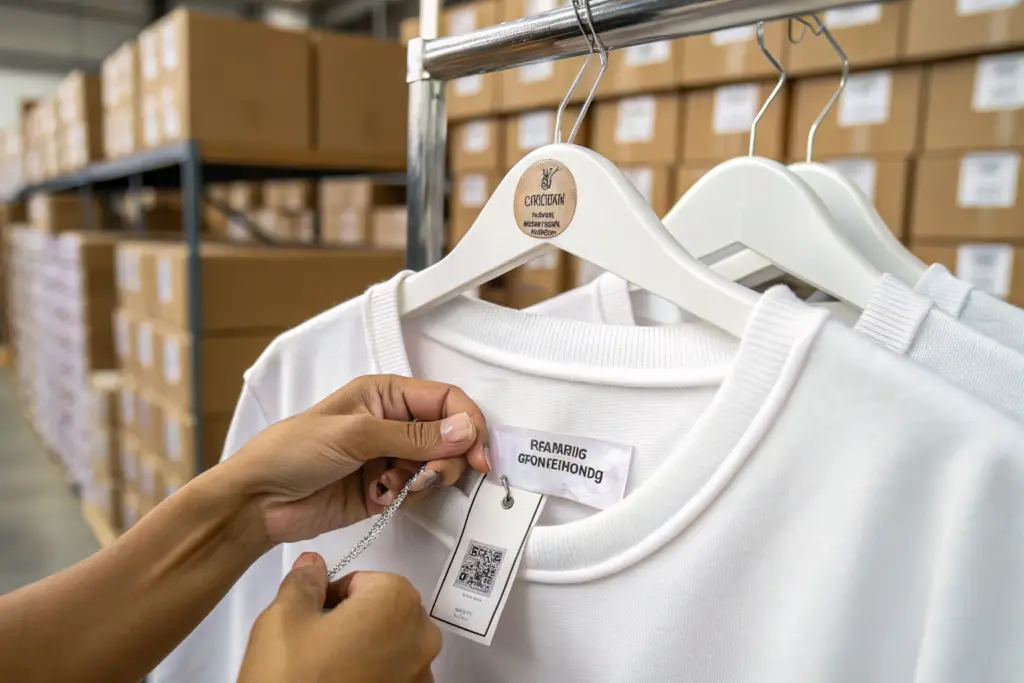
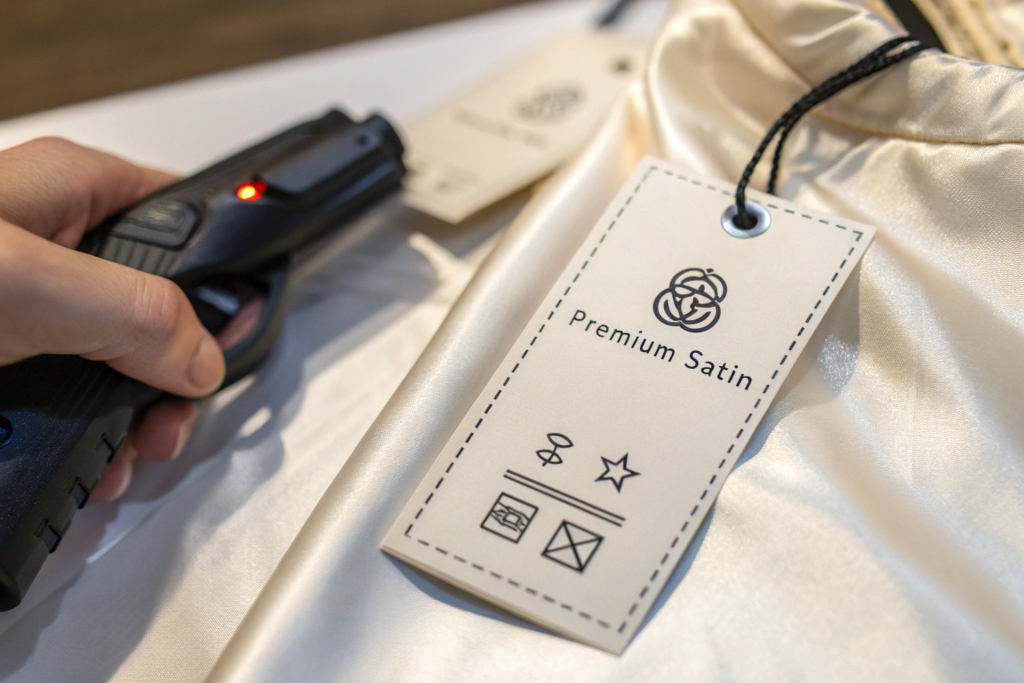
I have watched this play out in real time with our woven shirt program. A factory-direct stock shirt with no label might wholesale for $9.50. That same shirt, with a custom woven label and a unique hangtag designed by the distributor, wholesales for $15.75 to the exact same boutique buyer. The cost to add that label? About $0.18 per unit. That is an infinite return on investment.
What Is The True Cost Difference Between ODM And Full Custom Design?
This is where many new distributors get stuck. They think "private label" means they have to design a garment from scratch. They imagine a six-month development process and a 5,000-piece minimum. That is Full Package Custom Design. That is expensive and slow.
What we do for most American distributors is ODM (Original Design Manufacturer) with Private Label. Here is the distinction, based on real numbers from our Shanghai production lines:
| Production Model | Distributor Involvement | Typical MOQ | Estimated FOB Cost | Time to Market |
|---|---|---|---|---|
| Stock Lot (No Label) | None (Buy what is available) | 50 pcs | $8.00 | Immediate |
| ODM + Private Label | Select from existing sample line; add own tags | 300 pcs/style | $9.20 | 45-60 Days |
| Full Custom Design | Create tech pack from sketch; source custom fabric | 800 pcs/style | $12.50+ | 90-120 Days |
The ODM model is the sweet spot. You are not paying for pattern making. You are not paying for strike-offs. You are using a proven block that fits well and looks modern. You are just layering your brand identity on top. This is exactly how many large private label clothing companies operate. They focus their energy on marketing and sales, not on sleeve-head construction.
Why Does Brand Ownership Shield Distributors From Price Wars?
Last year, a men's wear distributor from Texas called me in a panic. He had found a great jogger on Alibaba and was selling it well. Then, one of his retail accounts sent him a screenshot of the exact same jogger on a competing wholesale site for $2.10 less per unit. He had to match the price or lose the account. He matched it. His margin vanished.
If that jogger had his own label sewn in—even if the base garment was the same—the retailer could not have made that direct comparison. The retailer would have to say, "I found a similar jogger for cheaper." That is a much weaker negotiating position.
Rebranding creates a Moat. In business terms, a moat protects your castle. The label is a small piece of polyester satin, but legally and perceptually, it is a barrier to entry. It allows you to build a brand equity asset that you can eventually sell. You cannot sell a business that just resells generic Alibaba goods. You can absolutely sell a business with a recognized private label and an email list of 500 boutique owners.
What Are The Legal Advantages Of Rebranding Wholesale Clothing?
Beyond the margin play, there is a hard legal reality that many distributors ignore until it is too late. U.S. Customs and Border Protection (CBP) takes intellectual property rights very seriously. Selling a garment with someone else's brand on it—even if it is a legitimate factory overrun—is a violation of trademark law.
Rebranding mitigates the risk of trademark infringement and ensures compliance with U.S. import regulations regarding country of origin labeling. It transforms the distributor from a potential infringer into a legitimate brand owner.
I have seen containers seized at the port because a buyer asked the factory to "throw in" some Nike socks to fill space. That is an extreme example. But the same principle applies to that no-name European streetwear label I mentioned earlier.
How Does Rebranding Solve Country Of Origin Labeling Compliance?
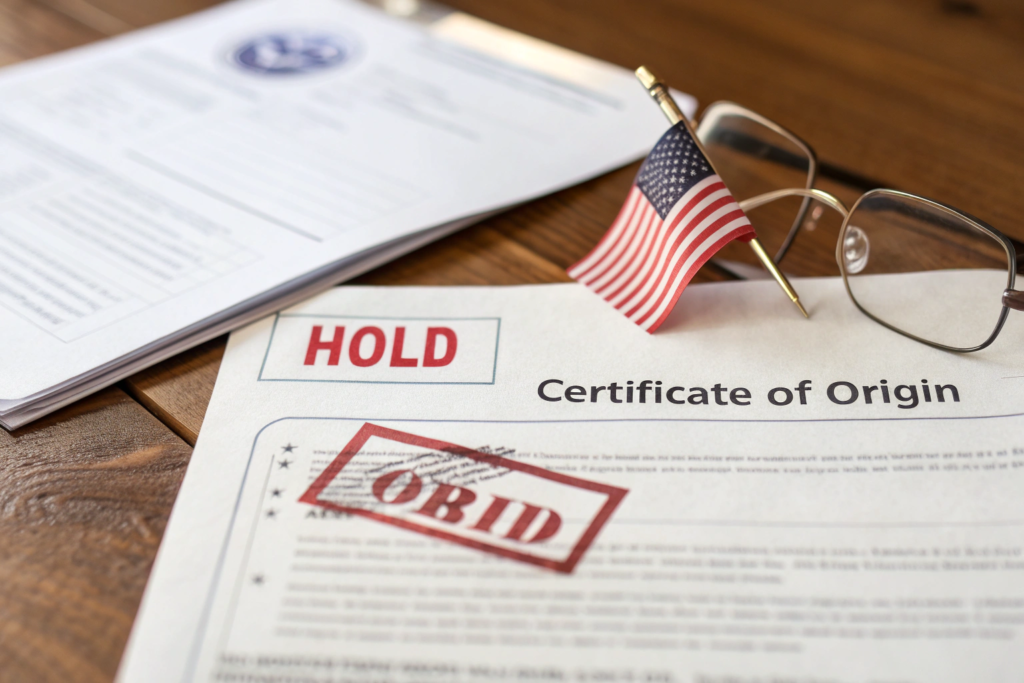
This is a detail that gets overlooked in the excitement of a new sample. U.S. law (specifically the Textile Fiber Products Identification Act) requires that most apparel sold in the United States have a label stating the Country of Origin (e.g., "Made in China").
If you buy a finished garment from a factory and it arrives with a tag that says "Made in Vietnam," you cannot just peel it off and ship it. The law requires the end consumer to know where the product was made. However, when you place a Private Label Order, we at Shanghai Fumao sew in the care label exactly to your specifications.
We ensure the label includes:
- Your RN Number (Registered Identification Number issued by the FTC).
- The correct Fiber Content (e.g., 95% Cotton, 5% Spandex).
- The correct Country of Origin.
By doing this at the factory level, you are fully compliant before the box hits the water. You do not have to hire a team in a U.S. warehouse to unpick stitches and risk damaging the garment. You can verify the requirements for labeling on the Federal Trade Commission website. Compliance is not optional; fines for mislabeling can be severe per violation.
Can Trademarking A Private Label Protect Against Market Saturation?
Imagine you build a great business selling a specific yoga legging. You call it "ZenFlex." You register that trademark with the USPTO (United States Patent and Trademark Office) . Now, if another distributor tries to sell the exact same legging (from the same factory) under the name "ZenFlex" to your customers, you can send them a cease-and-desist letter. You have legal standing.
Without a trademark, you are just selling a "black legging." Anyone can compete with you on "black legging."
Trademarking is not just for giant corporations. It is a relatively affordable process for small businesses. It gives you the exclusive right to use that name in commerce for clothing. This is how you prevent the market saturation that kills margins. You can search existing trademarks and file online through the USPTO database. We often advise new distributors to pick a brand name and do a quick search on the USPTO site before they even order hangtags. It saves them from falling in love with a name that is already taken by someone else in the apparel class.
Why Is Reliable Logistics More Critical For Rebranded Inventory?
There is a unique pressure that comes with selling your own brand. When you sell generic goods, a late shipment is an inconvenience. You apologize, maybe offer a discount. When you sell your own branded line, a late shipment is a disaster. Your retail accounts have floor space reserved for your label. They have marketing emails scheduled for your drop. A delay doesn't just cost you a reorder; it damages your brand's reputation for reliability.
Reliable logistics ensure that a distributor's brand promise of "In Stock" is kept. With rebranded goods, the distributor cannot easily substitute product from another factory, making on-time delivery and transparent tracking non-negotiable.
This is why the conversation around shipping terms is even more vital for private label than for commodity buying.
How Does DDP Shipping Simplify Cash Flow For Rebranding Projects?
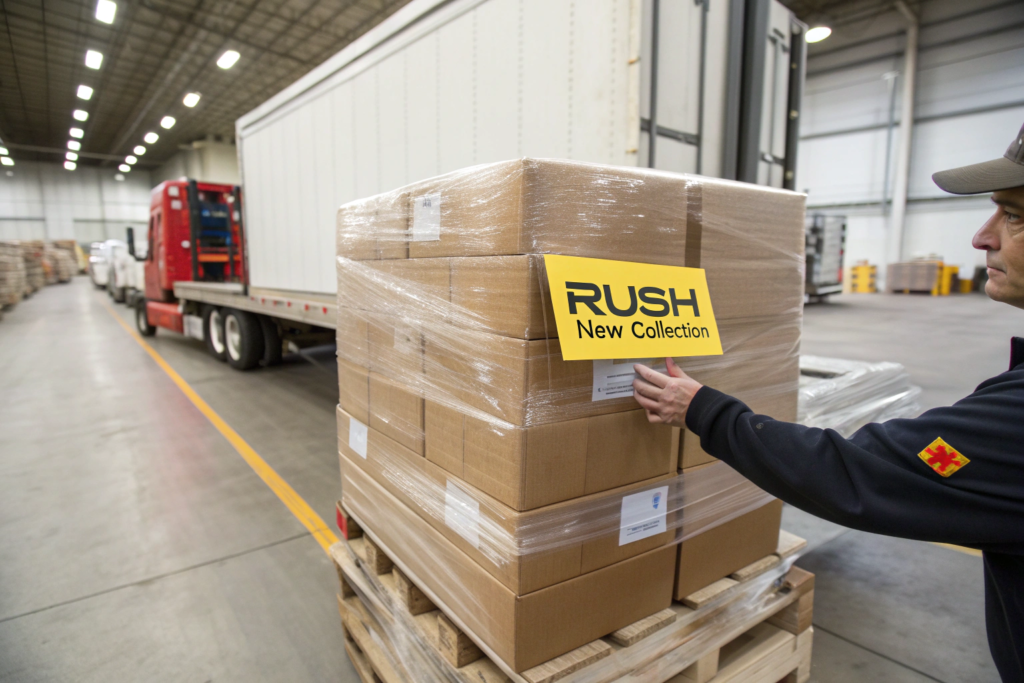
I want to revisit DDP (Delivered Duty Paid) in the context of branding. When you are building a brand, your mental energy should be on marketing and sales, not on calculating HTS codes for customs.
Let me give you a real scenario. A women's boutique owner from Florida ordered a small run of 200 branded linen dresses from us. She was new to importing. She asked for FOB pricing because it looked cheaper on the invoice. She did not realize that she would have to pay a customs broker $125 for entry, plus $85 for a bond rider, plus $200 for drayage from the port to her warehouse. Her "cheaper" FOB price ended up costing her an extra $3.10 per unit in unexpected fees and a massive headache.
When we quote DDP, she sees one number: $24.50 per unit landed. That is the number she plugs into her margin calculator. That number is fixed. There are no surprises. This is critical for a small brand because a surprise $500 bill from a freight forwarder can wipe out the profit on a whole style. DDP allows the distributor to price their goods to retailers with absolute confidence. For more on this, you can review the official Incoterms 2024 rules from the ICC.
What Role Does Quality Consistency Play In Repeat Wholesale Orders?
When you rebrand, you are putting your name on the line. Literally. If the first shipment of your "James & Co." shirts fits like a tailored dream, the boutique owner reorders. If the second shipment fits like a boxy tent, you lose that account forever.
This is the hidden risk of rebranding ODM goods from an unreliable factory. You need a partner who understands that Consistency is King.
We manage this through two mechanisms at Shanghai Fumao:
- The Sealed Sample: Before mass production, we send a pre-production sample (PP Sample) with your label sewn in. You sign off on it physically. We then keep an identical copy in our QC department. During production, the inline inspectors check every 10th piece against that Sealed Sample. If the armhole curve doesn't match, the line stops.
- Fabric Lot Control: We tag every roll of fabric that enters our warehouse with a barcode. When we cut your branded order, we cut from the same dye lot. This prevents that nightmare where the left sleeve is a slightly different shade of navy than the right body.
This level of process control is what allows a distributor to sleep at night knowing that the box arriving in November looks exactly like the box that arrived in July. Without this, you are gambling with your brand's reputation every time you place a reorder. You can learn more about quality assurance in textiles from ASTM International.
Conclusion
The preference for rebranding imported garments among American distributors is not just a passing trend. It is a fundamental shift in how wholesale value is created and captured. By moving from a model of anonymous distribution to one of private label ownership, distributors unlock three critical advantages. First, they escape the commodity price war and secure gross margins that allow for actual marketing and business growth. Second, they build a legal fortress around their product, protecting themselves from infringement claims while simultaneously creating an asset they can one day sell. Third, they elevate the importance of their supply chain, recognizing that a late shipment or inconsistent sizing doesn't just lose a sale—it damages a brand.
The beauty of this model is its accessibility. You do not need to be a fashion designer to build a clothing brand. You need to understand your customer, understand your numbers, and partner with a manufacturer that can execute ODM production with precision and logistical transparency. At Shanghai Fumao, we have streamlined the process of turning a stock garment into your garment. We handle the compliance, the quality, and the shipping, so you can focus on the selling.
If you are ready to stop competing on price and start building a brand that boutique owners actually ask for by name, let's look at your line plan. Reach out to our Business Director, Elaine, at elaine@fumaoclothing.com. She can walk you through our current ODM catalog and show you exactly how easy it is to add your own label to a proven, high-quality garment.