It happens at least three times a season. You find a garment that tests off the charts with your focus group. The drape is perfect. The color is on trend. You place a large purchase order with high hopes. Then, two months after the launch, you walk into a department store and see three other brands selling the exact same silhouette in a slightly different shade. Your "exclusive" drop just became a commodity. The margins evaporate. The inventory sits. This is the hidden cost of sourcing from catalogs filled with generic, open-line styles. I have seen this frustration firsthand with many of my American partners.
Rare style custom clothing attracts brand buyers because it establishes an immediate, defensible moat around their brand identity. It shifts the conversation from "How cheap can we get this?" to "How much is this unique value worth to our customer?" For a brand owner like you, this is not just about fashion; it is about intellectual property and market positioning. Customization eliminates the risk of direct price comparison and allows you to build a narrative that private label competitors cannot easily replicate.
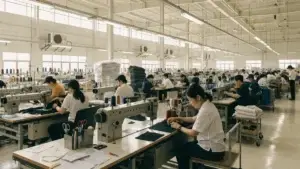
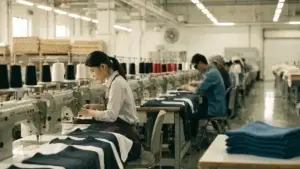
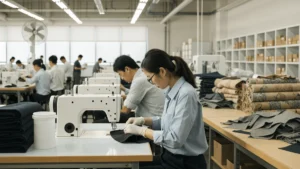
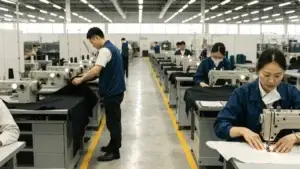
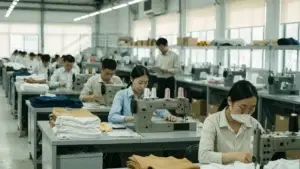
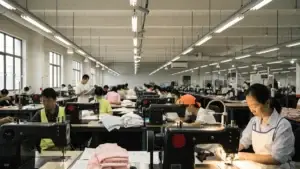
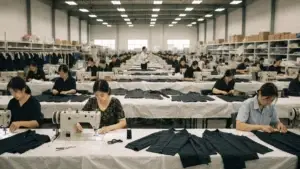
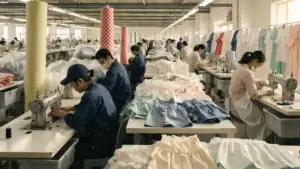
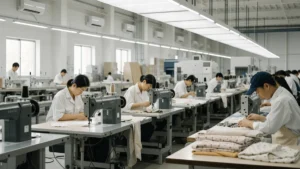
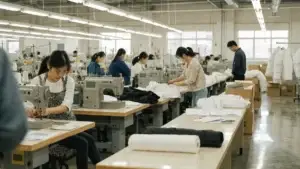
I know the hesitation. Custom manufacturing sounds slow. It sounds expensive. It sounds like it requires a team of technicians you do not have. That was true ten years ago. It is not true today. At Shanghai Fumao, we have spent the last decade retooling our five production lines specifically to make rare style development as agile as ordering blanks. Let me walk you through why this shift in sourcing strategy is changing the game for U.S. wholesalers and large distributors right now.
How Does Custom Apparel Manufacturing Enhance Brand Identity?
Brand identity is not your logo. It is the sum of a thousand tiny details that your customer notices only subconsciously. The weight of the zipper. The way a collar rolls. The specific crunch of the fabric. When you buy from a stock catalog, you inherit someone else's decisions about those details. You blend in.
Custom manufacturing allows a brand to control the physical DNA of its product. This control translates directly into higher perceived value and customer loyalty. In a market flooded with dropshipped and white-labeled goods, a rare cut or an exclusive fabric blend becomes the tangible proof of your brand's promise.
We cannot talk about identity without talking about the financial mechanics of wholesale. Stock garments lead to a race to the bottom. A custom garment resets the pricing anchor.
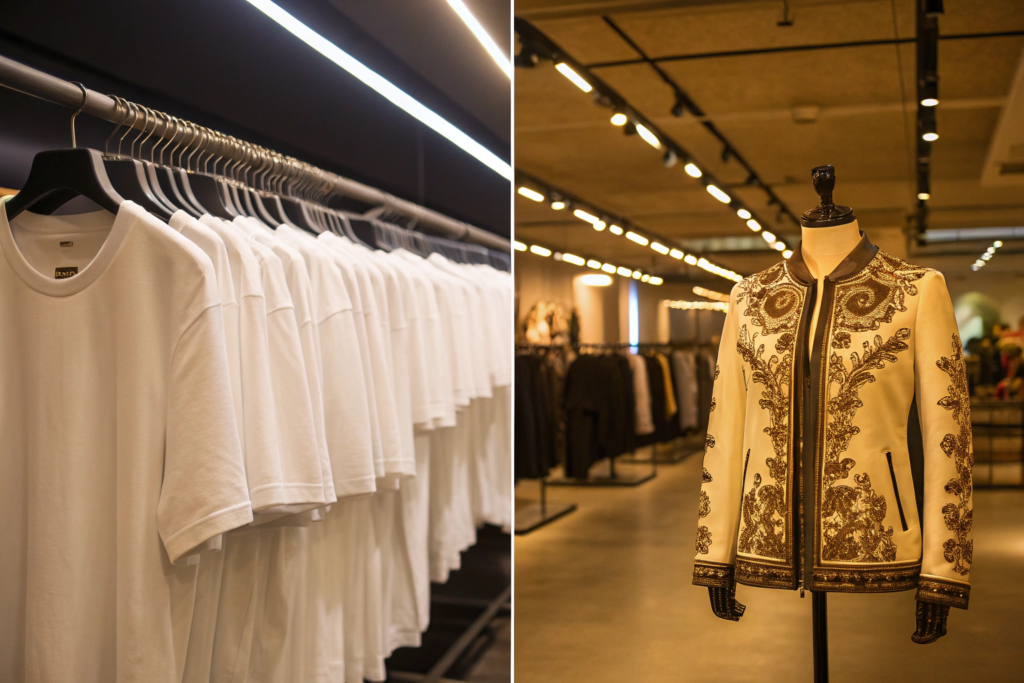
Why Do Unique Designs Reduce Price Competition For Wholesalers?
I remember a call with a buyer from Texas last spring. He was sourcing men's performance polos. The market price for a standard quick-dry polo was locked in around $28 wholesale. He was getting quotes from Vietnam, China, and India all within a dollar of each other. He came to us with a sketch of a polo that had a hidden magnetic collar stay and a laser-cut ventilation panel on the back yoke—details none of his competitors had.
Because the style was rare, there was no "market price" to compare against. Retail buyers could not pull up a competing line sheet and demand a 5% discount to match a rival brand. We worked with him to engineer the collar. The cost was slightly higher, about $2.80 per unit more than a standard polo. But his wholesale price to retailers jumped to $39. His sell-through was 60% higher because the product sold itself on the rack. The uniqueness of the design made the price negotiation disappear. It became about the feature, not the fee.
This is a key advantage of working with a factory that has development capabilities like Shanghai Fumao. We are not just cutting and sewing; we are engineering the value proposition. You can read more about standard garment production benchmarks set by the WTO to see where generic manufacturing sits versus value-added manufacturing.
What Fabric Sourcing Options Define A Rare Collection?
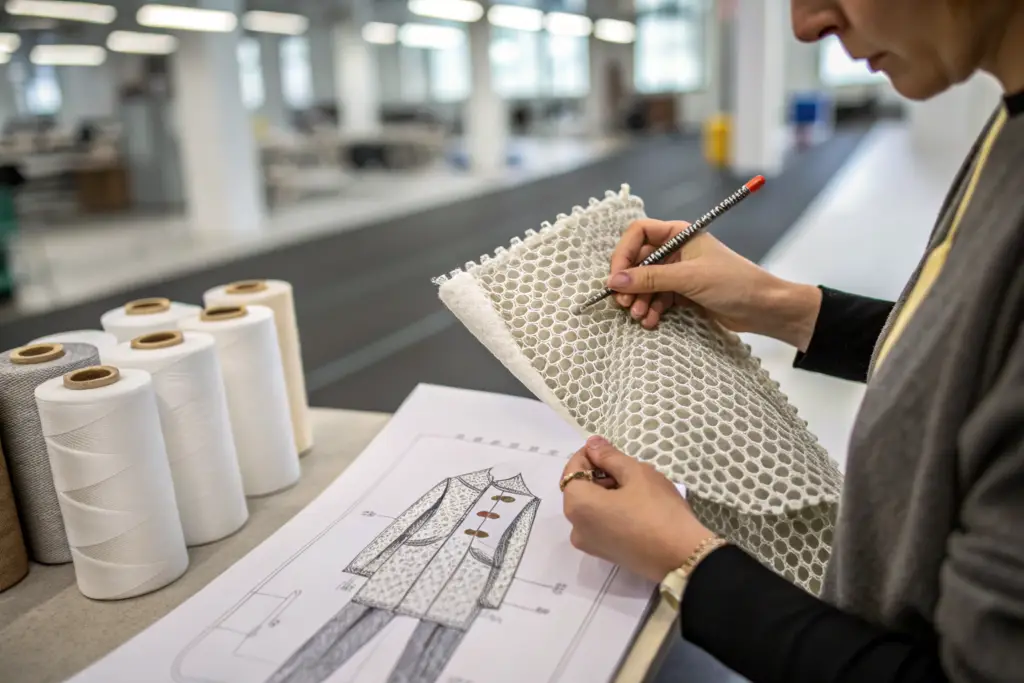
The style is only half the story. The hand feel is the rest. You cannot claim a "rare style" if the fabric is a run-of-the-mill 180gsm cotton jersey that every print-on-demand shop uses. True rarity comes from the textile level.
We source yarns that are not typically held in stock by large trading companies. This includes micro-modal blends for women's wear that drape like silk but wash like cotton. Or heavyweight, slub-textured fabrics for men's wear that look vintage right out of the box. Last year, we helped a Los Angeles brand develop a kids' wear line using a proprietary blend of recycled polyester and Tencel. The fabric had a cool, dry touch that parents loved for active toddlers. Because we controlled the knitting and dyeing specifications in-house, that specific hand feel was impossible for competitors to find on Alibaba.
Here is a basic comparison of sourcing approaches we discuss with clients:
| Sourcing Approach | Lead Time | Uniqueness Level | MOQ Per Style/Color | Cost Implication |
|---|---|---|---|---|
| Open Stock Fabric | Fast (2-3 weeks) | Low (Generic) | 50-100 pcs | Lowest |
| Custom Dye (Lab Dip) | Medium (4-5 weeks) | Medium | 300-500 pcs | Moderate |
| Custom Mill Knit/Woven | Slow (6-8 weeks) | High (Rare) | 800-1500 pcs | Highest Value |
This table is based on our internal production data from our Shanghai facility as of Q1 2026. For more details on sustainable textile options, the Textile Exchange provides excellent industry standards. Choosing the bottom row—the custom mill approach—is what separates a private label brand from a true design house.
Why Is DDP Logistics Critical For Rare Garment Sourcing From China?
Let's talk about the moment of truth in our business. The garment is perfect. The quality check passed. But if the shipment is stuck in customs in Long Beach for three weeks, that rare summer style becomes a liability for next season's clearance rack. For U.S. brand owners, the logistics of importing are often more painful than the manufacturing.
DDP (Delivered Duty Paid) shipping removes the financial and administrative guesswork from the international supply chain. For buyers of rare, high-value custom apparel, DDP ensures that the total landed cost is fixed upfront and that the goods arrive at your warehouse door without you needing to be a customs broker.
I have seen too many buyers get burned by hidden port fees or demurrage charges because they tried to manage freight themselves. With rare styles, margins are better, but the cost of a delay is also much higher. You cannot sell a unique winter coat in February.
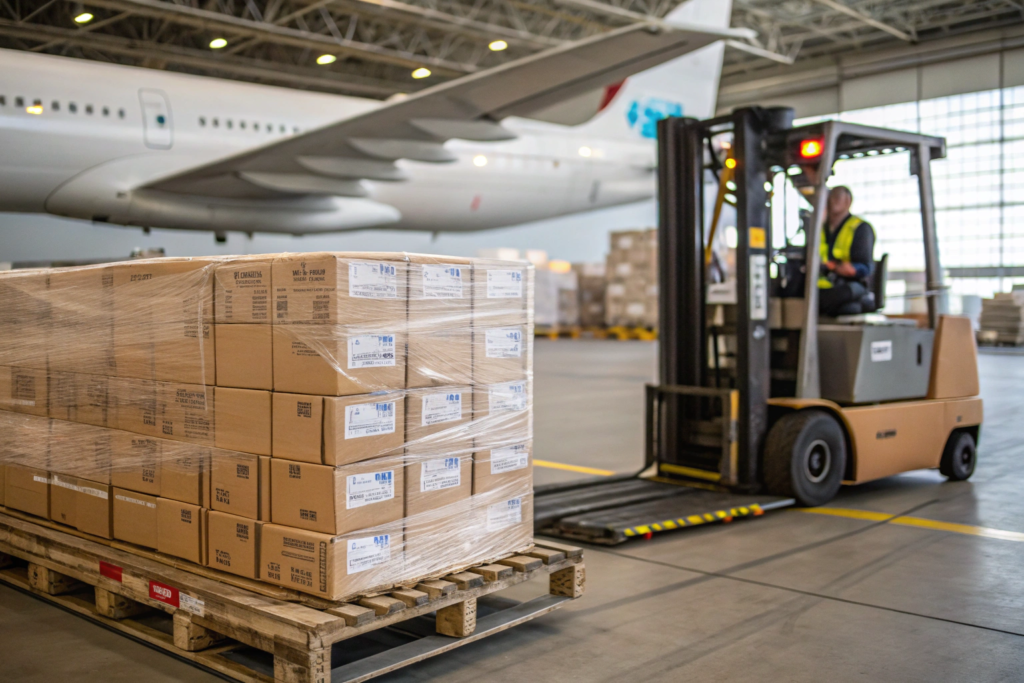
How Does DDP Shipping Prevent Seasonal Delays And Hidden Fees?
Two years ago, a women's wear client in Chicago placed an order for a complex wool-blend coat. Beautiful piece. Satin lining, custom horn buttons. It was an FOB (Free on Board) shipment, meaning they arranged their own freight forwarder. A labor slowdown at the West Coast port held the container for an extra 18 days. By the time it cleared, they had missed their delivery windows to Nordstrom and had to pay chargebacks. The freight bill was $2,200 higher than quoted due to port storage.
After that nightmare, they switched to our DDP service. I explained to them that under DDP terms, we (the shipper) bear all risks and costs until the goods are placed on their receiving dock in Illinois. We manage the bill of lading compliance, the classification codes, and the customs bond. If there is a port congestion fee, we eat that cost, not them.
This matters for rare styles because these items are often time-sensitive. You are building a marketing campaign around that specific drop. With DDP, I can tell a client: "Your per-unit cost is $18.47. That is the number you pay. We will see the box on Thursday the 14th." Certainty in logistics allows you to plan your sell-in strategy with confidence. The International Chamber of Commerce sets the official Incoterms rules that define DDP responsibilities.
Can DDP Mode Improve Trust With New Brand Partnerships?
Trust in sourcing starts small. Maybe a sample order of 50 pieces. For a new relationship, the fear of the unknown shipping cost is a huge barrier to clicking "send deposit." A buyer thinks: "The price is good, but what if customs holds this and I owe another $500 I didn't budget for?"
When we quote a new client in DDP terms, we are essentially saying: "We are so confident in our export process that we will guarantee the final price." This is a powerful tool for us at Shanghai Fumao. It signals that we are not just a factory throwing goods over the fence. We are a partner managing the entire supply chain.
This is particularly important for buyers who are used to the straightforwardness of domestic vendors but want the cost benefits of Asia. DDP mirrors the simplicity of a domestic purchase order. You do not have to file an ISF (Importer Security Filing) or find a customs bond. We handle the export documentation and clearance. This allows you, the brand owner, to focus on selling the unique story behind that rare garment we just made, instead of Googling "Harmonized Tariff Schedule for women's blouse with embroidery."
How To Verify Quality Control For Rare Custom Clothing Orders?
One of the biggest trust gaps I see between U.S. buyers and overseas factories is the definition of "good quality." To a buyer in New York, a loose thread is a defect that leads to a return. To a mass-production floor in a developing country, a loose thread might be an acceptable variance. For rare styles, this gap is a deal breaker. You cannot fix a crooked seam on a one-of-a-kind cut after it lands in New Jersey.
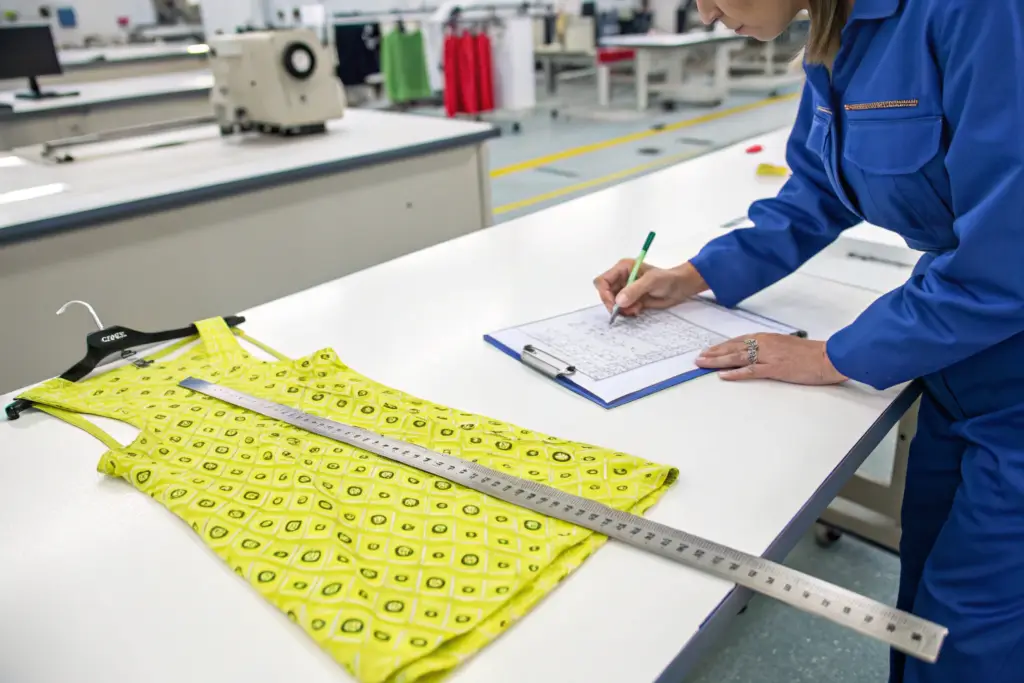
Effective quality control for custom clothing relies on pre-production approval of physical standards and in-line inspection. It is not enough to check the finished goods. You must check the process.
Buyers get nervous because they hear stories of factories swapping out approved trims or using cheaper interlining to save a few pennies. We prevent this by building quality into the tech pack stage, not just the final audit stage.
What Factory Certifications Matter For US Brand Compliance?
I often get asked: "Do you have BSCI? WRAP? ISO?" Yes, we do. But I always tell buyers: Certifications are a baseline. They tell you the factory can be clean and organized. They do not tell you if the factory will cut corners on your specific order.
For the U.S. market, compliance with CPSIA (Consumer Product Safety Improvement Act) is non-negotiable, especially for kids' wear. We maintain third-party lab relationships to test for lead and phthalates. For textiles, we use Oeko-Tex Standard 100 certified dyes to ensure the fabric is safe for skin contact. If you are a brand that promotes sustainability, you might ask for GRS (Global Recycled Standard) certification to verify the recycled content in that polyester jacket.
Here is a quick reference for what these acronyms mean for your due diligence checklist:
| Certification | Focus Area | Why It Matters for US Import |
|---|---|---|
| WRAP | Ethical Labor & Safety | Reduces risk of negative PR/bad press in US media |
| Oeko-Tex 100 | Chemical Safety | Prevents skin irritation and import holds by CPSC |
| GRS | Recycled Content | Verifies marketing claims for eco-conscious US consumers |
| BSCI | Social Compliance | Satisfies due diligence for large retail chain vendors |
I always encourage new partners to verify our certificates on the issuing body's website. Do not just accept a PDF. If a factory cannot give you the certificate number to cross-check, that is a red flag. You can verify standards through organizations like WRAP Compliance. For a deeper dive into textile chemistry, the American Association of Textile Chemists and Colorists is the definitive resource.
How Can Technology Prevent Supplier Certificate Falsification?
This is a pain point I heard directly from a buyer in Miami last month. He had been burned by a supplier in another country who sent a Photoshop-edited BSCI report. The dates were wrong. The factory name was slightly misspelled. He lost a container of goods to customs because the documentation was fraudulent.
In our operation, we use a cloud-based quality management platform (we currently use Inspectorio for real-time reporting). When we do an in-line inspection at 30% completion of your rare style cut, the inspector uses a tablet. The photo is geo-tagged and time-stamped. The data uploads instantly. You can see that the measurement spec for the shoulder drop is exactly 0.5cm, right now, on your phone in Seattle.
For certifications, we provide a live link to the third-party audit database. There is no static screenshot to alter. We also encourage virtual tours via video call where you can see the production floor and the certificate on the wall in real time. This transparency is the only way to build trust when dealing with custom designs that rely on specific textile testing standards like ASTM D5034 for fabric strength. Without this tech layer, you are just hoping the box matches the sample.
Where Do Successful Brands Find Reliable Custom Garment Manufacturers?
The search for a factory is noisy. Google returns 50 million results. Alibaba is a sea of identical product photos. Trade shows are back, but they cost time and travel. How do you cut through the noise to find a partner who actually understands "rare" versus "we can copy this picture"?
Successful brand owners use a multi-channel verification strategy that combines digital sourcing platforms with direct, on-the-ground validation. They look for factories that speak the language of design, not just the language of price per kilogram.
I tell my clients to stop searching for "cheap clothing manufacturers" and start searching for "apparel development partners." The words you use change the results you get.

What Questions Should You Ask In A Factory Video Audit?
Because you cannot fly to Shanghai every month, the video audit is now standard practice. But most buyers waste the opportunity. They let the salesperson walk them through the showroom of nice samples. That tells you nothing.
You need to ask to see specific things during a live, unscripted video call. Here is the checklist I recommend to anyone vetting a partner for custom work:
- Ask to see the Cutting Table. Is it automated or manual? For rare styles with complex pattern pieces, a precise auto-cutter is non-negotiable for consistency.
- Ask to zoom in on a Sewing Machine Needle. Is it the right size for the fabric weight they claim to be using?
- Ask to see the Trim Card for a Current Order. Is it organized or a mess? This shows attention to detail.
- Ask to speak to the Pattern Maker. Even if there is a language barrier, you can see if the sales rep is willing to connect you with the technical person. If they say "Oh, he is too busy," walk away.
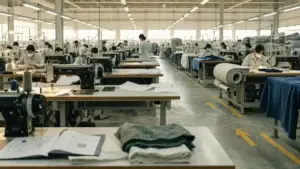
Six months ago, I did a walkthrough with a new men's wear brand from Denver. I showed them our fusing machine temperature log. It's a boring, technical document. But it proved to them that we control the interlining adhesion process, which is the #1 reason collars bubble after dry cleaning. That kind of transparency in a supply chain audit is what separates a good factory from a great one.
Why Are LinkedIn And Trade Shows Still Viable For Sourcing?
With all the talk of AI sourcing tools, it is easy to forget the human network. I find that many of my best, long-term relationships come from two places: LinkedIn introductions and face-to-face meetings at shows like MAGIC Las Vegas.
LinkedIn is valuable because you can see the tenure of the employees. If the Sales Director has been at the factory for 12 years, that is a strong signal of stability. You can also see what kind of content they post. Are they just posting stock photos of hoodies? Or are they posting real photos from the sewing floor? Shanghai Fumao uses LinkedIn to show the process of making a rare, complicated jacket, not just the finished product.
Trade shows, while expensive, solve the "trust but verify" problem instantly. You can touch the swatch book. You can feel the weight of the zipper. You can look the owner in the eye. Even if you do not place an order that week, that in-person chemistry is what gets you through the inevitable small problems that happen in any manufacturing process. You can find a list of upcoming industry events through the American Apparel & Footwear Association.
Conclusion
The attraction to rare style custom clothing is not about vanity. It is about survival. For a U.S. brand owner, sourcing unique, developed garments is the clearest path to defending your wholesale price and building a loyal customer base. We have seen that standard open-line products lock you into a price war you cannot win. Custom manufacturing allows you to control the product's DNA and the narrative around it.
We also cannot ignore the mechanics of making this work. You need a partner who removes the headache of importing with DDP terms. You need a partner who has the certifications and the technological transparency to make quality control visible and verifiable. And you need a partner who understands that efficiency in communication is just as critical as efficiency in sewing.
I know the feeling of being burned by a supplier who falsified a report or missed a crucial delivery window. That is why we built Shanghai Fumao to operate differently. We focus on being a reliable extension of your design and distribution team. We bring 30 years of expertise in navigating the complexities of fabrics and trims so you can focus on what you do best—selling the story.
If you are tired of seeing your "exclusive" styles show up on a competitor's feed and you want to discuss a real development project with a factory that has the lines and the logistics ready to go, let's talk. You can reach out to our Business Director, Elaine, directly at elaine@fumaoclothing.com. She can walk you through our process, from tech pack review to your first custom strike-off. Let's make something that no one else can copy.