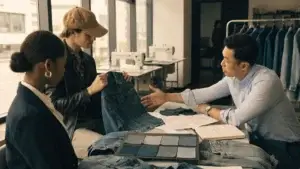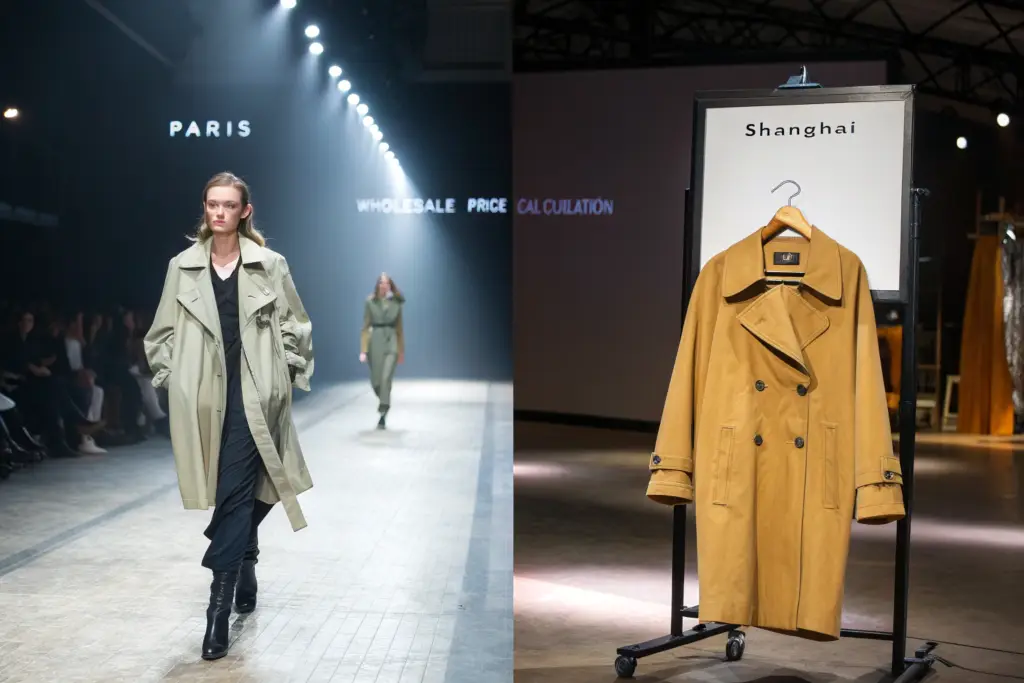
I remember a conversation with a brand owner from Austin, Texas three years ago. She had just returned from a buying trip to Milan. She showed me photos she took of a stunning oversized blazer with sculptural sleeves. The Italian brand sold it for 1,800 euros wholesale. Her customers loved the look but could never afford that price point. She asked me a blunt question: "Can you make me something that captures this same feeling but lets me sell it at 198 dollars retail?" I looked at the photo. I studied the shoulder construction. I told her to give me two weeks. Three years later, that blazer is still her best-selling fall item. She moves 800 units every September.
Yes, Shanghai Fumao replicates the design language of European runway styles, including silhouette, drape, and key construction details, at wholesale prices by re-engineering the garment architecture with cost-effective fabrics, simplified interior finishing, and optimized cutting marker efficiency. You get the visual impact of a luxury piece without the luxury manufacturing cost structure.
This process is not about counterfeiting. We never copy logos, prints, or trademarked design elements. We extract the design vocabulary of a silhouette, the volume of a sleeve, the proportion of a lapel, the length of a hem, and we rebuild it as an original garment using affordable materials and bulk-efficient construction methods. This is what every successful contemporary brand does behind the scenes. They interpret runway ideas for the real world. I want to open the curtain and show you exactly how we do this interpretation work, from tear-down analysis to the final wholesale price quote.
What Does "Runway-to-Wholesale" Garment Engineering Actually Mean?
The first thing to understand is that a runway garment and a wholesale garment are different animals. The runway version is made in a Paris or Milan atelier. A single skilled artisan might spend 40 hours on one jacket. The fabric might be a custom-milled Italian wool that costs 80 euros per meter. The buttons are hand-carved horn. The interior is fully lined with silk habotai. Every seam is hand-felled. This is beautiful craftsmanship, but it produces a garment that costs 600 euros just to manufacture. That cost structure works for a brand selling at 2,000 euros retail. It does not work for a brand selling at 200 dollars retail.
Garment engineering means analyzing the runway piece and identifying which elements create the visual signature and which elements are invisible cost drivers that the consumer never sees or values. The visual signature usually lives in the silhouette, the key proportion, and one or two distinctive construction details. The invisible costs live in the internal finishing, the label material, the button source, and the cutting waste. Our job is to preserve the signature while slashing the invisible costs. This is not dumbing down the design. It is smart value engineering.
How Does a Tear-Down Analysis Identify Cost Drivers?
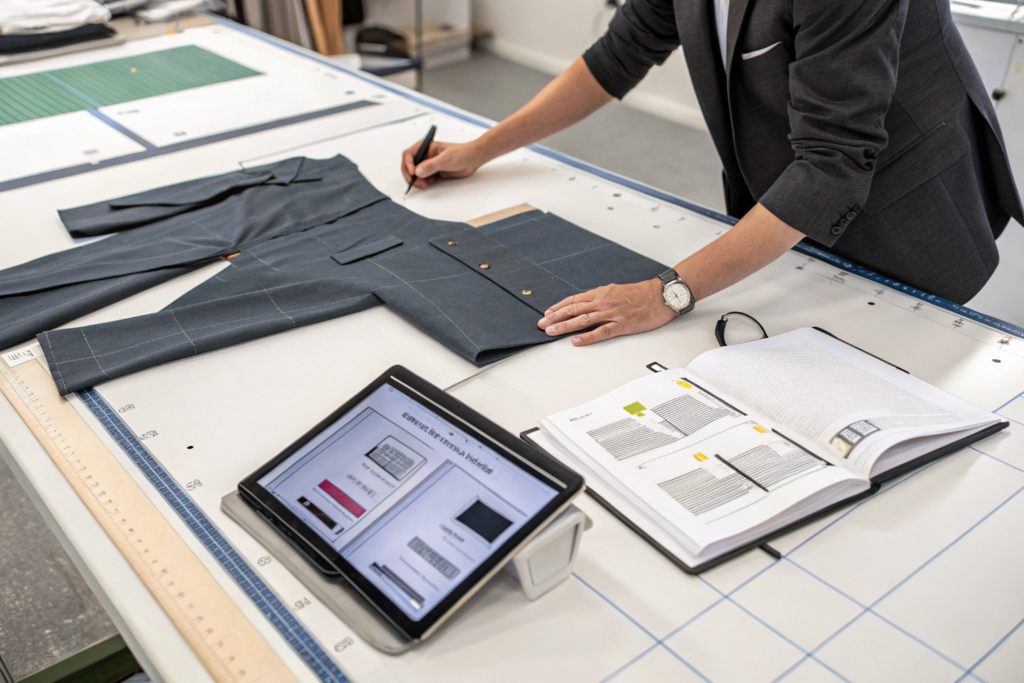
When a client sends us a reference garment, we do not just look at it on a hanger. We perform a tear-down. A senior pattern maker and a costing engineer sit together at a table. They turn the garment inside out. They measure every seam allowance. They identify the stitch types used. They count the stitches per inch. They note the interlining weight and the pocket bag material. They weigh the fabric and measure its width. They cut a small swatch and burn test it to identify the fiber content.
Last spring, a client sent us a French designer blouse with a dramatically puffed sleeve. The tear-down revealed that the sleeve puff was achieved using a silk organza interlining hand-basted inside the sleeve head. The organza was 22 dollars per meter. The hand-basting took an estimated 45 minutes per sleeve. We proposed an alternative: a polyester organdy interlining at 3 dollars per meter, fused with a low-temperature press instead of hand-basted. The puff volume was 95% identical. The sleeve construction cost dropped by 70%. The tear-down process isolates every cost variable and forces a conscious decision: keep, substitute, or eliminate.
How Do We Separate Signature Details From Hidden Costs?
The consumer sees the front of the garment. They rarely see the inside. A French-seamed interior is beautiful, but on a printed cotton dress, the customer only cares that the seam does not itch. We often switch interior finishing from French seams to clean-finished overlock on side seams and armholes. The outside looks identical. The durability is still excellent. The cost per garment drops significantly because overlock is a single-pass operation while a French seam requires two sewing passes.
Buttons are another major lever. A designer brand might use genuine Italian buffalo horn buttons at 5 dollars per button. For a cardigan with eight buttons, that is 40 dollars just in button cost. We source a high-quality resin substitute from a supplier near our factory. The resin button is polished to a matte finish. It has a similar color variation. It costs 30 cents per button. The visual difference is nearly undetectable at arm's length. The cost difference is 37 dollars and 60 cents per garment. These decisions multiply across every component. The skill is knowing which substitutions the consumer will feel and which ones they will never notice. A garment costing expert makes these calls based on experience, not guesswork.
How Does Fabric Substitution Maintain the Look While Cutting Costs?
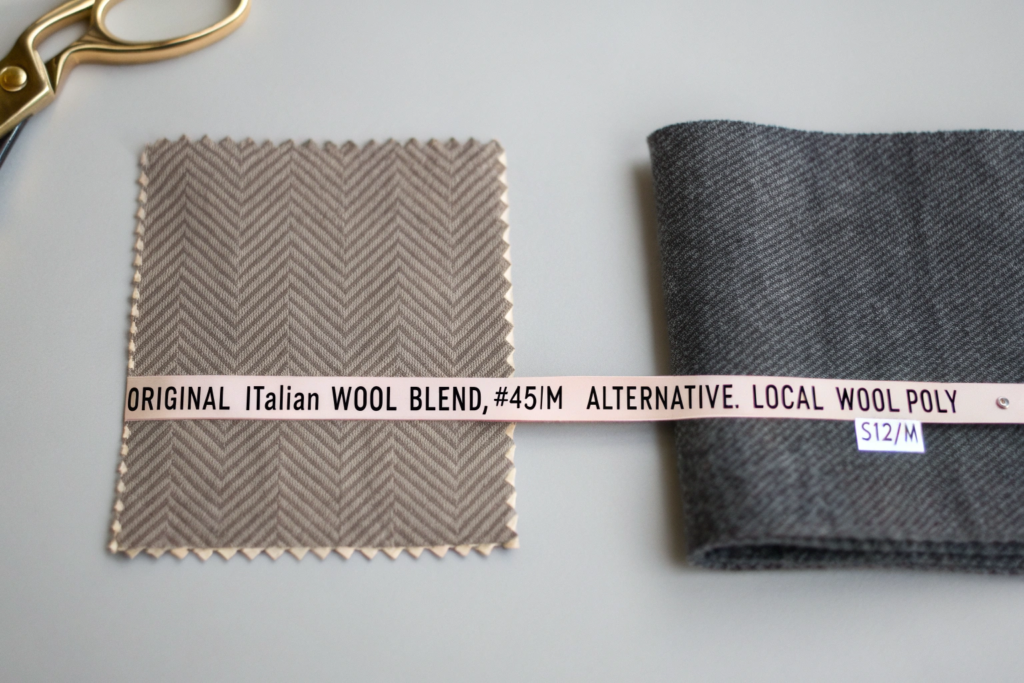
Fabric is usually 50 to 60 percent of the total garment cost. The runway piece used a fabric that was custom-developed for that specific collection. The mill produced perhaps 200 meters. The price per meter was astronomical because the order was tiny. When we scale up to a wholesale production run of 1,000 meters or more, we have real buying power. We can approach mills and say, "Develop me a fabric that looks like this but targets this price point." The mills respond because they want volume orders.
The key is understanding what the consumer's eye registers. A heavy crepe de chine from a French mill might have a specific pebble texture and liquid drape. A visually similar crepe from a Chinese mill might use a slightly different yarn twist. If the drape and hand feel are 90% similar, the consumer cannot tell the difference in a retail setting. They see a beautiful blouse. They try it on. It moves well on the body. That is enough. We have developed relationships with mills in Zhejiang and Jiangsu provinces that specialize in high-quality fabric analogs. They can match a reference texture within a very tight tolerance.
What Fiber Blends Achieve a Luxury Hand Feel at a Lower Price?
The magic of luxury fabric is often in the fiber blend. A pure cashmere sweater is undeniably soft, but a 70% wool, 30% cashmere blend can feel nearly identical while cutting the raw material cost almost in half. A silk blouse is beautiful, but a high-quality cupro or Tencel twill can drape even better than silk and cost 70% less. The fabric development team in our sourcing department constantly tests new yarn blends that mimic expensive fibers.
Last fall, a contemporary brand asked for a coat fabric that matched the soft, lofty hand of an Italian alpaca-wool blend. The original fabric was 35 dollars per meter. We developed a triple blend of extra-fine merino wool, acrylic, and a small percentage of real alpaca. The fabric had the same fluffy hand feel. It was 11 dollars per meter. The coat sold out on the brand's website at 148 dollars retail. Customers left reviews praising the "luxurious soft fabric." None of them knew or cared about the fiber percentage difference. They only knew it felt expensive. The fiber blend development process bridges the gap between the runway fantasy and the wholesale reality.
How Do You Source Near-Identical Prints Without Legal Risk?
Prints are the most sensitive area of style replication. A runway collection might feature a bold floral print designed by an in-house textile artist. That exact print is copyrighted artwork. We cannot and will not reproduce it. That would be illegal and unethical. What we can do is analyze the print's commercial appeal and develop an original print in the same category. If the trend is large-scale abstract watercolor florals on a dark ground, we commission an original watercolor floral from our textile design team that captures the same mood but is entirely new artwork.
The print placement technique also matters. If the runway dress features an engineered border print at the hem, we replicate the placement technique using our original art. The consumer buys the dress because it has a beautiful floral border at the hem, not because a specific Italian artist painted the flowers. By understanding the trend driver rather than copying the specific expression, we keep our clients legally safe while delivering the look their customers want. The textile design process for original prints takes about two to three weeks from concept to strike-off approval.
How Do You Replicate Complex Silhouettes Without an Atelier?
The most intimidating part of runway style replication is the silhouette. European designers are known for dramatic shapes, a Balenciaga volume coat, a Maison Margiela deconstructed shoulder, a Rick Owens elongated sleeve. These silhouettes look impossible to produce without a Paris atelier. But every shape that can be sewn from fabric can be broken down into pattern pieces. A dramatic shape is simply a pattern that uses more fabric, different grainlines, and strategic internal support structures.
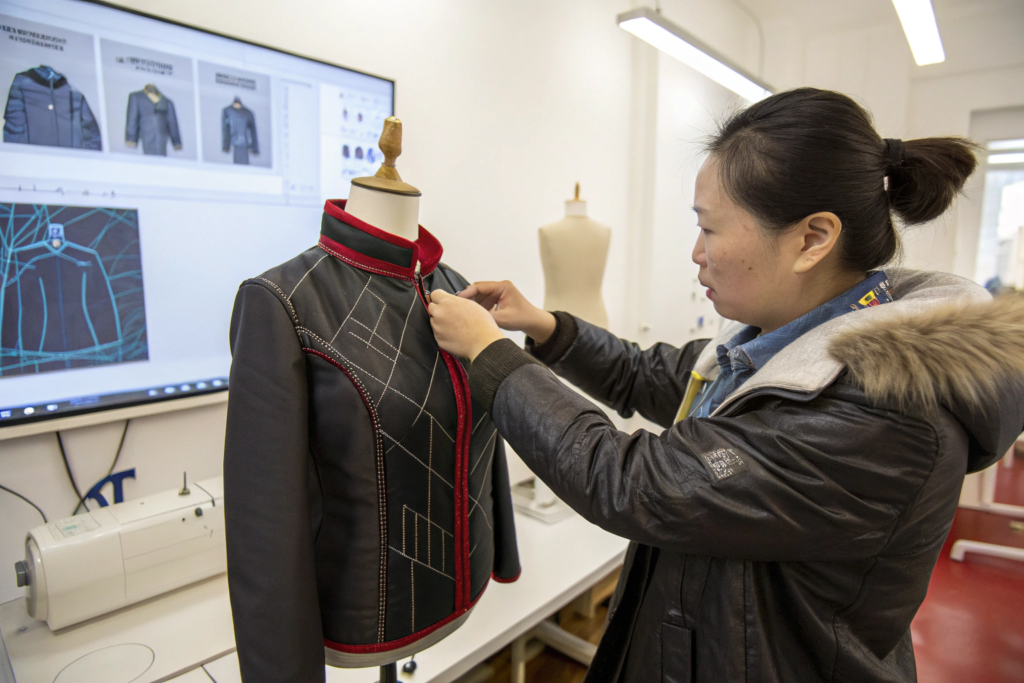
We approach complex silhouettes with a combination of traditional draping skill and 3D pattern simulation. My head pattern maker has thirty years of experience. She apprenticed in a high-end Shanghai tailoring house that made suits for European export. She can look at a photo of an exaggerated shoulder and know immediately whether the volume comes from the pattern seam shape, from an internal shoulder pad, or from a combination of both. This expertise is rare and cannot be replaced by software alone. But software amplifies her skill by letting her test theories digitally before cutting fabric.
How Do Internal Support Structures Create Runway Volume?
The secret to many dramatic runway shapes is not the outer fabric. It is what lives inside. A power shoulder blazer from a Milan runway might contain a multi-layer shoulder pad, a sleeve head roll, chest canvas, and a back stay. These internal components create architecture. The outer wool fabric simply drapes over this frame. We reverse-engineer the support system, not just the visible shell.
For an oversized trapeze coat we developed last year, the original reference garment used a heavy horsehair canvas throughout the entire front body to create the A-line flare. Horsehair canvas is expensive and requires hand-padding to shape. We substituted a fusible tailored canvas in a lighter weight, cut on the bias grain to encourage the flare naturally. We also added a chain weight inside the hem to make the coat swing dramatically when the wearer walked. The visual effect was identical to the runway piece. The cost was a fraction. Understanding garment construction at this engineering level separates a factory that truly gets it from a factory that just sews what the tech pack says.
What Role Does 3D Simulation Play in Complex Style Development?
Draping a physical sample for a complex silhouette can take multiple attempts. Each attempt costs fabric, thread, and pattern maker hours. A single complex jacket might need three physical prototypes before the volume and proportion are perfect. At 200 dollars in labor and material per prototype, that adds up fast. We run the first iterations digitally.
Using our 3D simulation software, we drape the exaggerated silhouette on a virtual fit model. We adjust the volume in real time. We check for drag lines that signal fit problems. We rotate the garment 360 degrees to confirm the shape looks right from every angle. The client approves the digital simulation before we cut a single piece of physical fabric. This process saves two to three weeks of sampling time and eliminates the cost of failed physical prototypes. The technology has matured enormously. The 3D garment simulation we use now accurately predicts how fabrics will drape, including the effect of gravity on heavy wool coatings and the bounce of lightweight chiffons.
What Quality Trade-Offs Should a Brand Realistically Expect?
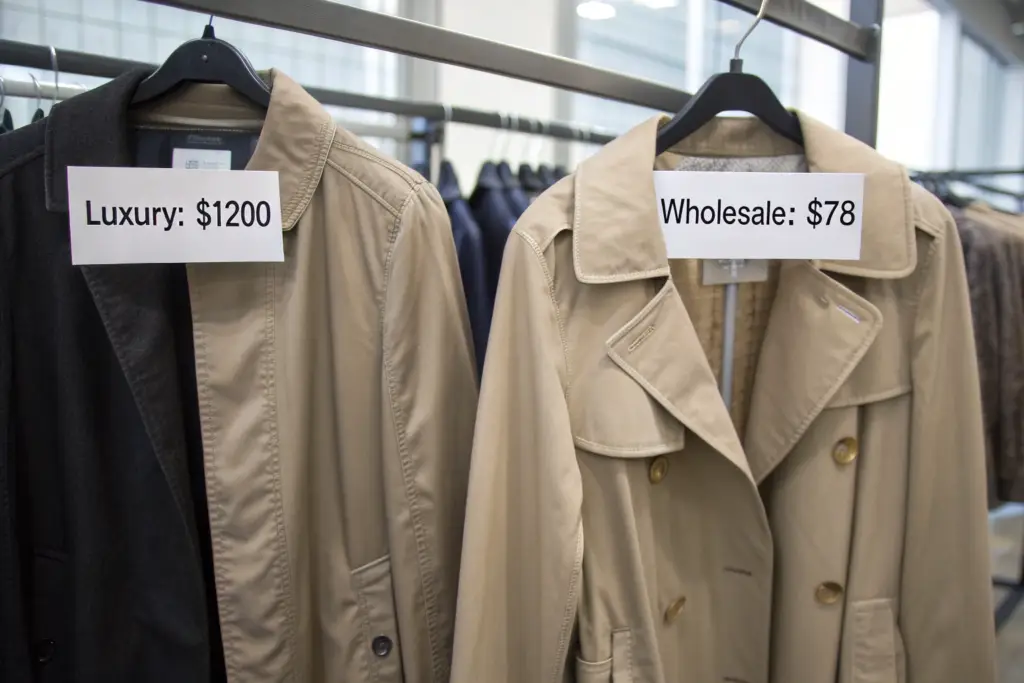
I want to be completely direct about this topic because it is where trust gets built or broken. A wholesale-priced recreation of a luxury runway piece will not be identical in every detail. It cannot be. The cost structure does not allow for hand-stitched buttonholes, hand-felled armholes, or 100% Italian virgin wool. A brand that expects exact replication at 10% of the cost will be disappointed. But a brand that understands the specific, intentional quality trade-offs will be thrilled with what can be achieved.
The key is to make conscious trade-offs. We tell the client upfront where the consumer will notice a difference and where they will not. The consumer will notice the silhouette, the drape, the key design detail, and the hand feel of the main fabric. These elements we protect at all costs. The consumer will probably not notice the interior seam finish, the button material, the label type, or the pocket lining. These are the areas where we reduce cost without reducing perceived value. This honest conversation sets realistic expectations. A factory that promises "exact same quality for one-tenth the price" is lying. We do not lie.
How Does Stitch Density Affect Visual Quality and Durability?
Luxury garments often use 10 to 12 stitches per inch on visible seams. This creates a fine, almost invisible stitch line. It looks beautiful. It also requires slower machine speeds and more skilled operators. Our wholesale production uses 8 to 10 stitches per inch. The stitch line is slightly more visible upon very close inspection. At normal wearing distance, it is not noticeable. The seam strength is effectively identical.
On a recent wool coat project, we used 8 stitches per inch on the main body seams and 10 stitches per inch on the lapel edge topstitching, because the lapel is a focal point the consumer's eye is drawn to. This selective upgrading of stitch density gives you the maximum visual impact for the minimum additional cost. A smart stitch specification strategy preserves the areas the consumer sees and touches while economizing on hidden areas.
How Do Interior Finishing Choices Impact the Garment's Longevity?
The interior of a luxury garment is often as finished as the exterior. Bound seams in rayon tape. Hand-felled hems. Silk-lined pockets. These are beautiful details. They also add significantly to the labor cost. On a wholesale garment, we use alternative finishing methods that are less beautiful but equally durable. A four-thread overlock seam is strong. A clean-finished hem with a blind stitch machine is secure. A cotton-poly pocketing fabric lasts for years.
The garment will not fall apart. It will hold up to repeated wash and wear cycles. It simply will not look like a museum piece when turned inside out. I tell clients to think about how their customer interacts with the product. If the customer is a busy professional who throws the blouse in a washing machine, she will never notice the difference between a French seam and a clean-finished overlock. But if you are selling to a collector who stores garments in archival tissue paper, you need the invisible finishes. That is a different wholesale price category. We can do both. We just need to know which customer you serve. The garment finishing decision should match the end-use reality.
How Do We Guarantee the Silhouette Stays True Despite Lower Costs?
The silhouette is the one thing we refuse to compromise on. If the runway reference has a 22-inch sleeve circumference at the bicep and a dramatic taper to a 9-inch cuff, our version will have a 22-inch bicep and a 9-inch cuff. The pattern geometry is identical. The fabric weight and drape characteristics are matched as closely as the substitute fabric allows. The internal support structures that create the shape are engineered to deliver the same volume.
We verify silhouette fidelity through a side-by-side photo comparison. We dress two mannequins. One wears the original runway piece. The other wears our wholesale sample. We photograph both from the front, side, and back under the same lighting. The client reviews these comparison photos before giving bulk approval. In most cases, the silhouettes are indistinguishable in photos. The customer who sees a brand's Instagram post cannot tell that the blazer is a wholesale recreation. They simply see a great-looking jacket and click the link. This comparison fit verification step is part of our quality assurance protocol for every style development.
Conclusion
Runway style replication is not about making cheap knockoffs. It is about translating high-fashion design language into a commercial product that real consumers can afford and want to wear. The process requires a deep understanding of garment engineering, fabric science, pattern geometry, and cost structure. We have spent years developing this capability at Shanghai Fumao because we saw a market need. Independent brands and contemporary labels wanted access to the design vocabulary coming out of Europe, but they needed it at price points their customers could pay.
The trade-offs are real but manageable. You trade hand-sewn interiors for efficient machine finishing. You trade Italian mill fabrics for high-quality local substitutes. You trade horn buttons for premium resin alternatives. You do not trade the silhouette, the drape, or the design presence. Those are sacred. The result is a garment that captures the emotional impact of a luxury runway piece at a wholesale price that allows a healthy markup for the brand and a fair retail price for the consumer.
If your brand wants to build a collection that channels the energy of European fashion week without the impossible cost structure, I am ready to talk through your specific inspiration references. Send us the runway images. Let us do a tear-down analysis and show you exactly how we would engineer each piece. At Shanghai Fumao, we bridge the gap between high-fashion aspiration and commercial reality. Contact our Business Director Elaine at elaine@fumaoclothing.com to start the conversation. Let us bring your vision from the runway to your store at a price that makes business sense.