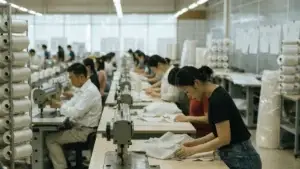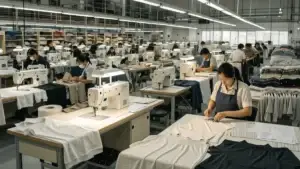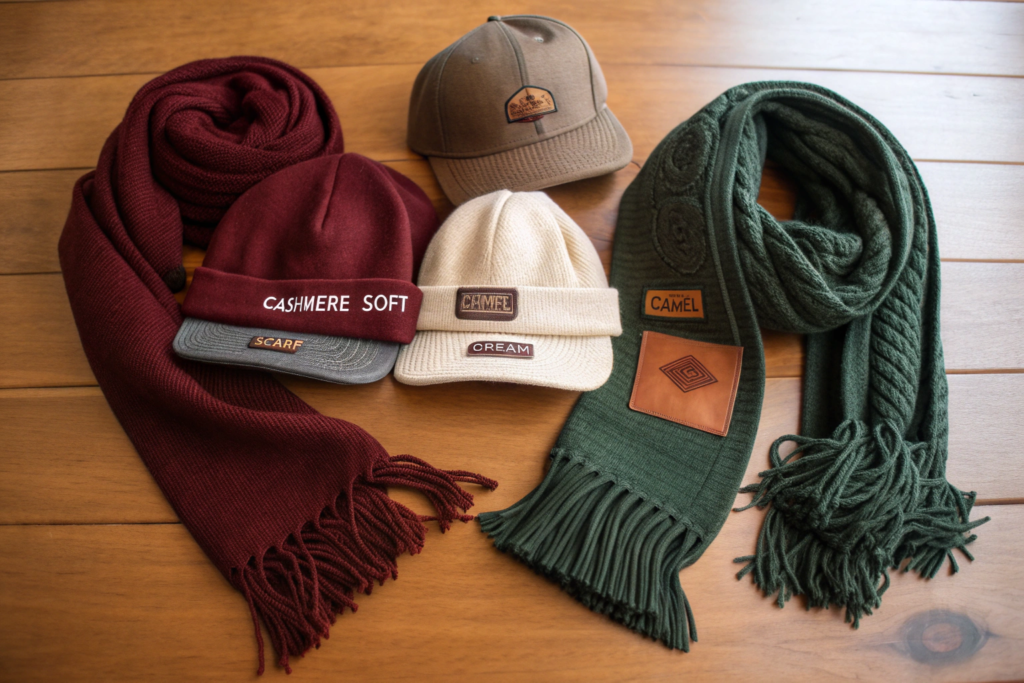
A Chicago-based contemporary womenswear brand once decided to add a "quick" line of branded beanies and scarves to their Fall collection, just six weeks before the retail launch. The founder found a generic promotional products supplier online, uploaded their logo, selected "navy blue" from a standard color chart, and placed a 500-piece order for each. The beanies arrived in a flat, lifeless shade of navy that clashed with the carefully developed midnight navy of their wool coat collection. The scarves were a thin, acrylic-blend knit that pilled after three wears and felt scratchy against the neck. The brand's customers, accustomed to the luxurious hand feel of the brand's $350 cashmere-blend sweaters, recoiled at the cheap accessories. The entire accessories line sold at a 60% clearance markdown. The brand had sourced hats and scarves from a promotional merchandise supplier, not a premium garment accessory manufacturer.
To quickly source premium customized hats and scarves for a retail apparel brand, you must approach the sourcing process as you would a tailored garment—by identifying a specialized knit accessories or headwear manufacturer with in-house yarn sourcing, knitting, and finishing capabilities, providing a physical "Reference Sample" with the exact hand feel, weight, and stitch structure you require, specifying every customization detail—yarn composition, gauge, label attachment method, and packaging—in a concise but complete accessories tech pack, and negotiating a "Rapid Replenishment" agreement that allows you to test the market with an initial 300-500 piece order and reorder best-selling colors within a 14-day turnaround.
At Shanghai Fumao, I produce customized hats and scarves for several of my existing apparel brand partners. The key insight is that a beanie is a knit garment for the head, and a scarf is a woven or knit garment for the neck. The same yarn sourcing relationships, the same knitting machine expertise, and the same quality control rigor that produce a premium sweater produce a premium accessory.
Why Is a "Yarn Composition Specification" the Single Most Important Quality Document for a Premium Scarf or Beanie?
A Boston-based premium menswear brand once launched a "cashmere-soft" scarf collection, marketed as "luxury winter accessories." The scarves sold well initially, but within weeks, the returns began. Customers complained that the scarves were "scratchy," "irritating to the neck," and "not as soft as expected." The brand investigated. The factory had sourced a cheap, short-fiber, low-grade wool-acrylic blend and labeled it as "cashmere feel" on the commercial invoice. The brand had never specified the exact yarn composition, fiber length, or yarn count in a sourcing document. The word "cashmere-soft" was a marketing term, not a material specification.
The yarn composition specification is the single most important quality document for a premium scarf or beanie because the entire tactile and thermal experience of the accessory—its softness against the sensitive skin of the neck and forehead, its warmth-to-weight ratio, its resistance to pilling, and its ability to hold its shape after repeated wear—is determined by the raw yarn fiber content, fiber staple length, and yarn count, and without a written, specific yarn specification stating the exact fiber percentages, the micron diameter for wool or cashmere, and the yarn count in Nm or Ne, the factory is free to substitute a cheaper, coarser, shorter-fiber yarn that will fail to meet the brand's quality expectation.
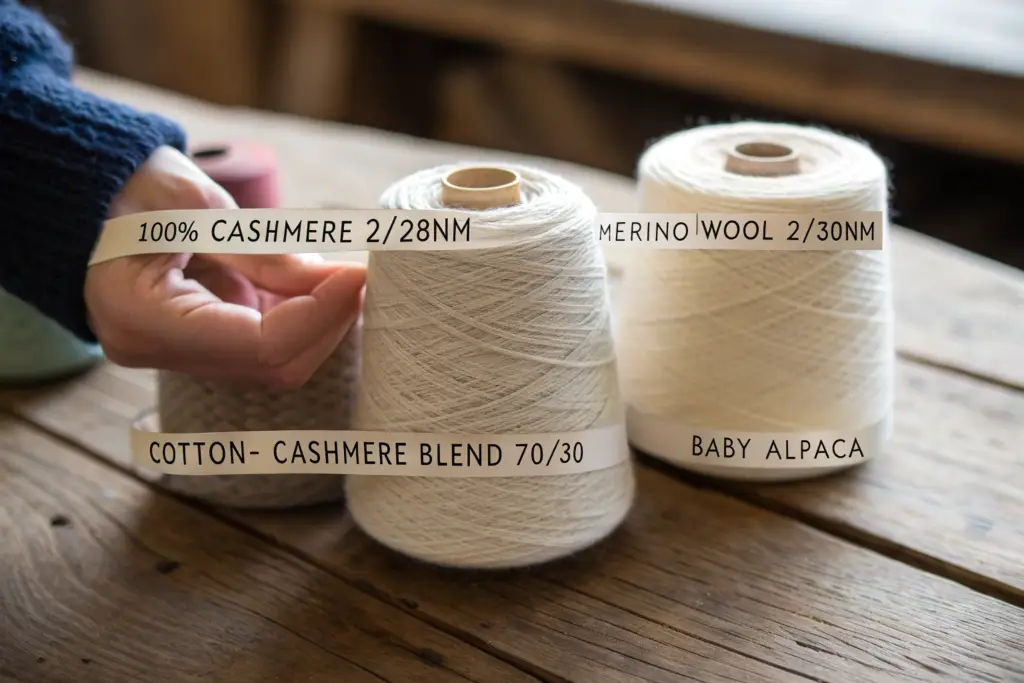
"Soft" is an opinion. "100% Cashmere, 15.5 micron fiber diameter, 2/28Nm yarn count" is a specification. The factory can verify the yarn invoice against the specification. The brand can send a random scarf to a lab for fiber content and micron analysis. The specification transforms a subjective quality promise into an objective, testable requirement.
What Is the Difference Between "Cashmere" and "Cashmere Feel," and Why Must the Specification Use the Exact Legal Fiber Name?
"Cashmere" is a legally defined fiber from the undercoat of the Capra hircus goat. "Cashmere feel" is a marketing term with no legal definition, often used to describe a chemically softened acrylic or a low-grade wool blend. The US Textile Fiber Products Identification Act requires the use of the generic fiber name. A specification that says "Cashmere feel" is a license for the factory to use acrylic.
How Does the "Fiber Micron Diameter" Specification Determine Whether a Scarf Feels Luxurious or Scratchy?
The micron diameter measures the thickness of individual wool or cashmere fibers. Cashmere fibers between 14 and 16 microns feel luxuriously soft against sensitive neck skin. Wool fibers above 22 microns feel scratchy and can cause skin irritation. The specification must state the maximum acceptable micron diameter.
What "Knitting Gauge and Stitch Structure" Details Transform a Generic Beanie Into a Premium, Shape-Retaining Accessory?
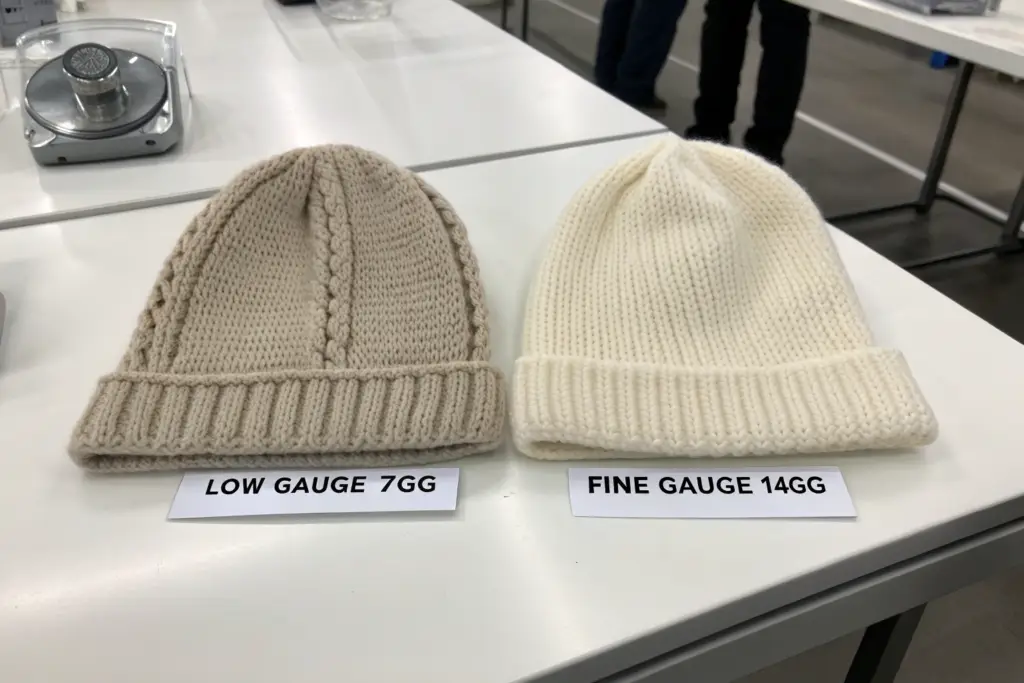
A Portland-based outdoor lifestyle brand once sourced a batch of beanies that looked great in the product photos. The beanies were a chunky, slouchy style that photographed beautifully for the website. After two weeks of wear, the beanies had stretched out, lost their shape, and become loose, shapeless bags of yarn on the customers' heads. The factory had knitted them on a low-gauge, 7-gauge machine with a loose tension to save yarn and reduce knitting time. The beanie had no inherent structural integrity. It relied on being brand new to hold its shape, and the moment a customer wore it for a day, the structure collapsed.
The knitting gauge and stitch structure details that transform a generic beanie into a premium, shape-retaining accessory are a minimum gauge of 12-14 GG (gauge) for a fine, dense knit that maintains its shape, a 1x1 or 2x2 rib structure at the cuff that provides active elastic recovery without requiring an external elastic band, and a specified stitch tension that is tight enough to create fabric memory but not so tight that the yarn loses its loft and softness, with the specific gauge and stitch structure documented on the accessories tech pack so the knitting mill cannot substitute a faster, looser, cheaper knitting program.
A knitting machine gauge is the number of needles per inch. A higher gauge number means more needles, tighter stitches, a denser fabric, and better shape retention. A lower gauge number means fewer needles, looser stitches, a faster knitting speed, and lower yarn consumption—all of which benefit the factory's cost at the expense of the product's quality.
How Does a "1x1 Rib Cuff" on a Beanie Provide Elastic Recovery Without Adding Spandex?
A 1x1 rib knit alternates one knit stitch with one purl stitch in every row. This creates a corrugated structure that naturally contracts and expands. When stretched, the rib structure stores mechanical energy and returns to its original shape. A premium beanie uses this natural rib elasticity for the cuff, maintaining a clean fiber composition without synthetic elastane.
Why Does "Stitch Tension" Affect Both the Softness and the Shape Retention of a Cashmere Scarf?
If the stitch tension is too loose, the scarf will feel soft and fluffy initially but will stretch out, lose its shape, and pill heavily. If the tension is too tight, the scarf will hold its shape but feel stiff and boardy, losing the luxurious drape. The tension must be specified and tested on a sample batch.
How Do You Specify "Custom Label and Trim Attachment" for Accessories to Ensure Brand Consistency?
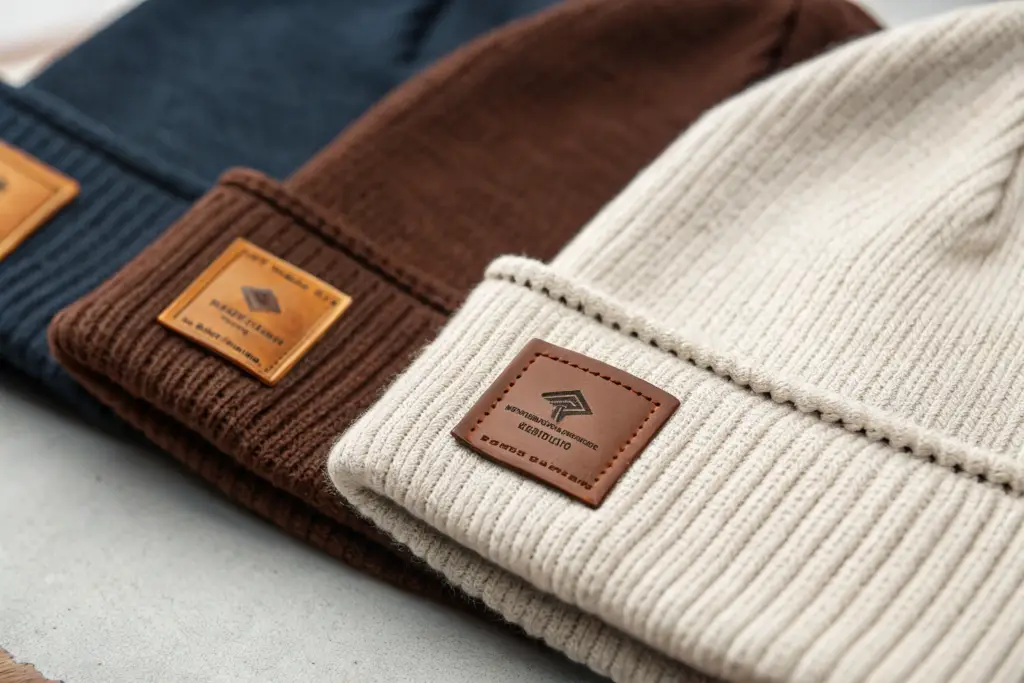
A Los Angeles-based streetwear brand once launched a premium beanie with a beautiful, custom-designed leather brand patch. The prototype sample was perfect—the patch was evenly stitched, centered, and securely attached. The bulk order arrived with the leather patches stitched crookedly, tilted at a 15-degree angle on 30% of the units, and with visible glue residue oozing from under the patch edges. The factory had substituted a cheaper, unskilled laborer for the patch attachment, using a glue gun and a manual stitching process with no alignment guide.
To specify custom label and trim attachment for accessories and ensure brand consistency, the accessories tech pack must include a "Label Placement Diagram" showing the exact position of the label relative to a fixed reference point—the center back seam, the folded cuff edge—with a tolerance of +/- 2mm, specify the attachment method (hand-stitched with hidden thread, machine-sewn with matching thread, or heat-sealed with no visible stitch) and the specific thread color and stitch density for sewn labels, and require a "Label Attachment Durability Test" where the label is pulled with a force of 30 Newtons for 10 seconds without detachment or distortion.
A label is a brand's signature on the product. A crooked, poorly attached, or peeling label communicates carelessness and cheapness, regardless of the quality of the beanie or scarf it is attached to.
How Does a "Laser Alignment Guide" on the Sewing Machine Ensure a Leather Patch Is Stitched Within a 1-Degree Angular Tolerance?
A laser alignment guide projects a red line onto the fabric, showing the operator exactly where the patch edge must align. The operator positions the patch against the laser line before sewing. This simple, low-cost fixture reduces angular misalignment from an unacceptable 15 degrees to an acceptable 1 degree.
Why Should a "Label Pull Test" at 30 Newtons Be Included in the Accessories AQL Inspection?
A label that detaches in the customer's hand during the first wear destroys the perceived quality of the entire accessory. The 30-Newton pull test, performed on a random sample during the AQL inspection, verifies that the label is securely and permanently attached.
What Is a "Rapid Replenishment" Accessories Production Model and How Does It De-Risk a New Category Launch?
A Minneapolis-based winter accessories brand once placed a single, large 3,000-piece order for scarves across six colors, based entirely on the founder's personal color preferences. The grey and camel scarves sold out within three weeks. The mustard yellow and teal scarves sold nine units combined. The founder was left with 1,200 units of dead stock in undesirable colors, tying up warehouse space and working capital for eighteen months. The brand could have tested the market with a 300-piece initial order across all six colors, identified the two best-selling colors within two weeks of launch, and placed a rapid replenishment order for 500 additional units in only the winning colors.
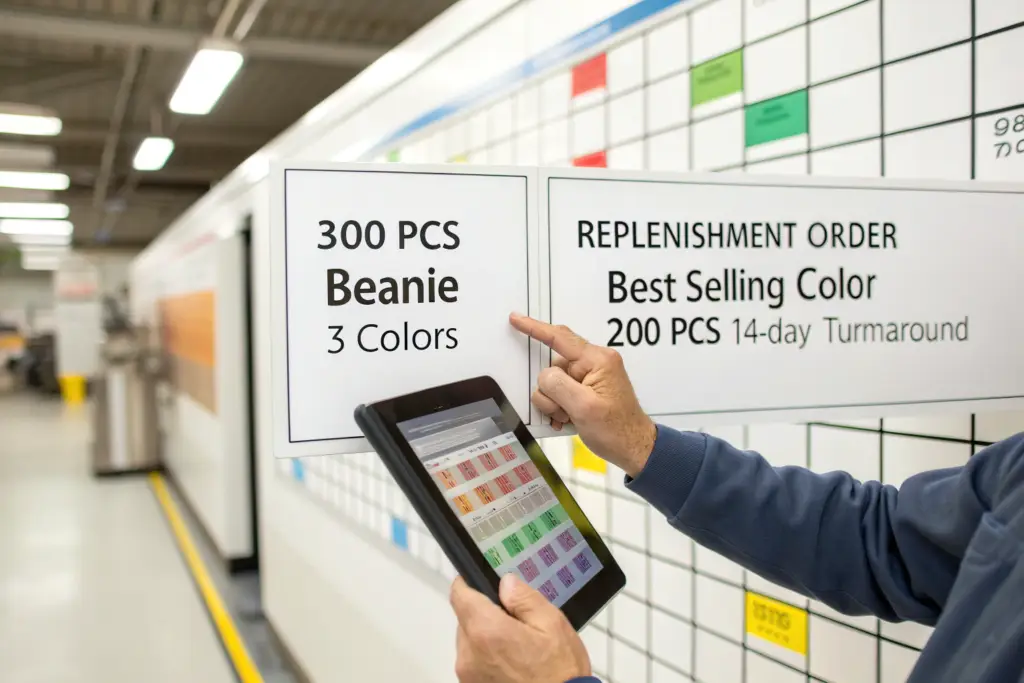
A Rapid Replenishment accessories production model de-risks a new category launch by structuring the initial production order as a small, 300-500 piece "Market Test" batch across all planned colors, with a pre-negotiated agreement that the factory will hold a buffer stock of the undyed greige yarn for the best-selling colors, and process a replenishment order for the winning color within 14 calendar days of the brand's reorder trigger, allowing the brand to test consumer color preferences with minimal upfront inventory investment and rapidly scale only the colors that demonstrate actual sell-through.
The biggest financial risk in launching a new accessories category is guessing wrong on color allocation and being stuck with dead stock. The Rapid Replenishment model replaces guessing with data-driven reordering.
How Does a "Greige Yarn Buffer Stock" for Accessories Enable a 14-Day Reorder Turnaround?
The factory pre-purchases a reserve quantity of undyed, high-quality yarn in the base fiber—cashmere, merino, cotton—based on the brand's initial order volume. When the brand identifies the best-selling color and triggers a replenishment order, the reserved greige yarn is immediately dyed to the specific color and knitted into finished accessories within 10-14 days.
Why Is a "Pre-Negotiated Replenishment Price" Locked in Before the First Order Ships?
The brand and factory agree on the replenishment unit price at the time of the initial order contract, not after the sell-through data comes in. This prevents the factory from raising the price on the best-selling color once the brand is dependent on rapid restocking.
Conclusion
Sourcing premium customized hats and scarves for a retail apparel brand is not a detour to a promotional products catalog. It is a specialized textile manufacturing discipline that requires the same rigor as sourcing a tailored jacket. The yarn composition must be specified to the fiber percentage, micron diameter, and yarn count. The knitting gauge and stitch structure must be specified to the machine gauge, the rib pattern, and the stitch tension. The custom label attachment must be specified with a placement diagram, a thread color, and a pull-force durability test. The production model must be structured as a Rapid Replenishment system that tests the market with a small batch and rapidly scales the winning colors.
At Shanghai Fumao, I produce customized hats and scarves for my apparel brand partners using the same yarn sourcing relationships, the same knitting expertise, and the same quality control systems that produce their premium sweaters and cardigans. My accessories tech packs mirror the rigor of my garment tech packs. My Rapid Replenishment model allows brands to test, learn, and scale without the risk of massive dead stock.
If you are a brand buyer ready to add premium, customized hats and scarves to your collection and you want a manufacturing partner who treats a beanie as seriously as a blazer, contact my Business Director, Elaine. She can share our accessories yarn specification template, our label attachment durability test standard, and our Rapid Replenishment agreement structure. Reach Elaine at: elaine@fumaoclothing.com. Accessorize your collection without compromising your quality.