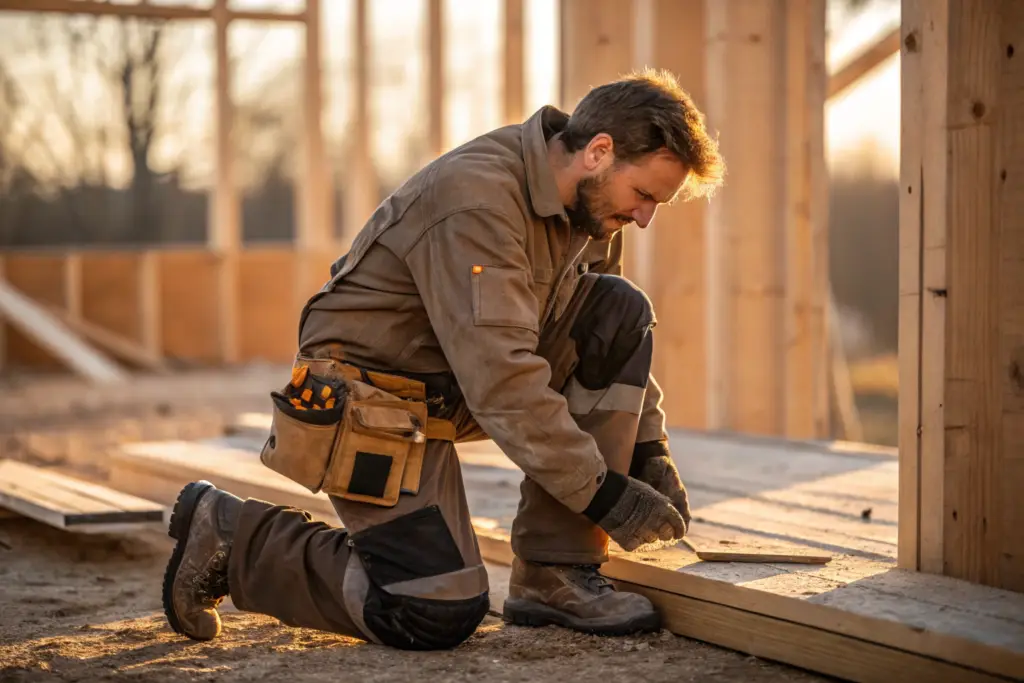
A Denver-based workwear brand once designed a "premium" outdoor work jacket that looked beautiful in the catalog—a clean, minimalist design in a handsome charcoal grey with subtle branded rivets. It sold well on launch. Within six weeks, the returns began flooding in. Construction supervisors reported that the pockets were too shallow, and their smartphones slipped out when they bent over to inspect footings. Utility linemen said the sleeve cuffs had no gusseted expansion, and the fabric pulled tight and restricted their reach when working on overhead lines. Road crews found the fabric was not windproof, and the chill cut through them during early morning shifts. The jacket was a fashion garment styled to look like workwear. It was not designed by anyone who had ever spent a ten-hour shift working outdoors in November.
Functional designs for outdoor workwear must incorporate seven specific, non-negotiable engineering features: articulated sleeves with a gusseted underarm that provides a full 180-degree overhead reach without the hem riding up, reinforced knee panels with a contoured shape and an internal pocket for removable foam knee pads, tool-specific pocketing with reinforced openings, a dual-layer fabric system with a durable, abrasion-resistant outer face and a moisture-wicking, thermoregulating inner face, triple-stitched load-bearing seams with a minimum of 10 stitches per inch, a windproof and water-repellent outer finish that retains breathability, and high-visibility reflective elements integrated directly into the garment seams rather than as detachable accessories.
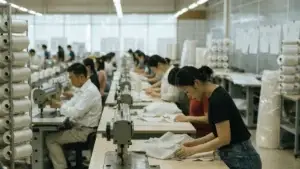
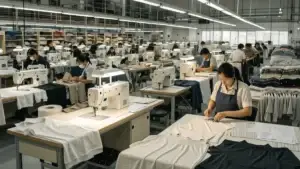
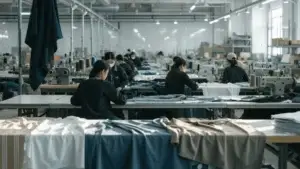
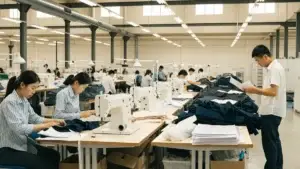
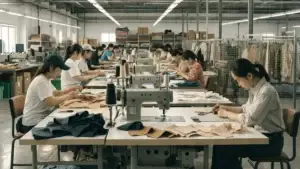
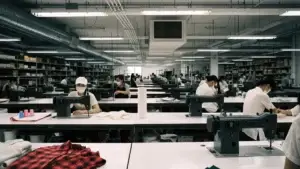
At Shanghai Fumao, I produce outdoor workwear for brands whose customers wear these garments to frame houses, climb utility poles, and pave roads. The design requirements are not aesthetic preferences. They are functional specifications dictated by the physical movements, environmental exposures, and tool-carrying needs of a worker who will wear the garment for 50 to 60 hours per week in all weather conditions.
Why Is an "Articulated Sleeve With Underarm Gusset" a Non-Negotiable Mobility Requirement for Overhead Work?
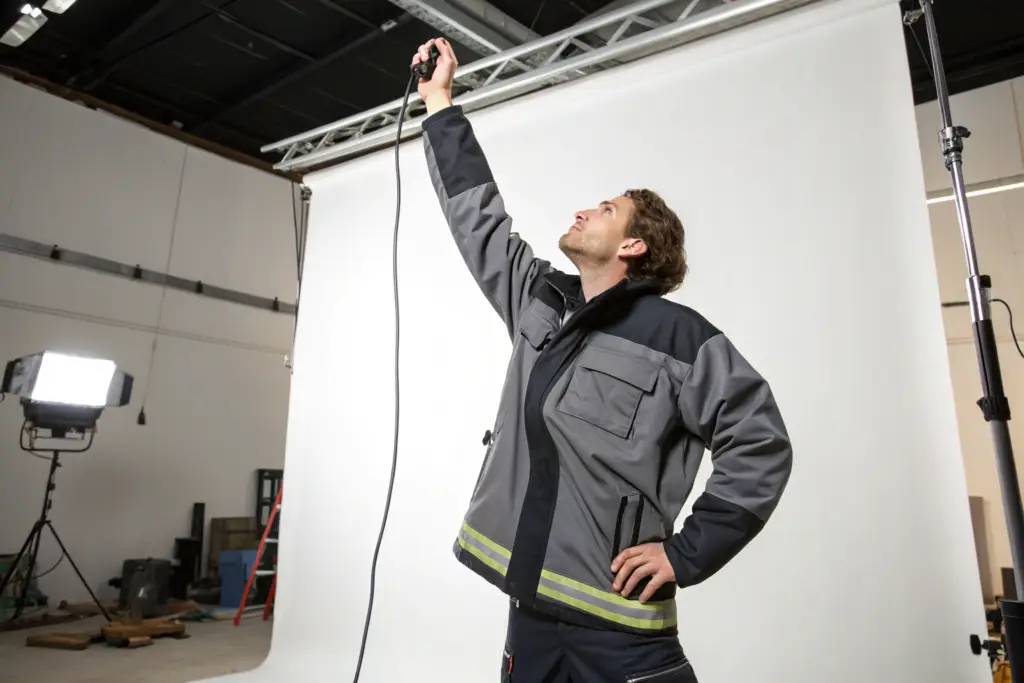
A Portland-based workwear brand once designed a jacket with a standard, straight-set sleeve—a design borrowed from casual fashion jackets. A utility lineman for a major electrical company wore the jacket during a winter storm repair shift. As he reached overhead to secure a transformer connection, the standard sleeve pulled the entire jacket body upward, exposing his lower back and stomach to freezing rain and wind. He completed the repair, returned to the depot, and filed a formal complaint that the jacket was "dangerous for overhead work." The brand lost a $200,000 corporate uniform contract.
An articulated sleeve with an underarm gusset is a non-negotiable mobility requirement because outdoor workers—utility linemen, arborists, construction framers, and warehouse loaders—routinely perform sustained overhead reaching, and a standard straight-set sleeve physically binds at the shoulder when the arm rises above 90 degrees, pulling the jacket body upward and exposing the worker's torso, whereas an engineered articulated sleeve with a diamond-shaped, flexible gusseted panel inserted at the underarm allows the arm to rotate through a full 180-degree range of motion while the jacket body remains anchored at the waist.
The gusset is a triangular or diamond-shaped fabric insert sewn into the underarm seam. When the arm raises, the gusset unfolds and provides additional fabric length along the sleeve's underside, accommodating the increased distance from shoulder to wrist that occurs when the arm is fully extended overhead. Without the gusset, the sleeve simply pulls the entire jacket upward.
How Is the "Gusset Depth" Measured and Specified on a Tech Pack for Maximum Mobility?
The gusset depth is the vertical measurement from the underarm seam intersection to the deepest point of the gusset. For a medium-sized work jacket, a gusset depth of 5-7 cm provides full overhead mobility. The measurement must be specified on the tech pack's sleeve construction detail page, and the gusset fabric must match the shell fabric's stretch and weight.
Why Does a "Bi-Swing Back" Pleat Combine With the Underarm Gusset to Double the Forward Reach Capacity?
A bi-swing back is a pair of deep, stitched-down pleats running vertically down the back of the jacket, from the shoulder blades to the waist. When the worker reaches forward, the pleats expand, releasing additional fabric across the back. Combined with the underarm gusset, the worker achieves unrestricted forward and overhead reach.
What Specific "Knee Pad Pocket" Construction Prevents the Pad From Slipping During Extended Crawling?
A UK-based construction workwear brand once designed trousers with a simple, open-top knee pad pocket. The foam knee pad, inserted from the top, consistently slid upward and outward during a full day of crawling and kneeling on a roofing project. The workers, frustrated, removed the knee pads entirely and resorted to strapping external rubber knee pads over the trousers. The built-in pocket feature was rendered useless by poor design.
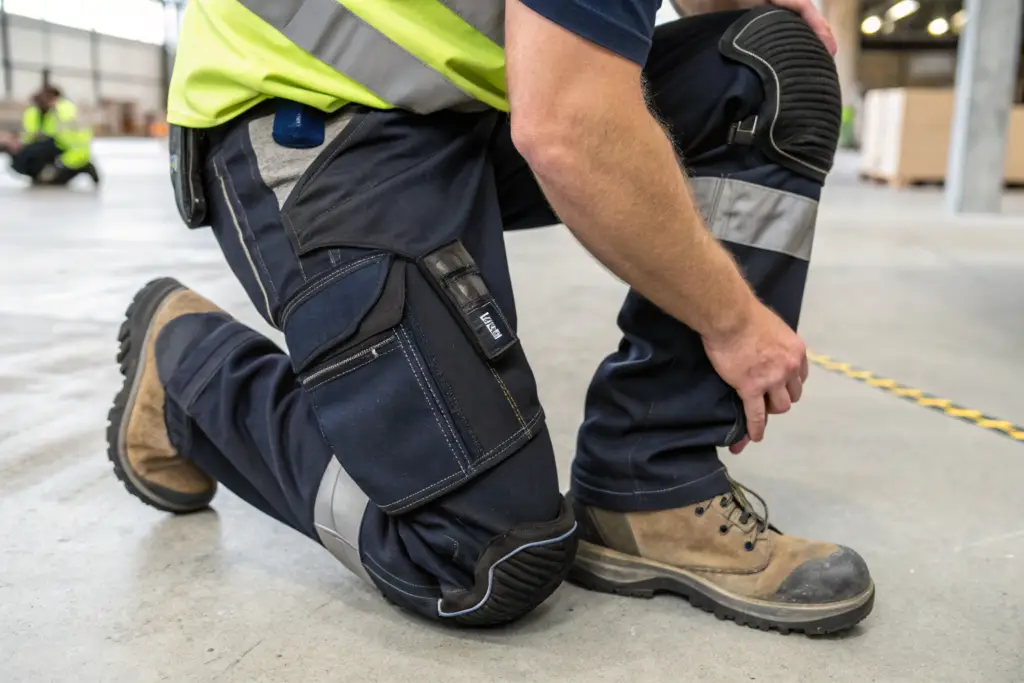
The knee pad pocket construction that prevents pad slippage must use a bottom-loading design with a heavy-duty, fully sealed Velcro or zippered closure at the trouser hem, a contoured internal pocket shape that mirrors the natural bend of a kneeling knee rather than a straight rectangular pouch, and an internal anti-slip silicone bead strip printed on the pocket lining that grips the foam pad and prevents vertical migration during repeated kneeling-to-standing transitions.
An open-top pocket relies on gravity and friction to hold the pad, but crawling generates upward forces that overcome both. A bottom-loading pocket with a secure closure traps the pad physically. The contoured shape matches the knee's bent position, and the silicone grip strip provides active friction.
How Does the "Contoured Pocket Shape" Differ From a Straight Rectangle, and Why Does It Matter?
A straight rectangular pocket forces the flat foam pad into a curve when the knee bends, creating internal tension that pushes the pad upward. A contoured pocket is pre-shaped with a slight curve that matches the natural angle of a bent knee, allowing the pad to sit naturally without tension.
Why Is "Bottom-Loading With a Storm Flap" Superior to "Top-Loading With a Velcro Strap"?
A bottom-loading pocket uses gravity to keep the pad seated—the pad rests at the closed bottom of the pocket. A storm flap covering the bottom opening prevents debris from entering. A top-loading pocket relies entirely on a small Velcro strap to hold the pad, which inevitably fails under sustained crawling pressure.
How Does a "Triple-Needle Felled Seam" Prevent Catastrophic Garment Failure at the Shoulder and Crotch Stress Points?
An Australian mining workwear brand once received a shipment of 5,000 coveralls where the crotch seams consistently burst open within four weeks of wear. The factory had used a standard single-needle lockstitch at 8 stitches per inch. The seam strength was inadequate for the repeated squatting, bending, and straddling movements of underground miners. The brand had to recall the entire batch, and the factory absorbed a $78,000 rework and replacement cost.
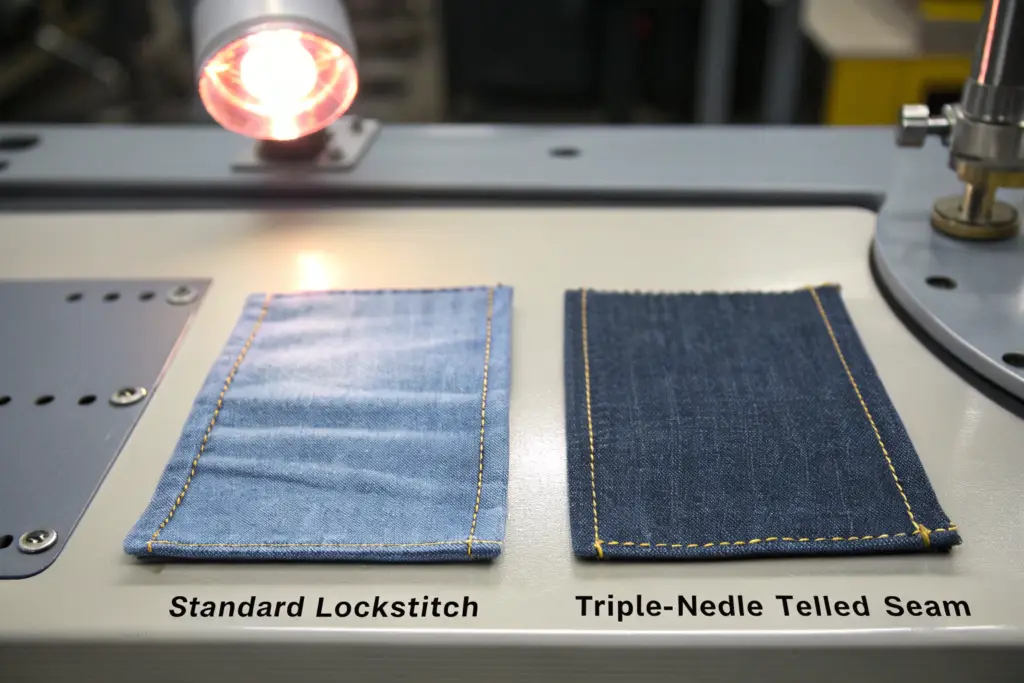
A triple-needle felled seam prevents catastrophic garment failure at shoulder and crotch stress points by distributing the tensile load across three separate, parallel rows of lockstitching, each sewn with a heavy-duty polyester core-spun thread at a density of 10-12 stitches per inch, and enclosing the raw fabric edge within a folded, double-layer seam allowance that eliminates the single-point thread perforation failure mode of a standard single-needle seam, resulting in a seam tensile strength of 60-80 Newtons compared to 25-35 Newtons for a standard lockstitch.
A standard single-needle seam fails when one stitch breaks, which increases the load on the adjacent stitches, causing a sequential zipper-like rupture along the entire seam. A triple-needle seam provides redundancy: even if one stitch line fails, two intact stitch lines remain, holding the seam together.
What Is the Exact Stitch Density and Thread Specification for a Load-Bearing Workwear Seam?
The specification requires 10-12 stitches per inch using a Tex 70 or Tex 90 polyester core-spun thread with a minimum tensile strength of 8-10 pounds. The seam allowance must be a minimum of 12mm, and the felled seam must enclose the raw edge completely.
How Does a "Bar-Tack Reinforcement" at the Seam Termination Point Prevent a 4-Inch Rip?
A bar-tack is a dense, 1/2 inch long zigzag stitch placed perpendicularly across the end of every major seam—shoulder, armhole, crotch, pocket corners. It distributes the pulling force across a wider area and prevents the seam from unzipping from its endpoint, which is the most common seam failure initiation point.
What "Dual-Layer Moisture Management System" Keeps a Worker Dry During High-Exertion Outdoor Labor in Cold Conditions?
A Canadian winter workwear brand once designed an insulated work jacket with a heavily waterproof outer shell and a thick fleece lining. It was exceptionally warm when the worker was stationary. But when a road construction crew began shoveling gravel at high exertion in -5 degrees Celsius weather, their bodies generated significant perspiration. The impermeable outer shell trapped the moisture inside. Within 45 minutes, the fleece lining was soaked with sweat. When the crew took their lunch break and stopped moving, the trapped moisture froze, and the workers became dangerously cold.
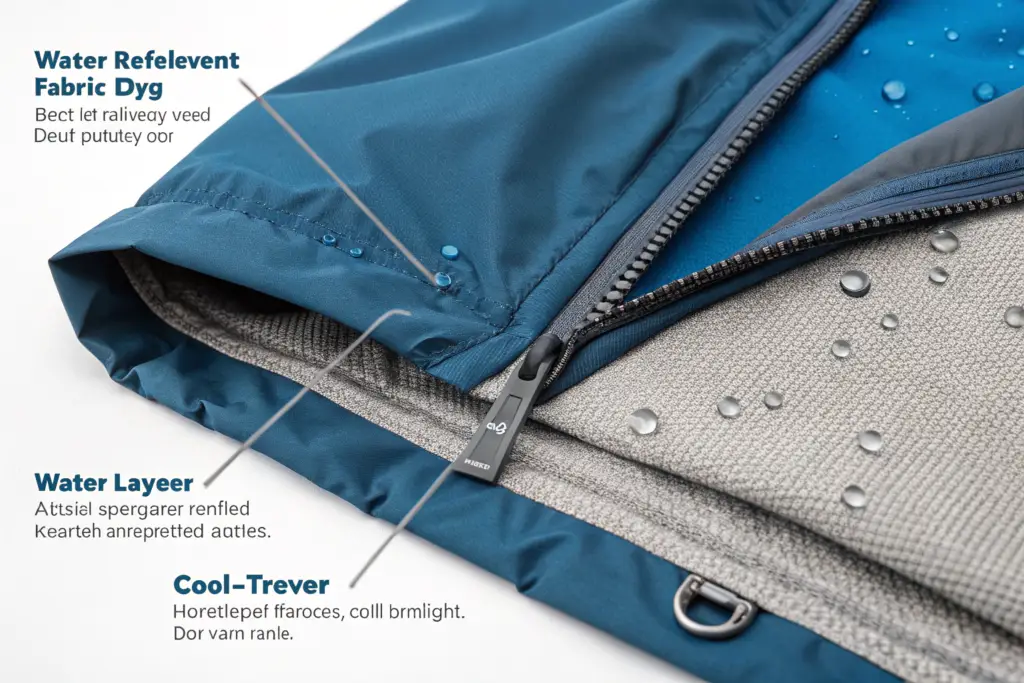
A functional dual-layer moisture management system for cold-weather workwear consists of an outer face fabric treated with a durable water-repellent finish that blocks external precipitation while maintaining a breathability rating of at least 5,000 g/m²/24hr, and an inner face fabric constructed from a hydrophobic polyester mesh or a moisture-wicking grid fleece that actively pulls liquid sweat away from the worker's skin, transports it via capillary action to the fabric's outer surface, and allows it to evaporate through the breathable outer layer, keeping the worker's skin dry during both high-exertion work and subsequent rest periods.
The system fails if either layer fails. A waterproof-but-not-breathable outer layer traps sweat inside, soaking the insulation. A wicking-but-not-warm inner layer pulls moisture but provides no thermal protection. The two layers must be engineered as an integrated system.
How Is "Breathability" Quantitatively Measured and Specified for a Waterproof Workwear Shell?
Breathability is measured in grams of water vapor that can pass through one square meter of fabric in 24 hours, expressed as g/m²/24hr. A rating of 5,000 g/m²/24hr is the minimum for moderate exertion work. A rating of 10,000-15,000 g/m²/24hr is required for high-exertion outdoor labor.
Why Is a "Hydrophobic Polyester Mesh" Inner Lining Superior to a Cotton Fleece Lining for Moisture Management?
Cotton fleece absorbs moisture and holds it against the skin, creating a cold, wet layer that accelerates heat loss through conduction. Hydrophobic polyester mesh does not absorb moisture; it physically channels the liquid sweat through the mesh structure to the outer surface, leaving the inner surface dry against the skin.
Conclusion
Designing outdoor workwear is not a fashion exercise with a rugged aesthetic. It is an industrial design discipline where the garment is a piece of equipment that must perform under physical and environmental stress for extended durations. The articulated sleeve with an underarm gusset is a biomechanical requirement for overhead reach, not a design detail. The bottom-loading, contoured knee pad pocket is a functional solution to a specific workplace movement pattern, not a style feature. The triple-needle felled seam is a structural engineering specification that prevents catastrophic seam rupture, not an aesthetic topstitching choice. The dual-layer moisture management system is a thermal physiology solution that prevents hypothermia during the rest period after high exertion, not a generic "breathable" marketing claim.
At Shanghai Fumao, I produce outdoor workwear to these specific functional specifications. My pattern-making team understands the biomechanics of overhead reach and the physics of moisture vapor transmission. My sewing lines are configured for triple-needle felled seam construction on heavy-duty fabrics. My fabric sourcing team has established relationships with mills that produce breathable, waterproof, abrasion-resistant technical textiles.
If you are a brand buyer developing an outdoor workwear line and you need a manufacturing partner who understands that a work jacket is safety equipment, not a fashion garment, contact my Business Director, Elaine. She can share our technical specification sheets for articulated sleeve construction, knee pad pocket engineering, and seam strength testing, and connect you with our pattern-making team for a functional design consultation. Reach Elaine at: elaine@fumaoclothing.com. Design workwear for the body that will wear it, not the catalog that will sell it.