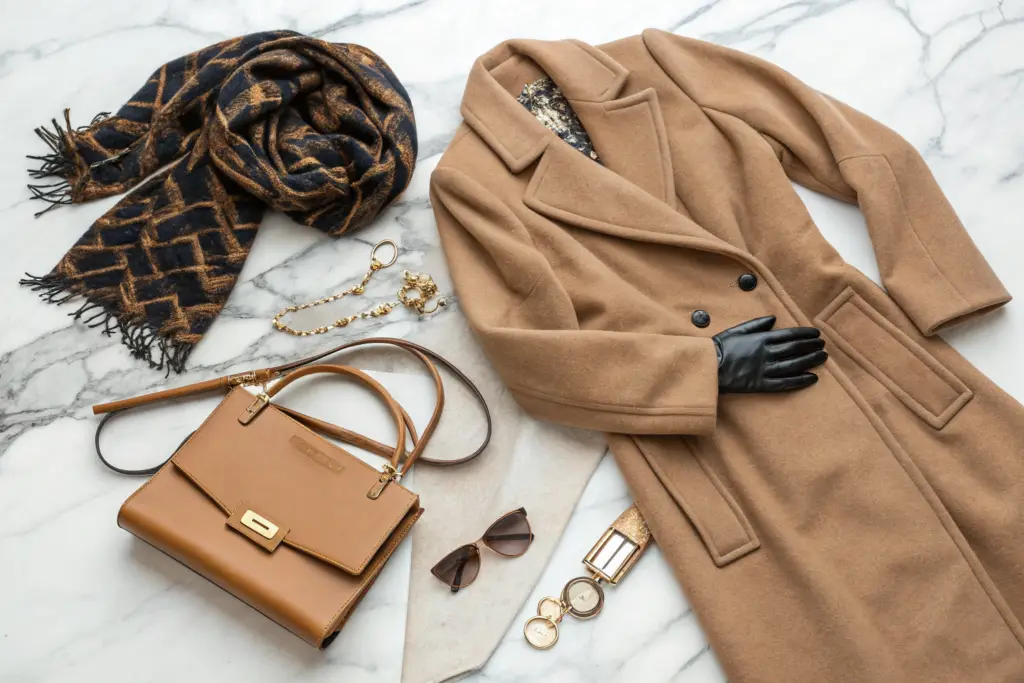
A San Francisco-based contemporary womenswear brand once decided to "easily" add a line of leather belts and handbags to their successful dress collection. The founder sourced a cheap leather workshop, approved some generic gold buckles, and launched the accessories alongside the Spring dresses. The result was a commercial and aesthetic disaster. The belt leather was stiff and plasticky against the soft, fluid drape of the silk dresses. The gold buckle tone clashed with the custom-developed, brushed-brass zipper pulls on the dresses. The handbag lining was a cheap polyester that snagged on the delicate silk fabrics. Customers who loved the brand's clothing immediately recognized the accessories as inauthentic, unbranded add-ons purchased from a different quality universe. The accessories line was marked down by 70% within three months.
To flawlessly integrate high-end fashion accessories into an existing clothing line, you must treat the accessory not as an add-on product but as a material and aesthetic extension of the garment itself, sourcing the exact same metal finishes, leather tannages, and fabric linings that appear in the clothing collection, developing accessories concurrently with the apparel design process—not as an afterthought—and ensuring that every accessory component, from the zipper pull on a bag to the thread color on a scarf hem, is specified with the same detailed tech pack rigor as a tailored jacket.
At Shanghai Fumao, I have helped several of my clothing brand partners extend their collections into coordinated, high-end accessories. The key insight is that a handbag is not a separate product category; it is a garment made from heavier fabric, constructed with the same stitching standards, the same material philosophy, and the same obsessive attention to detail.
Why Does "Hardware Matching" Between a Garment's Zippers and a Bag's Buckles Determine Perceived Luxury Cohesion?
A New York-based premium outerwear brand once developed a beautiful wool overcoat with custom-designed, matte-black powder-coated zipper pulls from a Japanese hardware supplier. The coat was a critical and commercial success. The following season, the brand launched a matching leather backpack. The backpack featured a generic, shiny, chrome-plated buckle from an unrelated trim supplier. The moment the backpack and the coat appeared together in a store window display, the visual disconnect was glaring. The matte-black, textured zipper pull whispered "quiet luxury." The shiny chrome buckle shouted "mass-market commodity." The brand's customers noticed. The backpack sold poorly, and the brand's image of material consistency was damaged.
Hardware matching between a garment's existing zippers, buttons, and rivets and a new accessory's buckles, clasps, and chain straps determines perceived luxury cohesion because the human eye detects metal finish inconsistencies at a subconscious level, and a luxury consumer's perception of quality is built on the expectation of obsessive material continuity—a brushed-gold zipper pull on a jacket paired with a bright-polished gold buckle on a bag from the same brand signals that the accessories were not developed with the same sourcing rigor, effectively severing the accessories from the brand's established quality identity.
Hardware is the jewelry of the garment. A brand that has invested months in developing a specific, signature zipper finish must source accessory hardware from the same supplier or specify the exact same electroplating process, metal alloy, and surface finishing technique to the accessory hardware supplier.
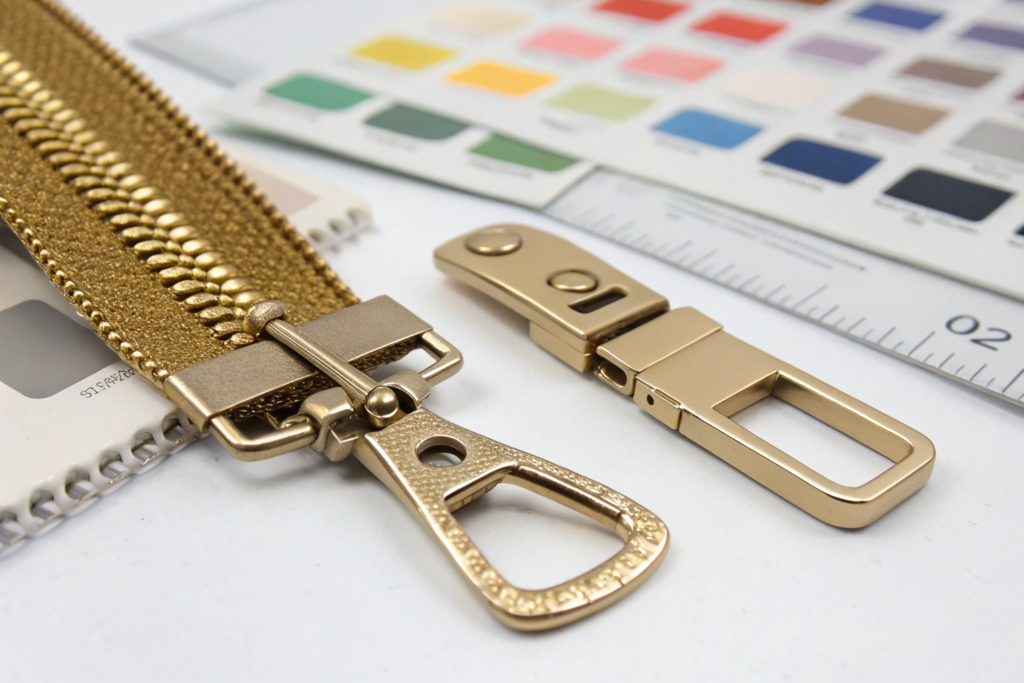
How Is a Specific "Brushed Gold" Finish Specified to a Hardware Supplier to Ensure an Exact Match Across Different Component Types?
The specification requires three elements: the base metal alloy (e.g., zinc alloy or brass), the plating metal and thickness (e.g., 14K gold electroplating at 0.5 microns), and the surface finish description with a physical reference sample (e.g., "satin-brushed finish, linear grain direction, reference sample #BG-2024 attached"). A physical, signed reference sample is non-negotiable for luxury hardware matching.
Why Should a Brand Request a "Hardware Consolidation Audit" From Their Factory Before Launching Accessories?
The audit identifies every single hardware component used across the entire clothing collection—zipper pulls, zipper teeth, buttons, rivets, snaps, eyelets, D-rings, and adjusters—and maps their supplier, metal alloy, plating specification, and finish. This consolidated map becomes the sourcing bible for the accessories development, ensuring every new buckle and clasp is specified from this identical material universe.
How Does "Fabric-to-Accessory Lining Continuity" Prevent a Silk Dress and a Leather Bag From Feeling Like They Came From Different Brands?
A Los Angeles-based evening wear brand once designed a stunning silk chiffon gown with a custom-developed floral print. The gown was lined in a soft, matte silk habotai. The same season, the brand launched a small evening clutch bag to complement the gown. The clutch was externally beautiful, but its internal lining was a generic, shiny black polyester satin. A customer who purchased both the gown and the clutch described the experience in a review: "The dress feels like a dream. The clutch feels like it was borrowed from a different store." The polyester lining screamed cost-cutting and broke the sensory continuity.
Fabric-to-accessory lining continuity ensures sensory cohesion by physically lining the interior of a handbag, the back of a belt, or the inside of a glove with the exact same fabric that lines the garments in the collection—the identical silk habotai, the same Bemberg cupro, the matching viscose twill—so that when a customer touches the inside of the bag after wearing the dress, her fingers register the identical tactile signature, reinforcing the subconscious perception that the entire collection was born from a single, coherent material vision.
Luxury is a tactile experience as much as a visual one. The moment a customer touches a cheap polyester lining inside a bag that accompanies a silk-lined dress, the illusion of a unified, premium collection shatters.
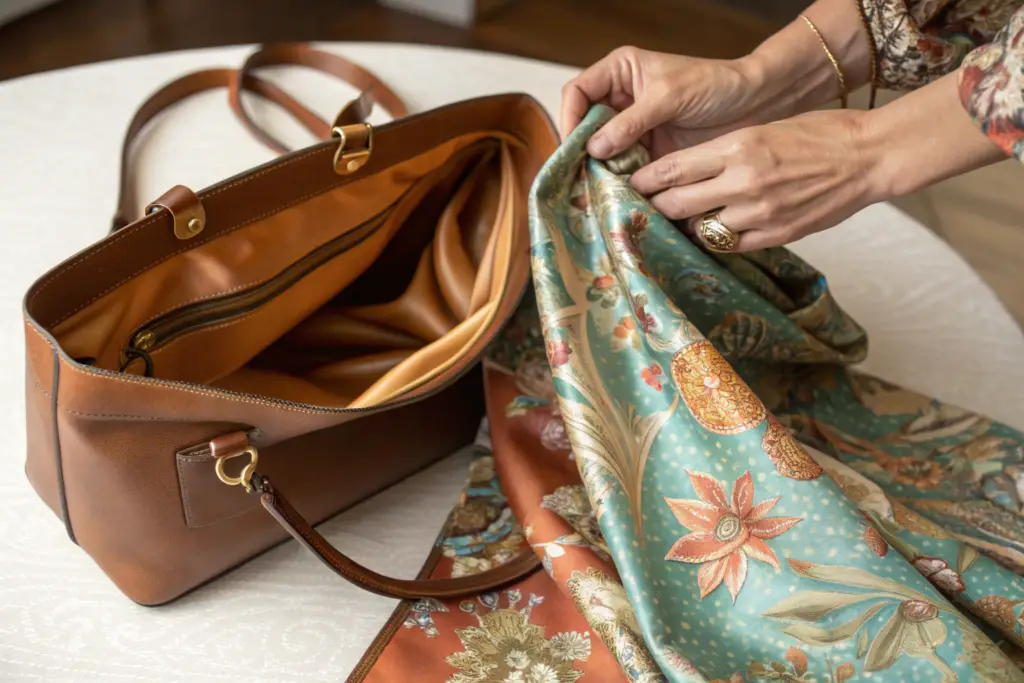
What Is the "Excess Garment Lining Allocation" Strategy That Ensures Perfect Continuity Without Doubling Minimum Order Quantities?
When the factory orders the garment lining fabric for the season's production, the brand orders an additional 8-12% yardage allocation specifically reserved for accessories lining. This uses the same dye lot, same batch, and ensures zero color or texture variation between the dress lining and the bag lining.
Why Is Bemberg Cupro Lining Preferred Over Polyester for Both High-End Garments and Coordinated Accessories?
Bemberg cupro is a regenerated cellulose fiber made from cotton linter. It breathes like cotton, has a luxurious, silky hand feel, is anti-static, and does not snag delicate garment fabrics. Polyester satin feels synthetic, generates static, and is perceived by luxury consumers as a cost-cutting substitute.
How Do You Develop an "Accessories Tech Pack" With the Same Rigor as a Tailored Jacket Specification?
A Chicago-based premium brand once developed their accessories line using a single, vague email to a leather workshop: "Make a nice leather tote bag in black." The resulting bag had uneven stitching, a strap that stretched out after two weeks of use, edge paint that cracked after a month, and a magnetic closure that was too weak to stay shut. The brand had no stitch density specification, no leather thickness tolerance, no edge paint adhesion test requirement, and no closure cycle rating. They had essentially outsourced their quality standards to a workshop with no incentive to meet standards that had never been communicated.
An accessories tech pack must match the rigor of an apparel tech pack by including a dimensionally scaled technical sketch with every measurement point specified in millimeters, a physical leather or fabric swatch with the exact tannage, finish, and thickness tolerance stapled and signed across onto the document, a hardware specimen card with every buckle, clasp, and rivet physically attached and signed, a stitch construction detail specifying the thread type, thread color, stitches per inch, and seam type for every seam on the accessory, and a quality inspection checklist that includes specific performance tests such as strap tensile strength, closure cycle rating, and edge paint adhesion.
The factory that sews a jacket to a 22-page tech pack cannot be handed a one-sentence email and expected to produce a luxury handbag. The specification document is the quality contract. Without it, the workshop defaults to its lowest-cost construction methods.
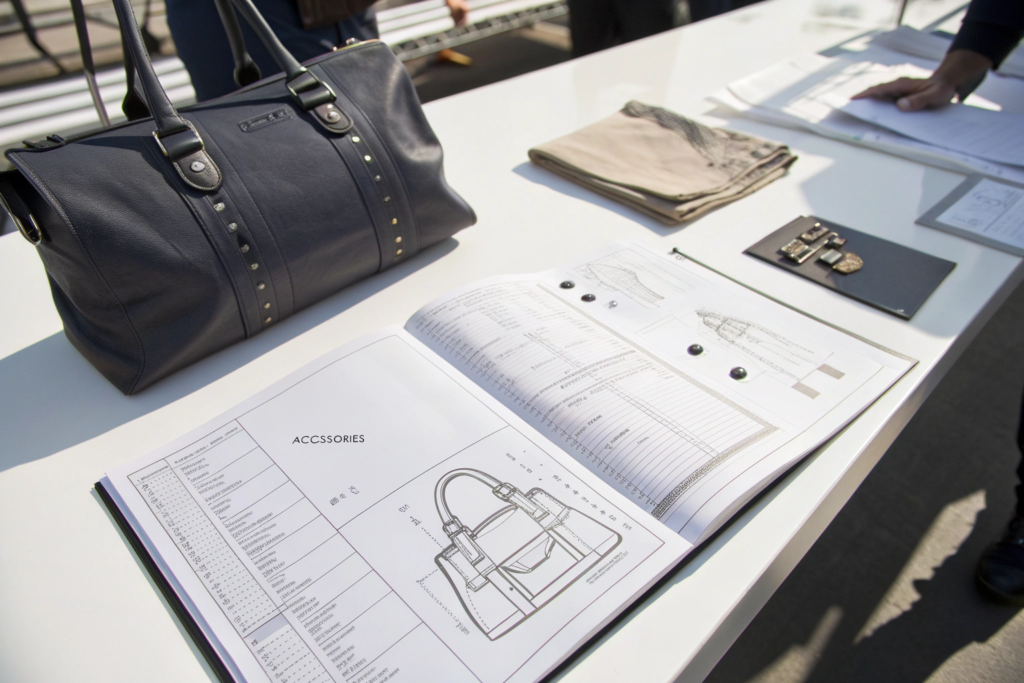
What Specific Performance Tests Must an Accessories AQL Inspection Include Beyond Visual Defect Checks?
The inspection must include a strap tensile strength test (the strap must withstand 15kg of static load for 30 seconds without stretching more than 2%), a closure cycle test (magnetic snaps and zippers must survive 1,000 open-close cycles without failure), and an edge paint adhesion test (the edge paint must not crack or peel when the leather is flexed 100 times).
How Does a "Leather Thickness Tolerance" Specification Prevent a Bag From Being Floppy in One Batch and Stiff in Another?
The tech pack must specify the exact leather thickness in millimeters, with a tolerance of +/- 0.2mm. A handbag specified at 1.6mm will be structured and hold its shape. The same pattern cut from a 1.2mm leather from a different tannery batch will be floppy and lack structure. The thickness specification, measured with a digital leather thickness gauge, ensures batch-to-batch consistency.
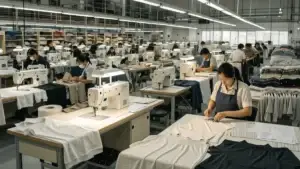
Why Does "Production Line Proximity" Between the Apparel Sewing Floor and the Accessories Workshop Enable Real-Time Quality and Design Continuity?
An Amsterdam-based contemporary fashion brand once split their production between a clothing factory in one province and a leather accessories workshop in a province 800 kilometers away. The clothing factory developed the seasonal color palette and hardware finishes. The accessories workshop received the specifications via email. By the time the leather bags arrived at the brand's warehouse, the "navy blue" leather was a shade lighter than the "navy blue" wool coating on the coats. The two products, intended to be displayed and worn together, looked like they belonged to different collections. The communication was technically correct, but the lack of physical, same-room comparison had allowed a shade drift that neither party had detected.
Production line proximity between the apparel sewing floor and the accessories workshop enables real-time quality and design continuity because the accessories team can physically walk a half-finished handbag to the garment sewing line, hold it directly against the matching coat, and compare the leather color under the same lighting conditions, the hardware finish against the garment zipper, and the lining fabric against the dress interior, resolving material matching discrepancies in minutes rather than across days of couriered samples and calibrated photographs between distant facilities.
Color and texture are perceived relative to their surroundings. The same leather swatch can appear perfectly matched under one light source and visibly mismatched under another. Only a side-by-side, same-room, same-light comparison can guarantee true material continuity.
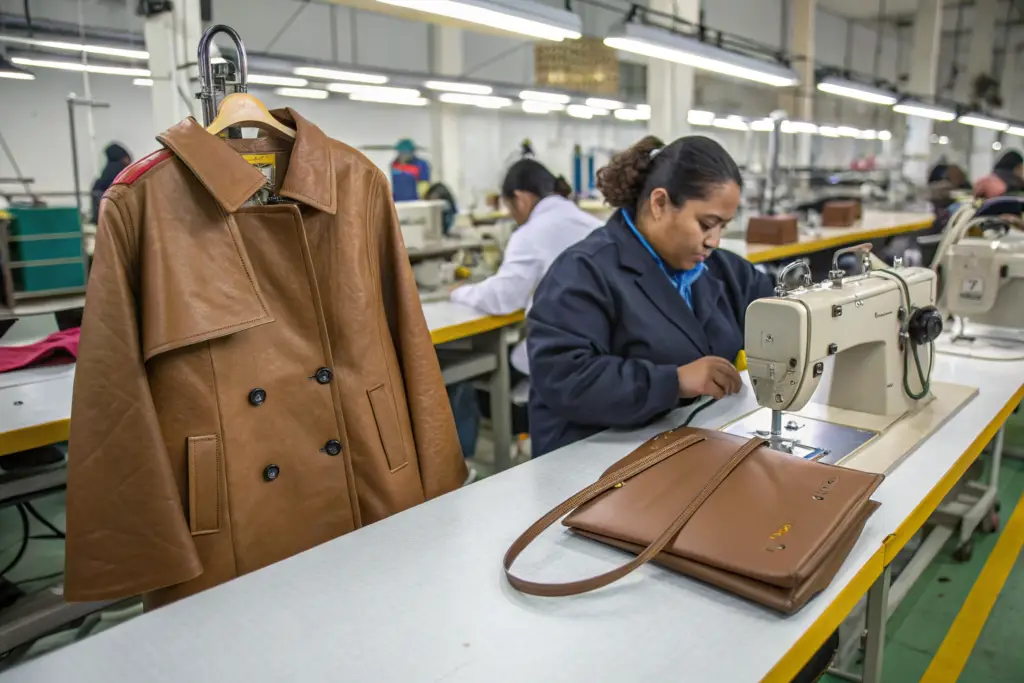
A single QC inspector, positioned at a station that serves both the apparel line and the adjacent accessories workshop, uses the same pick glass and the same stitch density specification card to inspect seams on both a wool coat and a leather tote bag, ensuring that the 10 stitches per inch standard is visually identical across both product categories.
Why Should the Same "Golden Sample" Approval Process Apply to Both a Tailored Jacket and a Leather Handbag?
The Golden Sample—a sealed, signed, physically archived reference standard—should be created for the first approved handbag sample exactly as it is for the first approved jacket. This single, signed, sealed handbag becomes the legal and physical quality reference for the entire accessories production run.
Conclusion
Flawlessly integrating high-end fashion accessories into an existing clothing line is not a simple product line extension. It is a material science and quality systems exercise that demands the same obsessive rigor applied to the garments. The hardware on the bag must match the hardware on the coat, specified to the micron of plating thickness. The lining inside the bag must be the identical silk or cupro that lines the dress, sourced from the same dye lot. The tech pack for the handbag must be as detailed as the tech pack for the tailored jacket, with stitch density, leather thickness tolerances, and performance test specifications. The accessories workshop must be close enough to the apparel sewing floor that a QC inspector can hold the bag against the coat under the same light.
At Shanghai Fumao, I have helped my brand buyers extend their collections into coordinated accessories by applying the same manufacturing discipline to leather goods and textile accessories that we apply to tailored garments. Our hardware suppliers are matched to the exact plating specifications of the garment trims. Our fabric lining allocations include an accessories yardage reserve. Our tech packs for accessories include the same AQL performance test checklists.
If you are a clothing brand ready to integrate high-end accessories into your next collection, and you want a manufacturing partner who understands that a handbag is a garment made from heavier material, contact my Business Director, Elaine. She can share our accessories tech pack template, our hardware matching specification guide, and our integrated QC checklist that covers both apparel and accessories. Reach Elaine at: elaine@fumaoclothing.com. Extend your collection without diluting your quality.