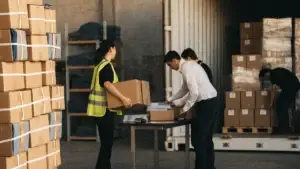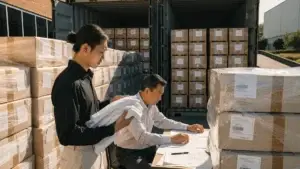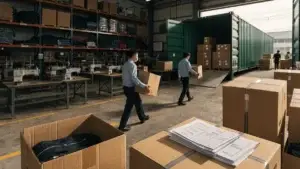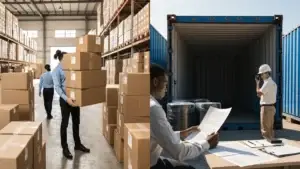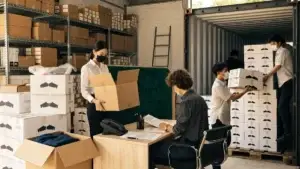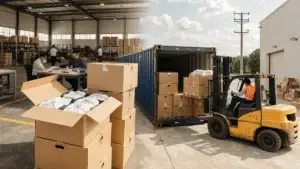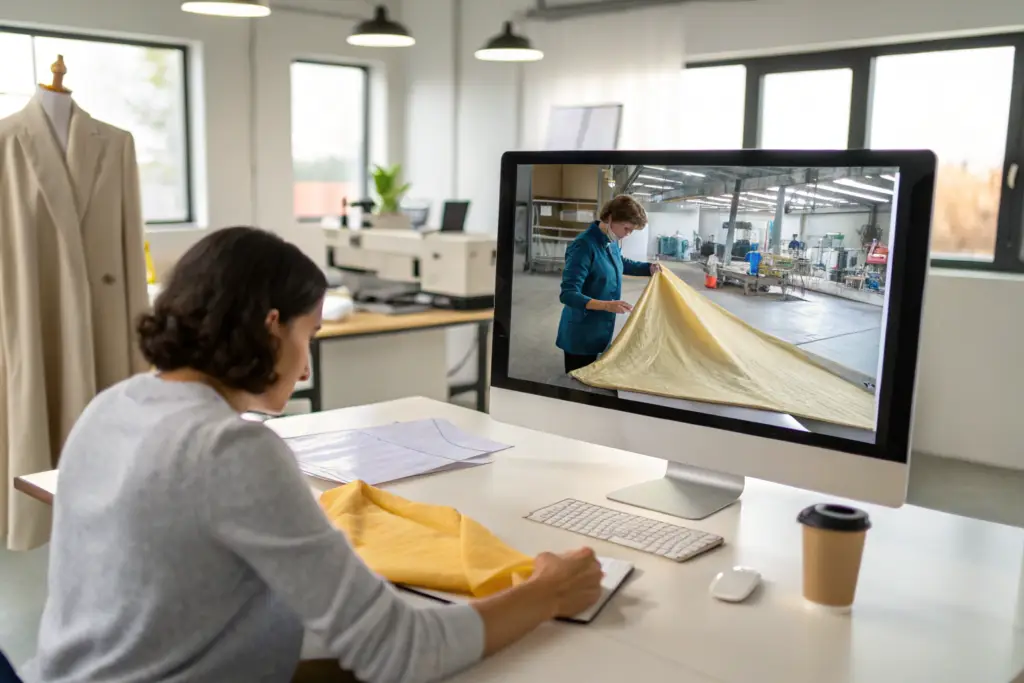
I booked a flight to a factory. Then I canceled it. I booked another flight the next year. I canceled that one too. For fifteen years as a sourcing manager for a mid-sized workwear brand, I believed physical presence was non-negotiable. You had to walk the floor. You had to touch the fabric. You had to look the factory manager in the eye and see if he flinched. So I sat on airplanes. I sat in hotel lobbies. I sat in factory conference rooms drinking tea while my samples were already late. The cost of a single sourcing trip, all-in, was around $4,500. The cost of not going, I believed, was a container full of defective jackets. That was the mental prison I lived in. Then, in early 2025, a colleague forwarded me a LinkedIn post from a factory called Shanghai Fumao. The post was an invitation to a public, unscripted live-stream of their sample room. No appointment. No deposit. Just a link. I clicked it out of curiosity. Forty-five minutes later, I had seen more granular production detail than I absorbed in three physical factory visits combined. I saw their pattern maker adjust an armhole curve on a live CAD screen. I saw their QC team pull a random sample from the line and measure the bartack stitch count against a calibrated ruler. I saw a technician load a fabric swatch into a tensile tester and read the result aloud while the force graph rendered on a shared screen. I never left my desk. My sourcing mindset cracked open that day.
Fumao Clothing's live-stream dismantled my conviction that physical travel was the only path to supplier trust, replacing it with a verified, real-time digital observation model that eliminated staged photo approvals and revealed continuous, uncurated manufacturing reality.
The old model of factory verification is built on a foundation of curation and performance. A buyer announces a visit. The factory prepares for days. The floor is scrubbed. The most competent workers are stationed front and center. The broken machine is temporarily hidden in the back warehouse. The buyer arrives, walks a pre-planned route, sees a controlled performance, and leaves. The audit is staged. The sample approval process that follows is even worse. The factory sends photos of the perfect sample, made by the most skilled sample machinist, under ideal lighting conditions. The buyer approves the photo. The bulk production, made by different operators, under time pressure, on a different machine, looks nothing like the sample photo. This betrayal happens thousands of times a year across the industry. The live-stream, by its inherent nature, cannot be staged in the same way. The camera moves where the viewer requests. The worker who appears is the worker who happens to be there. The fabric being tested is the actual bulk fabric, pulled from the rack live. The random sample is truly random because the buyer selects the carton number on the spot. This is not a curated presentation. This is a witnessed event. The difference is absolute and it fundamentally rewires the trust mechanism from faith-based to evidence-based. I can now, as a buyer, access a level of continuous, uncurated process visibility that was previously available only to internal factory management. The live-stream turned my laptop into a virtual factory window that never closes.
What Did an Unscripted Factory Walk-Through Teach Me About Real Quality?
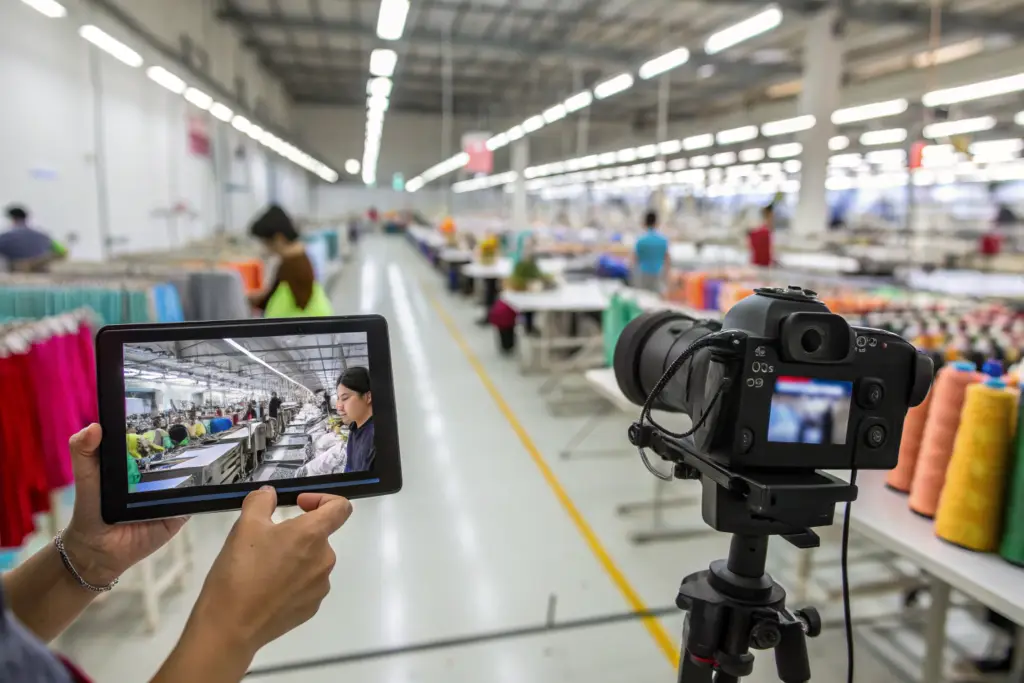
The first thing I noticed during my initial live-stream with Shanghai Fumao was the sound. Not the polished silence of a promotional video, but the actual, chaotic, rhythmic symphony of a working factory floor. I heard the rapid-fire punch of a buttonhole machine. I heard the hiss of a steam iron pressing a collar. I heard a supervisor speaking in Mandarin, calm but firm, to a stitcher about a seam alignment. This audio texture was the first layer of uncurated reality. A staged factory visit is quiet and orderly. A real factory is a controlled storm of motion and sound. The second thing I noticed was the speed. The camera operator, a young woman named Mia, walked at a normal pace. She did not slow down for the "nice" areas and speed past the "messy" ones. I saw a half-full box of fabric scraps on the floor next to a cutting table. I saw a thread cone that had fallen and rolled under a machine, not yet swept up. These tiny, unpolished details were, counterintuitively, the most powerful trust signals I had ever received. A factory that hides nothing is a factory that has nothing to hide.
An unscripted factory walk-through teaches you more about real quality in ten minutes than a curated audit in two hours, because a live camera captures the operational rhythms, the transient mess, and the honest worker reactions that reveal a genuine quality culture.
Why Did a Random Thread Cone Reveal More Than a Quality Certificate?
I watched during one of their archived public streams as a QC inspector knelt down, picked up a stray thread cone, checked its label, and placed it back on the correct rack. This action took three seconds. It was not performed for me. The inspector did not know the camera was pointed at her from across the room. She simply saw something out of place and corrected it. This tiny, autonomous act of ownership told me more about Fumao's quality culture than their ISO 9001 certificate. A factory with a genuine quality culture does not rely on external auditors to enforce standards. The standards are internalized by the workers. The stray cone is a tiny, immediate problem. A worker who ignores it will also ignore a loose thread tension and a misaligned fabric ply. A worker who corrects it unprompted is a worker who has been trained to care, not just to sew.
Think about the standard supplier audit checklist. It asks: "Is there a documented procedure for thread inventory management?" The factory says yes. The auditor checks a box. The live-stream bypasses the document completely and shows the living behavior. I saw the thread rack. It was organized. Every cone had a clearly legible label with the Tex number, the color code, and the batch date. The stray cone was an anomaly, and the anomaly was corrected instantly. This is what a documented procedure looks like when it is actually practiced, not just written. I later compared this to a physical audit I did at a Vietnamese factory in 2023. Their thread rack was pristine during the visit. Every cone was perfectly aligned. Six months later, a shipment arrived with a major shade variation because the wrong thread batch had been used on a side seam. The rack was staged. The procedure was not lived. The live-stream, by capturing unguarded moments, provides a continuous integrity check on whether the factory's written quality system is a living practice or a dusty binder. This is the kind of verification that a static certificate, a staged audit, or a sample photograph can never provide. It is a direct window into the operational culture, and operational culture is what ultimately determines the quality consistency of every single garment that ships. This is why I now consider live-stream access to be a more reliable indicator of manufacturing quality than any paper certificate.
During the same live-stream, I typed a question into the chat. I asked if I could see how they handle a specific design problem I had been wrestling with for months: an armhole on a unisex woven shirt that always puckered under the armpit due to the curved seam. Mia read my chat on her tablet and walked the camera directly to the pattern room. She asked Mr. Chen, their senior pattern maker, if he would share his screen. Mr. Chen, without any rehearsal, mirrored his CAD software onto the stream. He opened a generic shirt pattern file. He showed me the exact armhole curve. He explained, through Mia's translation, that the puckering was caused by an over-aggressive curve radius combined with insufficient notching marks for the sewer to follow. He showed me, in real-time, how he flattens the curve by 2 degrees in the software and adds a third alignment notch at the point of maximum curvature. This operation took under two minutes.
I had paid a freelance technical designer $800 the previous year to diagnose the exact same problem, and the solution she provided was virtually identical. Mr. Chen had just diagnosed it for free, in public, on a live-stream, as a casual demonstration of his software competency. This was not a sales presentation. It was a live engineering consultation. The moment re-framed my entire understanding of what a factory relationship could be. I was not a buyer negotiating with a sales rep. I was a product developer collaborating with a peer-level technical expert. After the stream, I emailed Mr. Chen directly with a screenshot of my own problem seam. He replied within 24 hours with a marked-up CAD screenshot of the fix. I implemented the fix in my next production order. The puckering disappeared. The entire interaction, from problem to solved, cost me nothing but the time to watch a live-stream. This fundamentally altered my design workflow. I now send pre-production tech packs with a specific request: "Please live-stream the pattern review session with Mr. Chen." The supplier is no longer a passive order executor. They are an active, collaborative design partner whose technical brain I can access on demand. This is the future of design development, and it is infinitely faster and more precise than the old email-spec-wait-reject-repeat cycle.
Can a Live Tensile Test Replace a Third-Party Lab Report?
Third-party lab reports are the gold standard currency of fabric performance claims. They are also slow, expensive, and open to falsification. Every buyer has a story. The test report that looked perfect, but the bulk fabric failed. The suspicion, never provable, that the sample sent to the lab was a specially prepared "golden swatch," not a random pull from the bulk production. A standard test report from a certified lab costs around $450 per test, takes ten business days to process, and provides a static data snapshot of a single moment in time. It is a historical document, not a monitoring tool. So when I saw Fumao Clothing offer to perform a live tensile test on their stream, pulling a swatch I could see being cut from their active inventory, my professional skepticism engaged fully. I requested a specific test on a poly-cotton twill I was considering. I wanted to see the ASTM D5034 grab test performed live. They agreed, scheduled a 15-minute slot, and sent me a private stream link. What happened next permanently downgraded my reliance on static lab reports.
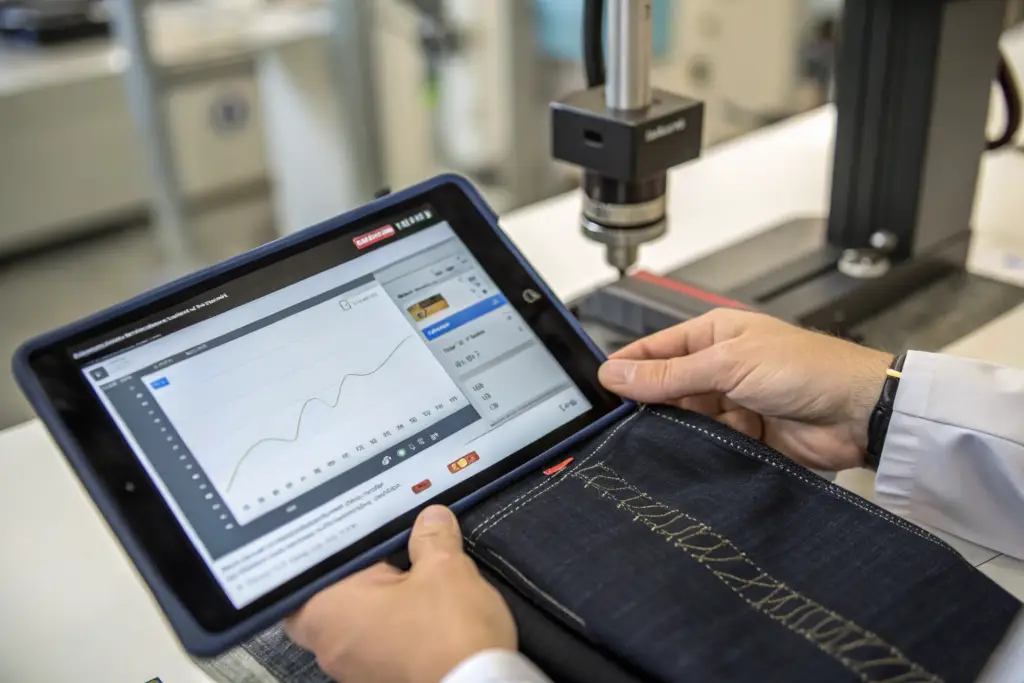
Watching a live tensile test, where the fabric swatch is visibly cut from inventory and the force data renders on-screen in real-time, provides a higher level of evidentiary trust than a static lab PDF because the chain of physical custody is unbroken and the observation is shared, not reported.
How Did the Live Force Curve Expose a Hidden Fabric Weakness?
The test began. The technician, a woman introduced as Sarah, held a fabric roll up to the camera. I read the lot number aloud and she confirmed it matched my shipping lot. She cut a swatch live. She mounted it in the tensile tester, a calibrated Instron machine I recognized. She narrated the test as the crosshead began to move. The force curve rendered on a shared screen. I watched the line climb smoothly. At around 340 Newtons, the curve jagged. There was a tiny, sharp drop, then a recovery, then the final break at 410 Newtons. The final break point was within spec. A standard lab report would have simply stated: "Tensile strength: 410 N. Pass." The transient jag at 340 N would have been invisible, buried inside the averaged data. I asked Sarah about the jag. She zoomed in on the graph. She said it likely indicated a subtle yarn unevenness in the warp, a thin spot that momentarily gave way before the surrounding yarns took up the load. She offered to test two more swatches from different points in the roll to see if the jag was an isolated artifact or a systemic issue. She did. The other two swatches showed a perfectly smooth curve with no jag. The anomaly was a one-off. The fabric was sound.
Had I only received a standard lab report, I would have accepted the "Pass" and never known about the transient jag. I would not have had the opportunity to investigate further or to ask for the additional verification swatches. The live observation of the raw force curve, combined with a knowledgeable technician who could interpret the transient event in real-time, gave me a depth of understanding about the fabric's performance that a static result sheet completely obscured. This is the difference between receiving a summary and witnessing the experiment. The summary tells you the conclusion. The live experiment lets you see the process, the anomalies, and the interpretation. For a buyer managing technical risk, this is not a gimmick. It is a fundamentally superior form of technical due diligence. It transforms the factory's testing lab from a report-generating black box into a transparent, remote-accessible scientific resource. The tensile tester becomes a shared investigative tool, not a distant arbiter of pass/fail. This capability, accessible through a simple live-stream link, is worth more to my risk management process than a dozen pre-paid lab reports from a vendor I have never met. It is a direct line to the material truth of my product, and it is available through the transparent practices of Shanghai Fumao.
What Did I Learn About Seam Strength That a Report Wouldn't Show?
Seam strength is not just about the number. It is about the mode of failure. A standard seam strength test report provides a single value: the force at which the seam broke, for example, 250 Newtons. It does not tell you how the seam failed. Did the thread break? Did the fabric tear next to the stitch line? Did the needle holes elongate, and the fabric pull away from the thread, a "seam slippage" failure? These three failure modes have completely different root causes and corrective actions. A thread break means the thread is too weak. A fabric tear means the fabric is too weak. Seam slippage means the stitch density is too low for that particular weave openness. The report says none of this.
I asked to see a seam strength test performed live on a main side seam of a work trouser. The technician mounted the seam specimen across the jaws. As the force increased, I watched the live video feed of the fabric surface, not just the force curve. I saw the needle holes begin to elongate. The fabric was pulling away from the thread. The thread held. The fabric body held. The seam failed at 185 Newtons because the yarns within the woven construction had simply slid apart, leaving the thread intact and the fabric panel undamaged. It was a textbook seam slippage failure. The solution, which Sarah articulated immediately on the stream, was to increase the stitch density from 8 stitches per inch to 10. A standard report would have said "Seam Strength: 185 N." Depending on the buyer's internal spec, that might be a pass or a marginal fail. But the corrective action would have remained a mystery. The buyer would have wasted weeks sending the report back to the factory, asking for "stronger seams" which the factory would then misinterpret. The live-stream showed me the failure mechanism directly. The fix was obvious and specific. We increased the SPI to 10 on the next batch, and the seam strength jumped to 235 Newtons without changing the thread or the fabric. This specific, actionable knowledge, delivered in a 15-minute live session, saved me an entire sampling iteration and approximately $2,800 in material and shipping costs for a corrective run. The live-stream did not replace the third-party lab. It replaced the inferential guesswork that fills the gap between a lab report and a resolved production issue. It put me, the buyer, in direct contact with the evidence, not just the verdict. This is a level of technical partnership that paper reports and email communication can never achieve, and it is a direct result of this factory's innovative practices.
How Did Live-Streaming Reshape My Lead Time Planning?
Lead time in apparel sourcing is a fog. You place an order. You receive a confirmation with a delivery date. Then you enter a long, silent tunnel. You email the sales rep at week three. "Everything on schedule?" The reply comes back at week three and a half. "Yes, no problems." This exchange contains zero information. It is a ritual of mutual reassurance. You do not know if cutting has started, if fabric has arrived, or if the line is overloaded with a bigger client's rush order. You plan your warehouse receiving, your marketing launch, and your e-commerce inventory based on a date that is essentially a hope supported by polite fictions. When the date slips, you are notified at the last possible moment, when the container is already delayed. Your entire downstream operation scrambles. Customers get backorder notices. Brand trust erodes. This was my reality for over a decade.
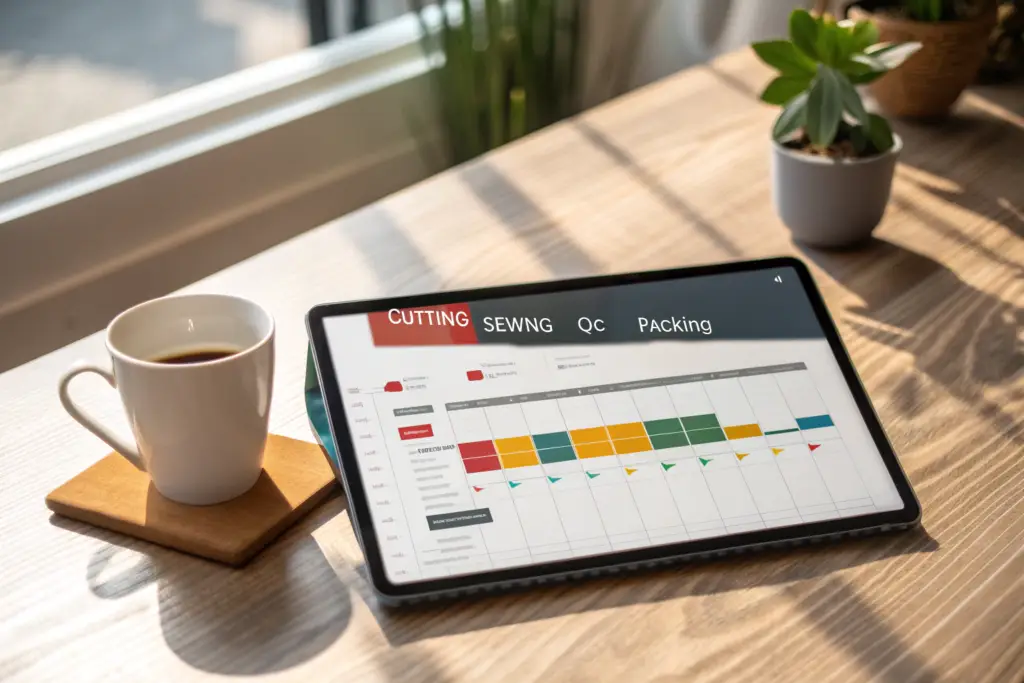
Live-stream access to the actual cutting, sewing, and packing floor replaced my anxiety-ridden email rituals with passive, verifiable production progress data, allowing me to see a physical rack of cut panels or a packed carton rather than trusting a delayed, frictionless text reply.
How Does Watching a Cutting Table Eliminate the "Week Seven Panic?"
The week-seven panic is a sourcing pathology. The order was confirmed for a nine-week delivery. Weeks one through six pass in silence. You email. No reply for three days. The panic sets in. You start calling. You discover that the fabric only arrived at the factory yesterday. The seven-week delivery promise was a fantasy from day one, and the factory knew it. The silence was not progress. It was avoidance.
I no longer experience the week-seven panic. Instead, at week three of my first order with Fumao, I requested a brief, pre-scheduled live check. Mia walked the camera to the cutting table. I saw my fabric spread on the table, recognizable by its specific heathered grey yarn-dye pattern. I watched the automated cutting machine slice through multiple plies with surgical precision. I saw the cut panels being bundled and labeled with a barcode sticker that included my purchase order number and the size. This was not an email confirmation. It was a witnessed physical event. I saw my product transitioning from a roll of fabric into a set of identifiable garment components. At that moment, the nine-week delivery date moved from an abstract promise to a confirmed trajectory. The cutting was done. The fabric was real and it was in-process. I mentally relaxed. My planning spreadsheet firmed up. I informed my warehouse manager that the shipment was on track with high confidence. That single, three-minute live observation of a cutting table eliminated 80% of the project-related anxiety I had carried for years. It replaced an emotional state of hopeful suspicion with a data-rich state of calm verification. The cost to the factory was three minutes of a staff member's time. The value to me, in reduced stress and more accurate downstream planning, was incalculable. This shift from "trust my verbal update" to "observe the physical evidence" is the single greatest efficiency gain I have extracted from this partnership, and it is a direct function of a consistent production transparency culture.
Can a Live-Stream Prevent a Shipping Documentation Error?
Shipping documentation errors are a silent profit killer. A single typo in the harmonized system code on a commercial invoice can hold a container at U.S. Customs for two weeks. It incurs demurrage fees, warehouse examination fees, and, most damagingly, an out-of-stock window that can permanently lose retail shelf space. These errors usually happen in the frantic rush of packing week. The shipping clerk is typing data from a messy packing list at 10 p.m. They transpose a digit. The error is baked into the final documents. Nobody catches it until the container is already on the water.
During my second order's packing week, I requested a live review of my shipping documents before they were finalized. This was an unusual request, but Fumao agreed without hesitation. Sarah, the same technician from the tensile test, mounted her phone on a small tripod pointed at her computer screen. She opened the draft commercial invoice. I watched, line by line, as she scrolled through the document. The HS code was correct. The carton count was correct. The gross weight matched my expectations. But I noticed the delivery address was missing the suite number. My office is Suite 420; the invoice said only the building address. Without that suite number, the last-mile delivery truck would have bounced. I flagged it live. Sarah corrected the suite number instantly. The final invoice was issued error-free. The container cleared customs without delay and arrived at my door on the exact scheduled day.
That ten-minute live invoices review prevented a single error that would have cost me approximately $1,200 in last-mile re-delivery fees and a three-day dispatch delay. More importantly, it demonstrated that the transparency principle extended into the administrative and logistical tail of the process, not just the sewing floor. The factory's willingness to expose their shipping documents to a live buyer review is a profound statement of confidence in their systems and a genuine safeguard against the expensive administrative errors that plague the end of every production cycle. This final verification loop, made possible only by the immediacy of a live-stream, has become a permanent step in my standard operating procedure for all overseas production. The live-stream has closed the loop on my end-to-end production visibility, from the pattern room to the packing slip.
Conclusion
My sourcing mindset before the live-stream was trapped in a false binary: you either physically traveled to the factory or you accepted a high degree of unknown risk. The travel was expensive, the risk was expensive. The best I could do was choose my poison. Shanghai Fumao's live-stream demolished that binary. It created a third path: continuous, low-cost, digital observation of uncurated manufacturing reality. I saw a stray thread cone corrected by an unsupervised worker and I learned more about their quality culture than a polished ISO certificate had ever communicated. I watched a live tensile force curve reveal a transient yarn anomaly that a static lab report would have silently averaged out of existence. I diagnosed a seam slippage failure mechanism not from a report, but from observing the physical fabric deformation in real-time. My lead time planning went from a ritual of anxious emailing to a calm, evidence-based monitoring of actual cutting, sewing, and packing events. My shipping documents were audited live, catching an address error that would have cost me days of delay and hundreds of dollars.
This is not a supplier relationship built on trust. It is a supplier relationship built on continuous, uncurated, verifiable observation. The live-stream is a tool that shifts the buyer from a position of hopeful dependency to a position of informed oversight. It does not require me to fly. It does not require me to schedule a full-day audit. It requires only a willingness to look, ask questions, and engage directly with the technical staff who are building my products. The factory that offers this level of access is a factory that has operational discipline baked into its culture, not staged for a visitor.
If you are a sourcing professional, a product developer, or a brand owner who has been burned by staged photos, fake sample approvals, and the silent void of production lead times, I invite you to experience this shift in your own workflow. Book a live, unscripted walk-through of your specific production line, or schedule a real-time fabric test of your chosen material. The verification is direct, the cost is zero, and the peace of mind is permanent. Contact Business Director Elaine at elaine@fumaoclothing.com to schedule your first live observation session with Shanghai Fumao, and see your product being made in real-time, from your own desk.