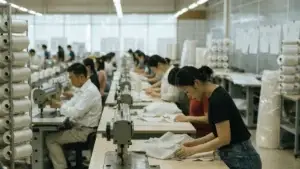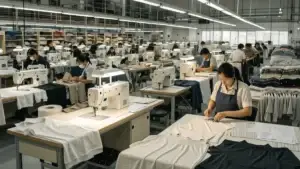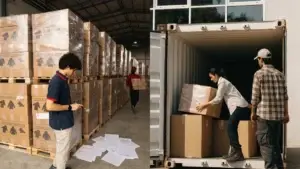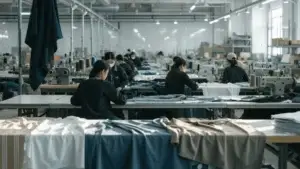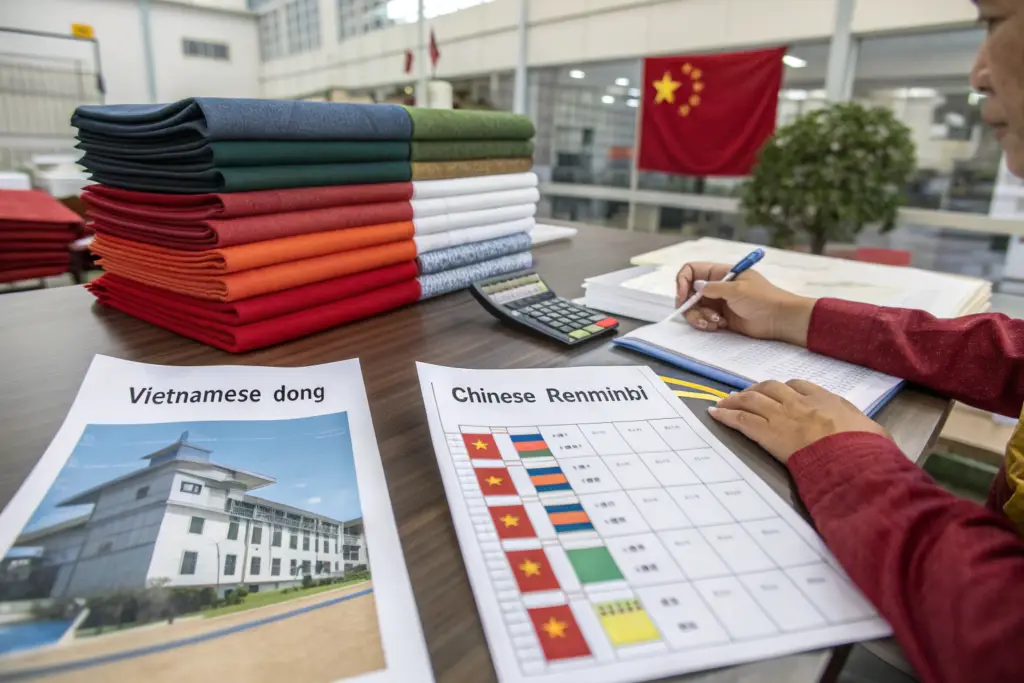
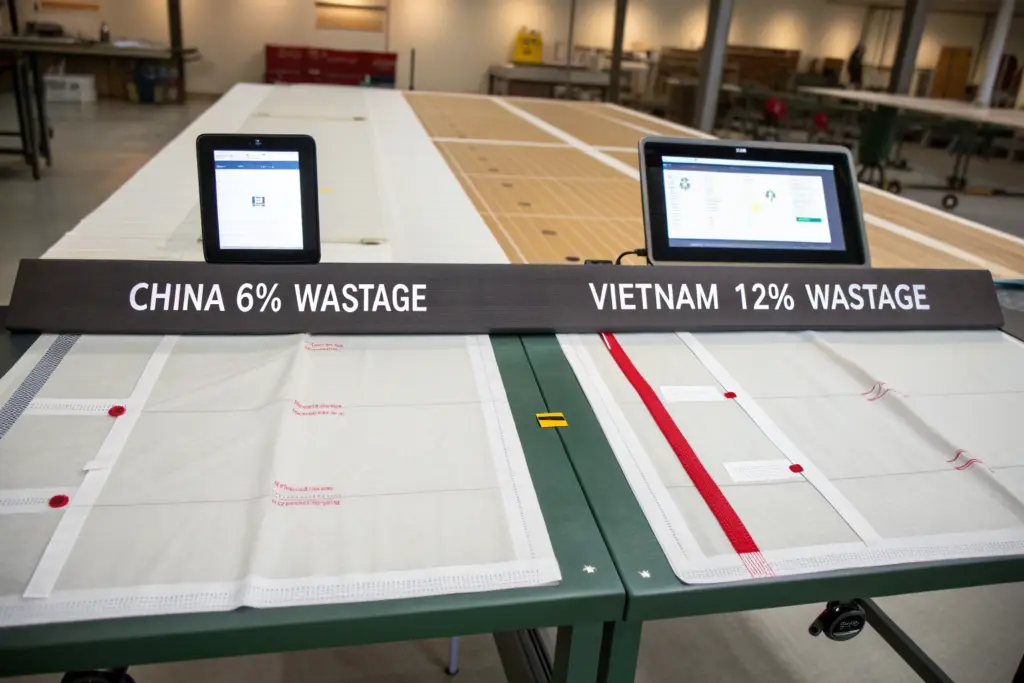
Eighteen months ago, a large Texas-based workwear brand made a strategic decision that their CFO believed would save them 18% on manufacturing costs. They moved their entire production of 50,000 units per year from a Zhejiang factory to a factory near Ho Chi Minh City, Vietnam, based on a single comparison metric: the quoted FOB price per unit. The Vietnamese FOB was $7.20. The Chinese FOB was $8.80. The savings looked like $1.60 per unit, or $80,000 annually. Twelve months later, the CFO was fired. The true total cost comparison—including the 18 additional days of ocean transit time that forced the brand to hold $140,000 more in warehouse inventory, the 12% fabric wastage rate at the Vietnamese factory compared to 6% at the Chinese factory, the $12,000 in additional travel costs for technical support visits, and the 4% late delivery penalty rate that never existed with the Chinese factory—revealed that the "cheaper" Vietnamese production had actually cost the brand $23,000 more than their previous Chinese production.
To accurately compare clothing manufacturing costs between China and Vietnam, you must build a "Total Landed and Operational Cost Model" that goes far beyond the FOB unit price to include the specific fabric wastage rate differential, the ocean transit time impact on inventory carrying cost, the per-color dye lot minimum difference that affects design flexibility, the availability and cost of specialized technical fabrics within the local supply chain, the skilled labor stability and training cost differential, and the hidden management travel and quality control oversight costs that increase with geographic and infrastructural distance from the manufacturing base.
At Shanghai Fumao, I have consulted with brands who have experimented with manufacturing in both China and Vietnam, and I have seen the spreadsheets that revealed the true cost picture long after the initial FOB price comparison had been celebrated. The FOB price is the first number in a much longer equation.
Why Does the "Fabric Wastage Rate Differential" Between Chinese and Vietnamese Factories Alter the True Unit Cost by 4-7%?
A Portland-based outdoor apparel brand once celebrated their Vietnamese FOB price of $6.50 per jacket, compared to their previous Chinese FOB of $7.30. Six months into production, their fabric cost per unit was mysteriously higher than budgeted. Upon investigation, they discovered that their Chinese factory had consistently achieved a 5.5% fabric wastage rate on the marker, while the Vietnamese factory was averaging 11.8% wastage. The Vietnamese factory's cutting room was using older, less precise spreading machines and less experienced cutting masters. For a jacket consuming 1.8 meters of fabric at $4.20 per meter, the 6.3% wastage differential added $0.48 to the actual fabric cost per unit. The "cheaper" Vietnamese FOB had hidden $0.48 in unrecovered fabric waste that the Chinese price had already accounted for.
The fabric wastage rate differential between Chinese and Vietnamese factories alters the true unit cost by 4-7% because Chinese factories in established textile clusters like Zhejiang and Guangdong have invested in automated, computer-controlled cutting machines and employ multi-generational cutting masters who achieve a consistent 5-7% wastage rate on standard markers, whereas many Vietnamese factories, operating in a younger manufacturing ecosystem, use semi-automated or manual spreading and cutting methods that produce a 10-14% wastage rate, and this 5-7 percentage point differential in fabric consumption directly increases the raw material cost per unit, a cost that is embedded in the FOB price in China but often understated in the initially quoted Vietnamese FOB.
Fabric is typically 50-65% of a garment's total cost. A 6% higher wastage rate on the largest cost component is not a minor operational detail—it is a meaningful margin eroder that often exceeds the entire FOB price savings that motivated the move to Vietnam.
How Does an "Automated Spreading Machine" in a Chinese Factory Reduce Wastage by 3-4 Percentage Points?
An automated spreading machine lays the fabric onto the cutting table with precise, consistent tension, eliminating the human error of pulling the fabric too tight or leaving it too loose, which distorts the marker alignment and creates unusable fabric sections at the edges.
Why Does the "Marker Nesting Skill" of an Experienced Cutting Master Directly Translate to Fabric Cost Savings?
The cutting master decides how the pattern pieces are arranged on the marker. An experienced master can mentally visualize complex, interlocking arrangements that fill the gaps between large pieces with smaller pieces, maximizing fabric utilization. This skill is developed over decades and is concentrated in mature manufacturing regions.
How Does "Ocean Transit Time" Create a Hidden Inventory Carrying Cost That Erases FOB Savings?
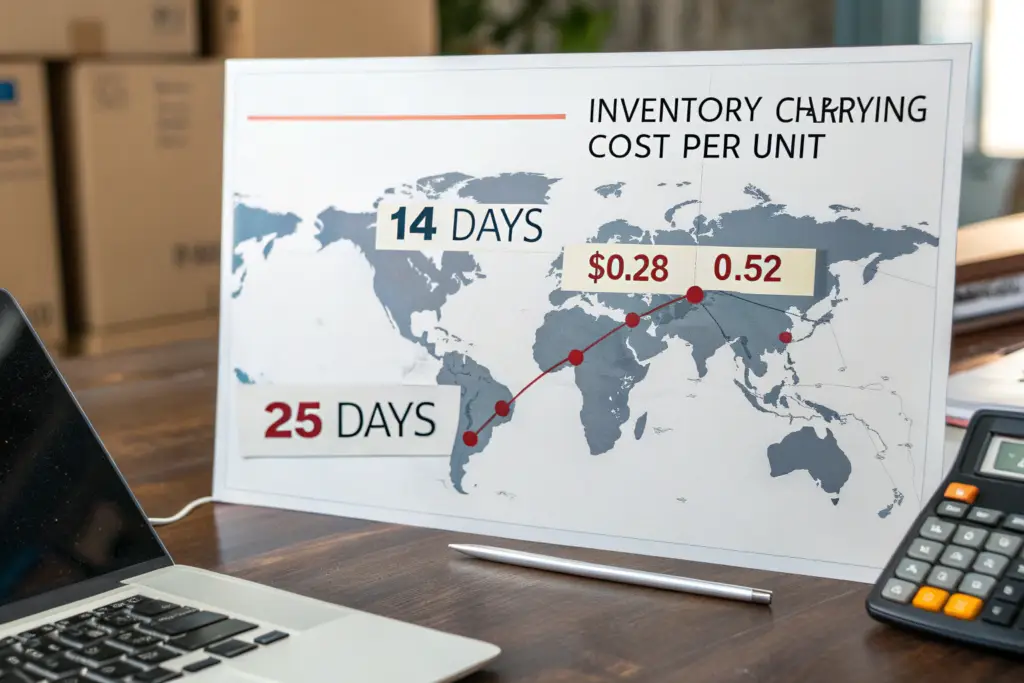
A San Francisco-based fashion brand calculated that moving production to Vietnam would save them $0.95 per unit on FOB. However, the ocean transit time from Ho Chi Minh City to the Port of Oakland was 22-25 days, compared to 12-14 days from Shanghai. The additional 11 days of transit meant the brand had to hold, on average, 11 additional days of inventory in their warehouse and 11 additional days of inventory on the water. For a brand selling 30,000 units annually at a landed cost of $9.50, the additional inventory carrying cost—including warehouse storage fees, insurance on goods in transit, and the cost of capital tied up in unsold inventory—amounted to $0.41 per unit. The Vietnamese FOB savings shrank from $0.95 to $0.54 after accounting for transit time alone.
The ocean transit time differential creates a hidden inventory carrying cost because the longer shipping duration from Vietnam to US West Coast ports—typically 22-28 days versus 12-16 days from Shanghai—forces the brand to hold a larger quantity of inventory in the pipeline and in the warehouse at all times, and this additional inventory incurs measurable costs: the warehouse storage fee per pallet per month, the cargo insurance premium for the extended voyage duration, and most significantly, the cost of capital tied up in goods that cannot be sold because they are sitting in a container on a ship, a cost that is invisible on the FOB invoice but directly reduces the brand's cash flow and working capital availability.
Inventory is cash that has been converted into fabric and is sitting idle. The longer it sits idle, the more it costs in storage fees, insurance, and lost opportunity. The FOB price comparison ignores time entirely. The total cost model measures time in dollars.
How Is the "Cost of Capital" on In-Transit Inventory Calculated, and Why Does It Matter for a Growing Brand?
If a brand has $100,000 worth of inventory on a ship for 25 days instead of 14 days, that $100,000 is unavailable for 11 extra days to pay for marketing, new samples, or payroll. The cost of capital is calculated as the annual interest rate the brand pays on its working capital line of credit, applied to the value of the in-transit inventory for the additional transit days.
Why Does a Longer Transit Time Reduce a Brand's Ability to Respond to a Mid-Season Sell-Out Restock?
If a color sells out unexpectedly, a reorder from China can arrive in 14 days via air freight or 30 days via sea. A reorder from Vietnam takes 22-28 days by sea and often lacks the air freight infrastructure for rapid restock. The inability to restock quickly means lost sales that no FOB saving can recapture.
What Is the "Specialty Fabric Availability Premium" That Chinese Factories Offer and Vietnamese Factories Cannot Match?
A Seattle-based technical outerwear brand once tried to produce a jacket in Vietnam that required a specific, breathable, waterproof three-layer membrane fabric from a specialized Taiwanese mill. The Vietnamese factory had no existing relationship with that mill, no experience bonding three-layer technical fabrics, and no local supplier who could provide a comparable alternative. The fabric had to be imported from Taiwan to Vietnam, adding a 12% import duty, a two-week shipping delay, and a $0.75 per meter logistics surcharge. The same fabric was available from a mill in Zhejiang, a 45-minute drive from the brand's previous Chinese factory, with zero import duties and same-day delivery.
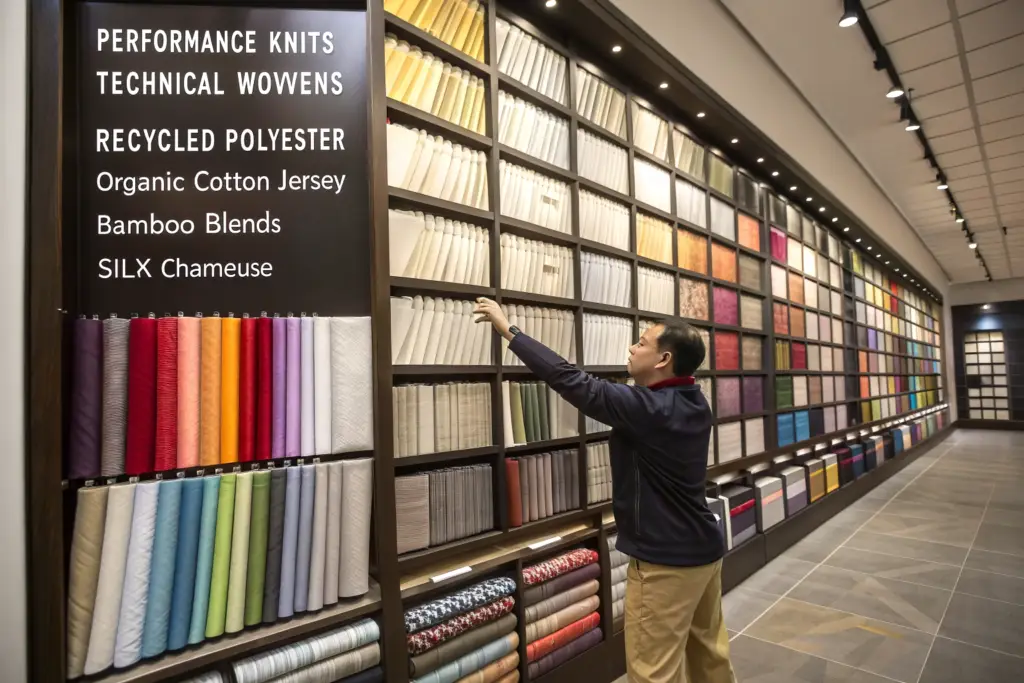
The specialty fabric availability premium in China is the cost advantage created by China's vertically integrated, deeply specialized textile ecosystem, where high-performance technical fabrics, certified organic and recycled textiles, premium silk and cashmere blends, and innovative sustainable materials are developed and manufactured within the same province as the cut-and-sew factories, eliminating the fabric import duties, extended logistics timelines, and minimum order quantity penalties that Vietnamese factories face when sourcing these same specialty fabrics from China, Taiwan, or Korea.
Vietnam's textile industry is strong in basic cotton and polyester knits. It is not yet vertically integrated in technical textiles, performance membranes, or certified sustainable fabrics. A brand requiring a specific technical fabric will likely find that the fabric itself is made in China, and shipping it to Vietnam adds cost and time.
How Does a "Fabric Import Duty" for Specialty Textiles Entering Vietnam Add 8-12% to the Raw Material Cost?
If a Vietnamese factory must import a technical fabric from China or Taiwan, Vietnamese customs applies an import duty on the fabric. That duty is embedded in the FOB price the factory quotes, making the Vietnamese FOB less competitive for any garment requiring imported specialty fabric.
Why Does the "Minimum Order Quantity" for an Imported Specialty Fabric Double When Shipped to Vietnam?
A Chinese mill selling to a Chinese factory will often accept a smaller minimum order quantity because the logistics are simple and the relationship is local. The same mill selling to a Vietnamese factory may impose a much higher minimum order quantity to justify the export documentation and international shipping complexity.
How Does "Skilled Labor Stability and Training Cost" Differ Between the Mature Chinese Workforce and the Developing Vietnamese Workforce?
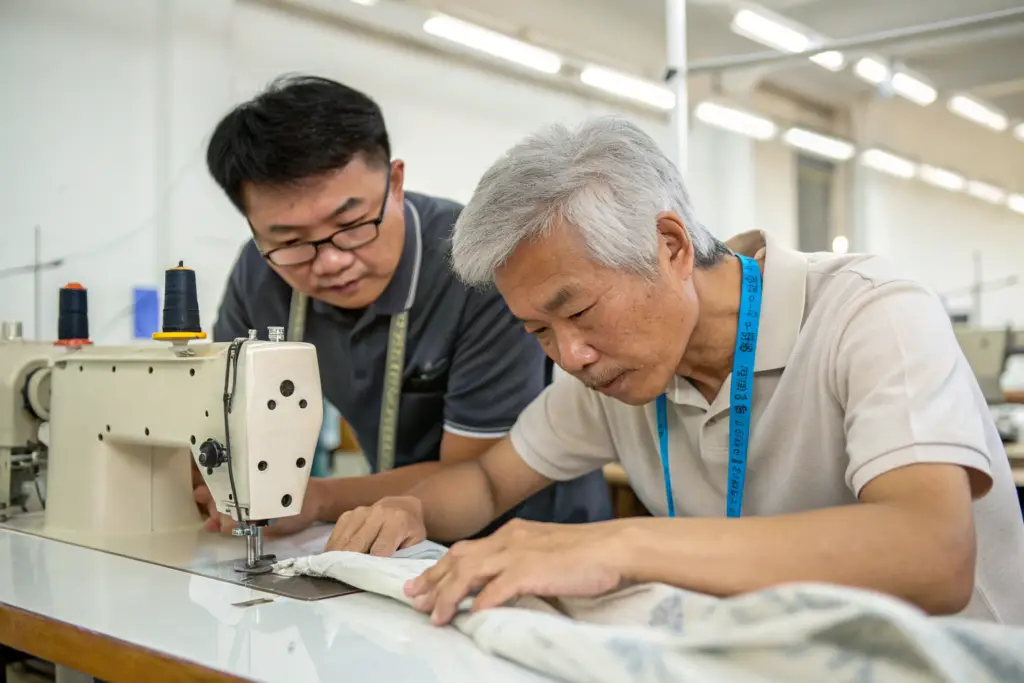
A Chicago-based uniform brand experienced a 14% defect rate on their first Vietnamese production run, compared to a 2.5% rate from their Chinese factory. The Vietnamese factory had a workforce where the average sewing experience was 18 months. The Chinese factory's average worker experience was seven years. The Vietnamese factory required an additional $4,200 in third-party QC inspection costs, three extra weeks of production time for rework, and a 2% air-freight surcharge for the replacement units to meet the delivery deadline. The labor cost per hour was lower in Vietnam, but the cost of inexperience—rework, inspection, and air freight—consumed the labor savings.
The skilled labor stability and training cost differential between China and Vietnam is a function of the maturity of each country's garment manufacturing industry: Chinese factories in established clusters have a stable, multi-generational workforce with an average sewing experience of 5-10 years and an annual turnover rate below 15%, resulting in a consistently lower defect rate of 1.5-3%, whereas Vietnamese factories, still developing their skilled labor base, experience an average workforce experience of 1-3 years and an annual turnover rate of 20-35%, requiring additional investment in training, inline QC supervision, and defect rework that adds an estimated $0.25-$0.55 to the true cost per unit.
A lower hourly wage paid to a less experienced worker who produces a higher defect rate can result in a higher true cost per sellable unit than a higher hourly wage paid to an experienced worker who produces a near-zero defect rate.
How Does a "Defect Rate Differential" of 10 Percentage Points Translate to Additional Rework and Air Freight Costs?
A 14% defect rate on a 20,000-unit order means 2,800 defective units. At an average rework cost of $1.20 per unit and an additional $0.80 per unit for the air freight to replace units that cannot be reworked in time, the total cost of the higher defect rate is approximately $5,600 on the order.
Why Is the "Training Cost Per New Hire" Higher in a Factory With 25% Annual Turnover Than One With 10% Turnover?
A factory with 25% turnover must train 25 new workers per 100 workers each year. Each new worker requires 4-6 weeks to reach full productivity. During those weeks, their output is lower and their defect rate is higher. The accumulated training cost and productivity loss is a real, measurable expense that is reflected in the factory's overall cost structure.
Conclusion
The FOB unit price is the starting line of a cost comparison between China and Vietnam, not the finish line. The true total cost model must account for the fabric wastage rate differential that hides an additional 4-7% raw material cost in a less experienced cutting room. It must account for the ocean transit time differential that adds $0.30-$0.55 per unit in inventory carrying costs. It must account for the specialty fabric availability premium that adds import duties and logistics costs to any garment requiring technical or sustainable textiles not produced locally in Vietnam. And it must account for the skilled labor stability differential that adds rework, inspection, and training costs when the workforce is younger and less experienced.
At Shanghai Fumao, I present these cost comparisons transparently to brands considering a move to Vietnam. I do not argue that China is always cheaper. I argue that the FOB price alone is a dangerously incomplete number, and the brand that makes a sourcing decision based on FOB alone is making a decision based on approximately 65% of the total cost picture.
If you are a brand buyer evaluating a potential move between manufacturing countries, and you want a partner who will help you build an accurate Total Landed and Operational Cost Model—including fabric wastage, transit inventory carrying cost, specialty fabric logistics, and labor quality metrics—contact my Business Director, Elaine. She can share a cost comparison template that our brand partners use to make data-driven sourcing decisions. Reach Elaine at: elaine@fumaoclothing.com. Don't let a single FOB number determine your supply chain strategy.