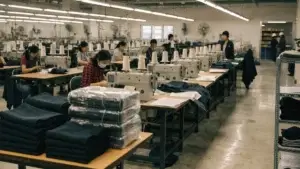
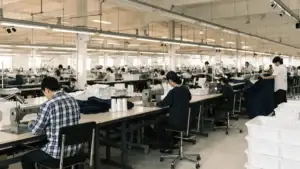
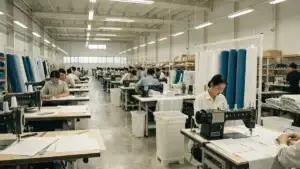
Two years ago, a children's wear brand owner from Seattle sat across from me at a trade show in Las Vegas. She looked exhausted. She had just ended a contract with a supplier who claimed to use GOTS-certified organic cotton. The certificates looked legitimate. The fabric felt soft. But a random fiber test she commissioned through a third-party lab found pesticide residue. The cotton was conventionally grown. She had been selling "organic" baby onesies for eighteen months. She had to issue a recall, refund her wholesale accounts, and rebuild her reputation from scratch. She asked me a question that stuck with me: "How do I know the cotton in my garment came from the same field as the certificate?"
Shanghai Fumao tracks organic cotton from certified farm plots to finished garments using a blockchain-based traceability platform. We assign a unique digital token to each bale of GOTS-certified organic cotton fiber at the gin. That token follows the fiber through spinning, knitting, dyeing, cutting, and sewing. You scan a QR code on the hang tag and see the entire journey on your phone in seconds.
Blockchain is not a buzzword for us. It is a tool to solve the trust crisis that plagues the organic textile industry. I know the skepticism. I had it myself when I first heard about blockchain for cotton. It sounded like a marketing gimmick. But after visiting cotton farms in Xinjiang and India, after seeing the pressure to mix cheap conventional cotton into organic bales, I realized that paper certificates are too easy to fake. The supply chain needs a digital witness. I want to walk you through how we built our traceability system, what data we capture at each step, and most importantly, how this technology protects your brand from the nightmare of selling fake organic clothing.
Why Is Organic Cotton Traceability a Crisis for Apparel Brands?
The organic cotton market has a fraud problem. It is not a small problem. It is widespread enough that major certification bodies have publicly acknowledged the challenge. The incentive to cheat is strong. Organic cotton costs roughly 20% to 40% more than conventional cotton at the raw fiber stage. A mill that blends 30% conventional cotton into an "organic" yarn batch can save thousands of dollars per container. The fabric looks identical. The hand feel is identical. Even a burn test cannot distinguish organic from conventional. Only a laboratory isotope test can detect the difference, and no brand owner runs isotope tests on every shipment.
The crisis hit a peak in 2020 when the Global Organic Textile Standard organization investigated irregularities in the Indian organic cotton supply chain. They found massive volumes of "organic" cotton being shipped from gins that far exceeded the actual organic cotton harvest in those regions. The math simply did not add up. Certificates were duplicated. Transaction certificates were sold like commodities. Brands that had built their entire sustainability story on organic cotton were unknowingly selling conventional cotton to consumers who paid a premium for green claims. The reputational damage when this gets exposed is catastrophic. Your loyal customers feel betrayed. They do not forgive easily.

How Do Fake Organic Certificates Circulate in the Supply Chain?
Paper certificates are easy to manipulate. A transaction certificate is supposed to follow each batch of organic material from the farm to the final product. But in practice, these are PDF files. They can be copied. They can be edited. A mill buys one legitimate ton of organic cotton and receives one valid certificate. They then buy two more tons of conventional cotton from a nearby farm. They mix all three tons together. They sell all three tons as "organic." The single certificate gets reused for the entire batch.
I spoke with a fabric agent in Zhejiang province who openly admitted this practice to me three years ago. He said, "The buyers just want the paper. They do not check the fiber." This shocked me. I realized that if I was going to offer genuine organic cotton products, I needed a system that made this kind of fraud structurally impossible. A GOTS certification number printed on a label means nothing without physical traceability behind it. Digital tracking creates a chain of custody that cannot be copied because each transaction is verified by multiple parties. The old saying applies here: trust but verify. Only now, verification happens through distributed ledger entries, not paper files.
What Happens When Consumers Discover Your Organic Claim Is False?
The Federal Trade Commission does not take false environmental claims lightly. Their Green Guides set specific standards for what constitutes a deceptive environmental marketing claim. If a brand labels a product "100% Organic Cotton" and it contains conventional cotton, the FTC can impose fines and require a corrective advertising campaign. But government fines are the small problem. The real cost is consumer backlash.
I watched a mid-sized sustainable fashion brand collapse in 2022 after an investigative journalist sent their "organic" hoodies to a forensic textile lab. The lab report showed traces of glyphosate, a herbicide banned in organic farming. The journalist published the findings on a popular sustainability blog. Within 48 hours, the brand's Instagram filled with thousands of angry comments. Influencers who had promoted the brand posted tearful apology videos. Two major retailers dropped the brand. The owner had no idea the cotton was fake. But ignorance does not protect a brand from the consequences of a false organic cotton claim. Traceability is your only insurance policy against this nightmare scenario.
How Does a Blockchain Token Follow Cotton From Farm to Garment?
The blockchain system we use is not complicated to explain, even though the technology underneath is sophisticated. Think of it as a digital passport for a bale of cotton. The passport is created at the gin, where the raw seed cotton is cleaned and pressed into bales. Each bale gets a physical QR code tag and a corresponding digital token on the blockchain. This token contains the farm location, the harvest date, the certification number, and the bale weight. Once that data is written to the blockchain, it cannot be altered. No one can go back and change the farm location or the harvest date.
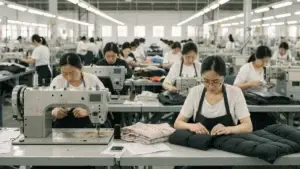
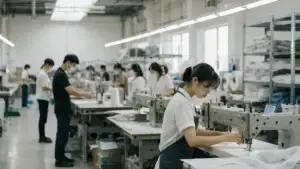
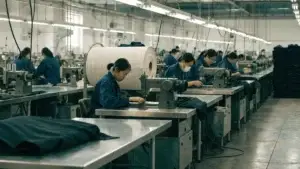
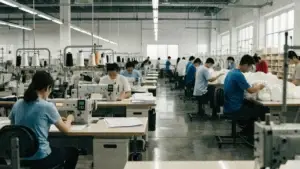
As the cotton bale moves through the supply chain, each facility adds its own transaction block to the chain. The spinning mill scans the bale QR code when it arrives. The system records that the bale entered the mill on a specific date. When the mill spins the cotton into yarn, it creates a new batch ID for the yarn cones. The new batch ID is linked to the original bale token. The yarn now has a digital parent-child relationship with the raw cotton. The knitting or weaving factory does the same. They scan the yarn batch, produce the fabric roll, and generate a new fabric roll token linked to the yarn batch. The cutting and sewing floor scans the fabric roll, produces finished garments, and assigns each carton a final shipment token. The entire chain is unbroken.

What Specific Data Points Does Each Supply Chain Stage Record?
Transparency requires granular data. An empty promise of "we track our cotton" is meaningless without specific data fields. At the farm level, our system records the farm name, the plot coordinates, the organic certification body and certificate number, the cotton variety, the planting date, and the harvest window. This agricultural data grounds the entire chain in physical reality. You can open Google Earth and see the actual field where the cotton grew.
At the gin, the system records the gin name, the gin date, the bale weight, and the bale identification number. At the spinning mill, the system captures the yarn count, the spinning method, and the cone weight. At the knitting or weaving stage, the system logs the fabric construction details, the roll length and width, and the dye lot number if piece-dyed. At the cutting and sewing facility, the system records the production order number, the cutting date, and the carton packing list. At every stage, a responsible party digitally signs the transaction. This creates a complete supply chain data record that no single party controls. The blockchain acts as a shared truth layer that all participants can view but no single participant can corrupt.
How Can a Brand Owner Verify the Blockchain Record Instantly?
The final step is the most important. All this data is useless if the brand owner cannot access it easily. Every finished garment that leaves our factory carries a hang tag or a care label with a unique QR code. The brand owner scans this code with any smartphone camera. The scan opens a web portal that displays the complete journey of that specific garment. The portal shows the farm name and location, the harvest date, the gin information, the spinning mill details, the fabric production data, and the garment manufacturing date.
The portal also displays a blockchain integrity check. It confirms that the data has not been tampered with by showing a green verification badge linked to the original block hash on the public ledger. This verification is mathematically provable. A dishonest actor cannot fake it. I demonstrated this system to a skeptical buyer from a large European retailer last year. He scanned a QR code on a sample hoodie with his own phone. He saw the farm plot in Turkey where the cotton was grown. He saw the date it was ginned. He stood quietly for a moment. Then he said, "This is what every supplier should be doing." Instant blockchain traceability transforms the audit process from a multi-week document review into a 30-second scan.
What GOTS Certification Means When Combined With Digital Tracking?
GOTS is the most respected organic textile standard in the world. It covers both the organic fiber content and the social and environmental criteria for processing facilities. However, GOTS certification has traditionally relied on a paper audit trail. Annual audits by third-party certifiers verify that a facility complies with the standard. Transaction certificates document the flow of organic material between certified entities. The system works well when everyone is honest. But as the market has grown, bad actors have exploited the gaps between audits.
We treat GOTS certification as the foundation and blockchain tracking as the reinforcement. The GOTS audit confirms that our factory meets the processing standards, such as using approved dyes and treating wastewater properly. The blockchain confirms that the specific bale of cotton used in your garment was actually certified organic and moved through certified facilities. Together, they create a defense-in-depth against fraud. A paper transaction certificate can be lost or copied. A blockchain entry cannot. The combination gives you legal-level confidence in your organic claim.

How Does the Digital Ledger Complement the Annual GOTS Audit?
An annual audit captures a snapshot. An auditor visits the facility for two or three days. They review documents. They inspect the storage areas. They take samples. They issue a report. If the facility is doing something wrong during the other 362 days of the year, the annual audit might miss it. This is the inherent limitation of periodic inspection. Digital tracking fills this temporal gap.
Every time a QR-coded bale enters our factory, the blockchain records the timestamp. Every time we produce a batch of organic fabric, the system links it to the specific bale inputs. This creates a continuous, real-time record of material flow. If the volume of "organic" fabric leaving our factory ever exceeded the volume of certified organic cotton entering our factory, the blockchain data would immediately reveal the discrepancy. It is a mass balance verification that runs continuously. The mass balance calculation is automated and immutable. An auditor can come in at any time and reconcile the blockchain record against the physical inventory. This layered approach of certified organic tracking significantly raises the bar for fraud prevention.
What Are the Key GOTS Criteria That Blockchain Helps Validate?
GOTS has specific requirements that blockchain data can help verify. One major criterion is the separation of organic and conventional materials throughout processing. Organic cotton must be stored separately from conventional cotton. It must be processed on dedicated or properly cleaned equipment. The blockchain records the exact bale identifiers entering each production batch. This allows an auditor to trace backward and confirm that no conventional cotton bales were introduced into the batch.
Another criterion is the chemical input management. GOTS restricts which dyes and auxiliary chemicals can be used on organic textiles. The blockchain can record the dye class and chemical batch numbers used for each fabric dye lot. If a customer wants to verify that a specific garment used only GOTS-approved low-impact dyes, the dye lot data is linked in the chain of custody. A third criterion is the social compliance aspect. The blockchain can anchor the employment records and wage payment confirmations for the workers who produced the batch, creating a verifiable link between the product and the people who made it. The GOTS standard becomes more enforceable when digital evidence supports the paper trail.
How Does Transparency Technology Build Higher-Perceived Value for Your Brand?
The modern consumer has a deep suspicion of marketing claims. They have been lied to by too many brands. "Eco-friendly." "Sustainably sourced." "Ethically made." These phrases have become so common that they barely register. But when you hand a customer a QR code and invite them to trace their garment back to a specific farm plot, their skepticism transforms into trust. This is not a marketing slogan. It is a verifiable fact. That shift in perception is worth real money at the checkout counter.
I have seen this play out in retail data. A boutique owner who stocks our organic cotton basics created a simple in-store display. She hung an iPad next to the clothing rack. The iPad was locked on the blockchain traceability portal. Customers could pick up any shirt, scan the QR code, and watch the journey appear on the screen. She told me her conversion rate on that rack increased by approximately 30% compared to the same product without the traceability display. Customers who engaged with the traceability story were also less price-sensitive. They understood why the garment cost what it did because they saw the real supply chain behind it.

How Can You Turn Traceability Into Content Marketing Gold?
Traceability is not just a compliance tool. It is content. Every data point in the blockchain record is a potential social media post, a blog paragraph, or a newsletter story. The farm in Turkey where the cotton grew has a name and a location. The spinning mill in India has a history and a community. The garment workers in our Shanghai facility have skills and stories. You can build an entire season of content around a single garment's journey.
One of our brand partners created a "Follow Your T-Shirt" Instagram story series. Day 1 showed the cotton field with drone footage we provided. Day 2 showed the ginning process. Day 3 showed the yarn spinning. Each day ended with a "swipe to track" call to action linked to their website's traceability page. The series generated their highest engagement rate of the year. Customers tagged friends in the comments saying "this is so cool." The brand sold out of the tracked t-shirt in ten days. Content built on verified truth performs better than content built on vague values. The supply chain transparency story is emotional because it is real. A consumer connects with the farmer's face and the factory worker's craft. That connection builds a loyalty that discount codes cannot buy.
How Does Verifiable Data Protect Against Greenwashing Accusations?
Greenwashing accusations spread faster than any marketing campaign you will ever run. A single tweet accusing your brand of faking sustainability can go viral in hours. If you respond with "we take sustainability seriously" and a link to a corporate mission statement, you lose. The internet smells weakness. But if you can respond with "here is the blockchain record of the exact bale of cotton used in this garment, and here is the third-party lab test confirming it is organic," the accusation collapses instantly.
Last year, a small sustainable brand faced a skeptical commenter on their Instagram who claimed their organic cotton was probably fake. The brand owner simply replied with a link to the blockchain traceability portal showing the specific garment's farm-to-finish journey. The commenter deleted their post. Other followers praised the brand for "having receipts." This is the new standard of brand defense. The greenwashing risk is too high to rely on good intentions. You need proof that can withstand scrutiny. Blockchain-tracked organic cotton provides exactly that. It turns your sustainability claim from a vulnerable assertion into a demonstrated fact.
What Is the ROI of Offering Traceable Garments to Wholesale Buyers?
Wholesale buyers are under intense pressure from their own customers to prove the sustainability of their assortments. Large retailers now require supplier transparency as a condition of doing business. A department store buyer recently told a brand that they would not place a reorder unless the brand could provide a full tier-2 supply chain disclosure, meaning not just the factory but also the fabric mill and the fiber source. Brands that cannot provide this data are losing shelf space.
When you walk into a wholesale meeting with a blockchain traceability portal on your tablet, you answer the buyer's sustainability questions before they ask them. You demonstrate that your supply chain is clean, transparent, and documented. A brand partner of ours secured a 500-unit order from a major sustainable retailer specifically because they were the only bidder who could show a live blockchain traceability link for their organic cotton leggings. The buyer told them, "This makes my job easier." Wholesale supply chain verification is becoming a competitive differentiator. Traceability moves your brand from the "maybe" pile to the "yes" pile when buyers face a sourcing decision.
Conclusion
The journey of organic cotton from a specific farm plot to a finished garment used to be invisible. Brands trusted paper certificates and prayers. That era is ending. Consumers demand proof. Wholesale buyers demand data. Regulators demand compliance. The blockchain traceability system we built at Shanghai Fumao turns an invisible supply chain into a transparent digital ledger that anyone can verify with a smartphone scan. This is not future technology. It is operating right now on our production floor, tracking real cotton bales from certified farms to cartons leaving our warehouse.
The crisis of fake organic cotton forced the apparel industry to reckon with a broken trust model. Certificates alone are not enough. Audits alone are not enough. What works is a combination of rigorous certification, digital token assignment at the raw material source, continuous mass balance verification, and instant consumer-facing transparency. Our system delivers all four layers. It protects your brand from fraud. It gives your customers a reason to trust your claim. It turns your sustainability story from marketing copy into verifiable history.
If you are ready to build an organic cotton collection backed by real traceability, I want to show you how our blockchain-tracked supply chain works in practice. You can scan a sample garment yourself and watch the farm-to-finish journey unfold on your phone. At Shanghai Fumao, we believe that radical transparency is the future of apparel manufacturing, and we have invested in the technology to make that future available to brands of all sizes. Reach out to our Business Director Elaine to schedule a virtual traceability demo. Her email is elaine@fumaoclothing.com. Let us prove to you and your customers that your organic cotton is exactly what you say it is.