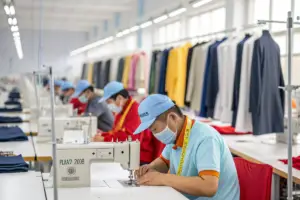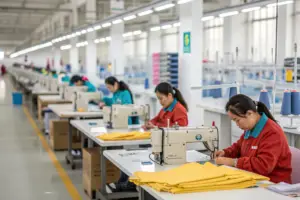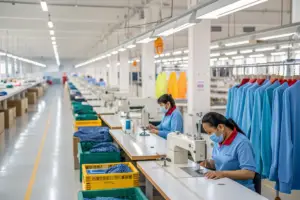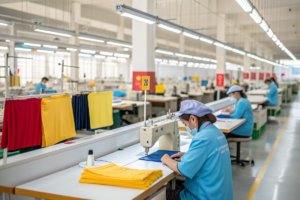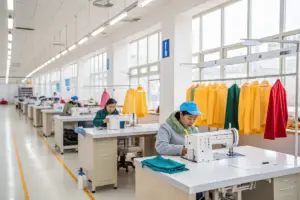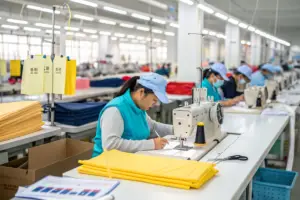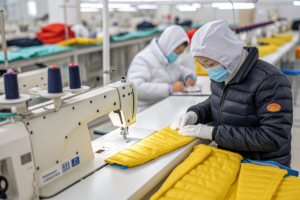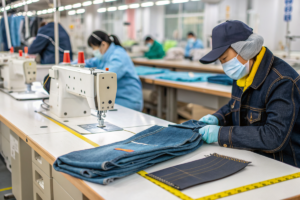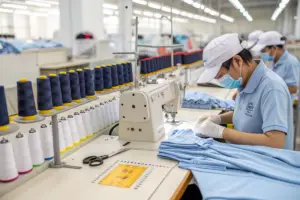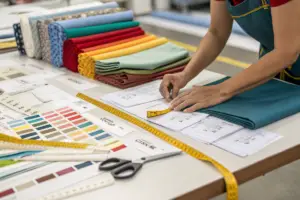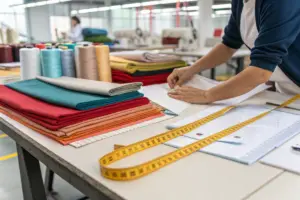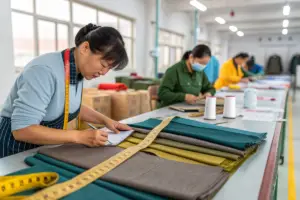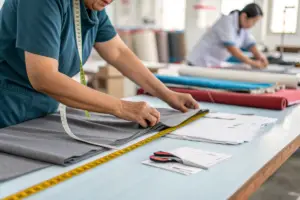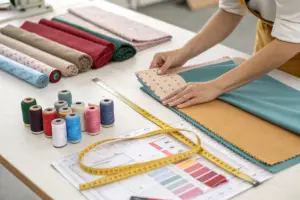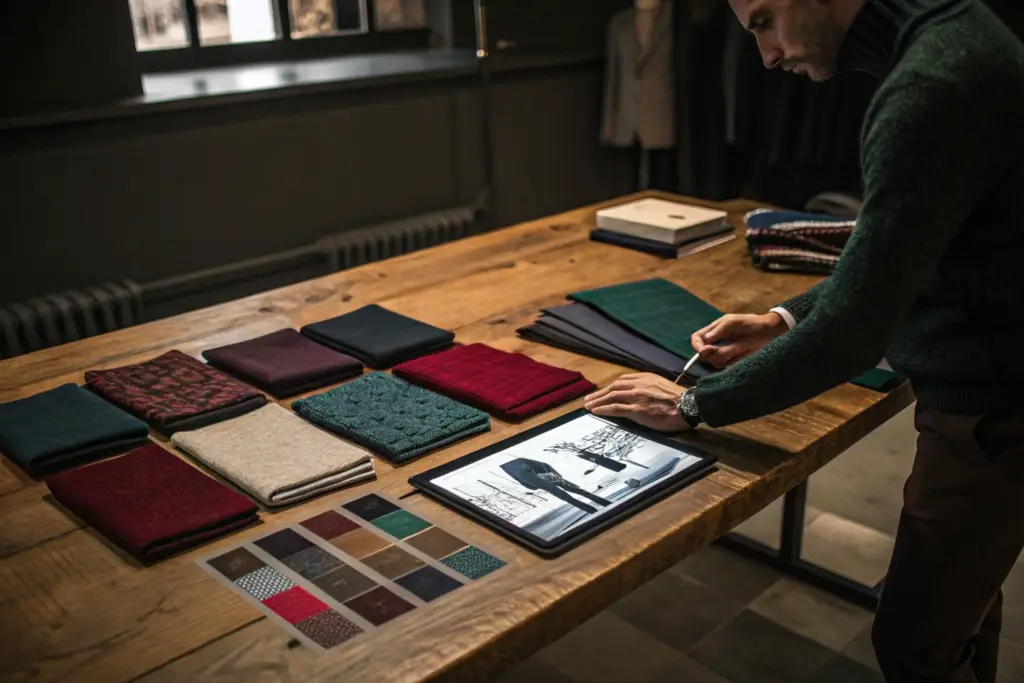
I sat in our fabric library last January with a cup of black coffee and a stack of trend reports from three different continents. A long-time client from Denver had just emailed me with her usual August panic. She wanted to know what to cut for Holiday 2026. Not guesswork. Not Instagram trends that would be dead in a week. She needed a real forecast based on what fabric mills were selling, what our pattern team was sampling, and what her competitors were not yet doing. I closed the laptop and looked at the racks of newly arrived swatches. The story was already clear.
Shanghai Fumao's 2026 Autumn/Winter forecast is built on three pillars: textural maximalism in knits and outerwear, a tonal earth palette shifting from warm beiges into moody oxidized hues, and a silhouette direction that pairs oversized top layers with structured, tailored bottoms. This is not a guess. It is a reading of the physical supply chain signals that arrive six months before retail buyers ever see a collection.
Trend forecasting in a factory looks different than in a fashion magazine. We do not wait for runway shows. We see the orders coming in from early-adopter brands. We see which swatches the mills are pushing. We see which yarns are selling out before August. I want to give you a direct look at what our pattern tables are producing more of, what fabrics are dominating our sample room, and where we are telling our brand partners to place their bets for the coming cold season.
Why Is Textural Maximalism the Defining Direction for AW26 Knits?
The dominance of flat, smooth knitwear is fading. For five years, the market has been saturated with fine-gauge merino crewnecks and minimalist cashmere V-necks. These are still foundational items. But the growth is coming from texture. Consumers who spent the pandemic years in simple loungewear are hungry for garments that feel special when touched. They want sweaters that make a statement on a video call. They want knit textures that photograph well and invite comments at a dinner party.
Our sample room started seeing this shift in early 2025. Brand partners who used to order exclusively 12-gauge cashmere suddenly asked for 5-gauge chunky lambswool. They requested brushed mohair blends that trap air and create a halo effect around the body. They asked for stitch patterns we had not run in bulk for a decade: cables, bobbles, fisherman ribs, and honeycomb stitches. A chunky knit uses more yarn and takes longer to sew, so the unit cost is higher, but brands are finding that customers willingly pay a premium for noticeable texture. The margin per unit is actually better than on basics.
Which Specific Stitch Techniques Are Trending for AW26?
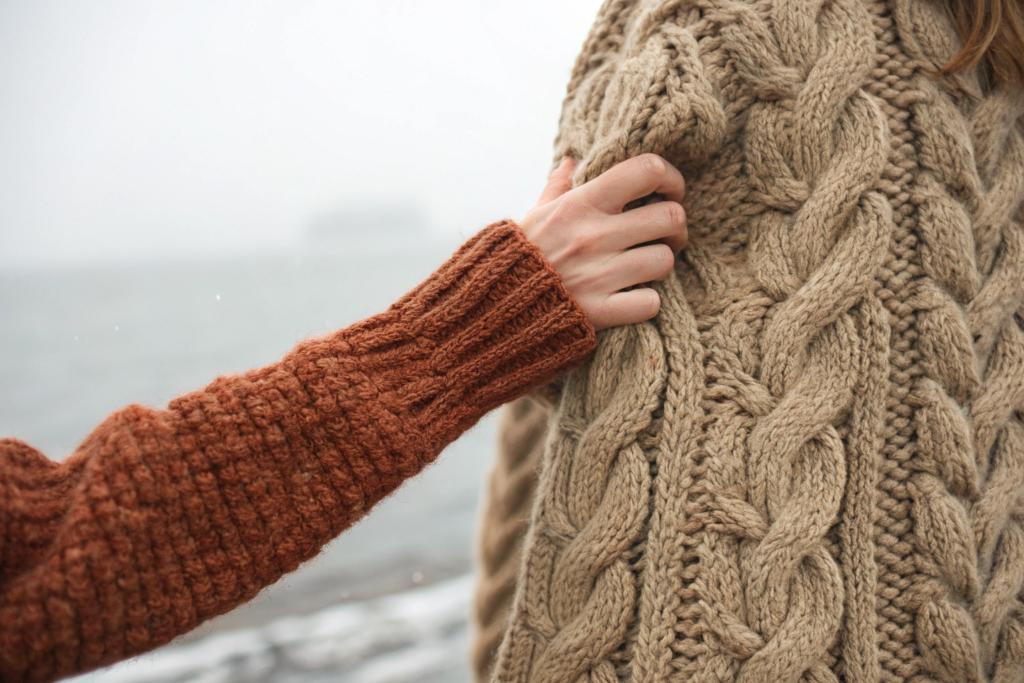
Cable knitting is coming back, but not the predictable center-panel cable of a traditional Aran sweater. The AW26 cable is an all-over sculpture. Think of a cardigan where the entire body is a continuous braided pattern. We developed a sample for a brand in Vermont last spring. The sweater used a 3-gauge cotton-wool blend. The yarn was thick enough that each cable braid was physically lifted off the body of the garment. The visual effect was dramatic, and the sweater photographed like a piece of art on a flat lay.
Fisherman rib is another major request. It creates a deeper, squishier texture than standard ribbing. It also traps body heat effectively, which makes it a functional as well as aesthetic choice. For a more delicate texture, we are running a lot of tuck stitch patterns. A tuck stitch creates a honeycomb or waffle surface that feels plush without the weight of a full cable. It works beautifully on finer-gauge merino layers. The key trend insight is that texture is being treated as the primary design element, not an afterthought. The stitch pattern is the design. The knit stitch techniques themselves are becoming the selling point in product descriptions and Instagram captions.
How Does Yarn Blend Innovation Drive the Textural Trend?
You cannot achieve these dramatic textures with any yarn. A basic 2-ply wool yarn will not hold a sculptural cable. The stitch definition will be soft. The cable will flatten over time. We have been working closely with our yarn suppliers to develop blends specifically engineered for dimensional stability in chunky gauges. A 60% wool, 25% alpaca, 15% nylon blend has become our standard recommendation for AW26 textural sweaters. Wool provides warmth and memory. Alpaca adds the soft halo and a silky hand feel. Nylon provides the structural backbone so the cable does not sag after three wears.
Last season, a brand owner sent us a photo of a competitor's chunky cable sweater that had stretched out badly on the hanger, the cables looking limp. He wanted our version to hold its shape for years. We tested five yarn compositions. We selected a high-twist lambswool blended with a small percentage of recycled polyester for tensile strength. The sweater maintained its cable definition through twenty simulated wear cycles in our lab. The customer reviews have been excellent. The yarn engineering behind textural knits is where the real trend lives. It is one thing to knit a beautiful sample. It is another thing to deliver a production run of 1,000 units where every sweater looks like the sample.
What Is the "Moody Earth" Color Story Dominating the AW26 Palette?
Color forecasting is part science and part intuition. The science comes from the mills. Every season, fiber dyeing facilities release their color cards based on what chemical dyes they are setting up for bulk runs. If a major mill invests in a particular red dye vat, they will push that red to every brand. The intuition comes from watching the mood of the culture. Are people anxious? They retreat into comforting beiges. Are they optimistic? They reach for vivid, saturated hues. For AW26, the signal is clear. The era of bright dopamine dressing is giving way to something deeper and more grounded.
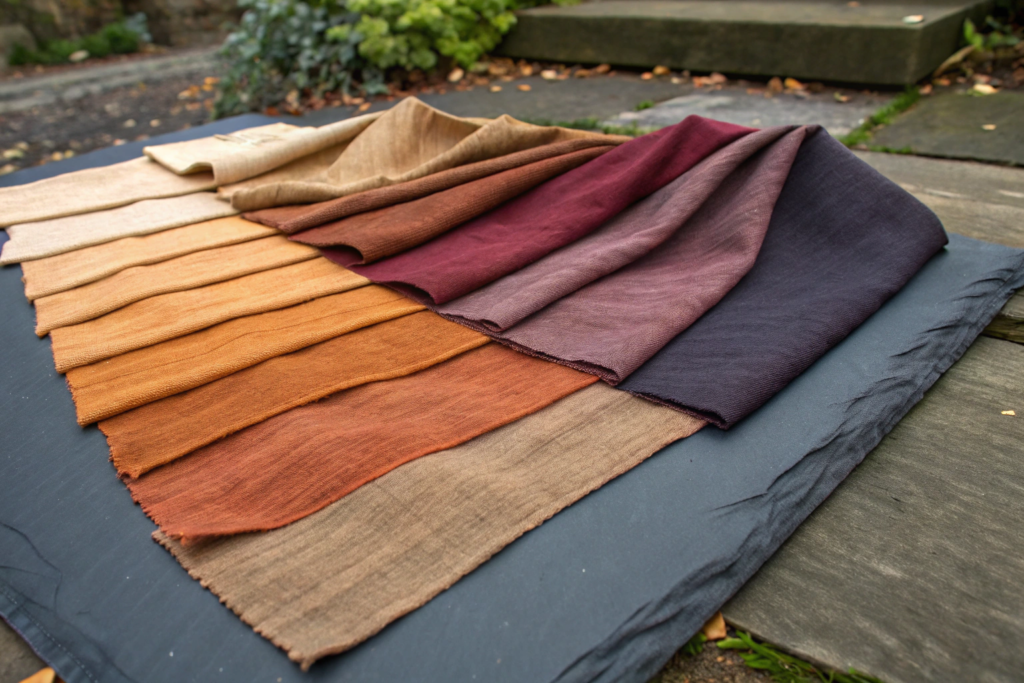
We call this the Moody Earth palette. The base is still warm earth tones, but they are oxidized. Think of a copper penny after it has weathered. Think of a forest floor after rain. The beige is not a clean sand beige. It is a toasted grain beige with a hint of yellow-brown. The green is not a fresh sage. It is a murky olive with an undertone of grey. The blue is not a bright cobalt. It is a midnight ink that almost reads as black under artificial light. This palette photographs beautifully in autumn light. It creates a mood of quiet luxury without screaming "trend."
What Are the Key Five Colors for the AW26 Outerwear Buy?
Based on the lab dip approvals we have processed in the last three months, five colors are dominating the AW26 outerwear orders. First is Burnt Sienna, a rich rust-red that has almost completely replaced traditional burgundy. It works exceptionally well on wool-blend coatings and looks expensive on camera. Second is Oxidized Olive, a darker, dirtier green than last year's sage. It pairs perfectly with raw denim and black trousers. Third is Midnight Navy, a blue so deep it absorbs light. Fourth is Toasted Oat, the evolution of beige into something warmer and more substantial, ideal for long wool coats. Fifth is Deep Aubergine, a purple-tinged brown that reads as a neutral while still feeling unexpected.
These five colors account for nearly 70% of the outerwear fabric we have ordered in the past quarter. A brand partner from Chicago built her entire coat collection around Burnt Sienna and Toasted Oat. She paired the coats with black and charcoal accessories. The collection looked cohesive and intentional. The Pantone color trends reports for the season closely align with this shift toward complex neutrals. Buyers at every level are signaling a retreat from the candy colors that defined earlier seasons. The consumer wants to feel enveloped, not loud.
How Do You Build a Cohesive Collection Around an Earth Palette?
The danger with earth tones is a collection that looks flat and muddy. You need contrast, but it must be tonal contrast, not jarring contrast. We advise clients to select one anchor dark, one anchor light, one accent color, and one pattern ground. For AW26, a strong combination is Midnight Navy as the dark anchor, Toasted Oat as the light anchor, Burnt Sienna as the accent pop, and a tonal plaid that mixes the three colors as the pattern ground.
This framework gives structure to a buy plan. The dark anchor works for trousers and structured blazers. The light anchor works for statement coats and chunky knits. The accent color works for a scarf, a beanie, or a single hero sweater that draws the eye in a retail display. The pattern piece, typically a check or a melange knit that blends the palette, ties the whole story together on a store rack. A collection color planning approach ensures every piece relates to every other piece. The customer can buy the coat and the sweater and wear them together without hesitation.
What Silhouette Shifts Are Reshaping AW26 Wovens and Bottoms?
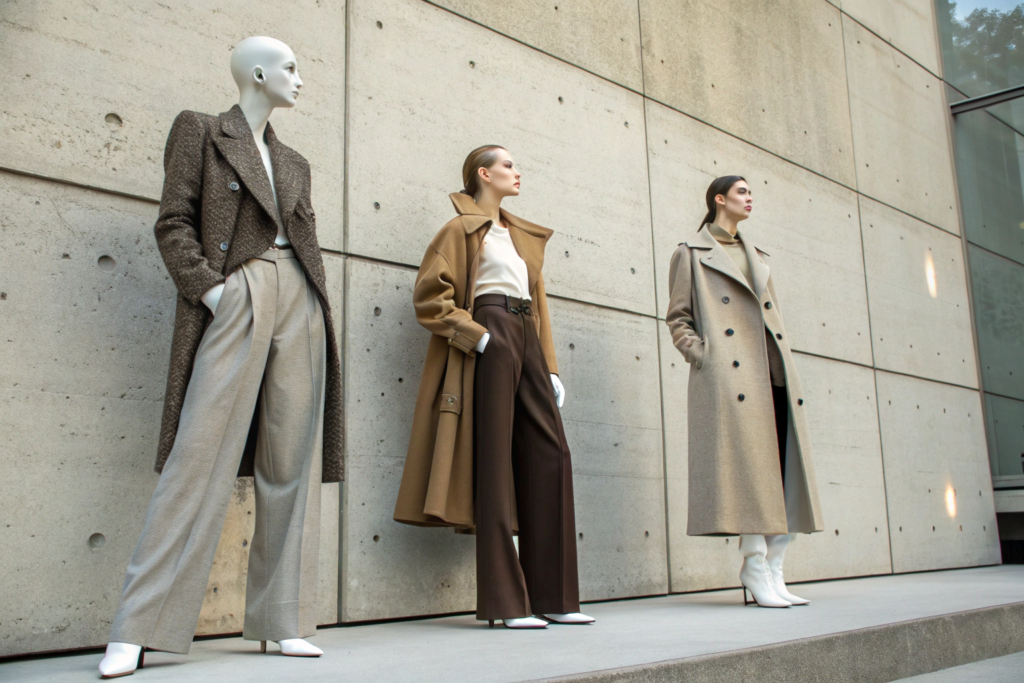
The proportion play that is defining AW26 is the most dramatic shift we have seen since the end of the skinny jean era. For years, the market bounced between two extremes: everything oversized or everything slim. AW26 is different. It pairs extreme volume on top with precision on the bottom. A massive, enveloping coat worn over a narrow, sharply tailored trouser. A chunky, boxy sweater tucked into a high-waisted, clean-front trouser with a sharp crease. This proportion pairing creates a tension that is visually interesting and flattering on a wide range of body types.
This silhouette direction requires careful pattern engineering. An oversized coat cannot simply be a size medium graded up to an XXL. The proportions shift. The armhole depth must be recalculated so the sleeve does not pull. The shoulder drop must be intentional, not accidental. The coat must look deliberately large, not like the wearer borrowed a bigger person's garment. Our pattern team has developed a specific oversized block library, grading rules apply differently when you design from a size small to a size large in an oversized fit.
What Are the Essential Coat Silhouettes for AW26?
Three coat shapes dominate our AW26 production orders. The first is the Sculptural Cocoon, a rounded, egg-shaped coat that curves inward at the hem. It pairs with slim bottoms to balance the volume. The fabric is typically a heavy double-faced wool that holds the curved shape without needing a stiff interlining. The second is the Broad Shoulder Topcoat, inspired by 1980s power dressing but softened with a fluid wool-cashmere blend that drapes rather than stands rigid. The shoulder pad is a rounded shape, not a sharp pagoda. The third is the Floor-Length Wrap Coat, a beltless robe style that skims the body and creates a vertical column.
Each of these shapes requires a different fabric weight and a different internal construction approach. The cocoon demands a fabric with some natural stiffness. The broad shoulder topcoat needs a soft tailoring canvas that supports without showing through. The wrap coat needs a fabric with beautiful drape that moves when the wearer walks. We are running all three silhouettes across multiple fabric qualities, so brands can choose the price point that fits their customer. The coat silhouette guide for AW26 is clear: volume is on the agenda, but it must be intentional volume.
How Are Wide-Leg Trousers Evolving for the New Season?
The wide-leg pant is not dead. But it is evolving. The sloppy, pooling-at-the-heel wide leg of previous seasons is giving way to a more structured, cropped wide leg that shows the ankle or the top of a boot. The new trouser has a high waist, often with a double-pleat front that adds room at the hip without adding width through the leg. The fabric is heavier, a wool suiting or a dense viscose twill, so the pant holds a sharp crease down the center front.
This trouser works as a counterpoint to the oversized top. The leg is generous but controlled. The hem is finished at the ankle bone or just above. Paired with a chunky knit and a heavy coat, the exposed ankle or a slim sock creates a deliberate punctuation point. We developed a sample for a New York contemporary brand that used a 300-gram wool blend suiting. The pant had a 22-inch leg opening and a cropped 26-inch inseam. It sold out in their pre-order within 72 hours. The wide-leg trouser remains a key item, but the AW26 version is refined, cropped, and built for structure rather than slouch.
How Should Small Brands Plan Their AW26 Buy to Reduce Risk?
Trend forecasting is exciting, but a smart brand does not bet the entire season on trends. The most successful boutique owners we work with use a barbell strategy. One end of the barbell is safe, proven basics that generate reliable cash flow. The other end is a small, concentrated bet on one or two trend statements that create buzz and attract attention. The middle, the mushy "sort of trendy but not really" zone, is where money gets wasted.
For AW26, I am advising my brand partners to allocate roughly 60% of their open-to-buy budget to core carryover styles in the Moody Earth palette. These are the reliable wool coats, the merino turtlenecks, the tailored trousers in anchor colors. These items will sell regardless of whether a specific trend hits or misses. Then allocate 25% to the big textural trend in a controlled way, perhaps one spectacular chunky cable sweater in two colorways. Allocate the final 15% to a single high-impact silhouette experiment, like the sculptural cocoon coat. This split protects your cash flow while ensuring you have something fresh to show.
What Is a Safe Minimum Viable Order for Trend-Testing?
The nightmare for a small brand is committing to 500 units of a trend piece and watching it flop. We solve this with a test-and-reorder model. Our production minimum for a single style is 300 units. But for trend-testing, we can work with a brand to split that 300 across two colorways of the same silhouette. You are not committing to 600 units. You are committing to 300 units that give you two different looks on your product page.
The A/B test happens in the market. You launch the cable sweater in Burnt Sienna and Oxidized Olive. Based on the first two weeks of sales data, you know which color is winning. You then place a fast reorder for the winning color while the losing color sells out at a moderate pace. Because we maintain buffer capacity in our production schedule, we can often turn a reorder in 30 to 35 days if the raw yarn is still in stock. This inventory planning model allows you to test trends without betting the farm. The key is to start the conversation early enough that your yarn order is placed before the mill sells out.
How Do You Time the AW26 Development Calendar to Beat Competitors?
Speed to market is a trend in itself. If you approve your AW26 samples in September 2025 instead of November 2025, you can launch your pre-order in early January when consumer enthusiasm for new arrivals is high and the post-holiday return window is closed. Your competitors who wait until February or March to launch are competing in a crowded field.
I recommend the following timeline to my brand partners. April to May 2025: finalize your trend direction and select fabrics from our AW26 swatch library. June to July 2025: first samples produced and reviewed. August 2025: second samples approved, and bulk production scheduled. September 2025: final product photography and marketing content prepared. January 2026: pre-order launch. This timeline puts your collection in front of consumers when they are looking for something new but before the market is flooded. The production calendar discipline is as important as the design choices.
How Do You Build a Narrative That Sells the Trend to Your Customers?
A trend item does not sell itself on a hanger. You need a story. The Moody Earth palette has a clear story: it is about returning to nature, about slowing down, about quality that lasts beyond a single season. The textural maximalism trend has a story: it is about craft, about the human hand, about the pleasure of touch in a digital world. The silhouette shift has a story: it is about power and presence, about taking up space confidently.
Brands that weave these narratives into their product descriptions, email campaigns, and Instagram captions will sell through faster than brands that simply list technical specifications. A cable sweater is a cable sweater until you describe the heritage of the fisherman who inspired the stitch, the traceable wool from a specific region, and the weight of the yarn that feels like a hug on a cold day. We provide our brand partners with detailed product information including source stories for our yarn and fabric. The brand storytelling material is ready for you to adapt. Your customer buys the story, not just the sweater.
Conclusion
The AW26 season is shaping up to be one of substance over spectacle. The texture in your knitwear is not just a visual detail. It is a signal of quality that your customer feels in their hand the moment they touch the garment. The Moody Earth palette is not just a color choice. It is an emotional anchor in a world that feels chaotic. The proportion play of oversized tops with tailored bottoms is not just a styling trick. It is a new way of dressing that makes your customer feel simultaneously comfortable and powerful.
The brands that will win AW26 are the ones that plan early, test trends carefully with small initial orders, and communicate the story behind the product with clarity and conviction. They are not the brands chasing every micro-trend on TikTok. They are the brands offering a cohesive, intentional collection that makes the customer feel understood. This is what our factory is built to support. Not just sewing seams, but enabling strategic clarity.
If you want to lock in your AW26 production slots before the seasonal rush consumes our capacity, now is the time to reach out. The mills are already running low on the best yarns in Burnt Sienna and Oxidized Olive. I do not want you to open your email in September and find that your hero sweater's yarn is sold out. At Shanghai Fumao, we forecast trends so you can build collections with confidence. Contact our Business Director Elaine at elaine@fumaoclothing.com to schedule a trend consultation and fabric review. Let us make AW26 your strongest season yet.