Three years ago, a major West Coast activewear brand placed a $280,000 order for 35,000 units of their bestselling leggings with a factory they had never visited. The entire negotiation, sampling, and contract signing was conducted through a sales representative over email and WeChat. The sales rep was professional, responsive, and reassuring. The samples were perfect. The price was competitive. The order was confirmed. Six weeks into production, the brand owner received an email from an unfamiliar address: the factory had gone bankrupt due to internal financial mismanagement that the sales rep had been hiding. The deposit was gone. The fabric was cut but unsewn. The brand owner had no relationship with the factory owner, no direct line of communication, and no legal recourse that could recover his investment within the selling season. He had trusted a sales rep who was incentivized to protect the factory's image, not to disclose its financial fragility.
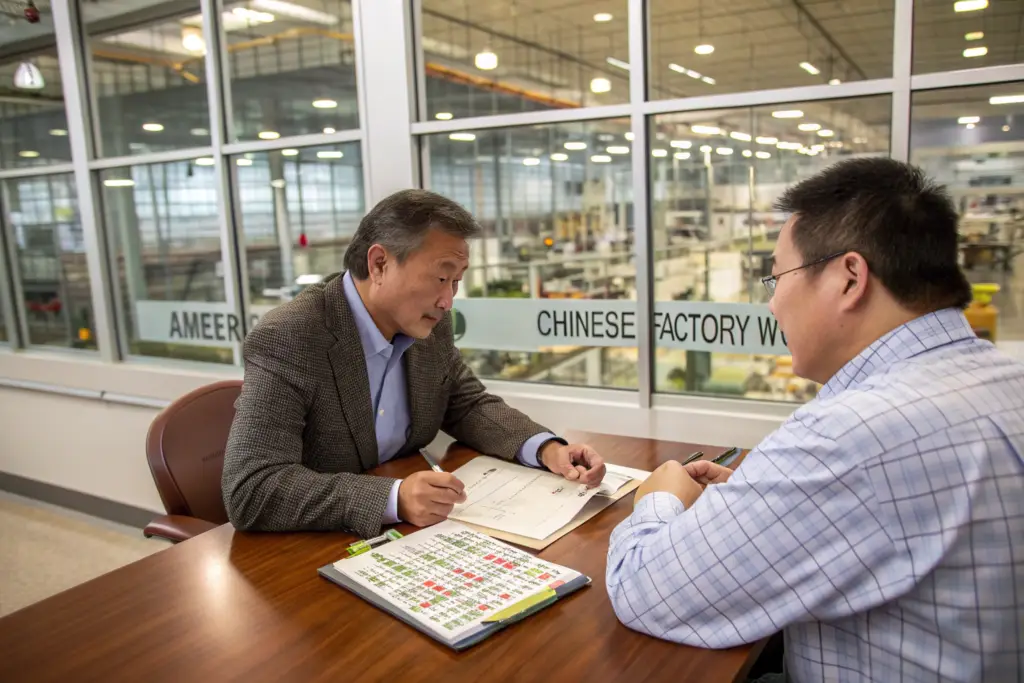
Direct meetings with factory owners are crucial for massive apparel orders because a multi-hundred-thousand-dollar production commitment requires a level of strategic alignment, financial transparency, and personal accountability that cannot be achieved through an intermediary sales representative, as only the factory owner possesses the authority to make binding capacity allocation decisions, the knowledge to disclose the factory's true financial health and current client concentration risk, and the personal commitment to prioritize your order over other clients when peak season resource conflicts inevitably arise.
At Shanghai Fumao, I am the factory owner. When a brand places a large order with me, they meet me directly. They have my personal mobile number. They know my production philosophy, my financial stability, and my commitment to their brand's success. A sales rep can promise. An owner can commit.
Why Is a Factory Owner's Personal Capacity Commitment the Only Binding Assurance for a 10,000-Unit Order?
A London-based premium basics brand was once assured by a sales representative that "we have capacity for your 12,000-unit order in September." The brand signed the contract and paid the 30% deposit. In August, the brand owner requested a production schedule confirmation. The sales rep stalled, then admitted that the factory owner had personally accepted a larger, more profitable order from a European fast-fashion conglomerate that occupied the September capacity. The sales rep had never actually secured the owner's commitment; she had simply assumed capacity was available. The brand's order was pushed to October, the retail launch window was missed, and the brand's wholesale accounts cancelled.
A factory owner's personal capacity commitment is the only binding assurance for a massive order because only the owner has the authority to physically block out a specific, named production line for a specific calendar window on the master production schedule, and only the owner's verbal and signed commitment—not a sales representative's hopeful promise—represents an actual allocation of the factory's most finite and valuable resource: the sewing time of its skilled workforce, which, once committed to your order, cannot be reallocated without the owner's explicit, conscious decision.
A sales representative can quote a price and a lead time from a rate card. Only the owner can look at the factory's total forward order book, assess the financial concentration risk of accepting another massive order, and make the strategic decision to allocate physical production lines to a specific client for a specific block of weeks.
How Does the Owner's "Forward Order Book Visibility" Prevent a Hidden Overbooking Crisis?
The owner sees the total, aggregated production commitments across all clients for the next six months. A sales rep sees only their own client portfolio. The owner can identify that accepting your 10,000-unit order would push the factory's total September commitment to 127% of maximum capacity, and either decline the order honestly or renegotiate the delivery date before contracts are signed.
Why Does an "Owner's Signature" on the Production Schedule Carry a Different Weight Than a Sales Contract Alone?
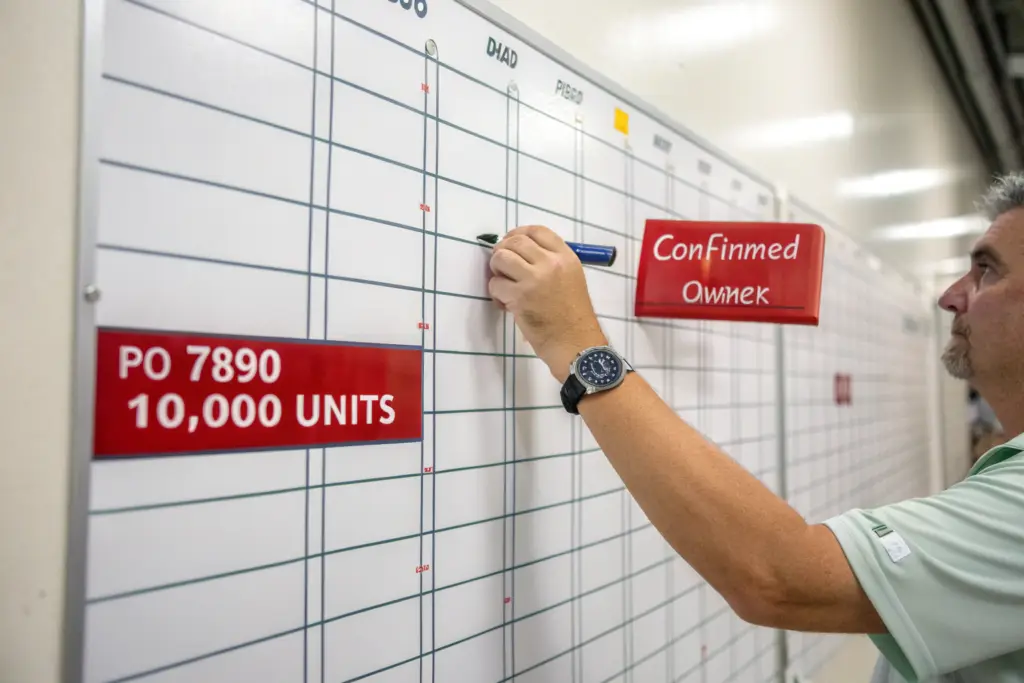
A standard sales contract is a legal document that can be disputed, litigated, or breached. The owner's personal signature on the physical production whiteboard, witnessed during a direct meeting, represents a personal, reputational commitment that extends beyond the legal terms into the realm of the owner's long-term industry relationships.
What Financial Transparency Does a Factory Owner Reveal in a Direct Meeting That a Sales Rep Cannot?
A Dutch sustainable fashion brand once placed a $175,000 order with a factory that, unknown to them, was heavily dependent on a single client who contributed 70% of the factory's annual revenue. That major client unexpectedly cancelled their order in the middle of the brand's production run. The factory's cash flow collapsed. The factory could not purchase the raw materials for the brand's order because their working capital had been consumed by the cancelled client's unpaid receivables. A sales rep would never have disclosed this client concentration risk. The factory owner, in a direct meeting, would have been asked about their client portfolio and might have revealed the vulnerability.
In a direct meeting, a factory owner may reveal the factory's client concentration risk—whether they are dangerously dependent on one or two large clients—their raw material supplier payment history that indicates whether the factory is in good standing with its fabric mills, and their current working capital position that determines whether they can finance the raw material procurement for your massive order without requiring an unusually large upfront deposit, all of which are critical financial health indicators that a sales representative either does not know or is explicitly instructed not to disclose.
A factory's financial health is the foundation upon which your production timeline rests. A factory with strong, diversified cash flow can absorb a minor delay without collapsing. A factory teetering on the edge of insolvency can be destroyed by a single late payment from another client, taking your deposit and your cut fabric down with it.

What Is a "Client Concentration Risk" Question, and Why Must It Be Asked Directly to the Owner?
The question is: "What percentage of your annual revenue comes from your single largest client?" If the answer is above 40%, the factory is dangerously concentrated. The owner is the only person who knows the true percentage, and a direct meeting allows you to assess the honesty of the answer through facial cues and body language that an email cannot convey.
How Does the Owner's "Supplier Payment Status" Reveal Whether the Factory Can Actually Procure Your Fabric?
A factory in poor financial standing may be on credit hold with its key fabric mills. The owner knows whether the factory's accounts payable are current or delinquent. A direct question—"Are you currently on credit hold with any of your top three fabric suppliers?"—will be answered honestly by a trustworthy owner and evaded by a factory in trouble.
How Does a Direct Meeting Establish the "Peer-to-Peer Relationship" That Prioritizes Your Order During a Peak Season Crisis?
During the pre-holiday peak season of 2022, a New York premium knitwear brand's 8,000-unit order was at risk of delay because a global cashmere yarn shortage had hit every factory simultaneously. The factory owner had three clients all demanding the limited available yarn. The brand owner had never met the factory owner. The factory owner allocated the limited yarn to two clients: one was a local Chinese brand that the owner had a 15-year personal relationship with, and the other was a European brand whose owner had flown to China specifically to have dinner with the factory owner and his family six months earlier. The New York brand's order was delayed by four weeks. The yarn allocation was not based on contract terms; it was based on personal relationship depth during a crisis.
A direct meeting establishes the peer-to-peer relationship that prioritizes your order during a peak season crisis because when a raw material shortage, a logistics disruption, or a labor scarcity forces the factory owner to choose which client's order will be delayed, that decision is made not by the sales department but by the owner personally, and the owner will instinctively protect the client with whom they have a direct, personal, face-to-face relationship—the client whose hand they shook, whose business story they heard, and whose face they remember—over the client who is a name on a contract managed entirely through an intermediary.
Contracts allocate liability. Relationships allocate scarce resources. When there is not enough yarn to fill every order, the owner does not consult the contract file; they consult their personal memory of who treated them as a partner and who treated them as a vendor.
In Chinese business culture, sharing a meal with the factory owner and their family creates a personal, social bond that extends beyond the commercial transaction. It signals respect, trust, and a willingness to invest in a long-term relationship. This bond becomes the tiebreaker when the owner must decide which client's order to delay.
How Does the Owner Knowing Your "Brand Story" Personally Influence Resource Allocation More Than a Sales Rep's Notes?
A sales rep's CRM notes are dry, factual, and emotionally weightless. When the owner personally heard the brand owner describe the decade spent building the brand, the family employees, the specific wholesale accounts that depend on timely delivery—that story carries emotional weight that directly influences resource allocation decisions in a crisis.
What Strategic Production and Cost Engineering Conversations Only the Owner Can Authorize?
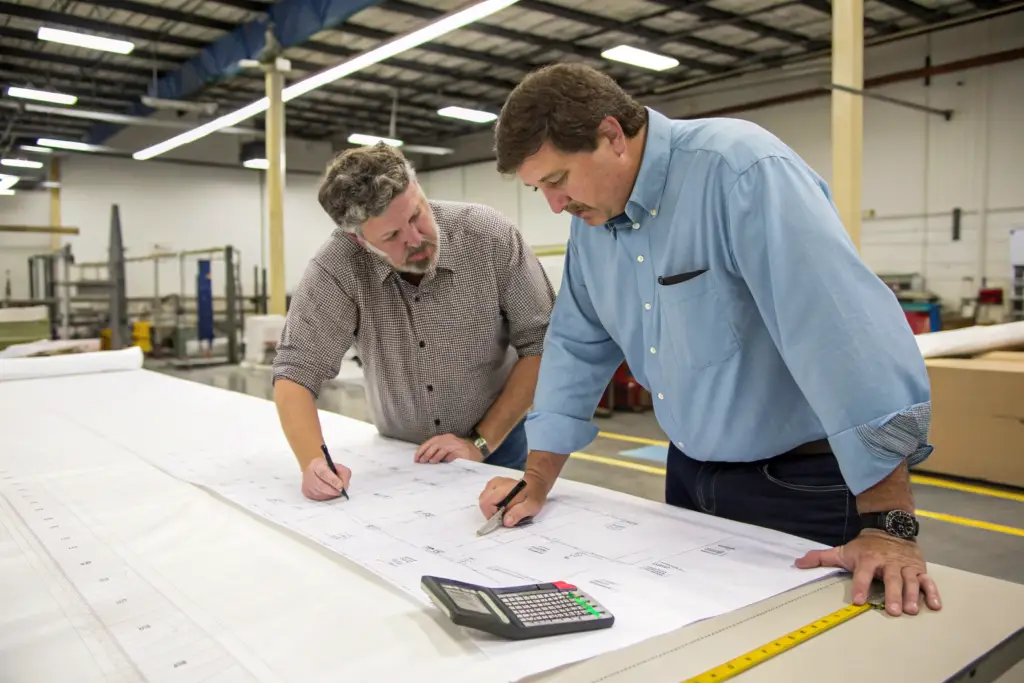
A Canadian outdoor brand's production manager once spent three weeks going back and forth with a factory's sales representative, trying to reduce the fabric wastage percentage on a large order of technical jackets. The sales rep repeatedly said, "Our cutting room standard is 8% wastage, we cannot reduce it." The brand finally insisted on a direct meeting with the factory owner. In a 45-minute conversation at the cutting table, the owner personally examined the marker layout, identified an inefficiency in the sleeve piece nesting, and authorized the cutting master to re-nest the marker. The wastage dropped to 6.2%. On 15,000 jackets, this saved the brand $4,700 in fabric cost. The sales rep had no authority to challenge the cutting room's standard practice. The owner did.
Only the factory owner can authorize strategic production modifications such as re-engineering a marker layout to reduce fabric wastage, renegotiating the standard Cut-Make-Trim labor rate for a high-volume order, or accepting a lower margin on a massive order in exchange for a multi-year exclusivity agreement, because these decisions require modifying the factory's internal cost structure, overriding department-level standard operating procedures, and committing the factory's financial resources beyond the current order cycle—all of which are outside the authority scope of any sales representative.
A sales representative operates within a fixed set of pricing and process parameters set by the owner. Only the owner can change the parameters. When a massive order represents a meaningful percentage of the factory's annual revenue, the owner is often willing to make structural adjustments that a sales rep cannot offer and may not even know are possible.

How Does the Owner's Ability to "Re-Engineer the Marker" on a 20,000-Unit Order Save Thousands in Fabric Cost?
The cutting marker determines how pattern pieces are arranged on the fabric roll. A 1% reduction in fabric wastage on a 20,000-unit order consuming 1.5 meters per unit saves 300 meters of fabric. At $4.00 per meter, that is a $1,200 saving. Only the owner can authorize the cutting master to spend extra time re-nesting the marker for maximum efficiency.
Why Is a "Multi-Year Exclusivity Agreement" for a Specific Fabric Quality Only Negotiable With the Owner?
If a brand wants the factory to reserve a specific custom-developed fabric exclusively for their brand for three years, the factory is agreeing to decline revenue from other clients who might want that same fabric. Only the owner can make this long-term, strategic revenue trade-off decision.
Conclusion
A massive apparel order is not just a larger version of a small order. It is a strategic partnership between two businesses, and a sales representative is not a proxy for the business owner. The factory owner holds the keys to the production schedule, the financial truth, the crisis resource allocation, and the strategic cost engineering decisions. Meeting the owner directly transforms the relationship from a transactional vendor arrangement into a peer-to-peer partnership where your order is a named, personally committed block on the production whiteboard, not a hopeful entry in a sales rep's CRM pipeline.
At Shanghai Fumao, I personally meet every brand owner who places a large production order with my factory. I want them to look me in the eye, hear my personal commitment to their delivery date, understand my factory's financial stability, and know that when a peak season crisis hits, I will remember their face and their story when I allocate limited resources. My sales team manages the day-to-day communication. I manage the strategic relationship.
If you are a brand buyer planning a substantial production run and you want a factory owner who will sit across the table from you—physically or via a direct video call—and personally commit to your production schedule, contact my Business Director, Elaine. She can schedule a direct meeting with me to discuss your order volume, your production timeline, and your long-term brand strategy. Reach Elaine at: elaine@fumaoclothing.com. A massive order deserves a direct conversation with the person who owns the machines.