I had a candid conversation with a buyer from a major online retailer at a trade show in Las Vegas last August. She was staring at our sheer coat samples with a mix of fascination and deep skepticism. "It's beautiful," she said, "but is it actually a garment, or is it just an Instagram prop? Can I sell this to a real woman in Ohio, or only to an influencer in Miami?" Her question cut to the heart of the matter. She had been burned before by runway trends that generated likes but not sales. She needed to know if the sheer coat had crossed the chasm from editorial fantasy to commercial reality.
Yes, the sheer summer coat remains a major trend for 2026 collections, but it has matured from a purely theatrical runway piece into a commercially viable category with multiple wearable interpretations for different customer comfort levels.
The sheer coat is no longer one monolithic, intimidating garment. It has diversified into a spectrum of options, from barely-there organza dusters to more substantial, semi-sheer knits and cleverly layered transparent trenches. At Shanghai Fumao, we have seen our sheer coat production volume triple over the last three summer seasons. This growth is not coming from avant-garde boutiques alone. It is coming from mainstream retailers who have figured out how to make the trend work for their customers. I want to break down exactly how this trend has evolved and how you can source it profitably.
How Has the Sheer Coat Trend Evolved from Runway to Retail?
Trends that stay on the runway are irrelevant to your business. The only trends that matter are the ones that make the journey into your customer's wardrobe. The sheer coat has made that journey, but not in its original, most extreme form. The version that stomped down the runway was often completely transparent, worn with nothing underneath, a statement of pure artistic provocation. That is not what is selling in stores. What is selling is an adapted, commercialized version that retains the ethereal DNA of the trend but adds elements of practicality and wearability.
The sheer coat trend has evolved from extreme, opaque-transparent runway pieces into a wearable retail category characterized by semi-sheer fabrics, functional layering pieces, and silhouettes that offer varying degrees of coverage and practicality.
This evolution is the reason the trend has legs for 2026. It is no longer a one-season wonder. It is becoming a staple summer layer. The customer who was terrified of the trend two years ago is now comfortable buying a sheer kimono or a semi-sheer shirt coat. The market has been educated.
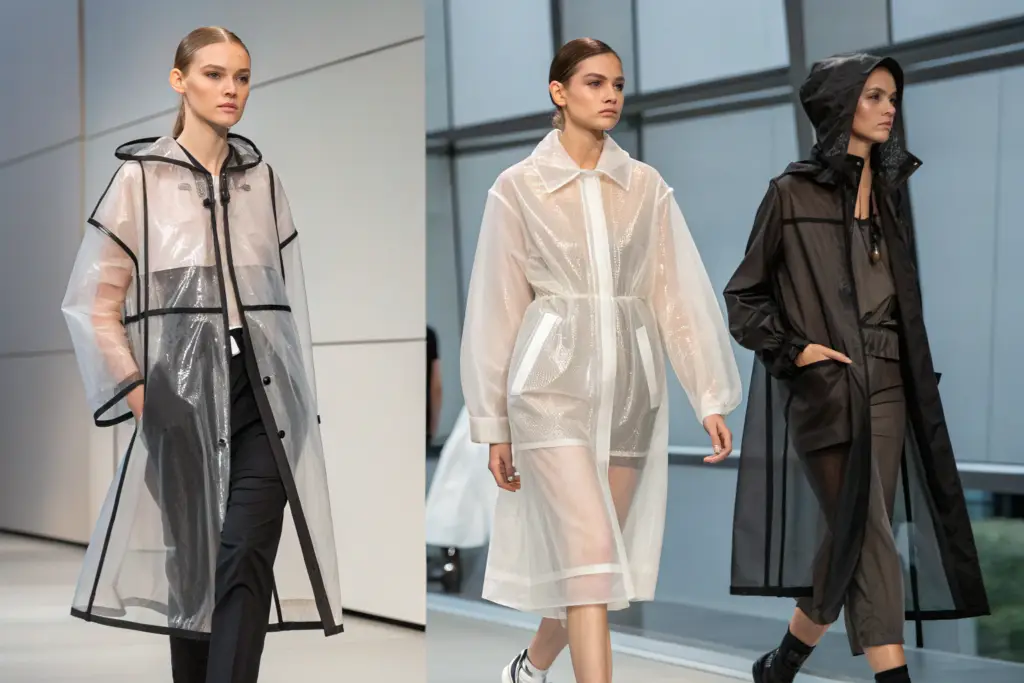
What Are the Key Differences Between the 2024 and 2026 Sheer Coat?
The 2024 sheer coat was largely a novelty item. It was almost exclusively sold in black, in a floor-length duster silhouette, and marketed as a "going out" piece for fashion risk-takers. The fabric was predominantly a stiff, crunchy nylon organza that had a beautiful visual effect but was uncomfortable to wear against the skin. The market was limited. The 2026 sheer coat is a completely different product. The fabric palette has expanded dramatically. Soft creams, blush pinks, pale blues, and even muted sage greens are now the dominant colors. Black is still present but no longer represents the majority of the buy.
The silhouettes have diversified. The floor-length duster remains important, but it is now joined by cropped sheer jackets, sheer shirt coats, and sheer kimono-style wraps. The fabric technology has also improved. The stiff, scratchy nylon has been largely replaced by softer polyester blends, recycled PET with a fluid drape, and even luxury fibers like silk organza and fine cotton voile for the higher end of the market. We developed a sheer fabric for a Los Angeles brand last year that was a blend of recycled polyester and Tencel. It had the transparent, ethereal look of organza but the soft, breathable hand feel of a natural fiber. This fabric innovation is what unlocks the broader market. The customer puts it on and it feels good, not just looks good.
How Are Designers Making Sheer Coats More Wearable for Everyday Life?
The solution is layering and strategic opacity. The most commercially successful sheer coats in 2026 are not fully transparent. They are semi-sheer or they feature sheer panels combined with opaque elements. Think of a trench coat with sheer, billowing sleeves but an opaque body. Or a duster that is sheer across the back but has an opaque front panel. These hybrid designs offer the editorial drama of the sheer trend but provide the coverage that a mainstream customer demands.
Another powerful strategy is the built-in layering piece. We produce a sheer organza duster for a boutique chain that comes with a detachable, matching slip dress in a soft modal jersey. The customer buys the complete look. She wears them together for a sophisticated, layered outfit or separates them to wear the duster over her own clothes. This solves the "what do I wear under it" problem at the point of sale. The styling is done for her. We also use a technique called shadow-striping. This is where a very fine, opaque stripe is woven into the sheer fabric. From a distance, the coat looks transparent. Up close, the subtle stripe provides a degree of visual coverage that makes the wearer feel secure. These design tricks are what separate a coat that sells from one that sits on the rack.
What Are the Most Commercially Viable Sheer Coat Styles for 2026?
You cannot build a wholesale program on a single, extreme style. You need a curated selection that offers different levels of commitment for different customer personalities. The sheer coat category in 2026 has matured to the point where it offers clear, distinct sub-categories. Each one appeals to a specific psychographic. The fashion risk-taker wants the full statement. The contemporary minimalist wants a sleek, modern version. The bohemian romantic wants something soft and flowing.
The most commercially viable sheer coat styles for 2026 are the sheer duster, the sheer shirt coat, and the sheer kimono, each providing a different entry point into the trend based on the customer's personal style and comfort level.
These three styles should form the backbone of your sheer coat buy. They cover the drama-seeker, the minimalist, and the romantic. They can be merchandised together to tell a complete, compelling trend story on your sales floor.
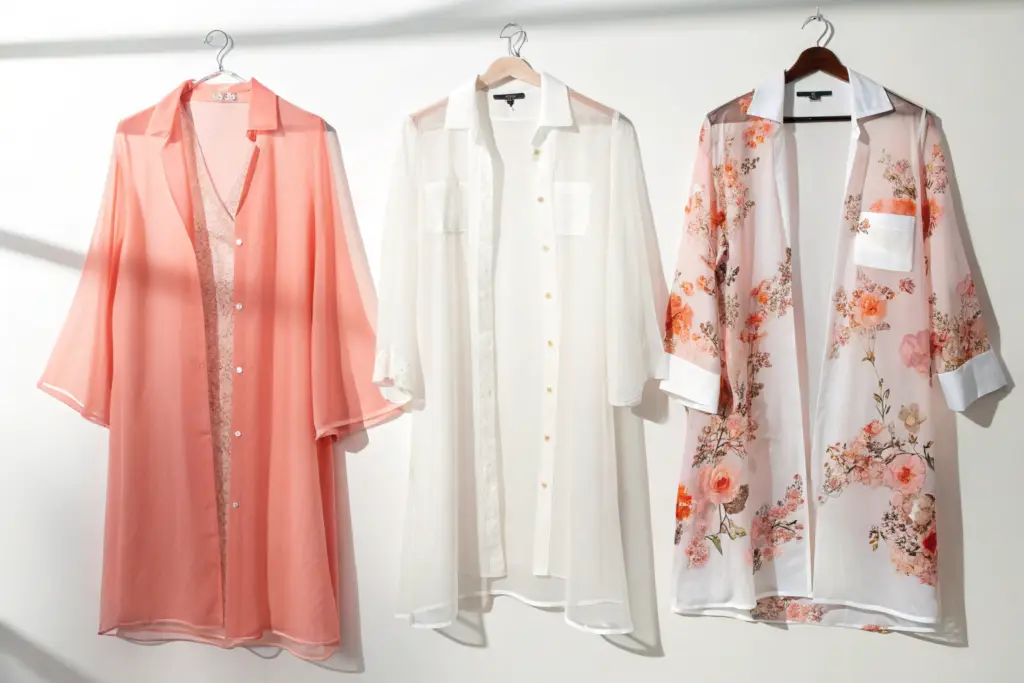
Is the Sheer Duster Still the Hero Product?
The sheer duster remains the hero product of this category. It is the purest expression of the trend. It is long, flowing, and creates a dramatic vertical line that instantly transforms the simplest outfit. A white t-shirt and jeans under a sheer black duster looks like a deliberate fashion choice. The duster does the heavy lifting. For 2026, the duster is being updated with more thoughtful details that enhance its commercial appeal. We are adding a single, delicate hook-and-eye closure at the neck. This allows the customer to close the coat if she wants, giving her more styling control.
We are also finishing the edges with a fine, rolled hem, often in a contrasting color thread for a subtle, beautiful detail that is visible only up close. This elevates the garment's perceived quality. The length is being adjusted for more versatility. While the floor-length version is still the most dramatic, we are producing more calf-length dusters. This length is easier to wear, does not drag on the ground, and works with both flats and heels. One of our department store partners ordered their duster in three colors: classic black, a soft pearl white, and a vibrant coral. The coral was the surprise bestseller. It sold out in three weeks because it looked incredible in their summer window display with the sunlight streaming through it. The lesson is to not be afraid of color in the sheer category.
How Does the Sheer Shirt Coat Appeal to a More Conservative Customer?
The sheer shirt coat is the gateway product for the customer who loves the look of the sheer trend but cannot imagine herself wearing a floor-length transparent duster. The shirt coat is familiar. It has a collar, a button front, and a shirt-tail hem. These details ground the garment in reality. The sheer fabric makes it fashion. The combination is powerful and accessible. The customer can wear a sheer white shirt coat over a matching camisole and tailored trousers for a very chic, modern office look.
The fabric choice for the shirt coat is critical. It needs to be crisp enough to hold the shirt details, like the collar and the cuffs. A fabric that is too soft will collapse and lose the shirt structure. We use a fine, high-twist polyester organza that has a papery, crisp hand feel. It holds a sharp crease and gives the garment a clean, almost architectural look. The buttons are small, pearlized, and delicate, complementing the lightness of the fabric. We ship this style with a tonal, opaque camisole in the box. This small addition dramatically increases the sell-through rate. The customer sees exactly how to wear it, and the fear factor disappears. One of our wholesale partners marketed this as the "complete sheer shirt set," and it became their top-selling summer coordinate.
What Makes the Sheer Kimono a Versatile Layering Piece?
The sheer kimono is the bohemian, romantic expression of the trend. It has wide, flowing sleeves, an open front, and an unstructured, relaxed shape. It is the easiest sheer coat to wear. There are no buttons, no closures, no fuss. The customer just slips it on. Its beauty is in its absolute simplicity. The kimono shape is universally flattering and has a resort-wear association that makes it perfect for summer vacations and warm-weather events.
For 2026, we are seeing a strong trend towards printed sheer kimonos. Delicate, watercolor floral prints on a sheer base fabric are incredibly popular. The print gives the garment more visual weight and makes it feel even less revealing. The fabric becomes a canvas. We developed a technique where the print is applied using a digital pigment process that is water-efficient and produces vivid, soft colors on sheer fabrics. The edges of the kimono are finished with a self-fabric fringe. The fringe adds movement and a hand-crafted touch that customers love. A resort-wear boutique in Hawaii ordered our sheer kimono in a custom hibiscus print. They sold it as a beach cover-up and an evening layer. Their customers wore it over swimsuits during the day and over a slip dress at night. That dual functionality drove incredible sell-through.
What Fabrics and Construction Details Define a Quality Sheer Coat?
The difference between a sheer coat that looks expensive and one that looks like a cheap costume is entirely in the fabric and the construction. These are garments where there is nowhere to hide. A flaw in the cutting, a crooked seam, or a low-quality fabric is instantly visible because the garment is transparent. The manufacturing standards must be higher for sheer coats than for almost any other garment category. The operator cannot rush. The quality control cannot be lax. Every stitch is on display.
A quality sheer coat is defined by the use of premium sheer fabrics like silk organza or fine recycled polyester, combined with meticulous construction techniques including French seams, hand-rolled hems, and delicate, weightless trims.
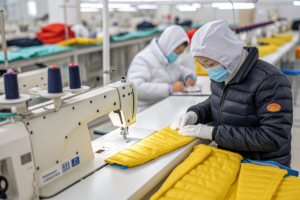
At Shanghai Fumao, we treat our sheer coat production line as a specialized unit. The operators who sew sheer fabrics are our most experienced and meticulous team members. They understand that the fabric demands patience and a gentle touch.
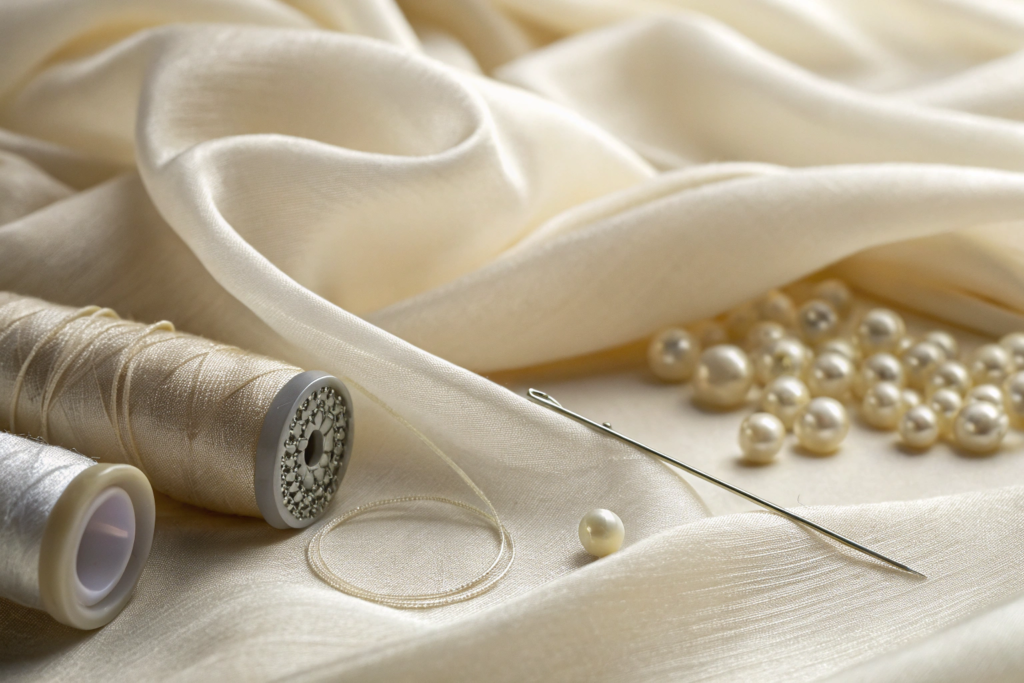
What Are the Best Fabric Choices for Durability and Drape?
Silk organza is the ultimate luxury fiber for sheer coats. It has an incomparable crispness, a subtle sheen, and a lightness that feels truly weightless on the body. It also breathes, which is essential for a summer garment. However, it is expensive and delicate. For a more accessible price point, a high-quality recycled polyester chiffon or organza is an excellent choice. The recycled content adds a sustainability narrative that resonates with customers.
The critical test for any sheer fabric is how it handles tension. A low-quality sheer fabric will pucker and ripple along the seams, especially on curves. This ruins the clean, ethereal look. We test every sheer fabric before we approve it for production. We sew a test curve, a collar curve or an armhole curve, and then we hold it up to the light. If the seam lies flat and smooth, the fabric passes. If there is any puckering, the fabric is rejected. We also prefer fabrics with a slight mechanical give. A totally rigid sheer fabric is uncomfortable to wear because it has no ease of movement. A fabric with a little bit of natural give, either from the yarn twist or a small percentage of elastane, will drape more gracefully and feel more comfortable on the body.
Why Are French Seams and Hand-Rolled Hems Essential?
A standard overlocked seam on a sheer coat looks cheap and unfinished. The thread loops are visible through the fabric, creating a messy, distracting line. A French seam is the only acceptable finish for a quality sheer garment. A French seam encloses the raw edge of the fabric within itself. The seam is sewn twice, first with the fabric wrong sides together, then flipped and sewn again with the right sides together. The raw edge is completely hidden inside a clean, narrow channel. When you hold the coat up to the light, all you see is a single, elegant line of stitching.
The hem is equally important. A machine-stitched hem on a sheer coat can look heavy and cause the fabric to ripple. The gold standard is a hand-rolled hem. A skilled sewer uses a needle and thread to literally roll the very edge of the fabric between her fingers, securing it with tiny, nearly invisible stitches. This creates a hem that has no weight, no bulk, and a delicate, couture-level finish. It is time-consuming. A single duster can take an hour just to hem. But this is the detail that separates a $50 coat from a $250 coat. We have invested in training a dedicated team of hand-finishing specialists who do nothing but this work. Their skill is the secret behind the luxury feel of our sheer coats.
How Do You Successfully Merchandise and Sell Sheer Coats?
The biggest barrier to selling a sheer coat is not the product itself. It is the customer's uncertainty about how to wear it. She is intrigued but intimidated. If your merchandising and your sales team do not bridge this gap, the coat will hang untouched on the rack. You need to provide the customer with a complete vision, not just a garment. You need to show her exactly how the sheer coat integrates into a real, wearable wardrobe. The presentation and the education are just as important as the product design.
Successfully merchandising sheer coats requires presenting them as part of complete, styled outfits, educating the sales team on layering strategies, and using visual displays that highlight the beauty and movement of the sheer fabric.
This is a category where the sell is made through emotion and inspiration, not just logic. The customer needs to feel the desire before she can justify the practicality. At Shanghai Fumao, we support our retail partners with the visual assets and the styling knowledge to make this happen.
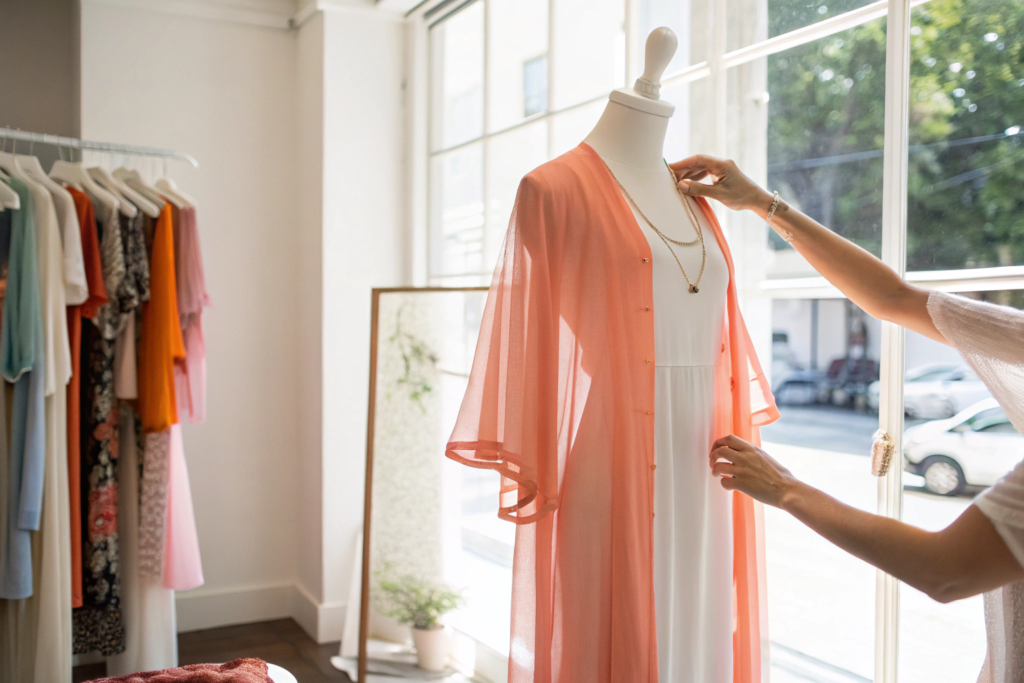
What Styling Formulas Remove the Customer's Fear Factor?
You need to give your customer simple, repeatable formulas. One formula is the monochromatic layer. A sheer black duster over a black slip dress and black sandals. The monochrome palette makes the sheer layer look intentional and chic, not revealing. Another formula is the high-contrast layer. A soft, romantic sheer floral kimono thrown over a simple white t-shirt and distressed denim shorts. The contrast between the feminine coat and the casual basics creates a perfect, effortless summer look.
The most important formula, the one that consistently closes the sale, is the "third piece" rule. A complete outfit needs a top, a bottom, and a third piece, like a jacket or a coat. The sheer coat is the perfect summer third piece. It adds a layer of style without adding heat. We train our retail partners to teach this concept to their sales associates. When a customer is trying on a dress or a top and pant set, the associate is trained to bring a sheer coat to the fitting room and say, "This will make that outfit look absolutely complete." When the customer tries it on and sees the transformation, the add-on sale happens naturally. We provide a training card with every wholesale order that outlines these three formulas. It is a simple but effective tool.
How Do You Display Sheer Coats to Maximize Visual Impact?
A sheer coat folded on a shelf is invisible. It looks like a crumple of nothing. It must be hung and it must be lit. The best display method is to place a sheer coat on a mannequin in your front window, positioned so that natural light or a spotlight shines through the fabric. The light makes the coat glow and reveals the subtle details of the weave or the print. It stops people on the sidewalk.
Another highly effective technique is to use a rotating rack or a slow-turning motorized display. Movement is the sheer coat's secret weapon. A static coat is beautiful. A coat moving gently in the breeze from an open door or a fan is mesmerizing. It showcases the fluidity and the drape of the fabric. We had one boutique partner in Miami who hung a sheer duster on a simple hook near the entrance of their store. The coastal breeze would catch it every time the door opened. They sold more of that duster than any other item that summer simply because of that placement. Think about movement and light when you plan your visual merchandising. These two elements are your best salespeople for this product.
Conclusion
The sheer summer coat is not just surviving into 2026. It is thriving because it has evolved. It has moved from a single, intimidating runway piece into a diversified category of wearable, beautiful garments. The sheer duster remains the dramatic hero. The sheer shirt coat brings the trend to the modern professional. The sheer kimono offers a romantic, effortless option that sells as both a cover-up and an evening layer. The market has learned how to wear it. The fabrics have become softer and more comfortable. The construction has reached a level of quality, with French seams and hand-rolled hems, that justifies a premium price point.
The key for you as a retailer or brand is to source these pieces from a manufacturer who understands the specialized handling they require. Sheer fabric does not forgive mistakes. You need a factory with the skilled operators, the right machinery, and a rigorous quality control process dedicated to this challenging category. At Shanghai Fumao, we have built that capability. If you are ready to explore adding sheer coats to your Summer 2026 collection, I encourage you to contact our Business Director, Elaine. She can share our sheer coat line sheet and discuss the customization options that will make your pieces unique. Reach her at elaine@fumaoclothing.com. Let's create something transparently beautiful together.