I spent a week in Florence last January, meeting with buyers from several of our long-standing European accounts. Over dinner one evening, a buyer from a prestigious Milan boutique leaned in and said something that stuck with me. "We do not want the American oversized look," she said, swirling her wine. "We want soft tailoring. We want the jacket to move with the body, not swallow it. Our customer cycles to work. She needs to arrive looking impeccable, not crumpled." Her words perfectly captured the specific, demanding nature of the European market. A linen blazer that sells brilliantly in California might be completely rejected in Copenhagen or Paris.
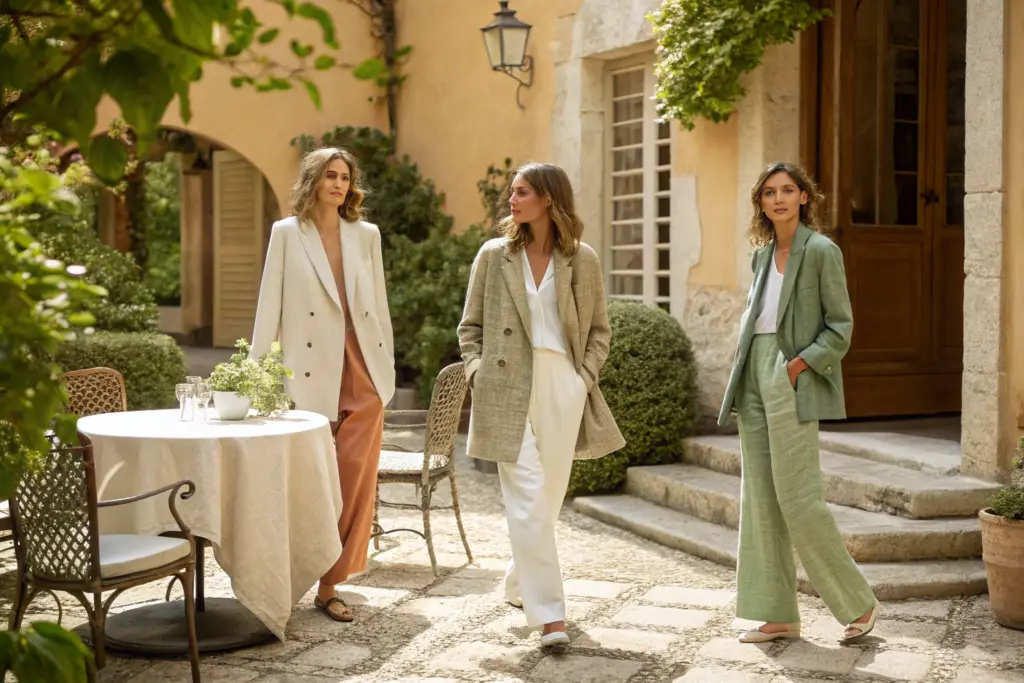
European buyers are ordering three distinct types of linen blazers for Summer 2026: the sculptural, soft-tailored blazer in neutral, undyed linens; the coordinated linen suit in warm, sun-faded hues; and the refined utility blazer in subtle stripes and textures.
The European market has a unique set of aesthetic codes and practical demands. The silhouettes are softer. The color palette is more sophisticated. The sustainability story is non-negotiable. At Shanghai Fumao, we have refined our approach to this market over many seasons. I want to share exactly what is going into the order books of the most influential European boutiques for Summer 2026.
What Defines the European Aesthetic for Summer Linen Blazers?
The European customer does not buy a linen blazer because it is a trendy item on a checklist. She buys it as an investment in her summer wardrobe. She expects it to perform beautifully for several seasons, softening and improving with age. The blazer must integrate seamlessly into a wardrobe that values quality over quantity. The aesthetic is rooted in a quiet, confident luxury that does not need to shout. The details are everything. The texture of the fabric. The roll of the lapel. The way the garment feels when it is worn open and unbuttoned.
The European aesthetic for summer linen blazers is defined by an understated elegance, a preference for natural and often undyed fabrics, and a silhouette that is softly tailored to move with the body rather than restrict it.
This is not a market that responds well to stiff, heavily constructed jackets or loud branding. The luxury is in the material, the cut, and the invisible quality of the make. We spend a significant amount of time with our European partners, understanding the nuances of their specific regional markets. A buyer in Stockholm has a different color sensibility than a buyer in Rome, but they are united by this core demand for authentic, soft luxury.
How Does "Soft Tailoring" Differ from Traditional Blazer Construction?
Soft tailoring is the defining construction philosophy of the European summer blazer. A traditional blazer is built like a suit of armor. It has structured shoulder pads, a stiff chest canvas, and layers of interlining. It creates a defined, angular silhouette. Soft tailoring removes almost all of this internal architecture. The goal is not to reshape the body but to follow it. The shoulder pad is either removed entirely or replaced by a whisper-thin, floating piece of cotton wadding. The chest canvas is a lightweight, woven material that is sewn in by hand, allowing the jacket to flex and move with the wearer's body, not against it.
The result is a blazer that feels more like a cardigan than a jacket. It can be rolled up and packed in a weekend bag. It drapes softly when unbuttoned. We developed a specific soft-tailored construction method for a Parisian brand last year. We replaced the traditional fusible interlining with a completely floating, hand-basted canvas made from horsehair and cotton. The armhole was cut slightly higher and closer to the body to allow for a full range of motion. The brand's founder described the jacket as "a second skin in linen." That phrase perfectly captures the soft tailoring ideal.
Why Are Natural and Undyed Linens So Important to This Market?
The European customer is highly educated on sustainability. She reads labels. She asks questions. She wants to know where the fabric came from and how it was processed. This has driven a massive demand for natural, undyed linens. These fabrics are not bleached or dyed. They are presented in their raw, authentic state, in shades of oatmeal, flax, and warm ecru. The natural slubs and irregularities of the flax fiber are celebrated, not hidden. The fabric tells an honest story.
This aesthetic aligns perfectly with the broader European "quiet luxury" movement. The value is communicated through the purity of the material, not a logo. The environmental benefit is also concrete. The dyeing and finishing process is one of the most chemically intensive and water-polluting stages of textile production. By skipping it entirely, the garment's environmental footprint is significantly reduced. We source undyed linen from a mill in Normandy that specializes in this. They use a mechanical finishing process that softens the fibers without any chemicals. The resulting fabric has a beautiful, soft hand feel and a lovely, slightly irregular, living texture. A buyer from a Copenhagen concept store told me her customers actively seek out these undyed pieces. They are her highest margin category because the customer perceives an authentic value.
What Are the Key Linen Blazer Silhouettes Ordered by European Buyers?
The European buy is not monolithic. It can be broken down into three clear, commercially significant silhouettes. Each one serves a different wardrobe purpose and appeals to a slightly different customer psychographic. The successful wholesale strategy for this market is to offer all three, creating a complete linen blazer story that allows the boutique buyer to curate a cohesive assortment for her specific clientele.
The key linen blazer silhouettes for the European Summer 2026 market are the oversized, unstructured single-breasted blazer, the belted, double-breasted blazer, and the unlined, casual utility blazer.
These three shapes form a pyramid. The single-breasted blazer is the volume driver. The belted blazer is the premium, high-margin hero piece. The utility blazer is the accessible, younger-skewing entry point. Together, they cover the market.
Is the Oversized, Unstructured Blazer Still a Volume Driver?
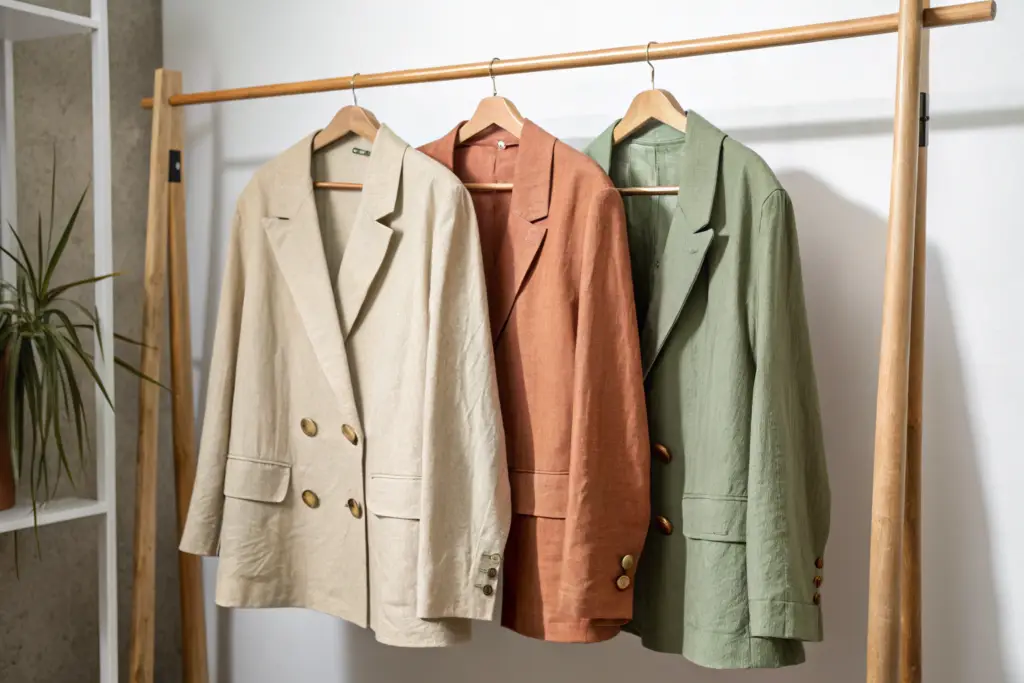
Yes, but the European interpretation of "oversized" is nuanced. It is not the aggressively huge, dropped-shoulder silhouette that you see in some Asian street-style markets. The European oversized blazer is more about a relaxed ease. The shoulder is slightly extended, perhaps by a centimeter or two, creating a soft, sloping line. The body is cut with a little more room through the chest and waist, but it does not overwhelm the frame. The length is typically longer, grazing the hip or even the upper thigh, which creates an elegant, vertical proportion.
The key construction detail is the complete absence of structure. There is no shoulder pad, no chest canvas, and often no lining. The jacket is essentially a beautifully cut linen shirt. This makes it incredibly versatile. The customer wears it over everything from a summer dress to a swimsuit. We produce this style in a washed linen that has a soft, almost sueded hand feel. A buyer from Berlin ordered this silhouette in three colors, natural, soft black, and a dusty blue, and she places a repeat order every single season. It is the backbone of her summer outerwear business.
Why Is the Belted, Double-Breasted Blazer a Key Premium Piece?
The belted blazer is the statement piece for the European summer. It is a more sculptural, intentional silhouette. The double-breasted front creates a strong, tailored V-shape. The self-fabric belt cinches the waist, defining the silhouette and adding an element of sophisticated polish. This is the blazer that the customer wears to a garden party, a summer wedding, or an important business lunch. It communicates a quiet, assured power.
The tailoring of this piece is more complex than the unstructured blazer. It requires a light canvas to hold the shape of the double-breasted front and the lapel roll. The belt loops must be precisely positioned and securely bar-tacked. We often customize the belt for our European partners, offering a contrast belt in a fine leather or a belting fabric with a subtle texture. A boutique owner in Milan ordered this blazer in a heavyweight, 280 GSM linen in a stunning, sun-faded terracotta color. She paired it with a matching wide-leg trouser. The suit was her highest-priced summer item, and it sold out within a month. The customer bought into the total look.
How Is the Utility Blazer Being Refined for the European Market?
The utility blazer, or shirt blazer, is the most casual entry in the linen blazer category. It borrows details from workwear: patch pockets, a slightly boxy fit, and simple, unbuttoned cuffs. For the European market, this style is being refined and elevated. The fabric is finer. A lightweight linen with a subtle stripe or a micro-check pattern. The pockets are sleek and streamlined, not bulky cargo pockets. The buttons are natural corozo or horn, not cheap plastic. The fit is relaxed but not sloppy.
We developed a utility blazer for a chain of boutiques in coastal France. It was made from a pre-washed, yarn-dyed linen stripe in a soft blue and cream. It was completely unlined, with all internal seams finished with a clean binding. They marketed it as the "perfect summer blazer for the boat." Their customers wore it over striped tees and white jeans. It became their number one selling blazer of the season because it perfectly captured the relaxed, effortless spirit of European summer style, but with the quality and refinement that the market demands.
What Color Palettes and Textures Are Defining the European Summer 2026 Blazer?
The European summer color palette is not loud. It is a palette of subtlety, depth, and connection to the natural world. It is inspired by the landscape, the architecture, and the quality of light in Southern Europe. The textures are equally important. The customer wants to see and feel the linen. The fabric should have a living, tactile quality. A flat, papery linen is rejected in favor of linens with a visible grain, a soft hand, and a drape that promises to improve with wear.
The defining color palette for European Summer 2026 linen blazers is rooted in nature, featuring warm, earthy pigments, sun-faded neutrals, and sophisticated tonal stripes, all executed on richly textured linens.
This palette is a direct reaction against the digital saturation of modern life. It is an embrace of analog warmth. At Shanghai Fumao, we work closely with our Italian and French fabric mills to develop custom colors that capture this specific, sophisticated mood.
What Are the Core Neutrals and Earthy Pigments?
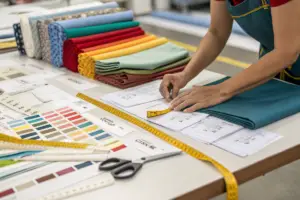
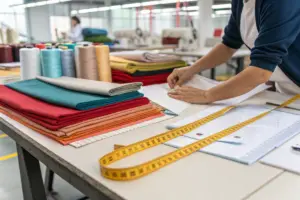
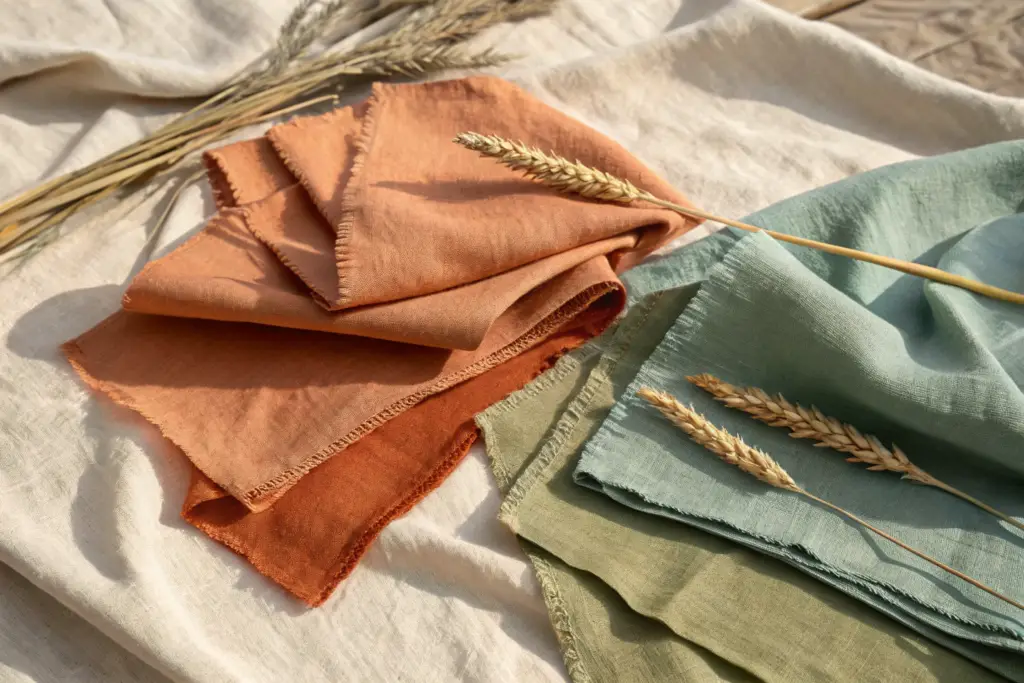
The core neutrals for Summer 2026 are natural flax, a warm, unpigmented oatmeal, and a soft, sandy ecru. These are the foundational colors that represent the majority of the buy. They are the most versatile and the most aligned with the undyed, sustainable narrative. But the excitement in the palette comes from the earthy pigments. Warm terracotta, a color inspired by the rooftops of Tuscan villages, is the most important fashion color of the season. It is strong, confident, and pairs beautifully with white linen trousers.
Sun-faded ochre and a deep, muted olive green are also performing very well. These colors have a dusty, lived-in quality that feels authentic and timeless. They look like they have been washed by the sun over many summers. We achieve this effect using a garment-dyeing process. The blazer is cut and sewn in a natural linen, and then the whole garment is dyed. This creates a beautiful depth of color and a soft, relaxed look, especially at the seams and edges. A buyer from a boutique in Provence told me her customers are drawn to these colors because they evoke a sense of travel, history, and the Mediterranean landscape.
How Are Stripes and Textured Weaves Being Used?
Stripes are a perennial favorite in European summer fashion, but the stripe for 2026 is softer and more sophisticated. It is not a bold, contrasting Breton stripe. It is a subtle, tonal stripe, often yarn-dyed. A cream blazer with a barely-there chalk stripe in the same cream tone, creating a tone-on-tone texture. Or a soft blue blazer with a fine, off-white pinstripe. The stripe adds visual interest without being loud. It is a detail that rewards a closer look.
Textured weaves are also a significant trend. Slubby linens, where the yarn thickness varies to create an irregular, organic surface texture, are in high demand. Seersucker linen, with its characteristic puckered texture, is being used for more casual, unlined blazer styles. These textures add a tactile dimension that customers love. They make the garment feel special and artisanal. We source a beautiful slub linen from a family-run mill in Italy. The texture is so rich that we recommend our partners photograph it in macro detail for their e-commerce sites. The close-up texture sells the garment as much as the silhouette. It communicates the quality in a way that words cannot.
What Sourcing and Quality Standards Are European Buyers Demanding?
European buyers are not just ordering a product. They are ordering a set of verifiable claims. The days of accepting a supplier's word on sustainability or quality are over. The modern European buyer demands documentation. She needs the certification numbers for her website and her hangtags. She needs to know the factory's social compliance audit score. This is not an administrative burden. It is a core part of the value she is selling to her end customer. The story of the garment is as important as the garment itself.
European buyers are demanding fully traceable, certified sustainable materials, impeccable construction finishing, and transparent social compliance documentation as a baseline requirement for any linen blazer order.
At Shanghai Fumao, we have built our European business by embracing these demands. We view them not as obstacles but as a framework for building premium products and long-term trust.
What Certifications Are Now Non-Negotiable for the European Market?
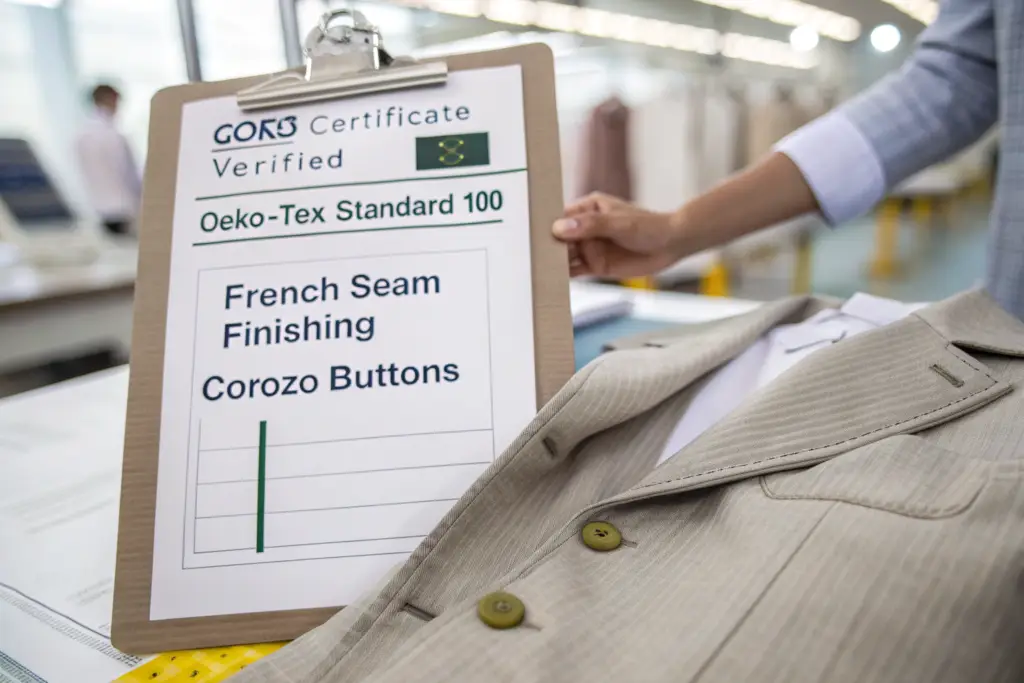
The certification landscape is becoming stricter every season. For linen, the most important certification is the Global Organic Textile Standard, or GOTS. This certifies that the flax was grown organically and that the entire processing chain, from field to fabric, met strict environmental and social standards. A GOTS certificate is now the entry ticket for many premium European boutiques. Another increasingly important standard is the OEKO-TEX Standard 100. This certification tests the finished fabric for harmful substances. It guarantees that the garment is safe for human health. Many European customers actively look for this label.
For recycled content claims, the Global Recycled Standard is the benchmark. We are now also seeing requests for the EU Ecolabel, which has a broader lifecycle assessment. The key is that the buyer does not just want to see a logo. She wants the certificate number so she can verify it herself on the public database. We provide a complete certification pack with every European order, including the scope and transaction certificates. This documentation is part of our product. It allows our brand partners to make specific, defensible claims in their marketing. They can say "This blazer is made from 100% GOTS-certified organic linen, certificate number CU123456." This level of specificity builds deep trust with the end consumer.
What Construction Finishes Are Inspected Most Closely?
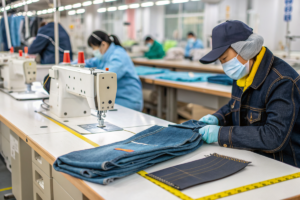
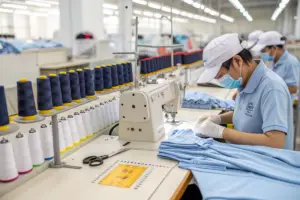
European buyers and their customers have a very high level of garment literacy. They know what to look for inside a jacket. The first thing they inspect is the seam finishing. On an unlined linen blazer, the internal seams must be immaculate. A raw, overlocked edge is not acceptable. The standard is a clean bound seam or a French seam. These finishing techniques enclose the raw fabric edge, creating a clean, durable, and beautiful interior. The garment looks as good on the inside as it does on the outside.
The second inspection point is the button attachment and the buttonholes. Buttons must be sewn with a thread shank and secured with a neat, tight wrap. Buttonholes must be cleanly cut and precisely stitched, with no loose threads. The third area of scrutiny is the lapel buttonhole. On a premium blazer, the left lapel should have a functional buttonhole, often finished with a subtle, hand-stitched detail. These are the "couture" touches that a European customer notices and appreciates. I recall a Swiss buyer who visited our factory. He spent ten minutes with a single blazer, turning it inside out, feeling the seams, and inspecting the buttonholes. He placed a significant order only after his meticulous inspection was complete. That level of scrutiny keeps us at the top of our game.
Conclusion
The European linen blazer market for Summer 2026 is clear in its demands. It wants soft tailoring that respects the body's movement. It wants a color palette drawn directly from the natural world, with undyed, earthy, and sun-faded tones dominating the buy. It wants three key silhouettes: the relaxed, unstructured volume driver, the polished belted statement piece, and the refined, casual utility blazer. And above all, it demands verified authenticity. Certifications are not an optional extra. They are the foundation of the business relationship.
Sourcing for this market requires a factory partner who speaks its language fluently. You need a team that understands the nuance of a French seam, the beauty of an undyed Normandy linen, and the rigor of the GOTS certification process. At Shanghai Fumao, this is the market we serve with the most pride because it demands the very best of our craftsmanship. If you are a brand or a buyer serving the European customer and you are planning your Summer 2026 linen assortment, I invite you to connect with our Business Director, Elaine. She can share our European collection lookbook and our detailed certification documentation. You can reach her at elaine@fumaoclothing.com. Let's create the perfect European summer blazer together.