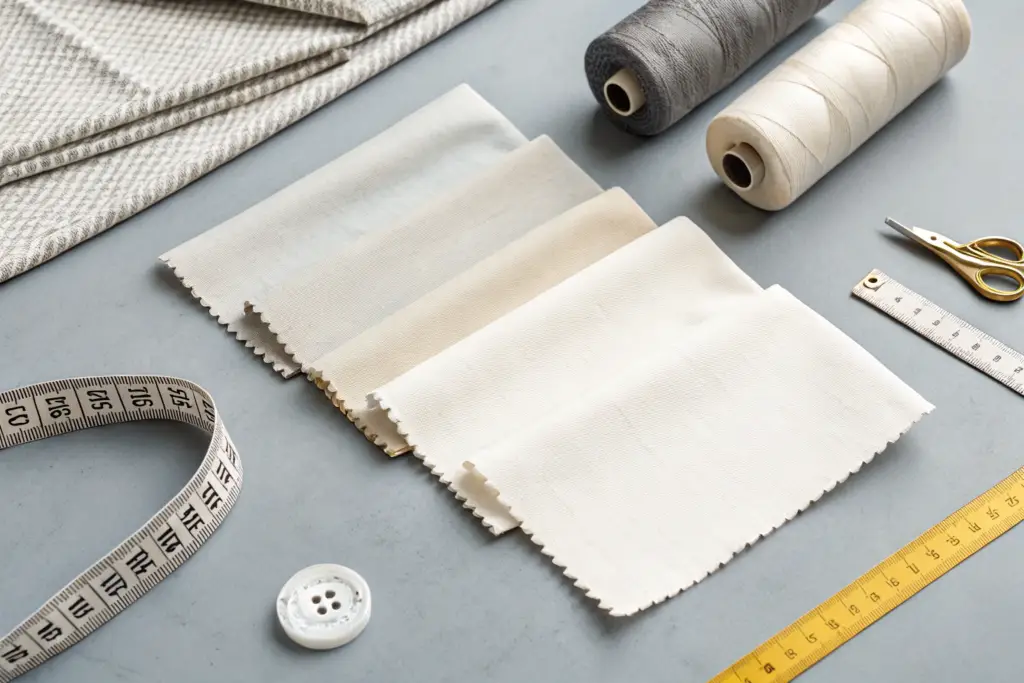
I vividly remember a shipment of what we thought were perfect summer coats. It was for a boutique in Austin, Texas. The design was beautiful. A long, flowing duster in a soft, breathable linen. The samples were stunning. But we made a critical error on the fabric weight. We used a linen that was a little too heavy, a 280 GSM weight that we normally reserved for early fall pieces. When the bulk shipment arrived and the retailer put them on the floor in June, the coats looked beautiful on the hanger. But customers picked them up, felt the weight, and immediately put them back down. The hand feel was too substantial for the Texas summer heat. The coats sat. The retailer had to mark them down in August. That experience taught me a lesson I have never forgotten: fabric weight is not a technical detail. It is a commercial decision that directly determines sell-through.
The best fabric weight for a women's summer coat falls between 150 and 210 GSM, a range that provides enough structure to hold the garment's shape while remaining breathable, lightweight, and comfortable against the skin in warm weather.
This specific weight range is the sweet spot. It is light enough to feel like a summer garment but heavy enough to drape beautifully and resist wrinkling into a shapeless mess. At Shanghai Fumao, we obsess over fabric weight because we know it is the invisible factor that makes or breaks a summer coat's commercial success. I want to explain exactly what GSM means, how different weights perform in the real world, and how to choose the perfect weight for each summer coat silhouette.
What Does GSM Mean and Why Does It Matter for Summer Coats?
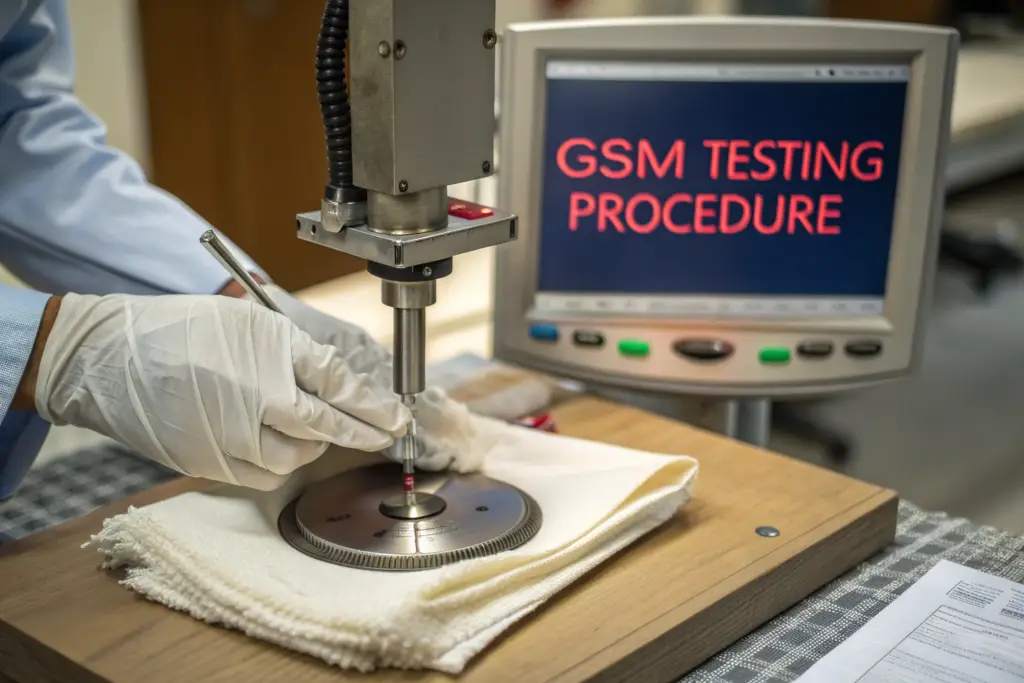
GSM, or grams per square meter, is the universal standard for measuring fabric weight. It tells you exactly how much a square meter of that fabric weighs in grams. It is an objective number that cuts through subjective descriptions like "lightweight" or "heavyweight," which can mean very different things to different suppliers. A factory might call a 250 GSM fabric "lightweight" compared to their 400 GSM winter coatings. For a summer coat, 250 GSM is decidedly a mid-weight and may be too warm. You need the number.
GSM is the critical metric for summer coats because it directly determines the garment's drape, breathability, and suitability for warm-weather wear, with lighter weights offering less structure and more airflow.
Understanding GSM gives you control over the product. You can specify your requirement precisely. You can compare fabrics from different mills objectively. You can ensure that the bulk fabric matches the approved sample. It is a tool for quality assurance and design precision.
How Does Fabric Weight Affect the Drape and Silhouette of a Coat?
Fabric weight is directly linked to how a garment hangs on the body. A very light fabric, under 150 GSM, has very little inherent weight. Gravity does not pull it down strongly. It tends to float, billow, and drape in soft, unstructured folds. This is beautiful for a sheer, romantic duster or a kimono. However, a fabric this light will not hold a tailored shape. A collar will not stand up crisply. A lapel will not roll. The garment lacks architecture.
As you move up in weight, into the 180 to 210 GSM range, you enter the territory of structure. A fabric in this weight class has enough body to hold a crease, support a collar, and create a defined silhouette. A linen blazer in a 200 GSM fabric will have a beautiful, crisp shape without being stiff. It will skim the body and define the shoulders. When you go above 250 GSM, the fabric starts to become heavy. It will pull downwards, creating long, vertical drape lines. The garment will feel more substantial. For a summer coat, this weight can work for a structured trench or a belted wrap coat, but it will not feel breezy. It will feel like a light fall garment. The customer wearing it on a hot day might find it oppressive.
What Is the Relationship Between Weight and Breathability?
Breathability is the ability of a fabric to allow air and water vapor to pass through. It is essential for summer comfort. Generally speaking, lighter-weight fabrics are more breathable because there is simply less material for air to pass through. The weave and the fiber also play a major role, but weight is a primary driver. A 150 GSM open-weave cotton will feel like a gentle breeze against the skin. A 300 GSM tightly woven twill, even if it is 100% cotton, will trap significantly more heat.
However, a fabric that is too light and too open can lose its sun-protective properties. It becomes see-through. It offers no shade. The customer might feel exposed. The ideal summer coat weight balances breathability with a degree of opacity and sun protection. The 180 to 210 GSM range, in a plain or twill weave, achieves this balance. It is substantial enough to provide coverage and a little warmth on a breezy evening but porous enough to not feel stifling. We conduct a breathability test using a moisture vapor transmission rate tester in our lab. We target a minimum MVTR for our summer coat fabrics. This data, combined with the GSM, gives us a complete picture of thermal comfort. I always advise my clients to request a hand feel of the fabric. The data is critical, but the final test is how it feels against your own skin on a warm day.
Which GSM Range Works Best for Different Summer Coat Styles?
There is no single "best" GSM for all summer coats. The ideal weight depends entirely on the intended silhouette and the functional purpose of the garment. A duster coat and a structured blazer have completely different engineering requirements. Choosing the wrong weight for the silhouette will result in a garment that fails to deliver on its design promise. The duster will look heavy and stiff. The blazer will look flimsy and shapeless.
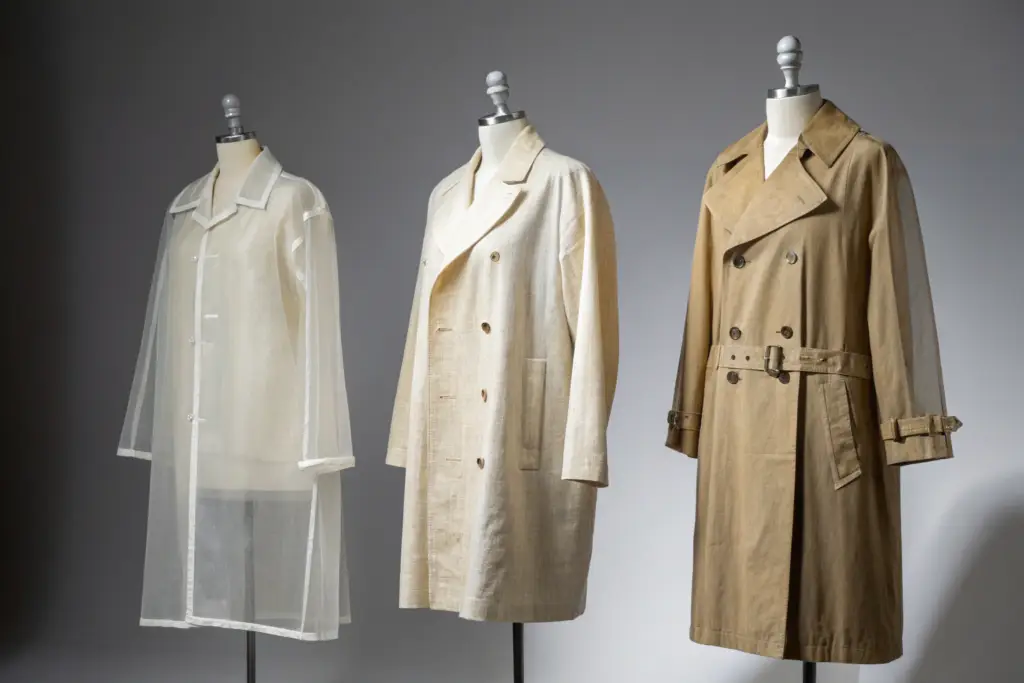
Different summer coat styles require different GSM ranges: sheer dusters work best at 130-160 GSM, structured blazers at 190-220 GSM, and classic trenches at 200-240 GSM.
These ranges are the result of years of prototyping and real-world wear testing. They are the parameters we use at Shanghai Fumao when we begin developing a new style for a client. They provide a reliable starting point.
Why Do Sheer Dusters and Kimonos Need Ultra-Light Weights?
The entire aesthetic of a sheer duster or a flowing kimono is based on ethereal lightness and movement. The fabric must be nearly weightless. It needs to float and billow with the slightest breeze. A heavy fabric would completely destroy this effect. The coat would hang limply. It would look like a bathrobe. For these styles, we recommend a fabric weight between 130 and 160 GSM. This range includes fine cotton voiles, silk organza, and very lightweight, open-weave linen gauze.
At this weight, the fabric has a beautiful transparency and a magical drape. However, it presents construction challenges. It is delicate and requires specialized handling. The seams must be French seams to prevent fraying without adding weight. The hems are often hand-rolled to be completely invisible. A designer from a bohemian brand in Los Angeles came to us with a kimono design. Her sample was in a beautiful 140 GSM silk-cotton blend, but it was too fragile and the cost was too high for her wholesale target. We sourced a 150 GSM Tencel voile that had the same fluid drape and a beautiful, subtle sheen. It was stronger, more cost-effective, and still had that weightless quality. Her customer never knew the difference in material, but they felt the perfect, airy drape.
What Is the Optimal Weight Range for a Structured Linen Blazer?
A structured blazer needs to do a job. It must hold a collar, define a shoulder, and support a button closure. It needs internal architecture. For this, the fabric needs body. The optimal GSM range for a summer linen blazer is between 190 and 220 GSM. At this weight, the linen has a beautiful, crisp drape. It will hold a pressed crease. A notched lapel will roll elegantly. The blazer will feel substantial on the body without being heavy.
We use fabrics at the higher end of this range, around 210-220 GSM, for blazers with a more tailored, belted, or double-breasted silhouette. The extra weight gives the tailoring details more definition. For a completely unstructured, soft blazer, we might use a 190 GSM linen that has been heavily washed for a softer hand. The washing process relaxes the fibers and makes the blazer feel more like a comfortable cardigan. A buyer from a Parisian concept store ordered our soft blazer in a 195 GSM washed linen. She described the weight as "perfectly French." It was structured enough to look like a jacket but soft enough to be crumpled into a beach bag. That perfectly describes the sweet spot for this category.
Can a Summer Trench Coat Be Too Light?
Yes, absolutely. A trench coat is defined by its sharp, utilitarian details. The collar stand, the epaulettes, the storm flaps, and the belt all require a fabric with enough body to hold crisp edges. If the fabric is too light, these details will look limp and sad. The epaulettes will curl. The belt will twist. The whole coat will look like a wrinkled shirt. The trench loses its authority. For a summer trench, the recommended weight range is 200 to 240 GSM. A tightly woven cotton twill or a cotton-lyocell blend in this weight will be crisp, durable, and hold the intricate trench details beautifully.
At this weight, the trench is still very much a summer garment. It is breathable and unlined or half-lined. But it has the structural integrity to look polished. We developed a summer trench for a UK brand using a 220 GSM organic cotton twill with a PFC-free water-repellent finish. The fabric was light enough to wear over a summer dress but heavy enough to hold the sharp collar and the belted waist. The brand marketed it as a "packable city trench." The weight was the key. It was heavy enough to perform but light enough to pack flat without permanent creases.
How Do You Balance Weight with Other Critical Fabric Properties?
Fabric weight is a crucial starting point, but it is never the whole story. A 200 GSM polyester twill and a 200 GSM linen twill will perform completely differently. The fiber content, the weave structure, and the finishing treatments all interact with the weight to determine the final hand feel and performance of the coat. You cannot select a fabric based on the GSM number alone. You must evaluate it holistically.
Selecting the ideal summer coat fabric requires balancing weight with fiber content for breathability, weave structure for drape, and mechanical finishes for wrinkle resistance and hand feel.
This balancing act is the art and science of fabric sourcing. The goal is to find a fabric that meets the weight requirement while also delivering on comfort, aesthetics, and practical performance. A beautiful weight is useless if the fabric feels like sandpaper or wrinkles if you look at it.
How Do You Choose Between Linen, Cotton, and Blends at the Same Weight?
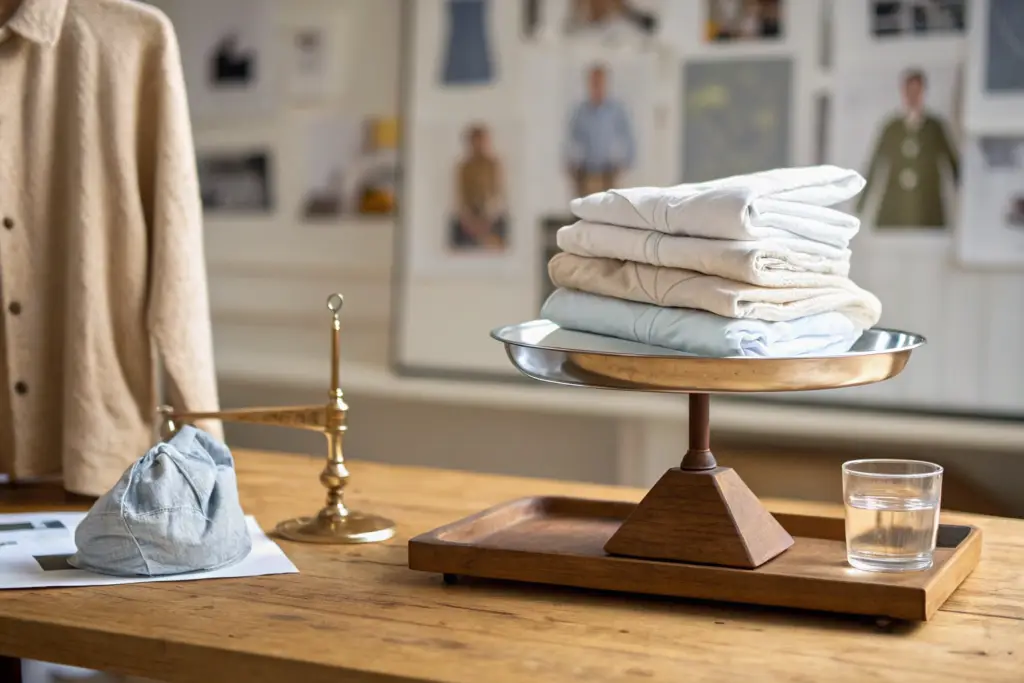
Suppose you have two fabrics, both 200 GSM. One is 100% linen. One is 100% cotton. One is a cotton-linen blend. How do you choose? The 100% linen will have the most texture and a natural, crisp drape. It will breathe exceptionally well. It will also wrinkle the most. The 100% cotton, if it is a long-staple twill, will be smoother, softer, and have a more fluid drape. It will be slightly less breathable than the linen but will wrinkle less.
The cotton-linen blend aims to give you the best of both worlds. The linen provides breathability and a beautiful, textured look. The cotton adds softness, reduces the sharp creasing, and often lowers the cost slightly. The choice depends on your customer. Is she a purist who loves the authentic, lived-in wrinkle of pure linen? Then choose the linen. Does she want a more polished, smooth look? Then the cotton twill or a blend is a better choice. We also consider the addition of a small percentage of a performance fiber. A 200 GSM linen with 2% elastane will have a mechanical stretch that dramatically improves comfort and movement. A 200 GSM cotton with 30% lyocell will have an incredibly soft, silky drape and better wrinkle resistance. The label on the fabric is just the beginning of the conversation.
What Mechanical Finishes Can Enhance a Lightweight Fabric?
A fabric's final performance is as much about the finish as it is about the fiber and the weight. Mechanical finishes are processes that physically change the surface of the fabric without chemicals. They are powerful tools for a designer. A peach-skin finish uses emery rollers to gently abrade the surface of a cotton or Tencel fabric, creating an incredibly soft, almost sueded hand feel. This transforms a basic 180 GSM cotton twill into a luxurious, touchable fabric that customers cannot resist.
A garment wash or an enzyme wash subjects the finished garment to a washing process with natural enzymes. This removes surface fuzz, relaxes the fibers, and gives the coat a soft, lived-in look. A 200 GSM linen blazer that has been enzyme-washed will feel completely different from one that is raw and unwashed. It will be softer, with a beautiful, slightly rumpled texture. We often apply a light calender finish to our summer trench fabrics. This process passes the fabric through heated rollers under pressure. It compresses the fibers and gives the fabric a smooth, almost papery, crisp hand that is ideal for holding sharp tailoring details. These finishes are essential. They allow a lighter-weight fabric to perform like a heavier one in terms of drape and structure, without adding weight.
Conclusion
The weight of the fabric is the invisible foundation upon which every successful summer coat is built. Choosing the correct GSM is the difference between a coat that floats gracefully and one that hangs heavily. It is the difference between a crisp blazer that holds its shape and a limp one that looks tired. The sweet spot for most summer styles lies in the 150 to 210 GSM range. The ethereal duster demands the lightest touch. The tailored blazer needs the structure of a mid-weight fabric. The classic trench requires enough heft to carry its details with authority.
But the number is just the beginning. The true skill lies in balancing that weight with the right fiber, the right weave, and the right finish to create a garment that feels as good as it looks and performs flawlessly for the customer. At Shanghai Fumao, this material expertise is at the core of what we do. We guide our partners through every step of the fabric selection process, from the initial GSM specification to the final hand feel approval. If you are working on your summer coat collection and want to ensure your fabric choices are perfectly calibrated for success, I invite you to speak with our Business Director, Elaine. She can send you our summer fabric swatch book with complete technical specifications. You can reach her at elaine@fumaoclothing.com. Let's find the perfect weight together.