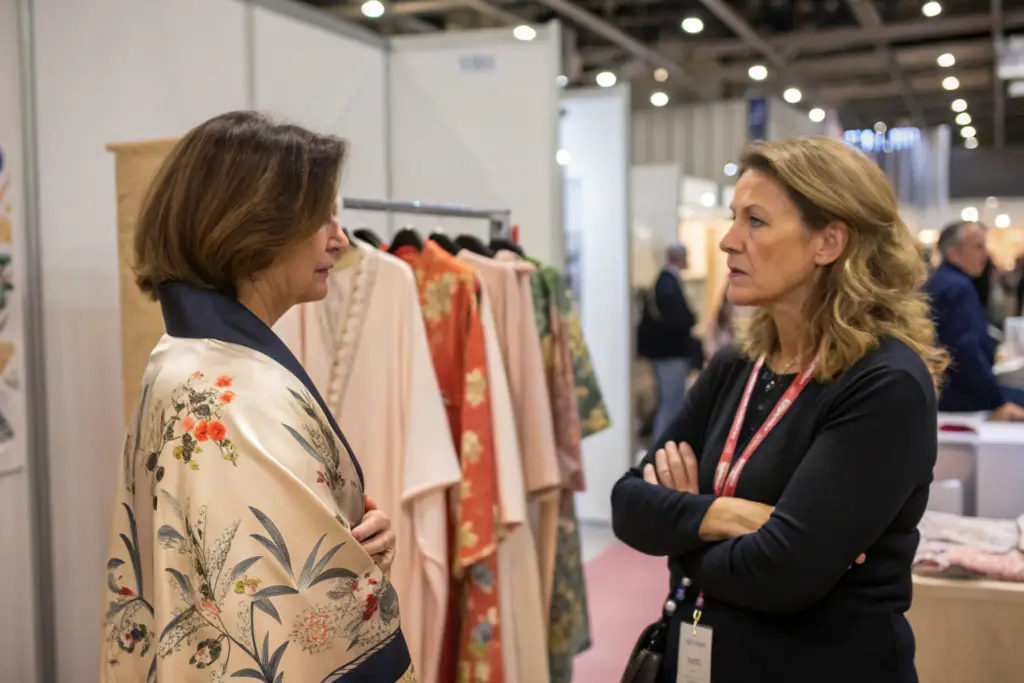
I remember a conversation at a trade show with a boutique owner from a wealthy coastal town. She was staring at a beautiful silk kimono coat on our stand, her arms crossed. "It's gorgeous," she said, "but my customer is 55 years old. She's not an influencer. She'll take one look at this and say, 'I wouldn't know how to wear it.' Can you show me how to sell this to her?" Her challenge was not about the product. It was about the communication. The kimono coat is one of the most versatile pieces a woman can own, but it can also be intimidating if it is not presented with clear, relatable styling roadmaps. The customer needs to see herself in it.
The kimono-style summer coat is styled for the modern consumer by using it as the hero "third piece" that transforms a simple base outfit of elevated basics into a complete, intentional look for multiple occasions.
It is the easiest statement piece to wear, but the styling must be visually demonstrated. At Shanghai Fumao, we do not just ship coats. We ship a styling concept. I want to share the exact formulas we teach our boutique partners so they can convert a hesitant browser into a confident buyer who will live in her kimono coat all summer.
What Are the Foundational Styling Rules for the Modern Kimono Coat?
The kimono coat is not a supporting actor. It is the star of the outfit. The biggest mistake a customer makes is trying to match its energy with other bold pieces. A printed kimono over a loud, patterned dress looks chaotic. A heavily embellished kimono over a ruffled blouse looks fussy. The kimono itself provides all the visual interest an outfit needs. Everything else must play a supporting role.
The foundational styling rule for the modern kimono coat is to treat it as the hero piece, supported by a quiet, solid, and well-fitting base layer that allows the coat's silhouette, print, or texture to dominate.
This rule applies regardless of the customer's age, body type, or personal style. The base layer creates a clean canvas. The kimono provides the art. This simple principle removes the guesswork and the fear for the customer. At Shanghai Fumao, we always style our kimono coats this way in our lookbooks and line sheets. It trains the buyer and the sales associate in the foundational rule before we show the more advanced variations.
Why Is the "Third Piece" Rule the Key to Effortless Style?
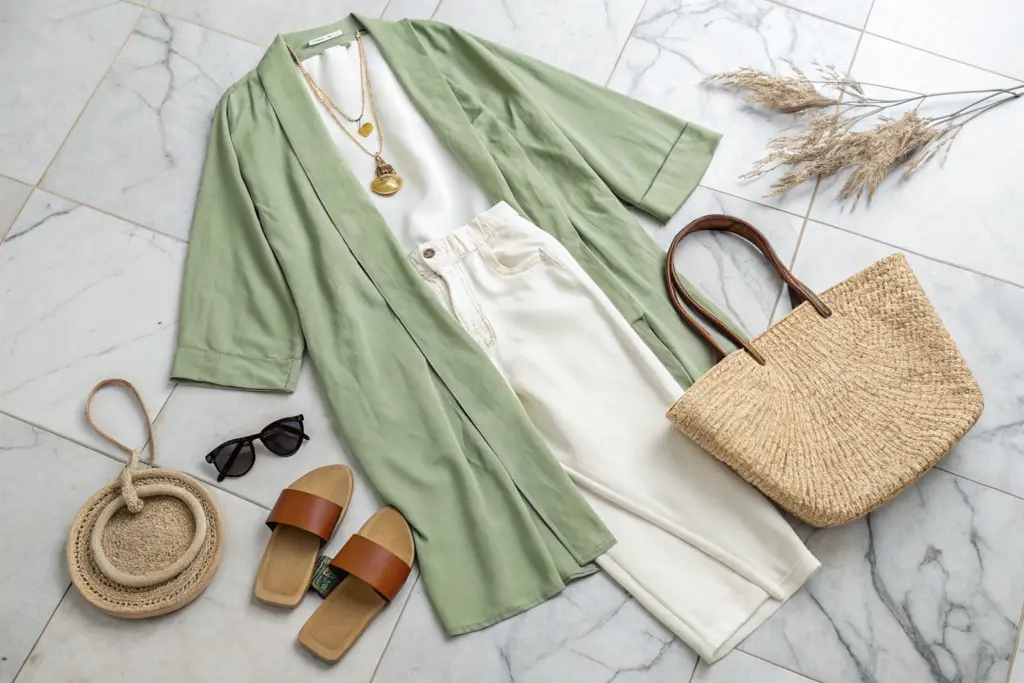
A complete outfit needs three pieces. A top, a bottom, and a third piece. The third piece is the layer that pulls the look together and gives it a point of view. It could be a jacket, a vest, or a statement scarf. In summer, when layering options are limited by the heat, the kimono coat is the ultimate third piece. It adds a layer of visual weight without adding thermal weight. It instantly elevates jeans and a t-shirt into a styled outfit.
A woman walks out of her house wearing a white t-shirt and jeans. She looks fine. Unremarkable. She throws on a silk kimono coat in a vibrant floral print. Suddenly, she looks intentional. She looks like she understands fashion. The coat did all the work. She is still wearing the same comfortable basics, but the third piece has completely transformed the perception of her outfit. This is the styling secret that we teach. We want the customer to understand that the kimono is not an extra piece. It is the essential piece that unlocks the potential of the simple items she already owns. One of our retail partners created a simple in-store graphic. It showed a before-and-after image with the caption, "The Third Piece You Need." It became their most effective point-of-sale tool for the kimono category.
How Do You Balance Proportion Between a Voluminous Coat and a Fitted Base?
The kimono coat is, by its nature, voluminous. It has wide sleeves. It has an open, flowing front. It creates a generous, A-line silhouette. If the base layer is also voluminous, the overall look can become shapeless and overwhelming. The customer looks like she is wearing a tent. The styling rule to prevent this is simple: always pair a voluminous kimono with a slim, defined base layer.
This does not mean the base must be skin-tight. It means it should have a clean line that follows the body's natural silhouette. A fitted tank top or a fine-gauge knit paired with slim-straight jeans or a narrow midi skirt. The contrast between the open, flowing coat and the lean, vertical line of the outfit underneath creates a beautiful, balanced proportion. The coat adds drama. The base layer provides structure. This rule of proportion is particularly important for the petite customer. She might worry that a long, voluminous coat will overwhelm her frame. When she sees it styled over a slim base, she realizes that the coat actually creates a long, unbroken vertical line that can be very lengthening. We always style our kimono coats on models with a fitted base for this exact reason.
What Are the Key Styling Formulas for Different Occasions?
The kimono coat's commercial power lies in its versatility. A customer buys one coat. She wears it to three different parts of her life. This multiplies the perceived value and justifies a higher price point. To communicate this value, you must show her the formulas. You cannot just tell her it is versatile. You must provide the visual roadmap for each occasion. The modern consumer is busy. She wants to be inspired with ready-made solutions.
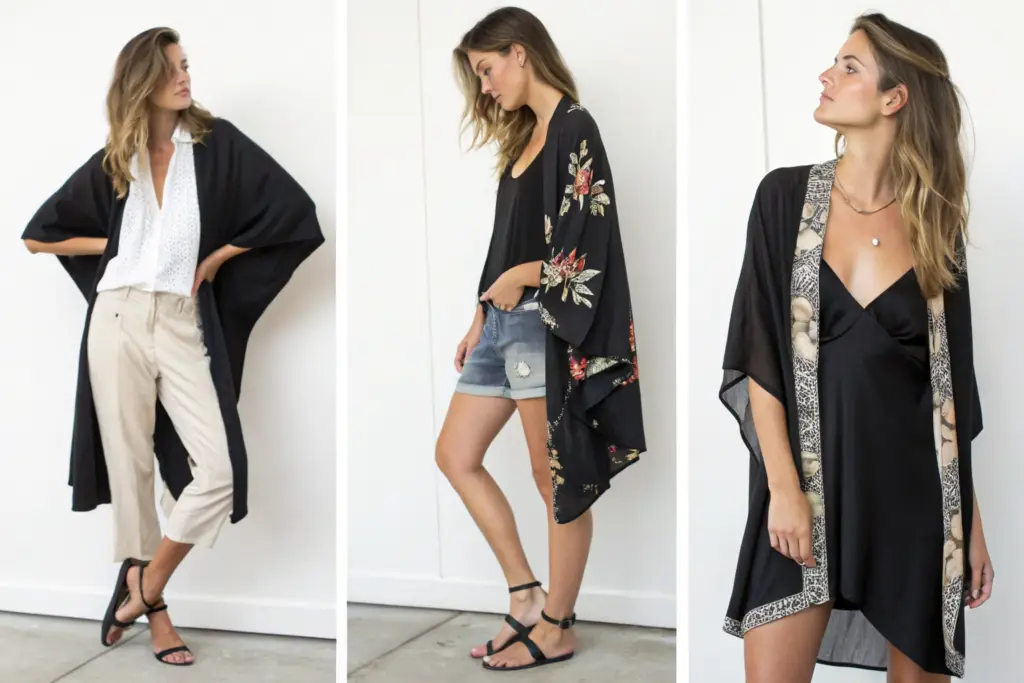
The modern kimono coat transitions effortlessly across occasions with three key formulas: polished office layer, effortless beach cover-up, and elegant evening wrap.
These three formulas should be the cornerstone of your visual merchandising and your sales associate training. They cover the vast majority of a working woman's summer life. A kimono that can do all three is not a luxury. It is a practical investment.
How Do You Style a Kimono for a Polished Summer Office Look?
The office formula requires the most structure. The kimono coat must be styled to look intentional and professional, not like a robe you forgot to take off. The key is the base layer. A tailored sleeveless top, a silk shell, or a fine-gauge knit tank provides a clean, polished canvas. The bottom should be sharp. A tailored wide-leg trouser in a crepe or a lightweight wool blend, or a slim, knee-length pencil skirt.
The color palette is critical. For an office look, keep the base and the kimono in the same tonal family. A cream kimono over a white top and sand-colored trousers. A navy kimono over a pale blue shell and navy trousers. This monochromatic approach reads as sophisticated and expensive. The accessories should be minimal and professional. A structured leather tote, simple pumps or elegant flat sandals, and discreet gold jewelry. The kimono replaces the traditional blazer. It says, "I am creative, confident, and I understand modern style." I worked with a buyer from a corporate women's brand in Chicago. She created a "Summer Suiting" concept built entirely around a tailored, solid-color linen kimono paired with matching wide-leg trousers. It was their most successful summer office campaign.
What Makes the Kimono the Ultimate Beach Cover-Up?
The beach formula is the most intuitive use of the kimono and a massive volume driver for resort and coastal boutiques. The functionality is perfect. It provides sun coverage for the shoulders and arms. It is light and airy, never sticky on sun-warmed skin. It transforms a swimsuit into an outfit, allowing the customer to walk from the beach straight into a cafe or a boardwalk shop without feeling exposed.
The styling here is simple. The kimono is thrown over the swimsuit. The key is the swimsuit choice. A sleek, solid-color one-piece or a simple bikini provides the perfect base. The accessories make the look. A wide-brimmed straw hat, oversized sunglasses, flat leather sandals, and a woven beach tote. The kimono itself can be more playful here. This is the perfect place for a bold, colorful print or a vibrant, sheer fabric. The print feels fun and vacation-appropriate. A resort boutique in Hawaii ordered our sheer printed kimonos and displayed them on a mannequin wearing just a simple black swimsuit and a straw hat. It was their single best-selling item all summer. The customer instantly understood how to wear it and where she would wear it.
How Can a Kimono Coat Transition to an Evening Layer?
The evening formula is the most transformative and often the one that surprises the customer. It allows her to wear a simple slip dress she already owns and make it look completely new, special, and occasion-appropriate. The kimono adds drama, movement, and a layer of sophistication that a dress alone might lack.
The formula is a slip dress in a solid, luxurious color, like black, champagne, or deep emerald. The kimono is worn open over it. The fabric of the kimono is critical here. A silk blend, a fine cupro, or a Tencel with a subtle sheen elevates the look instantly. The accessories should be evening-appropriate. Delicate heeled sandals, a small clutch, and statement earrings. A boutique owner in Charleston told me a story. A customer bought a long, champagne-colored satin kimono for her daughter's summer wedding. She wore it over a simple navy slip dress. She told the boutique owner she received more compliments on that coat than on any other outfit she had ever worn. She felt elegant, comfortable, and completely herself. That is the power of the evening kimono formula.
What Are the Most Versatile Kimono Coat Fabrics and Lengths?
The styling formulas work best when the garment itself is designed with versatility in mind. The fabric and the length of the kimono coat are not just aesthetic choices. They are functional decisions that determine how many of the three key occasions the coat can actually fulfill. A floor-length velvet kimono is a beautiful editorial piece, but it is not going to work as a beach cover-up. A tiny, cropped kimono lacks the drama for an evening event.
The most versatile kimono coats are crafted from lightweight, drapey fabrics like cupro or silk blends, and cut in a mid-calf to ankle-length that provides dramatic presence while remaining practical for daily wear.
This combination of fabric and length creates a piece that is truly multi-functional. It has enough weight to drape elegantly for evening but is light enough to float over a swimsuit. It is long enough to create a dramatic vertical line but not so long that it drags on the ground or becomes a tripping hazard. At Shanghai Fumao, we guide our partners towards these versatile specifications because they result in the highest sell-through and the lowest return rate.
What Fabrics Offer the Best Drape and Day-to-Night Versatility?
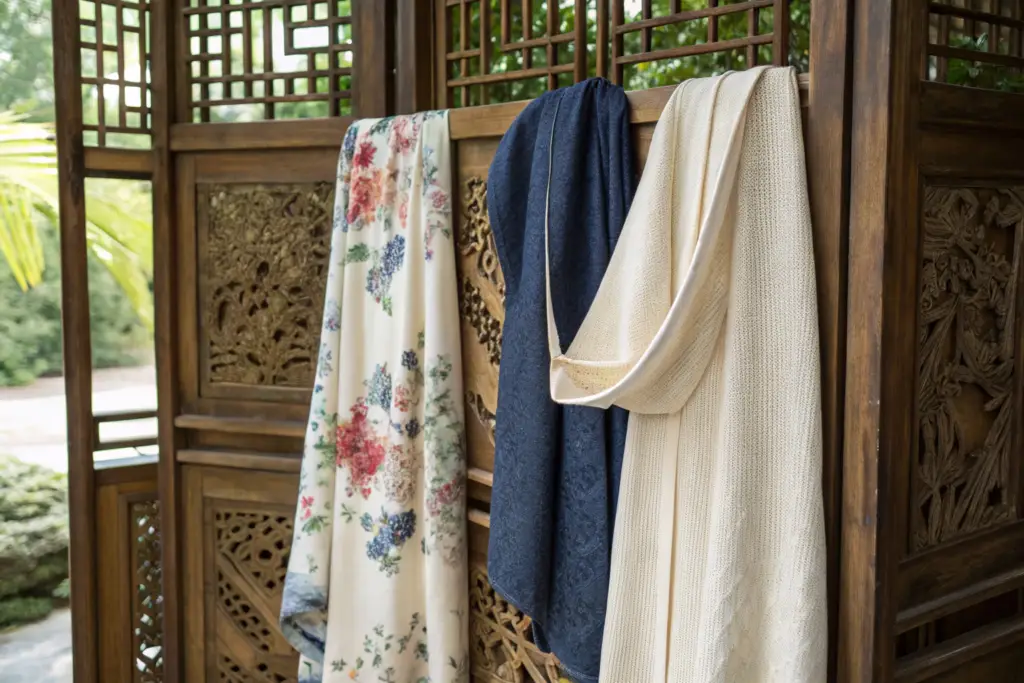
The ideal kimono fabric must flow. It must move with the body and catch the breeze. Stiff or heavy fabrics do not work for this silhouette. The gold standard is silk, but it is expensive and requires delicate care. The best commercial alternatives are high-quality cupro and Tencel lyocell. Cupro is a regenerated cellulose fiber made from cotton linter. It breathes like cotton and drapes like silk. It has a beautiful, subtle sheen and takes dye beautifully. Tencel is also a cellulose fiber, known for its incredible softness, breathability, and fluid drape.
These fabrics are perfect for the kimono coat because they feel luxurious against the skin, even in high heat. They are also more durable and easier to care for than silk. A lightweight, sand-washed silk is a premium option for the high-end market. The sand-washing process gives the silk a matte, slightly peachy texture and a beautiful, liquid drape. A printed polyester georgette is a more price-accessible option that still offers a lovely, floaty quality. The key is the hand feel. The customer should pick it up and immediately want to feel it against her skin.
What Is the Most Flattering and Practical Length?
The length of a kimono coat is its superpower. It creates a long, unbroken vertical line that is incredibly lengthening and slimming on any body type. A length that hits between the mid-calf and the ankle is the most universally flattering and commercially successful. It creates a beautiful, dramatic silhouette that feels special and intentional. It also works with both flats and heels.
A kimono that hits at the knee or above loses much of this elongating power. It can cut the body at an awkward point and look less like a statement coat and more like a casual cardigan. A floor-length kimono, while stunning in photographs, is impractical for daily life. It drags on the ground, gets caught in doors, and limits the customer's movement. The mid-calf length is the sweet spot. It is long enough to be dramatic but short enough to wear with flat sandals, navigate stairs, and get in and out of a car without difficulty. We offer our standard kimono coat in this length, and it consistently outperforms other lengths in sell-through data across all our retail partners.
How Do You Merchandise Kimono Coats to Maximize Sales?
The kimono coat sells when the customer can envision it in her life. It is an emotional purchase driven by a vision of herself looking effortlessly stylish. Your merchandising must create that vision. A kimono folded on a shelf is invisible. It looks like a pile of fabric. It must be displayed in a way that showcases its movement, its drape, and its transformative power. The visual presentation is the silent salesperson.
Maximizing kimono coat sales requires visual merchandising that showcases movement, cross-merchandising with compatible base layers, and providing clear, visual styling guides that eliminate the "how do I wear this" fear.
This is a product category where the sell is made through emotion and solved anxiety. The customer is intrigued but uncertain. The merchandising must bridge that gap. At Shanghai Fumao, we provide our partners with the visual assets and the display strategies to make this happen.
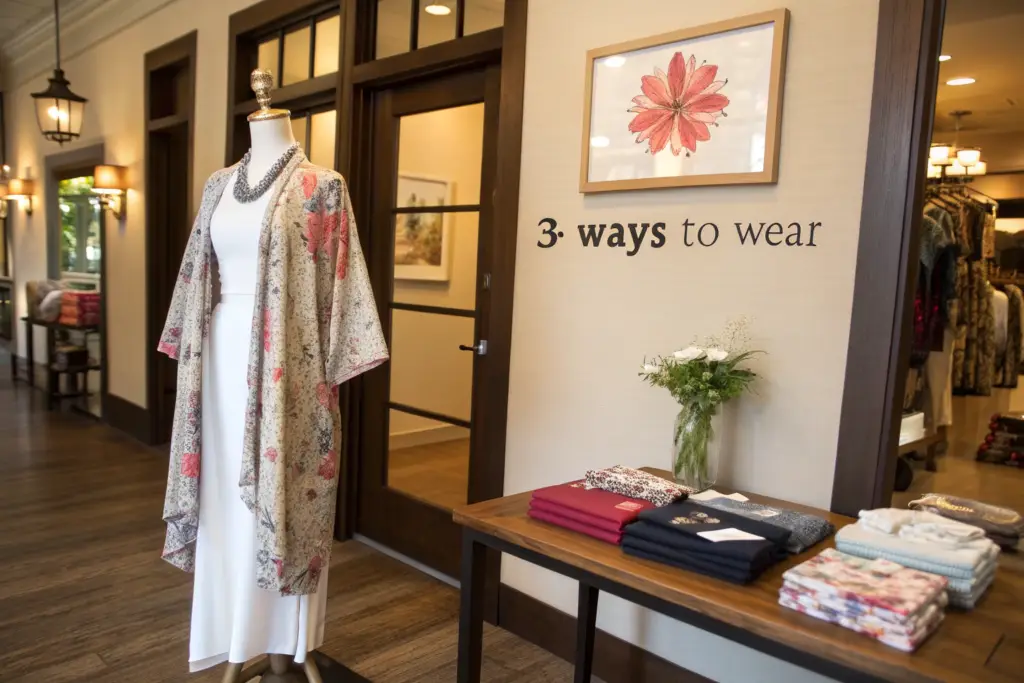
How Can You Use Movement and Light in Visual Displays?
A static kimono on a hanger is doing only 10% of its selling job. The magic of a kimono is in its movement. You need to bring that magic into your display. Place a mannequin wearing the kimono near the entrance of your store or near an air conditioning vent. The gentle airflow will cause the fabric to move and flutter. This movement catches the customer's eye from across the store. It brings the garment to life.
Light is the other critical tool. Backlight a sheer kimono with a window display spotlight. The light will shine through the fabric, revealing the beauty of the weave or the vibrancy of the print. The coat will glow. One of our resort boutique partners hangs a single kimono on a simple hook directly in their front window, with a small, discreet fan trained on it. The coat is constantly in motion. They told me it stops people on the sidewalk every single day. It is the most effective window display they have ever created, and it costs almost nothing. The lesson is to think about the kimono not as a static object, but as a kinetic sculpture. Display it accordingly.
What Role Does Cross-Merchandising Play in Driving Add-On Sales?
The kimono coat is a powerful add-on sale, but you must make the suggestion visually. Do not isolate the kimono in a separate "jackets" section. Cross-merchandise it with the pieces that complete the styling formulas. Place a kimono on a mannequin wearing a simple silk camisole and wide-leg trousers, and position that mannequin directly in the trousers section. The customer who came in to buy trousers now sees a complete, elevated outfit. She is far more likely to buy the kimono in addition to the trousers.
Place a rack of kimonos directly next to your swimwear collection. Style a mannequin in a swimsuit and a kimono. The customer buying a new swimsuit for her vacation is the perfect candidate for a beautiful cover-up. This strategic placement turns a single-item sale into a multi-item sale. We provide our wholesale partners with a "cross-merchandising guide" that maps out exactly where to place kimono coats within their store to maximize their impact alongside other categories.
Conclusion
The kimono-style summer coat is a dream product for the modern retailer. It solves the customer's desire for a statement piece that is genuinely easy to wear. It works as hard as any item in her closet, transitioning from office polish to beach cover-up to evening elegance with a simple change of base layer. The key to unlocking its commercial potential is clear communication. You must show the customer the styling formulas. You must use movement and light in your displays to reveal the coat's living beauty. And you must merchandise it strategically, placing it next to the items that complete the perfect outfit.
When you combine a beautifully made kimono coat with this thoughtful, educational approach to selling, you create a powerful retail experience. The customer does not just buy a coat. She buys a new way of dressing for summer. At Shanghai Fumao, we are passionate about helping our boutique partners succeed with this incredible category. If you are ready to explore adding kimono coats to your collection, I invite you to reach out to our Business Director, Elaine. She can share our latest kimono lookbook and styling guide. You can contact her at elaine@fumaoclothing.com. Let's style something beautiful together.