Every spring, I walk through our sample room and see the ghosts of dead trends. Piles of perfectly stitched garments that arrived too late or hit the market too early. As a factory owner, the question of a denim summer coat comeback isn't a fun fashion debate for me. It's a multi-million-dollar inventory decision. If I tell you to bet on denim and I'm wrong, you're stuck with heavy fabric in a season that demands lightness. The fear isn't just missing a trend. The fear is having 3,000 units of a coat that nobody wants to touch when the temperature hits 90 degrees.
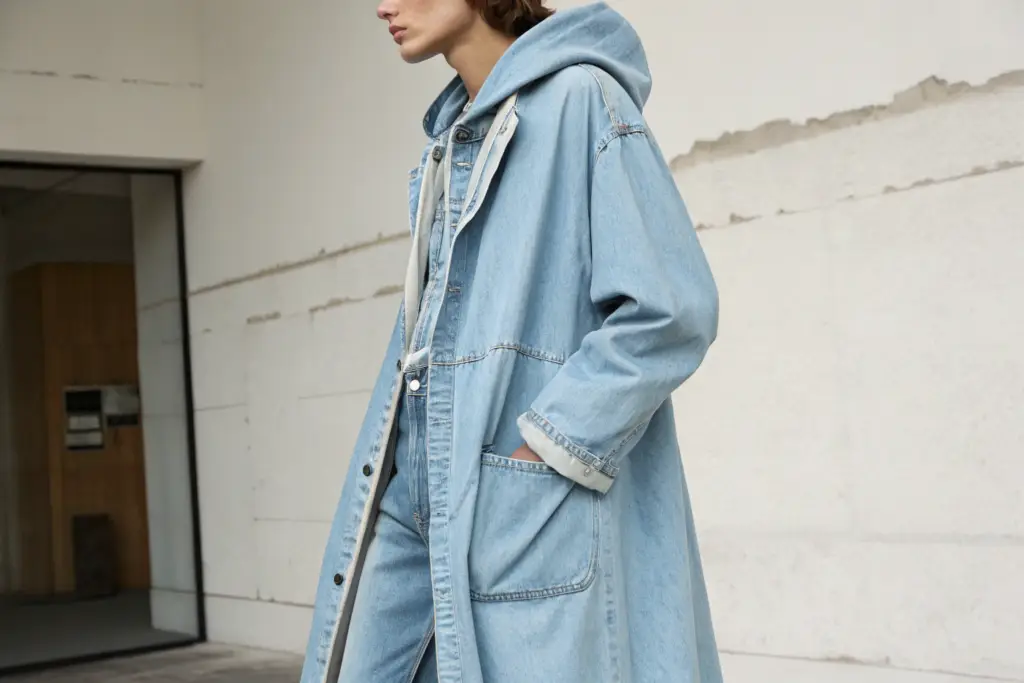
Yes, the denim summer coat is making a strong comeback for 2026, but not as the stiff, heavy trucker jacket of the past. The revival is driven by lightweight "chambray shirting" weights, oversized unisex silhouettes, and a streetwear influence that merges workwear with beachwear. The 2026 version sheds the lining and embraces a drapey, sun-bleached softness.
This is a return to practicality disguised as nostalgia. At Shanghai Fumao, we've been tracking this since late last year. Our cutting tables are already seeing a shift. Let me walk you through the fabric innovation, the design pivot, and the pricing strategy that will make or break this comeback for your brand.
The Fabric Revolution: Why 2026 Denim Is Nothing Like 2016
I remember the 2016 denim boom vividly. Brands ordered heavy 12oz selvedge denim jackets by the thousands. They looked incredible on the rack but felt like wearing a suit of armor in July. The return rate on those jackets was brutal. People bought them for the Instagram photo and returned them the next day because they were unusable in actual summer heat. The 2026 comeback corrects this mistake entirely. You cannot just take a winter denim coat pattern and sew it in lighter thread. You have to rebuild the fabric from the yarn up. Last month, a sustainable brand from Portland approached us with a challenge. They wanted the authentic indigo look but needed the fabric to weigh under 6oz per square yard. That is lighter than a standard dress shirt. We worked with our mill to develop a 5.5oz Tencel-cotton blend with an open weave that lets air pass through. The result was a coat that looked like rigid denim but packed into a fist-sized ball for travel. That is the innovation that sells a comeback, not just a marketing tagline.
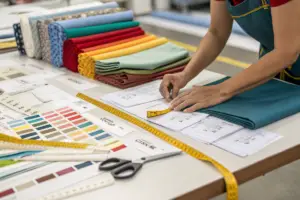
The winning fabric for 2026 is not traditional denim. It is a technical hybrid. We call it "shadow denim" because it has the appearance of a structured weave but behaves like a slubby linen. The market is shifting toward fabrics with at least 30% recycled content and a soft wash that eliminates the break-in period entirely.
You cannot sell a consumer a "stiff" experience anymore. They want the vintage look without the vintage pain. That means you must invest in garment washing before shipping. We process denim coats at our facility using eco-enzyme washes that mimic 200 trips through a washing machine without weakening the seams. This is expensive. It adds about $1.50 to the unit cost. But it turns a $40 retail item into a $120 retail item in perceived value. If you skip this step, your denim coat will sit on the shelf while the washed competitor sells out.
What Fabric Weights Actually Work for a Summer Denim Coat?
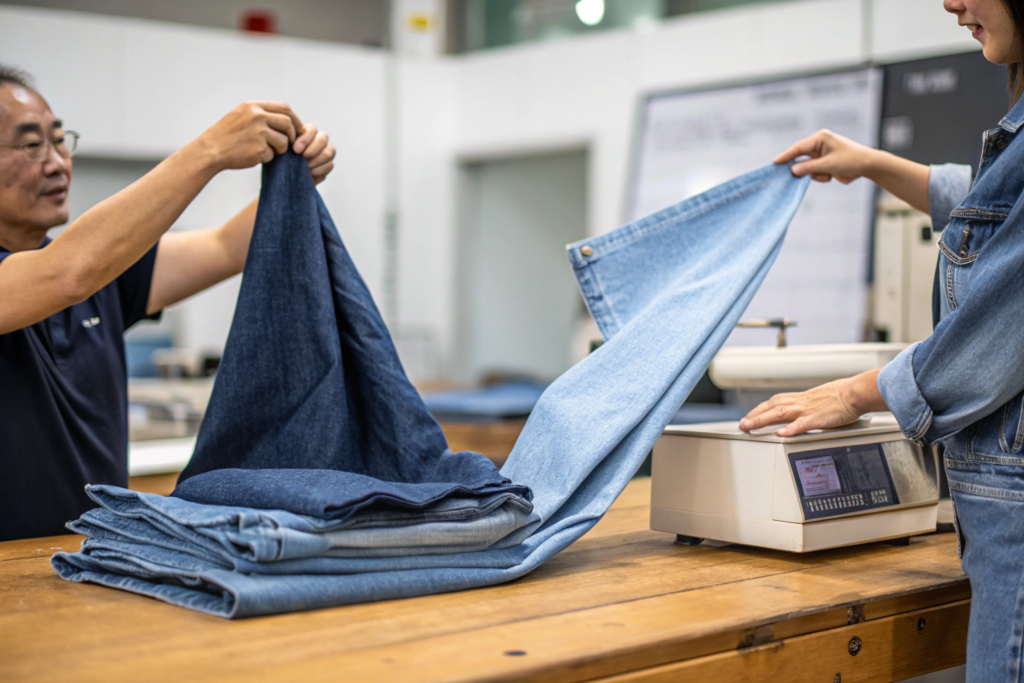
Weight is the silent killer of a summer coat program. You need to obsess over ounces. We categorize denim weights into three buckets for our brand partners, and only one bucket works for summer 2026.
| Weight Category | Ounce Range | Summer Suitability | Best Application |
|---|---|---|---|
| Boardwalk Weight | 4.5oz – 6oz | Excellent. Feels like a shirt. | Oversized slouchy coats, beach cover-ups. |
| Downtown Weight | 6oz – 8oz | Good. Requires open-weave structure. | Structured blazers, belted trench styles. |
| Heritage Weight | 10oz+ | Poor. Too heavy for July heat. | Avoid for Summer 2026. |
We learned this the hard way. A Dallas client ordered an 8oz denim duster coat two summers ago. We advised against it, but the sample looked beautiful. The customer reviews were merciless. "Feels like a weighted blanket," one reviewer wrote. Sales stalled after the first week of June. The coat was great for a 70-degree office but unwearable on the walk from the car to the restaurant. Next summer, we dropped them to a 5.5oz open-weave slub denim. The complaints vanished. You must test your fabric in the geography of your customer. A coat sold in San Francisco can handle 8oz. A coat sold in Atlanta needs 5oz or less. This geographic sensitivity is what separates a national comeback from a coastal fad. When you work with us at Shanghai Fumao, we ask for your top three selling zip codes. We match the fabric breathability to the average humidity index of those locations. It sounds obsessive, but it stops the return avalanche before it starts.
Can Sustainable Denim Drive the 2026 Trend?
Absolutely. The sustainability conversation has moved from "nice to have" to "entry ticket." In the denim world, the old way of doing things is dirty. Conventional denim dyeing uses massive amounts of water and chemicals. The 2026 consumer knows this. They are reading the hang tags. We recently partnered with a fabric mill that uses foam-dyeing technology. It reduces water usage by 96%. The resulting fabric has a beautiful, uneven ring-spun character that looks authentically vintage. We sampled a trucker coat in this fabric for a Los Angeles eco-brand. They launched it with a hang tag showing the actual gallons of water saved per garment. The first production run of 500 units sold out in 48 hours. The coat itself was a simple design. The story is what made it viral. When you plan your denim coat program for 2026, you must lead with the material narrative. Recycled copper hardware, hemp-blend labels, biodegradable polybags—these details become the content for your social media posts. They justify the price point and make the consumer feel like a participant in a solution, not just a shopper. This is how you sell a denim coat at full margin.
Design Architecture: The Silhouettes Defining the 2026 Comeback
The cut determines the conversion rate. You cannot use 2016 patterns in 2026 and expect success. The body has changed. The way people layer has changed. The lifestyle has shifted from "going out" to a hybrid existence where a coat must transition from a Zoom call to a coffee run without looking out of place. The 2026 denim summer coat is not a jacket. It is an "emotional armor piece." It is meant to be thrown on, not zipped up. Last fall, a boutique brand owner from Brooklyn visited our showroom with a mood board of vintage '90s rave flyers and Japanese workwear books. She wanted a denim coat that "felt like a hug." We developed a pattern with a 6-inch ease allowance in the chest and dropped armholes that start nearly at the elbow. It broke every traditional tailoring rule. But when the sample hit her Instagram, the response was explosive. It looked effortless. That is the keyword for 2026: effortlessness. You are selling the feeling of not trying.
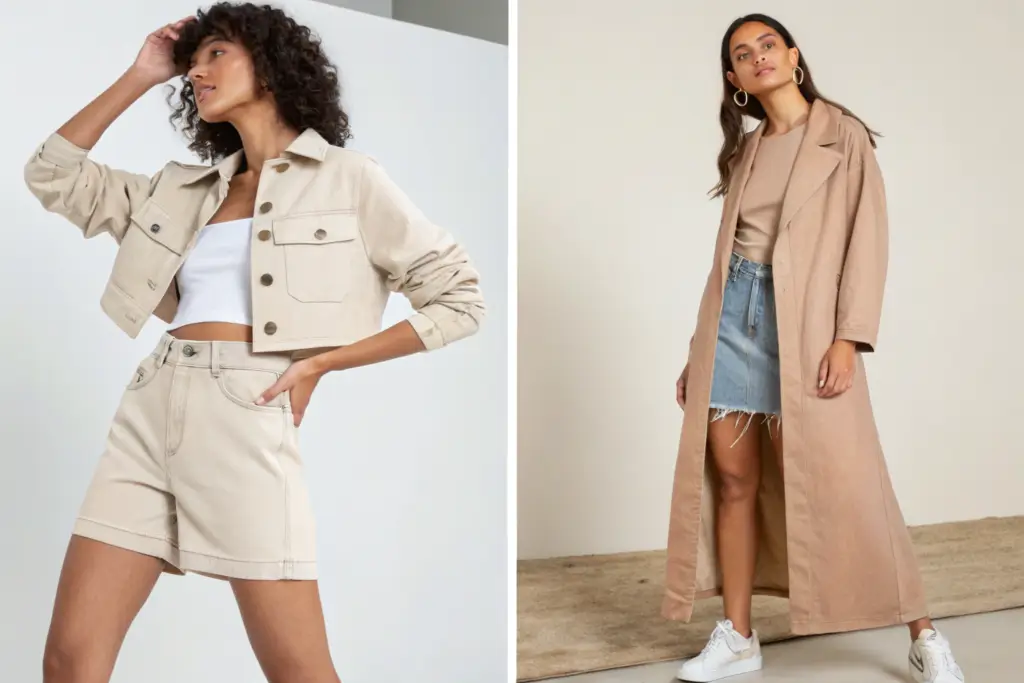
The signature 2026 silhouette is the "floor-length duster" in a weightless denim. It provides maximum drama with minimum thermal retention. It moves on video. The second critical shape is the "cropped box-trucker" that ends precisely at the natural waist, designed exclusively to pair with high-waisted wide-leg trousers or maxi skirts. You must choose your silhouette based on your customer's bottom-half wardrobe.
The mistake brands make is designing a coat in isolation. A summer coat always has a companion garment. If your customer wears high-waisted shorts, you give her a cropped trucker. If she wears slip dresses, you give her a long-line duster that finishes 3 inches below the hem of the dress. This ratio is not arbitrary. We measure the standard dress lengths of your best-selling competitors and add or subtract 3 inches for the ideal coat length. When the layers align perfectly on a product page, the "complete the look" add-to-cart rate jumps significantly. This is math, not magic.
Should You Go Oversized or Tailored for Summer Denim?
The data says oversized, but with surgical precision. Oversized does not mean "size up." It means "re-proportioned." A true oversized denim coat for 2026 has a shoulder seam that sits deliberately off the edge of the natural shoulder, but a sleeve length that stops sharply at the wrist bone. This contrast is what makes it look intentional. If the sleeve is too long, it looks like a mistake. If the sleeve is exactly right, the slouchy body looks designer-level. We see too many brands using standard grading rules. You can't just add 2 inches to all dimensions. You must hold the critical measurements—sleeve length, neck drop—constant while exploding the body width and armhole depth. We developed a proprietary "Oversize Block" for our clients at Shanghai Fumao. It took 12 rounds of sampling to get the neckline right. An oversized coat that slips off the shoulders every two minutes is not fashionable; it's annoying. It will be returned. The construction needs internal silicone grip tape on the back neck and shoulder seams to keep the coat exactly where you want it without visible stitches. This hidden functionality is what makes a viral coat re-orderable.
How to Incorporate Y2K Elements Without Looking Dated?
Y2K is the dominant aesthetic influence, but the 2026 interpretation cleans up the messiness. Think of the 2001 denim trends: raw hems, lace-up backs, rhinestone embellishments. Now strip away 80% of that. Keep the raw hem, but do it in a soft indigo chambray instead of a rigid non-stretch denim. Keep the lace-up detail, but move it from the front to a subtle back panel closure that reveals a sliver of skin when you walk away. The details must be "discovery" moments, not "in-your-face" statements. We recently did a coat with a detachable denim corset belt, a nod to the Vivienne Westwood punk era but made in a soft, washed organic cotton. The belt itself became the hero piece on social media. Influencers wore it separately over linen dresses. When you design your 2026 denim piece, ask yourself: can the detail live independently? If the removable element can be styled five other ways, you have created a value multiplier that justifies the cost. Avoid wholesale Y2K replication. The low-rise jeans of 2003 do not mean a low-armhole coat. Take the spirit—the chaos, the customization, the DIY attitude—and translate it into modular design.
Pricing the Comeback: How to Position Denim Summer Coats for 2026
Pricing a denim coat is a psychological puzzle. The market memory is long. Consumers remember buying a denim jacket for $29.99 at a fast-fashion chain. You are now asking them to pay $98 or $128 for a "summer weight" version. You need to build a justification bridge that is so strong they walk across it without looking down. This bridge is built on three pillars: fabric innovation, ethical production, and wardrobe versatility. If you can prove the cost-per-wear drops below their daily coffee budget, the sale is closed. Last year, a direct-to-consumer brand we work with switched from standard cotton denim to a specialty hemp blend for their summer coat line. Their raw cost increased by 18%. Instead of panicking, they launched a "Price Transparency" page on their website. They broke down the exact labor cost, the water savings, and the factory audit score. The result? Their conversion rate actually improved by 12% after the price increased from $79 to $98. The customer didn't want cheap. They wanted honest.
Your target retail for a premium summer denim coat in 2026 should land between $95 and $135. This zone signals "better than the mall" quality without tripping the "designer splurge" anxiety. You must bundle it. Never sell a denim coat alone. Create a visual set—a matching bucket hat, a mini skirt in the same wash—that raises the Average Order Value (AOV) above $150.
We engineer our cuts to make bundling natural. The cropped denim trucker is designed to sit perfectly with our client's high-waist denim skirt. We shoot them together in the sample photos. When you negotiate with me at Shanghai Fumao, we discuss the "landed cost to bundle ratio." If the coat costs you $22 landed, and the matching skirt costs $9, you can sell the set for $135 and still maintain a 70% margin after marketing spend. The math has to work before the first cut. This is how you survive the comeback when other brands are slashing prices.
What Is the Optimal Markup for a Summer Trend Piece?
Trend pieces carry risk. You do not mark them up like a basic white tee. You use a "Risk-Adjusted Markup" strategy. If the denim coat is a safe, classic trucker in a medium wash, you can accept a 3x markup from landed cost because the inventory risk is low. That coat will sell through August. But if you are betting on a radical silhouette—say, a denim trench with exaggerated lapels—you need a minimum 4x markup. That extra margin covers the potential 20% of stock you might have to clear at a discount in September. I always tell my clients: price the risk, not just the garment. We also factor in the "content cost." A risky, viral-worthy coat photographs better. It gets more organic social media shares. That earned media value should be factored into your pricing strategy. If a coat costs $25 landed and you sell it for $100, but it generates 10,000 organic Instagram impressions, your effective customer acquisition cost drops to pennies. That is the hidden profit of a comeback piece. We support this with "flash production." For risky shapes, we don't force you to buy 2,000 units. We allow an initial run of 300 units as a market test. The unit cost is higher, but your cash flow risk is contained. You prove the concept, and then we ramp up the volume immediately using our greige fabric reserves.
Can Transparent Sourcing Justify a Premium Price Point?
Without a doubt. The 2026 denim consumer is skeptical. They have seen the documentaries about fast fashion landfills. When they buy a denim coat, they are carrying a piece of environmental and ethical weight. You must lighten that load for them. We help our brand partners build a "Digital Passport" for each coat. It's a QR code sewn into the care label that links to a blockchain-verified record of the cotton origin, the dyeing process, and the factory wages. This is not marketing fluff. It's a hard requirement from the growing segment of Gen Z and Millennial buyers. We are one of the few factories in our region that has invested in this traceability technology. It adds about $0.80 per unit. But it allows you to price the coat $15 higher. A client from San Diego piloted this with their 2025 pre-fall line. They linked the passport to a short video of our sewing floor, showing real workers, real machines, and real quality checks. The coat was priced at $145. The reviews consistently mentioned "worth every penny because I know where it came from." If you are entering the 2026 denim comeback without a transparency story, you are fighting with one hand tied behind your back. You will be forced to compete on price alone, and that is a race to the bottom that a factory like Shanghai Fumao refuses to run. We compete on proof, not promises.
Manufacturing and Logistics: Delivering the Denim Comeback on Time
The comeback is worthless if the delivery misses the weather window. A denim summer coat has a razor-thin selling season. The buying starts in late February for early adopters and surges through March and April. By May, if your denim coat is not in the customer's hands, the opportunity has evaporated. People stop buying "summer layers" and start buying "beach swimsuits." The rhythm is unforgiving. I learned this in 2019 when a shipment of chambray dusters for a New York client got stuck during a port labor negotiation. The delay was 18 days. By the time the pallets hit the fulfillment center, the marketing campaign had gone cold, the influencer posts were stale, and the coats moved to the clearance rack by June 1st. The client lost $60,000 in potential profit. The fabric was beautiful. The cut was flawless. The logistics killed the business. That client is still with us today, but we never ship their denim program via ocean freight without a 14-day buffer and a pre-booked air freight contingency. The lessons in this industry are written in lost revenue.
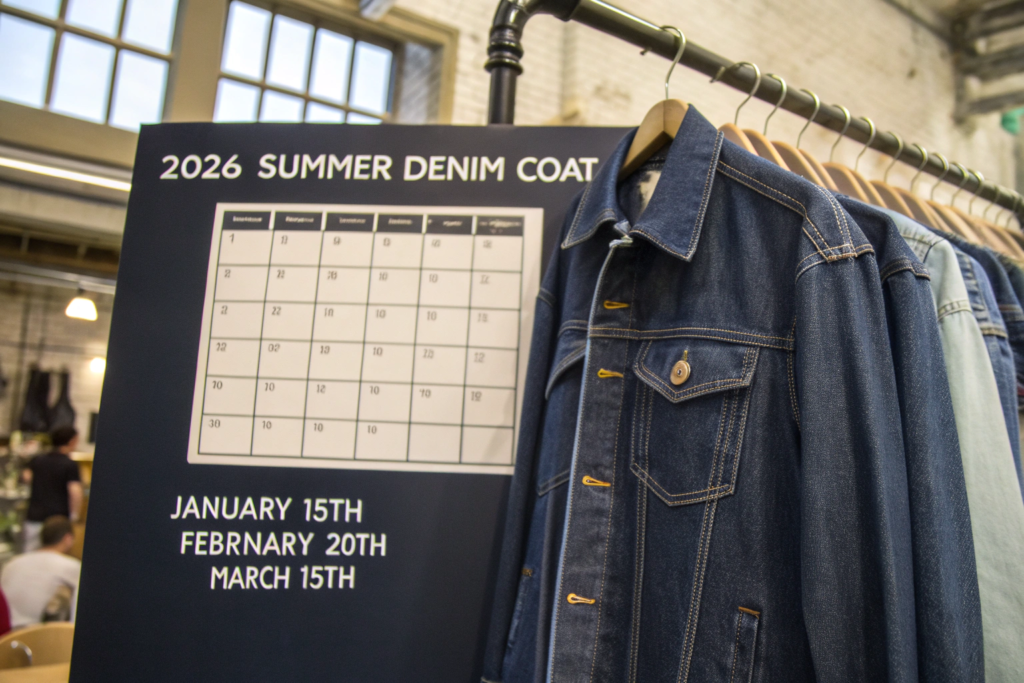
You must reverse-engineer your shipping date from your marketing launch date. For a 2026 summer denim coat, the bulk fabric should be in our cutting room by January 15th. Production must finish by February 20th. Goods must clear US customs by March 15th. This timeline is non-negotiable for capturing the full-margin Spring window. We run a "blackout calendar" for summer coat production to protect these deadlines.
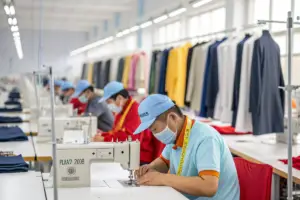
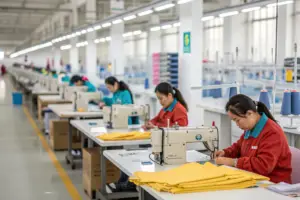
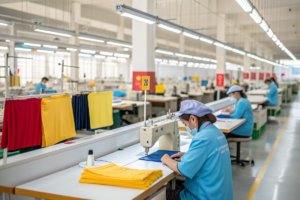
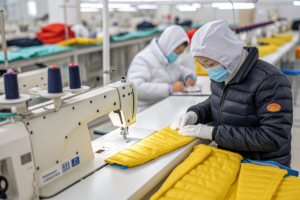
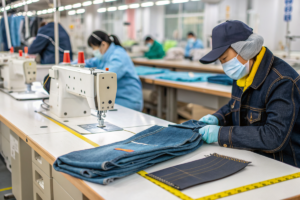
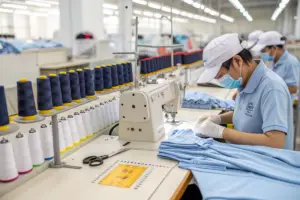
Denim production has unique bottlenecks. The washing process takes time. You cannot rush enzyme washing or stone tumbling without destroying the fabric integrity. We allocate 72 hours just for the wash and dry cycle. If you come to us on February 1st asking for denim coats by March 1st, I will tell you it's impossible. Not because we are slow, but because I refuse to ship a coat with residual shrinkage that will trigger returns. At Shanghai Fumao, we cut your production order, sew the shell, and immediately begin the wash-down process before the trims are attached. This ensures the coat shrinks before the buttons and zippers are sewn on, preventing the dreaded "puckering" at the seams that screams low quality. This extra step requires planning, but it distinguishes a comeback piece from a commodity.
Why Is the "Final Finish" Wash a Critical Bottleneck?
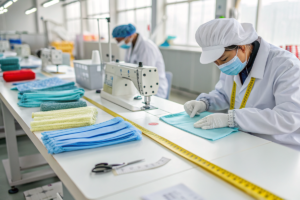
The wash is the personality of the denim coat. It is also the highest-risk step. You can sew a perfect coat and destroy it in a bad wash. The enzyme wash must be timed to the minute. If we leave the denim in the industrial washer for ten minutes too long, the indigo fades too much and the cotton fiber starts to degrade. We call this "over-cooking." The coat looks vintage, but the tear strength drops by 25%. It will rip at the elbow after three wears. When the fabric is lighter weight—4.5oz to 6oz—the margin for error shrinks dramatically. We use a "recipe card" system for every denim coat style. The wash recipe specifies water temperature to the degree, enzyme concentration to the gram, and stone-to-fabric ratio. We run a small test batch of 10 coats first and perform a tensile strength test on the washed fabric sample using a laboratory-grade stretching machine. If the strength drops below the acceptable threshold, we adjust the recipe. We also check the "skewing." Lighter denim can twist in the wash, causing the side seams to rotate toward the front. We correct this with a skewing machine that manually shifts the weft yarn before cutting. Most factories skip this step. You see it immediately when a cheap denim coat twists awkwardly on the body. That coat ends up in the landfill. It does not become part of a successful comeback.
How Can Small Brands Leverage Our DDP Logistics for Denim?
Small brands get crushed by logistics costs because they lack scale. A big brand can negotiate a $2,500 container rate. A small brand pays $4,500 for a shared LCL (Less than Container Load) and waits twice as long. We changed the game by pooling our partners' denim coats. If you order 500 units and another brand orders 300 units, we consolidate the order into a single container. You split the freight cost proportionally. You get the big-brand rate on a small-brand volume. We also take full responsibility for the DDP (Delivery Duty Paid) process. For a denim coat, the US import duty can vary between 8% and 18% depending on the cotton content and gender classification. We file the binding rulings and ensure you pay the lower rate. A client from Austin was recently misclassifying their women's denim trench coats as "overcoats" and paying a higher duty. Our logistics team at Shanghai Fumao reviewed their HS codes and reclassified them correctly as lightweight cotton windbreakers. It dropped their duty by 6 percentage points. On a shipment of 1,200 coats, that was a $5,000 saving. We didn't keep that. It went straight to their bottom line. That is the partnership you need. You must have a manufacturer who treats customs clearance as a profit center for you, not a risk to dump on your desk.
Conclusion
The denim summer coat is not just making a comeback for 2026. It is being reborn. The heavy, sweaty, stiff jackets of the last decade are gone. In their place is a new category: the "air-denim" layer. It is lightweight enough for a July evening, structured enough for a May office commute, and washed soft enough for a sensitive skin toddler—though we are dressing adults who crave that same comfort. The opportunity sits at the intersection of fabric innovation, oversized architectural cuts, and radically transparent sourcing.
This is not a trend you chase blindly. It is a trend you engineer. You control the weight. You control the wash. You control the landed cost. And you must control the delivery timeline with a logistics partner who treats your launch date like a sacred deadline. The brands that win in 2026 will be the ones who order their bulk fabric in January, not the ones who post a "coming soon" sign in June while their shipment floats somewhere in the Pacific.
At Shanghai Fumao, we have the needles, the wash recipes, and the shipping lanes ready. We have been studying this comeback since the first whispers on the vintage resale platforms. We know the fabric mills that can deliver the 5oz magic. We know the cutting patterns that drape like a dream. We know the customs codes that save you money. If you have a vision for a denim summer coat—whether it's a floor-sweeping duster or a sharp little cropped trucker—let's build it together.
Don't let another season slip by while you wait for samples from a factory that doesn't understand the urgency of fashion. Reach out to our Business Director, Elaine, and get a concrete plan with real numbers. No guesswork. Just denim that delivers. You can contact her directly at: elaine@fumaoclothing.com.