I received a text message from a confused boutique owner last April. She had just finished a buying appointment, and she was staring at her order sheet. "I think I bought too many lightweight jackets and not enough summer coats," she wrote. "Honestly, I do not even know the difference. Are they not the same thing? I just buy what looks pretty." Her confusion is incredibly common, and it is an expensive mistake to make. A summer coat and a lightweight jacket serve different purposes in a woman’s wardrobe. They appeal to different psychological needs. If you treat them as interchangeable, you will buy the wrong assortment, and your customer will walk out empty-handed, looking for the specific garment you failed to provide.
The fundamental difference between a summer coat and a lightweight jacket lies in the silhouette, the occasion, and the emotional job the garment performs for the wearer, not simply the weight of the fabric.
This distinction is critical for any boutique buyer or brand owner. It shapes your open-to-buy allocation, your merchandising strategy, and your sales associate training. At Shanghai Fumao, we categorize these as two distinct product families because we know they solve different problems. I want to walk you through the exact differences so you can buy with confidence and sell with clarity.
What Defines a Summer Coat as a Distinct Category?
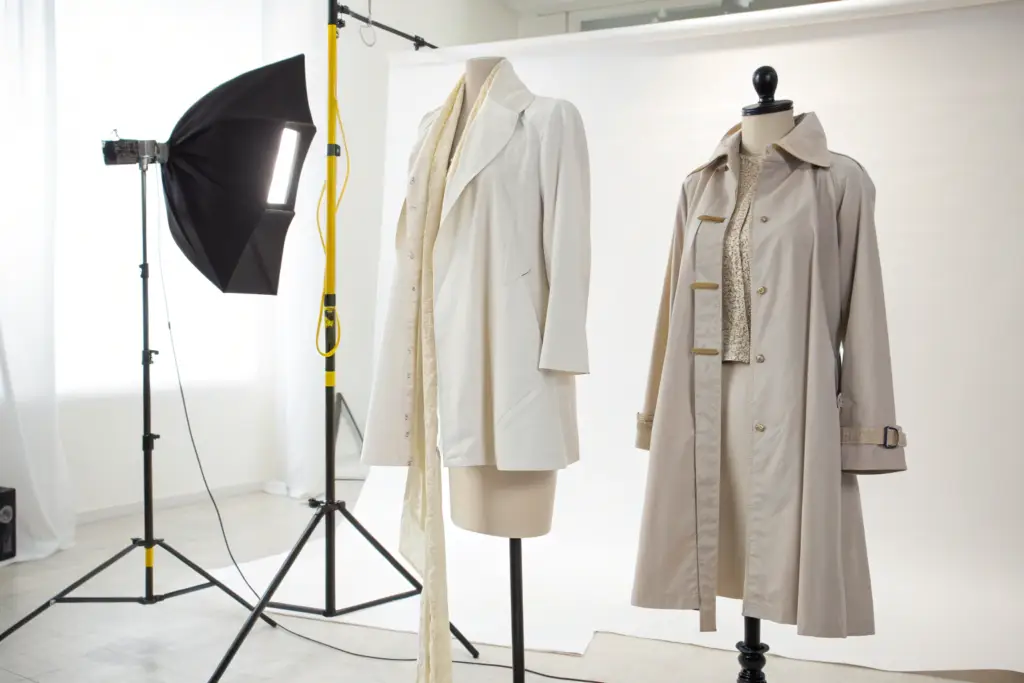
A summer coat is not just a jacket made lighter. It is a garment with a specific set of design codes, a specific historical context, and a specific emotional weight. When a woman puts on a summer coat, she is making a statement. She is adding a layer of drama, polish, or intentional style. The coat is the hero of her outfit. It is the piece that ties everything together and elevates her look from simple to complete.
A summer coat is defined by its longer length, typically from the knee to mid-calf, its ability to create a complete, polished silhouette, and its primary role as the statement outer layer of an outfit.
It shares the DNA of a traditional coat. It has a more defined structure, even if that structure is soft. It often includes classic tailoring details like a notched lapel, a back vent, or a belt. It is a garment with presence. At Shanghai Fumao, our summer coat category includes trench coats, duster coats, wrap coats, and kimono coats. These are pieces that transform an outfit.
How Does Length Distinguish a Coat from a Jacket?
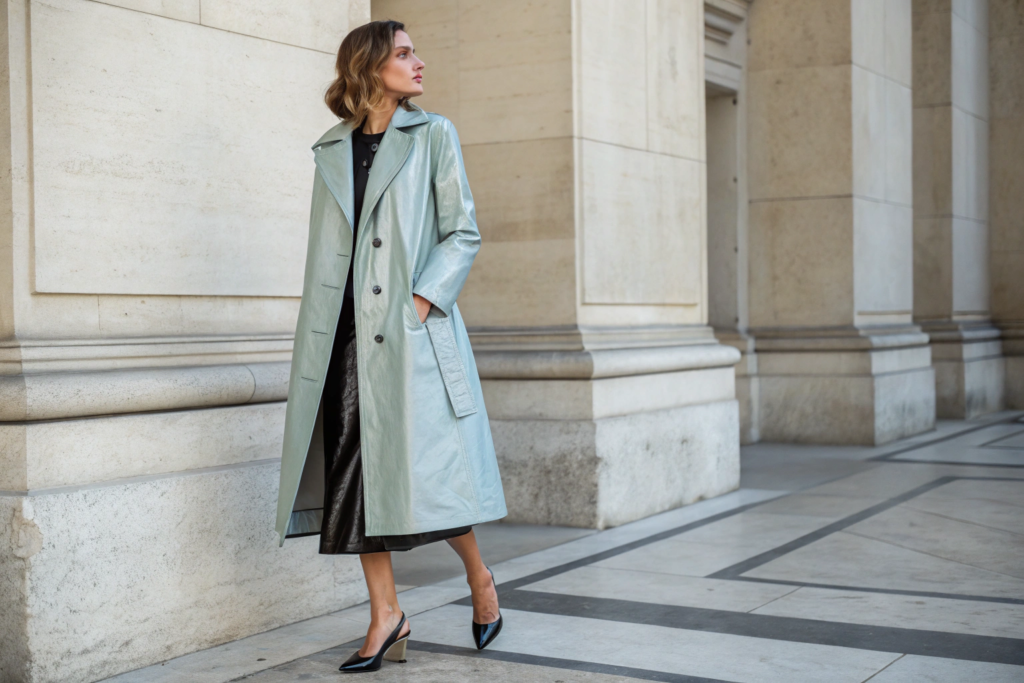
Length is the single most obvious visual differentiator. A true summer coat almost always falls below the hip. The most common and commercially powerful length is between the knee and the mid-calf. This longer length creates a beautiful, unbroken vertical line that is inherently elegant and lengthening. It provides coverage. It protects a dress or a pair of trousers from a summer breeze or a light shower.
A jacket typically stops at the hip or above. Its job is not to create a long, dramatic line. Its job is to provide a shorter, more casual, more functional layer. When a customer tries on a knee-length trench coat, she immediately feels more dressed, more polished, and more intentional. The length is doing the emotional work. I recall a trunk show where a customer tried on one of our mid-calf linen dusters. She looked at herself in the mirror, straightened her posture, and said, "Now I feel like I am actually wearing an outfit." That is the power of the length. It bestows a sense of occasion.
What Role Does Silhouette and Structure Play?
Beyond length, a summer coat often possesses a more defined silhouette. It might have a belted waist that creates an hourglass shape. It might have a defined shoulder line, even if it is a soft, unpadded shoulder. It might have an A-line or a flowing back vent that adds drama and movement. These structural elements give the coat a distinct identity. The coat itself is a complete design statement.
A jacket tends to be more relaxed and less architecturally defined in its silhouette. Think of a simple, boxy denim jacket or a casual, unstructured utility jacket. Its shape is often simpler. The summer coat, by contrast, is designed to create a specific visual effect on the body. A wrap coat cinches the waist. A duster creates a long, lean column. A trench coat adds sharp, tailored structure. These silhouette characteristics are what make a summer coat feel like a significant garment. It is not just an afterthought you throw on. It is the piece around which the entire outfit is built.
What Are the Defining Characteristics of a Lightweight Jacket?
The lightweight jacket is the workhorse of the summer wardrobe. Its defining characteristic is not drama or elegance. It is ease. It is the piece a woman reaches for every single day without thinking. She throws it on over a t-shirt and jeans to run errands. She grabs it as she walks out the door on a breezy evening. It is her trusted companion. It is functional, comfortable, and utterly unpretentious.
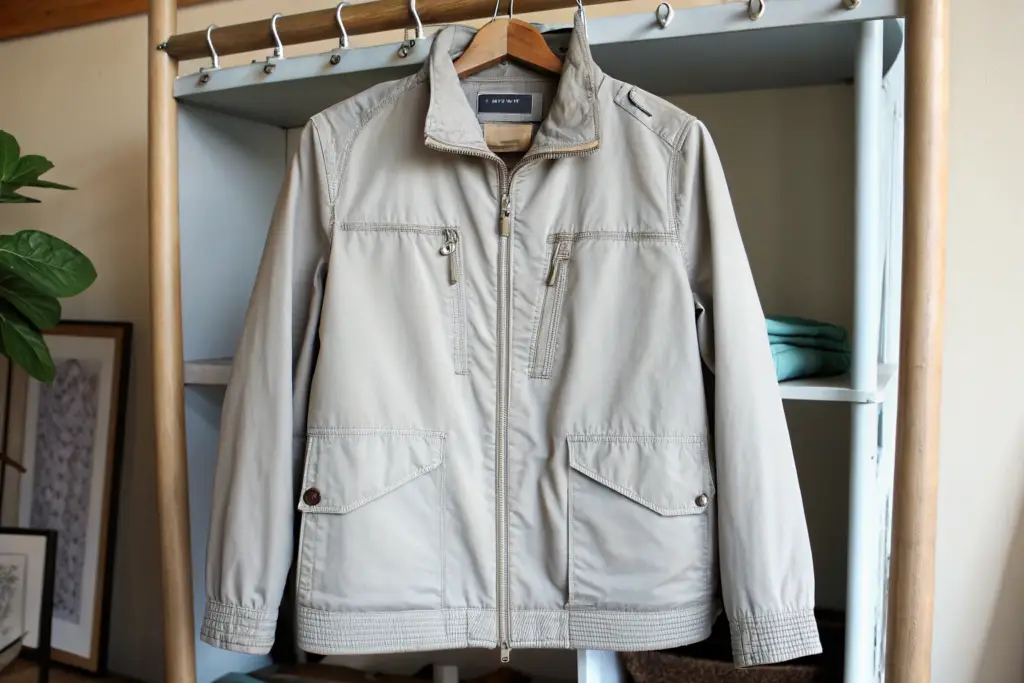
A lightweight jacket is defined by its shorter, hip-length cut, its casual, unstructured silhouette, and its primary role as a practical, grab-and-go layering piece for everyday life.
It does not demand attention. It provides quiet, reliable service. It is often made from durable, easy-care fabrics. Its details are simple and functional. Pockets for your phone. A simple button or zip front. At Shanghai Fumao, our lightweight jacket category includes denim jackets, utility jackets, shackets, and simple, unlined bomber jackets. These are the pieces that become the most-worn items in a customer’s closet.
Why Is Ease of Wear the Primary Function?
A lightweight jacket is designed for a life that is actually lived. It can be balled up and stuffed into a tote bag. It can survive a splash of coffee. It can be worn multiple times between washes. The fabrics are chosen for their durability and low-maintenance nature. Washed cotton twills, soft denims, lightweight ripstop nylons. These fabrics take a beating and look better for it.
The fit is generally relaxed and forgiving. There are no restrictive belts or complicated closures. The customer can move freely. She can drive her car, pick up her child, and reach for a high shelf without feeling constrained. This ease of wear is the jacket’s core value proposition. A customer might save her silk kimono coat for a special lunch. She wears her denim jacket to the grocery store, to the playground, and on a weekend road trip. The frequency of wear makes the lightweight jacket an incredible value purchase. She will easily achieve a cost-per-wear of pennies.
How Do Casual Silhouettes and Fabrics Define This Category?
The silhouettes of a lightweight jacket are generally straight, boxy, or slightly cropped. They are not designed to dramatically reshape the body. They are designed to work in harmony with a casual lifestyle. A denim jacket has a classic, square, slightly cropped shape. A utility jacket has a relaxed, straight fit. A bomber jacket has a gathered, elasticated waist. These are iconic, recognizable shapes that have remained largely unchanged for decades because they work so perfectly.
The fabrics are sturdy but soft. Cotton twill, cotton canvas, lightweight denim, and soft, brushed poplin are the core fabrics. They provide a little bit of warmth and a little bit of protection from the wind, but their primary function is not insulation. Their primary function is to add a tactile, casual layer to an outfit. A customer puts on a soft, washed cotton utility jacket over a tank top, and she feels instantly more put-together and more comfortable. It is a sensory and practical layer.
How Do You Strategically Buy Both Categories for a Complete Assortment?
Understanding the difference between a summer coat and a lightweight jacket is just the first step. The real skill lies in buying the right mix for your specific boutique and your specific customer. An over-investment in dramatic summer coats can leave you with a rack of beautiful but impractical pieces that only sell for special occasions. An over-investment in basic lightweight jackets can make your assortment feel boring and miss the opportunity for a higher-value sale. The goal is balance.
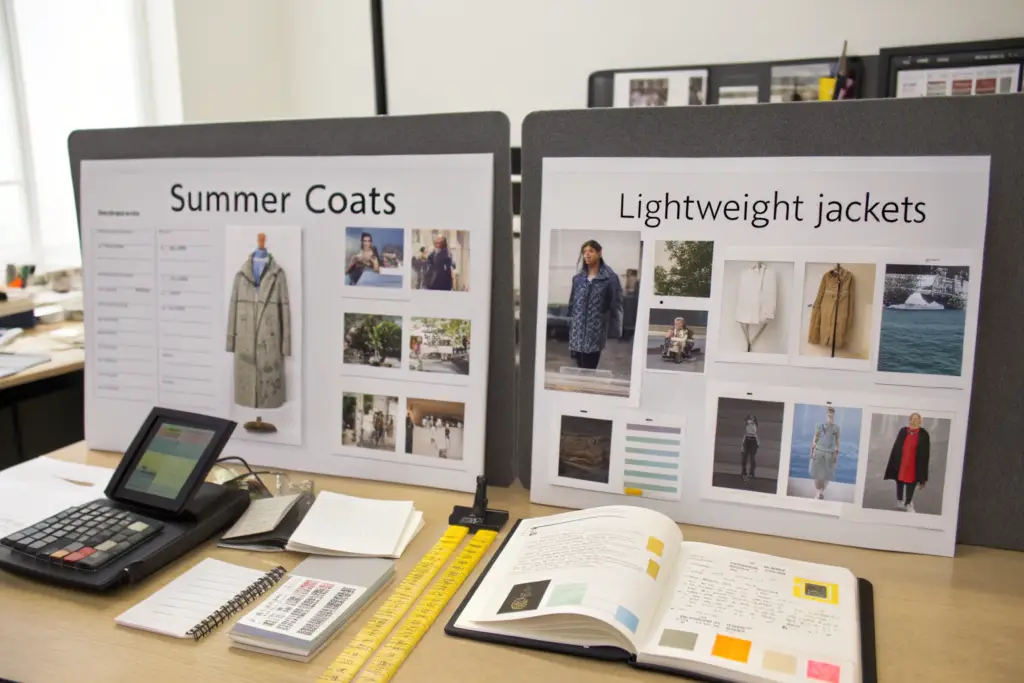
A strategic buying plan allocates approximately 60% of the outerwear budget to versatile, high-volume lightweight jackets and 40% to statement summer coats, adjusted based on the specific customer profile and regional climate.
This ratio is a starting point, not a rigid rule. A resort boutique in a vacation destination might flip the ratio towards dramatic kimonos and dusters. A practical, workwear-focused boutique in a casual city might lean even more heavily into utility jackets and blazers. At Shanghai Fumao, we work with each partner to customize their assortment based on their unique business.
What Is the Ideal Ratio of Coats to Jackets for Different Boutique Profiles?
Consider three different boutique profiles. The first is a sophisticated urban boutique in a city like New York or Toronto. Her customer needs polished layers for the office, client lunches, and evening events. For her, the ratio might be 50% summer coats, including a refined trench and a belted wrap, and 50% lightweight jackets, including a tailored utility blazer and a silk-blend bomber.
The second profile is a casual coastal boutique in a town like Malibu or Charleston. Her customer lives in jeans, sundresses, and sandals. Her lifestyle is relaxed. For her, the ratio shifts to 70% lightweight jackets, like a cropped denim jacket and a soft utility shacket, and 30% summer coats, like a dramatic, printed kimono for evening dinners. The third profile is a resort boutique in a place like Palm Beach or Maui. Her customer is on vacation. She wants statement pieces. The ratio might be 70% summer coats, including sheer dusters and flowing silk kimonos, and 30% lightweight jackets, like a crisp linen blazer for a lunch meeting.
How Do You Merchandise the Two Categories for Add-On Sales?
The two categories work beautifully together, and your merchandising should reflect this. A lightweight jacket should never be displayed in isolation. It should always be styled as part of a complete look with other items in your store. A denim jacket on a mannequin over a floral midi dress, with a pair of sandals and a tote bag from your accessories section. The jacket makes the dress feel more casual and complete. The customer is inspired to buy the entire outfit.
A summer coat should be displayed as the hero piece it is. It deserves its own focal point. A dramatic duster coat on a single mannequin near the entrance, beautifully lit. The customer sees it from across the store. She is drawn to it. When she asks about it, the sales associate is trained to explain the difference. "That is one of our statement summer coats. It is designed to be the hero of your outfit. It is a beautiful piece for a summer wedding or a special dinner." The language matters. It sets the coat apart and justifies its higher price point.
What Are the Key Quality Indicators for Each Category?
The quality standards for a summer coat and a lightweight jacket are different. It would be a mistake to judge a utility jacket by the same criteria you would use for a silk duster. The coat is judged by its elegance and its invisible, couture-level finishing. The jacket is judged by its durability and the integrity of its functional details. Understanding these different quality benchmarks will help you assess value correctly when you are sourcing.
Quality in a summer coat is defined by the refinement of its tailoring, the beauty of its internal seam finishing, and the luxe nature of its trims, while quality in a lightweight jacket is defined by the durability of its construction, the strength of its seams, and the reliability of its functional hardware.
Both can be exceptionally high quality, but they express that quality in different ways. At Shanghai Fumao, we hold both categories to the highest standard appropriate for their end use.
What Should You Look for Inside a Summer Coat?
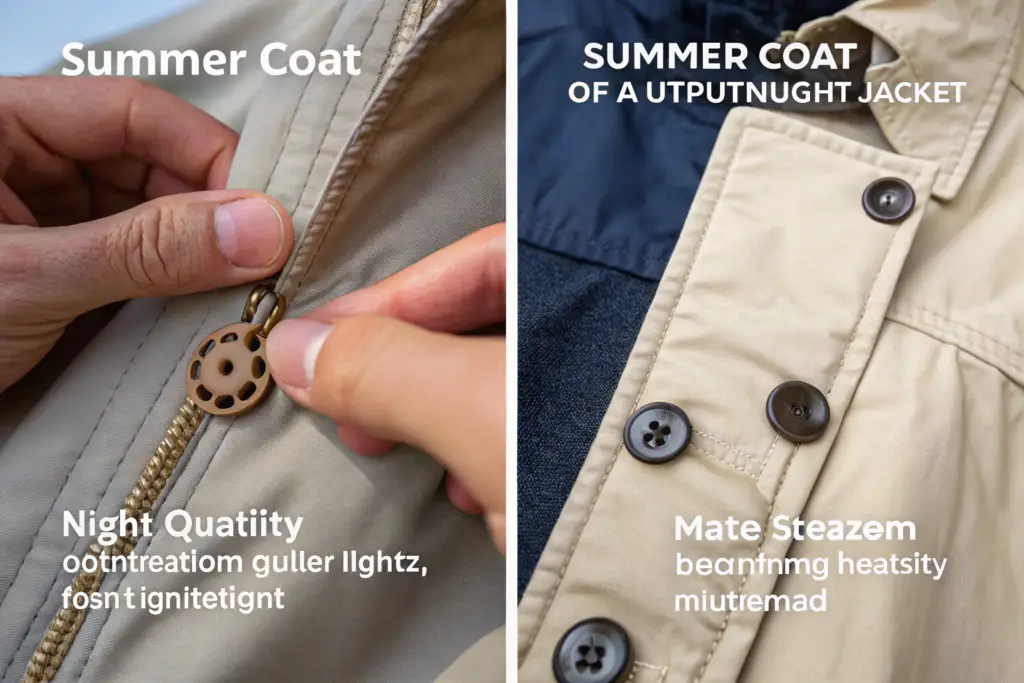
Turn a summer coat inside out. A quality summer coat, especially an unlined one, should have an interior that is almost as beautiful as the exterior. The seams should be French seams or cleanly bound with a fine cotton tape. There should be no raw, serged edges visible. The hem should be meticulously finished, often with a blind stitch that is nearly invisible from the outside. The internal structure, if there is any, should be a soft, floating canvas, not a stiff, glued interlining.
The buttons should be natural materials like corozo, horn, or mother-of-pearl. They should be sewn with a thread shank and a tight, neat wrap. The buttonholes should be clean and precisely stitched. On a premium summer coat, the left lapel often has a functional buttonhole. These are the details that a discerning customer notices. They communicate luxury and justify a higher price.
What Makes a Lightweight Jacket Durable and Long-Lasting?
A lightweight jacket is built for action. Its quality is proven through performance. Check the seams. They should be securely stitched with a tight, even stitch. The seam allowance should be finished with a clean overlock stitch that prevents fraying through many washes. The stress points, like the underarm gussets and the pocket corners, should be reinforced with bar-tack stitches.
The hardware is critical. Zippers should be from a reputable brand like YKK and should glide smoothly. Snaps should be securely attached, not just with prongs, but with a reinforced stitched backing when possible. Buttons should be heavy-duty and sewn on with a strong, durable thread. Pull on the pockets. They should feel solidly attached. A well-made utility jacket should feel substantial and reliable in the hands. It should feel like it will last for years of hard wear. That feeling of durability is the quality signal for this category.
Conclusion
The difference between a summer coat and a lightweight jacket is clear, and it matters. A summer coat is a statement. It is defined by its longer length, its elegant silhouette, and its power to transform an outfit into something polished and intentional. A lightweight jacket is a tool. It is defined by its shorter length, its casual ease, and its role as the dependable, grab-and-go layer for the beautiful chaos of everyday life. A successful boutique needs both.
You need the summer coat to inspire your customer, to raise your average transaction value, and to make your store a destination for special pieces. You need the lightweight jacket to drive your volume, to build loyal, repeat customers, and to be the reliable backbone of your daily sales. Buying them strategically, merchandising them distinctly, and training your team to speak about their different roles will transform your outerwear business. At Shanghai Fumao, we excel at helping our partners build this balanced assortment. If you are ready to plan your next season’s buy with clarity and confidence, I invite you to speak with our Business Director, Elaine. She can walk you through our complete range of summer coats and lightweight jackets. You can reach her at elaine@fumaoclothing.com. Let’s build a collection that works as beautifully as it looks.