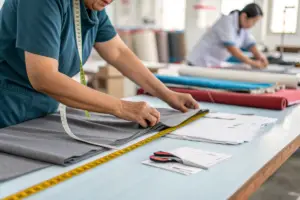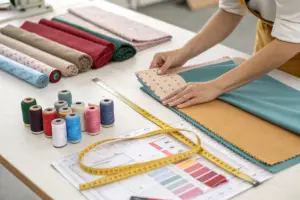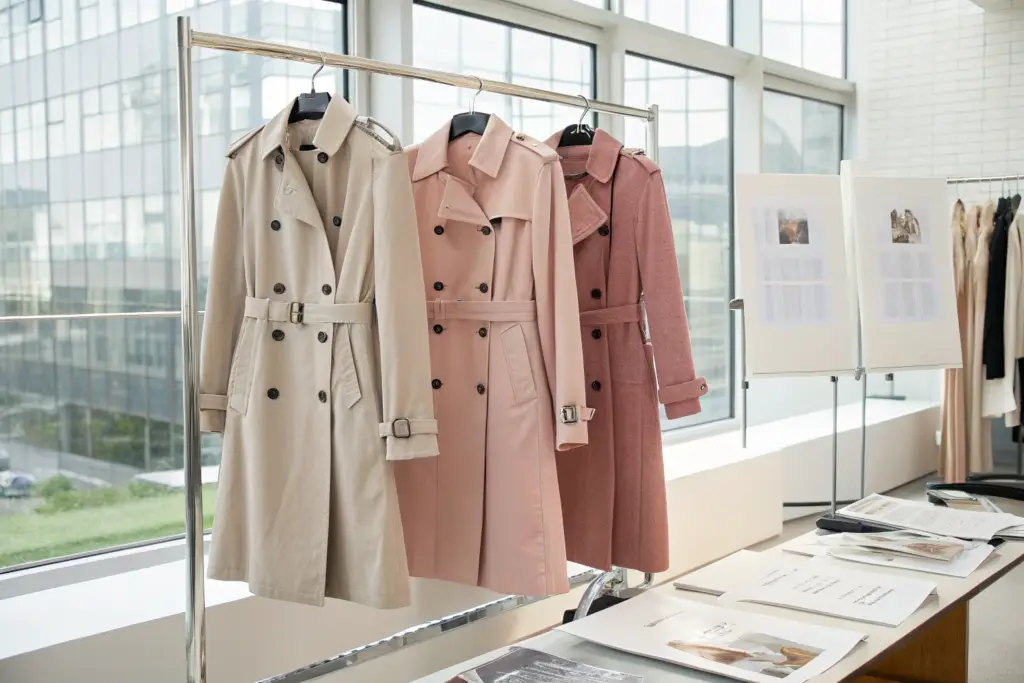
I was on a video call last April with a frustrated boutique owner from San Francisco. She had sourced what she thought were the perfect summer trench coats from a supplier she found on an online marketplace. The samples were beautiful. Crisp. The perfect shade of stone. She ordered 200 units across three colors. When the shipment arrived in June, the trenches were a disaster. The fabric was stiff and scratchy, not the soft, breathable cotton she had approved. The buttons were a different shade. The sizing was inconsistent. She spent her peak summer selling season processing returns, not making money. Her trust in overseas sourcing was shattered. That call is why I want to share exactly how to source correctly.
Sourcing the most popular women's trench coats for Summer 2026 requires a rigorous process of supplier vetting, detailed material specification, and strategic timing to secure the lightweight, modern silhouettes that will define the season.
This is not about finding the cheapest unit price on a generic platform. It is about building a supply chain that delivers consistent quality, on-trend design, and reliable delivery. At Shanghai Fumao, we have spent years refining this process for our North American brand and boutique partners. I want to walk you through the exact steps, from identifying the trending silhouettes to inspecting the finished goods before they ship.
What Are the Defining Trench Coat Silhouettes for Summer 2026?
The summer trench coat in 2026 is not just a lighter version of the fall classic. It has evolved into its own distinct category with specific silhouettes that respond to warm-weather styling needs. The customer who buys a summer trench is looking for a lightweight layer that solves a problem. She needs protection from a sudden shower, a stylish cover-up for air-conditioned spaces, and a piece that elevates simple summer outfits. You cannot simply offer her a heavy cotton gabardine coat and call it a day. The silhouettes for Summer 2026 are diverse, giving you multiple entry points for different customer personalities.
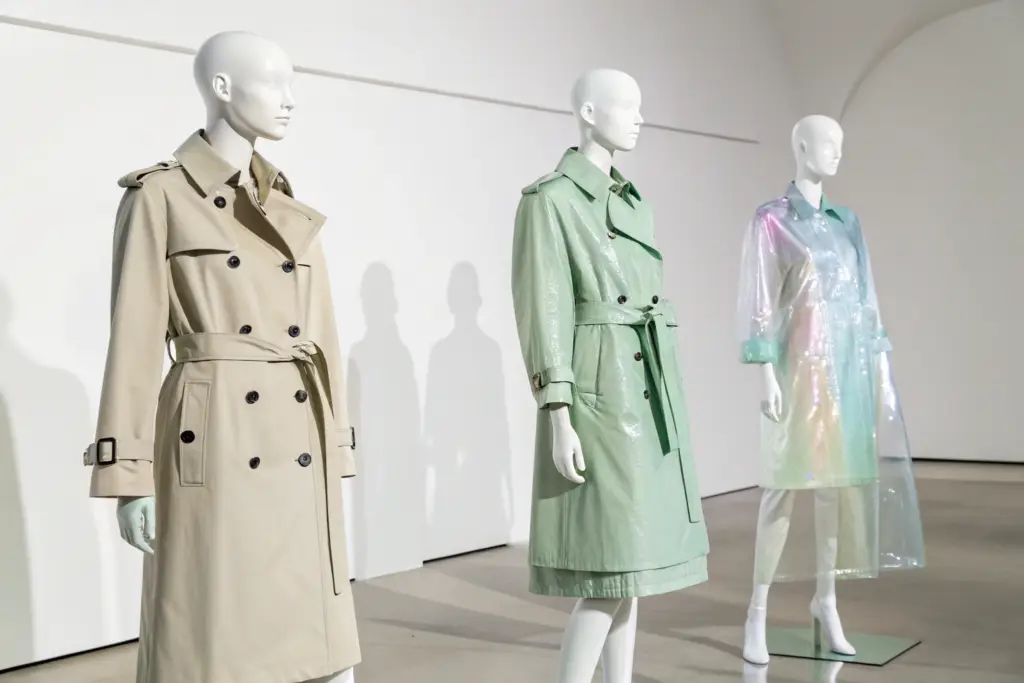
The defining trench coat silhouettes for Summer 2026 are the refined classic calf-length trench, the modern cropped trench, and the fashion-forward transparent trench, each offering a distinct aesthetic and solving a specific warm-weather styling challenge.
These three shapes represent a complete summer trench assortment. The classic appeals to the timeless customer. The cropped attracts the contemporary, fashion-aware shopper. The transparent trench captures the trendsetter and generates word-of-mouth for your brand.
Is the Classic Calf-Length Trench Still Relevant for Summer?
The answer is an emphatic yes, but only if it is re-engineered for the heat. The classic double-breasted, belted trench in a full-length is too heavy and too formal for summer 2026. The updated summer version is calf-length, hitting just below the knee or mid-calf. The fabric must be a lightweight, breathable cotton twill or a cotton-lyocell blend, weighing no more than 200 GSM. The lining must be either completely removed or replaced with a half-lining in breathable cupro or cotton voile.
The details also shift for summer. The traditional storm flaps and epaulettes are simplified or removed entirely to reduce visual weight. The color palette lightens considerably. Stone, ecru, and a pale khaki are the core colors. We produced this exact silhouette for a retailer in Charleston last year. We used a pre-washed, enzyme-treated organic cotton that had a soft, lived-in drape from day one. The unlined construction made it packable and perfect for travel. The retailer sold it as their "summer trench" and it was their top-selling outerwear piece from May through July. The classic trench is not dead. It just needs a summer remix.
What Makes the Cropped Trench a Key Piece for 2026?
The cropped trench is the silhouette driving the most excitement among contemporary brands. It hits at the waist or high hip. It is boxy and slightly oversized, often with a removable belt. It is styled less like a coat and more like a shirt-jacket. The customer wears it buttoned up as a top or open as a lightweight layer. Its shorter length makes it incredibly versatile. It pairs perfectly with the high-waisted wide-leg trousers and long skirts that dominate summer fashion.
The construction of a cropped trench needs to be crisp. Because there is less length to create a vertical line, the fabric needs body to hold the boxy shape. We use a cotton and recycled polyester blend with a mechanical stretch. This gives the fabric enough rigidity to keep the architectural shape without looking flimsy. The details are scaled down to match the proportion. Smaller buttons, narrower lapels, and a simplified belt. A key design feature is the sleeve. We cut the sleeve slightly shorter, around a three-quarter length, with a deep vent at the cuff. This allows the customer to push the sleeve up easily, creating a casual, effortless look. This silhouette has been a volume driver for our wholesale partners who supply to the contemporary market.
How Does the Transparent Trench Capture the Fashion-Forward Customer?
The transparent trench is the ultimate statement piece for summer. It is not for the faint of heart or the deeply traditional customer. It is for the woman who views fashion as a form of creative expression. The beauty of the transparent trench is that it protects the outfit underneath without hiding it. It is the perfect cover-up for a statement dress or a bold printed set that the customer wants to showcase, not conceal.
The commercial viability of this style has improved dramatically because the materials have evolved. The old PVC trench was a sweatbox. The new transparent trench uses a soft, flexible TPU or a recycled PET film that is lightweight and breathable. We laser-cut tiny, invisible ventilation holes under the arms and across the back yoke to allow airflow. The seams are sealed with high-frequency welding, not stitched, which gives a clean, futuristic finish. The color palette for 2026 has expanded beyond clear. We are seeing tinted transparent trenches in very pale pink, soft blue, and a smoky grey. These tints add a layer of sophistication and make the coat slightly more forgiving to wear. A boutique in Austin ordered this style in a soft pink tint and displayed it in their front window. It stopped pedestrian traffic and generated significant social media buzz. It was their highest margin piece of the summer.
How Do You Vet and Select a Reliable Trench Coat Manufacturer?
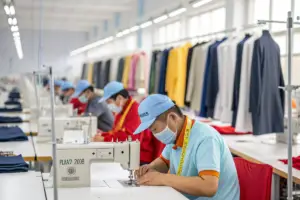
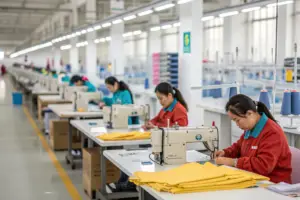
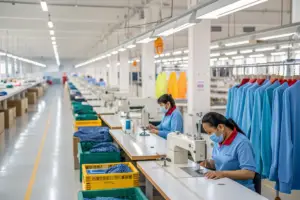
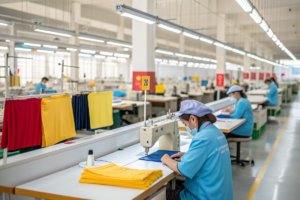
The biggest risk in sourcing is not a bad design. It is a bad manufacturer. A charming salesperson and a polished website can hide a factory with inconsistent quality, no real compliance, and a habit of missing deadlines. You need a vetting process that goes beyond the surface. I have seen brands fall in love with a sample, place a large order, and then lose their entire season because the factory simply could not replicate that sample at scale. The pain of that experience is avoidable with the right due diligence.
Vetting a reliable trench coat manufacturer requires verifying their specialization in lightweight outerwear, requesting a live video tour of the production line, and checking their material sourcing certifications directly with the issuing bodies.
You are not just buying a product. You are entering into a relationship that will directly impact your brand's reputation and your cash flow. At Shanghai Fumao, I encourage every potential partner to do this deep vetting because it builds trust and sets the foundation for a long-term partnership.
What Questions Reveal a Factory's True Trench Coat Expertise?
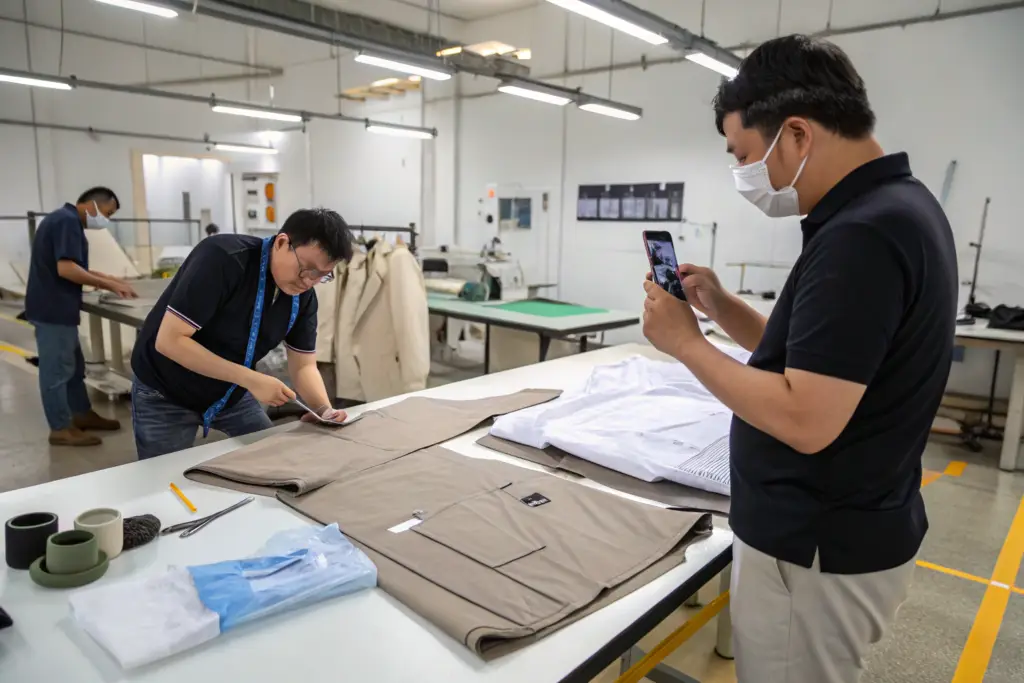
A generic garment factory can sew a basic jacket. A trench coat specialist is a different animal entirely. The trench coat has specific construction points that are difficult to execute well. The collar band, the epaulettes, the gun flap, the belt loops, and the buttonholes all require precise sewing and specific machinery. You need to ask questions that test for this specific expertise.
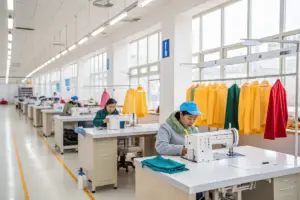
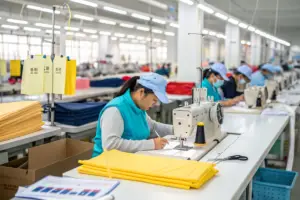
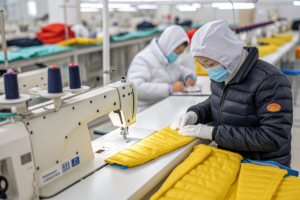
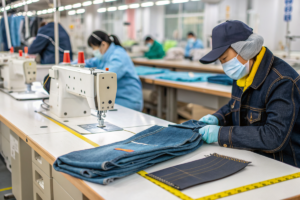
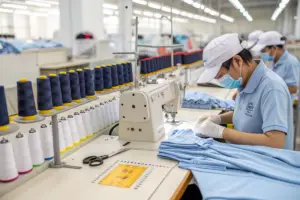
Ask the factory to show you close-up photos of a previously produced trench coat, specifically the buttonhole on the collar stand and the attachment of the epaulettes. A clean, bar-tacked epaulette that sits flat and a precisely keyhole-shaped buttonhole are signs of a skilled operator. Ask about their seam-sealing capabilities. A summer trench, even an unlined one, often has sealed seams for water resistance. Do they use seam tape or a liquid sealant? Both can be effective, but the factory needs to know how to apply them correctly without causing the fabric to pucker. Ask for a copy of their needle policy. This is a critical safety protocol in any reputable factory. A strict needle policy means broken needle fragments are tracked, accounted for, and the garment is scanned with a metal detector before packing. This protects your customer from a dangerous and brand-destroying incident.
How Can You Verify Certifications and Material Sourcing Claims?
A supplier can send you a PDF of a certification. In five minutes on a basic design program, I could create a fake one that looks identical. You must verify the certificate on the issuing body's public database. For organic cotton claims, ask for the GOTS scope certificate number and check it on the GOTS website. For recycled content claims, check the GRS certificate number on the Textile Exchange database.
For the fabric itself, request a lab test report from an independent third party like SGS or Intertek. This report should verify the fiber composition. I have seen fabric sold as 100% cotton that turned out to be a cotton-polyester blend. A burn test can give you a rough indication, but only a lab test gives you legal-grade proof. We provide these lab reports proactively to our new partners. The cost of the test is built into our development process because it protects both of us. Finally, verify the factory's social compliance. Ask for the most recent audit report from a recognized scheme like BSCI or SMETA. Check the date. An audit that is three years old is not valid. A current, clean audit is the baseline requirement for working with any reputable North American brand.
What Fabrics and Trims Define a Quality Summer Trench Coat?
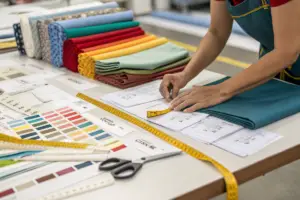
The hand feel of a summer trench coat is its closing argument. The customer will make her decision in the first three seconds of touching the fabric. If it feels stiff, scratchy, or synthetic, you have lost her. The fabric must communicate quality, breathability, and a sense of lightness. The trims, the buttons, the belt buckle, and the care label are the supporting actors that confirm the garment's value. A beautiful fabric paired with cheap, plastic buttons sends a mixed message that undermines the perceived value.
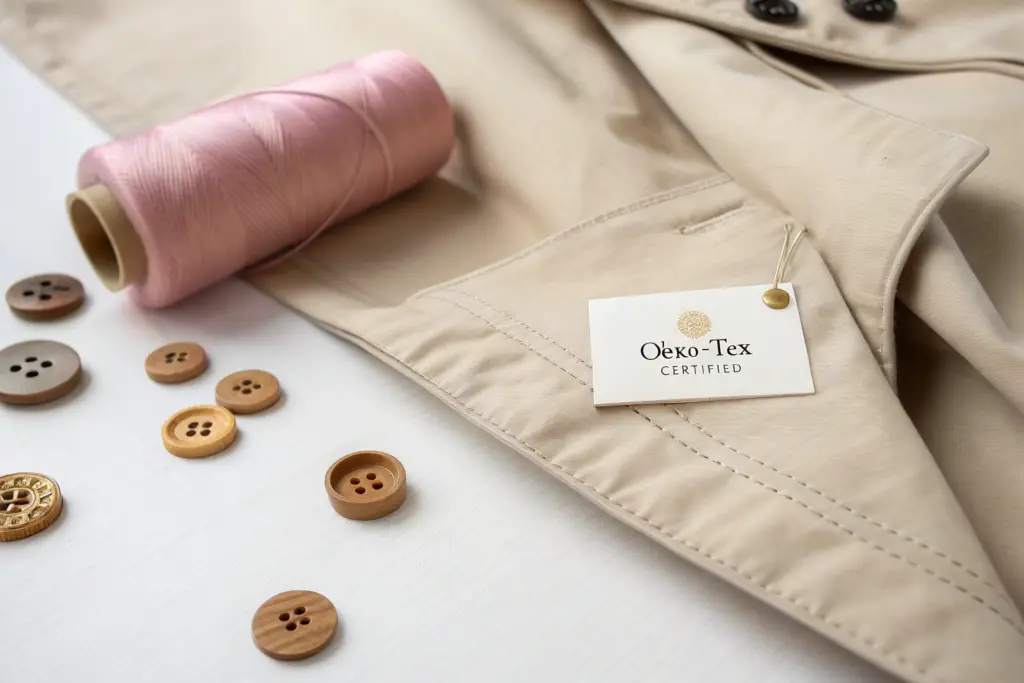
Quality summer trench coats are defined by lightweight, breathable cotton twills or blends, lined in cupro or left unlined, with trims in natural materials like corozo or horn that elevate the garment's hand feel and aesthetic.
These material choices are not arbitrary. They are the result of understanding what the end customer wants to feel against her skin on a warm day and what communicates luxury in a subtle, sophisticated way. At Shanghai Fumao, we have a curated library of fabrics and trims specifically selected for summer outerwear performance.
What Are the Best Lightweight Trench Fabrics for Hot Weather?
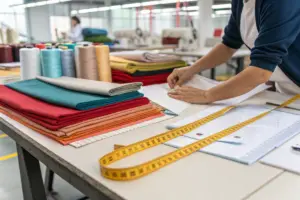
The gold standard is an organic cotton twill with a weight between 180 and 210 GSM. Twill has a diagonal weave that gives it a beautiful drape and a smooth, almost silky hand feel. The weave structure also makes it naturally more wind-resistant and durable than a plain weave. The organic certification adds a marketing story. A close second is a cotton-lyocell blend. Lyocell is a man-made cellulosic fiber derived from wood pulp. It is incredibly soft, breathable, and has a unique cooling effect against the skin. The blend with cotton gives the fabric more fluidity and a subtle sheen that looks very high-end.
We also work with a technical cotton fabric that has a micro-porous membrane bonded to the back. This membrane is invisible and breathable, but it provides genuine waterproofing without the stiffness of a traditional raincoat. It is perfect for the brand that wants to market a "performance summer trench." The key is that the membrane does not compromise the soft hand feel of the face fabric. This fabric technology was developed in Japan and has become more accessible for wholesale production in the last two years. It costs more, but it allows a significantly higher retail price point and a unique competitive position.
Why Do Trims Like Corozo Buttons and Natural Buckles Matter?
Sustainability is a total product story. You cannot use GOTS-certified organic cotton and then attach cheap, petroleum-based plastic buttons. The conscious consumer will notice and she will call out the inconsistency, often publicly on social media. The trim of choice for premium summer trenches is corozo. Corozo is a nut from the tagua palm tree, native to South America. It is harvested sustainably without harming the tree. The material is incredibly dense, takes dye beautifully, and can be polished to a high sheen or left with a natural, matte grain. It looks and feels like a luxurious, natural version of plastic.
For belts, we avoid cheap, electroplated zinc buckles that chip and tarnish. We source buckles made from solid brass with a matte finish or a PVD coating. PVD stands for Physical Vapor Deposition. It is a coating process that is incredibly durable, tarnish-resistant, and much more environmentally friendly than traditional electroplating. These buckles cost more, but they never come back as a return because of a chipped finish. One of our brand partners in Vancouver built their entire summer trench marketing campaign around their "plastic-free" promise. The organic cotton, the corozo buttons, and the brass buckle were all featured in their storytelling. Their customers responded enthusiastically because the commitment was genuine and complete.
How Do You Time Your Sourcing to Hit the Summer Selling Window?
The most common sourcing tragedy is a beautiful product that arrives too late. You find the perfect trench coat, you negotiate the price, and you place the order. But if that order lands in your warehouse on July 15th, you have already missed the heart of the summer selling season. The customer who wanted a light layer for her June vacation already bought something else. Your inventory sits. You are forced to discount. The margin you calculated is gone. Timing is not a logistical detail. It is a strategic element of profitability.
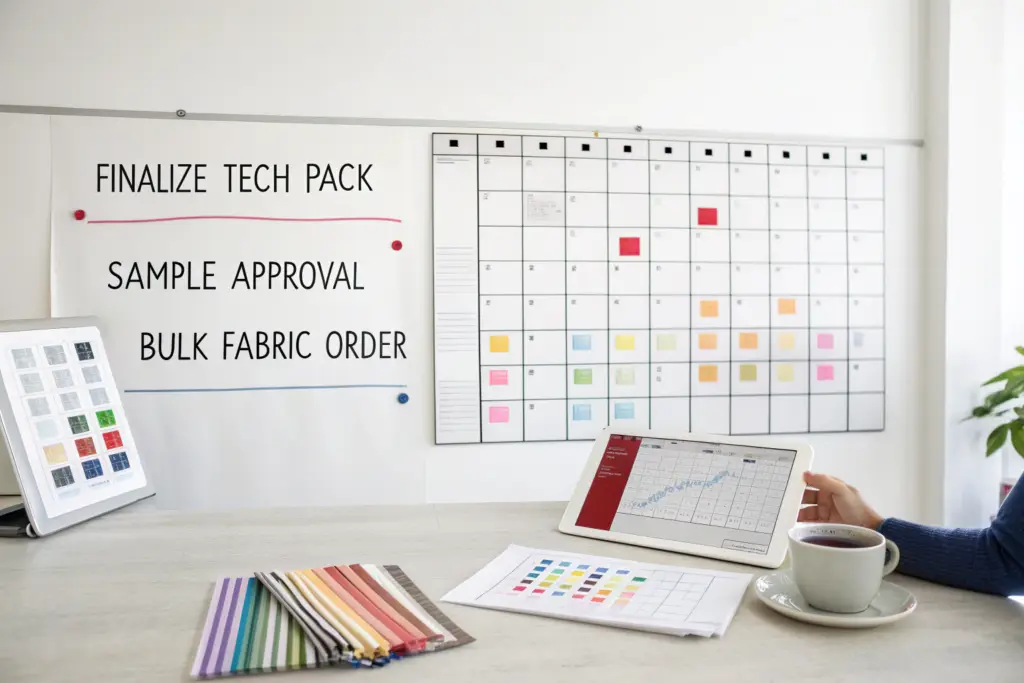
To hit the Summer 2026 selling window, you must finalize your tech pack by January, approve your pre-production sample by March, and have your bulk order shipped by early June at the absolute latest.
This timeline is not padded. It is based on the real-world lead times of fabric mills, the capacity constraints of quality factories, and the unpredictability of global shipping. At Shanghai Fumao, we work backward from your desired in-store date to build a production calendar that protects your selling season.
What Is a Realistic Production Timeline for Summer Coats?
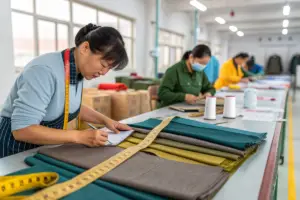
Let us walk through a realistic timeline for a custom trench coat order of 500 units. You should be briefing your supplier and finalizing your design in January. This includes locking in the fabric, the trims, and the measurements. The factory then sources the bulk fabric. Custom-dyed fabric can take 4 to 6 weeks to arrive. During this time, the factory develops your pre-production sample. This is the final sample before bulk cutting, and it must be perfect. You receive this sample in March. You review it, wear it, wash it, and give your final approval.
Upon your approval, the factory cuts the bulk fabric and begins sewing. For 500 units of a moderately complex trench coat, this can take 5 to 7 weeks. The goods are then finished, pressed, and inspected. A thorough AQL inspection adds a few days. The shipping method then determines the final leg. Air freight from Shanghai to a major US hub takes about 5 to 7 days. Sea freight takes 18 to 22 days to the West Coast, plus a few days for customs clearance and trucking. If you need the goods by June 1st, sea freight shipment must happen by early May. This timeline is tight but achievable with a well-organized factory. The critical point is that you cannot delay the January decision. Every week of delay in January compounds into a month of delay by June.
How Can a DDP Model Simplify the Entire Process?
Managing freight forwarders, customs brokers, and trucking companies across the Pacific Ocean is a full-time job with a steep learning curve. The alternative is a Delivered Duty Paid shipping model. Under DDP terms, your factory handles the entire logistics chain from their loading dock to your warehouse door. The price they quote you per unit includes the manufacturing cost, the export clearance, the ocean or air freight, the US customs duties, and the final mile trucking. You pay one price. You receive one shipment.
This model eliminates the risk of surprise costs. You know your exact landed cost before you place the order. This allows for accurate margin planning. It also simplifies accountability. If the shipment is delayed or damaged in transit, you have one point of contact to resolve the issue. The factory is responsible for the entire journey. This alignment of responsibility is powerful. It means we are as invested in the safe, timely arrival of your goods as you are. I strongly recommend that buyers new to overseas sourcing, and even many experienced ones, use a DDP model. It converts a complex, multi-vendor logistics puzzle into a simple line item on your purchase order. We manage this for the majority of our North American clients, and it consistently reduces their stress and protects their margins.
Conclusion
Sourcing the most popular women's trench coats for Summer 2026 is a process that rewards preparation and punishes haste. You now have a clear picture of the three winning silhouettes: the refined classic calf-length, the modern cropped boxy cut, and the statement-making transparent trench. You know how to vet a manufacturer by testing their specific trench coat expertise and verifying their certifications independently. You understand the premium materials that define a quality summer garment, from lightweight organic twills to natural corozo buttons. And you have a realistic timeline that protects your selling season, with a strong case for using a DDP shipping model to simplify the entire journey.
The brands that win in Summer 2026 are not the ones with the biggest budgets. They are the ones with the best processes. They source early. They partner deeply with their factory. They pay attention to the details that customers can see and feel. If you are ready to start the conversation about your summer trench coat program, I invite you to contact us at Shanghai Fumao. We are a factory that understands the unique demands of lightweight outerwear. Our Business Director, Elaine, can share our summer trench lookbook and walk you through our transparent, DDP sourcing process. You can reach her directly at elaine@fumaoclothing.com. Let's work together to get your coats on the rack before the season begins.