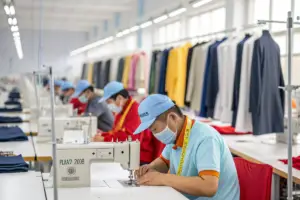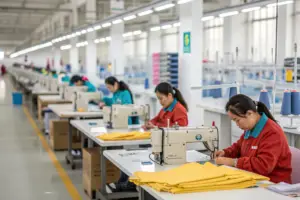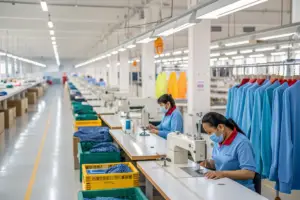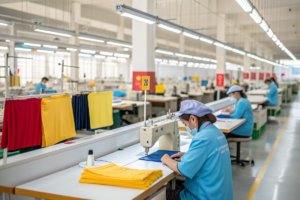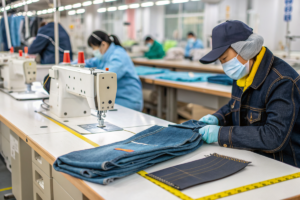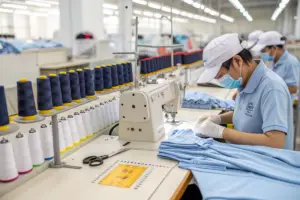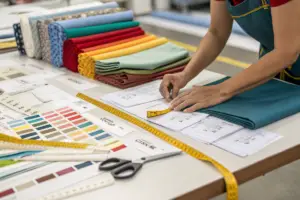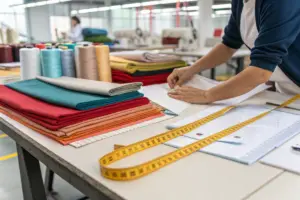
A few years ago, a startup brand owner flew to Shanghai to visit our factory. He had a clear vision. His brand was going to be known for a signature classic short with a unique pocket shape, a custom-woven waistband lining, and a proprietary blend of organic cotton and hemp. He sat down at our meeting table, pulled out a notebook filled with sketches, and said, "I want to place an ODM order." I paused. I looked at his sketches, then back at him. "You do not want ODM," I said. "You want OEM. And the difference is going to determine whether your brand exists as a unique entity or gets lost in a sea of identical products." He had spent six months designing his short, and he was about to hand that design to a model that would own it, not him. That conversation saved his intellectual property and set his brand on a completely different trajectory.
The real difference between ODM and OEM classic shorts services is a fundamental distinction of creative ownership, intellectual property rights, and development responsibility, where ODM provides a pre-designed, factory-owned product that the buyer can customize superficially with branding and minor modifications, while OEM manufactures a buyer-owned design from scratch according to detailed specifications, with the buyer retaining full creative control and intellectual property ownership of the garment design, pattern, and specifications.
At Shanghai Fumao, we offer both ODM and OEM services, and I walk brand owners through this distinction on a weekly basis. The choice between the two models is not about which is better in absolute terms. It is about which aligns with your brand strategy, your design capability, your budget, and your timeline. Choosing the wrong model can result in your unique design becoming a commodity, or your quick-turnaround product taking eighteen months to develop. Let me break down exactly what each model entails, and how to make the right choice.
What Exactly Does ODM Classic Shorts Service Include?
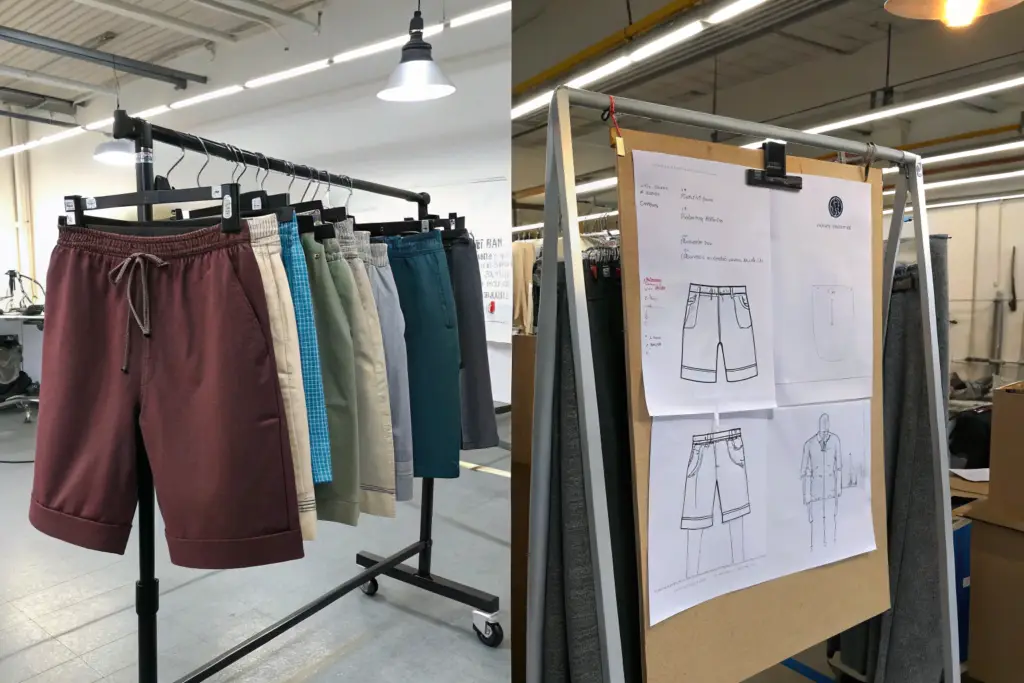
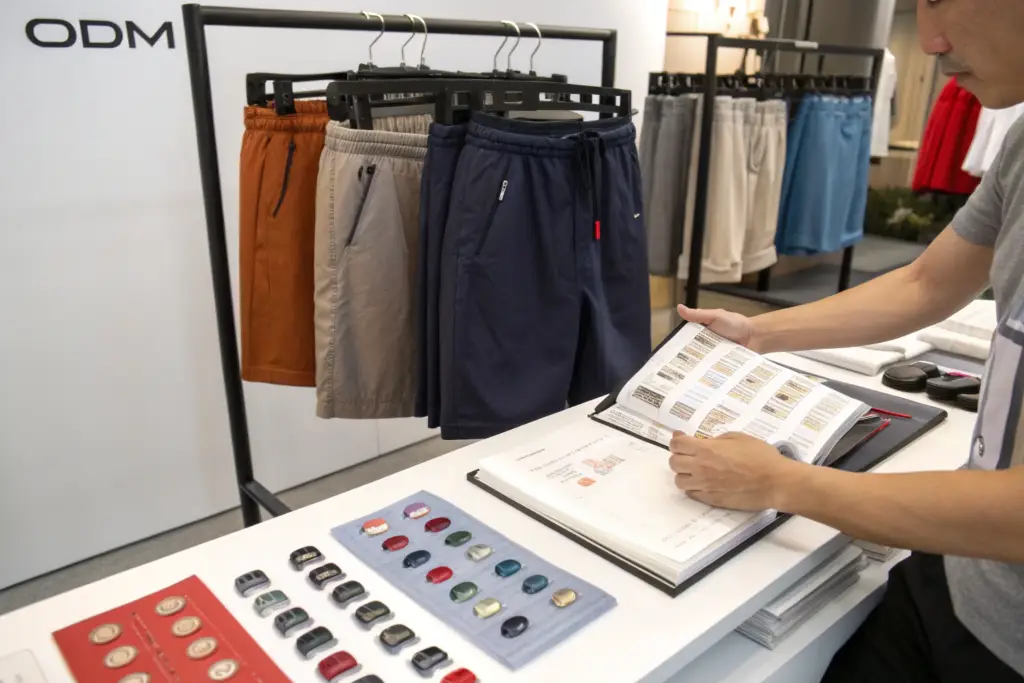
When a brand owner walks into an ODM showroom, they are walking into a library of pre-existing products. The factory has already designed, developed, and sampled a range of classic shorts. The fabric has been sourced. The pattern has been graded across a size run. The fit has been tested. The shorts hanging on the rack are not samples of what the factory can make. They are samples of what the factory has already made and is ready to produce for you, with your branding applied. The value proposition is speed and simplicity. The trade-off is uniqueness.
An ODM classic shorts service provides the buyer with access to a catalog of factory-designed, pre-developed shorts that have been fully sampled, fit-approved, and production-tested, allowing the buyer to select an existing style and customize it through fabric color selection, trim and hardware choices from a pre-approved options list, and the application of their own brand labels, hangtags, and packaging, with the factory retaining ownership of the design, the pattern, and all intellectual property.
How Much Customization Is Actually Possible Within ODM?
The word "customization" is used generously in ODM marketing materials, and it is important to understand exactly what it means in practice. In an ODM arrangement, you are customizing the surface layer of a product whose underlying architecture is fixed. The pattern, the fit, the construction method, and the basic silhouette are not yours to change. They belong to the factory.
What you can typically customize includes the fabric color, by selecting from the mill's available color card or requesting a lab dip match to your brand palette. You can select the button material and color from the factory's approved trim supplier catalog. You can choose the zipper tape color. You can apply your brand's woven label, care label, and hangtag. You can specify the folding and packaging method. Some ODM programs allow you to add a small custom detail, such as a branded embroidery on the back pocket or a printed logo on the inner waistband. What you generally cannot do is change the rise, the inseam length, the pocket shape, the fit block, or the fabric composition. Those elements are locked because they are the factory's development investment. This ODM manufacturing model is ideally suited for brands whose value proposition is their marketing, their brand story, and their distribution channel, not a unique product design. A brand that says, "We want to sell classic chino shorts with our logo, in our brand colors, to our customer base," is a perfect ODM candidate.
What Are the Timeline and Cost Advantages of Choosing ODM?
The single biggest advantage of ODM is speed to market. Because the product is already designed, sampled, and fit-approved, the development timeline collapses from months to weeks. A brand can walk into an ODM showroom on Monday, select a style on Tuesday, confirm custom color and trim choices on Wednesday, and have a branded sample in hand within two to three weeks. The bulk production can then begin immediately, with the entire process from first meeting to shipped product taking as little as eight to ten weeks.
The cost advantage is also significant. There are no pattern-making fees, no sampling fees for multiple rounds of development, and no fabric minimum order quantity penalties because the factory is running the fabric for multiple clients. The FOB price for an ODM short is typically lower than an equivalent OEM short because the factory has already amortized its development costs and has optimized the production line for that specific style. This speed to market fashion advantage makes ODM the preferred choice for brands that need to respond quickly to a trend, fill a seasonal gap in their line, or test a new product category without committing to full development investment. At Shanghai Fumao, our ODM classic shorts catalog covers a range of core silhouettes, fabrications, and fits that we have refined over years of production. When a brand partner needs shorts quickly and does not need a proprietary design, ODM is the right tool for that job.
What Does OEM Classic Shorts Manufacturing Require from the Buyer?
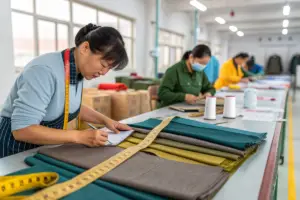
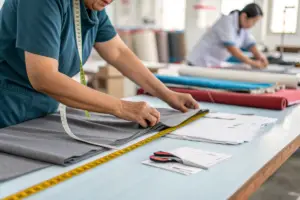
OEM manufacturing is a blank canvas. The factory brings its production capability, its machinery, its skilled labor, and its supply chain relationships. The buyer brings everything else: the design concept, the technical specifications, the fabric vision, the fit requirements. This model requires significantly more input from the buyer at every stage, but the output is a product that is genuinely and legally the buyer's creation. The shorts that come off the production line exist nowhere else in the world.
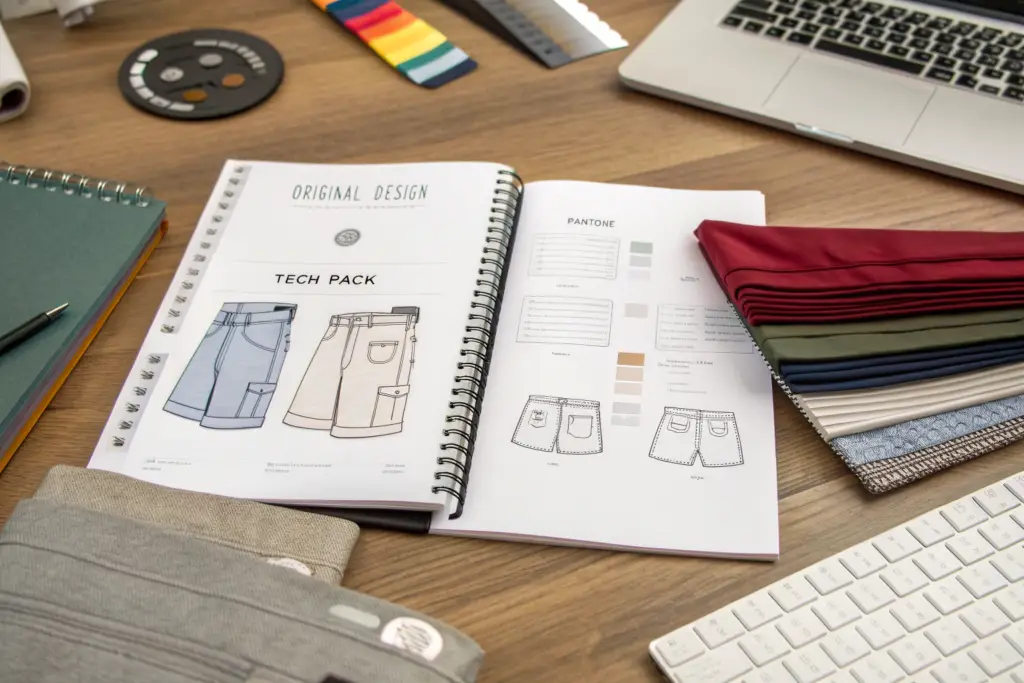
OEM classic shorts manufacturing requires the buyer to provide a complete and precise set of input documents including a detailed tech pack with construction callouts, a measurement specification sheet with tolerances, a bill of materials specifying every component from the shell fabric to the sewing thread, and an approved reference sample, with the buyer retaining full ownership of the pattern, the design, and all intellectual property, while the factory acts as a pure production partner executing the buyer's specifications.
What Technical Documentation Must the Buyer Provide for OEM?
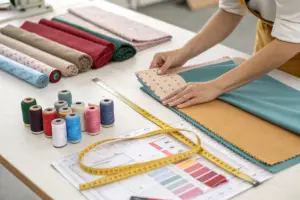
The success of an OEM project depends almost entirely on the quality of the input documentation. The factory's job is to execute. If the specification is vague, the execution will be an interpretation, and that interpretation may not match what was in the buyer's head. The most important document is the tech pack. A complete tech pack for classic shorts includes a technical flat sketch showing the front and back views with all construction details called out, a bill of materials listing every fabric, trim, and notion with exact specifications and preferred suppliers, a graded measurement chart with tolerances, a colorway sheet with Pantone references, and labeling and packaging instructions.
Beyond the tech pack, the buyer should provide reference samples. A reference sample can be a competitor's short that the buyer wants to replicate or improve upon, or a sample from a previous production run that represents the fit standard. If the buyer is developing a completely original design, they should be prepared to invest in multiple sampling rounds. The first sample from the factory will rarely be perfect. The buyer must inspect it, provide clear feedback, and iterate. This OEM manufacturing process requires a level of engagement and technical knowledge that not all brand owners possess. At Shanghai Fumao, we support our OEM partners through this process with technical guidance, but the creative direction and the final approval authority rests entirely with the buyer.
Who Owns the Pattern and Intellectual Property Under OEM?
This is the single most important legal distinction between ODM and OEM, and it is the reason many brands choose OEM despite the higher cost and longer timeline. Under an OEM arrangement, the buyer owns the pattern, the design, and all intellectual property. The factory is a work-for-hire producer. The pattern that the factory creates for the buyer is the buyer's property. If the buyer decides to move production to a different factory, they can take their pattern and their specifications with them.
The purchase order or manufacturing agreement should explicitly state this ownership. A clause reading, "All patterns, designs, specifications, and intellectual property developed for this order shall remain the sole and exclusive property of the Buyer," provides legal clarity. Without this clause, intellectual property ownership can become ambiguous, especially under Chinese contract law where the default assumption can differ from Western expectations. This intellectual property in fashion protection is the primary strategic reason to choose OEM. A brand that has invested in developing a unique short silhouette, a proprietary pocket system, or a signature fit block must manufacture under an OEM model to protect that investment. At Shanghai Fumao, we respect OEM intellectual property absolutely. We never share, repurpose, or show one client's designs to another client. Our OEM clients' patterns are stored securely, and they can request them at any time.
How Do You Choose Between ODM and OEM for Your Brand?
I have seen brands choose the wrong model and suffer for it. A premium brand with a genuinely innovative design chose ODM to save money, and within six months, their exact short was being sold under three different labels because the factory owned the design and marketed it to other buyers. A basics brand with no design differentiation chose OEM, spent nine months and forty thousand dollars on development, and ended up with a product that looked identical to an ODM short they could have ordered in eight weeks for half the cost. The choice between ODM and OEM is a strategic decision that should be driven by an honest assessment of your brand's value proposition and operational capability.
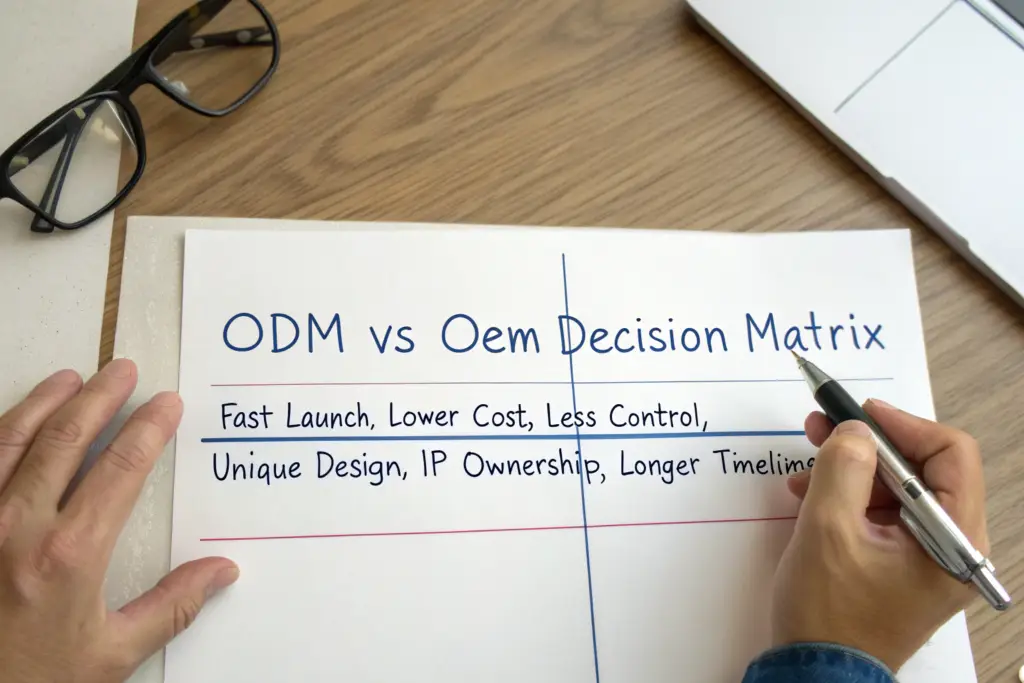
The decision between ODM and OEM should be based on a clear analysis of four factors: the source of your brand's competitive advantage, whether it is design uniqueness or marketing and distribution strength; your budget and timeline constraints, with OEM requiring significantly more of both; your internal design and technical capability, because OEM demands that you can produce a professional tech pack; and your long-term brand strategy, specifically whether owning your product designs is central to your brand's exit value and growth trajectory.
When Is ODM the Clearly Better Choice for a Brand?
ODM is the right choice when speed, cost, and simplicity are the primary drivers, and when the brand's value proposition does not depend on a proprietary product design. This describes a large segment of the apparel market, including many successful and profitable brands.
A brand that sells classic shorts through Amazon, where the customer is buying based on price, reviews, and convenience rather than a unique design, is an ideal ODM candidate. A brand that is launching a new product category and wants to test the market before investing in original development should use ODM. A brand whose strength is influencer marketing and social media, where the product is a vehicle for the brand lifestyle rather than the brand's raison d'être, can thrive with ODM. A startup brand with limited capital that needs to get product to market quickly to generate cash flow should start with ODM. The fashion brand strategy decision to use ODM is not a compromise. It is a strategic allocation of resources toward the areas where the brand actually creates value. At Shanghai Fumao, many of our long-term ODM partners are highly successful businesses that understand exactly what they are buying and why it works for their model.
When Does OEM Become a Strategic Necessity?
OEM becomes necessary when the product itself is the brand's intellectual property and competitive moat. If a brand's entire positioning is built around a specific, identifiable product design, that design must be protected, and ODM does not protect it.
A premium brand that has developed a unique short silhouette with a distinctive pocket shape, a proprietary waistband construction, or a custom-developed fabric must manufacture under OEM to maintain exclusivity. A brand that plans to sell to major department stores, where buyers demand exclusivity and will not purchase a product that can appear under a competitor's label, needs OEM. A brand that is building toward an eventual acquisition, where the acquirer will value the intellectual property portfolio, must have all of its product IP legally owned and documented. A brand that has a dedicated design team producing original seasonal collections should use OEM to protect the output of that team's work. This brand intellectual property protection consideration is especially important for brands operating in the premium and luxury segments, where the design is the primary value driver. At Shanghai Fumao, our OEM partners include brands whose entire identity is their product design. They invest in development because they know that their design is their asset, and they need a manufacturing partner who treats it that way.
Can You Start with ODM and Transition to OEM Later?
One of the most common conversations I have with startup brand owners starts with them apologizing for not being ready for OEM. They feel that choosing ODM is somehow a lesser option, a sign that they are not yet a serious brand. I always tell them the same thing. Many of our largest and most successful OEM partners started their relationship with us as ODM clients. They used ODM to enter the market, prove their concept, build their customer base, and generate the capital they needed to invest in original design. The transition from ODM to OEM is not a sign of past compromise. It is a sign of growth and a well-planned brand development strategy.
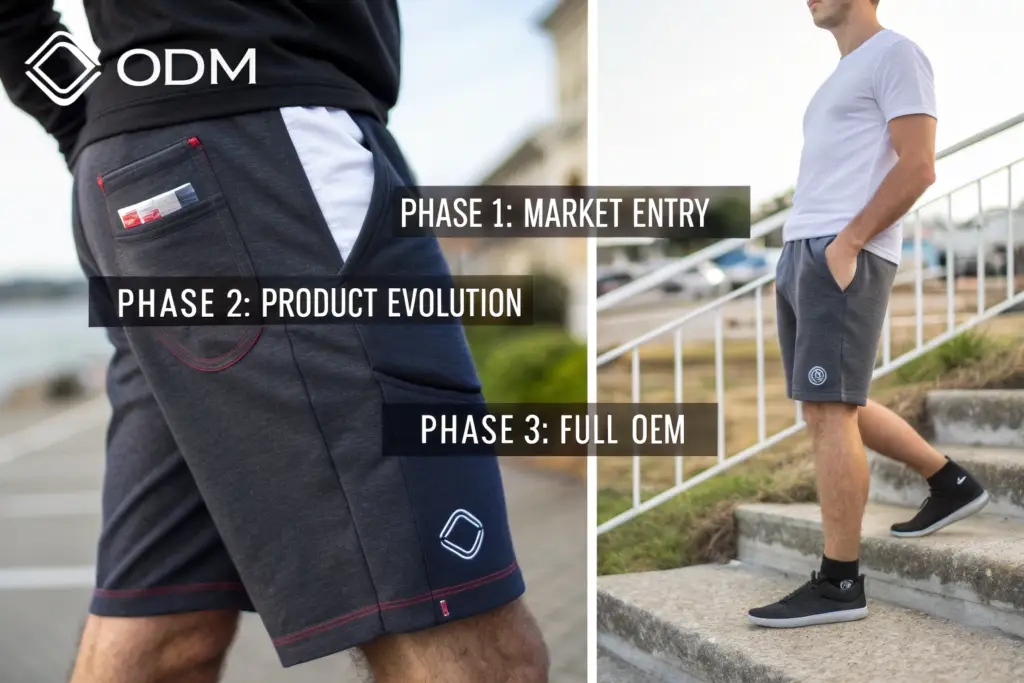
The transition from ODM to OEM is a natural growth trajectory for successful brands, typically following a phased approach that begins with pure ODM for market entry and cash flow generation, moves to a hybrid model where the brand modifies existing ODM styles with unique design elements, and culminates in full OEM when the brand has the design capability, financial resources, and market validation to invest in a proprietary product line that can be protected as intellectual property.
What Does a Hybrid ODM-OEM Approach Look Like in Practice?
The transition does not have to be a cliff. Many brands operate a hybrid model for years, running their core basics through ODM for efficiency while developing their hero, signature products through OEM. This allows the brand to maintain a full product assortment while strategically investing in the products that define its identity.
A practical example is a brand that uses ODM for its solid-color classic chino shorts, which are a replenishment basic, while using OEM for its printed, embroidered, or otherwise uniquely designed statement shorts that are the brand's marketing focus. The ODM products provide the steady revenue and the production volume. The OEM products provide the brand differentiation and the higher margins. This brand growth strategy allows the brand to scale without overextending its development resources. At Shanghai Fumao, we support brands that operate this hybrid approach seamlessly. We can run an ODM production line for a core chino short and an OEM development process for a signature cargo short simultaneously, with both receiving the same quality control and communication standards. The buyer's experience is unified, even though the underlying service models are different.
How Should a Brand Plan the Transition Timeline?
The transition from pure ODM to an OEM or hybrid model should be driven by business metrics, not by an arbitrary calendar or a feeling of needing to be more "legitimate." The key indicators that a brand is ready to begin investing in OEM include consistent profitability on existing ODM products, a clear understanding of the target customer and what they will pay for unique design, an internal design capability or a relationship with a freelance designer who can produce professional tech packs, and sufficient cash reserves to fund multiple sampling rounds and higher minimum order quantities without disrupting the core ODM business.
The first OEM project should not be the brand's entire seasonal line. It should be a single product, the hero short that will define the brand's design identity. The brand should expect to invest between three and six months in development and between $3,000 and $10,000 in sampling and pattern costs, depending on complexity. This investment should be treated as a capital expenditure that builds a long-term asset, the pattern and IP, not as a one-time cost that must be recovered on the first production run. This product development planning approach to the transition ensures that the brand does not overextend itself financially or operationally. At Shanghai Fumao, we counsel our ODM partners through this transition at the right pace for their specific business. We do not push brands into OEM before they are ready, because a failed OEM project is costly and demoralizing. We want our partners to succeed with their original designs, and that means waiting until the business fundamentals support the investment.
Conclusion
The difference between ODM and OEM classic shorts services is not a technicality buried in a procurement manual. It is a fundamental strategic choice that determines who owns the product, who controls the design, how fast you can move, and how much you will spend. ODM offers speed, cost efficiency, and simplicity. You select from a catalog of pre-developed styles, apply your branding, and go to market in weeks rather than months. The trade-off is that you do not own the design, and the same short may appear under other labels. OEM offers creative control, design exclusivity, and intellectual property ownership. You develop a unique product from your own specifications, and the factory executes your vision. The trade-off is a longer timeline, a higher development cost, and a greater requirement for your own design and technical capability.
The right choice depends on your brand's value proposition. If your brand competes on marketing, storytelling, and customer experience, ODM may be the perfect vehicle. If your brand competes on product design and innovation, OEM is not optional; it is existential. And for many brands, the answer evolves over time, beginning with ODM for market entry and transitioning to a hybrid or full OEM model as the business matures and the brand's design identity solidifies.
If you are evaluating which model is right for your classic shorts program, or if you are ready to begin the transition from ODM to OEM and need a manufacturing partner who understands both models intimately, we are here to help. At Shanghai Fumao, we offer transparent, clearly defined ODM and OEM services, and we will help you choose the path that aligns with your brand strategy and your growth stage. Contact our Business Director, Elaine, at elaine@fumaoclothing.com. Let's build your product the right way, whether that means starting with our catalog or starting with your sketchbook.