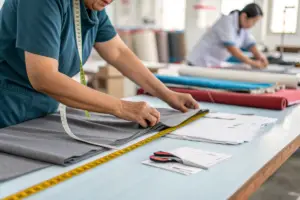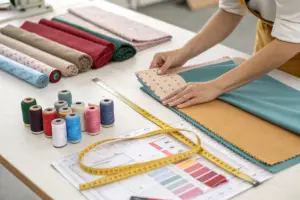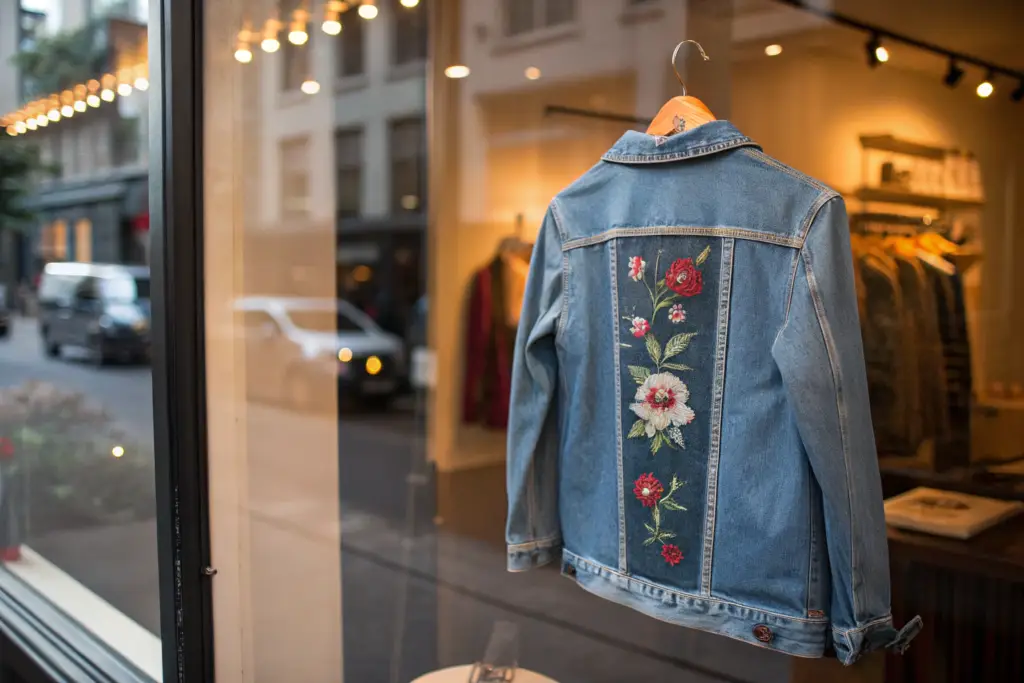
A boutique owner from Vancouver told me last March that she had not sold a basic denim jacket in over a year. The classic trucker, medium wash, standard fit, was dead on her shelves. But a jacket with an oversized silhouette, a hand-embroidered back panel, and a limited-edition hangtag sold out in four days at full price. She reordered immediately. The reorder sold out just as fast. She told me, "My customer already owns a denim jacket. Probably two or three. She is not walking into my store looking for a basic. She is hunting for something she has never seen before. Something that feels like a discovery." That word, discovery, captures the entire trend.
Rare style denim jackets are seeing a resurgence in North American boutiques because the consumer's relationship with denim has fundamentally shifted. Denim is no longer a basic, utility category defined by price and durability. It has become a canvas for self-expression, artisanal craftsmanship, and limited-edition storytelling. The boutique customer is seeking individuality, visible handwork, and the social currency of owning something that is not widely available. The rare style denim jacket, with hand-embroidery, custom patchwork, unique washes, and collaborative designer details, delivers exactly this value proposition. The resurgence is not about denim. It is about rarity.
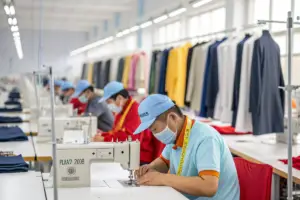
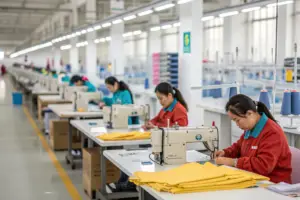
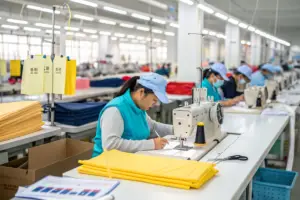
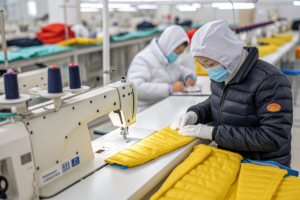
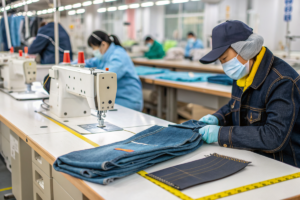
The data from our production lines confirms this shift. Three years ago, 80% of our denim jacket orders were basic styles in standard washes. Today, over 60% are rare styles requiring specialized finishing, handwork, or small-batch production. The unit volumes per style are smaller. The design complexity is higher. The retail price points are significantly higher. The boutiques are ordering fewer units but making more margin per unit. The economics of rare style denim are transforming the boutique business model. At Shanghai Fumao, we have invested in the specialized washing, hand-finishing, and small-batch production capabilities required to meet this demand. Let me explain what is driving the resurgence and what it means for your boutique.
What Defines a "Rare Style" Denim Jacket in the Current Boutique Market?
The term "rare style" is not a technical specification. It is a market positioning. A rare style denim jacket is defined not by its material composition, but by its differentiation from the mass-market standard. It is a jacket that the consumer cannot find at a department store, a fast fashion chain, or an online basics retailer. It possesses at least one, and usually several, attributes that make it scarce and distinctive.
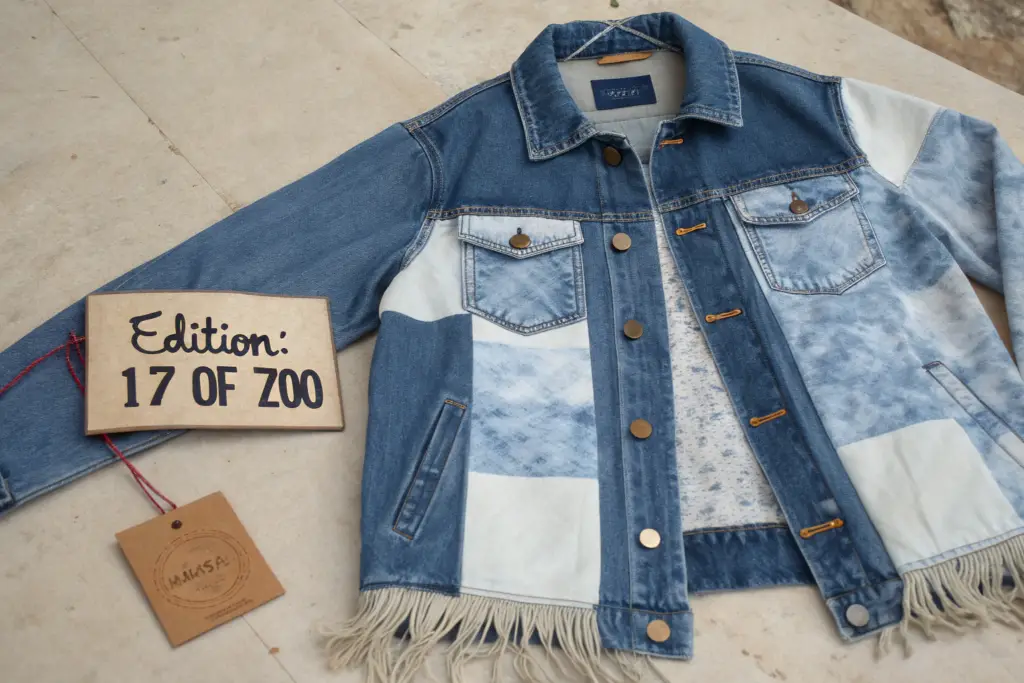
A rare style denim jacket in the current boutique market is defined by a combination of limited-edition production, artisanal finishing techniques, and unconventional design details. The silhouette is often oversized, cropped, or deconstructed. The wash is unique, a hand-applied marble dye, a natural indigo dip, a months-long sun-fading process. The surface is embellished with hand-embroidery, patchwork, visible mending, or custom hand-painted artwork. The jacket is numbered as part of a limited edition, often 200 units or fewer. The production story, the name of the artisan who embroidered the back panel, the name of the village where the natural indigo was harvested, is part of the product's value.
The rare style denim jacket is not just a garment. It is a wearable artifact. It carries a narrative. The boutique customer is buying the story as much as the jacket. The rarity is the engine of the purchase decision. The customer knows that if they do not buy it now, it will not be available next week.
How Is "Small Batch" Production Influencing Perceived Value in Boutiques?
Small batch production is the operational foundation of the rare style trend. A factory that produces 10,000 units of a single denim jacket style is producing a commodity. A factory that produces 200 units of a style, each with slight variations due to the hand-finishing process, is producing scarcity.
The boutique customer has been trained by the mass market to expect constant availability. If they see a jacket they like at a large retailer, they can wait for a sale, confident their size will still be in stock. The small batch model breaks this consumer behavior. The boutique owner communicates to the customer, "We received twelve of these jackets. Two are already sold. When they are gone, there are no more." The scarcity is real, not a marketing fabrication. The customer learns to buy at full price, immediately, or risk missing out entirely.
The small batch model also elevates the boutique's brand. The boutique becomes a destination for discovery, not just a place to buy clothes. The customer visits more frequently, not knowing what rare pieces might have arrived since their last visit. The treasure hunt experience drives foot traffic and customer engagement.
A boutique owner in Portland switched from ordering basic denim jackets in quantities of 48 units to ordering rare style jackets in quantities of 12 units, with four different styles each season. Her denim jacket revenue increased by 40%. Her full-price sell-through on denim jackets went from 65% to 95%. The small batch model eliminated markdowns and created urgency. She told me, "My customers now text me when they see a new jacket on my Instagram. They want to reserve it before it hits the floor. I have never seen this level of excitement for denim."
Why Are "Artist Collaborations" on Denim Outselling Traditional Branded Pieces?
Artist collaborations inject an external creative credibility into the garment. A denim jacket with a hand-painted back panel by a recognized street artist or textile artist carries the artist's reputation and following. The artist's audience becomes a built-in customer base for the jacket. The collaboration creates a cross-pollination of audiences that benefits both the artist and the boutique.
The collaboration also creates a deeper story than a traditional branded piece. A branded jacket says, "This is the brand's design." An artist collaboration jacket says, "This is a unique work created by a specific named artist, in a limited quantity, for this specific boutique or brand." The specificity of the story drives the perceived value.
The economics work for all parties. The artist receives a fee or a royalty. The factory produces the base jacket and may facilitate the embellishment. The brand or boutique sells the jacket at a significant premium, often two to three times the price of a non-collaborated jacket. The consumer receives a wearable piece of art with a verifiable provenance.
A boutique owner in Austin collaborated with a local Texas textile artist to create a limited run of 50 denim jackets featuring the artist's hand-embroidered desert landscape scenes. The jackets retailed for $450, compared to the boutique's standard denim jacket price of $180. The 50 jackets sold out in two days, primarily through the artist's Instagram following. The boutique owner told me, "Half the customers who bought the jacket had never been in my store before. They came for the artist. They will come back for the next collaboration."
What Specific Washing and Distressing Techniques Are Driving This Trend?
The wash is the soul of a denim jacket. A basic, uniform dark wash communicates mass production. A complex, multi-layered wash with visible handwork communicates rarity and craft. The washing and distressing techniques that define the current rare style trend are not new inventions. Many are based on traditional methods that were abandoned by large manufacturers because they were too slow, too inconsistent, and too labor-intensive for mass production. Those very qualities, slow, inconsistent, labor-intensive, are what make them perfect for the boutique rare style market.
The washing and distressing techniques driving the rare style trend include natural indigo rope dyeing that creates unique, irregular fading patterns, hand-sanding and hand-distressing that places wear marks exactly where they look most natural on the individual jacket, mineral washes and enzyme washes that create cloudy, marble-like surface effects, and sun-fading processes that take weeks to achieve a genuinely aged appearance. These techniques are applied to small batches, often individually, resulting in each jacket being subtly different from the next. The variation is not a quality defect. It is the proof of handcraft.
The factory that offers these techniques must have a skilled wash house team, not just a row of automated washing machines. The workers must understand how different denim weights and weaves respond to different treatments. The hand-sanding technician must know how to create a natural-looking wear pattern on the elbows, the collar, and the pocket edges, without creating a hole. The knowledge is artisanal, not algorithmic.
What Is "Sun-Fading" and Why Does It Command a Premium Price?
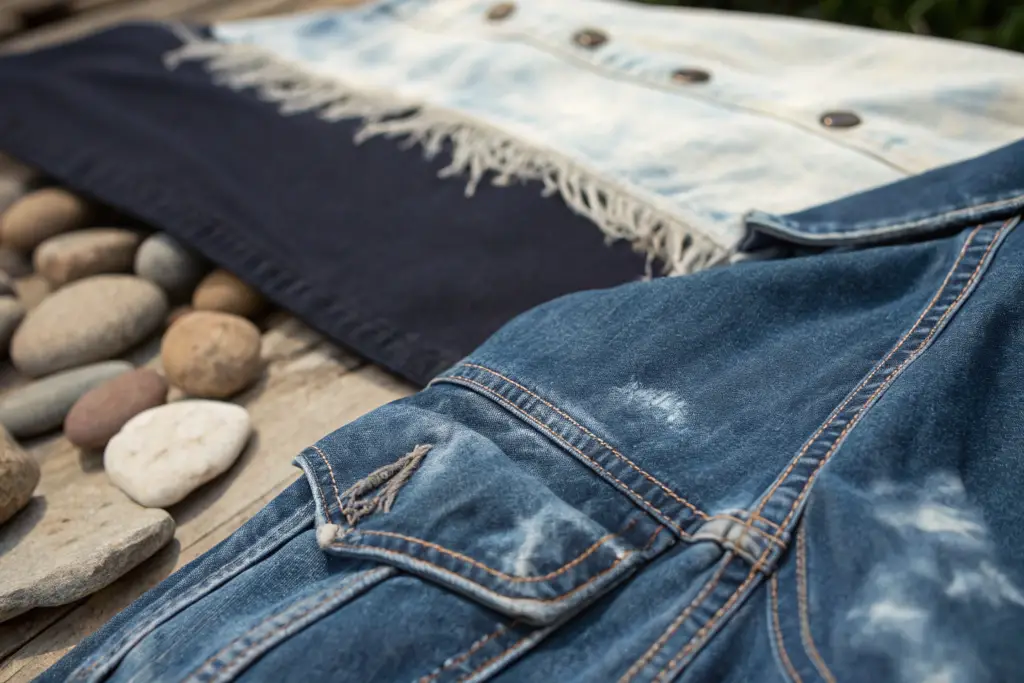
Sun-fading is the slowest and most artisanal of denim distressing techniques. Finished denim jackets are placed on mannequins or laid flat on racks in direct sunlight, often on rooftops or in open yards. They are left for days or weeks, depending on the desired level of fade. The natural UV radiation from the sun gradually breaks down the indigo dye on the exposed surfaces, creating a genuinely sun-bleached appearance. The fading is uneven, stronger on the shoulders and upper back where the sun hits most directly, softer on the under-sides of the sleeves and the side panels. The effect is organic and impossible to replicate perfectly with chemical or mechanical methods.
Sun-fading commands a premium price for two reasons. First, the time cost is enormous. The jacket occupies space and inventory for weeks, tying up working capital. Second, the result is genuinely unique. No two sun-faded jackets are identical. The cloud cover, the angle of the sun, the specific position of the jacket on the rack, all contribute to a one-of-a-kind fade pattern. The consumer is buying a garment with a natural history, not a machine-applied finish.
A boutique brand client produces a limited edition of 100 sun-faded denim jackets each summer. The jackets are placed on a rooftop rack at our partner wash house in Guangdong, where they fade for three weeks under the subtropical sun. Each jacket is photographed individually for the brand's website because each fade pattern is unique. The jackets sell for $380, a $200 premium over the brand's standard washed denim jacket. The entire edition sells out within a week of launch. The sun-fading story is the primary driver of the purchase.
How Are "Upcycled" and "Reconstructed" Techniques Reducing Material Costs While Increasing Value?
Upcycled denim jackets are constructed from vintage or deadstock denim garments that are deconstructed and reassembled into new designs. A jacket might be made from panels cut from three different pairs of vintage jeans, combining different shades of indigo, different wear patterns, and different levels of distressing into a single, patchwork garment.
The material cost for an upcycled jacket can be lower than for a new-denim jacket. Vintage jeans can be sourced in bulk from textile recyclers at a low cost per unit. The factory's cost is in the labor-intensive deconstruction, sorting, cutting, and reassembly, not in the raw material.
The perceived value to the consumer, however, is higher than a new-denim jacket. The upcycled jacket carries a sustainability narrative. It saved garments from landfill. It is a one-of-a-kind piece. It has a history. The consumer is willing to pay a premium for these attributes, even though the material cost was lower.
The margin structure on upcycled denim is highly favorable for the boutique. The FOB cost may be comparable to or slightly higher than a new-denim jacket due to the labor intensity, but the retail price can be 50% to 100% higher because of the unique, sustainable, and artisanal positioning. The boutique captures significantly more margin per unit.
A boutique owner in Brooklyn sells upcycled denim jackets made from vintage American workwear. The jackets are produced in small batches of 30 units. Each jacket is slightly different depending on the vintage jeans available in that batch. The jackets retail for $320. The FOB cost is $55. The margin is exceptional. The boutique owner markets the jackets with the story of each batch: "Batch 7 was made from 1940s railroad worker jeans found in a warehouse in Pennsylvania." The story sells the jacket at full price.
Why Are North American Boutique Buyers Prioritizing These Styles for Their Stores?
The boutique buyer is the gatekeeper between the factory and the consumer. The buyer's job is to curate a selection of products that will sell through at full price, attract customers into the store, and differentiate the boutique from every other store on the street and every website on the internet. The rare style denim jacket is fulfilling all three of these buyer objectives simultaneously, which is why it is being prioritized.
North American boutique buyers are prioritizing rare style denim jackets because they solve the boutique's existential problem: how to compete with e-commerce giants and fast fashion chains. A basic denim jacket is a commodity. The consumer can buy it anywhere, and will usually buy it where it is cheapest. A rare style denim jacket is an exclusive. The consumer can only buy it at the boutique that carries it. The rare style jacket drives foot traffic, generates social media visibility, and sells at full price with a high margin. It is a strategic competitive weapon for the independent boutique.
The boutique buyer is also responding to a genuine shift in consumer taste. The minimalist, basics-driven aesthetic that dominated the 2010s has given way to a maximalist, self-expression-driven aesthetic. The consumer wants clothing that communicates identity, not clothing that blends in. The rare style denim jacket is a perfect vehicle for this shift.
How Does the "Instagrammable" Nature of Rare Denim Drive Foot Traffic?
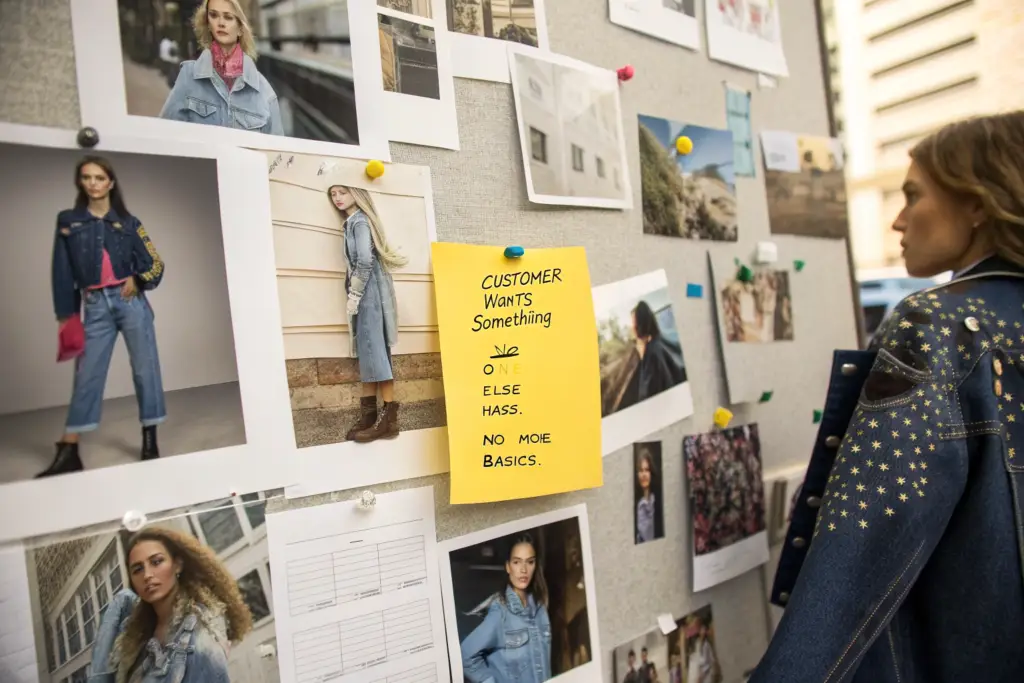
A rare style denim jacket is designed to be photographed. The unique wash, the hand-embroidery, the oversized silhouette, the visible mending, all create a visually striking image that stands out in an Instagram feed or a TikTok video. The consumer who buys the jacket photographs themselves wearing it and shares the image with their followers. The image acts as free advertising for the boutique.
The boutique owner can amplify this effect by creating an in-store environment that encourages photography. A dedicated "denim wall" displaying the rare jackets as art pieces. A well-lit mirror with the boutique's branded backdrop. A simple encouragement from the sales associate: "If you love it, take a photo. Tag us when you post." The boutique becomes a content creation studio as well as a retail space.
The Instagram effect drives foot traffic from consumers who saw the jacket on a friend or an influencer and want to see it in person. The consumer enters the store with the specific intent of finding that jacket. While they are in the store, they discover other products. The rare denim jacket is the magnet that pulls the customer through the door.
A boutique owner in Toronto posts a photo of each new rare denim jacket arrival on her store's Instagram. The photos are styled, but not overly produced. They show the jacket on a mannequin, with a close-up of the unique detail. The posts consistently generate high engagement. Customers comment, "Holding this for me!" or "Coming in tomorrow to see it." The Instagram channel has become the primary driver of foot traffic for the store, and the rare denim jackets are the highest-performing content category.
What Price Point Multipliers Are Boutiques Achieving with Rare Versus Basic Denim?
The price point multiplier is the most compelling reason for the boutique buyer's prioritization of rare style denim jackets. A basic denim jacket from a mid-tier brand retails for approximately $120 to $180. The boutique's wholesale cost is $50 to $70, yielding a gross margin of approximately 55% to 60%. The margin is healthy, but the absolute dollar profit is modest.
A rare style denim jacket with hand-finishing, a unique wash, and a limited-edition narrative retails for $280 to $450. The boutique's wholesale cost is $80 to $130. The gross margin percentage is similar or slightly higher, 60% to 65%. But the absolute dollar profit per unit is dramatically higher. A basic jacket generates $70 to $110 in gross profit. A rare jacket generates $170 to $290 in gross profit.
The boutique that sells 50 basic denim jackets a season generates $3,500 to $5,500 in gross profit from the category. The boutique that sells 30 rare denim jackets a season generates $5,100 to $8,700 in gross profit. The rare model generates more total profit from fewer units, with less inventory risk, less storage space, and less markdown liability. The boutique buyer who does this math will always choose the rare model over the basic model.
A boutique owner in Chicago analyzed her denim jacket sales data. She had sold 60 basic jackets the previous year, generating $4,800 in gross profit. She switched to a rare style model, selling 25 jackets at an average retail of $340. Her gross profit was $5,500. She told me, "I worked less, risked less, and made more. I will never go back to basics."
How Can a Boutique Buyer Authenticate a "Rare" Claim from a Supplier?
The word "rare" is a marketing claim. Like all marketing claims, it can be fabricated. A supplier can print "Limited Edition" on a hangtag, attach it to a standard, mass-produced denim jacket, and sell it at a premium price to an unsuspecting boutique buyer. The buyer must have the tools to distinguish a genuine rare style jacket from a mass-produced jacket with a misleading label.
Authenticating a supplier's rare claim requires verifying three elements: the production quantity, the uniqueness of the finishing, and the exclusivity of the distribution. Ask the supplier for a production quantity certificate or a signed declaration stating the exact number of units produced in that specific style and wash. Ask for photographic or video evidence of the hand-finishing process being performed on your specific order. Ask about distribution exclusivity: is this exact jacket being sold to any other boutique in your geographic territory? A genuine rare style supplier will provide this verification readily. A mass producer posing as a rare specialist will deflect or provide vague answers.
The authentication process is not about distrust. It is about verifying the value proposition for which the boutique is paying a premium. A boutique buyer paying $90 FOB for a "limited edition hand-finished" jacket has the right, and the responsibility, to verify that the jacket is genuinely limited and genuinely hand-finished.
What Documentation Proves a Style Is Genuinely "Small Batch"?
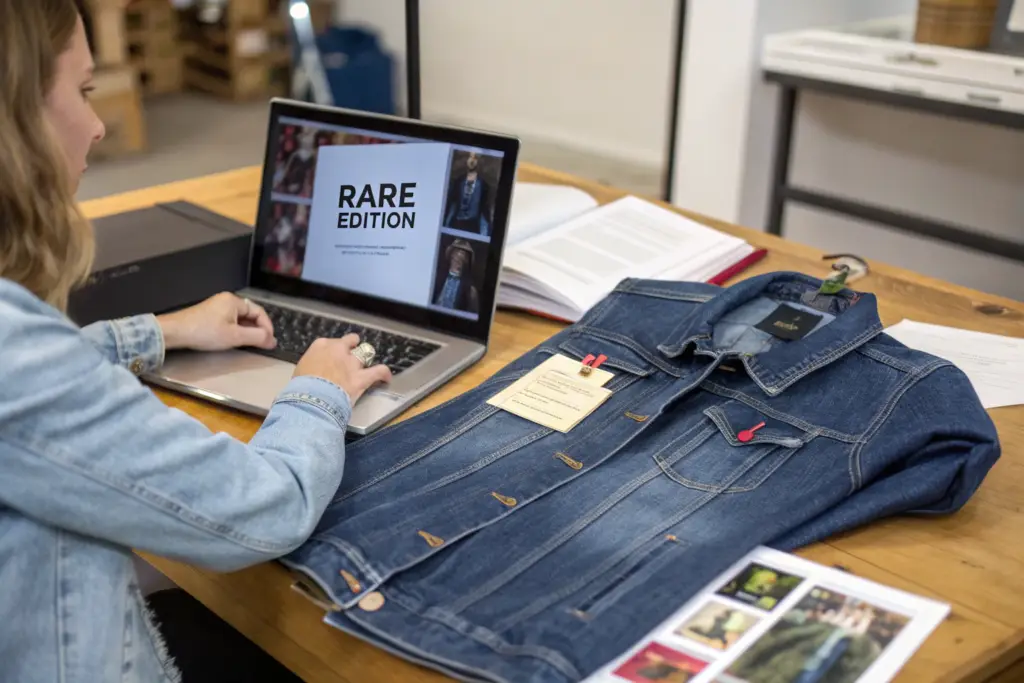
The most direct proof of a small batch is a production order confirmation or a cutting ticket that shows the total quantity produced. The supplier can provide a redacted copy of the internal production order that shows the style number and the quantity: "Style #DJ-2406: 150 units." The quantity on the production order should match the quantity on the boutique's purchase order, within a small overage allowance for quality control replacements.
A signed and stamped "Certificate of Limited Production" from the factory is a more formal document. It states, "Shanghai Fumao Garment Co., Ltd. certifies that Style #DJ-2406, the Hand-Embroidered Indigo Denim Jacket, was produced in a single production run of 150 units. No further production of this exact style will occur." This certificate is a legal representation by the factory. A reputable factory will not sign it if it is untrue.
The numbered edition tag on the garment itself is the consumer-facing proof. The tag should state the individual unit number and the total edition size, "47 of 150." The numbering must be consistent with the production quantity. If the tag says "47 of 150" but the production records show 5,000 units were produced, the tag is a fraud. The boutique buyer should spot-check the numbering against the production records.
We provide a Certificate of Limited Production and a numbered edition tag for every genuine small-batch order. The certificate and the tag are our representations to the boutique and to the end consumer. We stand behind them.
How Can You Verify That a Wash Is Truly "Hand-Applied" and Not a Mass Template?
A mass-produced "distressed" denim jacket is distressed by automated machines using rigid templates. The wear marks are identical on every jacket. The whiskering on the lap is the same shape and intensity. The distressing on the collar is in the same location. The uniformity is the proof of mass production.
A genuinely hand-distressed denim jacket will show variation from unit to unit. The wear marks will be slightly different on each jacket because a human hand applied them, and a human hand cannot replicate a pattern with machine precision. The buyer should ask the supplier to provide photographs of multiple units from the same production batch, showing the same details. If the distressing patterns are identical across units, the wash is templated, not hand-applied.
Video evidence is even more powerful. A short video of a wash technician hand-sanding the lap of a jacket, or hand-applying a mineral wash with a spray gun, is proof that the finishing process involves human craft. The supplier should be able to provide this video, filmed on their production floor, showing the actual garments being finished.
A boutique buyer visited our wash house partner during a trip to China. She watched the hand-sanding technicians at work, each one creating subtle, unique wear patterns on the jackets. She told me, "Now I understand the value. I can tell my customers, 'I saw the hands that made your jacket.' That story is worth the premium price." The buyer who has seen the handwork can sell it authentically to the consumer.
Conclusion
The resurgence of the rare style denim jacket in North American boutiques is not a fleeting fashion trend. It is a structural shift in the denim market that reflects a deeper change in consumer values. The consumer who once bought a basic denim jacket as a wardrobe staple now buys a rare denim jacket as a form of self-expression, a wearable piece of art, and a social signal of individuality. This consumer is willing to pay a significant premium for genuine rarity, visible handcraft, and a compelling production story.
We have defined the elements that constitute a rare style in the current market: the limited edition, the artisanal finishing, the unconventional silhouette, and the collaborative narrative. We have explored the specific washing and distressing techniques, sun-fading, hand-sanding, mineral washes, that create the unique aesthetic that mass production cannot replicate. We have examined the boutique buyer's economic calculus, which shows that rare style jackets generate higher total profit from fewer units with less risk. And we have provided the authentication tools that a buyer needs to verify that the rare claim is genuine and not a marketing fabrication.
The rare style denim jacket is the ideal product for the independent boutique. It is differentiated. It is high-margin. It drives foot traffic and social media engagement. It cannot be found on Amazon or in a department store. It is a competitive moat.
At Shanghai Fumao, we have embraced the rare style denim movement. We have invested in our wash house partnerships, our hand-finishing capabilities, and our small-batch production systems. We are producing limited-edition denim jackets with hand-embroidery, natural indigo washes, and artist collaborations for boutiques across North America. We understand that the boutique's survival depends on offering products that cannot be commoditized.
If you are a boutique buyer looking to develop a rare style denim jacket program, or if you have a concept for a limited-edition piece and need a manufacturing partner who can execute it, I invite you to contact our Business Director, Elaine. She can share our rare style denim lookbook, provide documentation of our hand-finishing processes, and discuss minimum order quantities and lead times for small-batch production. Reach Elaine at elaine@fumaoclothing.com. Let's create a denim jacket that your customers will treasure, not just wear.