
A brand owner from Melbourne called me last year with a delicate problem. He had been working with the same knitwear factory for seven years. The quality had always been good. The relationship was warm. But his last two shipments had shown small, creeping issues. A slightly looser stitch tension. A label sewn slightly off-center. Nothing that triggered a formal defect claim, but a pattern that worried him. He wanted to conduct an unannounced inspection of the production line during his next order. But he was terrified of offending the factory owner, a man he considered a personal friend. He asked me, "How do I inspect my friend without telling him I don't trust him?"
You conduct a surprise quality audit without offending a long-term supplier by framing it as a collaborative quality improvement exercise, not a suspicion-driven investigation. Announce the "surprise" element as a random spot-check protocol that you apply to all your suppliers, not just them. Bring your supplier into the process by sharing the audit findings immediately and framing any issues as shared problems to solve together. A surprise audit damages a relationship when it feels like an ambush. It strengthens a relationship when it feels like a shared commitment to excellence.
The long-term supplier relationship is built on trust. A surprise audit, mishandled, can feel like a betrayal of that trust. The unspoken message is, "I don't believe you are doing what you said you were doing." The supplier's reaction, hurt, anger, defensiveness, is a response to that perceived accusation. The solution is to separate the act of verification from the accusation of distrust. Verification is a professional practice. Distrust is a personal judgment. The audit must be the former, not the latter. At Shanghai Fumao, we welcome surprise audits from our long-term partners because we understand that their quality systems require independent verification, just as ours do. Let me share the approach that preserves the relationship while ensuring the quality.
How Do You Frame a Surprise Audit as a Collaborative Improvement Tool?
The frame is everything. The same physical action, walking onto a production floor unannounced and inspecting garments, can be perceived as an act of aggression or an act of partnership, depending entirely on how it is framed before, during, and after the visit. The framing begins long before the auditor arrives at the factory gate. It begins in the language used when the audit protocol is established.
The collaborative frame is built on three pillars. First, the audit is presented as a standard operating procedure applied universally, not a targeted investigation. Second, the audit's purpose is defined as protecting both the brand and the factory from the cost of quality failures. Third, the audit findings are shared transparently and immediately with the factory team, and the focus is on root cause analysis and corrective action, not blame. The supplier is not the subject of the audit. The production process is the subject of the audit. The brand and the factory are on the same side, auditing the process together.
This framing works because it is true. A quality failure hurts the factory as much as it hurts the brand. The cost of rework, the cost of a rejected shipment, the cost of a damaged relationship, is borne by the factory too. The audit is a tool to prevent that shared pain. When the factory owner understands that the audit is protecting their business as well as the brand's, the defensiveness dissolves.
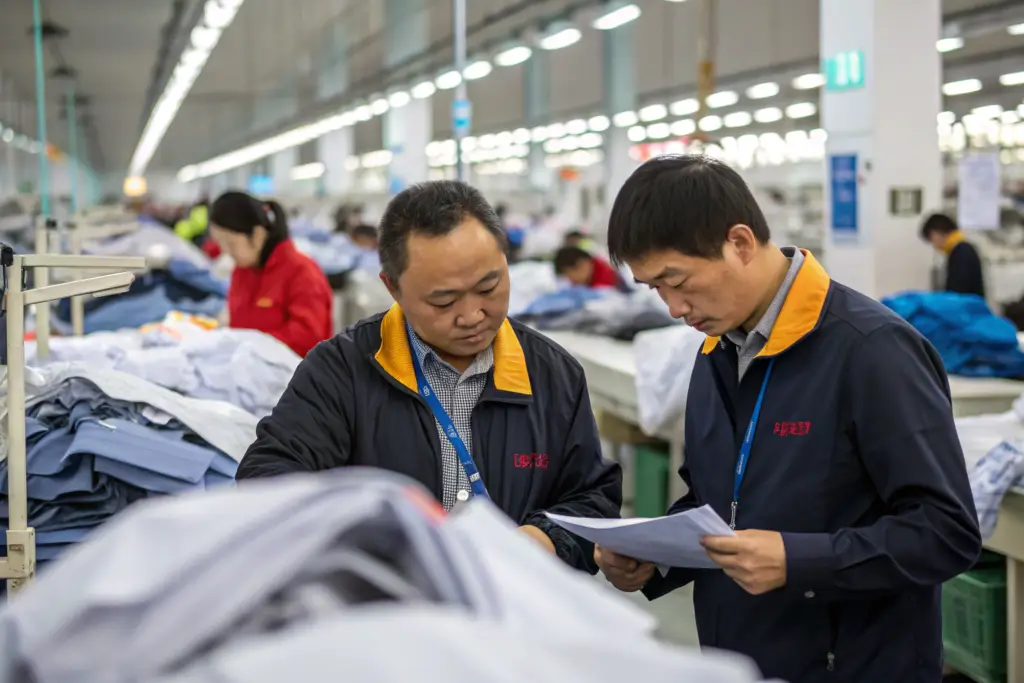
How Do You Introduce the "Random Spot Check" Protocol at the Start of a Partnership?
The best time to introduce a surprise audit protocol is at the very beginning of the partnership, during the onboarding phase. It is presented as a standard term of business, alongside the payment terms, the defect rate policy, and the shipping Incoterms. It is not a punishment for later suspicion. It is a known, agreed-upon practice from day one.
The protocol is described in the supplier manual or the purchase agreement. It states that the brand reserves the right to conduct unannounced quality inspections during production, at a frequency of approximately one per season or one per three orders. It states that the inspection will be conducted by the brand's quality assurance representative or a designated third-party inspection service. It states that the factory will provide reasonable access to the production floor and to the in-process and finished goods for the specific order.
The language is neutral and professional. It does not imply distrust. It implies a systematic approach to quality assurance. A factory that objects to this clause at the onboarding stage is a factory that is uncomfortable with transparency. That discomfort is valuable information. A factory that accepts the clause without hesitation is a factory that is confident in its processes.
When we onboard new clients at Shanghai Fumao, we proactively offer them the right to conduct unannounced inspections. We include it in our standard terms. We tell them, "We want you to inspect us. Surprise us. It keeps our team sharp, and it proves to you that our quality system works when no one is watching." The offer of transparency is itself a trust-building gesture.
What Language Shifts "Gotcha" Into "Let's Solve This Together"?
The language used during the audit itself determines the emotional tone of the entire interaction. An auditor who walks onto the floor with a scowl and a clipboard, who points at a defect and says, "That's wrong, that's a fail," has created an adversarial dynamic. The factory team feels attacked. They become defensive. They hide problems rather than expose them.
An auditor who walks onto the floor with a neutral expression, who observes a potential issue and says, "Can you help me understand this stitching? I'm seeing a slight variation from the approved sample. Let's look at this together and figure out what's happening," has created a collaborative dynamic. The factory team feels respected. They engage in problem-solving. They volunteer information about the process that helps identify the root cause.
The language shift is from accusation to inquiry. "This is wrong" is an accusation. "I notice a difference here" is an observation. "You need to fix this" is a command. "How can we adjust the process to bring this back to standard?" is a collaboration. The factual content is the same, a quality deviation has been observed, but the relational impact is entirely different.
A quality auditor working for a brand we partner with has mastered this language. During a recent inspection, she noticed the button attachment thread tension was slightly loose on a batch of women's blouses. She did not mark it as a defect and walk away. She called over the sewing line supervisor and said, "I'm seeing a little looseness on these button threads. I'm worried they might come loose after a few washes. Can we test a few and check the machine tension together?" The supervisor, feeling respected and included, immediately checked the machine, found a worn tension spring, replaced it, and re-sewed the affected buttons. The auditor's collaborative language turned a potential confrontation into a five-minute fix.
What Is the "Transparent Surprise" Method and How Does It Work?
The "transparent surprise" is a middle ground between a fully pre-announced audit and a completely cold drop-in. The brand gives the factory a window of time during which the audit will occur, but the exact day and time within that window are not disclosed until shortly before arrival. The window might be two weeks. The heads-up might be four hours. The audit is a surprise within a known boundary.
The transparent surprise method works by providing the factory with a broad "potential visit window" at the start of the season, such as "sometime during weeks 38 to 40." This sets the expectation that an audit will occur without revealing the exact timing. On the day of the audit, the brand's representative provides a short heads-up, typically two to four hours before arriving at the factory. This brief notice prevents the factory owner from being embarrassed by a completely cold arrival, while not providing enough time to stage a deceptive cleanup. The method balances the audit's effectiveness with respect for the factory's professional dignity.
The transparent surprise method is particularly appropriate for long-term relationships. The factory is not being ambushed. They know the audit is coming. They just do not know exactly when. The element of surprise is sufficient to ensure that what the auditor sees is the normal production condition, not a staged performance. But the advance window and the brief heads-up communicate respect for the factory owner's schedule and dignity.

Why Does Giving a 4-Hour Heads-Up Protect the Relationship Without Ruining the Audit?
A completely cold arrival can create an awkward, even humiliating, situation for the factory owner. The auditor arrives at the gate. The factory owner is in a meeting, or off-site, or not dressed to receive a guest. The production manager is not available to escort the auditor. The factory floor is in its normal state, which may include temporary clutter, a machine undergoing maintenance, or a section temporarily down for cleaning. The auditor sees a messy, disorganized snapshot that is not representative of the factory's normal operating condition, but the auditor cannot distinguish normal transient mess from systemic disorganization.
The four-hour heads-up eliminates these problems. The factory owner can adjust their schedule to be present. The production manager can be available. The floor can be tidied from its transient mess to its normal, representative state. The four hours is not enough time to fix systemic problems. A factory with poor quality control cannot retrain its operators or recalibrate its machines in four hours. A factory with a systemic cleanliness problem cannot deep-clean the entire production floor in four hours. But a well-run factory can clear the temporary clutter and ensure the right people are available to escort the auditor.
The heads-up also provides a small but meaningful act of respect. It says, "I want to see your real operation, but I respect your time and your dignity enough not to ambush you at the gate." This respect is received and reciprocated. The factory owner is more cooperative, more open, and less defensive because they were treated with courtesy.
A brand owner who uses the transparent surprise method told me about a recent audit at a long-term supplier. He gave a four-hour heads-up. When he arrived, the factory owner was waiting at the gate with tea. The production floor was clean and orderly, the normal state. The audit proceeded smoothly. A minor issue with a cutting table alignment was identified and discussed constructively. The factory owner later told the brand owner, "I appreciate that you gave me the notice. It allowed me to be here personally to walk the floor with you. If you had arrived cold, I would have been in a supplier meeting off-site, and my assistant would have escorted you. The audit would have been less productive for both of us." The heads-up made the audit better, not weaker.
How Do You Ensure the Audit Window Creates Accountability Without Ambush?
The audit window, the broad time frame communicated at the start of the season, creates ongoing accountability. The factory knows an audit is coming, but does not know when. The knowledge that an auditor could arrive at any time within the window motivates consistent quality practices throughout the window. The audit's deterrent effect is extended from a single day to several weeks.
The window should be broad enough to capture a representative sample of production, but not so broad that the accountability effect is diluted. A two-week window is typical. The brand might communicate, "We will be conducting our seasonal quality audit sometime between October 15th and October 30th." The factory now has a two-week period during which they must maintain audit-ready conditions.
The window also allows the brand to align the audit with the production schedule for their specific order. The brand knows their order is scheduled for cutting in week 38, sewing in weeks 39 and 40, and finishing in week 41. They set the audit window for weeks 39 and 40, when the order is on the sewing line and can be inspected in process. The audit is not random. It is timed to coincide with the brand's production. The surprise element is the exact day within that production window.
A brand owner producing a line of men's tailored jackets sets his audit window for the week his jackets are scheduled to be on the sewing line. He communicates the window to us at the start of the season. We know he is coming sometime that week. The sewing line team maintains consistent quality throughout the week because they do not know if he is coming on Monday or Thursday. The extended accountability window drives consistent performance. The audit, when it happens, confirms the consistency.
What Should You Do If the Surprise Audit Reveals a Major Problem?
The discovery of a major problem during a surprise audit is the moment of truth for the relationship. A systemic quality failure, a significant deviation from the approved sample, an unauthorized material substitution, is a crisis. How the brand owner responds to the crisis determines whether the relationship survives and strengthens, or fractures. A punitive, angry response will trigger defensiveness, cover-up, and long-term damage. A structured, collaborative response will trigger problem-solving, accountability, and long-term strengthening.
When a surprise audit reveals a major problem, the brand owner must follow a structured response protocol. First, contain the problem. Stop production on the affected order immediately to prevent more defective units from being produced. Second, investigate the root cause collaboratively with the factory team. Third, agree on a corrective action plan with specific actions, responsible persons, and deadlines. Fourth, verify the correction with a follow-up audit. Throughout the process, the focus must be on fixing the process, not punishing the person. A major problem, handled well, can deepen the relationship more than a flawless audit ever could.
The factory owner is probably as distressed by the finding as the brand owner. A quality failure represents a failure of their own systems and a threat to a valued relationship. They are not the enemy. The problem is the enemy. The brand and the factory are allies in a war against the problem.

How Do You Request a Rework Without Destroying the Production Schedule?
A rework is the correction of defective units. It is expensive in time and labor. It can destroy the production schedule if not managed carefully. The brand owner's request for a rework must be specific, justified, and accompanied by a schedule recovery plan.
The rework request must be specific. "The entire order needs to be re-sewn" is vague and terrifying. "The collar attachment on units 1 through 800 shows a stitch tension deviation from the approved sample. The collar must be removed and reattached with the correct tension. The affected units are currently at the finishing station. The rework will take approximately 12 labor hours." This request is specific, quantified, and manageable. The factory can plan the rework.
The rework request must be justified with evidence. The auditor must show the factory owner the approved sample, the defective production unit, and the measurable deviation. "The approved sample has 8 stitches per inch on the collar seam. These production units have 6 stitches per inch. The loose tension will cause the collar to roll incorrectly and may fail after repeated washing." The evidence makes the rework request objective, not subjective. The factory owner cannot argue with the measurement.
The schedule recovery plan must be developed collaboratively. The rework will consume 12 labor hours. Which hours? Can the rework be done on overtime tonight, without disrupting tomorrow's scheduled production? Can the feeder line absorb the rework while the main line continues? The brand owner and the factory owner must solve the scheduling problem together.
A quality audit on a men's shirt order revealed that the left cuff buttonholes were being sewn 3mm too short, causing the buttons to be difficult to fasten. The auditor identified the issue, measured the deviation, and brought it to the production manager within an hour of arrival. They agreed the affected 600 shirts needed rework. The production manager scheduled the rework for the evening shift, using the buttonhole machine operators on overtime. The rework was completed by 10 PM. The next day's production schedule was not disrupted. The brand owner paid a small overtime charge. The shirts shipped on time. The collaborative problem-solving turned a potential schedule disaster into a minor cost.
What Is a "Corrective Action Plan" and How Do You Follow Up Effectively?
A Corrective Action Plan, a CAP, is a formal document that records the quality problem, its root cause, the actions taken to correct the immediate issue, and the actions taken to prevent the problem from recurring. It is the written record of the learning from the audit. It transforms a negative event into a positive improvement.
The CAP is structured in four sections. Section one describes the problem, what was found, where, when, and by whom. Section two identifies the root cause, determined through collaborative investigation. Section three specifies the corrective actions already taken to fix the immediate problem. Section four specifies the preventive actions to be implemented to prevent recurrence, with responsible persons and completion dates.
The root cause analysis is the most important part of the CAP. A problem solved without understanding its root cause will recur. The root cause might be a machine maintenance issue, an operator training gap, a material variance from the supplier, or an ambiguous specification in the tech pack. The investigation must go deep enough to find the true cause, not just the superficial symptom.
The follow-up is essential. A CAP without follow-up is a paperwork exercise. The brand owner must verify that the preventive actions were actually implemented and are effective. This verification can be done at the next scheduled production run, or through a follow-up focused audit specifically on the CAP items.
A surprise audit on a women's dress order found that the side seam pucker was occurring on approximately 10% of units. The root cause investigation, conducted jointly with our production team, traced the problem to a specific sewing machine with a worn feed dog that was not feeding the fabric evenly. The immediate corrective action was to take the machine offline, replace the feed dog, and re-sew the affected units. The preventive action was to add feed dog inspection to the weekly machine maintenance checklist for all sewing machines. The CAP was documented and signed. The brand owner's follow-up audit three months later verified that the feed dog inspection had been added to the checklist and was being performed consistently. The problem never recurred.
How Can Regular "Scheduled" Visits Complement the Surprise Element?
The surprise audit is a tactical tool. It verifies daily conformance to standards. The scheduled visit is a strategic tool. It builds the relationship, discusses future developments, and aligns on long-term goals. Both are necessary. A relationship that consists only of surprise audits feels like a police state. A relationship that consists only of scheduled visits may miss creeping quality issues that develop between visits. The optimal pattern combines both.
Scheduled visits complement the surprise audit by providing the relationship-building context that makes the surprise audit feel acceptable. The scheduled visit is when the brand owner and the factory owner share a meal, discuss next season's fabric innovations, and talk about their businesses. This personal connection, built during scheduled visits, creates the reservoir of goodwill that absorbs the tension of a surprise audit. The factory owner who knows the brand owner personally, who has shared a meal with them, is far less likely to feel offended by a surprise quality check. The scheduled visit is the relationship deposit. The surprise audit is the quality withdrawal. The account must be in surplus.
The scheduled visits also serve a practical purpose. They allow for activities that cannot be done on a surprise basis. A seasonal planning meeting requires both parties to prepare. A fabric development session requires the mill's technical team to be present. These planned activities move the partnership forward strategically.

What Is the Ideal Ratio of Planned Visits to Surprise Audits?
There is no universal ideal ratio. The right balance depends on the maturity of the relationship, the complexity of the product, and the quality history. For a new relationship, the first year, the ratio might favor surprise audits, perhaps two audits and one scheduled visit, as the brand builds confidence in the factory's quality systems. For a mature relationship with a strong quality track record, the ratio might shift to one surprise audit and three scheduled visits per year, with the scheduled visits focused on development and innovation.
The ratio also varies with the production cycle. During peak production season, when the factory is running at full capacity and quality risks are elevated, the surprise audit frequency might increase. During the development season, when the focus is on sampling and innovation, scheduled visits dominate.
The key is that the factory knows both types of interaction will occur. The pattern is predictable, even if the specific dates are not. The factory understands that the brand's quality assurance program includes both scheduled and unscheduled elements. The surprise audit does not feel like a personal suspicion because it is embedded in a predictable program of quality engagement.
A brand owner who has worked with us for five years visits our factory four times a year. Three of those visits are scheduled months in advance. They are two-day visits. Day one is a seasonal planning meeting, a fabric innovation review, and a meal together. Day two is a walkthrough of the production lines. The fourth visit is a surprise audit within a two-week window, with a four-hour heads-up. This pattern has been consistent for five years. The surprise audit does not feel like an accusation because it is a known, expected part of the annual rhythm. The scheduled visits have built a relationship strong enough to support the surprise audit without strain.
How Do You Use a Planned Visit to Discuss Audit Findings Without Blame?
The scheduled visit that follows a surprise audit is the ideal forum for discussing the audit findings in a non-crisis, forward-looking context. The audit occurred. Problems were found and corrected. The CAP was implemented. The scheduled visit is the opportunity to review the CAP, verify the preventive actions, and close the loop.
The discussion should be framed as a review of the quality system's effectiveness, not a review of the factory's past mistakes. The language is, "Our quality system identified a collar tension issue in October. The CAP was implemented. Let's walk the line now and verify that the preventive action is holding. What else can we do to strengthen the collar construction process?" The focus is on the system and the future, not the person and the past.
The scheduled visit is also the opportunity to give positive feedback. If the audit found no issues, or if the issues were minor and well-handled, the brand owner should explicitly acknowledge this. "The October audit was clean. The collar work was especially strong. Please pass my thanks to the sewing team." Positive feedback is as important as corrective feedback. It reinforces the desired behavior. It makes the factory team feel seen and appreciated.
A brand owner who conducted a surprise audit in September found a minor labeling issue. The CAP was implemented. During his scheduled visit in November, he specifically asked to see the labeling station. He verified that the preventive action, a new label placement jig, was in use. He then thanked the labeling team for their responsiveness. The team was proud. They had been recognized for fixing a problem. The interaction transformed a quality finding from a negative mark into a positive demonstration of continuous improvement.
Conclusion
The surprise quality audit is a necessary tool in garment manufacturing. It verifies that the quality system is functioning when no one is watching. It catches creeping deviations before they become shipment-rejecting defects. It maintains a healthy productive tension that keeps quality standards high. But it is also a relational minefield. Mishandled, it can destroy a partnership that took years to build.
The key to conducting a surprise audit without offense is to embed it in a culture of collaborative quality improvement. The audit is not a weapon. It is a diagnostic tool. The factory is not the suspect. The process is the subject. The brand and the factory are on the same side, working together against quality failures that hurt both parties.
We have explored the specific techniques that make this framing real. Introducing the random spot-check protocol at the onboarding stage, so it is a known term of business, not a mid-stream accusation. Using the transparent surprise method, the audit window and the brief heads-up, to balance effectiveness with respect. Responding to major findings with a structured Corrective Action Plan, not with blame and punishment. And complementing the surprise audits with scheduled visits that build the relationship and provide the context for non-crisis quality discussions.
At Shanghai Fumao, we do not just tolerate surprise audits from our partners. We welcome them. We see them as opportunities to demonstrate the robustness of our quality systems and to identify improvement areas before they affect a shipment. Our relationship with our clients is strong enough to absorb the scrutiny because the scrutiny is mutual, transparent, and always focused on the shared goal of excellent product.
If you are developing your quality assurance program and want a manufacturing partner who will collaborate with you on audits, scheduled and surprise, I invite you to contact our Business Director, Elaine. She can share our internal quality audit protocols, discuss how we integrate client audits into our production schedule, and arrange an initial visit, planned or surprise, so you can see our quality systems in action. Reach Elaine at elaine@fumaoclothing.com. Let's inspect our way to a stronger partnership.