A luxury handbag brand owner from Milan sat in my office last year, exhausted and furious. His brand had spent fifteen years building a reputation for Italian craftsmanship. His bags retailed for €800. A few months earlier, he discovered a website selling exact copies of his best-selling bag for €120. The copies were so good that even his own customer service team struggled to tell the difference from photos. The counterfeit bags used the same leather, the same hardware, and identical labels. The label was the key. The counterfeiters had obtained a genuine label from a legitimate production run and sent it to a label factory in another province. The factory replicated it perfectly. The counterfeit bags were indistinguishable from the genuine article because the label, the primary authentication device, was itself perfectly counterfeited.
The latest anti-counterfeiting technologies for garment labels combine physical security features, digital traceability, and blockchain verification into a multi-layered defense. Physical technologies include holographic threads woven into the label, micro-printed text visible only under magnification, color-shifting inks, and UV-reactive fibers. Digital technologies include encrypted QR codes and NFC chips embedded in labels that link to a secure, blockchain-backed digital product passport. No single technology is immune to counterfeiting. A layered approach, where the counterfeiter must defeat multiple independent systems simultaneously, is the current best practice.
The counterfeit garment industry is a $500 billion global problem. It steals revenue from legitimate brands, damages brand reputation with poor-quality fakes, and in some cases funds organized crime. The label is the frontline of defense. It is the primary authentication point for customs officials, retail partners, and consumers. A label that can be easily copied is a vulnerability. A label that incorporates multiple, difficult-to-replicate security features is a powerful deterrent. At Shanghai Fumao, we source and integrate advanced anti-counterfeiting labels for our brand clients. Let me explain the technologies that are available and how they work together.
What Are the Most Effective Physical Tag and Label Security Features?
Physical security features are the first line of defense. They are integrated into the label material or the printing process. Their purpose is to make the label extremely difficult to reproduce with standard commercial printing equipment. A counterfeiter with a high-resolution scanner and a good printer can copy a basic printed label. A counterfeiter cannot copy a label with a woven-in holographic thread, micro-printed text that requires a specialized printing plate, or color-shifting ink that requires a proprietary chemical formulation.
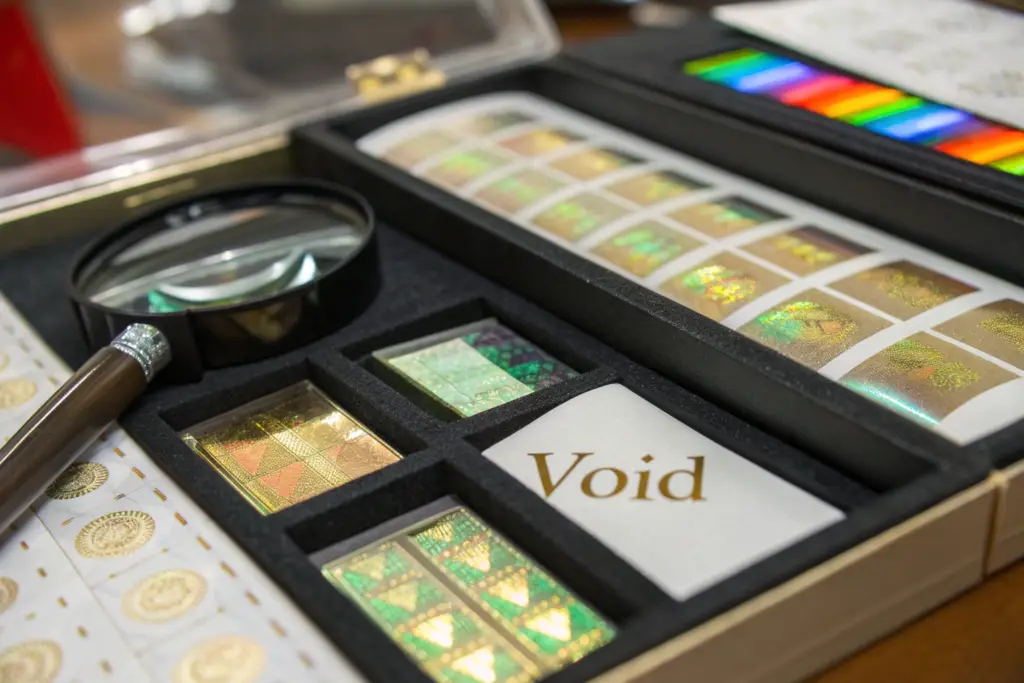
The most effective physical security features are those that require specialized, expensive, or controlled equipment to produce. Holographic threads and foils are produced by a limited number of certified manufacturers and are extremely difficult to replicate without the original master hologram. Micro-printed text, letters so small they appear as a solid line to the naked eye, requires high-resolution printing plates that are beyond the capability of most commercial printers. Color-shifting optically variable inks change color depending on the viewing angle and are produced by a small number of specialized chemical companies. Tamper-evident materials and serialized QR codes complete the physical layer.
These features are not mutually exclusive. A high-security label might combine a woven holographic thread, a micro-printed serial number, and a tamper-evident VOID pattern. The counterfeiter must defeat all of them to produce a convincing fake. The cost of doing so becomes prohibitive.
How Do Holographic Threads Woven into Labels Prevent Photocopying?
A holographic thread is a thin, metallic-looking strip that is woven directly into the label fabric during the label weaving process. The thread has a micro-embossed pattern that diffracts light, creating a rainbow-like color shift or a specific image that changes when the viewing angle is tilted. The thread is not printed on the surface. It is an integral part of the label structure.
A photocopier or a flatbed scanner cannot reproduce a holographic thread. The scanner captures the label as a flat image. The holographic effect, the color shift with angle, is lost. A scanned and reprinted copy of the label will show a flat, dull grey strip where the holographic thread should be. The counterfeit is immediately detectable by a trained inspector or an attentive consumer.
Holographic threads can be customized with the brand's logo or a specific security pattern. The customization requires the brand to work directly with a certified holographic thread manufacturer, such as those approved by international banknote security suppliers. The customized thread is produced exclusively for the brand. The manufacturer will not sell the same thread to an unauthorized party. The thread is a controlled material.
A premium denim brand client uses a woven label with a custom holographic thread featuring their logo repeating along the thread length. The thread shimmers from silver to blue when the label is tilted. The brand's retail partners are trained to check the holographic thread as a quick authentication test. Counterfeit jeans seized by the brand's investigators consistently lack the holographic thread. It is the single feature the counterfeiters have been unable to replicate.
What Is Micro-Text and Why Can't Standard Printers Reproduce It Accurately?
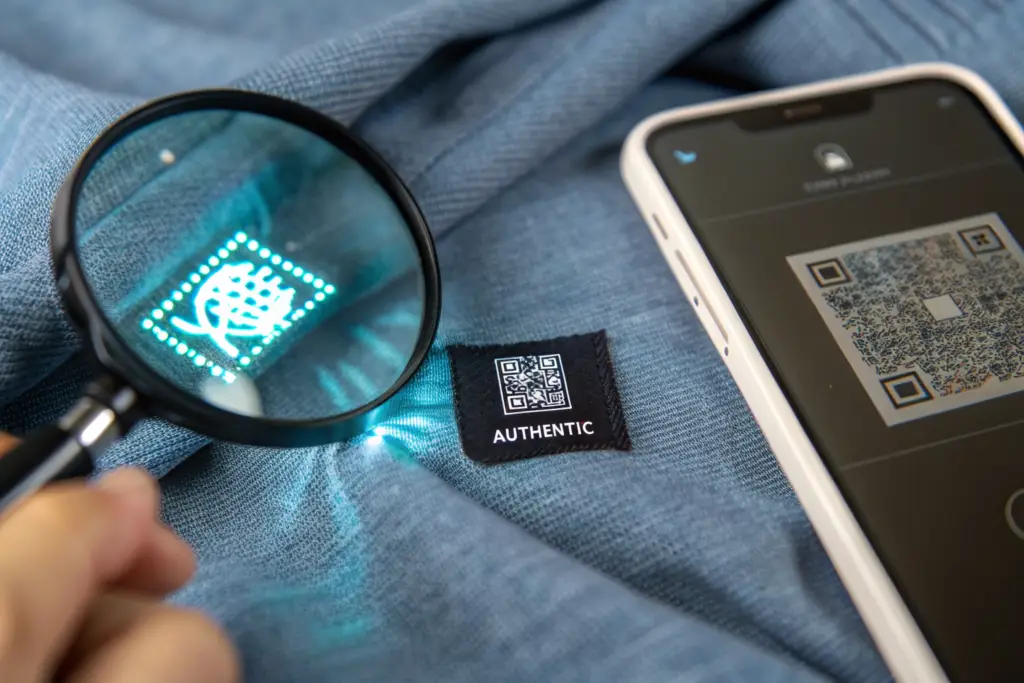
Micro-text is printed lettering that is extremely small, typically 0.5 to 1 point in size. To the naked eye, it appears as a thin solid line. Under a magnifying glass or a macro lens, the line resolves into readable text, often the brand name, a security code, or a repeating pattern.
Standard commercial printing, the kind used for hang tags and basic labels, cannot reproduce micro-text accurately. The resolution of standard printing plates and the ink bleed on standard paper or fabric cause the tiny letters to blur into an unreadable smudge. Reproducing micro-text requires specialized high-resolution printing plates, often using laser engraving technology, and precision printing presses with extremely tight ink control.
The counterfeiter who scans a label with micro-text and attempts to reprint it will produce a label where the micro-text line is a solid, featureless blur. A customs officer or a brand investigator with a pocket magnifier can instantly distinguish the genuine label with sharp, readable micro-text from the counterfeit with a blurred line.
Micro-text can also be combined with a hidden message. The micro-text might read "GENUINE PRODUCT" on the authentic label. A counterfeiter who manages to reproduce the visual appearance of micro-text, without knowing the actual text content, might inadvertently print a line that resolves into gibberish or the wrong message. The content of the micro-text becomes an additional authentication check.
How Do NFC and RFID Chips Enable Consumer-Level Authentication?
Physical security features are effective for trained inspectors, but they offer limited protection for the consumer buying a product online from an unauthorized third-party seller. The consumer cannot examine the holographic thread through a website photo. Digital authentication technologies, embedded in the label and readable by a consumer's smartphone, extend the security perimeter to the point of purchase and beyond.
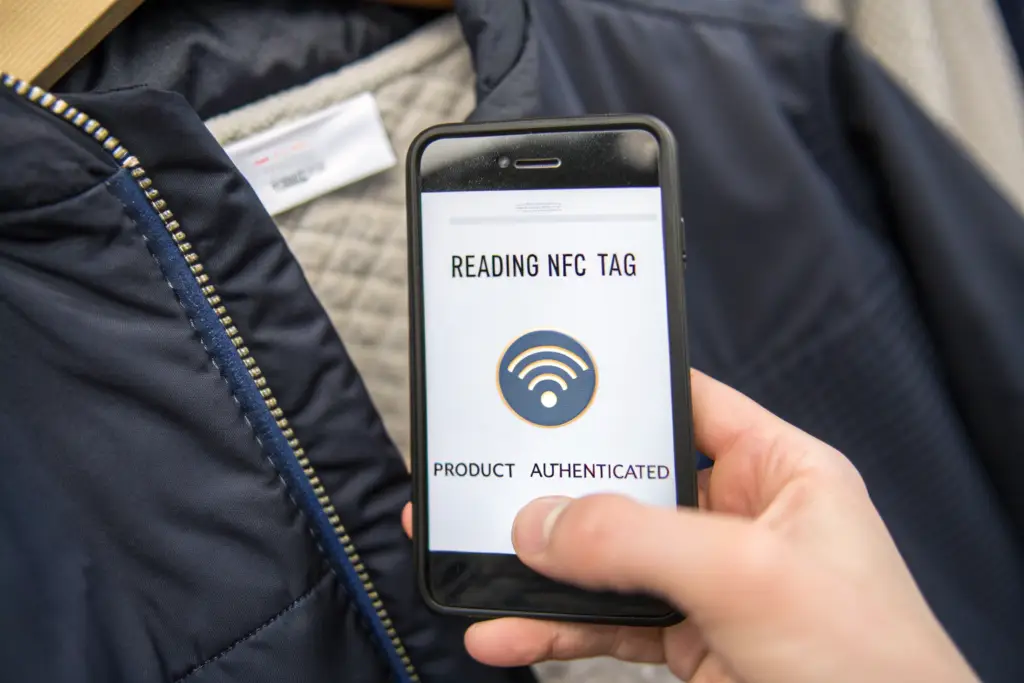
NFC, Near Field Communication, and RFID, Radio Frequency Identification, chips embedded in garment labels enable consumer-level authentication by linking the physical garment to a unique, verifiable digital identity. A consumer taps their smartphone against the label. The phone reads the chip's unique encrypted identifier. The identifier is checked against a secure cloud database maintained by the brand or a third-party authentication service. The consumer receives an immediate "Authentic" or "Unverified" response on their phone screen. The technology transforms the label from a passive identifier into an active authentication device.
The key difference between NFC and RFID is the read range and the reader required. NFC is designed for very close proximity, a few centimeters, and is readable by most modern smartphones. RFID can be read at a longer range, several meters, but requires a specialized RFID reader. For consumer-facing authentication, NFC is the preferred technology because the consumer's own phone is the reader.
What Is the Difference Between a Simple QR Code and an Encrypted, Serialized QR?
A simple QR code printed on a hang tag is a static link. It directs the consumer to a website. The same QR code is printed on every unit. The counterfeiter copies the QR code and prints it on the counterfeit hang tag. The consumer scans the code and is directed to the genuine brand's website, even though the product is fake. The QR code provides no authentication. It provides a false sense of security.
An encrypted, serialized QR code is a dynamic, unique identifier. Each unit receives a unique QR code containing an encrypted serial number. When the consumer scans the code, the decryption server verifies the serial number against the database of genuine issued serial numbers. If the serial number is valid and has not been scanned an abnormal number of times, the server returns an "Authentic" message. If the serial number is invalid, duplicated, or has been flagged, the server returns a warning.
The counterfeiter cannot simply copy a serialized QR code. If they copy one genuine code onto a thousand counterfeit units, the authentication server will see the same serial number being scanned from many different geographic locations, an obvious fraud pattern. The server will flag the serial number as compromised. The counterfeiter's next attempt to generate a fake serial number will fail because the number is not in the encrypted database, or it will fail the cryptographic integrity check.
A streetwear brand client uses encrypted, serialized QR codes on his hang tags. Each code is unique. The consumer scans the code after purchase and registers the product to their account. The registration confirms authenticity and activates the warranty. The brand has detected several counterfeiting operations when the same serial number was scanned hundreds of times from different countries. The QR code system provided the intelligence to identify and pursue the counterfeiters.
How Are Blockchain-Based Digital Product Passports Linked to Physical Labels?
A Digital Product Passport, as we discussed in the context of EU regulations, is a digital record of a garment's supply chain, materials, and authenticity. A blockchain-based DPP stores this record on a decentralized, immutable ledger. The record cannot be altered retroactively. The provenance data, the cotton farm, the spinning mill, the dye house, the sewing factory, is cryptographically sealed.
The physical link between the garment and its blockchain DPP is the label. An NFC chip or a serialized QR code on the label contains a unique identifier that points to the DPP entry on the blockchain. When the consumer scans the label, they access the DPP. They can see the garment's entire journey, verified by immutable blockchain records.
The blockchain DPP provides a level of authentication that goes beyond a simple "real or fake" check. It provides the full story of the garment. A counterfeit garment has no story, or a fabricated story that does not match the blockchain records. The absence of a verifiable DPP is itself evidence of counterfeiting.
The blockchain DPP also enables circular economy applications. A consumer wishing to resell the garment can transfer the DPP to the new owner. The new owner can verify the garment's authenticity and provenance independently. The DPP stays with the garment for its entire life. This is a requirement of the upcoming EU Digital Product Passport regulation, which will make blockchain-linked labels a compliance necessity for many brands selling in Europe.
The most perfectly designed anti-counterfeiting label is worthless if the counterfeiter can simply order additional copies of the same label from the same label manufacturer. The label supply chain, the chain of custody from the design file to the finished label attached to the garment, is itself a security vulnerability. The brand owner must audit and control this supply chain.
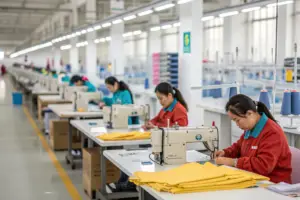
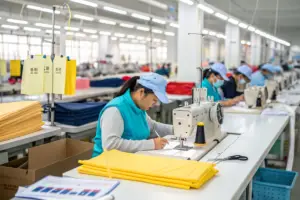
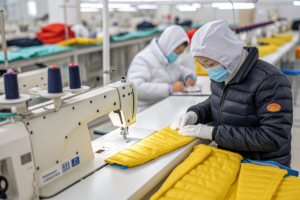
Auditing the label supply chain involves mapping every entity that touches the label design, the printing plates, the holographic materials, the NFC chip encoding, and the finished labels. The brand owner must verify that each entity has adequate physical and digital security to prevent unauthorized duplication. The brand owner must also implement a "closed loop" manufacturing model where the exact quantity of labels produced is reconciled with the exact quantity of garments produced, and any surplus labels are securely destroyed. A label manufacturer that produces 10,000 labels for a 5,000-unit garment order has created 5,000 labels that can be diverted to counterfeit production.
The label supply chain is often more complex than the brand owner realizes. The label design might be created by a branding agency, sent to a label manufacturer, printed by a subcontractor, and shipped to the garment factory. Each handoff is an opportunity for the design file or the physical labels to be copied.

Why Should Label Manufacturing Be Separate from General Trims Procurement?
General trims, buttons, zippers, thread, are commodity items sourced from multiple suppliers based on price and availability. Security labels are not commodities. They are security devices. The procurement process for security labels should be separated from general trims procurement, with stricter controls and fewer, more trusted suppliers.
A general trims procurement manager is incentivized to find the lowest price. A security label requires a higher price, reflecting the specialized materials and processes. If the same manager is responsible for both, the incentive to cut cost may override the security requirement. The cheapest label supplier is unlikely to be a certified holographic thread manufacturer.
The brand should designate a specific, vetted, and contractually bound label security supplier. This supplier should be audited for physical security, the premises are secured, visitor access is controlled, production areas are monitored, digital security, design files are encrypted, access is restricted, and employee screening, background checks are conducted. The supplier contract should include strict liability clauses for unauthorized label production or design file leakage.
A luxury brand client maintains a list of exactly two approved label security suppliers. Both have been audited by the brand's security team. Both operate under strict contracts that limit their ability to sell the brand's labels to any other party. The brand's general trims are sourced from a separate, broader supplier base. The separation ensures that security decisions are not compromised by cost-saving pressures.
How Do You Conduct a "Label Reconciliation" Audit at Your Factory?
A label reconciliation audit is a physical count and comparison of labels received, labels used, and labels remaining. The purpose is to detect any leakage of labels from the factory, which could indicate unauthorized production or diversion to counterfeiters.
The audit begins with the factory's receiving records. How many labels were received from the label supplier? The audit then reviews the factory's production records. How many garments were produced that required this specific label? The audit then physically counts the remaining label inventory in the factory's secure label storage area.
The equation is simple. Labels received minus labels used should equal labels in inventory. Any discrepancy indicates a problem. A surplus of labels in inventory might indicate that not all produced garments received the label, which could mean some labels were set aside for unauthorized use. A deficit of labels might indicate that more garments were produced than recorded, also a sign of unauthorized production.
The label reconciliation audit should be conducted periodically, without advance notice. The auditor should have unrestricted access to the label storage area, the production records, and the finished goods inventory. The factory should be contractually obligated to cooperate with label reconciliation audits.
We welcome label reconciliation audits from our brand clients. Our label storage area is a locked, access-controlled room. Our label inventory is tracked digitally. Our production records are transparent. A client's auditor recently conducted a surprise label reconciliation audit and found zero discrepancies. The audit took two hours. It confirmed the integrity of our label management system and strengthened the trust between the brand and our factory.
What Are the Trade-Offs Between Security Cost and Brand Protection?
Anti-counterfeiting technologies add cost to the label. A basic printed satin label might cost $0.05 per unit. A label with a woven holographic thread, micro-text, and an NFC chip might cost $0.50 or more. For a brand producing 100,000 units annually, the difference is $45,000 in label costs. The brand owner must weigh this cost against the financial and reputational damage caused by counterfeiting.
The trade-off between security cost and brand protection is not a simple cost comparison. It is a risk management decision. The brand owner must estimate the probability and the impact of counterfeiting on their specific brand. A luxury brand with a high retail price and a strong brand equity is a prime target for counterfeiters. The impact of widespread counterfeiting, lost sales, brand dilution, potential legal liability from defective counterfeit goods, is enormous. For such a brand, a $0.50 security label is a negligible insurance premium. A mass-market brand with a low retail price and lower brand equity may face a lower counterfeiting risk, and a $0.50 label may not be cost-justified. The security investment should be proportional to the risk.
The trade-off also involves the consumer's willingness to engage with the authentication process. An NFC chip that requires the consumer to download a specific app may have a low adoption rate. A simple QR code that works with the phone's native camera app has a higher adoption rate. The most effective security technology is the one that consumers actually use.

How Much Does a Full NFC Anti-Counterfeit Label Add to the Per-Unit Cost?
The cost of an NFC anti-counterfeit label depends on the chip type, the antenna design, the label material, and the order volume. For a typical garment label application, the costs are roughly as follows.
The NFC chip itself, a basic NTAG 213 or similar, costs approximately $0.06 to $0.12 per chip at moderate volumes of 50,000 to 100,000 units. The cost is lower at higher volumes and higher at lower volumes.
The antenna and the inlay, the chip attached to the antenna on a flexible substrate, adds another $0.04 to $0.08. The label material, a woven or printed fabric label with the NFC inlay integrated into the back or between layers, adds $0.05 to $0.15 depending on the label size and complexity.
The encoding of the chip, writing the unique encrypted identifier to each chip, adds $0.02 to $0.05 per unit. The total incremental cost of an NFC-enabled label, compared to a standard woven label at $0.10, is approximately $0.15 to $0.35. A fully featured NFC security label costs approximately $0.25 to $0.45 per unit.
For a brand producing 50,000 units annually, the incremental annual cost is $7,500 to $17,500. For a luxury brand with an average retail price of $500 and a counterfeiting problem eroding an estimated 10% of sales, the investment is recovered by preventing the loss of a few dozen units. The return on investment is compelling.
When Is a Simple Tamper-Evident Label the Pragmatic Choice for a Mid-Tier Brand?
A mid-tier brand, retailing at $80 to $150 per garment, may not face the same counterfeiting threat as a luxury brand, but still faces risks from unauthorized overproduction by factories, diversion of goods to unauthorized channels, and return fraud, where a customer buys a genuine garment, replaces it with a counterfeit, and returns it for a refund.
A simple tamper-evident label is a practical, cost-effective solution for these risks. The label has a cut pattern or a material property that causes it to self-destruct or reveal a "VOID" pattern if someone attempts to remove it from the original garment and reattach it to another garment. The label does not prevent counterfeiting of the entire garment, but it prevents the label itself from being transferred.
The cost of a tamper-evident label is significantly lower than an NFC label. A tamper-evident VOID label made of a specialized vinyl or acetate material costs approximately $0.08 to $0.15 per unit, a small premium over a standard label. The technology is well-established and requires no consumer action or smartphone.
A mid-tier brand client uses a tamper-evident woven label with a hidden VOID pattern. If a counterfeiter tries to remove the label from a genuine garment and sew it into a counterfeit, the label fibers separate along the tamper lines, leaving a visible "VOID" text on the label remnant. The brand's retail partners are trained to check label integrity during returns processing. The simple label has significantly reduced return fraud without the cost of NFC technology.
Conclusion
The battle against counterfeit garments is fought at the label. The label is the identity document of the garment. A secure, difficult-to-counterfeit label protects the brand's revenue, reputation, and customer trust. An insecure, easily copied label is an open invitation to counterfeiters.
We have surveyed the current best practices in anti-counterfeiting label technology. Physical features like holographic threads, micro-text, and color-shifting inks make the label extremely difficult to reproduce with standard printing equipment. Digital features like encrypted serialized QR codes and NFC chips enable consumer-level authentication through a smartphone tap, linking the physical garment to a secure digital identity. Blockchain-based Digital Product Passports provide an immutable record of provenance that stays with the garment for its entire life. And a disciplined approach to label supply chain security, including separate procurement, supplier auditing, and label reconciliation, closes the backdoor of unauthorized label production.
No single technology is a silver bullet. The most effective approach is a layered one, combining physical, digital, and procedural defenses. The brand owner should choose the layers that are appropriate for their brand's risk profile and their customer's willingness to engage with authentication.
At Shanghai Fumao, we take label security seriously. We source security labels from certified, audited suppliers. We maintain a secure, access-controlled label storage and reconciliation system. We integrate NFC chips, serialized QR codes, and tamper-evident labels into our production process for our brand clients. We do this because we understand that the label we sew into the garment is the final guarantee of authenticity.
If you are concerned about counterfeiting, unauthorized production, or grey market diversion of your products, and you want to explore the anti-counterfeiting label technologies that are right for your brand, I invite you to contact our Business Director, Elaine. She can provide samples of the various security label options, discuss the cost implications for your order volumes, and connect you with our label security specialists for a detailed risk assessment. Reach Elaine at elaine@fumaoclothing.com. Let's protect your brand, one label at a time.