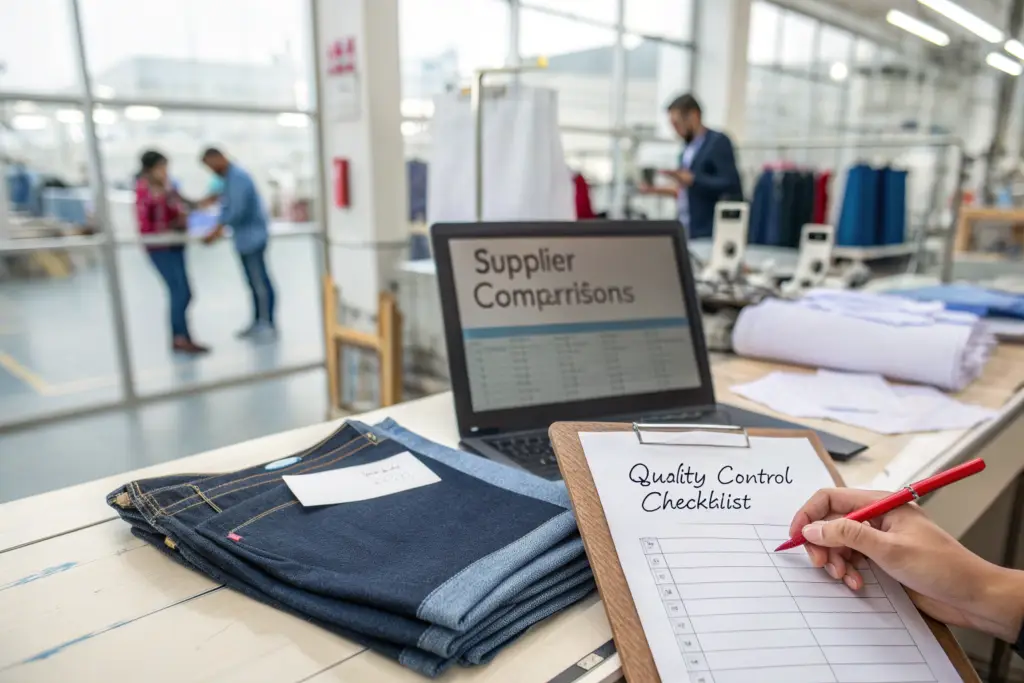
You type "denim shorts manufacturer China" into Google. You get 12 million results. You send twenty inquiries. You get fifteen replies with stolen photos and promises that sound identical. A month later, you have a headache, three overpriced quotes, and zero confidence that any of these suppliers will actually ship what they showed you. I know this frustration because I hear it from new contacts every single week. Sourcing from China is not hard because the manufacturing is bad. It is hard because the information gap between you and the factory floor is massive. That gap costs you money. It costs you time. And worst of all, it can cost you your reputation with your own customers.
To source high-quality denim shorts from China, you must verify four things before you send a deposit. First, confirm the factory owns its production lines, not just a trading license. Second, request a video of their internal fabric shrinkage and color fastness testing. Third, negotiate DDP shipping terms to lock your exact landed cost. Fourth, hire an independent third-party inspection before the balance payment leaves your account.
Sourcing is a skill. It is not about finding the cheapest price. It is about finding a partner who treats your order like their own inventory. As the owner of Shanghai Fumao, a factory with five real production lines, I want to walk you through the entire process. I will show you how to identify a real manufacturer, how to ask the right technical questions, how to navigate the logistics maze, and how to build a relationship that pays off season after season.
How Do You Tell a Real Denim Factory from a Trading Company?
This is the most expensive mistake a new buyer makes. You think you are talking to a factory. You are actually talking to a middleman in a high-rise office who has never touched a sewing machine. The trading company adds a 10% to 20% commission to every pair of shorts you buy. Worse, they have zero control over production quality. When a problem happens, they just forward your angry email to the real factory and hope for the best.
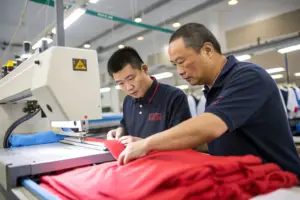
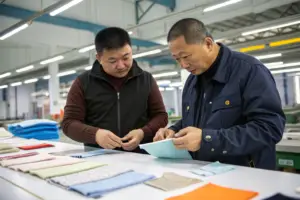
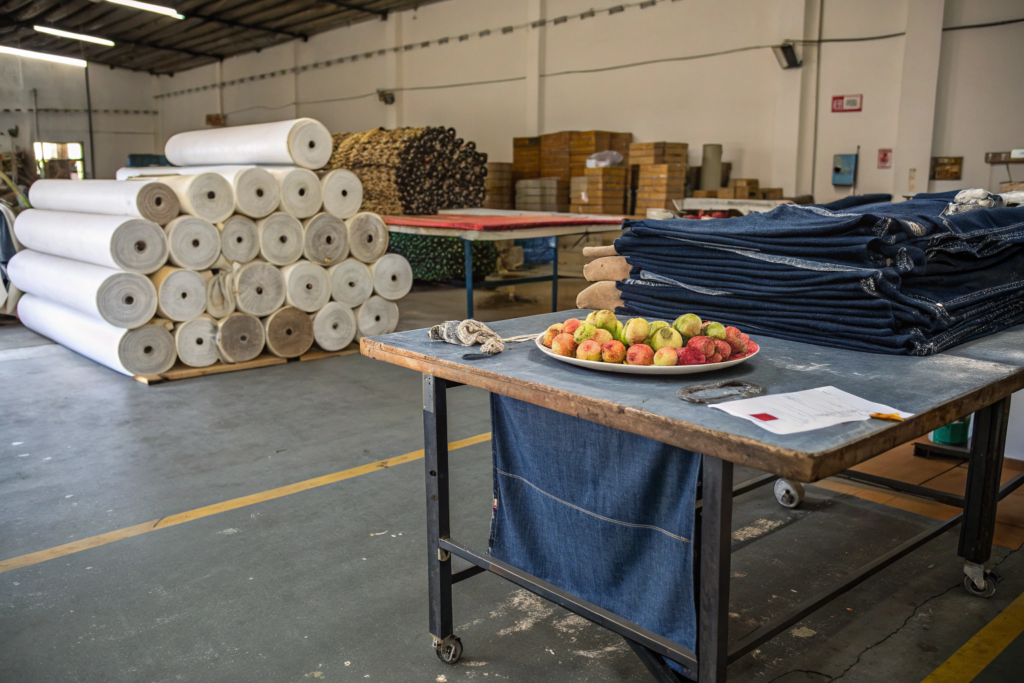
A real factory has dust on the floor. It has rolls of fabric stacked to the ceiling. It has a cutting table with layers of denim ready for the bandsaw. A trading company has a showroom with one sample of each product and a nice fruit platter for visitors. You need to learn how to spot the difference from 7,000 miles away. I have been on both sides of this conversation, and I will give you the checklist I use myself when vetting fabric mills.
The verification process starts before you even discuss pricing. Look at the business license, but also look at the machinery.
What Specific Business Documents Should You Request First?
Do not accept a website as proof. A nice website costs $500 to build. Ask for the Business License, known in China as the Ying Ye Zhi Zhao. This document lists the company's legal registered business scope. You are looking for the term "Manufacturing" or "Production and Processing." If the scope only says "Trading" or "Wholesale," you are dealing with a middleman.
We at Shanghai Fumao are registered as a production enterprise. We openly provide our license in the initial communication. The second document is the Factory Audit Report. Ask if they have a recent Sedex or BSCI social compliance audit. A real factory invests in these audits because Western buyers require them. You can learn more about the BSCI audit standard online. A valid audit report means the factory exists, has real employees, and meets basic safety laws. I also recommend asking for a certificate of origin sample. We issue a generic CO for each shipment, but the template shows our actual production address. If the address on the CO is different from the address on the business license, walk away.
How Can a Live Video Walk-Through Protect Your Investment?
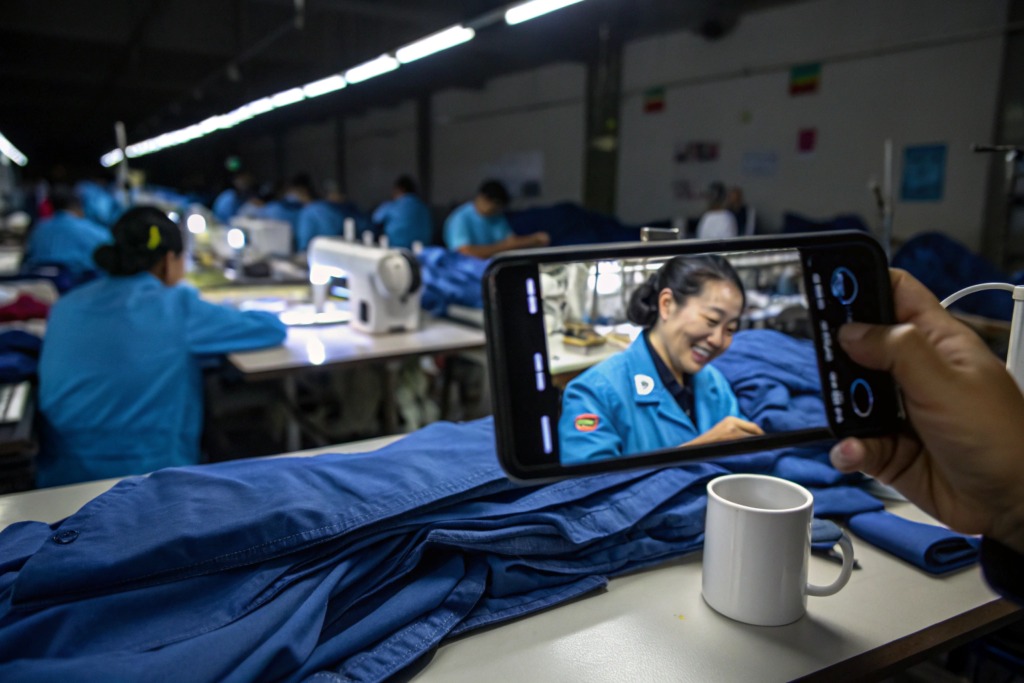
A photo can be stolen. A pre-recorded video can be staged. A live video call on WeChat or WhatsApp at 10:00 PM your time, which is our morning here, cannot be faked easily. I tell new clients to ask for a spontaneous tour. Not a scheduled one.
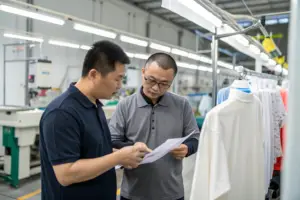
Ask the contact to walk to the cutting table. Ask them to show you the fabric rolls. Tell them to point the camera at the electricity meters or the fire extinguisher inspection tags. Those tags have dates and addresses written in Chinese. That is hard to fake. During the call, ask to see the production line for a current order. Look for busy workers and actual denim pieces on the sewing machines. A quiet factory is a sign of a sampling room, not a mass production unit. The factory floor layout should make logical sense. Cutting near the fabric store. Sewing in flowing lines. Finishing near the packing area. If the video shows a chaotic room with no logical flow, the production efficiency will be low, and your delivery will likely be late. I always offer a live tour because I am proud of the order on our floor.
What Technical Specifications Should You Demand for Denim Quality?
Most sourcing conversations start and end with "What is your price for denim shorts?" That question is useless without the context of the spec sheet. Price depends on the weight of the fabric, the type of the dye, the brand of the zipper, and the complexity of the wash. If you do not lock down the technical specifications, the factory can legally switch to a cheaper, thinner denim and call it "similar." You will only discover the truth when a customer returns the shorts because the fabric ripped.
You need to speak the language of denim engineering. You do not need to be a textile scientist, but you must know the four key variables that dictate the lifespan of the shorts. I train my sales team to ask clients about these points before quoting any price. A quote without a locked spec sheet is just a guess. A guess leads to a dispute. A dispute leads to a broken relationship and wasted inventory.
Here are the non-negotiable technical parameters you must pin down in your purchase contract.
Why Is Fabric Weight the First Lie You Must Catch?
Fabric weight is measured in ounces per square yard (oz/yd²). Standard denim shorts range from 8 oz to 12 oz. Lighter weights are fine for summer beach cover-ups. Heavy weights are for structured, rigid looks. The lie comes when a factory quotes a 10 oz price but ships 8 oz fabric. The shorts feel flimsy. They lose their shape.
You must specify the weight after wash, not before. Raw denim loses weight when the starch is removed in the washing process. A 10 oz loom-state denim becomes 9.2 oz after a garment wash. We always write the finished weight tolerance as +/- 0.3 oz on our tech packs. To verify, buy a GSM cutter and a digital scale. Cut a sample from the bulk, weigh it, and do the math. For our standard wholesale shorts, we use a true 10.5 oz finished weight. This gives a solid hand feel without being too hot. Last year, we helped a Portland-based brand correct a supplier's mistake. The original factory shipped 7 oz shorts. The pocket bags were visible through the back panel. We re-cut the order in 10.5 oz and the brand's review average jumped from 3.8 to 4.4 stars. That is the direct result of fabric weight.
What Tests Guarantee the Color Will Not Bleed?
Crocking is the technical term for color transfer. You sit on a white leather car seat. When you stand up, the seat is blue. Your customer will be furious. This is the fastest path to a one-star review on your website.
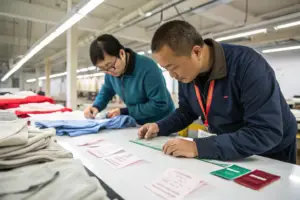
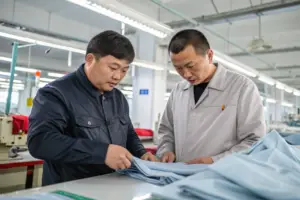
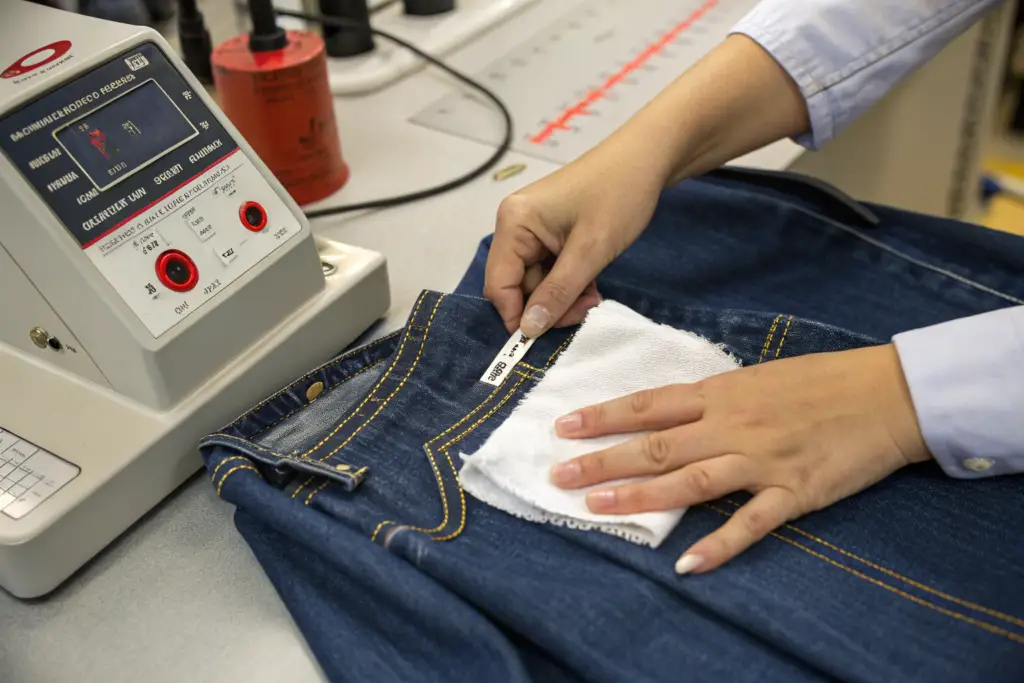
You must demand a Crocking Test result with your shipment. The standard is AATCC 8. A wet crocking grade of 3.5 is the minimum for denim. We target a grade of 4.0. We achieve this through a specific fixation process after dyeing. The indigo molecules are locked into the cotton fiber using a binder in the wash bath. Cheap factories skip the binder because it costs $0.08 per garment. Do not let them. Ask for the test report from an in-house lab or a third party like SGS. You can review the official AATCC 8 crocking test methodology to understand the exact rubbing procedure. Also, demand a wash test. Put the shorts through three home laundry cycles at 40 degrees Celsius. Measure the leg and waist before and after. We guarantee less than 2% shrinkage. If it shrinks more, the pattern was not adjusted for fabric relaxation. That is a manufacturing defect, and a good factory will accept a claim.
Which Shipping Method Protects Your Profit Margins Best?
You found the perfect shorts. The price was great. Then the freight forwarder sends the final invoice. Demurrage charges. Customs exam fee. Port congestion surcharge. Your $4.00 per unit profit evaporates into a $1.50 loss. Shipping is the hidden monster under the sourcing bed. If you get the logistics wrong, the whole deal is a failure.
The key decision is how the risk transfers from the factory to you. FOB means the risk transfers when the container crosses the ship's rail in Shanghai. Anything that happens after that is your financial problem. CIF means the factory pays the insurance and freight to the U.S. port, but you handle the customs clearance and trucking. DDP means the factory pays for everything until the goods are inside your warehouse. I have strong opinions on which method protects a growing brand the best.
Your logistics choice should match your experience level. Do not overestimate your ability to navigate U.S. Customs paperwork on your first import.
When Should You Choose DDP Over FOB Sourcing?
Choose DDP if you want a single, predictable cost. I recommend this for any brand ordering less than 5,000 units per season. The learning curve of U.S. Customs is too steep and the penalties for mistakes are too high.
With DDP, we quote you a price like "$7.80 per unit, delivered to Dallas." That price includes the product, the ocean freight, the 16.6% duty for cotton denim, the customs bond, and the trucking. You pay one invoice. We handle the Importer Security Filing. We classify the goods under the correct Harmonized Tariff Schedule code. The risk of a customs hold is on my team, not yours. I remember a Seattle startup in 2025. They tried FOB on their first 1,000 pairs. The container was selected for an intensive X-ray exam by Customs. They had no bond in place. The storage fees piled up to $2,200 before they even touched the shorts. The next order, they switched to our DDP model. You can research the complexities yourself on the CBP Importing into the U.S. guide. But honestly, let the factory carry this stress. We do it every day.
How Can You Avoid Demurrage and Detention Charges?
Demurrage is the fee the port charges you for keeping the container too long inside the terminal. Detention is the fee for keeping it too long outside the port. These fees are pure waste. They pay for nothing. And they happen when you are not ready to receive the cargo or when the paperwork is wrong.
To avoid this, we pre-clear Customs before the vessel even arrives. We file the Entry Summary (CBP Form 7501) while the ship is still on the water, usually three days before arrival. This requires your customs bond to be active and the commercial invoice to be perfect. We also have a trucking dispatcher who books the delivery appointment as soon as the container is discharged. At Shanghai Fumao, we use a digital logistics dashboard. You get a link showing the ship location, the estimated pier arrival, and the scheduled delivery date. No dark periods. No panic. You can learn more about the specific definitions of these fees on the Maersk demurrage guide to see how quickly the costs can compound. Communication solves most detention problems. If your warehouse is full, tell us immediately. We can hold the container at our forwarder's bonded facility for a few days, which is cheaper than port storage.
How Do You Build a Reliable, Long-Term Sourcing Partnership?
A transaction is not a relationship. You can find a cheap price on Alibaba, place one order, and never speak to that supplier again. But that approach will never build a brand. A real brand needs consistency. It needs a factory that remembers your fit preferences. It needs a partner who will call you when they find a new sustainable fabric that fits your aesthetic, instead of emailing you a generic price list.
Building this takes deliberate action from both sides. It requires clear communication protocols, fair negotiation, and a commitment to growing together. The factories that survive and thrive in China are the ones with long-term partners, not one-hit wonders. I want to share how you can turn a first sample order into a supply chain that becomes a competitive advantage.
Trust is built through small, repeated actions. It is also built through honest conversations about money and mistakes.
What Communication Habits Prevent Costly Production Errors?
The biggest communication breakdown is assuming the factory understands your brand's unspoken rules. They do not. You must over-communicate. Write everything down. If it is not on the tech pack, it will not be on the garment.
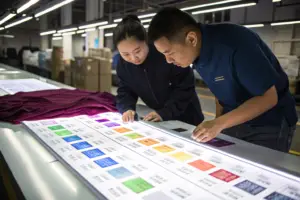
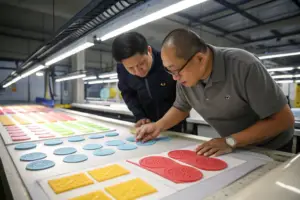
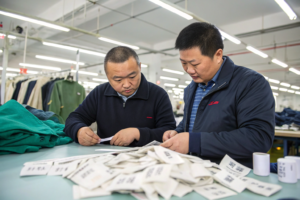
We assign a dedicated merchandiser to each account. You do not talk to a call center. You talk to Elaine or one of her team members who knows your order history. Use visual language. Do not say "make the wash lighter." Say "please match the wash to this reference swatch from our Spring 24 collection." We use a color spectrophotometer to read your reference and output a lab dip recipe. This removes the subjective "it looks light to me" debate. Also, discuss problems immediately. If a fabric delay happens, we inform you within 24 hours with a revised timeline. I expect the same honesty from buyers. If your sales are down and you need to push the ship date, tell us. We can adjust the cutting schedule. An open dialog prevents the anxiety loop that destroys partnerships. Many of my longest clients use a shared Trello board with us. We update the production stages daily. This simple visual management tool has stopped more mistakes than any contract.
Can a Factory Actually Help You Design Better Products?
A good one can. A factory that only sews is a commodity. A factory with a development room is a creative partner. We do not just wait for your sketch. We proactively research the U.S. market trends using WGSN forecasts and retail floor reports from our agents.
I have a regular design feedback call with a large buyer from Miami. Last fall, I suggested he add a hidden zipper pocket inside the waistband of his cargo denim shorts. He had not thought of it. That small addition cost $0.40 per unit. He marketed it as "travel safe" shorts. They sold out in three weeks at a $15 higher retail price. That is the value of a factory that thinks about the end consumer. We also help with fabric innovation. When lyocell blends became popular for their softness, we sourced the raw Tencel fiber and tested four different blend ratios before offering the best one to our partners. You can explore the properties of such fibers on the Tencel Lyocell official page. A factory partner should feed you ideas, not just wait for instructions. This turns a simple sourcing relationship into a product development engine.
Conclusion
Sourcing high-quality denim shorts from China is a system, not a gamble. The system starts with verifying the factory's legal right to manufacture. You check the business license for the word "production." You force a live video walk-through to see the cutting tables and the fire extinguisher tags. Then you move to the technical lock. You freeze the fabric weight at the finished state, you demand a wet crocking grade of 4.0, and you put a 2% shrinkage cap in the contract. After the product is defined, you choose a shipping term that matches your experience level. For most brands, DDP is the safest bet. It puts the customs risk and the freight volatility on the factory's shoulders, where it belongs. Finally, you stop looking for a supplier and start building a partnership. You over-communicate, you share your market data, and you invite the factory to contribute design ideas.
I have been in the denim business long enough to know that the market rewards brands that control their supply chain, not brands that chase the lowest quote. The lowest quote always has a hidden cost. It is hidden in the zipper brand, the fabric weight, or the duty paperwork. Our goal at Shanghai Fumao is to remove the hidden costs entirely. We show you the fabric tests. We lock the price. We deliver the box to your door. And we call you with a new design idea when we find one. That is the sourcing experience you deserve.
If you are ready to stop gambling with your denim orders and start building a predictable inventory flow, let's talk. Our five production lines are running, and we have open capacity for the upcoming season. Contact our Business Director, Elaine. She will send you our factory video tour, a sample of our 10.5 oz denim, and a detailed quotation with DDP terms. Reach her at elaine@fumaoclothing.com. Let Shanghai Fumao be the reason your next denim launch is your smoothest one yet.