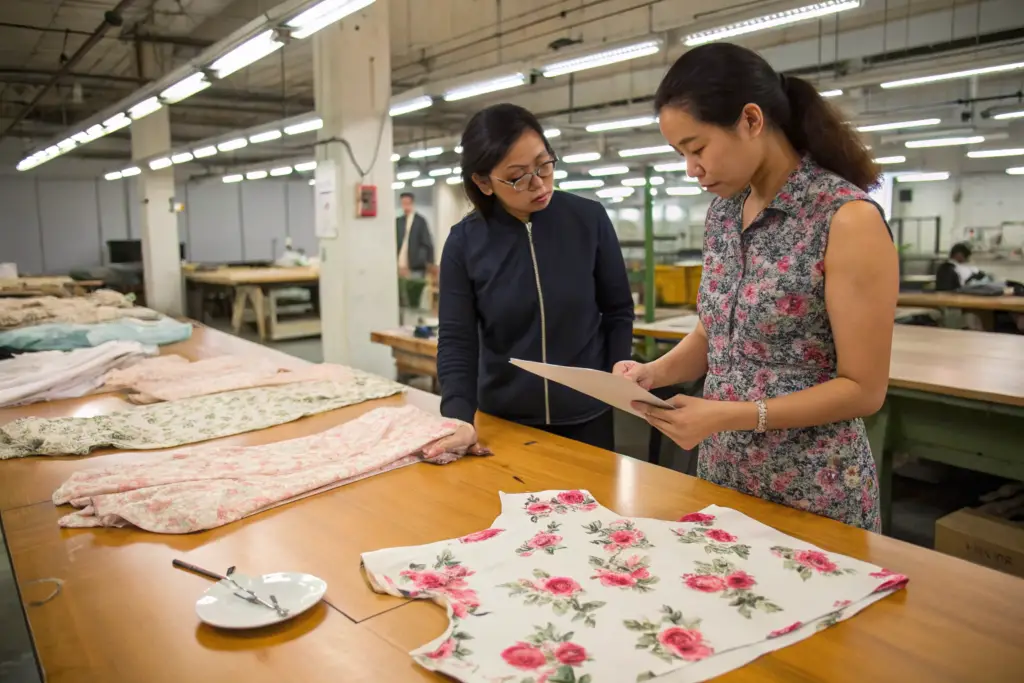
The email lands in your inbox on a Tuesday morning. Subject line: "QC Report – Batch #2407 – FAIL." Your stomach tightens. You open the attachment and scroll through photos of your custom floral dresses. A seam is puckering. The print doesn't match at the side. Several pieces have a faint yellow stain near the hem. 800 units. Your launch date is three weeks away. Your first instinct is to fire off an angry email, demand a full refund, and threaten legal action. I've been on the receiving end of those emails, and I understand the panic completely. But I also know, as the owner of Shanghai Fumao, that how you handle the next 48 hours determines whether you salvage the season or lose it entirely. Let me walk you through a proven process, from discovery to resolution, that protects your brand and your relationship with the factory.
The correct way to handle a defective batch of custom floral dresses is to immediately stop the shipment, document the defects with timestamped photos and measurements, classify the issues by severity using the AQL standard, and negotiate a remedy with the supplier before the goods leave the factory. The remedy options include full rework at the factory's expense, a price discount for acceptable minor defects, or a complete re-cut of the order with expedited production. Never accept a defective shipment without a written agreement on compensation. The factory has maximum leverage to fix problems while the goods are still in their facility.
A defective batch feels like a catastrophe in the moment, but it's actually a test of your supplier relationship. The best factories don't just fix the current problem. They fix the system that caused it so it never happens again. Let me show you exactly how this works from the factory side.
What Should You Do the Moment You Discover a Defect in Your Dress Batch?
The first 24 hours after discovering a defect are critical. Most brand owners waste this window on emotional reactions. They send angry WhatsApp messages in all caps. They call the salesperson and yell. None of this fixes the dresses. What actually moves the needle is cold, systematic documentation. The factory is a problem-solving machine, but it needs clear input. You have to give them evidence they can't dismiss and a process they can follow.
At Shanghai Fumao, when a client reports a defect to us, I don't want opinions. I want data. "The print looks off" is useless. "The floral motif on the left side seam of Piece #47 is misaligned by 1.5 centimeters compared to the approved reference sample, see attached photo DSC_0042" is actionable. The second statement allows my QC team to open that specific piece, measure the deviation, check the cutting marker for that panel, and trace the error to its root cause within hours. Vague complaints trigger vague responses. Specific evidence triggers specific fixes.

How Do You Properly Document Defects for a Factory Claim?
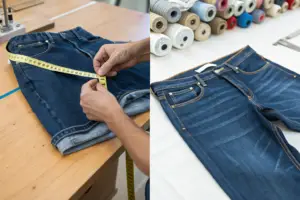
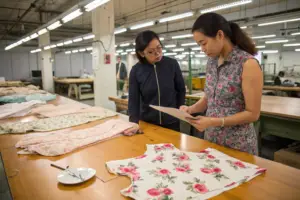
Documentation is the foundation of your negotiation. Without it, you have no leverage. I recommend a three-part documentation package. First, timestamped digital photos. Use your smartphone, but turn on the timestamp watermark in the camera settings. Photograph the full garment on a mannequin or flat on a white surface. Then take macro close-ups of each defect. Hold a ruler or a measuring tape next to the flaw for scale.
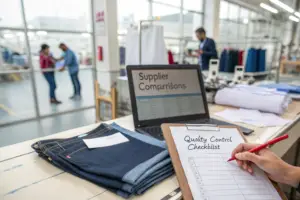
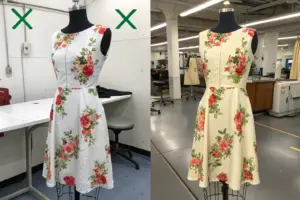
Second, a defect log spreadsheet. Create columns for: Piece Number, Defect Description, Defect Location on Garment, Severity Classification, and Photo File Name. The severity classification should use the AQL standard. A critical defect threatens safety, like a broken needle tip. A major defect makes the dress unsellable, like a large stain or a burst seam. A minor defect is a cosmetic imperfection, like a loose thread or a slightly uneven hem. Third, a comparison to the approved reference sample. Place the defective piece next to the gold-seal sample and photograph them together. The visual difference becomes undeniable. I recall a brand owner from Seattle who sent us a documentation package so thorough, our production manager identified the root cause within 20 minutes. It turned out to be a dull blade on the cutting machine that had frayed the fabric edges on one specific panel. Because the photos showed exactly which panel was affected, we fixed the blade and re-cut those panels that same afternoon.
| Defect Category | Example on Floral Dress | Required Evidence | Typical Resolution |
|---|---|---|---|
| Critical | Broken needle tip embedded in seam | X-ray or metal detector reading photo | Full lot re-inspection; rework all pieces |
| Major | Floral print misalignment over 5mm at center front zipper | Close-up with ruler showing deviation vs. approved sample | Rework affected pieces or negotiate 15-25% discount |
| Major | Visible oil stain larger than 3mm on front bodice | Photo with ruler under daylight lamp | Spot clean or replace panel; negotiate discount if unremovable |
| Minor | Loose thread tail under 1cm inside hem | Close-up photo | Factory trims and re-inspects; no discount warranted |
Why Should You Never Accept a "We'll Fix It in the Next Order" Promise?
This is one of the most dangerous phrases in the apparel industry. A supplier ships a defective batch and says, "Don't worry, I'll give you a 10% discount on the next order to make up for it." The problem is, that next order might never happen. Or when it does, the discount is mysteriously forgotten. Or the factory's situation has changed and they can no longer honor the promise.
The defect must be resolved against the current order. Period. If the goods haven't shipped yet, they stay at the factory until they're fixed. If they've already shipped, the compensation must be immediate: a credit memo against the current invoice, not a vague future discount. I've seen brands accept a "next order discount" only to have the factory raise the base price on that next order by exactly the discount amount. The brand saved nothing. A written credit memo issued against the current proforma invoice is legally enforceable and doesn't vanish into the fog of future dealings. At Shanghai Fumao, if we ship a defective batch, which has happened rarely but honestly in our early years, we issue the credit note immediately. The client deducts it from the balance payment. No games. No future promises. The resolution is tied to the problem, not to a hypothetical future transaction.
How Do You Negotiate a Fair Compensation for a Defective Dress Shipment?
Negotiating compensation is uncomfortable. You don't want to destroy the relationship, but you also can't absorb a financial loss that isn't your fault. The key is to approach the conversation as a joint problem-solving exercise, not a blame game. The factory made a mistake. They know it. You don't need to humiliate them. You need to quantify the damage and propose a fair remedy that allows both parties to move forward.
Start the conversation with facts, not accusations. Say, "Here is what our inspection found. Here is how this impacts our sell-through. What can we do together to fix this?" This framing puts you on the same team. If the factory gets defensive or denies the evidence, that's a red flag. A good factory will acknowledge the problem and immediately start discussing solutions. At Shanghai Fumao, when a defect is confirmed as our responsibility, I open the negotiation by saying, "Here is what we can do to make this right. Tell me if this works for you." I propose a solution before the client has to demand one. That's the standard you should expect.

Should You Ask for a Price Discount or a Full Rework?
This decision depends on the nature and severity of the defect. A full rework is ideal for major structural issues. If the seam is going to burst, if the zipper is installed incorrectly, if the sizing is completely off, the dresses are unsellable in their current state. A discount doesn't help you because you can't put a burst-seam dress on the rack. The factory must re-cut, re-sew, or replace the affected pieces at their own cost, including the cost of replacement fabric.
A price discount makes sense for cosmetic defects that don't affect wearability but do affect the perceived value. A slight print misalignment on the side seam. A subtle color variation from the approved lab dip. A small, removable stain that cleaning might fix. In these cases, calculate your loss. If you planned to sell the dress at $89.99 full price but now must mark it down to $59.99, your lost margin per unit is $30. Multiply by the affected quantity. That's your starting point for the discount negotiation. The factory won't agree to compensate your full retail margin loss, but a reasonable discount of 15% to 30% off the FOB price is standard. Last year, a batch of floral maxi dresses we produced had a subtle streaking in the background print. It was visible upon close inspection but the dresses were structurally perfect. We offered the client a 20% discount on the FOB price. They marked the dresses as a "limited edition artisan finish" and sold them at full price with a story about the unique handcrafted nature of the fabric. They made more margin, not less. That's creative problem-solving.
What If the Factory Refuses to Take Responsibility?
Sometimes a factory will deny fault. They'll say the defect was within tolerance. Or that your spec sheet was unclear. Or that the fabric you approved was the source of the problem. This is where your documentation becomes your weapon. Your original tech pack, your approved sample, your email correspondence, and your inspection photos together form an evidence chain that is hard to dispute.
Escalate methodically. First, request a video call with the factory owner or general manager, not just the salesperson. Present your evidence screen-to-screen. If they still refuse, mention that you'll file a dispute through the trade platform if the order was placed through Alibaba Trade Assurance. Alibaba's dispute resolution heavily favors buyers with strong documentation. If the order was direct, mention that you'll share your experience in industry forums and with your network. No factory wants a reputation for shipping defects and refusing responsibility. I've been in this industry long enough to know that the factory almost always knows they're at fault. Their refusal is usually a test to see if you'll back down. Don't back down. But also don't burn the bridge if the factory eventually comes around. Sometimes, a factory manager needs to save face internally before agreeing to a compensation. Give them a dignified way to say yes. For example, "I understand this was an unusual error for your team. Let's agree on this discount and move forward with the strong partnership we've built." This allows them to accept responsibility without groveling.
How Can a Factory Fix Defective Dresses Before They Ship?
The best-case scenario is catching defects before the container leaves the factory. This is why a pre-shipment inspection, either by your own visit, a third-party service, or the factory's internal final audit, is non-negotiable. When defects are caught in-house, the factory has unlimited access to its sewing lines, its steam presses, its stain removal chemicals, and its replacement fabric inventory. The cost and speed of fixing are dramatically better than any post-shipment solution.
At Shanghai Fumao, our internal process for handling a failed final inspection is called a "Quality Hold and Recovery Protocol." The entire batch is immediately quarantined. It does not get packed. It does not get loaded. Our QC team generates a defect map showing exactly which pieces, which sizes, and which colors are affected. This map goes to the production manager, who creates a rework schedule. The rework team is assigned, machines are reserved, and a deadline is set. The client is notified of the hold, the defect details, and the revised shipment date within the same business day. Total transparency.
What Rework Techniques Can Actually Rescue a Floral Dress?
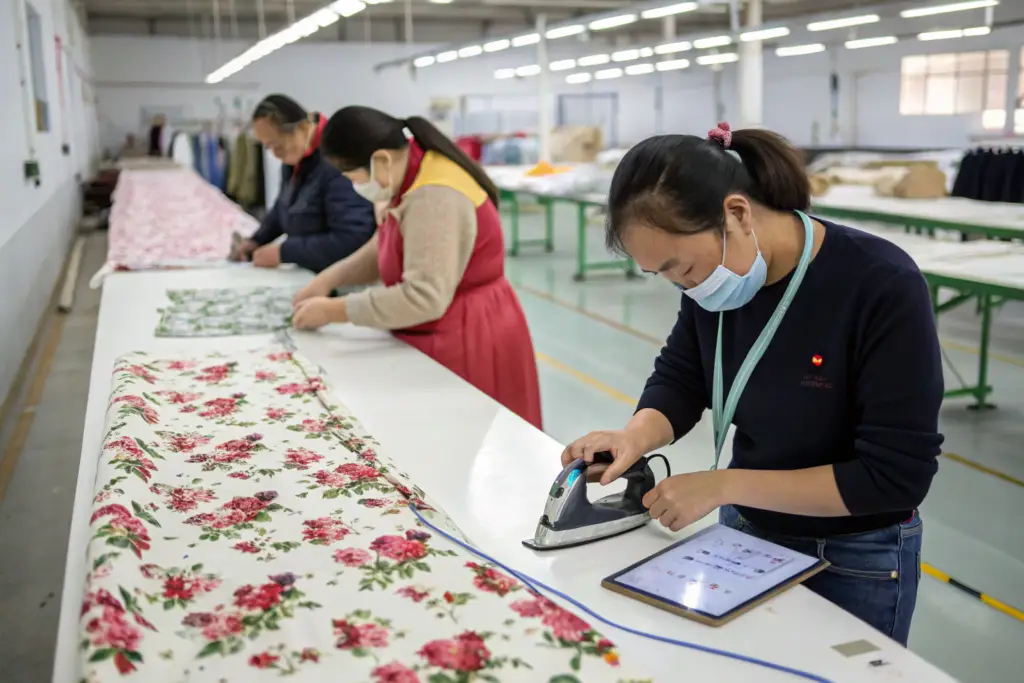
Not all defects are fatal. A skilled rework team can perform surgical repairs that are invisible to the end consumer. The most common rework on floral dresses is seam re-stitching. A seam that puckers due to incorrect thread tension can be ripped open and re-sewn with proper tension. The old needle holes usually vanish after a steam press because the fabric fibers relax and close up.
Stain removal is another common fix. Oil stains from sewing machine lubrication, dirt marks from handling, and light dye transfer can often be spot-cleaned with professional textile solvents. Our rework station has a range of stain treatment chemicals: a mild detergent for water-based stains, a solvent-based cleaner for oil, and an oxalic acid solution for rust marks from metal buttons or zippers. Each stain is treated individually, tested on a hidden seam allowance first, and then air-dried under a fan. After treatment, the garment is re-pressed and re-inspected. For print alignment issues, rework is harder but sometimes possible. If the side seam is misaligned because the panels were sewn shifted by half an inch, the seam can be ripped and re-sewn correctly. However, if the panels were cut incorrectly from the start, rework isn't an option. Those panels must be replaced.
When Is It Cheaper for the Factory to Re-Cut Than to Rework?
Rework is labor-intensive. A seam ripper, a re-stitching, a steam press, and a re-inspection can take 20 to 30 minutes per dress. Multiply that by 500 units, and you're looking at 250 labor hours. At a certain point, it's actually faster and cheaper for the factory to discard the defective pieces and cut new ones from fresh fabric.
The factory will do this calculation internally. If the defect rate on a specific panel is over 30%, and the fabric is still available, re-cutting is usually more efficient than reworking. The new panels are cut correctly the first time, sewn up cleanly, and the old defective panels are scrapped. The scrap fabric is a loss the factory absorbs, but it avoids the risk of a reworked dress failing a second inspection. I recall a project with a brand in Texas where the side front panels on a floral A-line dress had been cut slightly off-grain on about 40% of the batch. The QC team caught it during the inline inspection. Rather than trying to work with the skewed panels, we scrapped them entirely and re-cut the affected sizes from new fabric. The cost of replacement fabric and fresh cutting was about $1,200. The cost of reworking those panels, only to have the dress hang twisted on the body and generate customer returns, would have been far higher in reputation damage alone.
How Do You Prevent the Same Defect From Recurring in Future Orders?
Fixing the current batch solves the immediate crisis. Preventing the next batch from having the same problem builds a long-term supply chain. This is where the real value of a good factory relationship emerges. A supplier that learns from mistakes gets better with every order. A supplier that just patches and ships will disappoint you again in six months.
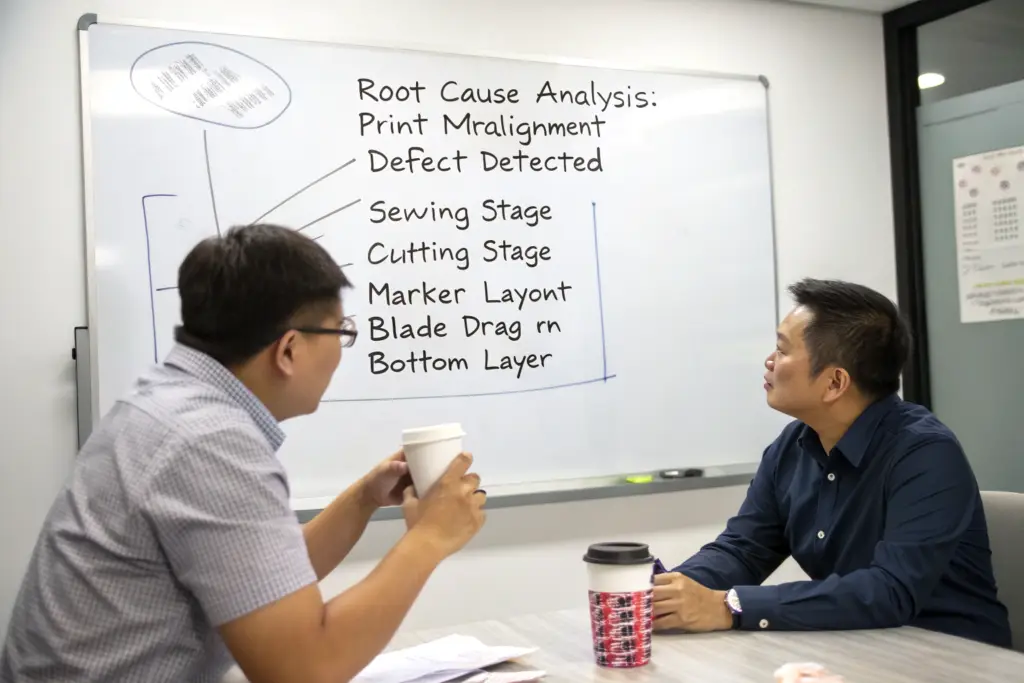
At Shanghai Fumao, every defect that triggers a quality hold also triggers a mandatory Corrective Action Report, or CAR. The CAR is not a punishment. It's a structured investigation. Our QC manager, production manager, and the relevant line supervisor sit down and trace the defect back to its root cause. Was it a machine issue? A training gap? A material problem? A spec sheet ambiguity? Once the root cause is identified, a preventive action is documented and implemented. A copy of the CAR is sent to the client for full visibility. This process has reduced our repeat defect rate to nearly zero.
What Should a Corrective Action Plan From a Factory Look Like?
A real corrective action plan is specific and measurable. It doesn't say, "We will be more careful next time." That's a wish, not a plan. A real CAP says, "The dull blade on Cutting Machine #3 caused fabric fraying on the bottom layer of the spread. Maintenance schedule updated: blades now replaced every 4 cutting hours instead of every 8. Production supervisor sign-off required on the Blade Change Log before each shift. Effectiveness will be measured by zero fraying defects in the next 3 production batches."
Look for four elements in any CAP the factory provides. First, a clear root cause statement. "The defect happened because X." Second, a specific corrective action. "We changed Y to fix the current batch." Third, a preventive action. "We changed Z so this cannot happen again." Fourth, a verification method. "We will check the effectiveness on the next order by doing W." If the factory's plan is vague or missing any of these four elements, push back. Ask for the details. A factory that can't articulate how they'll prevent a recurrence probably won't prevent it. I recall a situation where a brand client noticed that buttonholes on the dress back closure were fraying after washing. Our CAR investigation revealed the buttonhole machine's cutting knife was ever so slightly dull, tearing the fabric fibers instead of slicing them cleanly. The fix was simple: a new knife installed and a preventive maintenance schedule set to replace it every 3,000 cycles. That one small change prevented the defect on five subsequent orders from that same brand.
How Do You Build a Partnership That Naturally Reduces Defects Over Time?
Defect prevention isn't just about checklists and CAPs. It's about the relationship between the brand and the factory. When a factory feels like a disposable vendor, they invest the minimum effort. When they feel like a valued partner, they proactively look for problems before you find them. This is the hidden ROI of long-term factory relationships.
I work differently with a brand that has been with us for three years compared to a brand on their first order. For the long-term partner, I know their tolerance levels. I know which defects are absolute dealbreakers and which can be solved with a quick call. Our production team knows their fit preferences, their fabric hand-feel expectations, and their packaging standards by heart. This institutional knowledge acts as an invisible quality filter. The cutting supervisor remembers that this brand is particular about print placement on the center front, so she double-checks the marker alignment before the knife touches the fabric. The finishing supervisor remembers that this brand rejects dresses with even a single loose thread, so she adds an extra thread-trimming pass. None of this is in the spec sheet. It's relationship capital built over multiple production cycles. If you want consistently high quality, consistently low defects, and consistently smooth problem resolution, invest in a long-term factory partnership. Don't jump between five different suppliers chasing the lowest price. Pick one good factory, grow with them, and hold them accountable with data, not tantrums. That's how you build a supply chain that sleeps soundly at night.
Conclusion
A defective batch of custom floral dresses is a stressful, expensive, and infuriating experience. I won't sugarcoat that. But it's also a moment of truth that reveals exactly what kind of supplier you've chosen. A bad supplier deflects, delays, and disappears. A good supplier documents, negotiates fairly, fixes the problem at their own cost, and installs systems to prevent it from happening again.
Your job as a brand owner is to respond with organized documentation, clear classification of the defects, and a collaborative but firm negotiation stance. Don't accept vague promises tied to future orders. Demand resolution on the current order. Work with the factory to understand whether rework or re-cut is the right path. And if the factory handles the crisis professionally, recognize that you've found a partner worth keeping. The factories that stand behind their mistakes are rare and valuable.
If you're currently dealing with a defective batch from a supplier who won't communicate, or if you want to switch to a manufacturing partner that treats quality failures as learning opportunities instead of secrets to hide, I encourage you to reach out. At Shanghai Fumao, we don't claim to be perfect. No factory is. But we do claim to be honest, responsive, and relentless about fixing our mistakes. Contact our Business Director, Elaine, at elaine@fumaoclothing.com. She can share our documented defect rate, our corrective action process, and references from brands who have experienced exactly how we handle problems when they arise. That's the true test of a supplier, and we're not afraid to be tested.