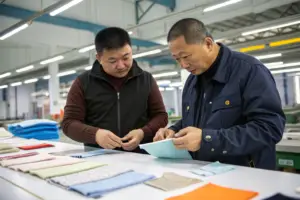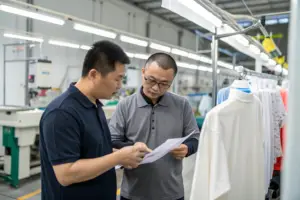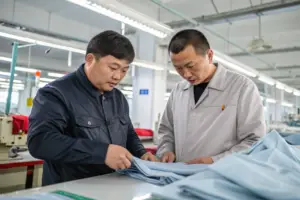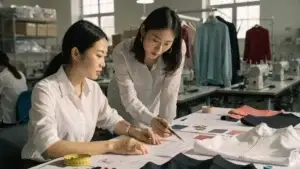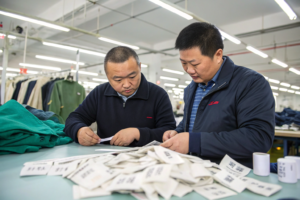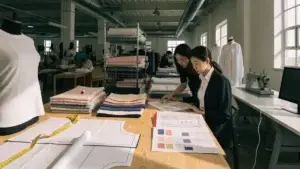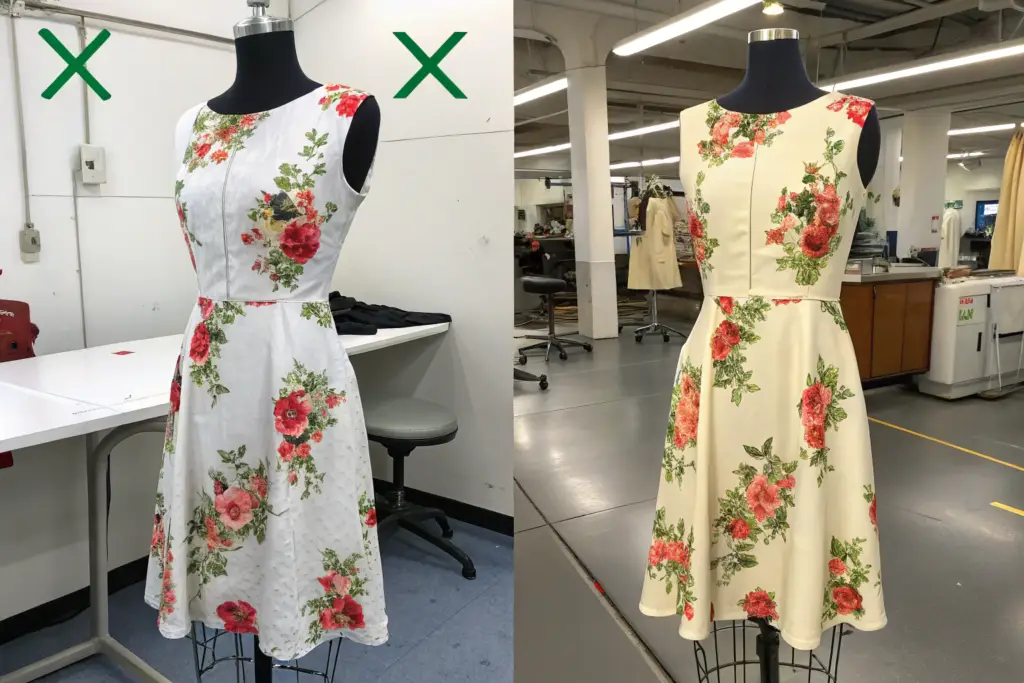
Let me tell you a hard truth about this industry. Two factories can hold up the exact same floral A-line dress sample at a tradeshow. They look identical on the hanger. The price difference is 30%. You naturally pick the cheaper one. Then the bulk shipment arrives. The flowers don't line up at the zipper. The fabric feels like sandpaper. The hem twists after one wash. You call the supplier, and suddenly they don't speak English so well anymore. I've rescued dozens of brands from this exact nightmare. The difference between a premium A-line floral dress and a clearance-rack failure isn't visible in a photo. It's buried in the quality control system, the thread type, and the factory's definition of "acceptable."
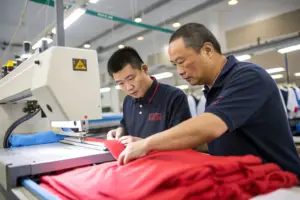
The quality of an A-line floral dress varies dramatically between suppliers based on four hidden factors: fabric print alignment precision at the seams, seam construction strength for curved plus-size cuts, color fastness of the floral dyes, and the strictness of the final inspection protocol. A cheap factory hides flaws under cheap lighting. A premium factory like Shanghai Fumao uses inline inspection at every production stage, catching misaligned prints and weak stitches before the dress is ever finished.
The price tag doesn't tell you the full story. The real cost shows up later, in return rates and damaged brand reputation. Let's pull back the curtain on exactly where suppliers cut corners and how to spot the difference.
Why Do Two Floral Dresses With the Same Spec Sheet Look Completely Different?
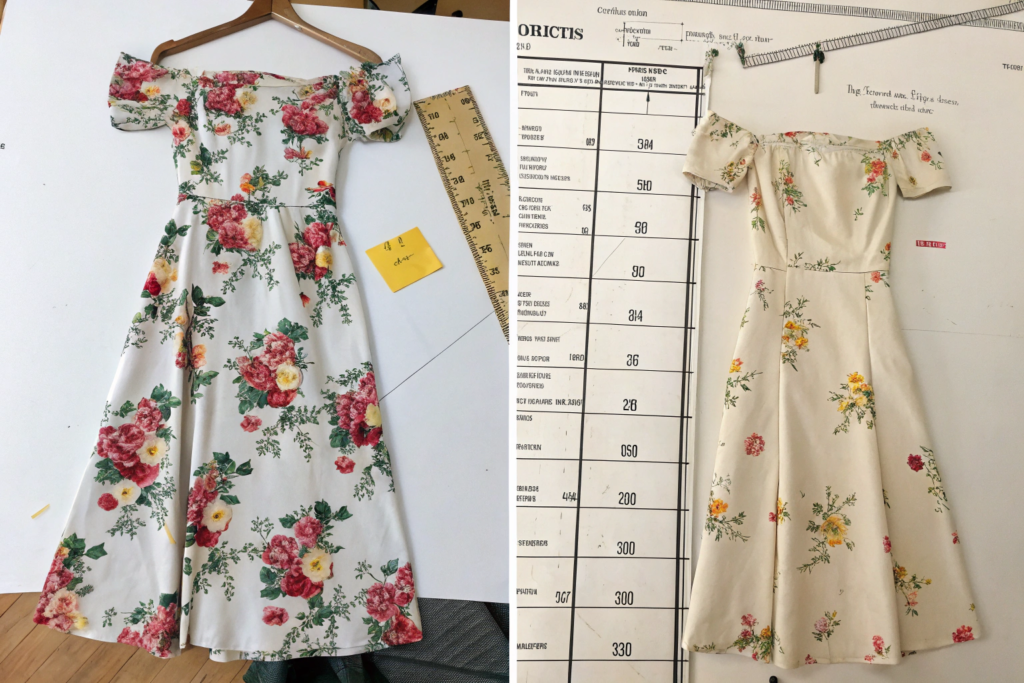
A spec sheet is just a starting point. It gives measurements: bust circumference, dress length, sweep at the hem. But it doesn't specify the feel of the fabric after washing. It doesn't dictate how to place the floral motif on the cutting table. A lazy supplier will cut fabric in bulk stacks of 50 layers thick. The blade drags. The bottom layers shift by half an inch. The front and back panels don't match. A quality-focused supplier cuts in precise layers and actually looks at where the flowers land. I've learned that a spec sheet only controls about 60% of the final dress appearance. The other 40% comes from the factory's internal standards that the buyer never sees written down.
Does the Cutting Method Actually Change the Dress Shape?
Absolutely. And this is where many brands discover the gap between sample and bulk. A sample is usually cut by hand, one piece at a time, by a senior pattern maker. The bulk production, however, might be cut using an automated spreading machine and a straight knife cutter. If the operator isn't skilled, they force the knife through tight curves.
This stretches the fabric, especially on woven floral cottons and rayons. The side seams then pucker when sewn because one piece is subtly distorted. At Shanghai Fumao, we use a band knife cutter for curved A-line panels. The blade is a continuous thin loop. It doesn't drag the fabric. It slices cleanly. I recall a project for a boutique brand in New York. They ordered 1,500 floral A-line midi dresses from us, but they had previously sampled with a smaller workshop. That workshop had used hand shears for the sample. When we took over the bulk, our first task was to adjust the seam allowance by 0.2 centimeters to compensate for the slightly cleaner edge our band knife produced. If we hadn't made that adjustment, every dress would have been slightly bigger than the approved sample. That's a technical conversation most cheap suppliers won't have. They'll just cut and hope you don't notice.
| Cutting Variable | Low-Cost Supplier Approach | Quality-Focused Supplier Approach |
|---|---|---|
| Fabric Layer Height | 40-50 layers to save time | 15-20 layers for precision |
| Cut Edge Quality | Jagged, fraying edges from dull knives | Clean, sealed edge from sharp band knives |
| Pattern Alignment | Cuts through floral motifs arbitrarily | Manual single-ply cutting for large flower placement on center front |
| Blade Type | Straight knife that drags on curves | Band knife or laser cutter for smooth curves |
What Hidden Fabric Treatments Affect the Final Look?
Not all floral fabrics arrive at the factory ready to cut. A high-end supplier will perform a relaxation shrinkage test on the fabric roll before a single piece is cut. This involves taking a square of fabric, washing it, drying it, and measuring how much it shrank. Cotton blends can shrink 2-3%. Rayon can shrink 5% or more.
If the factory skips this step, they cut the dress panels at the spec sheet measurements. The dress looks perfect until the end consumer washes it once. Then the lining shrinks at a different rate than the shell. The hem becomes uneven. The dress looks twisted. We always pre-shrink our fabric for A-line dresses using a steam relaxation machine. It's a slow process. It costs money to run the boiler. But it means the size Medium that leaves our factory is still a size Medium after the customer launders it. A brand client from Texas learned this the hard way with their previous supplier. The cotton floral dresses shrank nearly two full sizes. We had to re-cut the entire order using pre-shrunk fabric to save their reputation.
How Do Seams and Stitching Standards Vary Between Factories?
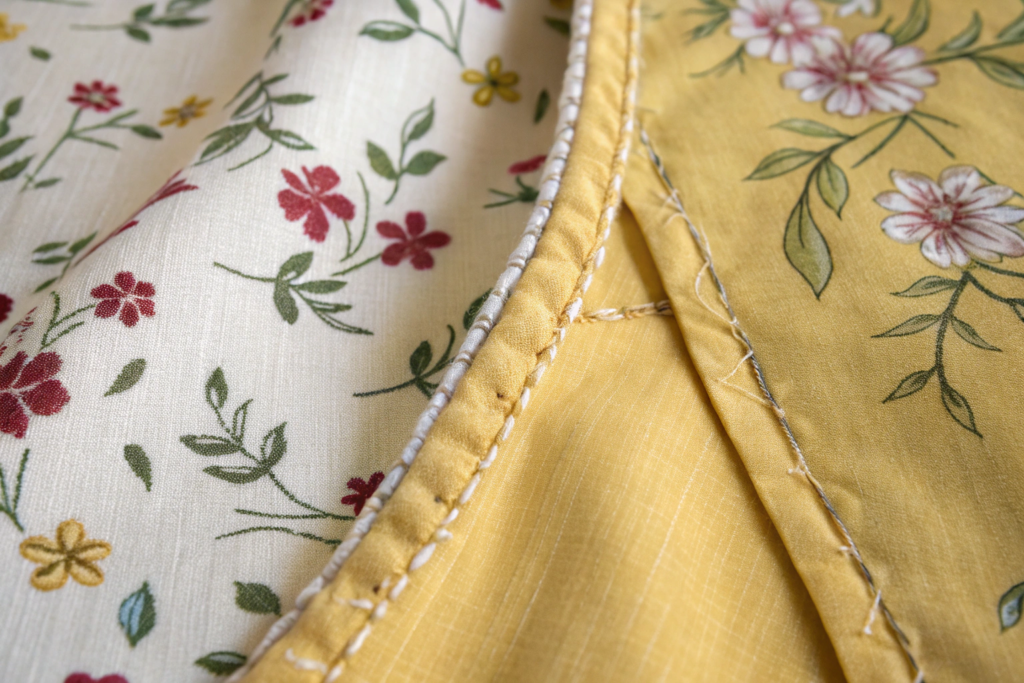
The seam is where a dress either holds together or falls apart. On an A-line floral dress, the side seams carry a lot of stress, especially at the hip curve. A cheap factory uses a basic lockstitch with a stitch density of 8 or 9 stitches per inch. A quality factory uses 12 to 14 stitches per inch with a safety stitch or a 5-thread overlock. The difference isn't just cosmetic. The tighter stitch creates a stronger seam that resists bursting when the wearer sits down or bends over. I always tell my clients to look at the reverse side of a sample dress. That's where the truth hides.
Why Does Thread Quality Determine the Dress Lifespan?
Thread is the cheapest component in a garment, but choosing the wrong one destroys the entire dress. Low-end factories use weak spun polyester thread because it's $2 per cone. It's fuzzy. It breaks under tension. After six washes, the seams start grinning. That means the stitches don't break, but the thread stretches permanently, and you see little gaps of light between the fabric layers.
We use corespun thread for all stress seams on plus-size and standard A-line dresses. It has a polyester core wrapped in cotton or poly sheath. The core gives it strength. The sheath gives it a soft, smooth surface that slides through the fabric without puckering. I remember a specific incident from 2022. A Los Angeles brand sent us a competitor's dress to analyze. The side seam had burst open at the hip on a size 20W. We examined the thread under a magnifying glass. It was low-grade spun polyester. The tensile strength test showed it broke at just 2.5 kg of force. Our standard corespun thread breaks at 5.5 kg. The cost difference per dress was roughly $0.08. That eight-cent saving caused a return that cost the brand $15 in shipping and a lost customer.
How Can You Spot Invisible Zipper Installation Problems?
The invisible zipper on the back of a floral A-line dress is a quality checkpoint. A bad supplier installs the zipper with a regular zipper foot. The stitches land far from the zipper teeth. When the dress is worn, the zipper is visible as a ugly, rippling scar down the back. The floral print breaks abruptly at the zipper tape.
A skilled sewer uses an invisible zipper foot. The stitches run right next to the teeth. When the zipper is closed, the fabric folds over it completely. The floral pattern looks uninterrupted. But there's a second hidden issue: the base of the zipper. If the sewer back-tacks the zipper bottom carelessly, the stitches bunch up into a hard, scratchy knot. On a dress without a lining, that knot rubs against the wearer's lower back. It's uncomfortable and looks lumpy from the outside. Our QC checklist includes a "zipper base smoothness" touch test. Every single dress gets a hand check at the zipper bottom. It's a 5-second step that most bulk factories skip because they're rushing to meet a quota.
What Makes Floral Print Quality Vary From Supplier to Supplier?
The floral print is the soul of the dress. It's the first thing the customer sees. Yet, print quality is one of the biggest variables between factories. The issue starts at the fabric mill. Some mills use cheap reactive dyes that look bright on the roll but wash out after three laundry cycles. Other mills use high-quality pigment prints that sit on top of the fabric, which never fade, but can feel stiff if applied too thickly.
We guide our clients through this choice. For a soft, drapey rayon A-line dress, reactive dyes are better because they bond with the fiber and keep the hand-feel soft. But they require strict washing fastness testing. For a structured cotton poplin A-line, high-quality pigment prints work beautifully and hold up to repeated washing. I've seen too many brands pick a fabric based purely on a photo of the print, without understanding the chemistry behind it.
Why Do Some Floral Prints Fade After Just a Few Washes?
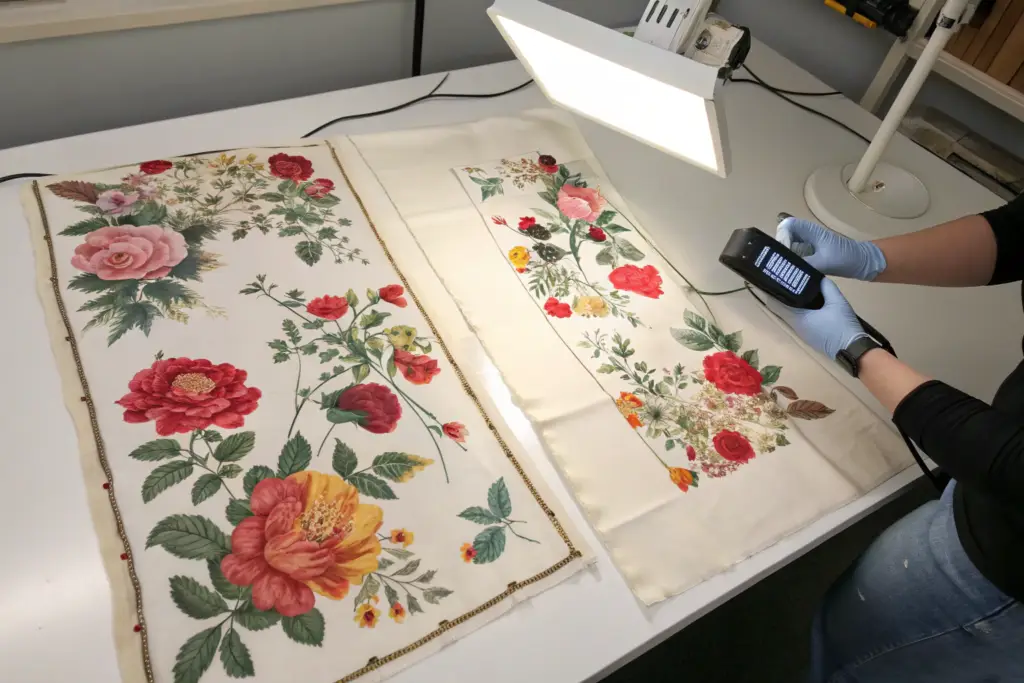
Fading happens because the dye molecules didn't properly bond with the cellulose fibers. The factory or mill skipped the fixation process to save time and steam energy. Fixation requires steaming the printed fabric at precisely 102 degrees Celsius for 30 to 45 minutes. This opens the fiber pores and locks the dye inside.
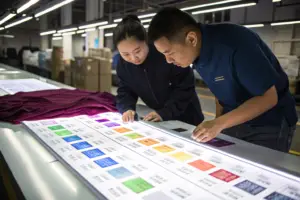
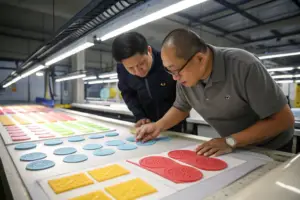
If the steamer temperature is too low, or the fabric moves through too fast, the dye sits on the surface like dust on a table. The first wash wipes it right off. At Shanghai Fumao, we require a wash fastness rating of grade 4 or higher on the AATCC scale for all our floral prints. We test this in our in-house lab before cutting. We take a swatch from every dye lot. We wash it five times. We compare it to an unwashed control swatch using a grey scale. If the color change is more than a half-point, we reject the fabric lot and send it back to the mill. A client from San Diego once sent me a photo of a competitor's dress after three washes. The vibrant sunflowers had turned a sickly pale yellow. The white background was now a murky cream color because the dark green leaves had bled during washing. That's a complete product failure, and it started with a factory that simply didn't test.
How Do You Check if the Print is Aligned Correctly on an A-line Skirt?
The A-line shape creates a specific print alignment challenge. The skirt panels are triangular. The print gets cut off at an angle. A lazy supplier ignores this completely. You receive dresses where a large, beautiful rose sits perfectly on the left hip, and is completely absent on the right. Or worse, a bright red flower is cut exactly in half down the center back zipper. It looks like a mistake, because it is.
We have a protocol called "print indexing." On the cutting marker, we designate specific alignment points. For an A-line skirt panel, the first alignment point is the center front. The second is the hem sweep. We ensure that if a dominant floral motif appears near the center front, it matches on the bodice and skirt when the waist seam is joined. On a recent project, a New York brand ordered a large, bold watercolor floral print for a maxi A-line. The blooms were huge, about 8 inches wide. We had to place each bloom manually on the marker, ensuring they didn't land on the bust apex like a target. That manual placement added about 15% to the cutting time, but the result was a dress that looked custom-made. That's the difference between a supplier who sees fabric as a commodity and one who sees it as a design element.
How Do Final Inspection Standards Impact the Customer Experience?
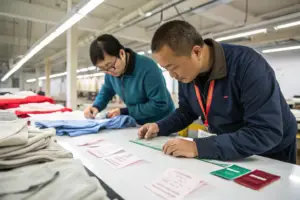
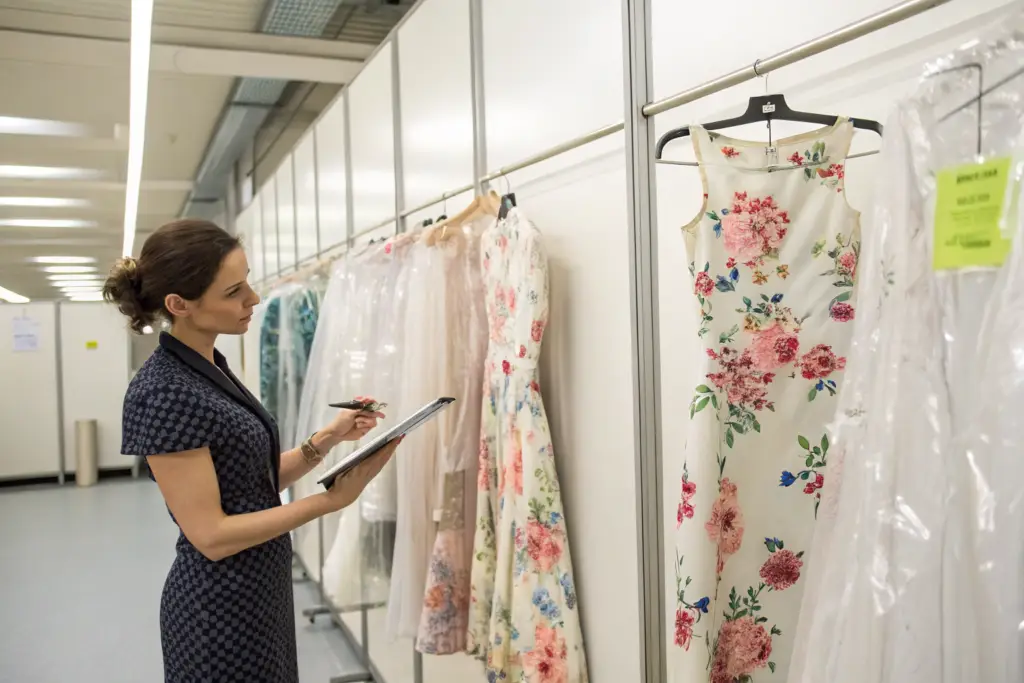
The final inspection is the last line of defense before the dress reaches your customer. This is where the supplier's true attitude toward quality reveals itself. A low-end supplier does a "tail-end check" on 10% of the order, usually the first ten pieces, and calls it done. A premium supplier does an AQL 2.5 inspection on the entire lot, which means checking 200 pieces out of 1,200 and enforcing strict acceptance criteria.
But beyond the statistics, it's the checking environment that matters. I've visited factories where the inspection table is in a dark corner with a single flickering fluorescent tube. You can't see pale pink flowers on a white background in yellow light. Our inspection stations at Shanghai Fumao are equipped with D65 daylight-simulating lamps. This is the international standard for color assessment. Under these lights, a slight shade variation or a subtle stain becomes immediately visible. The defect rate we catch is higher, but so is the quality of the product that leaves our door.
What Specific Defects Do Strict Inspectors Catch?
A good inspector looks for three categories of defects: critical, major, and minor. A critical defect is something that could harm the wearer, like a broken needle tip left in the seam. We use needle detectors on every single dress. A major defect is something that makes the dress unwearable or unsellable, like a large oil stain or a hole in the fabric. A minor defect might be a loose thread or a slightly uneven hem by 0.3 centimeters.
The difference between suppliers is how they handle these findings. A bad supplier re-classifies major defects as minor to pass the inspection. They ship the dress anyway, hoping the customer doesn't notice. A good supplier fixes the problem. If we find a recurring defect during the AQL inspection, we stop the shipment. We go back to the production line and solve the root cause. For a batch of 800 floral A-line dresses last autumn, our final inspector noticed the back neck binding was slightly wavy on about 15% of the checked samples. It wasn't a structural flaw, but it looked cheap. We failed the inspection internally. We pulled every dress off the rack, sent them back to the finishing station, and re-pressed the neck binding with steam. The shipment was delayed by two days. The client never knew there had been a problem, because they never saw a flawed dress. That's the commitment a quality supplier makes without being asked.
How Does a Transparent Supplier Handle a Quality Failure?
Even with perfect systems, failures happen. Fabric gets a hidden flaw. A dye lot acts unexpectedly. The mark of a truly great supplier isn't zero defects. It's what they do when a defect appears. A dishonest supplier hides it behind falsified certificates and photoshopped inspection images. I've heard horror stories of brands receiving "inspection photos" that were actually taken of a different order.
We take the opposite approach. If we find a problem that affects the entire lot, I personally get on a call with the brand owner. I show them high-resolution photos. I explain what went wrong, why it happened, and present two or three solutions. For instance, earlier this year, a batch of floral printed viscose arrived with a subtle streaking in the background white. It wasn't visible from three feet away, but up close, it looked like faint pinstripes. We could have cut and sewn it. Most consumers might not have noticed. But we stopped production. We sent the photos to the brand owner in Chicago immediately. Together, we decided to proceed with a 15% price concession on that style, which the brand passed on as a limited-time discount to their customers. The brand was upfront about the "unique fabric characteristic" in their product description. The batch sold out. Trust was maintained. A supplier who hides a problem steals your ability to manage it. Transparency in quality control protects your brand long after the shipment is delivered.
Conclusion
The quality difference in A-line floral dresses between suppliers comes down to hundreds of small, invisible decisions. It's the number of fabric layers on the cutting table. It's the brand of thread in the sewing machine. It's the temperature of the fixation steamer at the print mill. It's the type of lightbulb over the inspection table. These are choices the brand owner doesn't see until the returns start piling up.
A cheap dress isn't cheap if it costs you a loyal customer. A premium dress isn't expensive if it builds your brand's reputation for consistent fit and lasting beauty. The floral print that remains vibrant after a year of washing, the A-line silhouette that flatters without twisting, the invisible zipper that disappears into a sea of perfectly matched flowers—these are the results of a factory that invests in skilled people, proper equipment, and honest inspection protocols.
If you've been burned by inconsistent quality or hidden defects from previous suppliers, you know how exhausting it is to manage from thousands of miles away. You need a manufacturing partner who runs toward problems, not away from them. If you want to experience a different standard of quality control and transparent communication for your next floral A-line dress collection, reach out to our Business Director, Elaine. Her email is elaine@fumaoclothing.com. Let's build dresses that earn repeat customers, not return requests.