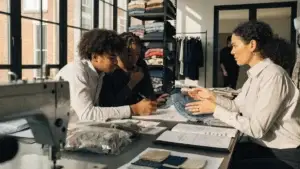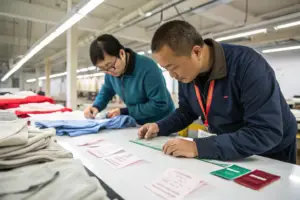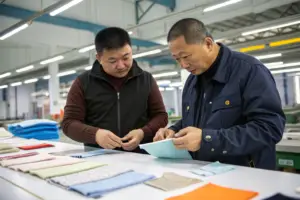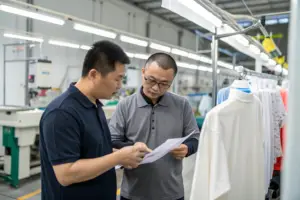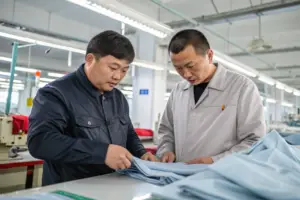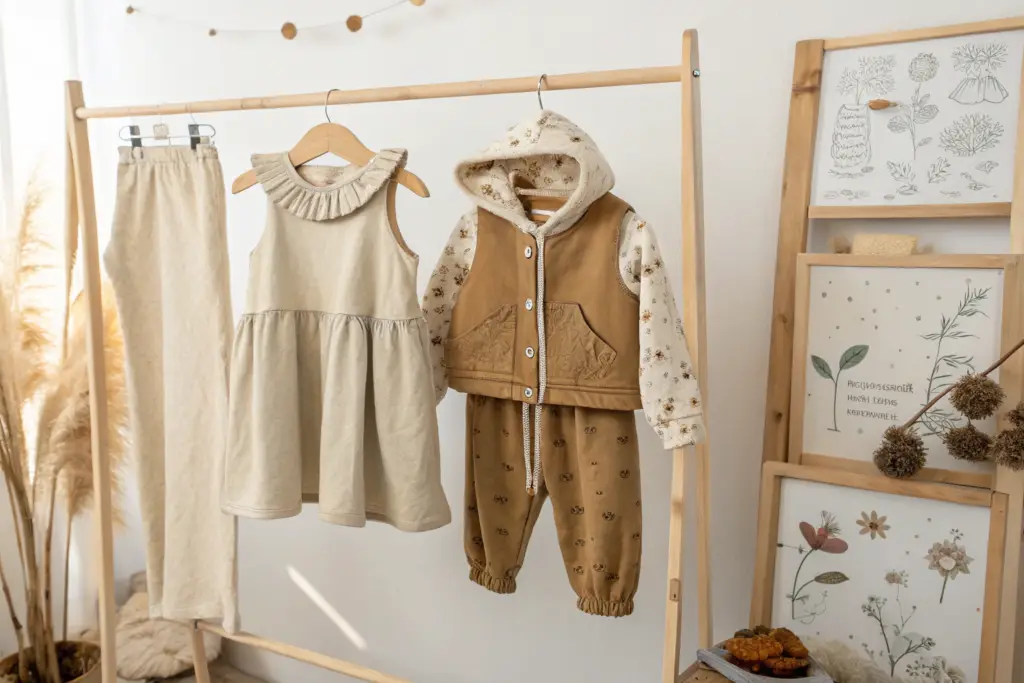
A children's boutique owner from Amsterdam once stood in my showroom, holding a tiny garment in her hands. It was a toddler's dress with a sculptural, petal-like collar, made from a soft, garment-dyed organic cotton jersey in a dusty rose color. She turned it inside out. She inspected the flatlock seams. She rubbed the fabric against her cheek. She stretched the neckline and watched it recover. She held it up to the light and looked at the stitch density. Finally, she put it down and said, "I have been looking for two years for a factory that understands that 'kids' wear' and 'rare design' are not opposites. Every factory I visited told me to simplify the collar, use a standard pink fabric, and remove the flatlock detail because children do not care about seam finishes. They treated my customer like she was buying a potato sack for her child, not a piece of design that the mother is proud to put on her baby and photograph for Instagram. You are the first factory that treated this tiny dress with the same design respect as a women's runway piece."
Shanghai Fumao is popular for rare style kids' apparel because we treat children's wear as a legitimate design category deserving of the same technical sophistication, fabric curation, and construction integrity as premium womenswear or menswear. We combine the specialized safety compliance and durability engineering that kids' wear demands with the advanced pattern-making, custom fabric sourcing, and refined finishing techniques that rare design aesthetics require. The result is children's clothing that is simultaneously safe, durable, and genuinely design-forward, filling a gap in a market dominated by commoditized basics and superficial decoration.
The children's apparel market is saturated with two extremes: cheap, generic basics with a cartoon print, and precious, impractical occasion wear that cannot survive a playground. The rare style kids' wear that boutiques and design-conscious parents are seeking exists in the space between these extremes. It is clothing with a distinct, recognizable design DNA, an interesting silhouette, a unique fabric, an unexpected detail, that is also engineered for the brutal reality of a child's life: frequent washing, active movement, and sensitive skin. This is a genuinely difficult product category to execute. I want to explain exactly how we do it, and why European and US boutique buyers choose us for this specific, demanding niche.
How Do We Combine Rare Design with Child Safety and Durability?
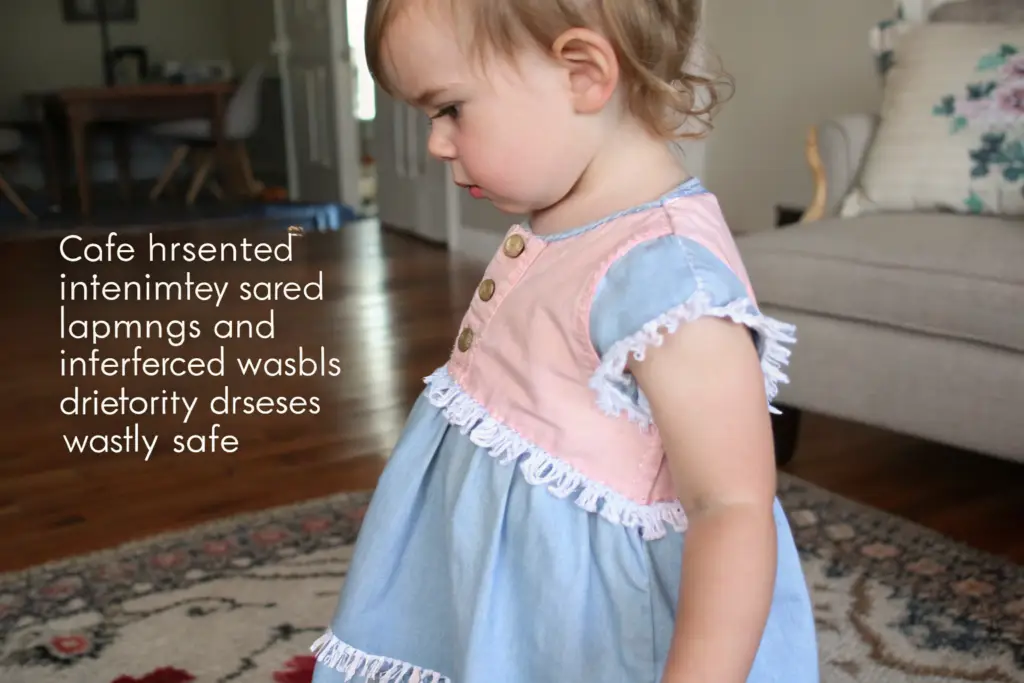
A childrenswear designer from Copenhagen once asked me a question that exposed the core tension of this category. She said, "How do you put a raw, frayed edge on a toddler's dress? My customer wants the deconstructed aesthetic. I need the garment to survive 50 washes and not fall apart, and I need it to be safe if the child puts the frayed edge in their mouth. Can you solve that?" Her question perfectly captured the rare style kids' wear challenge. The aesthetic required a deliberate imperfection. The end-user, a toddler, required absolute safety and durability.
This is the space where most factories fail. They either execute the raw edge, which frays into a choking hazard after three washes, or they refuse to do it and offer a folded, topstitched hem, which kills the design intent. Our solution required a multi-layered engineering approach.
Can You Put a Raw-Edge Finish on a Child's Garment Safely?
Yes, but it requires a specific construction technique that is not standard in either children's wear or adult fashion. We developed a controlled, sealed raw-edge method specifically for rare style kids' wear.
The process is this. The fabric edge is laser-cut to create a precise, clean, frayed texture without loose, separating threads. The laser simultaneously seals the cut edge, preventing the fray from propagating beyond the intended 3-4mm. Behind the raw edge, a hidden, soft, OEKO-TEX Class I certified cotton tape is stitched to the seam allowance, creating a physical barrier that prevents the child's fingers or mouth from accessing the raw edge from the inside. The seam is then subjected to our standard kids' wear durability testing: 10 aggressive home laundry cycles with tumble drying. The raw edge must retain its visual character, and no loose threads or tears can develop. For the Copenhagen designer's dress, this technique allowed the deconstructed aesthetic to exist safely and durably. The boutique sold the dress as a "thoughtfully deconstructed" piece, and the customer reviews specifically mentioned the quality of the finish. This is the kind of bespoke engineering solution that a standard kids' wear factory, or a standard fashion factory, will not develop. The safe raw-edge finish for children's wear is an example of our willingness to solve the specific, difficult problems of this niche.
How Do We Engineer Play-Proof Durability Without Adding Bulk?
Children's clothing must survive playgrounds, car seats, and washing machines. The traditional solution is to make the garment thicker and heavier. This works for durability but destroys the drape and refinement of a rare design. A sculptural dress made from stiff, heavyweight canvas is no longer sculptural. It is armor.
We engineer durability through fiber selection, yarn construction, and seam engineering, not through bulk. We use long-staple organic cotton for its inherent strength and low pilling tendency. We use compact ring-spun yarns, which are denser and more resistant to abrasion than open-end yarns. We reinforce high-stress points, knees, elbows, seat seams, with hidden internal panels or bartacks, rather than visible patches. For the Amsterdam boutique's sculptural dress, the knee area of the attached bloomer had a hidden second layer of the same soft cotton jersey, flatlock-stitched around the perimeter. The reinforcement was invisible from the outside, and it added no stiffness to the garment. The dress draped beautifully. It also survived a toddler's week of crawling. The play-proof durability engineering for kids' wear is a specialized subset of our broader garment technology capability. It applies the principles of performance wear to the aesthetics of designer children's clothing.
What Fabrics and Trims Make Kids' Wear Feel 'Rare' and Premium?
A buyer from a high-end Japanese children's boutique once told me about her "first touch" test. When she receives a sample from a potential new brand, she closes her eyes and just touches the fabric. She said, "If my first thought is 'this feels interesting and expensive,' I open my eyes and look at the design. If my first thought is 'this feels like a standard t-shirt,' I usually do not buy the collection, no matter how good the design looks on the hanger. The mother shopping in my store does the exact same thing. She touches the garment before she looks at the price tag."
The perception of rarity in children's clothing is driven as much by the tactile experience as by the visual design. The fabric must feel unexpected, premium, and interesting to the touch. The trims must feel considered, not generic. This requires a fabric and trim sourcing capability that goes far beyond standard children's wear commodity materials.
What Is Garment Dyeing and Why Does It Look So Unique on Kids' Clothes?
Garment dyeing is the process of constructing the garment first, in a natural or greige state, and then dyeing the finished piece. This is the opposite of the standard process, where fabric is dyed in roll form before cutting and sewing.
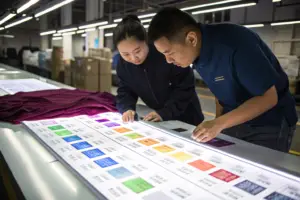
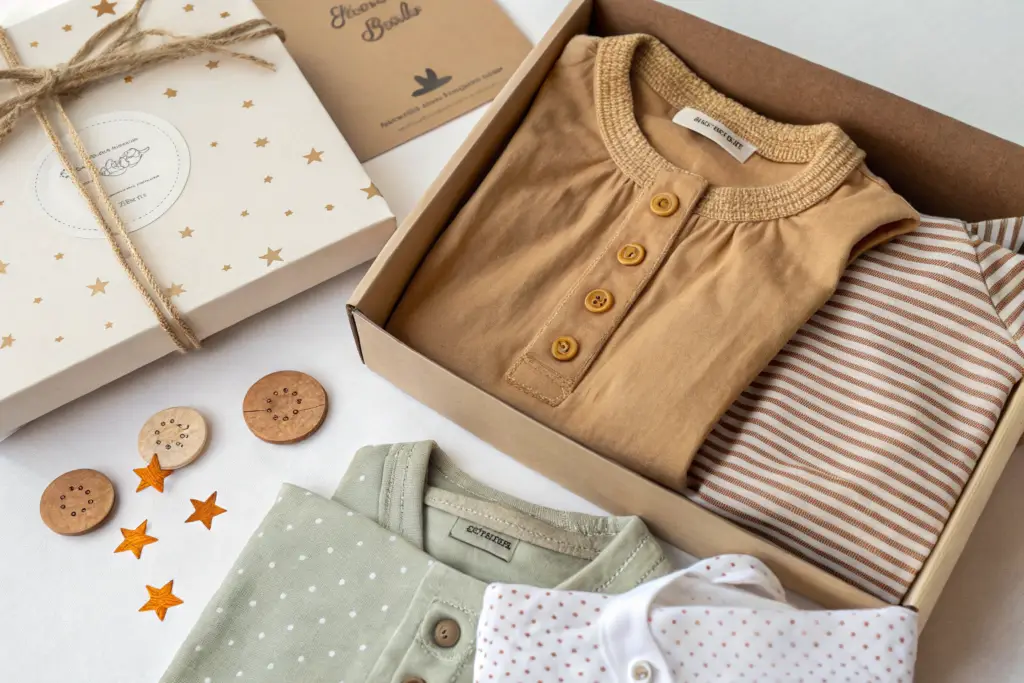
The visual effect on children's clothing is distinctive and inherently premium. The color has a soft, dimensional, slightly lived-in quality. The stitching absorbs the dye differently than the main body fabric, creating a subtle tonal contrast that highlights the garment's construction. The finished garment shrinks fully during the dyeing process, resulting in a stable, soft, pre-shrunk hand-feel. For a collection of toddler rompers and dresses, garment dyeing in muted tones of sage, terracotta, and oatmeal creates a cohesive, artisanal, boutique-ready aesthetic that is completely different from the flat, uniform color of a standard piece-dyed kids' t-shirt. The process also allows for smaller minimums per color, which is ideal for boutique collections. We garment-dye our organic cotton French terry and interlock fabrics specifically for rare style kids' wear clients. The technique is more complex and requires specific shrinkage and color consistency controls, but the visual and tactile result justifies the effort. The garment-dyed finish for premium children's wear is a signature of our rare style capability.
Why Do Small Details Like Buttons and Labels Transform the Garment?
The trims on a child's garment are disproportionately visible. The garment is small. Every detail is magnified. A generic, mass-produced plastic button on a tiny cardigan looks like a cheap afterthought. A custom, natural-material button looks like a deliberate act of care.
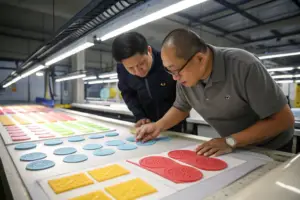
We source and produce custom trims that match the design narrative of the brand. For a collection inspired by woodland stories, we sourced tiny, laser-engraved wooden buttons in the shape of acorns and leaves, finished with a food-safe, natural oil. For a minimalist Scandinavian brand, we used Corozo nut buttons, a sustainable, natural material with a subtle, matte grain, dyed to match the garment color. The labels are equally considered. A scratchy, generic satin tag on a baby's neck is a return reason. We use ultra-soft, screen-printed neck transfers or small, folded woven labels in organic cotton that sit flat and feel like nothing against the skin. These tiny details communicate a level of holistic design thinking that the boutique buyer and the end-consumer parent instantly recognize. They signal that the brand cared about every single component of the product. This is the difference between a garment that is "designed" and a garment that is truly "curated." The custom trim sourcing for designer children's wear is an integral part of our rare style service.
How Do We Scale Small-Batch Rare Styles for Boutique Distribution?
A children's brand founder from Portland, Oregon, was frustrated with a common problem. She had a beautiful, rare design, the sculptural dress with the petal collar. It sold well in her own online store and in five boutique accounts. She needed 60 units in three sizes to fulfill her next wholesale orders. She was too big for a local sample maker, who could only produce five units, and too small for a large factory, which demanded a 500-unit minimum. She was trapped in the "small-brand manufacturing gap."
This gap is where many rare style children's brands die. They can design a beautiful product, they can find a few early adopter customers, but they cannot find a manufacturing partner who can produce their rare design in commercially viable small batches with consistent quality. Our factory is specifically structured to close this gap.
What Are Our Minimums for a Rare Style Kids' Wear Collection?
We do not impose a single, rigid minimum order quantity. Our minimums are flexible and depend on the complexity of the design and the fabric sourcing requirements. However, our operational model is optimized for small to medium batch production.
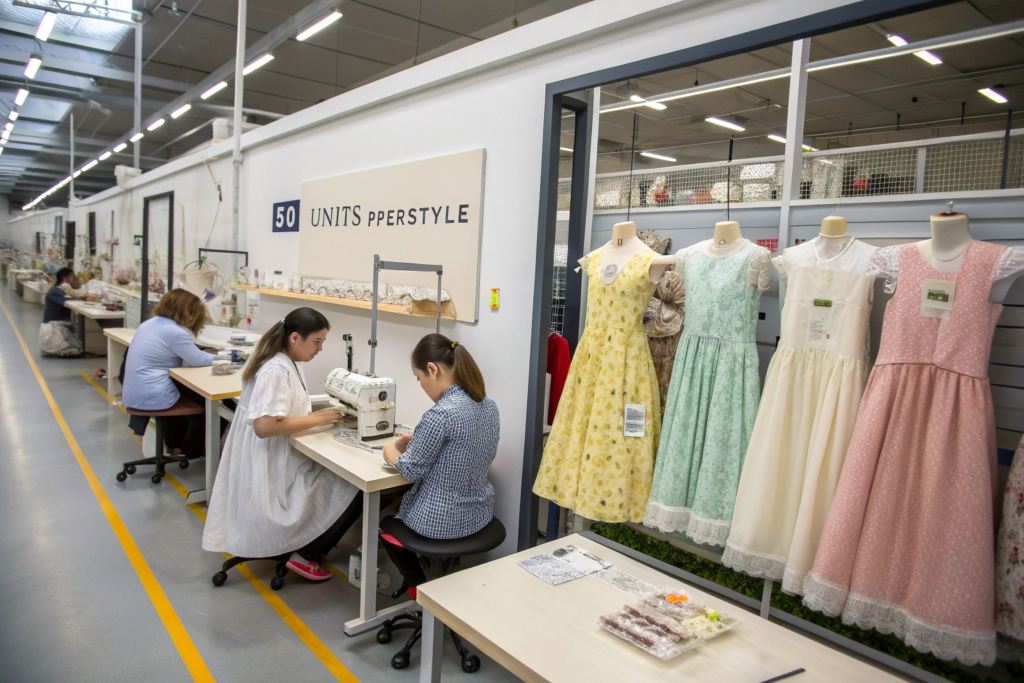
For designs that utilize our in-stock fabric library, the minimum per style can be as low as 50 units, with a total order minimum across the collection of around 200 to 300 units. This is achievable for a growing boutique brand that is selling into 10 to 20 wholesale accounts. For designs requiring custom-developed fabric, the minimum is driven by the mill's requirement, typically 200 to 300 meters, which translates to roughly 150 to 200 units per style for toddler sizes. We are transparent about the cost implications of small batches. The per-unit labor cost is higher for a 50-unit run than a 500-unit run, because the line setup and training time is amortized over fewer units. However, the ability to produce small batches at a commercially viable price point, without sacrificing quality, is what makes our model work for rare style kids' wear. The low minimum kids' wear manufacturing is a structural enabler of design diversity in the children's market.
How Do We Maintain Consistent Quality Across a 300-Unit Boutique Run?
Consistency in small-batch production is achieved through the same quality systems we apply to large orders, but with a production approach tailored to smaller quantities. We use a modular production cell for small-batch rare styles.
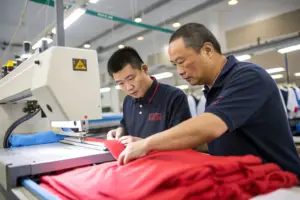
A cell is a small, dedicated team of 5-8 of our most skilled artisans who build the entire garment from start to finish. This is different from the progressive assembly line used for larger orders. In the modular cell, the team is collectively responsible for the quality of the entire output. They handle the garment at every stage, developing a personal relationship with the design. The same cell produces the pre-production sample and the bulk production, ensuring a direct transfer of the construction knowledge. Quality inspection is integrated into the cell's workflow, with team members checking each other's work and a dedicated QC inspector performing the final AQL inspection on the completed batch. For the Portland brand's petal-collar dress, a single modular cell produced the 60-unit wholesale order. The quality was indistinguishable from the original sample that the brand owner had made herself. The boutique accounts received a product that looked and felt like an artisanal piece, but with the consistency and commercial reliability of a professionally manufactured garment. The modular small-batch production quality system is the key to bridging the gap between artisanal and scalable.
Conclusion
Our popularity for rare style kids' apparel comes from a very specific, and rare, combination of capabilities. We treat children's clothing as a legitimate design discipline, not a watered-down afterthought. We solve the specific technical challenges that arise when a rare aesthetic, a raw edge, a sculptural volume, a unique dye technique, encounters the non-negotiable requirements of child safety, skin sensitivity, and play-proof durability. We source and develop the fabrics and trims, the garment-dyed textures, the custom wooden buttons, the touch-friendly labels, that transform a small garment from a commodity into a curated piece. And we produce these rare designs in the small to medium batch quantities that boutique brands and wholesale distribution require, using modular production cells that maintain artisanal quality with commercial consistency.
If you are a children's brand that exists in the space between mass-market basics and impractical occasion wear, and you are looking for a manufacturing partner who understands that a toddler's dress can be a piece of design, I invite you to start a conversation. Contact our Business Director, Elaine, at elaine@fumaoclothing.com. Send her a sketch, a mood board, or a sample of the rare style you want to create. She will work with our pattern and sourcing teams to provide a technical feasibility assessment, a fabric and trim curation, and a small-batch production plan. Let us help you create children's clothing that parents will photograph, not just wash.