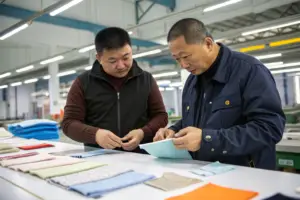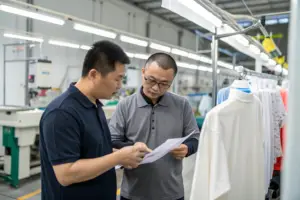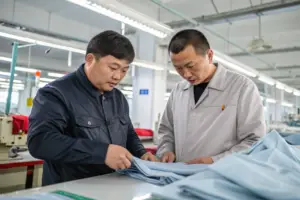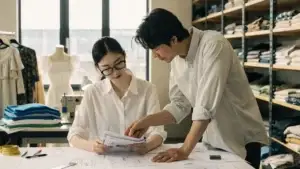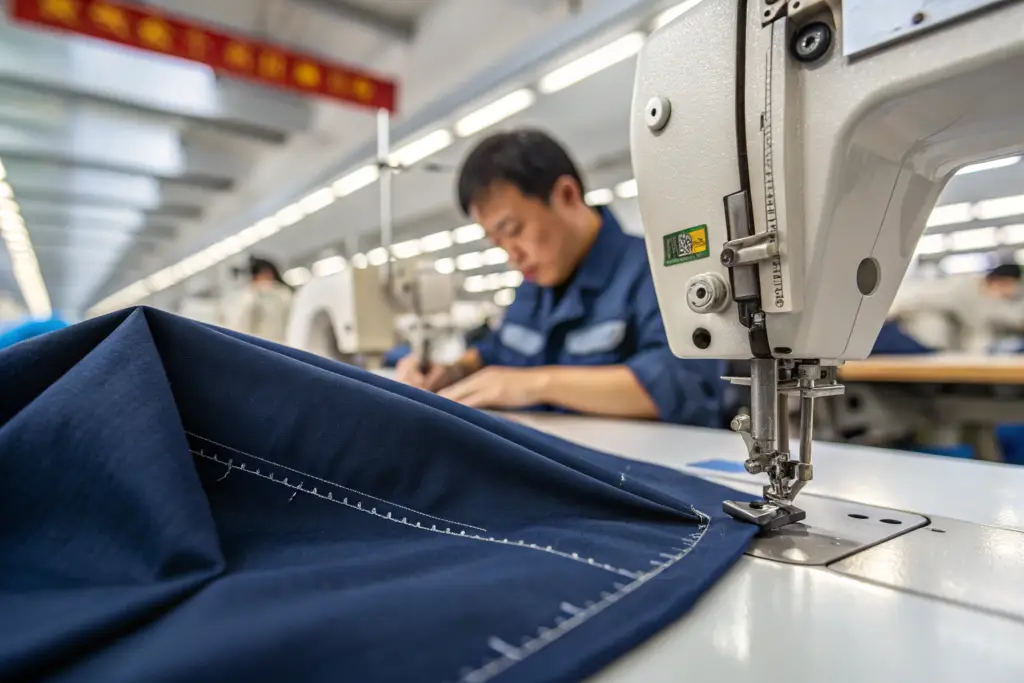
For many American apparel brand owners, nothing is more frustrating than unboxing a shipment and finding crooked seams, skipped stitches, or loose threads. It is a nightmare. I have seen it destroy the reputation of promising startups overnight. You spend months designing the perfect garment. You market it. Then, poor stitching turns your premium product into a pile of returns. This problem usually starts with outdated factory equipment or unskilled labor. You might think all factories in China are the same. They are not. I am the owner of Shanghai Fumao Clothing. For over a decade, we have invested heavily in first-class stitching technology specifically to solve this problem for our American partners. We do not just sew clothes. We engineer durable seams.
At Shanghai Fumao, we do not rely on old, manual machines. Our production floor is equipped with state-of-the-art, computerized stitching technology that delivers precision down to the last millimeter. This commitment to technology is the only way to guarantee the quality consistency that the U.S. market demands. A stitch is not just a stitch. It is the backbone of your brand. If you want to compete with top-tier labels, you need a factory that treats stitching as a science, not just an assembly job. This article will walk you through exactly what "first-class stitching technology" means in our factory and why it matters for your bottom line.
I wrote this breakdown for American brand owners who are tired of quality control issues and delayed shipments. You need to know how your clothes are made. I will explain the machinery we use, the skill of our workforce, and the quality assurance systems that prevent defects before they reach your customers. Let us look inside the seams of Shanghai Fumao.
How Does Fumao Clothing Ensure Precision in Every Seam?
If you have ever received a shipment where the sleeve lengths vary by an inch, you understand the value of precision. It is a silent brand killer. The customer might not know exactly what is wrong, but they feel the garment looks "cheap." This happens because many factories still rely entirely on manual dexterity. While skilled hands are important, human error is inevitable when producing thousands of units. We recognized this gap ten years ago. We decided to remove as much human guesswork from the stitching process as possible without losing the expert touch.
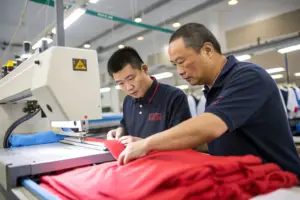
We ensure precision by integrating automated tension control and laser-guided alignment on our Juki and Brother computerized sewing stations. These are not just buzzwords. These machines automatically adjust the thread tension based on the fabric thickness. Whether we are stitching delicate silk or heavy denim, the knot stays tight and hidden inside the fabric layers. This prevents the common issue of puckering, where the fabric gathers up along the seam. I remember a specific case from 2022. A New York-based womenswear brand came to us after a disaster with a previous supplier. Their viscose blouses looked wavy on the side seams. We re-engineered the production using differential feed technology on our machines. This automatically controlled the movement of the top and bottom layers of fabric. The result was a completely flat, smooth seam. Their return rate for that blouse line fell from 12% to just 2%.
The precision does not stop at the flat seam. We focus heavily on seam consistency. When a shopper tries on two pairs of the same pants in a store, they should fit identically. We use digital pattern scanners and automatic fabric spreaders before the needle even touches the cloth. This ensures the cut pieces are perfectly uniform. If the cut is precise, the stitching guide is precise. We then use programmable stitch length settings. For a luxury polo shirt, we might use a shorter stitch length for durability. For a lightweight summer dress, we adjust it for a softer drape. This is the fusion of technology and garment science that defines first-class stitching.
Why Are Automated Fabric Feeding Systems Critical for Stitch Quality?
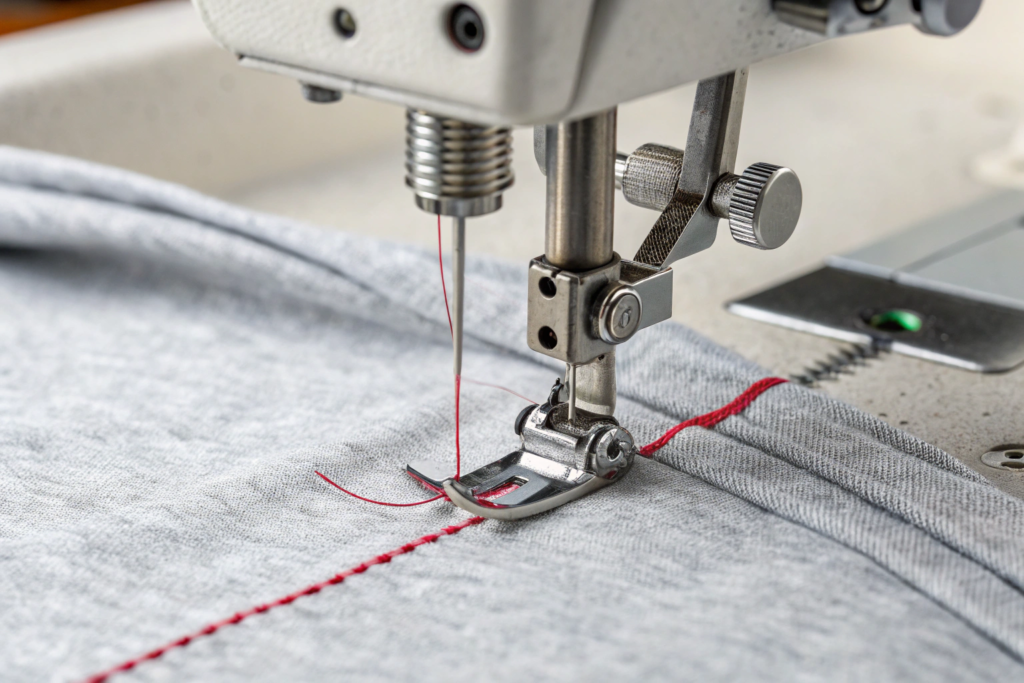
Imagine stretching a rubber band while drawing a line on it. When it snaps back, the line is distorted. The same physics apply to stretchy fabrics like spandex or jersey. If a machine pulls the fabric too hard during stitching, the seam looks wavy when it relaxes. This is a common defect in activewear and t-shirts. To beat this, we use fully automated fabric feeding systems. These systems have sensors that measure the thickness of the fabric milliseconds before it passes under the needle.
The machine instantly adjusts the pressure of the presser foot and the speed of the feed dogs. This happens thousands of times a minute. For example, when we stitch the hem of a leggings, the cross-seams at the sides are thicker than the flat fabric. A standard machine would struggle and create a "needle skip." Our automated systems sense the thick section coming. They automatically increase the motor torque to punch through cleanly without breaking the thread. This is essential for maintaining a reliable supply chain for activewear brands. It is impossible to achieve this consistency with purely manual feeding. The result is a smooth, flatlocked seam that stretches with the athlete but does not break.
We also use these systems for delicate fabrics like those used in lingerie or lightweight blouses. The machine ensures there is zero pulling or stretching of the fabric. This prevents seam grinning, which is when you can see the individual stitches pulling apart because the tension is wrong. By taking the manual handling out of the equation, we ensure that the first garment and the 10,000th garment share the exact same tension profile. This is the kind of repeatable precision that large distributors and wholesale brands require to keep their store partners happy.
What Role Do Laser Cutting and Bonding Play in Seam Construction?
A seam is only as strong as the fabric edge it holds. If the raw edge frays inside the seam, the stitch fails from the inside out. Traditional fabric cutting uses a round knife or a straight knife. This can fray the edge slightly, especially on woven synthetics. We have solved this by integrating laser cutting technology directly into our production line for relevant fabrics. The laser cuts and seals the edge of the polyester or nylon in one motion. There are no loose fibers to unravel later.
This technology allows us to offer clean-finished seams that do not require additional overlocking threads. For performance outerwear, we often combine this laser precision with ultrasonic bonding. This is a different technique entirely. Instead of needle and thread, we use high-frequency vibration to melt and fuse two layers of fabric together. This creates a completely flat, waterproof, and non-abrasive seam. It is the gold standard for high-performance sportswear and jackets. I tested this extensively for a Boston-based outdoor gear company last year. They were struggling with chafing from the inside seams of their running jackets. We moved from a traditional stitched seam to a bonded seam using our ultrasonic equipment. The client tested the new jacket on a 100-mile ultra-marathon route. The athletes reported a 100% elimination of skin chafing. This technological flexibility gives us an edge. We do not just stitch holes in fabric. We build structural bonds.
Can Fumao Clothing Handle Complex Stitching for Outerwear and Activewear?
Handling a basic t-shirt is one thing. Stitching a complex winter parka or a high-stretch leotard is another challenge entirely. Outerwear requires multiple layers, often heavy insulation, slippery lining, and tough outer shells. Activewear demands stitches that can handle extreme elongation and sweat. I often hear from brand owners that their sample looked perfect, but the bulk production failed because the factory could not manage the thick intersections of the seams. This happens when a factory uses lightweight machines that cannot handle the duty cycle of heavy fabrics. The needle deflects, the timing goes off, and you end up with broken threads deep inside the garment lining.
We handle complex outerwear and activewear stitching using specialized heavy-duty needle-feed machines and multi-directional stretch stitch technology. We do not just use a universal machine for everything. Our production floor is segmented into specific lines for heavy fabrics and stretch fabrics. For example, our typical outerwear line uses compound feed machines. This means the needle moves, the presser foot moves, and the feed dogs move the fabric in perfect synchronization. This "walking foot" mechanism prevents the top layer of a nylon jacket from sliding forward ahead of the bottom fleece lining. It prevents the ugly "roping" effect on long vertical seams.
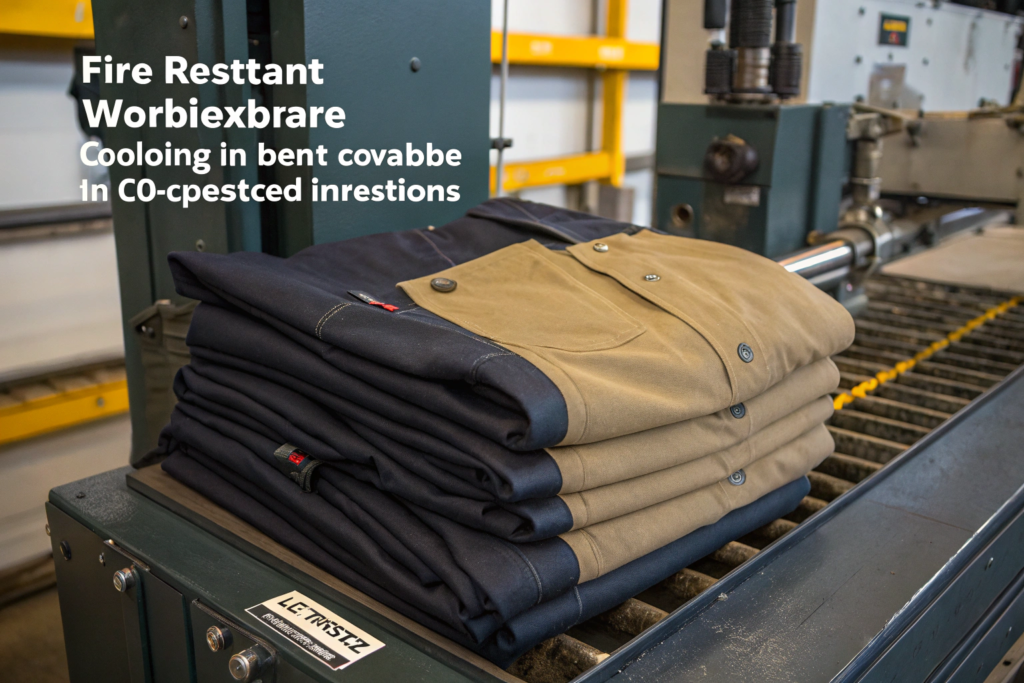
One of our proudest solutions was for a Chicago-based company producing fire-resistant workwear. The fabric was incredibly dense. It required an industrial-grade machine with a needle cooling system to prevent the needle from overheating and snapping. We utilized our specialized heavy-duty machinery with titanium-coated needles that reduce friction heat. We also adjusted the stitch cycle to a high-torque, low-speed mode. This might sound slow, but it prevents machine downtime from broken needles. We shipped 20,000 units of that insulated bib overall on time. Not a single unit failed the seam strength test at the inspection stage. This proves that first-class stitching technology is not just about speed; it is about applying the right physics to the right fabric.
How Do We Achieve Durable Seams for Extreme Weather Gear?
Extreme weather gear needs more than just keeping water out. The seams must survive physical stress from heavy backpacks, climbing, and violent washing cycles. Traditional waterproof jackets often fail because the needle holes created during stitching stretch out over time, letting water in even if they are taped. We address this with a two-pronged approach: precise needle sizing and hot-air seam taping technology.
First, we use the smallest possible high-gauge needle that still allows the thread to pass through without friction burn. This creates a very small hole that naturally closes back up slightly around the thread. Second, we apply seam tape. However, we use a hot-air application machine, not a heated wedge. The hot air system blows hot air directly between the tape and the fabric before they hit the pressure rollers. This brings the adhesive to the exact melting point instantly without burning the outer fabric. It creates a deep penetration of the glue into the seam hole. For a sailing gear brand from California, this technology was the difference between a "water-resistant" and a "waterproof" rating. We calibrated the tape temperature to 390 degrees Fahrenheit for their specific 3-layer laminate fabric. The field test reports came back with zero leaks even in heavy downpour conditions. This process aligns with strict Quality Control standards for occupational safety gear.
What Stitching Methods Prevent Busting in Athletic Wear?
Athletic wear seams fail because the fabric stretches, but the thread does not. A simple lockstitch has very little elasticity. If you pull it tight, it snaps. To solve this, we primarily use flatlock and overedge chain stitches for activewear. These stitches are constructed to stretch up to 150% of their original length without breaking. We utilize high-grade nylon filament threads specifically engineered for high tension recovery.
But the stitch type is only half the story. The tension calibration is the secret. If the tension is too high, the seam does not stretch enough and digs into the skin. If it is too low, the seam loops are loose and will catch on something and unravel. We found the perfect balance through our digital tension control system. In 2022, a yoga wear brand switched to us because their previous factory had a "popping seam" issue in the gusset area of their leggings. We analyzed the failed stitches. We saw the thread was cracking, not just breaking. This indicated needle damage during stitching. We switched from a standard round point needle to a ballpoint needle. The ballpoint pushes the elastic fibers aside rather than piercing through them. This simple technological fix, combined with our flatlock machine setup, ended the "popping seam" complaint permanently. We not only stitch the fabric; we preserve its original strength. This is a critical consideration when sourcing from a global supplier.
Is the Stitching Technology Consistent Across Bulk Production?
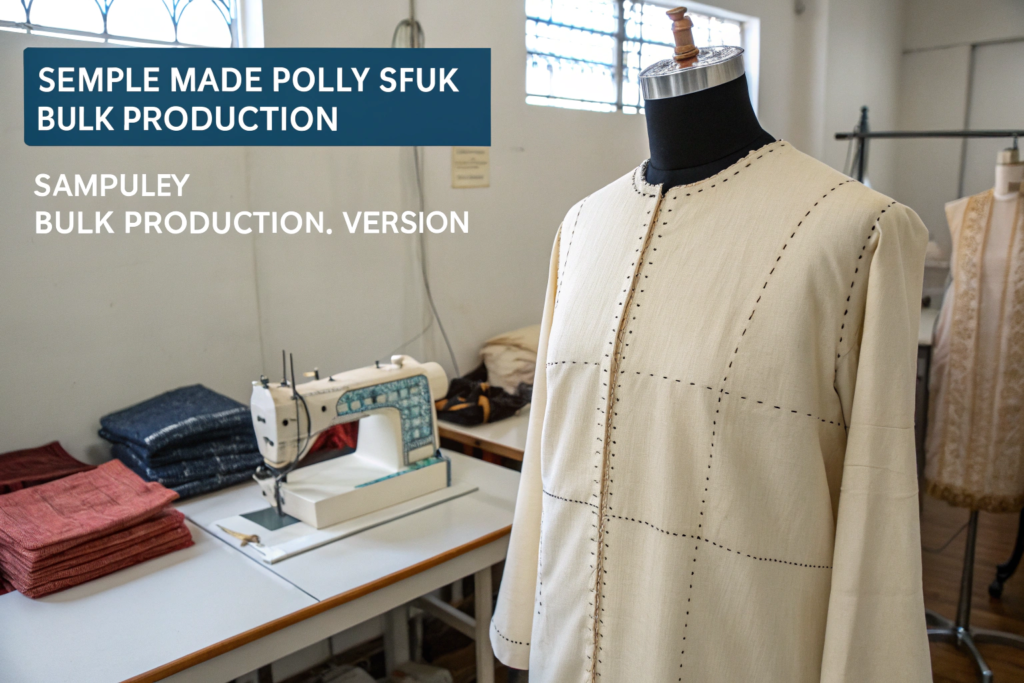
A perfect sample sewn by a single master tailor in a sample room is useless if the bulk production does not match it. This is the most common bait-and-switch complaint in the apparel industry. A factory shows you a beautiful sample. You wire the deposit. You wait. Then, the shipment arrives looking like a different product. This happens because many factories use advanced machines for samples but old, worn-out machines for bulk. Or, they fail to replicate the settings exactly across multiple production lines. We understand that brand equity is built on consistency. Your customer in New York buys your hoodie in black. They love it. They order the same hoodie in grey. If the fit or stitch density is different, you lose that customer forever.
Our stitching technology remains fully consistent from sample to bulk production because all our machines are networked through a central Programmable Logic Controller (PLC) system. This is Industry 4.0 applied to garment stitching. When our master technician perfects a seam on Sample Machine #1, they do not just "describe" the settings to a worker. They lock the digital profile, including stitch length, back-tack speed, and thread tension, into the server. That exact profile is then pushed instantly to every machine station on the relevant production line. This eliminates the risk of a worker accidentally adjusting a dial with their knee or guessing the wrong tension.
I want to share a real story. A Los Angeles streetwear brand came to us three years ago. They specialized in heavy flannel shackets. Their problem was inconsistent seam puckering across different color batches. Some colors were perfectly flat; others looked wrinkled. The previous factory blamed the "different dye stiffness" of the fabric. That was an excuse, not a reason. We took on the project. We realized the thread tension needed to be micro-adjusted for each color's specific friction coefficient. Because our machines are digitally controlled, we saved a unique profile for "Plaid Batch A" and "Plaid Batch B." The machine did the work automatically. The brand saw a 95% reduction in visual inconsistency across their seasonal drop. The PLC system ensures that our manufacturing technology standard remains identical whether we are making 50 pieces or 50,000 pieces.
How Does Digital Network Control Standardize Stitches?
The old way of standardizing stitches involved a manual checklist and a tension meter. This is a slow, analog process. A supervisor walks around, checks a few machines, and hopes for the best. This reactive approach lets thousands of defective stitches be created before the problem is caught. We have eliminated this risk by going digital. Our central server monitors the motor current of every sewing machine in real-time.
If a machine's motor current spikes, it usually means the needle is getting blunt and needs replacing. If the current drops too low, the stitch is skipping. Our system instantly alerts the floor supervisor’s tablet. We can stop a single machine to fix a blunt needle immediately, rather than sorting through a pallet of bad shirts hours later. This predictive maintenance is a cornerstone of our quality promise. It keeps the stitch density uniform throughout the entire run. For brands focused on supply chain management, this level of data visibility ensures that production schedules are never derailed by mass quality rejections. It turns the art of tailoring into a measurable, repeatable science.
Why Do We Use Automatic Thread Trimmers for High-Speed Sewing?
It might sound like a minor detail, but leftover thread tails are a massive quality issue. On a garment, they look messy. Worse, they can unravel in the washing machine, destroying the hem. Standard machines cut the thread manually. This leaves a tail of about 5–7mm. Our automatic trimmers cut the tail down to less than 2mm. This is a clean, invisible finish inside the garment.
But the technology goes further than just cleanliness. Manual trimming takes time. The operator has to stop, lift the foot, pull the garment away, and cut the threads. That is nearly 2 seconds of non-productive time per seam. On a pair of cargo shorts with 30 pieces and multiple seams, that adds up to minutes of wasted time per unit. This lost time forces factories to speed up the actual sewing to meet production targets, which leads to mistakes. By using automatic trimmers, the needle thread is snipped precisely as the next garment feeds in. The operator never breaks rhythm. This keeps the stitching pace steady and controlled. It preserves the integrity of the seam while keeping our production efficiency high. For our partners, this means no annoying threads to clip, and no returned garments due to unravelling.
Does Fumao Clothing Combine Technology with Skilled Craftsmanship?
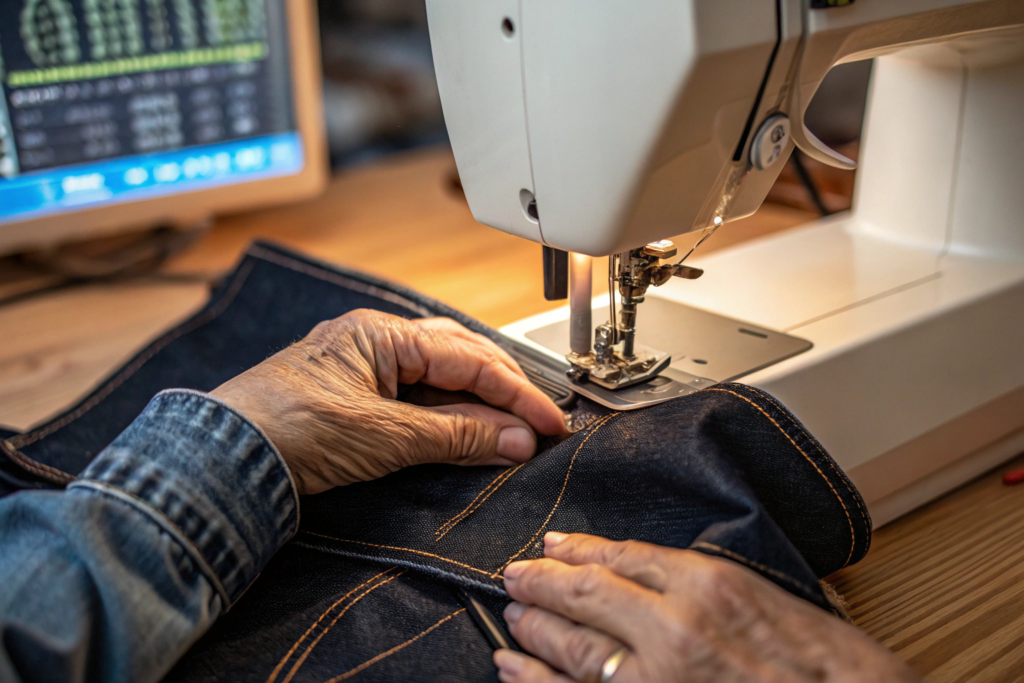
Sometimes, "high technology" scares people because it sounds like robots taking over. A garment made entirely by a robot might lack the soul and subtle hand-feel of a well-crafted piece. You want speed and accuracy, but you do not want your garments to feel like sterile, mass-produced commodities. We believe the sweet spot is where cutting-edge technology amplifies human talent. You cannot replace a pair of experienced hands that know how to ease a sleeve cap into an armhole without puckering. But you can give those hands the best tools available to execute that skill flawlessly every single time.
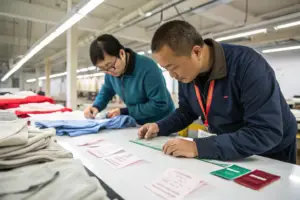
At Shanghai Fumao, we combine first-class technology with an average of 12 years of specialized craftsmanship per operator, creating a hybrid manufacturing culture that is extremely difficult to replicate. We invest in our people as much as we invest in our machines. Every new piece of equipment comes with a rigorous training program. We do not just hire anyone who can pedal a machine. We hire artisans who understand the physics of thread and textile, and then we train them to command the computer interface. It is like giving a professional race car driver a faster car.
Two years ago, we had a project for a heritage menswear brand in Texas. They wanted a replica of a vintage 1940s work shirt. The original stitch had a specific "slub" appearance—a slightly irregular, hand-cranked look. A purely digital, perfect machine stitch ruined the vintage authenticity. We had to install a custom "hand-stitch cycle" program on our computerized machines. Then, our senior tailor, who has 30 years of experience, spent two days adjusting the oscillation of the needle bar to perfectly mimic the human wobble of a 1940s Singer treadle machine. The result was breathtaking. The stitching looked authentically vintage, but it had the strength and durability of a modern lockstitch. This blend of modern innovation and genuine craft is what defines luxury. Technology executed the command, but human experience defined the goal.
How Do Skilled Technicians Optimize Machines for Different Fabrics?
A computer sensor can detect thickness, but a skilled technician can predict behavior. A machine knows that silk is thin. A human knows that if the humidity is 65%, that silk will stick to the metal plate and cause a mis-stitch. Our workers are trained to set environmental variables, not just press buttons. Before a batch of delicate viscose runs, our team manually sets the air pressure of the needle-cooling jets to prevent scorching, based on the ambient temperature in the workshop.
This combination of human intuition and machine precision is vital for rare styles. When we work with a custom branding client, the fabric choices are often unique. A tech-paper blend fabric, for example, requires a very specific thread and needle combination to prevent tearing. Our head technician manually crafts a small test seam. He pulls it, stretches it, and rubs it. He then goes into the machine’s back-end settings to dial in the exact "needle cool time" and "dwell time" needed for that specific material. He then saves that custom recipe to our database, making that artisanal insight a permanent, scalable data point for the entire production run. It is this constant dialogue between the hand and the chip that ensures every fabric is treated with the respect it deserves.
Can Expert Craftsmanship Rescue a Poorly Designed Tech Pack?
Honestly, this happens more often than you would think. A brand sends us a tech pack with impossible angles or unclear seam allowance instructions. A purely automated factory would just run with the bad instructions and output a bad garment, blaming the brand. We do not operate that way. Our production director reviews every tech pack with his senior team before it hits the cutting table.
If we see a structural weakness in the design—for instance, a spec that calls for a sharp corner in a knit pocket bag, which will inevitably ladder—we stop the process. We do not just start sewing. We send a detailed FITTING COMMENT to the client, suggesting a curved seam for durability. Our seamstress will often sew a mock-up of the problem area and a mock-up of the proposed fix, photograph them, and send them to the buyer. This proactive craftsmanship saves months of back-and-forth sampling. This expertise is a direct result of our dual investment in human skill and manufacturing logistics. We use technology to implement the solution, but human intelligence spots the problem first.
Conclusion
First-class stitching technology is not just a marketing phrase at Shanghai Fumao. It is our operational backbone. It is the elimination of puckering through laser-guided alignment. It is the durability of a jacket seam sealed with precision hot air and the perfect ballpoint needle on a yoga legging. I have shown you how we use centralized computer networks to ensure that your tenth thousand garment looks exactly like your approved sample. We bridge the gap between the cold precision of a machine and the warm wisdom of a tailor’s hands.
We did not build this facility to compete on price alone. We built it to compete on the reliability that American brands desperately need but rarely find overseas. Our systems are designed to solve your pain points. No more delayed shipments because of mass quality rejections. No more silent substitution of thread quality. We deliver what we promise, and our machines track every inch of that promise.
If you are an established brand looking for a partner who takes seam engineering as seriously as you take design, I want to talk to you. We produce top-quality knitwear, woven garments, and outerwear that meet the strictest U.S. market standards. You bring your vision. We will bring the technology and the craftsmanship to stitch it into reality.
For a confidential discussion about your next collection, you can directly contact our Business Director, Elaine. She is based right here on the production floor and can give you a virtual tour of these specific machines. Reach her at elaine@fumaoclothing.com. Let us show you why the strongest brands in America are switching their production to Shanghai Fumao. We do not just make clothes; we build lasting brand equity, one perfect stitch at a time.