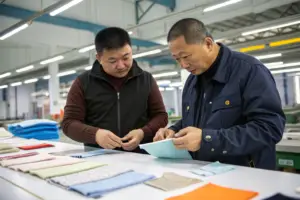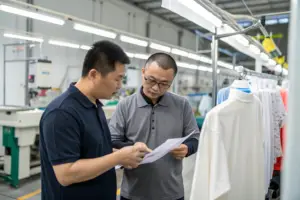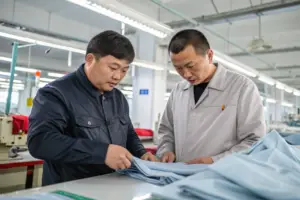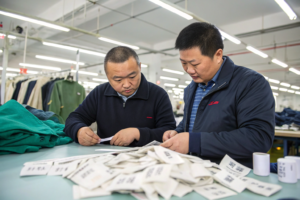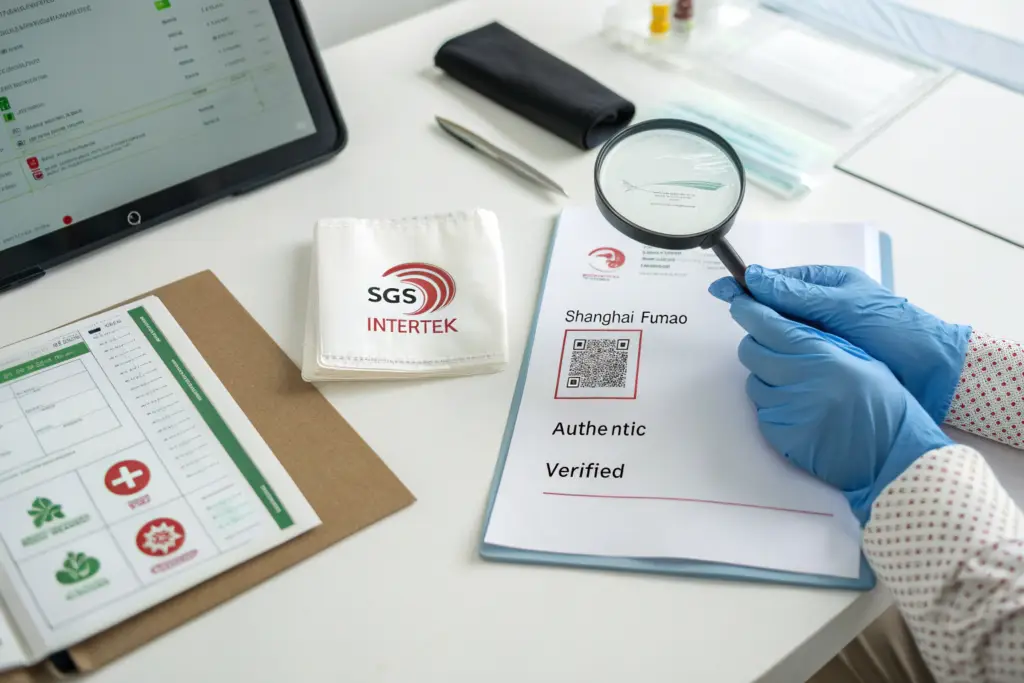
A brand owner from San Francisco once told me a story that nearly destroyed her business. She had ordered 2,000 units of a baby blanket. The supplier provided a beautiful test report, on official-looking letterhead, showing the fabric was free from harmful chemicals. She trusted the report and shipped the blankets to her retail accounts. Six weeks later, a customer complaint triggered an investigation. The fabric was tested by an independent lab. The report had been entirely fabricated. The lead content exceeded the legal limit. Her entire inventory was seized. She was fined. Her retail accounts dropped her. She told me, "That piece of paper cost me my company. I learned that a test report is not a document. It is a promise. And if I cannot verify the promise myself, independently, it is worth less than the paper it is printed on."
Yes, Shanghai Fumao provides authentic, verifiable fabric test reports. We offer two levels of testing documentation: comprehensive in-house lab reports, generated by our own calibrated, standards-compliant testing laboratory, and independent third-party test reports from globally accredited laboratories, including SGS, Intertek, and Bureau Veritas. Critically, every report we provide, whether in-house or third-party, is independently verifiable. Our in-house reports are backed by our lab's accreditation certificates and our open invitation for you to audit our facility or send duplicate samples to an external lab of your choice. Our third-party reports are verifiable directly on the issuing laboratory's online portal using the unique report number. We do not provide PDFs you must trust. We provide evidence you can check.
The global apparel supply chain has a counterfeit test report problem. Fabricated reports, outdated reports repurposed for new orders, and reports from non-existent or non-accredited "labs" are common. A brand owner who accepts a test report without independent verification is gambling with product safety, legal liability, and brand reputation. Our approach to fabric test reports is designed to eliminate this gamble entirely. I want to walk you through the two types of reports we provide, what each contains, how each is generated, and most importantly, how you can verify their authenticity independently.
What In-House Testing Capabilities Do We Have and Are They Trustworthy?
A technical director from a European outdoor brand once challenged me on our in-house lab. He said, "I have seen 'in-house labs' in factories before. They are usually a corner of the warehouse with a rusty scale and a washing machine from 1995. The 'reports' are handwritten notes on a scrap of paper. Why should I trust your in-house data any more than that?"
It was a fair question. The term "in-house lab" covers a vast range of realities, from the genuinely professional to the comically inadequate. I did not argue. I took him to our lab. He inspected the equipment calibration stickers. He reviewed the technician training records. He requested a blind comparative test, sending the same fabric to our lab and to an independent lab in Germany. The results from both labs were statistically identical. He approved our in-house reports for his brand's quality assurance program.
What Equipment and Standards Does Our Lab Use?
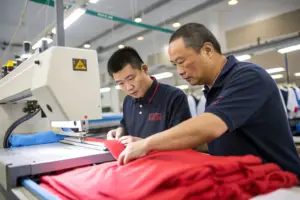
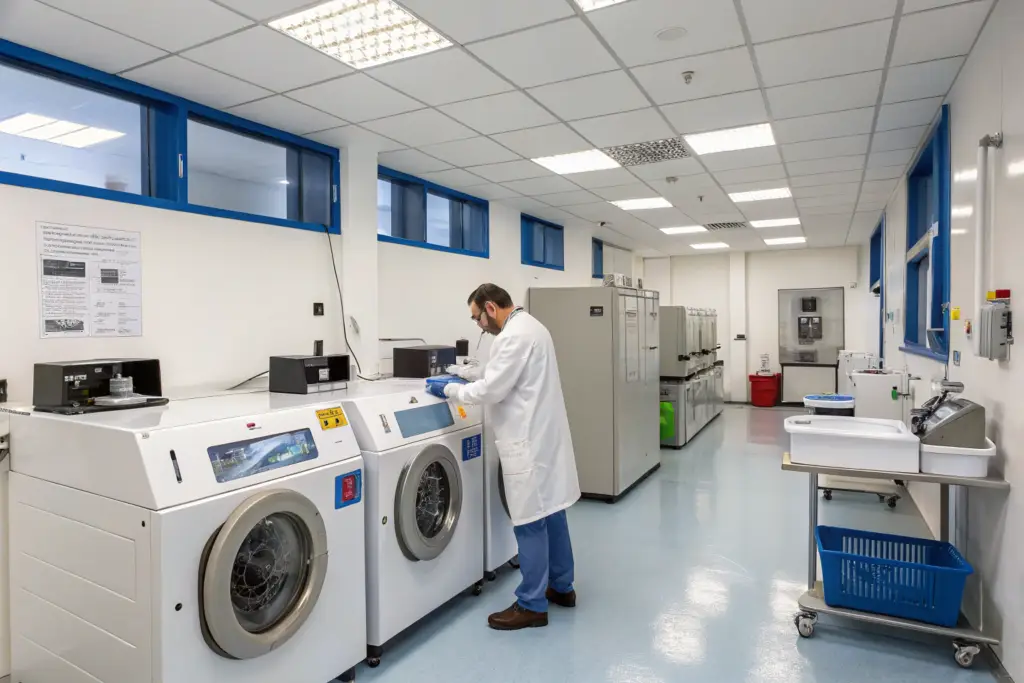
Our in-house laboratory is equipped with the same types of calibrated testing instruments used by independent commercial labs. We test to the exact same international standards, AATCC for US orders, ISO for European orders.
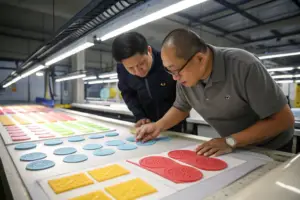
Our lab equipment includes a Martindale Abrasion and Pilling Tester, for assessing surface wear and pilling resistance per ASTM D4970 and ISO 12945. A Wascator FOM71 CLS, for standardized dimensional stability and appearance after wash testing per AATCC 135 and ISO 6330. A Gyrowash or Launder-Ometer, for accelerated color fastness to washing per AATCC 61 and ISO 105-C06. A Crockmeter, for color fastness to rubbing per AATCC 8 and ISO 105-X12. A Spectrophotometer, a benchtop X-Rite or Datacolor instrument, for precise color measurement, Delta-E calculation, and digital color standard management. A Tensile Strength Tester, for fabric strength and seam slippage testing per ASTM D5034 and ISO 13934. A Hydrostatic Head Tester, for waterproof ratings per AATCC 127 and ISO 811. A Spray Rating Tester, for water repellency per AATCC 22 and ISO 4920. Each instrument is maintained on a regular calibration schedule by certified technicians, with calibration certificates traceable to national or international standards. We are not a "rusty scale" operation. The AATCC testing standards and ISO textile testing standards are the exact standards we follow.
Can We Provide Comparative Test Results to Prove Accuracy?
Yes, and this is our strongest defense of our in-house lab's credibility. We welcome comparative testing.
If you have any doubt about the accuracy of our in-house data, we will send a duplicate sample of the same fabric batch to an independent third-party laboratory of your choice, SGS, Intertek, Bureau Veritas, or any other accredited lab you specify. You pay the independent lab directly, ensuring there is no financial link between us and the testing entity. We will then compare our in-house report against the independent report. Over multiple such comparisons, the variance between our results and the independent lab's results has consistently been within the acceptable inter-laboratory tolerance defined by the relevant testing standard, typically within a half-grade on the Grey Scale for color tests, and within a few percentage points on dimensional stability. We will provide you with historical examples of these comparative tests. This comparative lab testing for verification is the ultimate proof of our in-house lab's competence and integrity.
How Do We Provide and Verify Third-Party Test Reports?
A buyer for a major US department store once gave me a simple rule for third-party test reports. She said, "I do not accept a PDF. I do not accept a scan. I go to the lab's website, I type in the report number, and I look at the report on their server. If the report does not verify online, it does not exist. No exceptions."
Her rule is the only effective defense against the most common form of test report fraud: the fabricated or altered PDF. A dishonest supplier can take an old, legitimate report, change the date, the fabric description, and the order number using basic PDF editing software, and send it to the unsuspecting buyer. The only way to defeat this fraud is to bypass the supplier's file entirely and verify the report directly on the lab's independent online portal.
What Is the Process for Commissioning an SGS or Intertek Report?
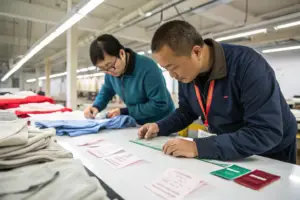
The process is simple and transparent. You request third-party testing for a specific parameter, fiber content, color fastness, chemical safety, flammability. We randomly sample the fabric from the bulk allocated to your order. You can specify the sampling method or even have the lab perform the sampling, though this adds time and cost.
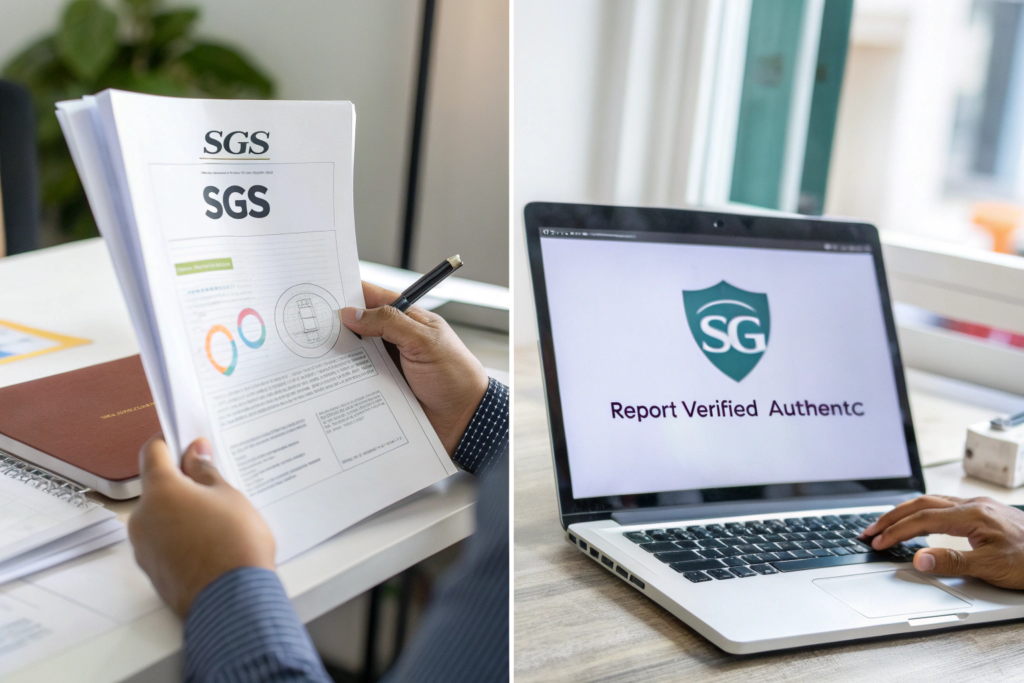
We send the samples directly to the SGS or Intertek laboratory. The lab performs the tests according to the specified standards and issues a formal, numbered report. This report is sent directly to you from the lab, or we provide you with the report number and a link to the online verification portal. We never alter or intercept the report. You can verify the report's authenticity by entering the report number on the lab's official website. The SGS report verification portal and Intertek report verification portal are publicly accessible and provide definitive proof of a report's existence and content. This process removes any possibility of document tampering. The cost of third-party testing varies depending on the test parameters. We provide a transparent quote for the testing fee, which is a pass-through cost. There is no markup.
When Should You Request a Third-Party Report vs. Our In-House Report?
The choice depends on the regulatory requirements of your product and market, and your brand's internal vendor compliance requirements.
For products with mandatory third-party testing requirements, such as children's products sold in the US requiring CPSIA compliance testing from a CPSC-accepted laboratory, a third-party report is legally non-negotiable. For high-value orders where independent verification is required by your retailer's vendor manual. For chemical safety testing for restricted substances, which requires sophisticated and expensive equipment like GC-MS that is beyond the scope of a standard factory in-house lab. For any situation where your brand's compliance policy specifically requires an external report. Our in-house report is suitable for routine physical and colorfastness quality checks, such as shrinkage, pilling, color fastness to wash, and fabric weight. It provides fast, cost-effective data for production quality management. Many of our clients use a hybrid approach: our in-house reports for ongoing production monitoring, and an annual third-party report for formal compliance certification. We are transparent about which tests are best performed by an external lab and will advise you accordingly. The CPSIA testing requirements and EU REACH testing requirements are examples of regulations that often mandate third-party testing.
What Information Does a Complete Fabric Test Report Include?
A new brand owner once asked me, "What exactly am I looking at when I receive a test report? There are so many numbers and codes. How do I know if the fabric actually passed?" It was a good question. A test report is a technical document with a standard structure. Understanding that structure empowers you to read any report, from any lab, and know what you are looking at.
A complete test report is not a simple "pass" or "fail" statement. It is a detailed record of objective measurements against specified standards, allowing you to understand not just whether the fabric passed, but by what margin, and where its performance limits lie.
How Do You Read a Test Report's Key Data Points?
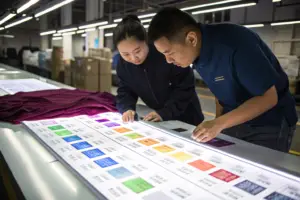
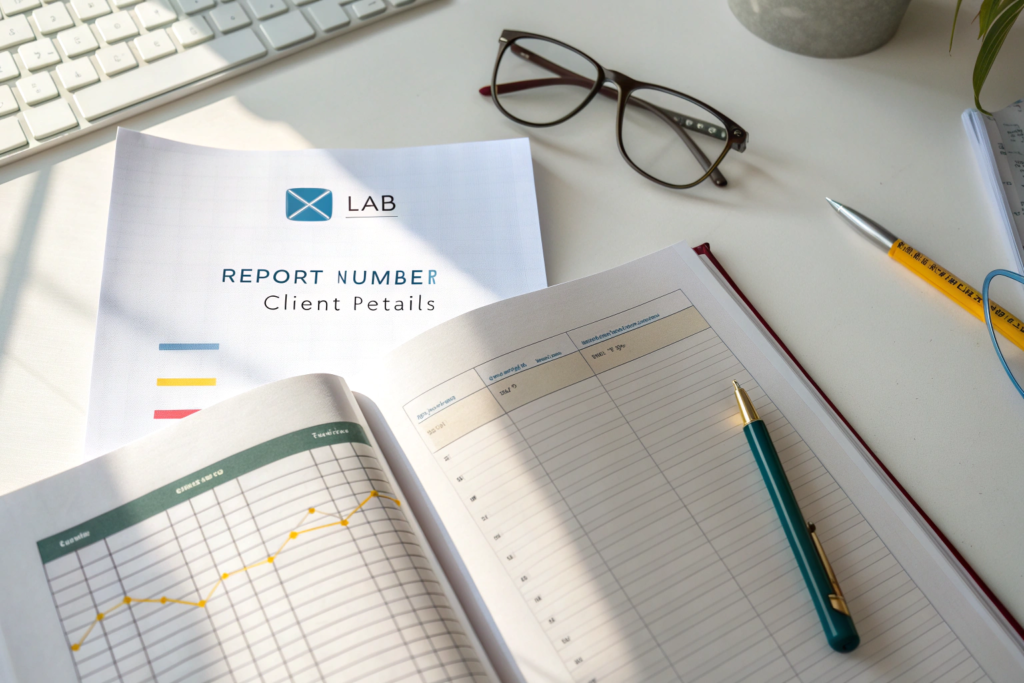
A standard textile test report is organized into clear sections. The header identifies the testing laboratory, the report number, and the date. It identifies the client and the sample description. The body of the report contains the test data tables.
Each row in a data table represents a specific test. It states the test parameter, like "Dimensional Stability to Washing." The test method standard, like "AATCC 135." The test conditions, like "Machine Wash Warm, Tumble Dry Medium, 3 Cycles." The measured result, like "Length: -3.5%, Width: -2.1%." And the requirement or specification, like "Max +/- 5.0%." A pass/fail conclusion is stated for each test. For color fastness tests, the results are reported as numerical grades, usually on a scale of 1 to 5, with 5 being the best. A grade of 4-5 for color change and 4 for staining is generally considered excellent. For pilling, the result is also a grade of 1 to 5. A grade of 4 or higher is generally considered acceptable for premium apparel. If you are ever unsure how to interpret a result on one of our reports, Elaine will walk you through it on a call, explaining each parameter in plain language. The understanding textile test reports is a skill we help our clients develop.
What Certifications and Accreditations Should a Legitimate Lab Hold?
Whether it is our in-house lab or a third-party lab, a legitimate testing facility should hold relevant accreditations that demonstrate its competence.
The most important accreditation for a textile testing lab is ISO/IEC 17025, "General requirements for the competence of testing and calibration laboratories." This is the international standard that certifies a lab has a quality management system, technically competent staff, and validated, calibrated test methods. For third-party labs, ask to see their ISO 17025 accreditation certificate and check the scope to ensure it covers the specific tests you are requesting. For labs testing children's products for the US market, they must be CPSC-accepted, meaning they are recognized by the US Consumer Product Safety Commission as competent to perform the required tests. For chemical testing for restricted substances, the lab should hold relevant chemical testing accreditations. Our in-house lab is equipped and operated to ISO 17025 principles, with calibrated instruments and trained technicians. Our third-party partners, SGS, Intertek, Bureau Veritas, are all ISO 17025 accredited and CPSC-accepted. We provide their accreditation certificates upon request. The ISO 17025 laboratory accreditation is the definitive quality standard for testing laboratories.
Conclusion
An authentic fabric test report is not a piece of paper or a PDF. It is a verifiable piece of evidence, rooted in calibrated measurements against international standards, and independently confirmable through a chain of custody that is not controlled by the entity being tested. We provide this evidence in two forms: a rigorous, standards-compliant in-house report, backed by comparative testing and an open invitation for external audit, and a formal, accredited third-party report from SGS, Intertek, or Bureau Veritas, verifiable online on the lab's own portal. We do not ask you to trust a document. We give you the tools and the access to verify the evidence yourself.
If you are planning an order and require fabric test reports as part of your quality assurance or compliance process, I invite you to request a sample report and verify it independently. Contact our Business Director, Elaine, at elaine@fumaoclothing.com. Ask her for a recent anonymized in-house test report and the corresponding third-party report for the same fabric batch. Request the third-party report number and verify it on the lab's website yourself. Compare the data. Let the independent, verifiable evidence build your confidence in our testing integrity.