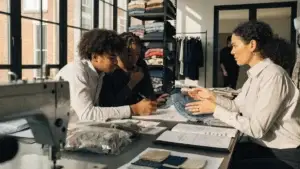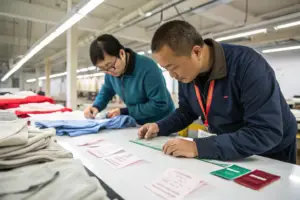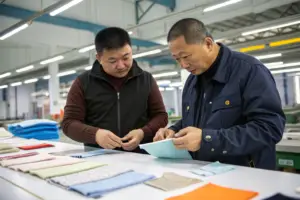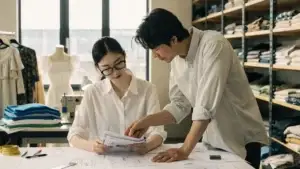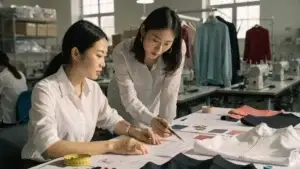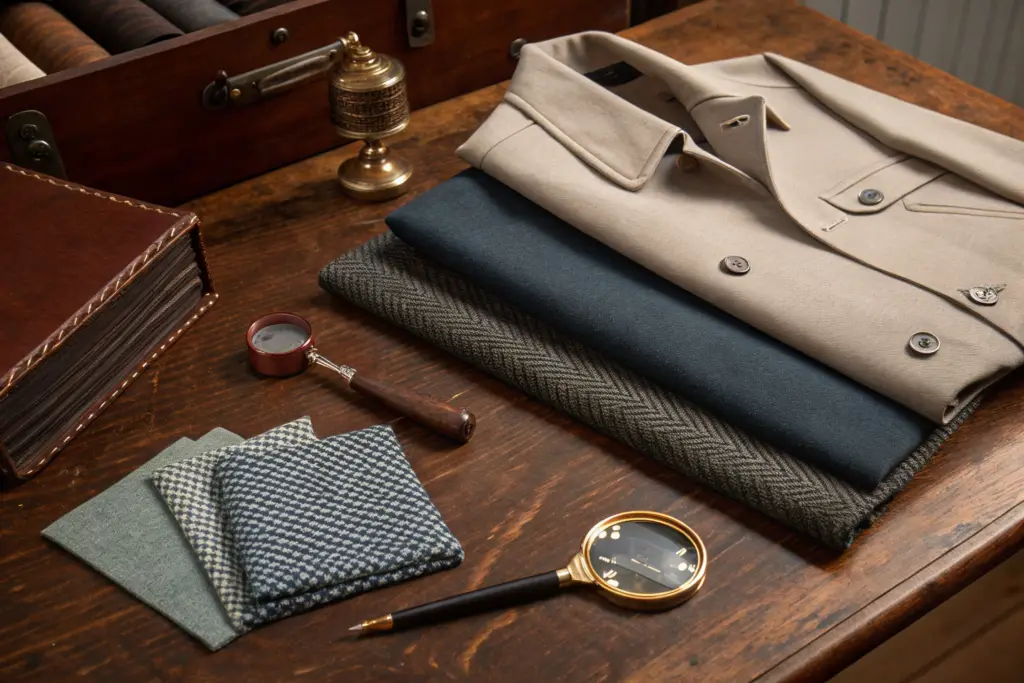
A bespoke tailor turned menswear brand owner from London once spent an hour in our fabric library. He did not look at any designs. He did not ask about construction techniques. He simply went through bolt after bolt of fabric. He rubbed the cotton twill between his thumb and forefinger. He held the wool flannel up to the natural light from the window to check the density of the weave. He stretched a swatch of pique to test the recovery. He smelled a bolt of linen. Finally, he turned to me and said, "Most factories hand me a book of standard qualities and tell me to pick from page 4. They have five options. This, this is a library. This is curated. This tells me I can build a collection here, not just order a product." His reaction captured the difference between a factory that treats fabric as a commodity input and a factory that treats fabric as the foundation of a brand's identity.
Shanghai Fumao uses first-class fabrics for men's wear across four core categories: premium long-staple and organic cotton for shirting, knitwear, and casual bottoms, high-performance wool and wool-blend suiting and outerwear textiles, innovative sustainable fiber blends including TENCEL™, recycled polyester, and organic cotton combinations, and specialized technical fabrics with advanced finishes for the growing tailored comfort and performance menswear categories. Every fabric is sourced from audited mills, tested in our in-house laboratory to AATCC or ISO standards, and available with full traceability documentation, including OEKO-TEX and GOTS certifications where applicable.
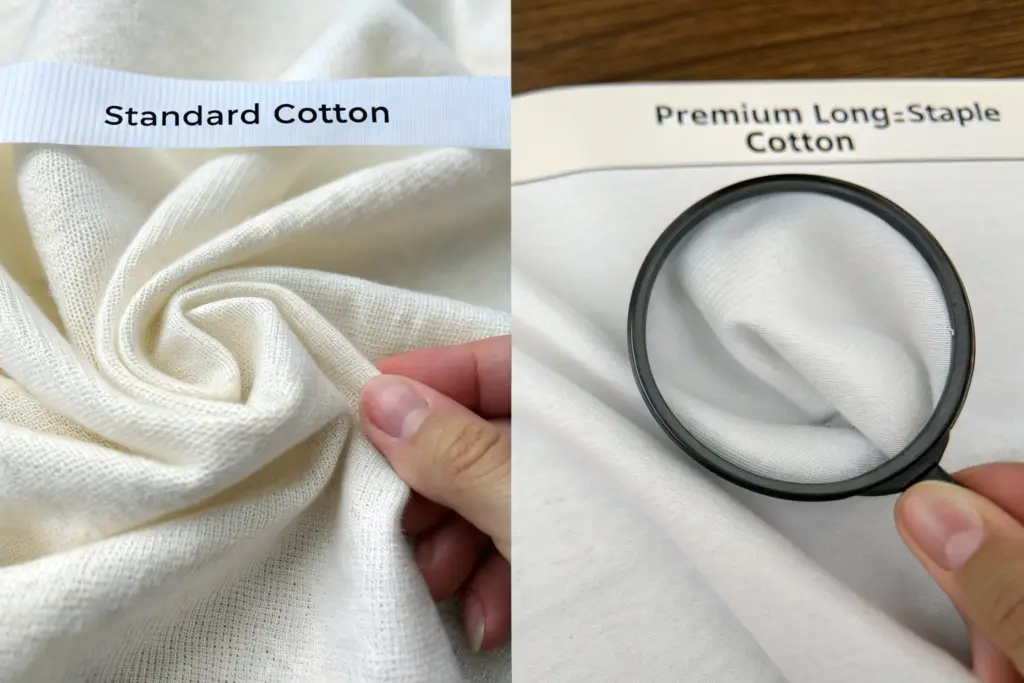
A first-class fabric is defined by three characteristics: the quality and origin of the raw fiber, the precision and consistency of the spinning, weaving, or knitting process, and the sophistication of any finishing treatments applied. A cheap, short-staple cotton woven loosely into a low-density twill is not first-class, even if it is labeled "100% Cotton." A long-staple cotton, compact-spun into a fine yarn, woven tightly into a high-density twill, and finished with a soft, natural enzyme wash, is first-class. The difference is felt the moment the fabric is touched, and it becomes more apparent with every wash and wear. I want to walk you through the specific fabric categories we offer, the quality attributes that define them, and the sourcing and testing processes that ensure they meet the first-class standard.
What Premium Cotton Qualities Do We Use for Men's Shirts and Knits?
A men's shirting brand owner from New York once asked me why two white dress shirts, both labeled "100% Cotton," could feel so completely different. One felt smooth, dense, and cool to the touch. The other felt slightly fuzzy, thin, and warm. He said, "My customer does not understand cotton grades. But he can feel the difference in the fitting room. And he can definitely see the difference after ten washes. The cheap shirt looks tired. The good shirt looks better than when he bought it." His observation captured the critical importance of fiber quality and yarn construction in men's wear.
Cotton is not a single, uniform commodity. The species of the cotton plant, the length of the individual fibers, the spinning method used to form the yarn, and the knitting or weaving construction all dramatically affect the fabric's hand-feel, durability, appearance, and performance over time. A first-class men's wear program begins with first-class cotton.
What Is the Difference Between Carded, Combed, and Compact Ring-Spun Cotton?
These terms describe the yarn spinning process, and they represent a hierarchy of quality that directly impacts the fabric's surface, strength, and pilling resistance.
Carded cotton is the most basic and least expensive process. The cotton fibers are roughly aligned, and short fibers and impurities are partially removed. The resulting yarn is uneven, hairy, and prone to pilling. It is used for cheap, low-quality t-shirts and basics. Combed cotton undergoes an additional combing process that removes more short fibers and impurities, resulting in a smoother, stronger, and more even yarn. It is the standard for mid-to-premium men's knitwear. Compact ring-spun cotton is the premium tier. The spinning process uses a pneumatic condensing system that completely eliminates the spinning triangle, tightly binding all fibers into the yarn structure. The result is a yarn with virtually no surface hairiness, exceptional strength, and a very smooth, clean surface. This is the yarn we specify for our premium men's t-shirts, polos, and knitwear. A compact ring-spun cotton jersey feels noticeably smoother and cooler against the skin, resists pilling far longer, and maintains its color and surface integrity after dozens of washes. The cotton yarn spinning methods explain the technical differences. The difference in the finished garment is felt immediately.
When Do We Recommend Organic Cotton vs. Long-Staple Conventional Cotton?
The choice depends on the brand's positioning, the target market, and the desired hand-feel.
Organic cotton is the right choice when sustainability and skin-sensitivity are core brand values. Our organic cotton is GOTS-certified, ensuring it is free from pesticides, herbicides, and toxic chemical inputs throughout the entire supply chain, from farm to finished fabric. It has a natural, clean softness that is ideal for garments worn against the skin. We recommend it for premium basics, loungewear, and any brand that makes an explicit organic promise to its customer. Long-staple conventional cotton, such as Supima or Egyptian cotton varieties, is the right choice when the brand's primary promise is an exceptionally smooth, silky, and lustrous hand-feel. The extra-long fibers, typically 34mm or longer, can be spun into extremely fine, strong yarns that produce a fabric with a beautiful drape and a subtle sheen. We recommend this for luxury t-shirts, fine-gauge knit polos, and high-end shirting. Both are first-class fabrics. The decision is about matching the fiber story to the brand story. We provide the GOTS organic cotton certification and the fiber origin traceability for both options.
What Wool and Wool-Blend Fabrics Do We Source for Premium Outerwear and Suiting?
A menswear brand owner who specializes in modern business attire once described wool as "the most honest fabric." He said, "A cheap wool jacket tells you it is cheap within five seconds of wearing it. It is scratchy. It loses its shape. It shines in the wrong places. A great wool jacket is a second skin. It breathes. It moves. It makes you stand up straighter. My customer spends $800 on a jacket. He is buying the wool. The tailoring is the delivery system for the fabric."
Wool is a complex, highly variable natural fiber. The breed of sheep, the climate in which it was raised, the spinning system, and the finishing treatments all affect the fabric's hand-feel, drape, durability, and performance. For premium men's outerwear and suiting, we source wool fabrics from mills in China and, upon request, from specialist mills in Italy and Japan. The quality is defined by objective, measurable parameters.
What Is the Difference Between Worsted and Woolen Wool Fabrics?
These two terms describe fundamentally different spinning systems that produce fabrics with opposite characteristics.
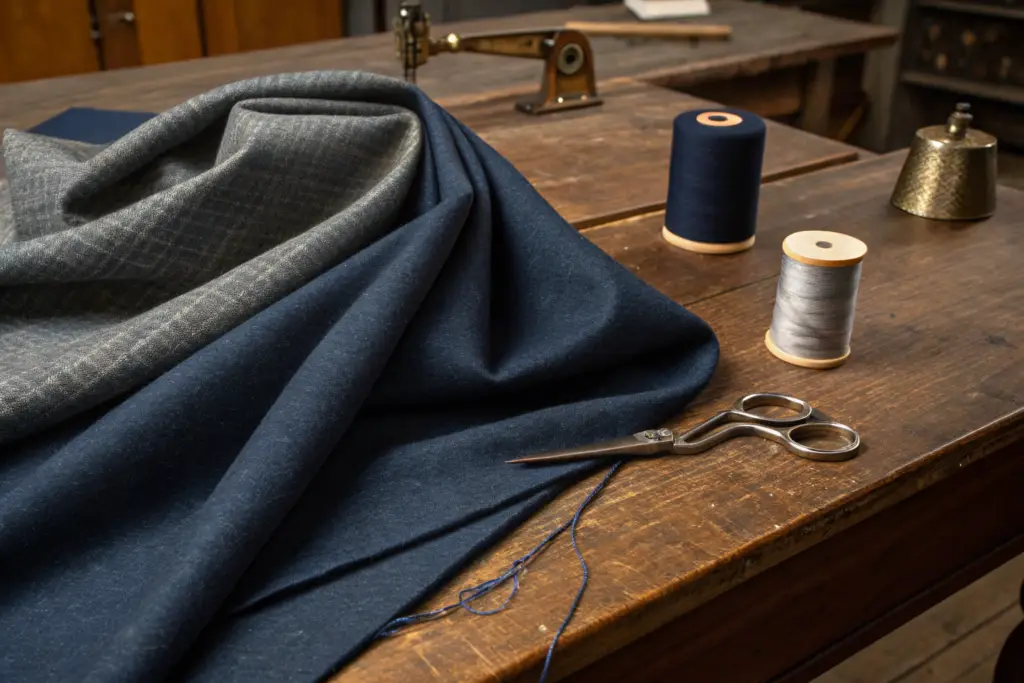
Worsted wool uses long, fine wool fibers that are combed to be parallel before spinning. The yarn is smooth, fine, and strong. The resulting fabric is crisp, smooth, cool to the touch, and has a subtle natural sheen. It holds a crease exceptionally well and is the standard for men's suiting and dress trousers. Woolen wool uses shorter fibers that are not combed, resulting in a yarn that is more irregular, bulkier, and has protruding fiber ends. The resulting fabric is soft, fuzzy, warm, and has a more casual, textured appearance. It is used for flannel shirts, casual jackets, and overcoats. We offer both worsted and woolen fabrics in various weights and blends. A Super 110s or Super 130s worsted wool is a classic suiting choice. A brushed woolen flannel in a heavyweight 400gsm is a premium outerwear choice. The worsted vs. woolen wool distinction is fundamental to selecting the correct fabric for the garment's intended use and aesthetic.
Why Do We Blend Wool with Performance Fibers for Modern Men's Wear?
The modern menswear consumer, particularly in the growing "tailored comfort" category, demands the aesthetic and natural feel of wool combined with the easy-care, stretch, and durability of performance fibers.
A 100% wool trouser is beautiful but requires dry cleaning and can lose its shape with extended wear. A wool-polyester-elastane blend, in a carefully engineered ratio such as 50% wool, 47% recycled polyester, 3% elastane, maintains the matte appearance and breathable comfort of wool, while the polyester adds wrinkle resistance and durability, and the elastane provides comfortable mechanical stretch for cycling to work or traveling. We source these performance wool blends from mills that specialize in technical suiting fabrics. The fabrics are tested for pilling, seam slippage, and dimensional stability to ensure the performance claims hold up over the garment's lifecycle. For a men's travel blazer program, we used a high-twist wool-polyester blend that was machine washable, highly wrinkle-resistant, and weighed 30% less than a traditional wool blazer. The fabric performed like a technical jacket but looked and felt like a refined tailored blazer. The performance wool blend fabrics are a key part of our first-class offering for the modern men's wear market.
What Sustainable and Technical Fibers Do We Incorporate?
A men's activewear brand owner from Vancouver came to us with a clear brief. He said, "My customer is a 35-year-old guy who does a morning workout, cycles to his tech office, and wants to wear one shirt that handles both, looks good enough for a casual meeting, and does not destroy the planet. I need fabrics that perform like synthetics but feel like naturals, and I need the sustainability story to be real, not greenwashing." His brief captured the direction of the men's market. The consumer is increasingly educated, skeptical of marketing claims, and demanding both high performance and genuine environmental responsibility.
Our sustainable and technical fabric offering is built on certified, traceable fiber sources and validated performance testing. We do not make vague "eco-friendly" claims. We provide specific fiber certifications, recycled content percentages verified by GRS, and performance data from our in-house lab.
What Are the Benefits of TENCEL™ Lyocell for Men's Shirts and Trousers?
TENCEL™ Lyocell is a cellulosic fiber produced from sustainably sourced wood pulp, typically eucalyptus, through a closed-loop process that recovers and reuses over 99% of the solvent. It is produced by Lenzing AG, and the TENCEL™ brand is a guarantee of sustainable sourcing and production.
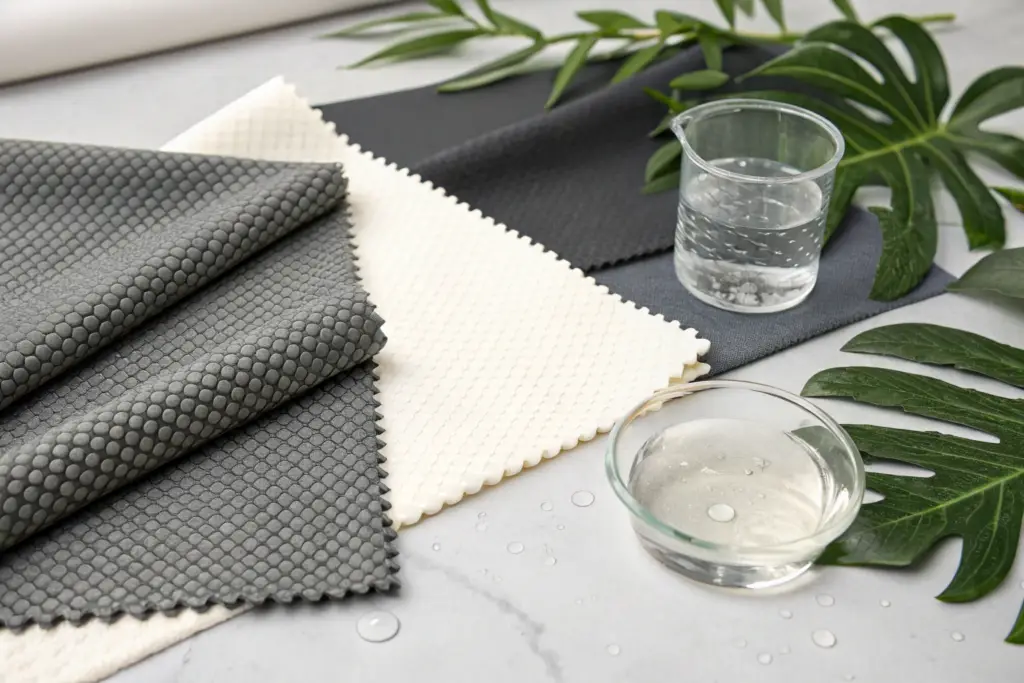
The fiber itself has exceptional properties for men's wear. It is softer than silk and cooler than linen. It has a smooth, breathable surface that is gentle on sensitive skin. It has high moisture absorption and release, making it naturally odor-resistant and comfortable in warm conditions. We use TENCEL™ in blends with organic cotton for premium casual shirts, creating a fabric with a beautiful, fluid drape and a cool, dry hand-feel. We use it in blends with linen for summer trousers, creating a fabric that resists the aggressive wrinkling of pure linen while maintaining breathability. We also use it in blends with recycled polyester for performance polos, combining the natural comfort of TENCEL™ with the wicking and durability of polyester. The TENCEL™ Lyocell fiber properties make it a genuine first-class material that addresses both sensory quality and environmental responsibility.
How Do We Use Recycled Polyester Without Sacrificing Hand-Feel?
Recycled polyester, typically made from post-consumer PET bottles, has historically had a reputation for being rough, shiny, and cheap-feeling. This has been a barrier to its adoption in premium men's wear. Modern recycled polyester technology has largely overcome these limitations.
We source high-quality, GRS-certified recycled polyester yarns that are engineered to mimic the hand-feel and matte appearance of virgin polyester or natural fibers. The key is in the yarn cross-section, the filament denier, and the finishing treatments. For a men's performance woven trouser, we used a 100% recycled polyester mechanical stretch twill that had the matte, dry hand-feel of a cotton-nylon blend, with superior wrinkle resistance and recovery. For a knit polo, we used a recycled polyester filament with a unique cross-section that wicked moisture aggressively while feeling soft and cotton-like against the skin. We also blend recycled polyester with organic cotton or TENCEL™, using the recycled polyester as an internal performance core and the natural fiber as the skin-contact surface. The GRS certification provides full traceability from the recycled feedstock to the finished yarn. The GRS certified recycled polyester ensures the environmental claim is verified and auditable.
How Do We Verify and Test Every Fabric Before Cutting?
A technical designer from a major US menswear brand once told me his "trust but verify" philosophy. He said, "I trust the mill to send me the fabric they promised. Then I verify every single roll. Mills make mistakes. Dye lots drift. Finishes fail. If I do not test, I am gambling with my brand's reputation. A fabric that feels good on the cutting table but pills after five washes is my problem, not the mill's problem. The mill already got paid."
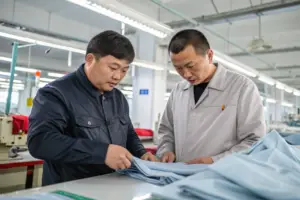
His philosophy is ours. A fabric's quality is not determined by its label or its marketing story. It is determined by objective, measurable performance against standardized tests. Our in-house laboratory is the gatekeeper that ensures every fabric we use meets the first-class standard before a single meter is cut.
What Tests Do We Perform on Every Incoming Fabric Batch?
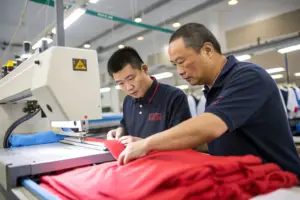
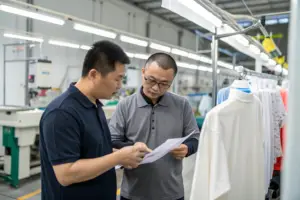
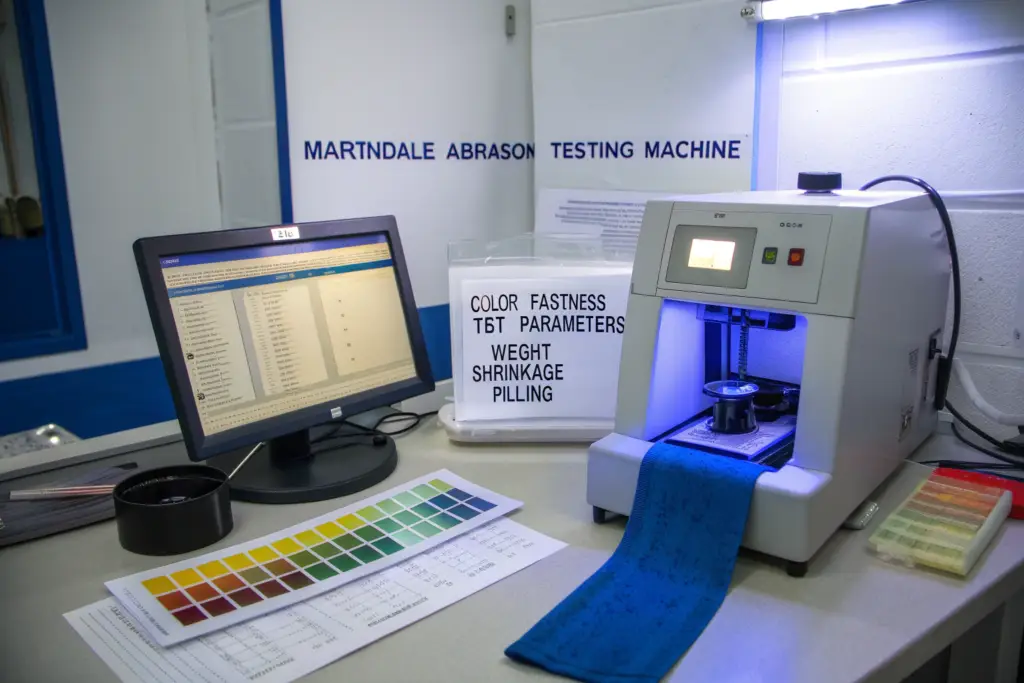
Every incoming fabric batch, regardless of the supplier or the fiber content, undergoes a standardized battery of physical and colorfastness tests in our in-house lab. The specific tests are selected based on the fabric type and the garment's intended end-use.
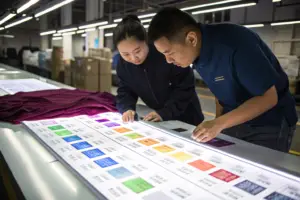
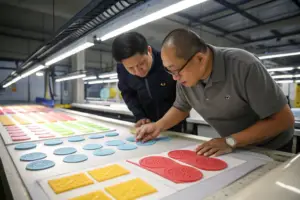
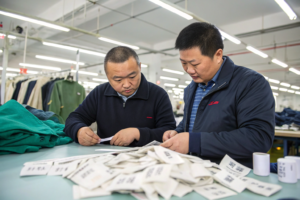
Our standard test battery includes the following: Fabric weight verification against the specified GSM, using a precision scale. Dimensional stability, measuring shrinkage after multiple wash and dry cycles according to AATCC 135 or ISO 6330. Pilling resistance, using a Martindale abrasion tester to simulate wear, evaluated against standard grading scales. Color fastness to washing, tested in a Launder-Ometer, evaluating shade change and staining on a multi-fiber strip. Color fastness to crocking or rubbing, both wet and dry, using a crockmeter. Tensile strength and seam slippage, using a tensile strength tester, for woven fabrics. These tests are not performed on a random sample of orders. They are performed on the specific fabric rolls allocated to your specific order. The pass/fail criteria are set to the standard specified for your garment type and destination market. A fabric that fails any test is rejected and returned to the mill before cutting. The fabric testing standards AATCC and ISO textile testing standards are the language we speak in our laboratory.
Can We Provide Third-Party Lab Reports for Your Specific Fabric?
Yes. For orders where independent third-party verification is required by the brand's vendor manual, by retail compliance requirements, or for legal safety standards like CPSIA for children's products, we send the fabric to an accredited third-party laboratory.
We work regularly with SGS, Intertek, and Bureau Veritas. The process is simple. You specify the tests you require and your preferred lab. We randomly sample the bulk fabric allocated to your order, send it to the lab, and manage the entire process. The test report is issued directly by the independent lab, on their letterhead, with their accreditation stamps. This provides the highest level of objective verification. This service adds a few hundred dollars and several days to the pre-production timeline, but for a premium men's brand making specific performance or sustainability claims, or for a brand entering a major retailer with strict compliance requirements, it is a wise investment in confidence. We welcome third-party testing because we are confident in our fabrics and our sourcing. A factory that resists independent testing is a factory that is uncertain about what the test will reveal.
Conclusion
The fabrics we use for men's wear are not an afterthought or a cost line item to be minimized. They are the physical, tactile, and performative expression of your brand's promise to your customer. Our first-class fabric offering spans the spectrum of premium natural fibers, innovative sustainable materials, and high-performance technical blends. It includes the smooth, pilling-resistant surface of compact ring-spun organic cotton, the crisp drape of worsted wool suiting, the fluid coolness of TENCEL™ blends, and the durable comfort of GRS-certified recycled polyester. Every fabric is sourced from audited mills, qualified through our in-house laboratory against international testing standards, and available with full traceability documentation, including OEKO-TEX, GOTS, and GRS certifications where applicable.
If you are building a men's wear brand where fabric quality is a non-negotiable pillar of your identity, I invite you to experience our fabrics directly. Contact our Business Director, Elaine, at elaine@fumaoclothing.com. Tell her about your product category, your target price point, and your desired hand-feel and performance characteristics. She will curate a physical swatch pack, selected from our fabric library, with the corresponding lab test reports and certification details. Hold the fabrics. Stretch them. Compare them against your current sourcing. Let the materials make the case for our first-class quality.