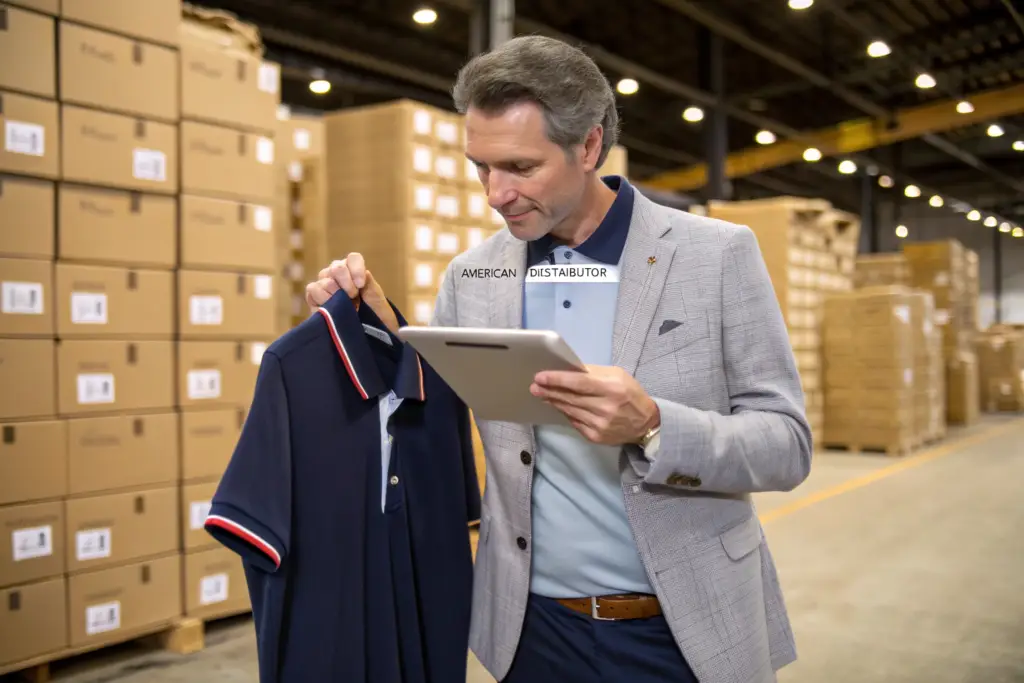
A distributor from Chicago once told me a story that has stayed with me for years. He had built a successful business buying high-quality blank apparel from a well-known manufacturer, sewing his own label into the back neck, and selling it to independent menswear boutiques across the Midwest. The product was good. The business was growing. Then, one day, he received an email from the manufacturer. They had decided to launch their own direct-to-consumer website. The exact same garment he was selling for $85, with his label, was now available online for $55, with their label. His retail accounts started calling him, furious. "Why am I paying you a wholesale markup when I can buy this direct for less?" His business model, built on a product he did not control, collapsed within a single season. He told me, "I learned the most expensive lesson of my life. If you do not control the product, you do not have a business. You have a temporary reselling arrangement."
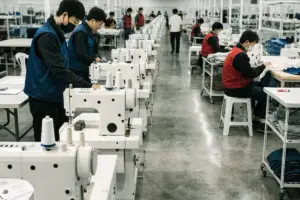
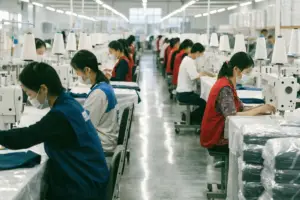
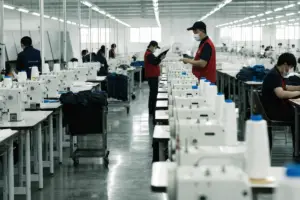
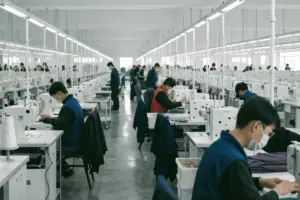
American distributors trust Shanghai Fumao for rebranding because we offer a true private-label manufacturing partnership, not a reseller arrangement. We do not sell competing branded products. We do not launch direct-to-consumer websites. We do not have a “house brand” that appears next to yours in a Google search. We are a manufacturing engine that builds your product, to your specifications, with your brand identity, and then we disappear from the customer’s view. Your brand is your asset. Your customer is your customer. Your product is unique to you, not a commodity blank with your label sewn over a generic tag.
Trust in a rebranding partnership is built on three structural guarantees: product exclusivity that ensures your product cannot be sourced by a competitor from the same factory, brand identity control that ensures your labeling, packaging, and product design are unique to you, and quality consistency that ensures your brand promise is delivered identically across every unit, every order, and every season. I want to walk you through each of these guarantees, and explain why American distributors, who understand the existential risk of brand dependency, choose to partner with us.
What Does True Private-Label Manufacturing Mean for Your Brand?
The Chicago distributor’s story is not unique. The apparel industry is full of “private label” programs that are actually just relabeling operations. The factory produces a standard product. They sell it to multiple distributors. Each distributor sews their own label into it. The product is identical. The only difference is the tag. This is not a brand. It is a label swap. The distributor has zero product differentiation, zero pricing power, and zero protection if the factory decides to compete with them.
True private-label manufacturing means the product itself is developed exclusively for your brand, based on your specifications. The fabric, the fit, the trims, and the construction details are unique to you. This is the foundation of a defensible brand.
How Do We Guarantee Your Product Is Not Sold to Competitors?
We operate on a strict product exclusivity model. The specific combination of fabric, fit, trims, and construction that we develop for your brand is not offered to any other client. This is not a marketing claim. It is a structural business commitment.
When we develop a custom fabric for your brand, the development cost and the minimum order quantities are absorbed within your production order. The fabric mill’s production is allocated to your brand. We do not stock that specific fabric as an open-line option for other clients. When we develop a custom fit block, the pattern and the grading are stored in your brand’s digital file, not in a shared library. The embroidered logo, the custom-engraved buttons, the unique hangtag, and the packaging are all produced exclusively for your purchase orders. Your product is your asset. This commitment means that your competitor cannot walk into our showroom, point to a product on the rack, and say, “Give me the same thing with my logo.” The product does not exist on the rack. It exists only in your development file. This private-label manufacturing exclusivity is the structural solution to the Chicago distributor’s nightmare. It protects your brand from being commoditized by the factory that produces it.
Can You Own Your Patterns, Tech Packs, and Brand Assets?
Yes. The patterns, tech packs, fit blocks, and design specifications that we develop for your brand are your intellectual property. This is formally acknowledged in our manufacturing agreement.
Upon request, we provide you with the complete digital pattern files and the full tech pack, including material specifications, construction details, and quality standards. You are free to use these assets for any purpose, including manufacturing the product with another factory in the future. We do not hold your brand hostage to your production files. This transparency is a deliberate trust signal. A factory that withholds your pattern files is telling you that they view you as a captive customer, not a partner. We view you as a partner who has invested in product development, and the product files are rightfully yours. This brand IP ownership in manufacturing is a critical part of a trust-based rebranding partnership.
How Do We Build a Consistent Brand Identity Across All Garment Details?
A distributor from Texas who built a successful western-inspired menswear brand once told me, “My brand is not my logo. My logo is the signature. My brand is the feeling a guy gets when he puts on one of my shirts. It is the weight of the fabric. The stiffness of the collar. The snap of the pearl buttons. The little branded tape inside the placket. The thank-you note in the box. If any one of those details is off, the spell is broken. He might not return the shirt, but he will not become a loyalist.”
His insight was profound. A brand is a holistic sensory and emotional experience, not a graphic design element. The label is the identifier, but the experience is the brand. Building that experience consistently, across every unit, requires a manufacturing partner that treats brand identity as an integrated production discipline.
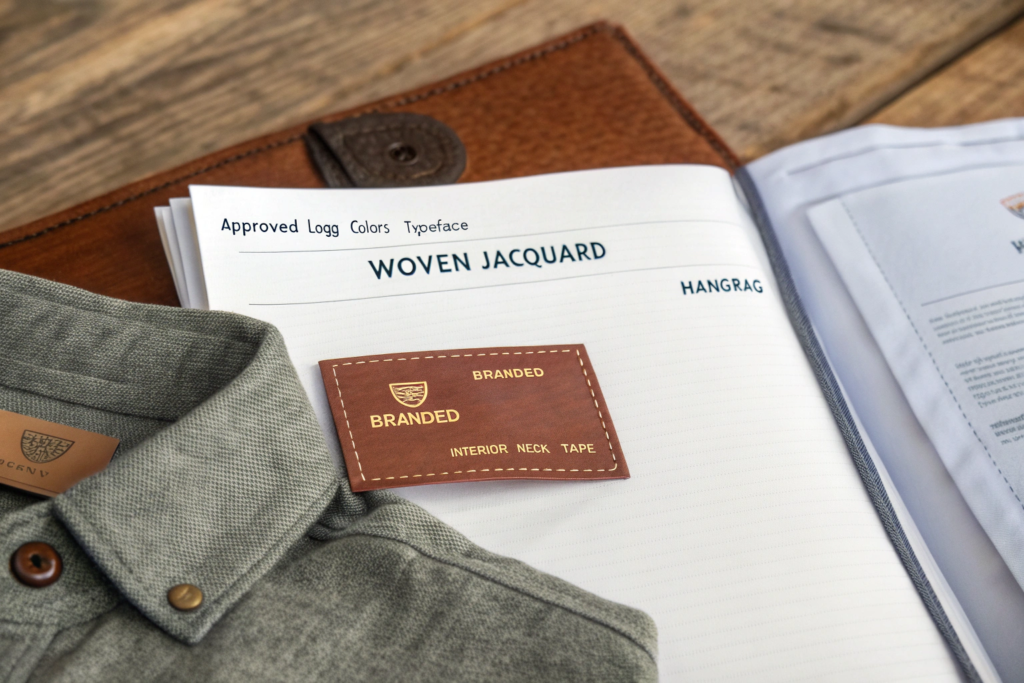
How Do We Handle Custom Labels, Tags, and Packaging?
We produce and attach a complete suite of custom branding elements, integrated into the garment’s construction and presentation. The branding is not an afterthought. It is part of the production bill of materials.
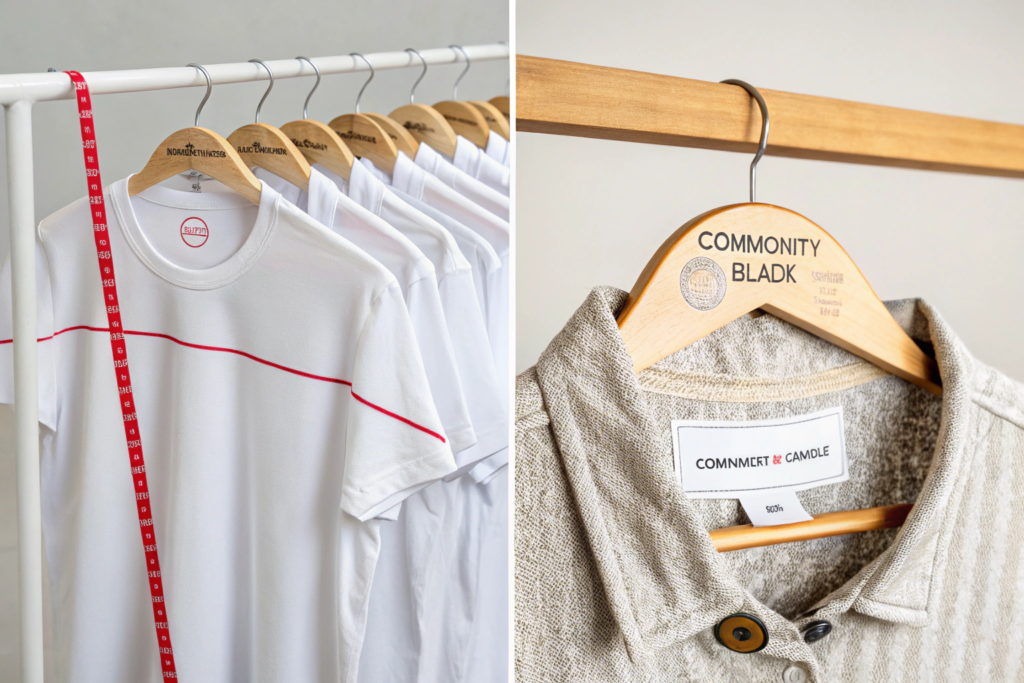
The internal brand identity package includes the main brand label, woven jacquard, printed satin, or debossed leather, depending on the brand aesthetic. It includes the care and content label, printed with your logo and typeface, not a generic template. It includes the hangtag, designed to your specification, printed on premium cardstock with your brand story. It includes the packaging, folded tissue paper with a logo print, branded polybags, and custom-printed boxes. Each element is produced to your exact design and color specification. The placement of each label, the fold of the tissue, the sticker sealing the bag, are standardized and quality-inspected, just like the garment construction. This custom garment branding and packaging turns a generic product into a branded experience.
Why Do Small Details Like Interior Trim and Buttons Matter for Brand Perception?
The customer’s first interaction with your brand is often the visual impact of the product online. But the interaction that creates loyalty is the tactile and visual discovery of the garment’s details. The customer puts on the shirt. They feel the soft, branded tape against the back of their neck instead of a scratchy generic tag. They button the cuff and notice the custom-engraved button. They see the contrast tape inside the side vent.
These small details communicate that the brand cared about the entire product, not just the outward appearance. They signal quality, intentionality, and respect for the customer. They are the difference between a product that is “good enough” and a product that inspires loyalty. We work with our distributor clients to identify 2-3 “surprise and delight” interior details that align with their brand identity. For a menswear brand that emphasized its coastal heritage, we sourced custom buttons made from recycled oyster shells and printed a subtle nautical coordinate on the interior neck tape. These details cost very little, pennies per unit, but they generate the customer reviews and word-of-mouth that build a brand. The interior garment branding details are a critical part of our rebranding partnership.
How Do We Ensure Your Rebranded Product Is Consistent Over Multiple Seasons?
A distributor who had been with us for three years once said something in a reference call that I found deeply gratifying. A potential new client asked him about our consistency. He said, “I opened a box of my Oxford shirts last month. The new shipment. I pulled one out. I held it next to a shirt from my first order, two years ago. I could not tell them apart. The fabric felt the same. The color was the same. The collar roll was the same. My boutique accounts reorder every season without even checking the new samples. They trust the product because the product never changes.”
This is the ultimate compliment for a rebranding manufacturer. The product is so consistent that the retailer stops checking it. Their trust in the brand, built on the consistency of the product, transfers to trust in the manufacturer. Achieving this multi-season consistency requires rigorous documentation, physical archiving, and disciplined reorder management.
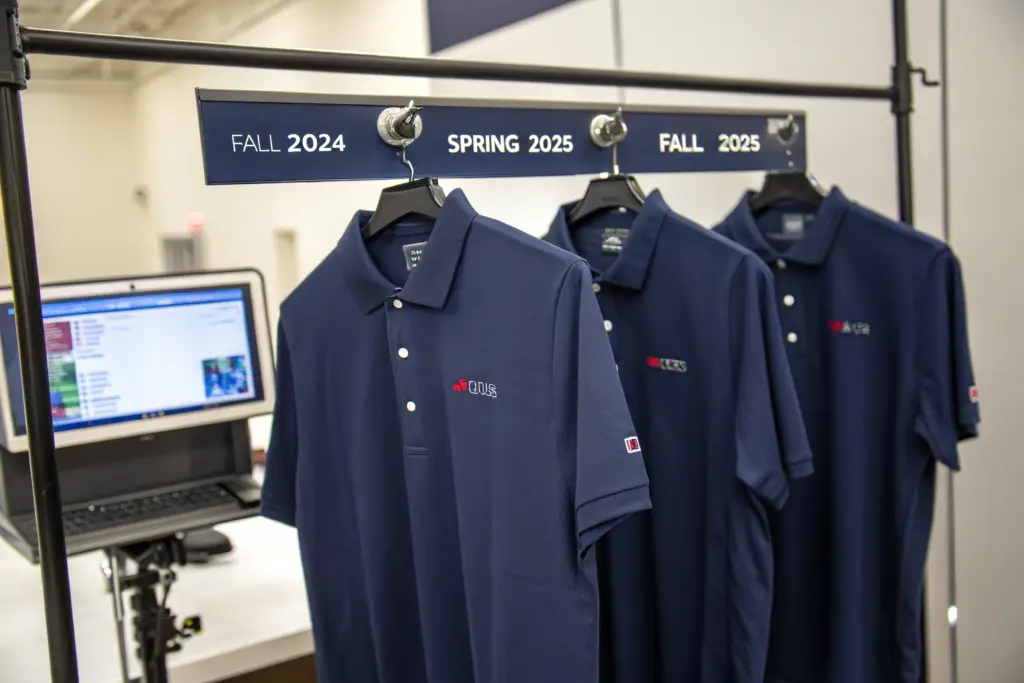
How Do We Manage Color and Fabric Consistency Across Reorders?
The two most common consistency failures in apparel reorders are color drift and fabric hand-feel change. A “navy” polo reordered six months later arrives a slightly different shade. The cotton feels slightly thinner or coarser.
We solve color drift through our digital color management system. For every custom color developed for a brand, we retain a digital spectral fingerprint, read by a spectrophotometer, and a physical lab dip reference, stored in a light-protected archive. When a reorder is placed, the new dye lot is measured against the original digital fingerprint. The Delta-E tolerance is less than 1.5. If the new lot exceeds this tolerance, it is rejected and re-dyed before cutting. We solve fabric hand-feel change through our retained physical fabric reference archive. A cut of the original bulk fabric is stored. The new fabric is compared against this reference for weight, hand-feel, and surface texture. We also retain the mill specifications and the finishing process parameters, ensuring the fabric is re-sourced from the same mill and finished in the same way. The color and fabric consistency management for apparel reorders is a documented, auditable process, not a hopeful assumption.
Do We Retain Your Patterns and Specifications for Future Orders?
Yes. Your digital pattern files, graded size specifications, approved construction details, and trim specifications are archived in your brand’s dedicated digital file, backed up on secure servers.
Your physical reference archive, including the original approved sample, the fabric swatch, the trim card, the lab dip, and the packaging sample, is stored in our physical reference library, protected from light and dust. When a reorder is placed, we retrieve both the digital and physical archives. The production is set up against these exact, unchanged references. There is no need to re-develop or re-approve anything, unless you are making an intentional design change. This archival system ensures that the product you receive in season three is the product you approved in season one, not a well-intentioned but slightly different recreation from memory. The pattern and specification archival for brand consistency is the infrastructure of multi-season brand integrity.
Conclusion
American distributors trust Shanghai Fumao for rebranding because we offer what the traditional supply chain often fails to provide: genuine product ownership, holistic brand identity execution, and multi-season product consistency. We do not sell you a commodity blank and let you sew your label into it. We develop a unique product, exclusively for your brand, with your specifications. We do not treat branding as a neck label and a hangtag. We treat it as an integrated sensory experience, from the custom buttons to the interior tape to the packaging. And we do not treat reorders as a new development project. We archive your specifications, your colors, and your references, and we replicate them exactly, season after season. This is the structural foundation of a brand that you own, control, and build equity in over time.
If you are an American distributor who is tired of competing on price with other distributors selling the same generic product, or who has been burned by a factory that became a competitor, I invite you to start a conversation about true private-label manufacturing. Contact our Business Director, Elaine, at elaine@fumaoclothing.com. Send her a brief description of your brand, your product category, and your target market. She will arrange a confidential discussion about how we can develop a unique product exclusively for your brand, with the product exclusivity, brand identity control, and quality consistency that builds a defensible, valuable business. Let us help you build a brand that nobody can take away from you.