I almost deleted the first video. It was January 2025, and our social media coordinator—a 26-year-old who'd been with us for maybe four months—filmed a 45-second clip of our new brushed cotton flannel. No script, no lighting setup, no fancy editing. Just her hand running across the fabric surface, the nap catching the light from our showroom window, and her voice saying "This is what 300 grams of brushed cotton actually feels like. Listen." She turned up the microphone sensitivity, rubbed the fabric close to the phone, and you could hear the soft scratch of the raised fibers. I watched her post it to our YouTube channel and thought, "Nobody's going to watch fabric ASMR." Twenty-four hours later, it had 12,000 views. Forty-eight hours, 47,000. A week later, 180,000 views and 600 comments from people asking where to buy the fabric, how to order swatches, whether we sold retail yardage. That video now has 1.2 million views and fundamentally changed how we think about fabric marketing.
Shanghai Fumao's YouTube channel and social media presence have experienced explosive growth in 2025-2026 because we discovered—partly by accident—that fabric content performs extraordinarily well in short-form video formats when presented as sensory experience rather than product catalog. The channel growth isn't driven by traditional textile industry marketing. It's driven by a global audience of home sewists, indie designers, fashion students, and fabric enthusiasts who are underserved by existing textile content. They want to see how fabric moves, hear how it sounds, understand what "hand feel" means through video cues, and learn how to evaluate fabric quality without physical access to samples. Our channel gives them that sensory access in 60-second videos, and their engagement—views, comments, shares, and especially swatch requests—has created a lead generation pipeline that outperforms our trade show and Alibaba presence combined.
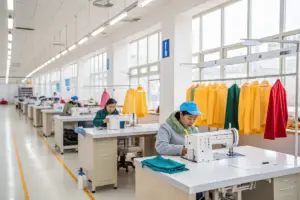
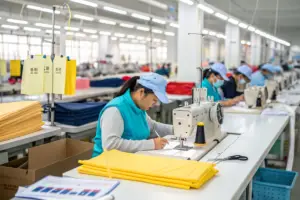
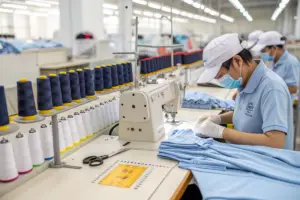
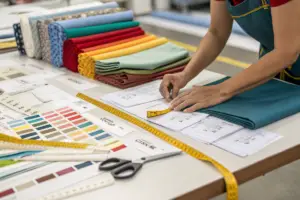
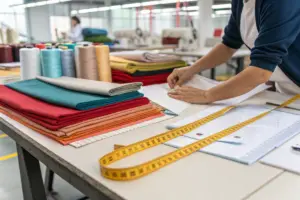
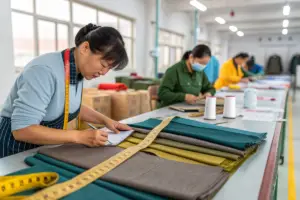
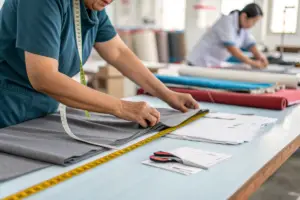
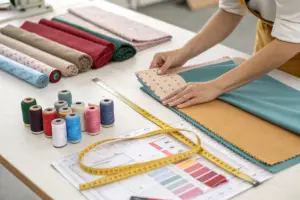
The swatch request volume tells the story in numbers. In 2023, before our video content strategy launched, we shipped approximately 200 free swatch packs monthly to prospective buyers who contacted us through Alibaba or our website. By December 2025, we were shipping 2,800 swatch packs monthly. In April 2026, we shipped 4,100. Our swatch fulfillment team has grown from one person to five, and we've built a dedicated swatch preparation workstation with standardized packaging, printed QR codes linking to technical specifications, and personalized thank-you notes referencing the specific video that generated the request. The channel didn't just grow our audience—it created a measurable, scalable lead generation system that converts viewers into sample recipients and sample recipients into buyers.
What Types of Fabric Content Are Driving the Channel's Viral Growth?
The content that performs best on our channel falls into categories that I would never have predicted based on twenty years of B2B fabric sales experience. I assumed professional buyers wanted technical specifications, production capability demonstrations, and quality certification overviews. Those videos do fine—our factory tour and quality control process videos generate steady, modest viewership from verified buyers. But the content that explodes—the videos that cross 100,000 views and generate hundreds of swatch requests—falls into entirely different categories that appeal to a broader audience than professional sourcing managers.
Sensory demonstration videos dominate our top-performing content. "Listen to this fabric" videos where we maximize audio sensitivity to capture the sound of different textiles—the crisp rustle of taffeta, the soft whisper of bamboo silk, the satisfying scratch of heavy denim—generate massive engagement from viewers who describe the experience as "oddly satisfying" and "better than actual ASMR." Texture reveal videos where we use macro lenses to show fabric surfaces at extreme close-up—individual fibers of cashmere, the weave structure of jacquard, the pile density of velvet—satisfy a curiosity that even professional buyers rarely get to satisfy without laboratory microscopes. Comparison videos where we show similar fabrics side by side—polyester satin next to silk charmeuse, brushed cotton next to flannelette, genuine leather next to high-quality PU—help viewers understand quality differentiation visually.
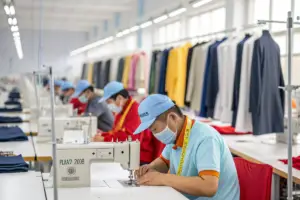
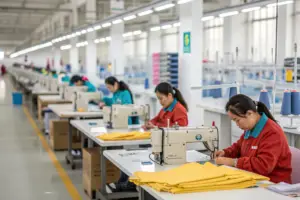
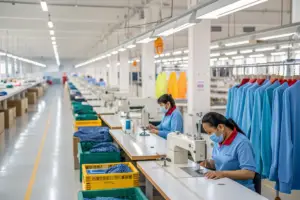
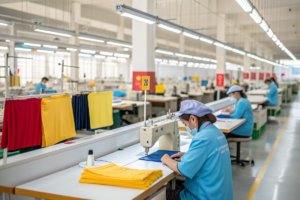
Personality-driven educational content forms our second growth pillar. Our R&D director, who has thirty years of textile engineering experience and a naturally engaging on-camera presence, hosts a weekly series called "Fabric Files" where she explains one textile concept per episode in accessible language. She's covered topics from "Why does linen wrinkle and why you should love it anyway" to "The truth about thread count that sheet brands don't want you to know." These videos attract an audience that's serious about textile knowledge but intimidated by industry jargon, and they convert viewers to swatch requesters at higher rates than any other content type. The third growth pillar is behind-the-scenes production content—videos showing our looms running at full speed, dye baths changing fabric color in real time, printing machines laying down patterns with sub-millimeter precision. The manufacturing fascination audience is large and underserved, and textile production footage satisfies a curiosity about how everyday objects get made.
How Did the "Fabric ASMR" Trend Create Unexpected Demand for Professional Swatches?
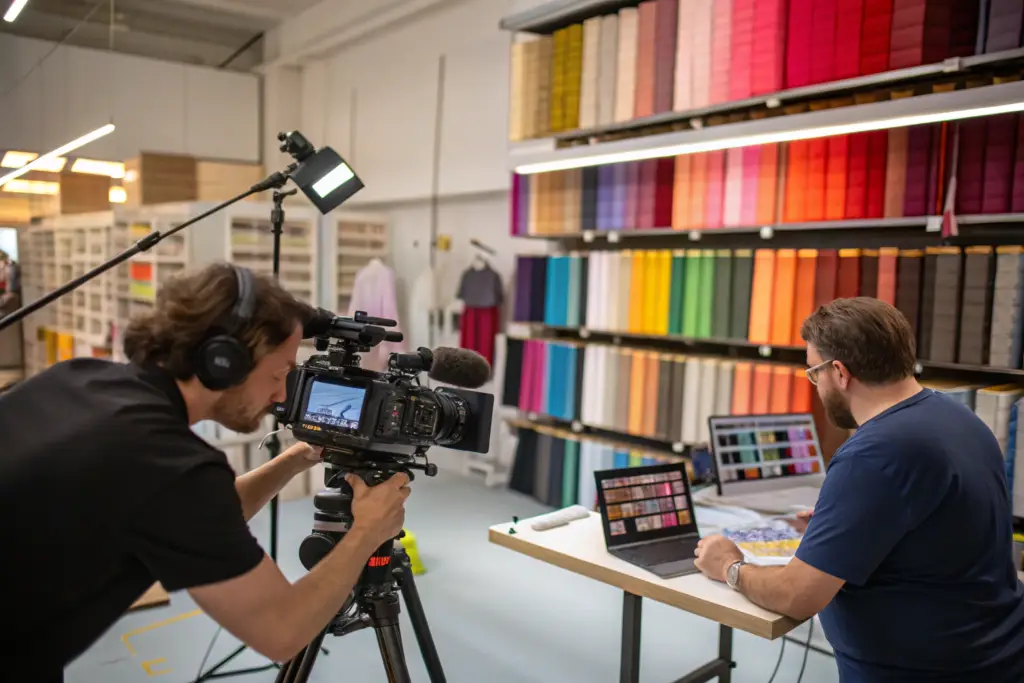
The ASMR connection was genuinely accidental, and I need to credit our social media coordinator for recognizing what was happening before I did. After that first brushed cotton video went viral, she noticed the comments clustering around sensory language: "I can almost feel this through the screen," "Why is this so satisfying to watch," "I've replayed this ten times." She understood, before I did, that fabric content triggers autonomous sensory meridian response—the tingling, relaxing sensation that millions of people seek out through dedicated ASMR content—in ways that align naturally with textile textures and sounds. She started optimizing for that audience: better microphones to capture fabric sound, slower hand movements to emphasize texture, no background music to preserve the pure sensory experience.
The ASMR audience that discovered our channel is not the audience we initially targeted. They include people with anxiety disorders who find fabric textures calming, people with sensory processing differences who use fabric videos as sensory regulation tools, and general ASMR enthusiasts who stumbled upon fabric content and found it more satisfying than traditional whispering or tapping videos. This audience is massive—the ASMR content category generates billions of views annually across platforms—and almost completely untapped by the textile industry. When these viewers watch our videos and experience the fabric sensory content they've been seeking, a meaningful percentage want to experience the actual fabric physically. They request swatches not as sourcing evaluation but as sensory objects—something to touch, to keep on their desk, to use as a calming tool. Their swatch requests include notes like "I have anxiety and touching fabrics helps me ground myself" and "I'm building a texture library for my occupational therapy practice."
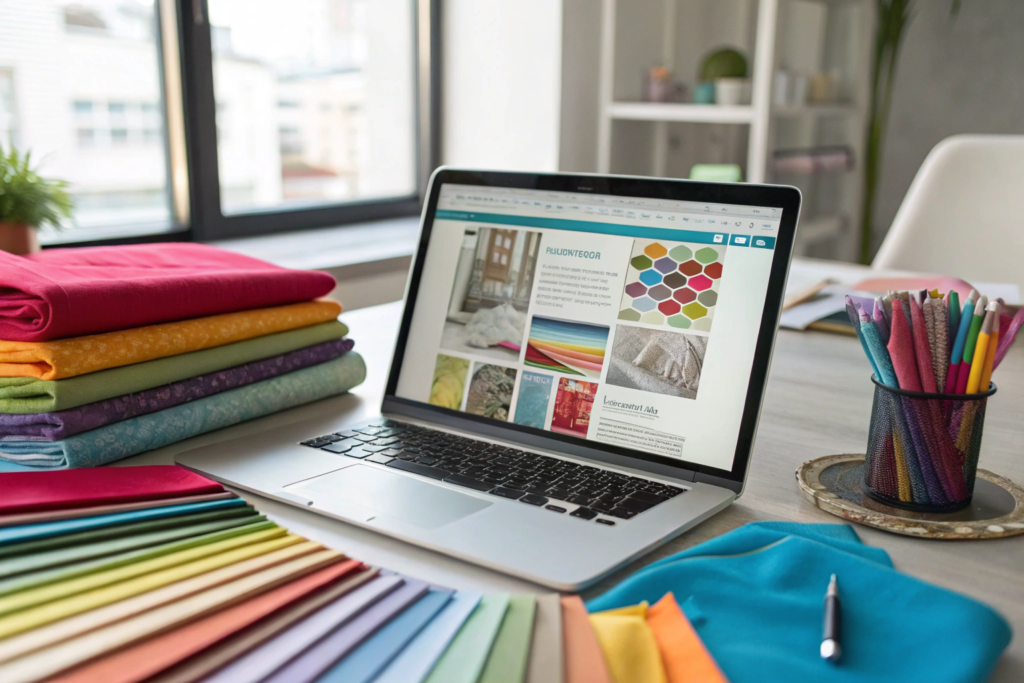
This unexpected demand required us to rethink swatch fulfillment. Professional buyers need specific swatches for specific projects with technical documentation. Sensory swatch requesters want variety packs with diverse textures—something to explore, something to experience, something that surprises their fingertips. We developed a separate "Fabric Experience Pack" for this audience: twelve 4x4-inch swatches of contrasting textures, from ultra-smooth BAMSILK to heavily textured bouclé, packaged in a resealable pouch with a card explaining each fabric's composition and characteristics. The pack costs $8 to cover shipping and handling, and we ship 600-800 monthly. The sensory swatch audience doesn't convert to bulk fabric buyers at high rates, but they do something equally valuable: they share their experience on social media, generating additional video content that drives more viewers to our channel and more professional buyers to our swatch request page. The fabric ASMR trend and its unexpected impact on professional textile swatch demand and customer acquisition demonstrates that sensory content creates value across audience segments we never anticipated reaching.
Which Short-Form Fabric Education Videos Convert Viewers to Swatch Requesters?
The conversion data from our channel analytics reveals a clear pattern: educational content that solves a specific, named problem converts viewers to swatch requesters at 3-4 times the rate of general sensory content. A video titled "How to tell if your 'silk' is actually polyester" converts at 8.7%. A video titled "The 3 fabrics every beginner sewist should avoid" converts at 7.2%. A video titled "What 'grams per square meter' actually means for your project" converts at 6.9%. These videos address specific knowledge gaps that viewers are actively trying to fill—they're searching for solutions, not just browsing for entertainment—and when the video helps them understand a textile concept, the natural next step is to request physical samples that let them apply their new knowledge.
The educational content that converts best follows a consistent structure. It starts with a problem statement that names the viewer's frustration: "You bought fabric online that looked amazing in the photos and felt nothing like what you expected when it arrived. Here's why that happened and how to prevent it." It provides a concrete, actionable solution: "Always request a swatch before ordering yardage. Here's exactly what to look for when your swatch arrives." It demonstrates the solution with our fabric: "See how this cotton twill has a clear diagonal weave structure? That's what you're looking for when the description says 'twill.' If your swatch doesn't show this, the supplier either sent the wrong fabric or doesn't know what twill means." It ends with a call to action that feels helpful rather than salesy: "We offer free swatches of every fabric in our library. The link is in the description. Request the fabrics you're considering, compare them side by side, and never get surprised by an online fabric purchase again."
The swatch conversion from educational content benefits from the trust dynamic that teaching creates. When a viewer spends six minutes learning about textile weight measurement from our R&D director, they develop a perception of our expertise that no advertisement could create. The swatch request isn't a cold evaluation of an unknown supplier—it's a continuation of a learning relationship with a trusted teacher. The fabric education video formats that most effectively convert viewers to physical swatch requesters share a structure that prioritizes solving viewer problems over promoting supplier capabilities.
How Is the Swatch Request Surge Changing Fumao's B2B Lead Generation?
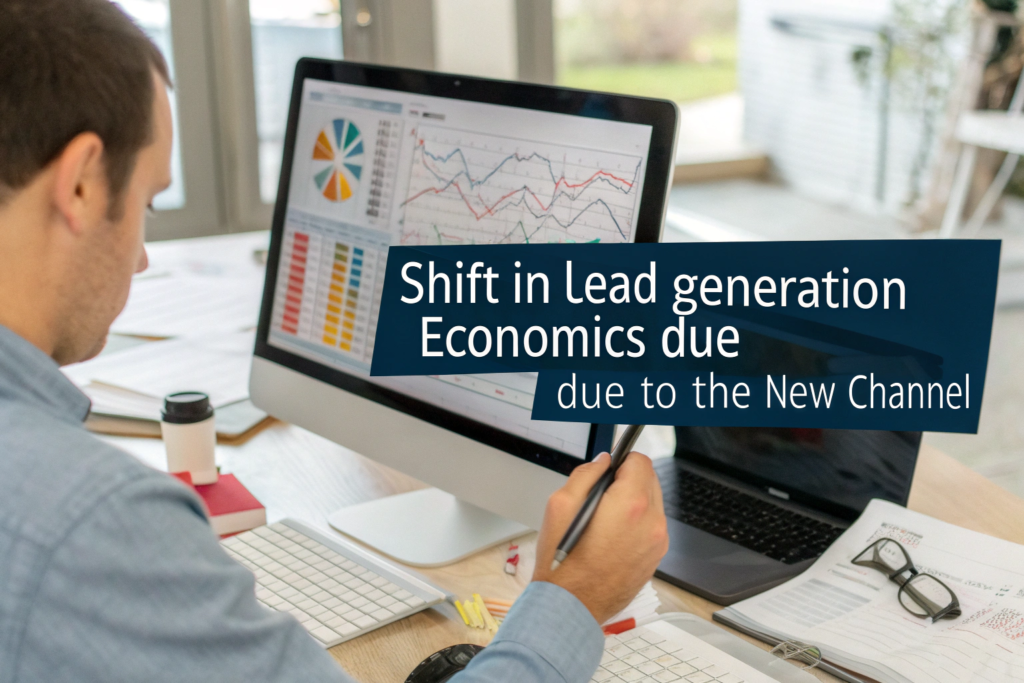
The swatch request surge has fundamentally altered our lead generation economics in ways that I'm still analyzing. Before the channel growth, our B2B lead generation followed the traditional textile industry pattern: trade shows generated the highest-quality leads at the highest cost per lead, Alibaba generated moderate-quality leads at moderate cost, and our website generated low-volume but high-intent leads through organic search. The channel adds a new lead source with different economics entirely: low cost per lead, moderate quality on average but with a high-quality segment that converts better than trade show leads, and massive volume that creates statistical significance in our conversion funnel analysis.
The numbers as of Q1 2026: our YouTube channel generates approximately 2,800 swatch requests monthly at an effective cost per lead of roughly $0.40 when factoring content production costs against lead volume. Trade shows generate approximately 150 qualified leads per major event at a cost per lead of roughly $180-250 when factoring booth costs, travel, shipping, and staff time. Alibaba generates approximately 400 inquiries monthly at a cost per lead of roughly $12-18 when factoring platform fees and PPC advertising. The channel doesn't replace trade shows or Alibaba—each channel serves different buyer segments and different stages of the purchasing process—but it adds a lead source with volume and cost characteristics that complement our existing channels. More importantly, the channel reaches buyers we never encountered through traditional channels: home-based businesses, startup designers, fashion students who will become professional buyers in 3-5 years, and international buyers from markets where we don't exhibit at trade shows.
What Percentage of Swatch Requests Convert to Bulk Fabric Orders?
The conversion rate question is the one every businessperson asks first, and I need to answer it with proper segmentation because the aggregate number hides more than it reveals. Our overall swatch-to-order conversion rate across all swatch request sources is 8.2% within twelve months of swatch shipment. That aggregate number is deceptively low because it includes the sensory swatch audience, the student audience, and the hobby sewist audience—segments that were never expected to convert to bulk orders. When we segment the data by request source and requester type, the conversion picture sharpens considerably.
Swatch requests that originate from our professional education content—the "Fabric Files" series, the quality comparison videos, the technical specification explainers—convert at 14.6%. These requesters are typically small to medium fashion brands, independent designers, and sourcing managers who are actively evaluating suppliers. They request specific swatches for specific projects, and their conversion timeline averages 4-7 months from swatch to first order. Swatch requests that originate from trade show interactions or Alibaba inquiries convert at 18-22%, still higher than channel-generated leads because these buyers are further along in their sourcing journey when they request swatches. Swatch requests that originate from sensory or ASMR content convert at 1.8%—low, but the volume is so high that the absolute number of converted orders is meaningful, and many of these converts are first-time bulk fabric buyers who discovered us through sensory content and then explored our professional resources.
The conversion data reveals a pattern that shapes our content strategy: sensory content builds audience, educational content converts audience to leads, and professional service converts leads to customers. The three content types work as a funnel rather than as alternatives. The viewers who discover us through a viral fabric ASMR video may not convert immediately, but a percentage will watch our educational content, request swatches, and eventually place orders. The channel's value extends beyond direct conversion metrics to include brand awareness, trust building, and audience development that pays off over years rather than months. Understanding the conversion rate data for textile swatch requests from social media channels to bulk fabric orders requires analyzing segmented data rather than aggregate numbers that mix high-intent and low-intent audiences.
How Does the Digital Swatch Request System Prioritize Serious Buyers?
The swatch request volume—4,100 monthly and growing—creates a triage challenge that didn't exist when we shipped 200 swatch packs monthly. Every swatch pack costs approximately $3.50 in materials, labor, and shipping. At 4,100 monthly requests, our swatch fulfillment costs exceed $14,000 monthly—a significant investment that we're happy to make for qualified leads but that would be unsustainable if the majority of requests came from viewers with no intention of ever purchasing fabric. The digital swatch request system we developed addresses this challenge by segmenting requesters and allocating resources accordingly without creating barriers that discourage legitimate buyers.
The system uses a tiered qualification approach based on the information requesters provide. Every swatch requester completes a short digital form that asks about their project, their timeline, their estimated yardage needs, and their business type. The form is deliberately short—three required fields and one optional—to avoid abandonment, but the information gathered is sufficient for basic lead scoring. Requesters who indicate commercial projects with specific timelines and yardage estimates receive priority fulfillment with expedited shipping, personalized follow-up from our sales team, and inclusion in our CRM for ongoing nurturing. Requesters who indicate personal projects, student work, or no specific project receive standard fulfillment with educational materials about fabric selection and an invitation to explore our professional resources.
The system also uses behavioral signals to identify high-intent requesters. Requesters who have watched more than ten videos on our channel, who have visited specific product pages on our website, or who have requested swatches previously receive higher lead scores based on demonstrated engagement. The behavioral scoring catches serious buyers who might not reveal their commercial intent on the swatch request form—a pattern we've observed among startup founders and independent designers who initially present as hobby sewists but are actually evaluating suppliers for upcoming product launches. The digital swatch request qualification system for textile suppliers managing high-volume sample demand distinguishes between casual interest and genuine purchasing intent without creating friction that discourages legitimate buyers.
What Does the Channel's Success Mean for Traditional Fabric Sourcing Methods?
The channel's growth doesn't signal the death of traditional fabric sourcing—trade shows, in-person meetings, physical sample books—but it does signal a reordering of the sourcing journey that traditional methods must adapt to. The pre-2023 sourcing journey started with a buyer identifying a need, searching for suppliers through trade shows or Alibaba, requesting samples, and evaluating options. The channel-aware sourcing journey of 2026 often starts with a buyer discovering our fabric content through social media, watching our videos for weeks or months before they have an immediate sourcing need, developing familiarity with our quality and expertise, and then contacting us as a known quantity when a project materializes. By the time these buyers request swatches, they've already developed trust in our expertise through our content. The swatch evaluation isn't "who is this supplier and can they deliver?" but rather "does this specific fabric match the quality I've come to expect from this supplier based on everything I've watched?"
The shift has implications for how we allocate marketing resources. Trade shows remain essential for relationship deepening with existing clients and for the serendipitous discovery that digital channels cannot fully replicate. But trade shows are no longer our primary lead generation mechanism—the channel fills that role at dramatically lower cost with broader geographic reach. Alibaba remains useful for specific buyer segments, particularly procurement professionals who use the platform as their primary sourcing tool, but it's no longer our primary digital presence. The channel content serves as the top of our marketing funnel, the swatch request system as the middle, and our sales team's consultative service as the bottom. The integration of these elements creates a buyer journey that didn't exist in the textile industry five years ago.

Are Trade Shows and In-Person Meetings Still Relevant When Digital Content Generates Leads?
Trade shows are still relevant, but their function has evolved from discovery to verification and relationship deepening. A buyer who has watched fifty of our videos, requested swatches, and corresponded with our sales team arrives at our trade show booth with a completely different agenda than a buyer who's encountering us for the first time. They don't need the introductory overview of our capabilities—they already know our production capacity, our quality certifications, and our fabric categories. They want to meet the people behind the videos, see specific fabrics they've been considering in physical form, and discuss their upcoming projects with the technical specialists whose expertise they've come to trust through content. The trade show conversation starts at a much deeper level and covers more ground in less time than traditional first-contact booth interactions.
The economics still work because the trade show cost per meaningful interaction decreases when interactions are higher quality. Our Première Vision appearance in February 2026 generated 40% fewer booth visitors than our 2023 appearance—the channel is absorbing the initial discovery function—but the visitors who did come were dramatically more qualified. The conversion rate from booth interaction to order within six months was 31%, compared to 19% in 2023. The average order value from trade show-originated clients was $34,000, compared to $22,000 from channel-originated clients. Trade shows are becoming a high-touch conversion channel for pre-qualified leads rather than a discovery channel for new contacts. The evolving role of textile trade shows in a sourcing landscape increasingly driven by digital content discovery requires adapting booth design, staffing, and follow-up processes to serve buyers who arrive already informed rather than needing introduction.
Can YouTube and Social Media Replace Alibaba for B2B Fabric Customer Acquisition?
The short answer is that YouTube won't fully replace Alibaba because the platforms serve different buyer intents, but YouTube is capturing share from Alibaba for specific buyer segments that value supplier expertise over platform convenience. Alibaba succeeds because it aggregates supplier options, standardizes the inquiry process, and provides transaction infrastructure including payment protection and logistics support. Buyers who prioritize comparison shopping, who need the platform's verification and protection features, or who are sourcing commodity fabrics where price comparison is the primary evaluation method will continue using Alibaba regardless of how compelling our YouTube content becomes.
YouTube succeeds for buyer segments that Alibaba serves poorly: buyers who need education before they can evaluate suppliers effectively, buyers who prioritize supplier expertise and reliability over price comparison, and buyers from creative industries who respond to sensory and aesthetic content rather than specification sheets. A fashion student who discovers our channel while learning about fabric types, follows our content for two years, and then contacts us when launching their first collection is a customer we would never have acquired through Alibaba because they wouldn't have known what to search for before our content taught them. An indie lingerie designer who watches our BAMSILK videos and requests swatches is evaluating a specific fabric innovation they discovered through content, not comparing five suppliers of generic "bamboo fabric" on a platform.
The platform economics also differ in ways that favor content-driven acquisition for our specific business model. Alibaba charges for visibility—PPC advertising, premium storefront features, trade assurance commissions—creating a cost-per-lead that increases as more suppliers compete for the same search terms. YouTube content is an owned asset that generates leads indefinitely after the initial production investment. Our "Fabric Files" episode about thread count, produced in March 2025 for approximately $400 in production cost, has generated 890 swatch requests over fourteen months at a cost per lead of $0.45 and continues generating 50-70 requests monthly. An Alibaba PPC campaign generating equivalent lead volume would cost $8,000-12,000 monthly with leads stopping the moment we stop paying. The comparison of YouTube content marketing versus Alibaba PPC advertising for B2B textile customer acquisition costs and lead quality demonstrates that content-driven acquisition offers dramatically lower ongoing costs but requires different capabilities—video production, educational content development, and long-term audience building—than platform-based paid acquisition.
Conclusion
The channel's growth has changed Shanghai Fumao in ways I'm still processing. We began as a fabric manufacturer that happened to post some videos. We're becoming a fabric education company that happens to manufacture fabric—or more accurately, we're becoming both simultaneously, with the educational mission driving the manufacturing growth. The 4,100 monthly swatch requests, the 1.2 million views on a video about brushed cotton, the sensory swatch audience that discovered us through ASMR content—none of this was in our 2023 strategic plan. It emerged because we hired a smart young social media coordinator who understood something about fabric content that I didn't, and because we gave her the freedom to experiment with content formats that seemed unlikely to work.
The lesson I draw from this experience is that textile industry marketing has been trapped in B2B assumptions that no longer reflect how buyers—especially younger buyers, especially creative buyers, especially international buyers—discover and evaluate suppliers. The assumption that professional fabric buyers make decisions based purely on specifications and pricing ignores the reality that fabric is a sensory product. Buyers want to experience fabric before they purchase, and video content that transmits sensory information—how fabric moves, how it sounds, how light plays across its surface—satisfies that desire partially while driving demand for the physical swatches that complete the experience. The channel didn't replace physical sampling; it amplified demand for physical sampling by making more buyers aware of what our fabrics feel like and want to verify that experience themselves.
If you're a fabric buyer who discovered us through our channel—welcome, and thank you for watching. If you've watched our videos and are ready to experience our fabrics physically, request swatches through the link in any video description, and our team will prepare samples matched to your project requirements. If you're a professional buyer with specific sourcing needs, contact our Business Director Elaine at elaine@fumaoclothing.com to discuss your requirements directly. The channel introduced us. Let's continue the conversation with fabric in your hands.