In September 2024, a scrubs brand founder from Phoenix, Arizona called me with a problem that was threatening her business. She'd been selling "antimicrobial scrubs" for eighteen months, built a loyal customer base of nurses and dental hygienists, and was about to sign a contract with a 200-hospital group purchasing organization. Then the GPO's quality team asked for her fabric's antimicrobial efficacy test data—specifically, AATCC 100 test results showing bacterial reduction percentages after 50 industrial laundry cycles. She sent them the test data her previous fabric supplier had provided. The GPO's lab director reviewed it and flagged three problems: the testing was performed after only 5 washes, not 50; the test methodology didn't follow AATCC 100 standards; and the supplier couldn't provide batch-level quality control data showing that every production run achieved the claimed antimicrobial performance. The contract was suspended pending acceptable documentation. She had 30 days to provide verified test data or lose the deal. She called me because her previous supplier—a trader who had marketed "antimicrobial fabric" without understanding the technical requirements—couldn't produce what the GPO demanded. We turned around AATCC 100 testing on our anti-bacterial scrubs fabric in 18 days, provided batch-level QC data for the past twelve months of production, and gave her the documentation package that satisfied the GPO's requirements. She got the contract. Her previous supplier lost a customer who now understands the difference between marketing claims and verified performance.
Shanghai Fumao provides anti-bacterial scrubs fabric with guaranteed antimicrobial performance verified by independent laboratory testing against recognized standards. Our anti-bacterial finish achieves 99.9% reduction of Staphylococcus aureus and Klebsiella pneumoniae after 50 industrial laundry cycles at 75°C, tested according to AATCC 100 methodology by an ISO 17025-accredited laboratory. The guarantee includes batch-level quality control testing on every production run, documentation packages suitable for healthcare group purchasing organization compliance review, and a warranty that the antimicrobial performance will meet specification throughout the stated durability life of 50 industrial laundry cycles. The guarantee is backed by our production quality system, our inline process monitoring, and our willingness to provide complete transparency into testing data and methodology—the same transparency that earned our "Most Transparent Factory" designation.
The antimicrobial scrubs fabric market has expanded rapidly since 2020, driven by healthcare worker demand for garments that provide an additional layer of protection beyond standard cotton and polyester scrubs. The market expansion has attracted suppliers who market "antimicrobial" or "anti-bacterial" fabric without the technical infrastructure to verify their claims or maintain consistent performance across production batches. The gap between marketing claims and verified performance creates risk for scrubs brands whose healthcare customers rely on antimicrobial claims for purchasing decisions and infection control protocols. Our guarantee addresses this risk by providing the verification infrastructure that healthcare buyers require.
What Testing Standards Verify Anti-Bacterial Fabric Performance for Medical Scrubs?
The testing standards that verify antimicrobial textile performance for medical applications are specific, rigorous, and fundamentally different from the testing that supports general antimicrobial marketing claims. Understanding these standards is essential for scrubs brands because healthcare customers increasingly demand test data that follows recognized methodologies, and buyers who can't distinguish between AATCC 100 and informal "lab tests" risk supplying products that fail compliance review.
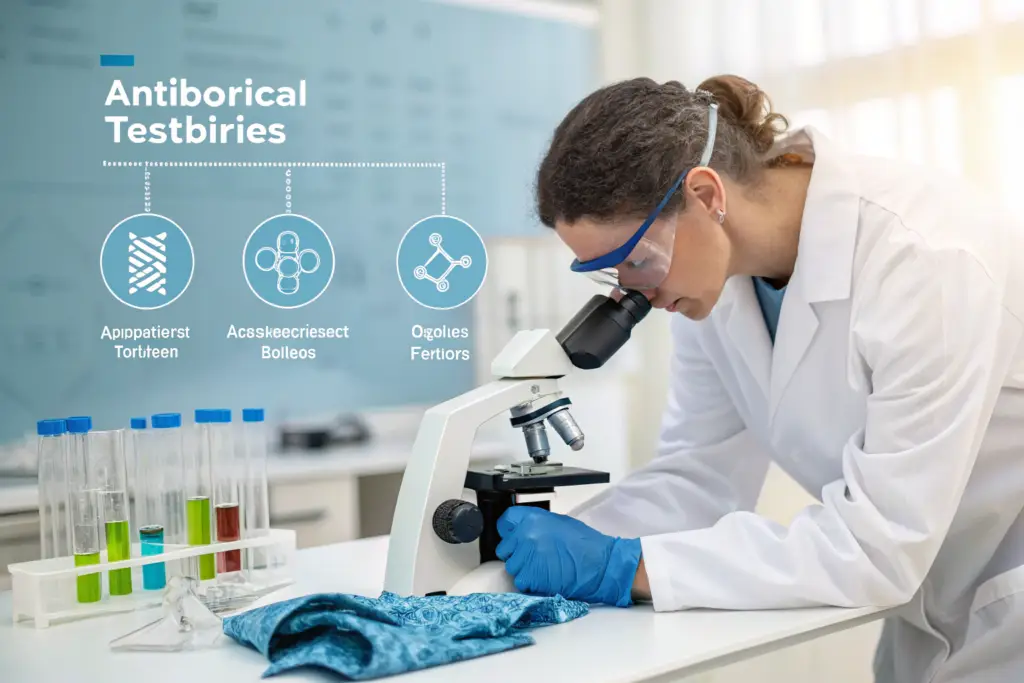
AATCC 100 is the globally recognized standard for quantitative assessment of antibacterial finishes on textile materials. The test methodology inoculates fabric samples with a known concentration of specific bacterial strains—typically Staphylococcus aureus (gram-positive) and Klebsiella pneumoniae or Escherichia coli (gram-negative)—and measures the bacterial population after a specified contact time, typically 24 hours. The result is expressed as a percentage reduction compared to an untreated control fabric. A result of 99.9% reduction (3-log reduction) is the commonly cited threshold for "antibacterial" claims, though specific healthcare applications may require higher thresholds. The standard requires testing after multiple wash cycles to establish durability—a critical requirement for scrubs that undergo frequent high-temperature laundering.
AATCC 147 is a qualitative screening method that assesses antibacterial activity by measuring the zone of inhibition around a fabric sample placed on an inoculated agar plate. The test is useful for rapid screening and quality control but does not provide the quantitative bacterial reduction data that healthcare customers require for compliance verification. Some suppliers market fabric as "AATCC tested" based on AATCC 147 results, implying quantitative performance that the test method doesn't provide. Understanding the distinction between AATCC 147 and AATCC 100 prevents buyers from accepting inadequate testing as evidence of antimicrobial performance.
ASTM E2149 is an alternative quantitative method that assesses antimicrobial activity under dynamic contact conditions—fabric samples are shaken in a bacterial suspension rather than static inoculation. The method is sometimes preferred for fabrics with irregular surfaces or hydrophobic characteristics, but AATCC 100 remains the dominant standard for healthcare textile applications in the US market. ISO 20743 is the international equivalent, with similar methodology and multiple testing options for different textile types. European healthcare buyers often request ISO 20743 data alongside or instead of AATCC data. The testing standards for quantifying antibacterial finish performance on medical textiles demonstrate that valid performance claims require specific, recognized test methodologies applied under realistic durability conditions.
How Does AATCC 100 Testing Differ From AATCC 147 Screening?
The distinction between AATCC 100 and AATCC 147 is the distinction between measurement and indication—between knowing how well a fabric kills bacteria and knowing whether it kills bacteria at all. AATCC 100 is a quantitative test that measures the number of viable bacteria remaining after contact with the treated fabric, expressed as a percentage reduction compared to the initial inoculum and an untreated control. The test produces a number: 99.9% reduction, 99.99% reduction, or less. The number enables comparison between different antimicrobial treatments, verification against specification requirements, and evaluation of performance durability across wash cycles.
AATCC 147 is a qualitative test that places treated fabric samples on an agar plate inoculated with bacteria and observes whether a clear zone—a zone of inhibition—forms around the fabric. The clear zone indicates that antimicrobial agents have diffused from the fabric into the surrounding agar, preventing bacterial growth. The test produces a yes-no observation: inhibition present or absent, with the size of the inhibition zone providing a rough indication of antimicrobial activity level. The test does not quantify how many bacteria are killed, how quickly, or whether the antimicrobial activity persists after the agents that diffused into the agar are depleted.
The practical significance for scrubs brands is that AATCC 147 results cannot substitute for AATCC 100 results in healthcare compliance documentation. A supplier who provides "antimicrobial test reports" showing AATCC 147 results is demonstrating that the fabric exhibits some antimicrobial activity—useful information for initial screening—but is not providing the quantitative performance data that healthcare customers require. Buyers should specifically request AATCC 100 or ISO 20743 quantitative test data, verify that testing was performed after a specified number of wash cycles, and confirm that the testing laboratory holds appropriate accreditation.
AATCC 147 serves a legitimate quality control function when used as intended—rapid screening of production batches to verify that antimicrobial treatment was applied. Our quality system uses AATCC 147 for inline screening, with AATCC 100 quantitative testing on representative samples from each production batch. The combination provides both manufacturing efficiency and verified performance data. The difference between AATCC 100 quantitative antibacterial testing and AATCC 147 qualitative screening for medical textiles explains why healthcare compliance requires specific test methodology documentation.
What Bacterial Strains and Log Reductions Do Healthcare Buyers Require?
Healthcare buyer requirements for antimicrobial scrubs fabric cluster around specific bacterial strains, reduction thresholds, and durability expectations that reflect infection control priorities in clinical environments. Understanding these requirements enables scrubs brands to evaluate supplier claims against the standards their customers actually apply.
The bacterial strains specified in testing requirements reflect the pathogens most commonly implicated in healthcare-associated infections. Staphylococcus aureus, including methicillin-resistant strains (MRSA), is the most commonly specified gram-positive test organism because it's a leading cause of surgical site infections and is frequently transmitted via contaminated textiles. Klebsiella pneumoniae and Escherichia coli are the most commonly specified gram-negative test organisms, representing the enteric bacteria that cause urinary tract infections, pneumonia, and bloodstream infections in healthcare settings. Testing against both gram-positive and gram-negative organisms is standard because antimicrobial treatments that are effective against one bacterial type may be less effective against the other.
The log reduction threshold typically required is 3-log, representing 99.9% bacterial reduction. Some healthcare systems and GPOs specify 4-log (99.99%) reduction, particularly for fabrics used in surgical settings or for immunocompromised patient populations. The difference between 3-log and 4-log is tenfold—a fabric achieving 99.9% reduction leaves 10 times more viable bacteria than a fabric achieving 99.99% reduction. The clinical significance of this difference depends on the application and the initial bacterial load, but the 3-log threshold is the most common commercial requirement for general healthcare scrubs.
The durability requirement—antimicrobial performance after repeated laundering—is the standard that most distinguishes verified performance from marketing claims. Healthcare scrubs undergo frequent industrial laundering at elevated temperatures, typically 65-75°C, with aggressive detergents and bleach alternatives. The AATCC 100 testing must demonstrate maintained antimicrobial performance after a specified number of wash cycles, with 50 cycles being the most common durability requirement and 100 cycles specified for premium positioning. Testing after 5-10 wash cycles—which some suppliers provide as evidence of "durability"—does not represent the real-world usage conditions of healthcare scrubs. The bacterial strain specifications and log reduction requirements for antimicrobial medical textiles demonstrate that healthcare buyers evaluate performance against clinically relevant standards, not marketing descriptions.
What Anti-Bacterial Technology Does Fumao Use for Scrubs Fabric?
Our anti-bacterial scrubs fabric uses a silver-ion based antimicrobial technology integrated into the fabric through a controlled exhaust process during dyeing or finishing. The technology was selected after evaluating four alternative antimicrobial approaches against criteria of efficacy, durability, safety, compatibility with fabric hand feel, and cost-effectiveness for production-scale manufacturing. The selection process involved twelve months of comparative testing, including AATCC 100 efficacy testing, cytotoxicity testing for skin compatibility, and industrial laundry simulation for durability verification.
The silver-ion technology operates through a multi-mechanism antimicrobial action that distinguishes it from leaching antimicrobials that deplete over time. Silver ions bind to bacterial cell membranes, disrupting membrane permeability and cell respiration. The ions also interact with bacterial DNA, preventing replication, and with bacterial enzymes, disrupting metabolic function. The multi-mechanism action makes bacterial resistance development less likely than with single-mechanism antimicrobials, and the silver ions remain bound within the fabric matrix rather than depleting through surface leaching. The binding mechanism—ionic interaction between silver ions and the fiber substrate—is what enables antimicrobial durability through repeated high-temperature laundering.
The application process integrates the antimicrobial treatment into our standard fabric finishing workflow, with the silver-ion compound applied during the dyeing or final finishing stage depending on the specific fabric construction. The application parameters—concentration, temperature, pH, dwell time, and reduction conditions—are precisely controlled and monitored, with inline spectrophotometric verification of antimicrobial compound uptake. The controlled application ensures consistent antimicrobial loading across the fabric batch, which is essential for consistent antimicrobial performance. The process parameters are stored in our digital production system and replicated for every production batch, ensuring that the antimicrobial performance achieved in initial testing is maintained in ongoing production.
How Does Silver-Ion Technology Compare to Other Antimicrobial Fabric Treatments?
Silver-ion technology was selected for our scrubs fabric after systematic comparison against the three other antimicrobial treatment categories available for textile applications: quaternary ammonium compounds (quats), triclosan-based treatments, and copper-based treatments. Each category has distinct performance characteristics, safety profiles, and durability limitations that affect suitability for healthcare scrubs applications.
Quaternary ammonium compounds are organic antimicrobials that disrupt bacterial cell membranes through electrostatic interaction. Quats are effective against a broad spectrum of bacteria and are less expensive than silver-based treatments, making them common in consumer antimicrobial textiles. Their limitation for healthcare scrubs is durability: quats are typically applied as topical finishes that physically coat fiber surfaces and gradually wash away during laundering. The durability limitation is inherent to the application method—topical finishes deplete with washing—rather than a failure of the antimicrobial chemistry. Quat-treated fabrics typically maintain antimicrobial performance through 20-30 industrial wash cycles, insufficient for scrubs that may undergo 50-100 cycles during their service life.
Triclosan-based treatments were widely used in antimicrobial textiles prior to 2016-2017, when regulatory concerns about endocrine disruption, environmental persistence, and bacterial resistance development led to restrictions in multiple markets. The FDA banned triclosan from consumer antiseptic washes in 2016, and while textile applications remain permitted in some jurisdictions, healthcare buyers increasingly specify triclosan-free antimicrobial treatments. The regulatory trajectory suggests further restrictions, making triclosan a problematic choice for scrubs brands planning multi-year product lines.
Copper-based treatments share silver's multi-mechanism antimicrobial action and durability advantages, with copper oxide and copper nanoparticle formulations showing comparable efficacy to silver in some applications. Copper's limitation is primarily aesthetic: copper treatments can impart a visible color to fabrics, limiting color options for scrubs that require specific shade matching. Copper can also interact with perspiration to produce odor on some wearers, a cosmetic concern for garments worn during long clinical shifts. Silver-ion treatment was selected because it provides the durability of ionic antimicrobial technology without the color limitations of copper or the regulatory concerns of triclosan. The comparison of silver-ion, quaternary ammonium, triclosan, and copper antimicrobial fabric treatments for medical textile applications explains why different technologies suit different end-use requirements.
What Durability Testing Proves the Finish Survives Industrial Laundering?
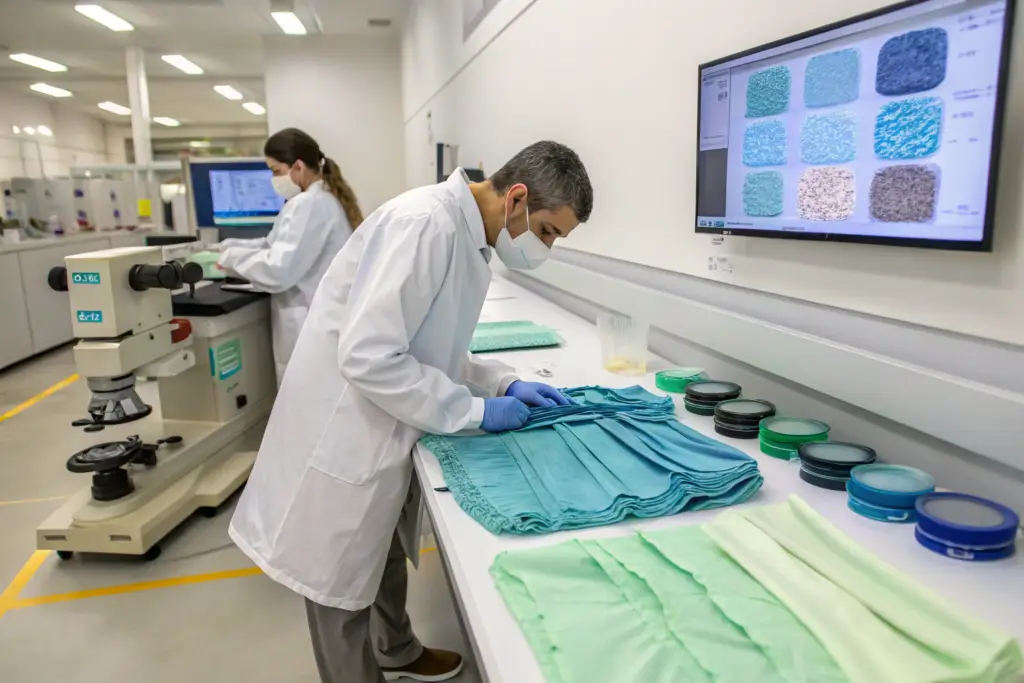
The durability testing program for our anti-bacterial scrubs fabric simulates the industrial laundering conditions that healthcare scrubs experience during their service life, providing evidence that antimicrobial performance persists through the full useful life of the garment. The testing program operates at three levels: laboratory standardized washing for certification testing, commercial laundry simulation for real-world validation, and ongoing production batch durability verification for quality control.
Laboratory standardized washing follows AATCC LP1 laboratory laundering procedures, with wash cycles at 75°C using AATCC standard reference detergent. The standardized conditions enable comparison across different testing laboratories and different time periods, providing the objective evidence that healthcare buyers require for compliance verification. AATCC 100 antimicrobial testing is performed at the 0-wash baseline (fabric as produced, before any laundering) and at 10-wash intervals through 50 washes. The testing at each interval quantifies the antimicrobial efficacy against both S. aureus and K. pneumoniae. Our standard anti-bacterial scrubs fabric maintains 99.9% reduction (3-log) against both organisms through 50 AATCC LP1 wash cycles, with typical results showing 99.95-99.99% reduction (3.3-4 log) at the 50-cycle endpoint.
Commercial laundry simulation augments the standardized testing with real-world validation using a healthcare laundry service that processes our scrubs fabric alongside actual hospital textiles. The commercial laundry uses industrial tunnel washers operating at 70-75°C with commercial-grade detergents, bleach alternatives, and fabric softeners typically used in healthcare laundry operations. The commercial simulation provides validation that the antimicrobial performance documented in laboratory testing translates to the more aggressive and variable conditions of actual healthcare laundering. Results from our 2025 commercial laundry simulation showed maintained 99.9% reduction through 75 commercial wash cycles, exceeding the performance documented in standardized laboratory testing.
Production batch durability verification tests every production batch at the 0-wash and 50-wash endpoints using AATCC 100 methodology. The batch-level testing ensures that the antimicrobial performance documented in initial certification testing is maintained across all production, not just in the samples submitted for certification. Batches that fail to achieve the 99.9% reduction threshold at either endpoint are quarantined for investigation and re-processing. The multi-level durability testing for antimicrobial textile finishes under industrial laundry conditions demonstrates the verification infrastructure that supports performance guarantees.
How Does Fumao Verify and Document Anti-Bacterial Performance for Buyers?
The verification and documentation system for anti-bacterial performance provides buyers with the evidence they need to support antimicrobial claims to their healthcare customers. The system operates on three principles: independent testing by accredited laboratories, batch-level quality control with buyer-accessible results, and complete documentation transparency that enables buyer verification of every claim.
Independent testing is performed by ISO 17025-accredited laboratories with specific expertise in textile antimicrobial testing. We use AATCC 100 methodology with the bacterial strains, contact time, and wash cycle durability parameters that healthcare buyers require. The independent laboratory reports provide the objective, third-party verification that healthcare GPOs and hospital procurement departments require for supplier qualification. The laboratory reports include the complete test methodology description, the raw data, the calculated results, and the laboratory's accreditation information—not just a summary certificate that omits the detail buyers need for compliance review.
Batch-level quality control tests every production batch using both AATCC 147 screening (rapid qualitative verification that antimicrobial treatment was applied) and AATCC 100 quantitative testing on representative samples from each batch. The batch test results are recorded in our quality database, linked to the specific production batch identification, and available to buyers through our digital platform. A buyer can access the antimicrobial test results for their specific fabric batch, verify that the results meet the specified performance standard, and include the documentation in their own compliance records.
Documentation transparency means we provide the complete testing record rather than a summary certificate. Buyers receive the independent laboratory test reports with full methodology and raw data, the batch-level QC test results for their specific order, the durability testing data showing antimicrobial performance across the specified wash cycle range, the antimicrobial agent safety documentation including skin irritation and sensitization testing, and the manufacturing process documentation showing the controlled application parameters used for their production batch. The documentation package provides everything a healthcare buyer needs for compliance verification, supplier qualification, and regulatory documentation. The verification documentation for antimicrobial textile performance claims in medical applications enables scrubs brands to substantiate their product claims with independently verified evidence.
What Independent Lab Test Reports Do Buyers Receive With Their Orders?
The independent laboratory test report package that buyers receive with their anti-bacterial scrubs fabric orders is structured to support the compliance documentation requirements of healthcare purchasing organizations. The package includes four categories of test reports, each serving a specific verification function.
The initial certification report documents the antimicrobial efficacy established during product development and validation. This report includes complete AATCC 100 testing against S. aureus and K. pneumoniae at baseline and at 50 AATCC LP1 wash cycles, performed by an ISO 17025-accredited laboratory. The report provides the quantitative bacterial reduction data, the test methodology description, the laboratory accreditation information, and the dated report with unique identification number. The initial certification report establishes the performance baseline and is updated annually or when significant process changes occur.
The batch-specific test report documents the antimicrobial performance of the specific production batch shipped to the buyer. This report includes AATCC 100 testing on samples from the buyer's production batch at baseline and at 50 wash cycles, performed by our internal quality laboratory or by the independent laboratory for buyers who require third-party batch testing. The batch-specific report links the antimicrobial performance data to the production batch number that appears on the buyer's fabric rolls and shipping documentation, providing traceability from performance claim to physical product.
The durability validation report documents the antimicrobial performance persistence across the full wash cycle range, with testing at 0, 10, 20, 30, 40, and 50 wash cycles. The multi-point testing demonstrates that antimicrobial performance is maintained throughout the durability life rather than declining progressively, providing confidence that performance at the 50-cycle endpoint represents sustained performance rather than a threshold that's barely achieved. The safety documentation report provides the skin irritation testing, skin sensitization testing, and cytotoxicity testing results for the antimicrobial treatment. The safety testing addresses the healthcare-specific concern that antimicrobial textiles might cause dermatological reactions in wearers with prolonged skin contact during clinical shifts. The independent laboratory test reports provided with antimicrobial medical textile orders enable buyers to substantiate product performance claims with complete verification documentation.
How Does Batch-Level Quality Control Ensure Consistent Anti-Bacterial Performance?
Batch-level quality control for antimicrobial performance addresses the fundamental challenge of antimicrobial textile production: the antimicrobial efficacy established during product development must be maintained across every production batch, with variations in raw materials, process conditions, and equipment performance. The quality control system uses a three-stage verification protocol that tests antimicrobial performance before, during, and after production.
Pre-production verification tests the antimicrobial compound concentration and the fabric substrate before production begins. The antimicrobial compound lot is tested for active ingredient concentration against specification. The fabric substrate is tested for characteristics that affect antimicrobial uptake—pH, moisture content, surface energy—to ensure that the substrate will accept the antimicrobial treatment consistently with previous production. Pre-production verification prevents the most common cause of batch-level performance variation: using an antimicrobial compound that doesn't meet specification or a fabric substrate whose characteristics have changed.
In-process verification uses inline spectrophotometric monitoring of antimicrobial compound uptake during the application process. The monitoring system measures the concentration of antimicrobial compound in the treatment bath before and after fabric passage, calculating the uptake based on concentration depletion. The calculated uptake is compared against the specification range, and the process parameters are adjusted in real-time if uptake falls outside the acceptable range. The inline monitoring catches application variations during production rather than after production, enabling immediate correction rather than batch rejection.
Post-production verification tests the finished fabric from every production batch using AATCC 147 screening and periodic AATCC 100 quantitative testing. The AATCC 147 screening is performed on samples from the beginning, middle, and end of each batch, providing rapid verification that antimicrobial treatment was applied uniformly across the batch. The AATCC 100 quantitative testing is performed on a composite sample from each batch, with results reviewed against the 99.9% reduction specification before the batch is released for shipping. The batch-level quality control system for consistent antimicrobial textile production demonstrates the manufacturing discipline that transforms a laboratory-proven technology into a commercially reliable product.
What Guarantee Terms Apply to Fumao's Anti-Bacterial Scrubs Finish?
The guarantee terms for our anti-bacterial scrubs finish are specific, measurable, and backed by our willingness to accept financial responsibility for performance failures. The specificity of the guarantee terms distinguishes our offer from the vague "antimicrobial" claims that dominate the market, and the financial backing demonstrates that we're confident enough in our performance to put money behind it.
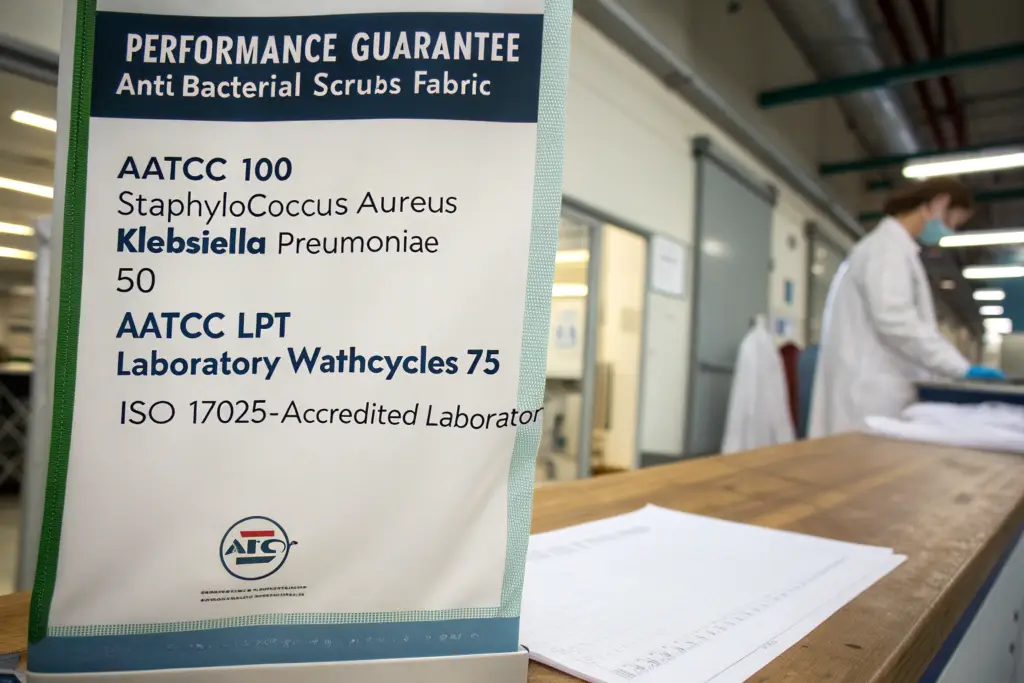
The performance guarantee specifies that our anti-bacterial scrubs fabric will achieve a minimum 99.9% reduction of Staphylococcus aureus and Klebsiella pneumoniae when tested according to AATCC 100 methodology after 50 AATCC LP1 laboratory wash cycles at 75°C. The testing must be performed by an ISO 17025-accredited laboratory following the specified methodology. The guarantee applies to the antimicrobial performance characteristic specifically, not to other fabric characteristics (shrinkage, colorfastness, tensile strength) that are covered by our standard quality warranty.
The durability guarantee specifies that the antimicrobial performance will be maintained for 50 industrial laundry cycles at temperatures up to 75°C, using standard healthcare laundry detergents and procedures. The durability guarantee does not cover laundering that uses bleach concentrations exceeding healthcare industry standards (typically 50-150 ppm available chlorine), fabric softeners containing cationic surfactants that can interfere with antimicrobial mechanisms, or laundering temperatures exceeding 85°C. These exclusions reflect the operating conditions for which the antimicrobial treatment was designed and tested, and they align with standard healthcare laundry practices.
The remedy for verified performance failure is fabric replacement or refund, at the buyer's election. If independent testing demonstrates that the fabric fails to achieve the guaranteed antimicrobial performance, we replace the fabric with conforming product or refund the purchase price. The remedy is structured to make the buyer whole—they receive the antimicrobial performance they paid for, or their money back—without requiring negotiation or dispute resolution. The verification process requires testing by a mutually agreed ISO 17025-accredited laboratory, with the testing cost covered by us if the fabric fails and by the buyer if the fabric passes. The guarantee terms for antimicrobial performance on medical scrubs fabric provide the specific, measurable, and financially backed assurance that healthcare buyers require.
What Testing Documentation Supports the Performance Warranty?
The testing documentation that supports the performance warranty is organized to provide complete, verifiable evidence of antimicrobial efficacy at every stage from initial certification through ongoing production. The documentation structure enables buyers to validate our claims independently and to satisfy their own healthcare customers' compliance requirements.
The initial certification documentation includes the complete AATCC 100 test reports from ISO 17025-accredited independent laboratories, showing antimicrobial efficacy against S. aureus and K. pneumoniae at baseline and after 50 wash cycles. The reports include the test methodology, raw data, calculations, and laboratory accreditation details. The certification documentation also includes the antimicrobial agent technical data sheet from the chemical manufacturer, the skin safety testing report, and the manufacturing process validation demonstrating consistent antimicrobial application. The initial certification documentation establishes the performance baseline that the warranty covers.
The ongoing production documentation includes the batch-level AATCC 100 test results for every production batch, linked to the batch numbers that appear on fabric rolls and shipping documents. A buyer can trace their specific fabric batch to its antimicrobial test results, verifying that their fabric achieved the guaranteed performance. The ongoing documentation also includes the inline process monitoring records showing antimicrobial uptake during application, the AATCC 147 screening results for production batches, and the annual re-certification testing that confirms the antimicrobial performance documented in initial certification is maintained in ongoing production.
The warranty claim documentation specifies the testing protocol for verifying alleged performance failures. The fabric in question must be tested by an ISO 17025-accredited laboratory using AATCC 100 methodology after the specified number of wash cycles. The testing laboratory must be mutually agreed or, absent agreement, selected from a pre-approved list of accredited laboratories with textile antimicrobial testing capability. The testing documentation supporting the antimicrobial fabric performance warranty provides the verification infrastructure that enables the warranty to function as a meaningful guarantee rather than an unenforceable marketing statement.
What Liability and Replacement Policies Back the Antimicrobial Guarantee?
The liability and replacement policies that back the antimicrobial guarantee are designed to provide clear, predictable remedies for verified performance failures while defining the scope and limitations of our responsibility. The policies reflect the commercial reality that fabric is a component of finished garments, and our liability appropriately extends to the fabric's performance rather than to consequential losses from garment-level issues.
The replacement policy provides that fabric verified to fail the antimicrobial performance guarantee will be replaced with conforming fabric at our expense, including the cost of the replacement fabric and the shipping cost to deliver it to the buyer's specified location. The replacement fabric will be from a production batch that has been tested and verified to meet the antimicrobial performance specification. The replacement timeline is standard lead time for the fabric specification—typically 4-6 weeks—unless the buyer's circumstances require expedited production, in which case rush charges may apply.
The refund policy provides an alternative to replacement, at the buyer's election. If the buyer prefers refund to replacement, we refund the purchase price of the non-conforming fabric. The refund policy is appropriate when the buyer no longer needs the fabric, when the delivery timeline for replacement fabric doesn't meet the buyer's requirements, or when the buyer has lost confidence in the product and prefers to source alternative fabric. The refund is processed within 30 days of the verified performance failure determination.
The liability limitation defines the scope of our financial responsibility. Our liability is limited to the purchase price of the non-conforming fabric—the direct cost of the product that failed to perform. We do not accept liability for consequential damages including garment manufacturing costs, lost profits, brand damage, or regulatory penalties arising from antimicrobial performance failure. This limitation is standard in textile supply contracts and reflects the commercial reality that fabric suppliers cannot insure against the downstream consequences of product failure across the entire garment supply chain. The limitation is disclosed in our warranty documentation, and buyers who require broader coverage should discuss extended warranty options with our team. The liability and replacement policies for antimicrobial fabric performance guarantees provide the commercial framework that supports the technical warranty.
Conclusion
The anti-bacterial scrubs fabric guarantee that Shanghai Fumao provides—99.9% bacterial reduction against specified organisms after 50 industrial laundry cycles, verified by AATCC 100 testing, backed by batch-level quality control and documented by independent laboratory reports—addresses the gap between antimicrobial marketing claims and verified antimicrobial performance that creates risk for scrubs brands serving healthcare customers. The guarantee terms are specific and measurable. The testing documentation is complete and independently verified. The replacement and refund policies provide clear remedies for verified performance failures. The guarantee is backed by our production quality system and our willingness to stand behind our performance with financial accountability.
The scrubs brand founder whose GPO contract was threatened by inadequate antimicrobial documentation now sources all her fabric from us. Her GPO relationship is secure because she can provide the test data, the batch-level QC records, and the independent verification that healthcare buyers require. Her customers—nurses, doctors, dental hygienists—wear scrubs with antimicrobial protection that performs as claimed, backed by documentation that proves it. The guarantee isn't just a marketing statement on her website. It's a business asset that opens doors in healthcare procurement and keeps them open.
If you're developing antimicrobial scrubs or medical apparel and need fabric with verified antimicrobial performance that satisfies healthcare compliance requirements, I invite you to review our testing documentation, evaluate our batch-level quality control data, and discuss your specific antimicrobial performance requirements with our technical team. Contact our Business Director Elaine at elaine@fumaoclothing.com to request antimicrobial test reports, fabric samples for your own evaluation, and a detailed discussion of how our anti-bacterial scrubs finish can support your healthcare market strategy. Your customers trust you to protect them. Trust us to protect that promise.