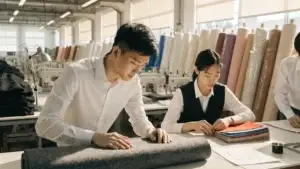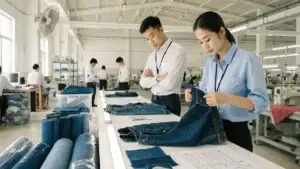
You are planning your next season's collection. You are tired of looking at the same trend reports that every other brand is reading—the ones that tell you what is already popular. You want to be ahead of the curve. You want to design what women will want to wear six months from now, not what they are already buying. But how do you separate a fleeting TikTok fad from a genuine, emerging macro-trend? A successful creative director once told me, "Trend forecasting is not about predicting the future. It is about listening to the fringe signals that are already here, but have not yet been amplified. The future is unevenly distributed."
Identifying trending women's wear styles before they hit the mainstream requires shifting your focus from mass-market reports to the "fringe" sources where genuine trends are born. The key strategies are: 1) Analyzing "Upstream" Cultural Signals (niche social media communities, early-adopter street style, art and music scenes), 2) Tracking "Bottom-Up" Product Data (search trend analysis, early-stage best-seller data from innovative retailers), and 3) Monitoring "Material Innovation" (new fabric developments and sustainability shifts that enable new silhouettes). It is a blend of cultural anthropology and data science.
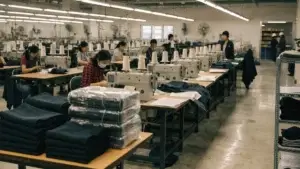
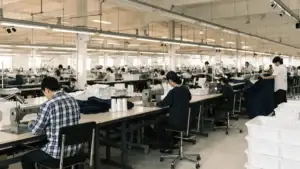
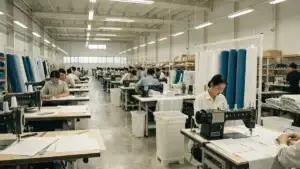
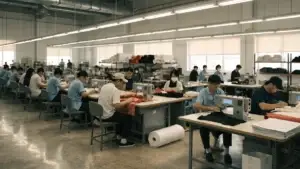
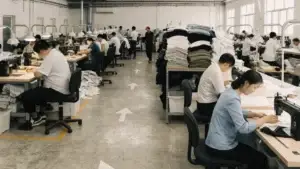
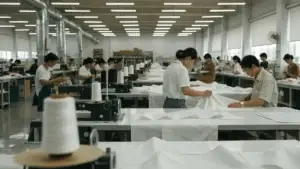
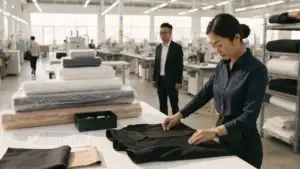
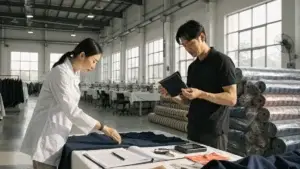
At Shanghai Fumao, we help our B2B partners bring these forward-looking visions to life with the agility of our CMT and private label manufacturing. We see the trends early in the fabric requests we receive and the designs our most innovative clients are developing. Let me share the specific methods you can use to sharpen your trend radar and build collections that feel fresh, relevant, and ahead of the competition.
Where Are the True "Upstream" Sources of a Trend Before It Becomes Mainstream?
The mainstream trend reports you buy from large agencies are the last stop on the trend train. By the time a style reaches a mass-market report, it has already been percolating in niche subcultures for 6-18 months. To find the next big thing, you must shift your attention away from the mainstream and toward the "fringe." This is where genuine, uncompromised creativity lives, unshaped by commercial pressures. It is the research and development lab of the fashion world.
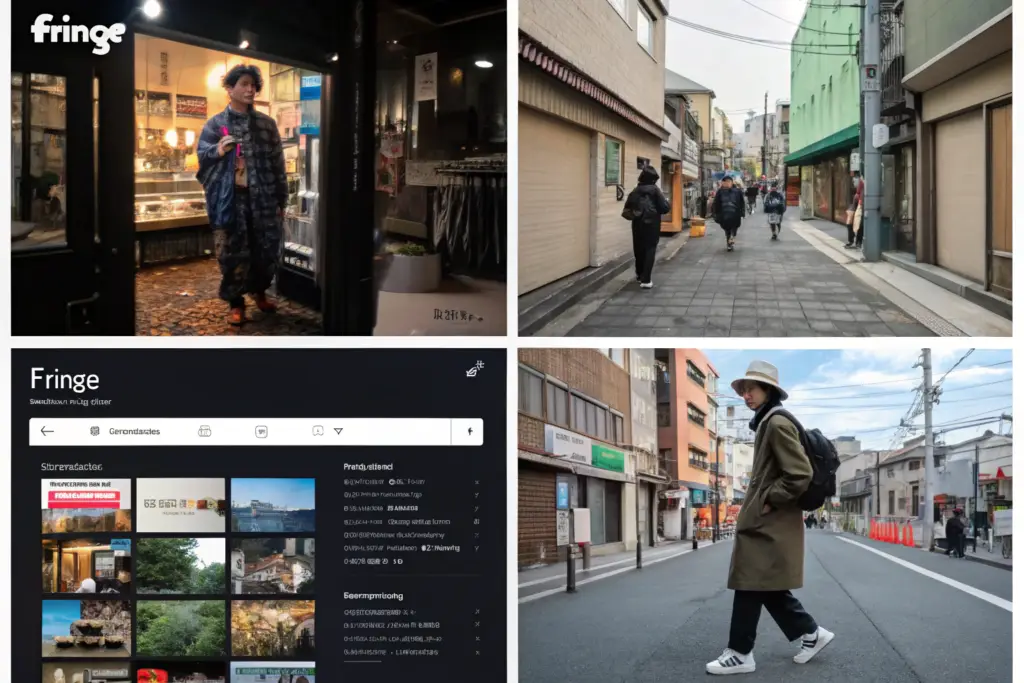
The true upstream sources of a trend are found in niche subcultures and creative communities. Look at early-adopter social platforms (like Are.na or specific Subreddits), the street style of specific, avant-garde neighborhoods (not fashion weeks), and the visual world of emerging music and art scenes. The aesthetic of a new independent film, the costumes of a groundbreaking theater piece, or the look of a new musical genre are often the earliest indicators of a major cultural shift that will eventually influence mass fashion. You must observe culture, not just the fashion industry.
I recall a brand founder who was years ahead of the "gorpcore" / technical outdoor wear trend. She was not looking at fashion magazines; she was an avid rock climber and part of an online community of female mountaineers. She saw how these women were creatively adapting their technical gear for everyday life. She was inspired to launch a line of beautifully tailored, functional outerwear that blended performance with urban style—years before it became a major trend. Her source was her own authentic community. This is the power of cultural immersion for trend spotting .
Why Are Niche Social Platforms More Valuable Than Mass-Market Instagram?
By the time a trend is all over Instagram's Explore page, it is already a commodity. Early-stage platforms and private communities (like Discords, Substacks, or Are.na) are where tastemakers share raw, unfiltered ideas. These are the "cool hunters'" secret sources. You need to find the digital equivalent of the underground club or the indie record store. This is a key part of future-focused design research .
How Can the World of Art and Independent Film Inspire Silhouette and Fabric Trends?
Fashion is a reflection of the broader cultural zeitgeist, and artists and filmmakers are often the first to capture a shifting mood. The color palette of an acclaimed director, the use of texture in a new art installation, or the way a costume designer re-imagines a historical silhouette can be a powerful catalyst for a new fashion direction. You are not copying; you are translating a cultural feeling into clothing. This is the essence of design inspiration .
How Can "Bottom-Up" Product Data Reveal an Emerging Trend?
Cultural observation gives you the "why." Data gives you the "proof." In the modern world, an emerging trend leaves digital footprints long before it shows up in a major retailer's sales report. The key is to look at the right kind of data: not backward-looking sales figures, but forward-looking indicators of consumer interest and intent. You are looking for the small, accelerating signals that indicate a spark is about to catch fire.
"Bottom-up" product data reveals trends by tracking early purchase intent. Use tools like Google Trends to look for niche search terms that are showing small but accelerating growth over a 12-month period. Monitor the new product drops from a curated list of 10-15 highly innovative, independent boutiques and small DTC brands. If you see multiple, independent sources all starting to feature a similar new silhouette, fabric, or detail, you are likely witnessing the birth of a genuine trend within their influential, early-adopter customer base.
A brand we work with uses this method brilliantly. They do not look at what large retailers are selling. They have a curated list of 15 independent boutiques around the world whose buyers they respect. They monitor these stores' new arrivals weekly. When they saw three different boutiques in Tokyo, London, and LA all drop a similar deconstructed, twisted-seam top within a few weeks, they knew it was an emerging trend. They quickly developed their own version using our CMT service, and they were one of the first to market with the look on a larger scale. This is the power of data-driven trend validation .
What Are the Best Free Tools for Tracking Early-Stage Search Trends?
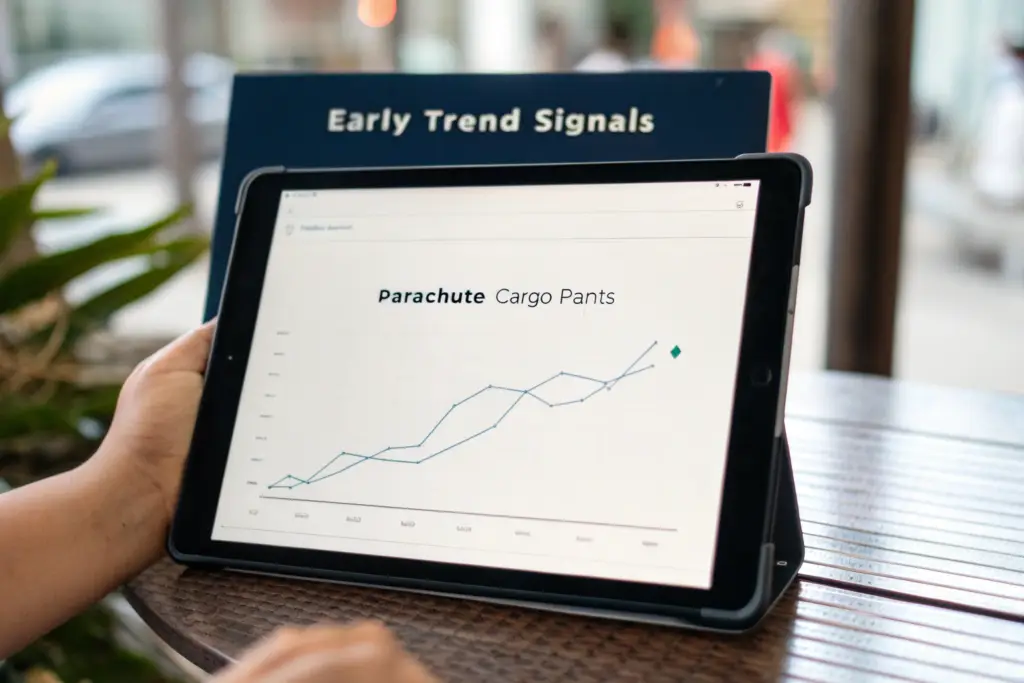
You do not need expensive software. Start with Google Trends. Do not just look at broad terms. Type in very specific product descriptions, like "ballet-core wrap top" or "wide-leg parachute pant." Look at the 5-year trend line. Is there a small, but consistent and accelerating, upward curve in the last 6-12 months? This is a powerful, quantitative signal. Pinterest Trends is another excellent tool for seeing what women are actively planning and searching for. This is the core of quantitative trend analysis .
Why Is Monitoring "Innovative Retailers" More Important Than Watching Giants?
A trend appearing at Zara or H&M is already in its mass-adoption phase. A trend appearing in a small, curated edit at a boutique like SSENSE, Dover Street Market, or a cool local shop in Copenhagen is in its early-adopter phase. These retailers are in the business of discovering and betting on newness. Their new arrivals section is a live, curated feed of emerging trends. This is the most valuable real-time trend report you can find. This is a key part of our market intelligence gathering .
How Can You Use the CMT Model to Rapidly Prototype and Test a Trend?
Identifying a trend is only half the battle. The real competitive advantage is the speed at which you can act on it. Traditional, high-volume manufacturing models are too slow and too rigid to chase a trend. This is where the CMT (Cut, Make, Trim) model, combined with a flexible manufacturing partner, becomes your secret weapon. It allows you to move from trend identification to market testing with unprecedented speed and minimal financial risk.
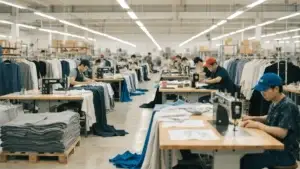
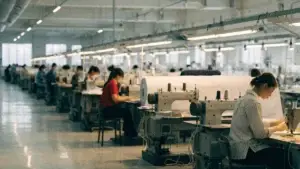
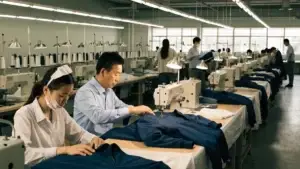
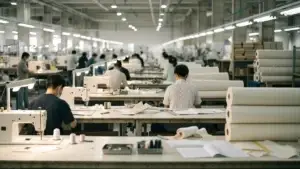
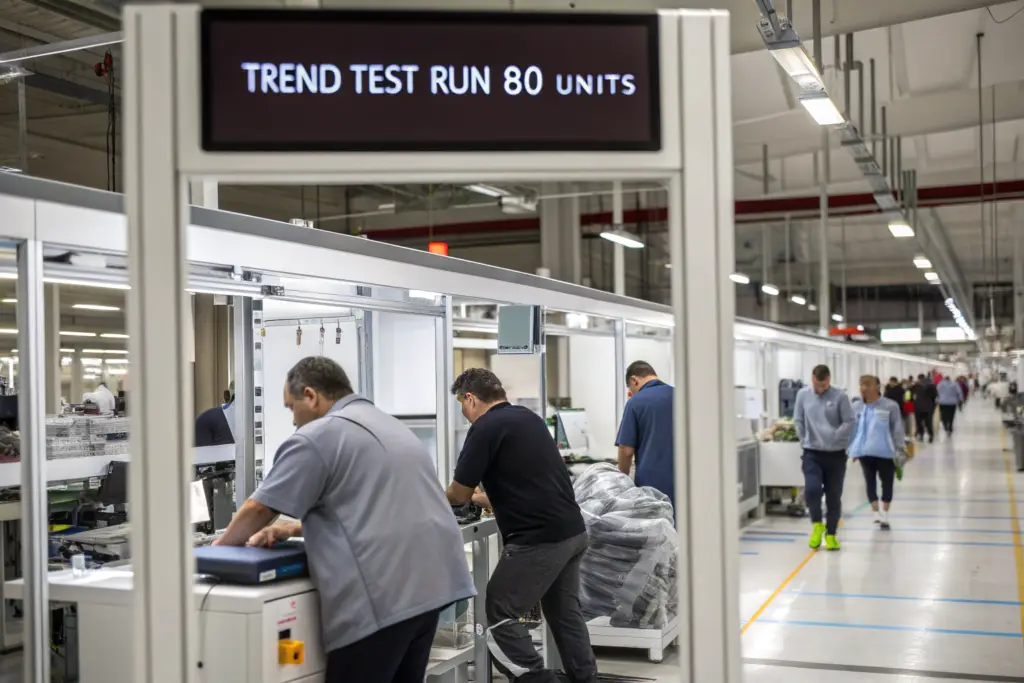
The CMT model is the ideal vehicle for testing a trend because of its speed, flexibility, and low minimums. Because you control the fabric sourcing, you can quickly procure a small amount of a novel textile that embodies the trend. A flexible factory with modular production cells can then produce a small, low-risk test run—as few as 80-150 units—in a matter of weeks. This allows you to test the trend's commercial viability in the real market without making a massive inventory bet. It is a "venture capital" approach to product development.
A brand we work with spotted the "hyper-feminine coquette" aesthetic emerging online. They quickly sourced a beautiful, delicate deadstock lace and a soft, pastel silk. They used our CMT service to produce a test run of 100 blouses. They launched them as a limited drop on their website. It sold out in 48 hours. This validated the trend for them with zero inventory risk. They immediately reordered. This speed-to-market, enabled by flexible CMT manufacturing , is a massive competitive advantage.
How Does a Low CMT MOQ De-Risk Your Investment in a New Trend?
The biggest fear with chasing a trend is being stuck with dead stock. A CMT MOQ of 50-100 units allows you to place a small, calculated bet. If the trend takes off, you can place a fast reorder. If it fails, you are left with a tiny, manageable amount of inventory. This low-risk model is essential for trend-driven product development. This is the core of our small-batch and fast-reorder services .
What Is the Ideal Fast-Track Production Timeline for a Trend-Driven Style?
Using our agile CMT model with stock or quickly-sourced deadstock fabrics, a trend-driven style can go from approved sample to delivery in as little as 4-6 weeks (including air freight if necessary). This speed allows you to capture the peak of a trend's demand curve, which is where the maximum full-price profit is made. This is the agility of our fast-track production .
How Does Fumao's Agile Manufacturing Help You Capitalize on Trends?
Spotting a trend requires cultural sensitivity and data analysis. Capitalizing on it requires a manufacturing partner with the speed, flexibility, and expertise to move as fast as you do. Our entire service model—our modular production cells, our CMT expertise, and our transparent communication—is designed to be the engine that powers trend-responsive brands.
Fumao's agile manufacturing empowers brands to capitalize on trends by providing a complete, responsive ecosystem. Our low-MOQ, fast-turnaround CMT production allows you to test trend-driven styles with minimal risk. Our flexible production lines can seamlessly scale a winning style from a 100-unit test run to a 5,000-unit reorder. And our expert pattern making and fabric sourcing support can help you translate a raw trend concept into a beautifully manufacturable product. We are your speed-to-market partner.
A brand founder told us, "Your factory is my secret weapon for staying ahead of trends. I know I can spot a new look, and your team can help me get a beautiful, high-quality version of it to market faster than any of my competitors. That speed is why my brand is seen as an innovator." That is our goal. To provide the agile, responsive manufacturing platform that turns your trend insights into a lasting competitive advantage. This is the power of a trend-responsive manufacturing partnership .

How Does Our Material Library Help You Quickly Execute on a Trend?
Our curated library of stock fabrics and our network of mills allows you to quickly find the right textile to embody a new trend. Whether it is a textured slub, a fluid Tencel, or a high-tech performance knit, we can help you source the perfect material without the long lead times of custom development. This is a key part of our speed-to-market fabric sourcing .
How Can a Hybrid Full-Package/CMT Strategy Maximize Trend Responsiveness?
This is the most advanced approach. Use Full-Package for the very first, ultra-fast test of a completely new, trendy item where you do not want to invest in material sourcing upfront. If it validates, immediately transition to a CMT model for the fast, profitable reorder. You capture the initial speed of Full-Package and the replenishment speed and margin of CMT. This requires a single, flexible partner like Fumao. This is our strategic hybrid offering .
Conclusion
Identifying trending women's wear styles before they go mainstream is a skill of cultural observation, data analysis, and strategic agility. It is about looking away from the obvious and tuning into the fringe signals, and then having the courage and the manufacturing capability to act on those insights with speed and low financial risk.
At Shanghai Fumao, we are the manufacturing partner that empowers this forward-looking business model. Our flexible production, our rapid CMT services, and our collaborative approach provide the engine that turns a trend forecast into a commercial, profitable reality. We help you be the brand that leads, not follows.
If you are ready to build a brand that is always one step ahead, let's talk. Our Business Director, Elaine, can discuss how our agile manufacturing can support your trend-driven strategy. Please email Elaine at: elaine@fumaoclothing.com.