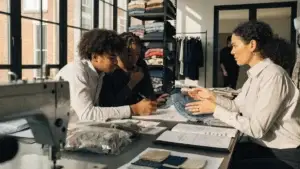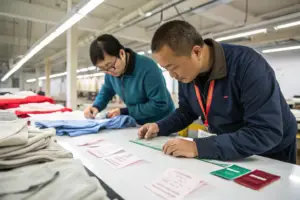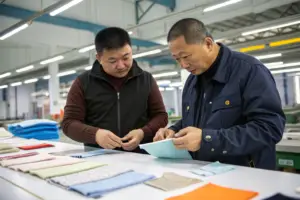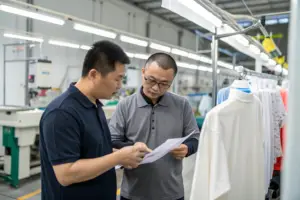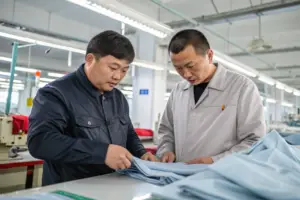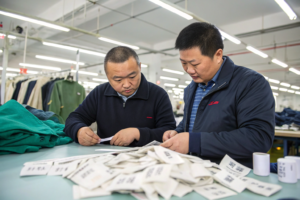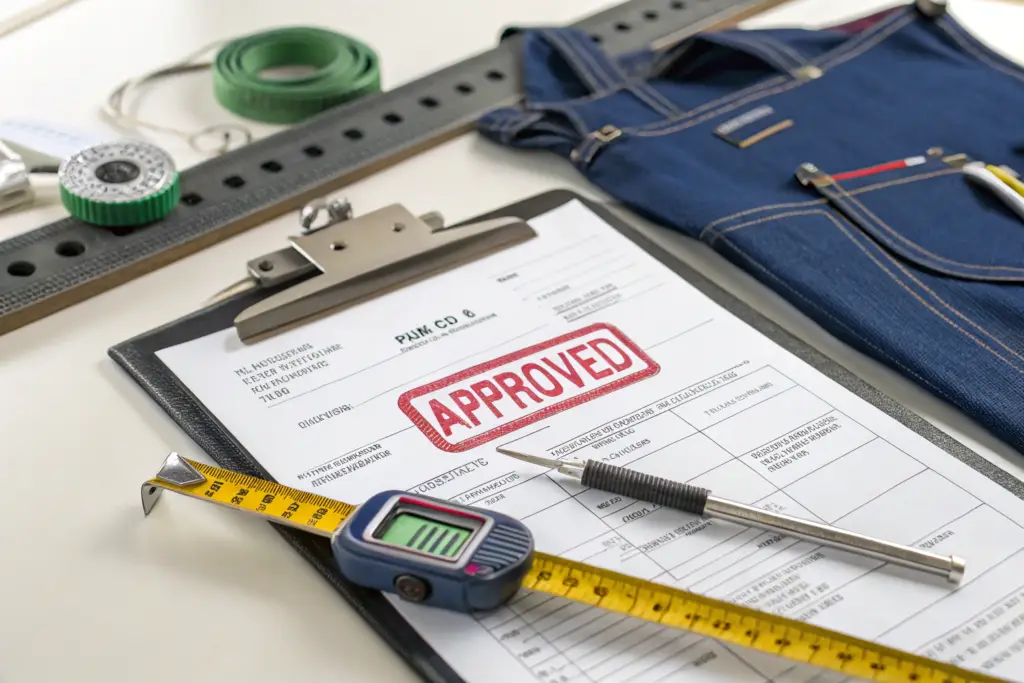
You open the first carton from your new factory. You pull out the first garment. It is perfect. You pull out the tenth. It is perfect. You pull out a random carton from the middle of the pallet. It is perfect. This is the feeling of working with a top tier quality control system. It is not luck. It is the result of a deeply embedded, rigorously enforced culture of precision. A brand owner told me, "I used to dread opening boxes. Now, I barely even think about it. I just know it's going to be right."
A top-tier garment factory's quality control is defined by four interconnected pillars: Proactive Prevention (stopping defects before they happen through rigorous incoming inspection and in-line audits), Objective Standards (using calibrated tools and standardized AQL sampling, not subjective opinion), Empowered People (a dedicated QC team with the authority to stop the line), and Transparent Documentation (providing clients with verifiable data and reports, not just promises).
At Shanghai Fumao, quality is not a department. It is our culture. It is the single most important reason our B2B partners trust us with their brand reputation. Let me take you inside a world-class quality control system and show you the specific, observable practices that separate the best from the rest.
How Does Proactive "In-Line" Inspection Prevent Defects Before They Happen?
An average factory inspects the goods after they are made. A top tier factory inspects them while they are being made. This is the fundamental difference between reactive and proactive quality control. By the time a finished garment reaches the end of the line, it is too late to fix a systemic issue without causing massive delays and rework costs. Proactive inspection stops the bleeding immediately.
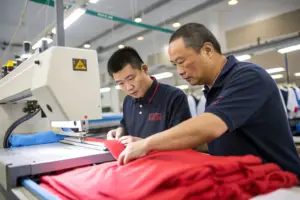
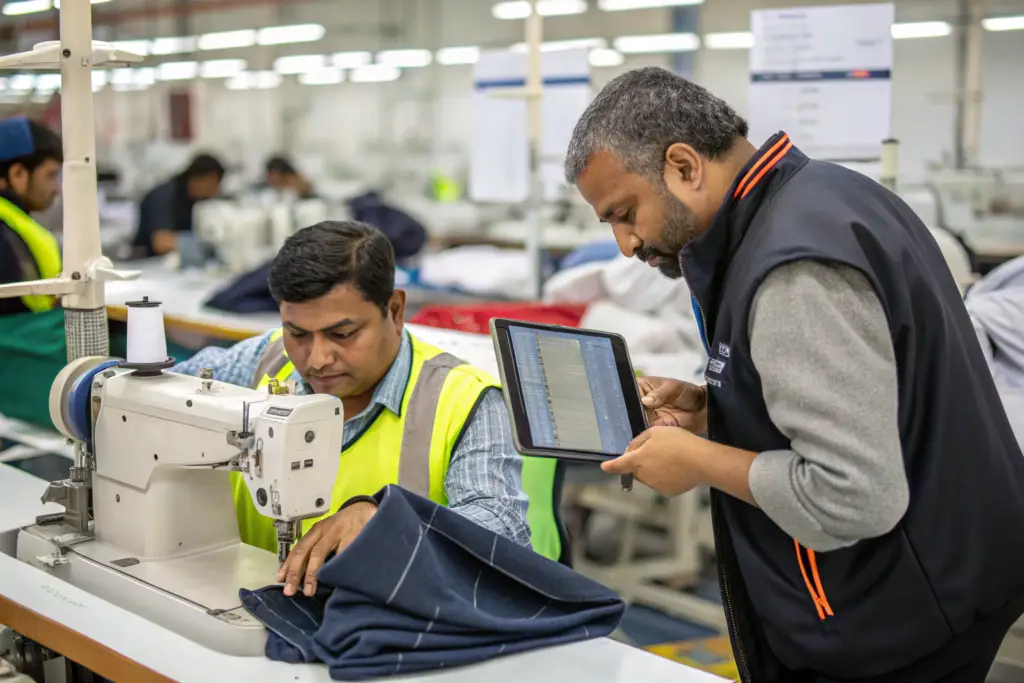
Top-tier in-line inspection involves a roving QC specialist who continuously audits the sewing process. They pull random samples from the bundles on the line and check them against the Sealed Sample and spec sheet. If they find a recurring defect—a skipped stitch, a crooked seam, an incorrect label placement—they have the authority to stop the line immediately, identify the root cause, and fix it before hundreds of defective units are produced.
I recall a situation with a men's wear shirt order. Our in-line inspector noticed that the collar points on the first dozen units were slightly blunted, not sharp and crisp like the Sealed Sample. She stopped the line. The issue was traced to a worn folder on the collar turning machine. The folder was replaced in 15 minutes. The next 2,000 shirts had perfect collars. In a factory with only end-of-line inspection, that problem would have been discovered after 2,000 units were already sewn and packed, requiring a massive, costly rework. This is the tangible value of proactive quality assurance.
What Is the Difference Between In-Line, End-of-Line, and Final Inspection?
This is a crucial hierarchy.
- In-Line Inspection: During sewing. Catches process errors immediately. The most valuable and cost-effective form of QC.
- End-of-Line Inspection: After sewing, before finishing. Checks for visual defects and loose threads.
- Final Inspection (Pre-Shipment): The statistical AQL audit on finished, packed goods. The final gate before shipment.
A top tier factory excels at all three, but its true strength lies in the rigor of its In-Line Inspection.
How Does the "Sealed Sample" Guide the In-Line Inspector?
The Sealed Sample is the inspector's bible. They do not work from memory. They physically carry the sealed sample (or have a high-resolution, approved photo on their tablet) and do a Side-by-Side Comparison with the production unit. They check the collar roll, the pocket shape, the seam finish, and the drape of the fabric. This constant, physical reference ensures that the standard never drifts. It is the anchor of a consistent brand aesthetic.
Why Is Rigorous Incoming Material Inspection the Foundation of Quality?
You cannot sew a high-quality garment from flawed raw materials. A beautiful design and expert sewing are wasted if the fabric has hidden defects, the zipper is off-color, or the thread is weak. Top tier quality control begins the moment materials arrive at the factory's receiving dock. This is the first, and arguably most important, line of defense.
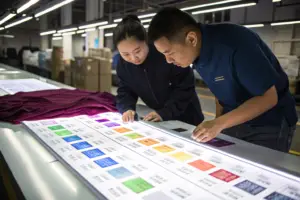
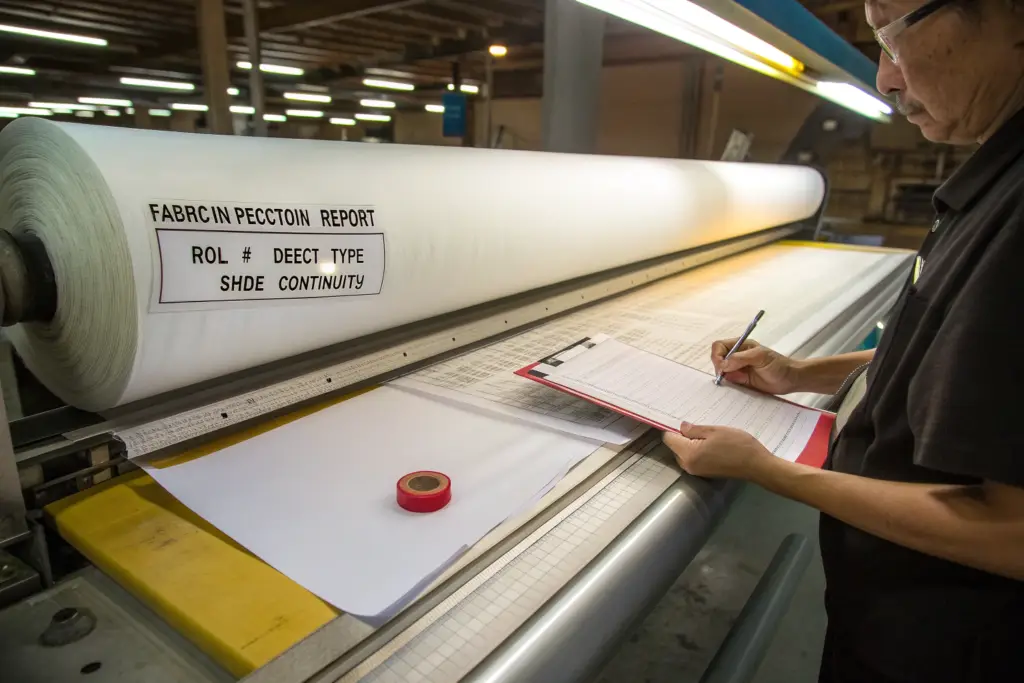
A top-tier factory inspects 100% of incoming fabric and trims before they are released to production. This involves motorized inspection tables with backlighting to check for weaving defects, stains, and shade consistency. Trims like zippers and buttons are audited against the approved Bill of Materials (BOM) and tested for functionality and colorfastness. No material is used without a documented inspection.
We had a shipment of premium Tencel fabric arrive for a women's wear dress order. To the naked eye, it looked beautiful. On our backlit inspection table, we discovered a subtle but consistent "barre" mark—a faint horizontal stripe—across several rolls. It was a weaving defect. We immediately quarantined the affected rolls and secured replacement yardage from the mill before cutting began. If we had skipped this step, we would have produced hundreds of defective dresses. This is the invisible shield that protects our B2B partners from hidden costs and reputational damage.
How Do You Inspect for "Shade Continuity" Across Fabric Rolls?
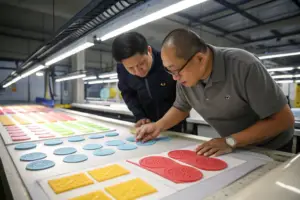
Even within a single dye lot, color can vary slightly from roll to roll. This is normal. The problem arises when a garment is cut from two rolls with different shades. We perform Shade Banding. We use a lightbox to compare each roll to the approved lab dip standard and to each other. We group rolls into "light," "medium," and "dark" bands. We then ensure all parts for a single garment are cut from the same shade band. This prevents the "patchwork" effect where a sleeve is a slightly different color than the body. This is a level of precision that defines top tier manufacturing.
What Trims Are Checked and How?
Every trim component is audited upon arrival. We check:
- Zippers: Functionality (do they slide smoothly?), color match to the approved standard, and finish.
- Buttons: Color match, thickness, and durability (using a button impact tester).
- Labels & Hangtags: Content accuracy, spelling, and color match.
- Thread: Color match, tensile strength, and correct Tex size.
This meticulous incoming inspection prevents the disaster of discovering that 5,000 zippers are the wrong shade of "Antique Brass" after they have been sewn into the garments.
What Role Do Calibrated Tools and Objective Standards Play?
In a lower-tier factory, quality is subjective. An inspector looks at a seam and says, "Yeah, looks okay." In a top tier factory, quality is objective and measurable. It is defined by numbers, tolerances, and calibrated instruments. This removes opinion and bias from the equation and ensures a consistent standard is applied to every single order, regardless of the client.
Top-tier QC relies on calibrated, objective tools. A spectrophotometer provides a precise Delta E (ΔE) color reading, removing the subjectivity of "it looks a little red." A metal measuring tape (checked against a master) verifies exact measurements against the spec sheet. A GSM cutter and scale confirm the fabric weight. A pick glass allows for precise inspection of stitch density (SPI). The goal is data, not opinion.
A client once questioned the color matching on a bulk fabric lot, feeling it was "off." Instead of arguing, we provided the spectrophotometer readings for both the approved lab dip and the bulk fabric. The Delta E was 0.8 (under our 1.0 tolerance). The color was objectively a match. The data resolved the dispute instantly and professionally. This is the power of objective standards. It builds trust and removes ambiguity. This commitment to precision is what defines a world-class clothing manufacturer.
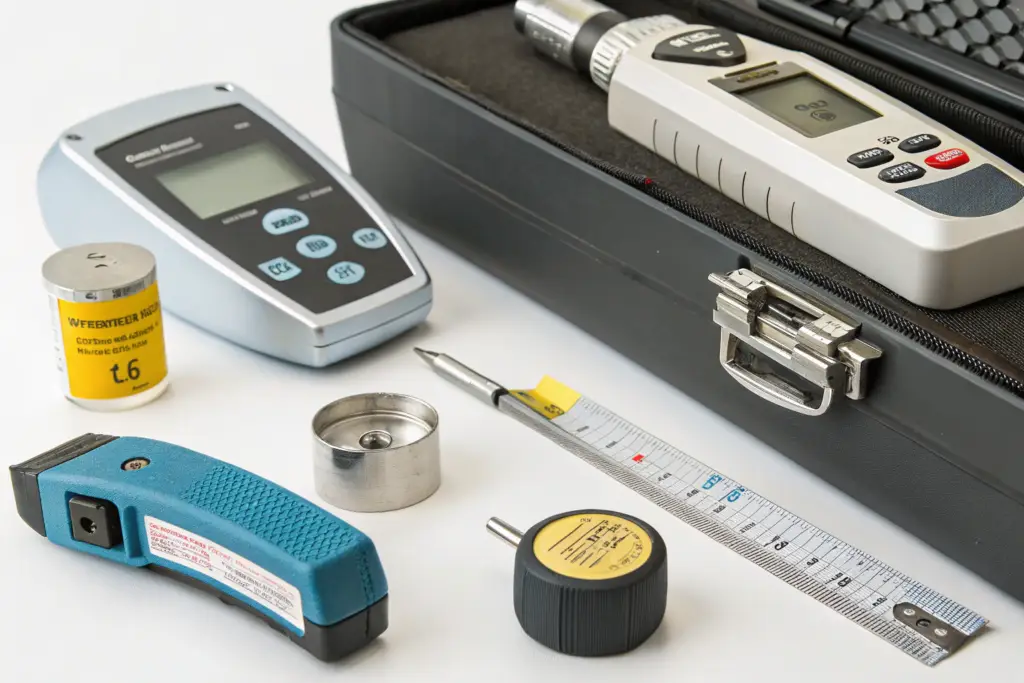
What Is a Spectrophotometer and Why Is It Essential?
A spectrophotometer is a scientific instrument that measures the intensity of light reflected from a surface. For textiles, it provides an objective, numerical value for color. It compares a sample (the bulk fabric) to a standard (the approved lab dip) and generates a Delta E (ΔE) value. A ΔE of less than 1.0 means the human eye cannot perceive a difference. This tool is essential for ensuring color consistency across different dye lots and between different materials (e.g., matching a zipper tape to the body fabric). It eliminates the "I think it's a match" guessing game.
How Do You Ensure Measurement Accuracy Across All Inspectors?
Humans can measure differently. One person might pull the tape measure tight, another might leave it slack. To ensure consistency, we use calibrated metal measuring tapes that are regularly checked against a master standard. All QC inspectors are trained and certified on the exact same method for measuring each Point of Measure (POM) . For example, "Chest Width: Measure 1" below armhole, straight across, with the garment laid flat and relaxed." This standardized, documented method ensures that a measurement taken by Inspector A is identical to a measurement taken by Inspector B.
A factory can say they have great quality. But a top tier factory proves it with transparent, verifiable data. They do not hide their inspection reports. They share them proactively. This transparency is the ultimate form of accountability and the foundation of a trusting B2B partnership. It allows the brand to see exactly what the factory sees.
Top-tier QC is defined by transparent, data-driven reporting. The client receives not just a final "Pass" notification, but the underlying data: the AQL inspection report showing defect types and quantities, the graded measurement report comparing actual specs to targets, and photos of both good practices and any defects found. This open-book policy builds trust and allows for continuous improvement.
One of our large company buyer clients has a specific online portal where we must upload all QC data. They analyze defect trends across all their suppliers. Because we provide detailed, granular data, we consistently rank as one of their top-performing vendors. This data-driven transparency gives them confidence in our manufacturing process and has led to us receiving a larger share of their business. This is the commercial value of a world-class quality control system.

What Should a Professional AQL Inspection Report Include?
A professional AQL report is not a one-page summary. It should include:
- Sample Size and AQL Level Used: (e.g., AQL 2.5, Level II)
- Total Accept/Reject Numbers: Based on the statistical tables.
- Detailed Defect List: Categorized by Major and Minor, with descriptions and quantities.
- Photos of Defects: Clear images of the issues found.
- Final Disposition: "Passed," "Failed," or "Passed with Corrective Action."
We provide this full report to every client for every order. It is their independent verification of our quality promise.
How Does Fumao Use Data to Drive Continuous Improvement?
We do not just collect data. We analyze it. Our QC manager reviews defect trends weekly. If we see a spike in "skipped stitches" on a particular line, we investigate the root cause. Is it a machine maintenance issue? An operator training need? We implement corrective action and then monitor the data to confirm the fix worked. This Plan-Do-Check-Act cycle of continuous improvement is the engine that drives our quality system forward. It is how we get better every single day.
Conclusion
What makes a garment factory's quality control top tier is not a single thing. It is a holistic, deeply ingrained system. It is the culture that empowers an in-line inspector to stop a line. It is the discipline to inspect every roll of incoming fabric. It is the investment in calibrated tools that provide objective data. And it is the transparency to share that data openly with brand partners.
At Shanghai Fumao, this system is the bedrock of our business. We know that our B2B partners are not just buying sewing capacity. They are buying peace of mind. They are buying the assurance that the clothes they receive will match the sample they approved, order after order. This relentless commitment to quality is not just what we do; it is who we are.
If you are looking for a clothing manufacturer whose quality system you can trust, let's talk. Our Business Director, Elaine, can walk you through our QC manual and share examples of our transparent reporting. Please email Elaine at: elaine@fumaoclothing.com.