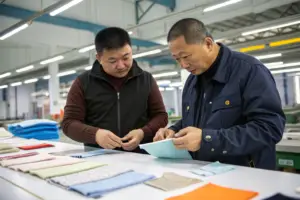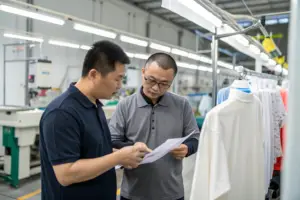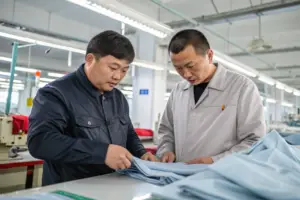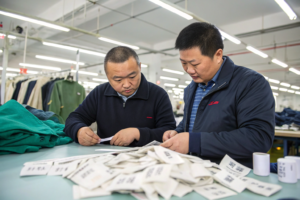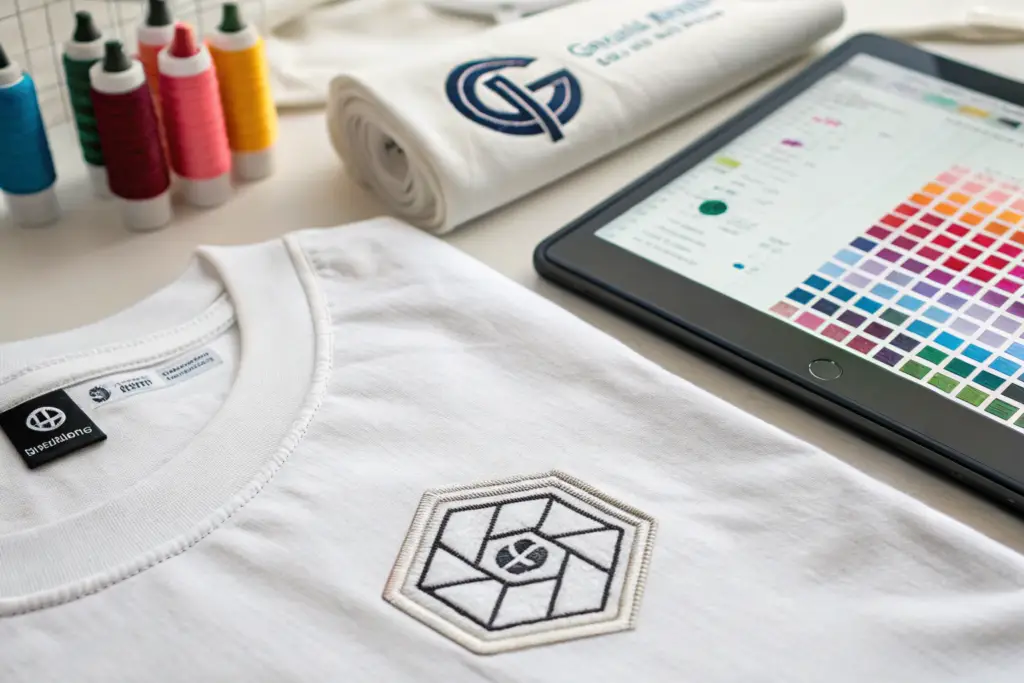
Your logo is the face of your brand. It is the tiny piece of real estate that tells the world who made this garment. When it is crooked, faded, or scratchy, the customer does not blame the factory in China. They blame you. They assume your entire brand is cheap. I had a client from a growing streetwear label in Brooklyn who almost went out of business because of bad logo execution. Their previous clothing manufacturer used a low-quality heat transfer for their chest logo. After three washes, the logo cracked and peeled off. The Instagram comments were brutal. Returns spiked to 18%.
At Fumao, custom logo production is a specialized workflow, not an afterthought. We manage the process in four distinct phases: Artwork Digitization & Proofing, Decoration Method Selection (Embroidery vs. Screen Print vs. DTG), Pre-Production Sampling on Actual Fabric, and In-Line Quality Control of Logo Placement. We treat your logo as the most valuable 2 square inches on the entire garment.
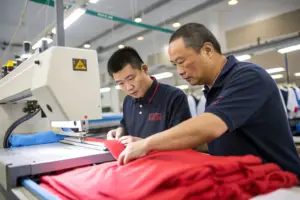
Your logo deserves the same care as the fabric and fit. At Shanghai Fumao, we have invested in high-speed industrial embroidery machines, precision screen-printing carousels, and a dedicated quality team whose only job is to inspect logos under magnification before the garment leaves the factory. Whether you need a subtle chest emblem on a men's wear polo or a large, rare style graphic on a women's wear tee, let me walk you through exactly how we bring your customizable logo to life without the cracking, peeling, or crooked placement that destroys brand trust.
What Is The Best Decoration Method for My Brand's Logo?
You have a logo file on your computer. It is a JPG or a PNG. That is a long way from being a durable mark on a garment. The first and most critical decision is how to apply it. The wrong method can ruin the look of an expensive fabric or fall apart after three washes. The right method enhances the apparel and lasts the life of the clothes.
The choice between Embroidery, Screen Printing, and Direct-to-Garment (DTG) depends on three factors: Order Quantity, Fabric Type, and Design Complexity. Embroidery is best for small logos and professional wear (polos, hats). Screen Printing is most cost-effective for bulk orders of simple graphics. DTG is ideal for small runs with many colors or photorealistic detail.
I recall a distributor of corporate uniform apparel. They wanted a 3-color logo on 2,000 men's wear performance polos. They initially asked for screen printing. But performance polyester is slick. Screen print ink can sit on top and crack. We recommended Embroidery. The thread sinks into the fabric and moves with the stretch. The cost was slightly higher per unit ($0.85 vs $0.45), but the logo looked more "executive" and lasted for years. Their corporate clients loved it. The perceived top quality of the garment increased because the logo application matched the use case. This is the kind of guidance you get from a knowledgeable apparel decoration partner.
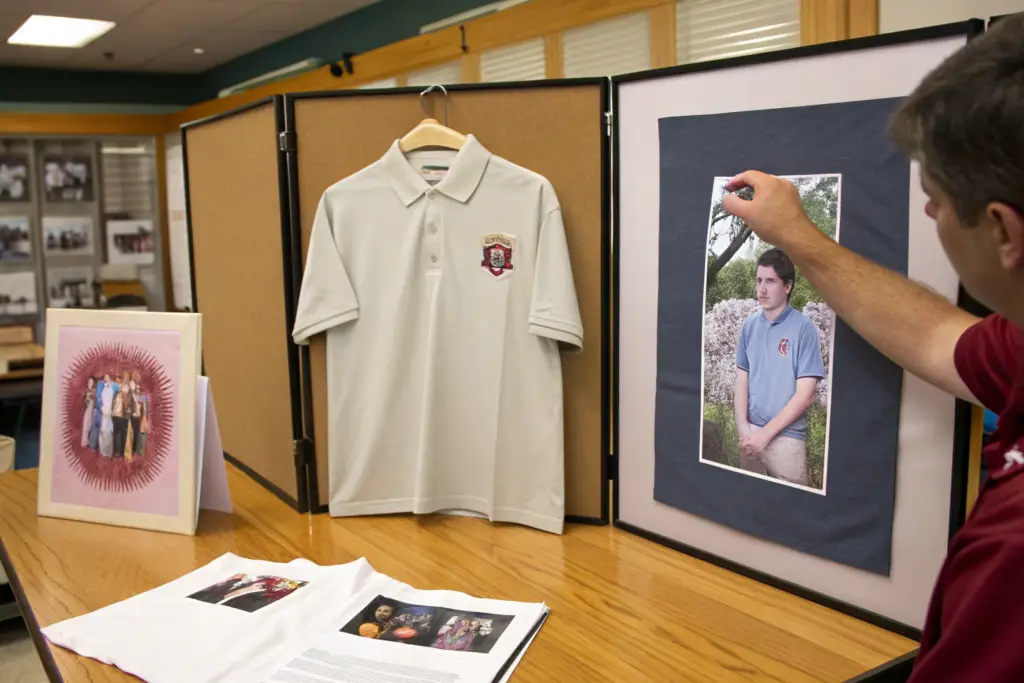
When Should You Choose Embroidery Over Screen Printing?
Embroidery is the gold standard for a premium, professional look. It adds texture and weight. But it has limitations. You cannot embroider tiny text or highly detailed gradients.
Here is a simple decision matrix we use with clients:
| Feature | Embroidery | Screen Printing |
|---|---|---|
| Durability | Excellent. Outlasts the garment. | Good. May fade or crack over 50+ washes. |
| Best For | Polos, Hats, Outerwear, Left Chest Logos | T-shirts, Tote Bags, Large Back Graphics |
| Minimum Order | 12-24 pieces (Digitizing fee applies) | 50-100 pieces (Screen setup fee applies) |
| Fabric Compatibility | Thicker fabrics (Pique, Fleece, Canvas) | Most fabrics (Cotton, Blends) |
| Design Detail | Simple shapes, Bold text | Solid colors, Halftones possible |
We use Tajima industrial embroidery machines that can handle up to 15 colors with precision. The key is the "digitizing" step—converting your logo into a stitch file. A poorly digitized logo will be lumpy and cause thread breaks. We have an in-house digitizer with 15 years of experience.
How Does Fabric Type Affect Screen Print Adhesion?
This is a technical detail that causes many failures. You cannot print the same ink on a 100% Cotton tee as you do on a Polyester/Spandex activewear legging.
- 100% Cotton: Absorbs water-based ink beautifully. The ink penetrates the fibers. Soft handfeel.
- Polyester: Requires Plastisol Ink with a Catalyst or Silicone Ink. Regular ink will not bond and will crack. Even worse, polyester can "bleed" dye through the ink during curing. We use Low-Bleed Poly Ink to prevent this.
- Nylon: Requires a special Nylon Bonding Agent mixed into the ink.
If a factory uses cheap, general-purpose ink on your women's wear polyester blouse, the print will peel off like a sticker. We test ink adhesion on the actual bulk fabric before production. This is non-negotiable in our quality control process for custom logo orders.
How Is Logo Placement and Sizing Standardized in Bulk?
You approved the sample. The logo was exactly 3 inches down from the collar and perfectly centered. But how do you ensure that the next 5,000 units are identical? You cannot rely on 20 different operators to "eyeball" it. Human error will result in logos that wander—too high, too low, tilted to the left.
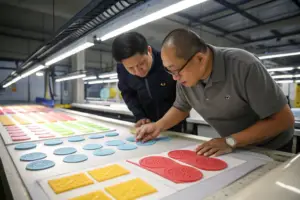
Fumao uses physical Placement Templates (Jigs) and Laser Alignment systems to standardize logo location. For every custom logo order, we create a clear acrylic guide that snaps onto the garment. The operator places the garment on the template, and the cut-out window shows exactly where the logo must be applied. This eliminates variance.
I remember a project for a kids' wear brand. They had a small heart logo on the chest of a toddler tee. On the first 50 units from a previous supplier, the heart ranged from 2 inches down to 4 inches down. It looked sloppy. We created a placement jig that hooked onto the shoulder seams and the neck seam. The operator could load the shirt in 3 seconds and know the logo was perfect. The consistency of the finished clothes made the brand look much more established.
What Is the Tolerances for Logo Placement Error?
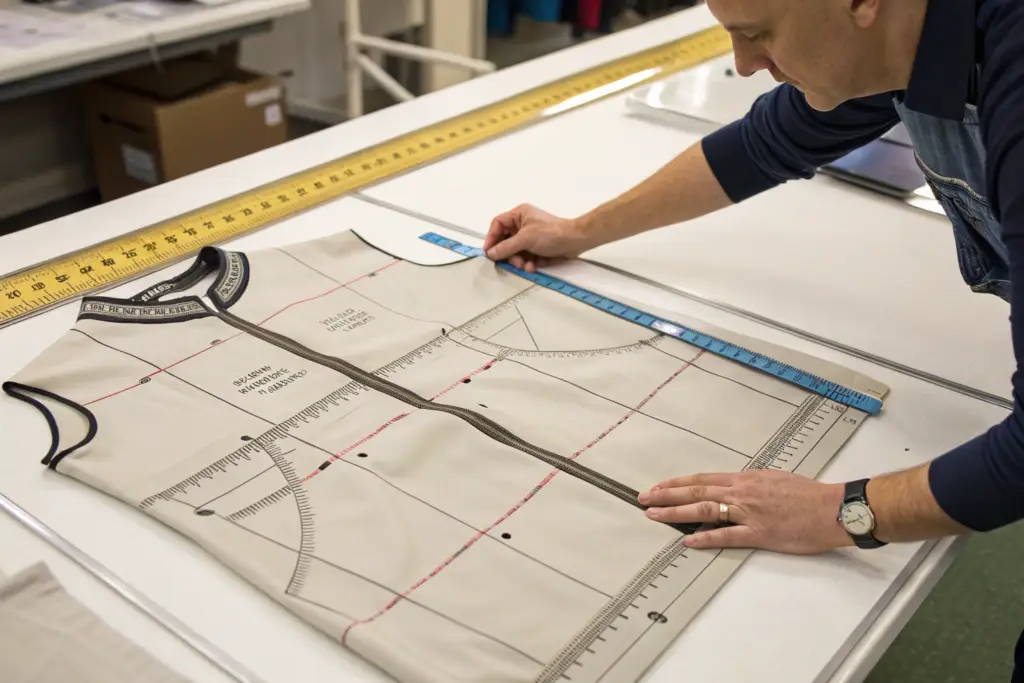
Perfection is the goal, but in manufacturing, we work within defined tolerances. The industry standard for logo placement variance is +/- 1/4 inch (6mm). That means if the spec is 3 inches down, the logo can be anywhere from 2.75 inches to 3.25 inches.
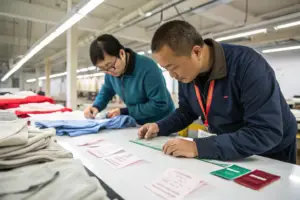
At Fumao, our internal standard is +/- 1/8 inch (3mm). We achieve this tighter tolerance through the use of the rigid placement templates described above. Our in-line quality assurance inspectors carry a small measuring tape. They check the placement on 5 units out of every 100. If they find drift (e.g., the logo is creeping down to 3.15 inches), they stop the line and recalibrate the operator's jig. This prevents the gradual shift that happens when operators get tired or try to work too fast. This attention to garment measurement standards ensures your brand looks professional.
How Do You Ensure Logos Are Straight and Not Tilted?
Even if the distance from the collar is perfect, the logo can be rotated slightly. A 3-degree tilt is invisible on the table but obvious when someone is wearing the shirt.
We prevent tilt by aligning the logo to the grain line of the fabric or the center front seam. Our templates have a laser crosshair or a physical center line that aligns with the garment center. The embroidery hoop or screen print screen is locked into the machine at a perfect 90-degree angle. We also do a "Mirror Check" during final inspection. The inspector holds the garment up by the shoulders in front of a mirror. A tilted logo jumps out immediately in a mirror reflection. This is a simple, low-tech trick that catches what a ruler might miss.
What Quality Checks Prevent Logo Defects Like Fading or Cracking?
The sample logo looked great on day one. But what about day 100? The customer is going to wash that garment 30 times. They are going to stretch it over their head. If the logo fades, cracks, or distorts, you have lost that customer forever. Custom logo quality is a long-term promise.
Fumao performs mandatory durability testing on all decoration methods. We conduct AATCC Wash Fastness tests (simulating 5 home launderings) and manual Stretch & Recovery tests. The logo must show no significant cracking, peeling, or color transfer. If it fails, we adjust the ink, thread tension, or curing temperature until it passes.
We had a case with a men's wear brand doing a vintage-inspired outerwear jacket. They wanted a cracked, distressed screen print on purpose. But they wanted the rest of the print to stay in place. We used a special "Puff Additive" ink that creates a controlled crackle effect but has a strong underbase to prevent flaking. We sent them a video of the wash test showing the intended crackle without the print falling off. They approved it. This is the difference between a factory that just prints and a factory that engineers the apparel decoration.
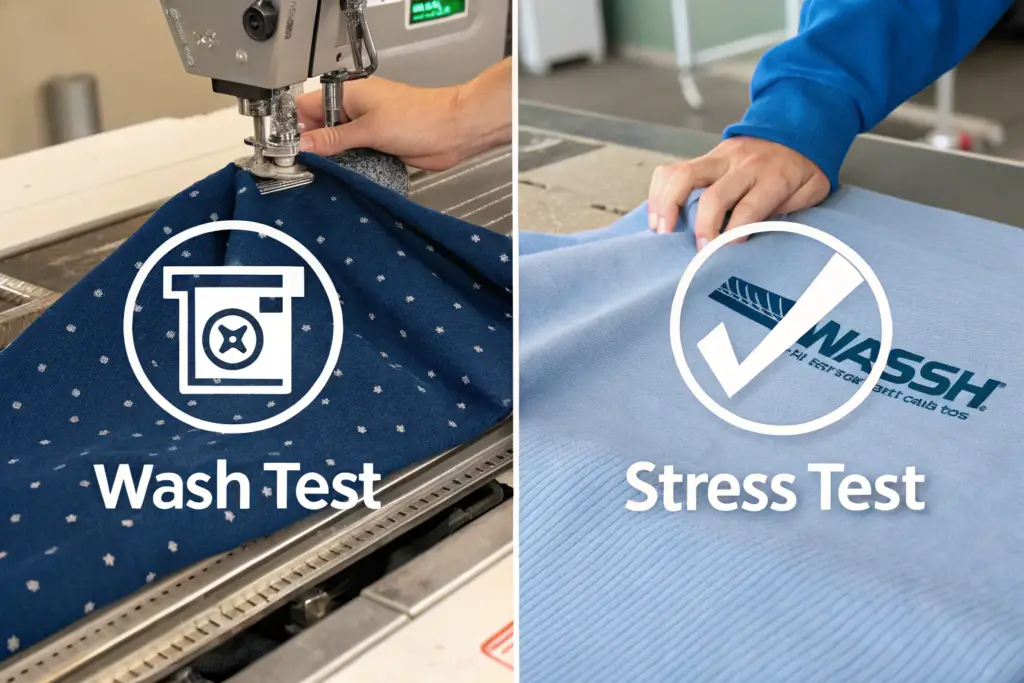
How Do You Test for Colorfastness on Printed or Embroidered Logos?
Colorfastness refers to the logo's ability to retain its color and not bleed onto other parts of the fabric. This is critical for dark inks on white clothes.
For Screen Printing, we perform a Crocking Test (AATCC 8) . We rub a white cloth against the printed logo with controlled pressure. We then examine the white cloth for color transfer. If there is transfer, the ink was not cured properly. We increase the dryer temperature or belt speed.
For Embroidery, colorfastness is about the thread. Cheap polyester thread will bleed dye when washed. We use OEKO-TEX certified embroidery thread that is guaranteed colorfast. We also test thread tension. If the tension is too loose, the loops will snag and pull. If too tight, the fabric will pucker around the logo. Our textile testing protocols ensure the logo looks as good on month six as it did on day one.
What Is "Thread Break" Detection and Why Does It Matter?
This is specific to Embroidery. An embroidery machine has multiple needles (e.g., 12 needles for 12 colors). If one needle thread breaks, the machine might keep running, stitching the rest of the design without that color. The result is a logo missing an eye or a letter.
Our machines are equipped with Automatic Thread Break Detection. A sensor detects the lack of thread tension and stops the machine instantly. The operator fixes the break and restarts the design. Without this technology, a factory can produce dozens of defective logos before anyone notices. We also have a Final 100% Visual Inspection of every embroidered garment. The inspector looks at the back of the embroidery (the "underlay") to ensure the bobbin thread tension is correct and there are no loose loops.
How Does The Artwork Approval Process Prevent Misprints?
You send a low-resolution JPG of your logo. The factory says, "Looks good." Three weeks later, you receive a sample with a blurry, pixelated logo in the wrong shade of blue. You are furious. The factory says, "But this is what you sent." This miscommunication happens every day in apparel manufacturing.
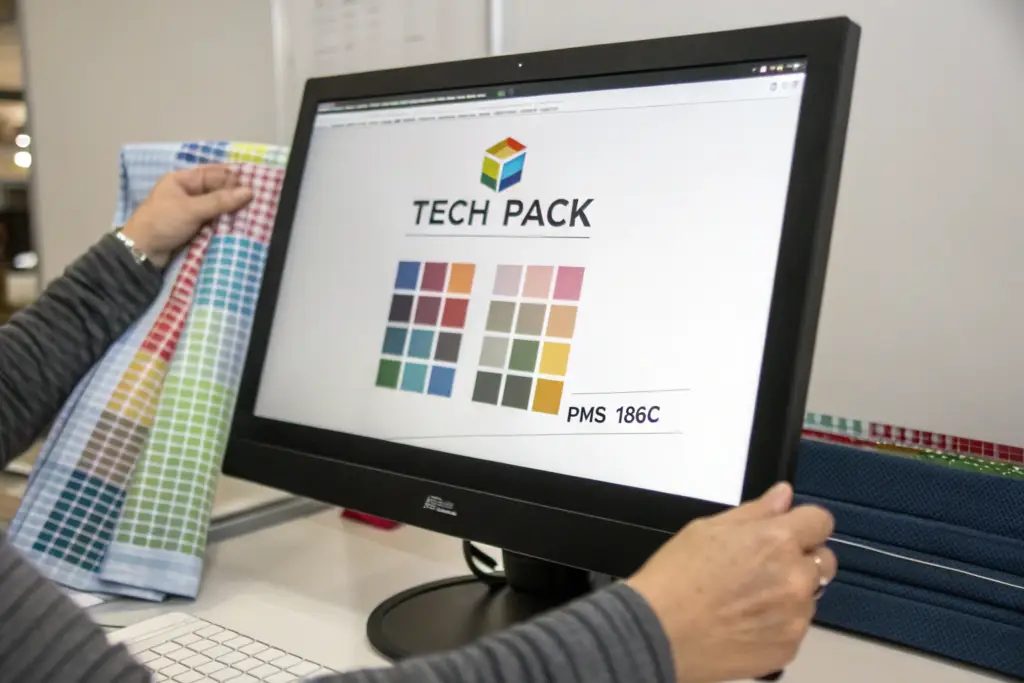
Fumao requires a formal "Artwork Approval" sign-off before any logo is digitized or screens are burned. We provide a digital proof showing the logo at 100% scale, with Pantone (PMS) color callouts, and placement measurements relative to the garment seams. You must reply in writing: "Approved for Production." This paper trail protects both parties.
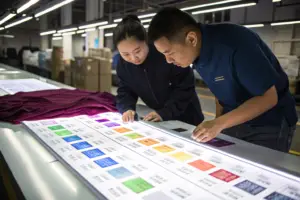
We use Pantone Matching System (PMS) colors for all screen print and embroidery thread matching. "Blue" is subjective. "PMS 294 C" is a specific formula that looks the same in Shanghai and New York. If a client does not provide a PMS number, we ask for a physical swatch or we recommend the closest match from our thread/ink library. This extra step in communication prevents 90% of logo-related disputes.
What File Format Do You Need for High-Quality Logos?
Sending the right file format saves time and ensures a sharp result. Here is the quick guide we give all new clients:
| Decoration Method | Required File Format | Why? |
|---|---|---|
| Embroidery | Vector File (.AI, .EPS, .CDR, .PDF) | Allows digitizer to trace clean lines and paths. |
| Screen Print | Vector File or High-Res PSD | Allows for color separation and sharp edges. |
| DTG (Direct-to-Garment) | High-Res Raster (.PNG, .PSD, 300 DPI) | DTG prints pixels. Low-res files look blurry. |
If you only have a JPG, we can often redraw it as a vector file for a small artwork service fee. But providing the original vector file is always best for custom logo clarity.
How Are Pantone Colors Matched for Thread and Ink?
Matching ink to fabric is one thing. Matching thread to a Pantone chip is harder. Thread is made of twisted fibers that reflect light differently than flat ink.
We use Madeira and Gunold thread brands, which provide official Pantone cross-reference charts. We lay the physical thread spool on the Pantone chip under a D65 lightbox. We take a photo and send it to the client for approval. "Here is the closest match to PMS 186 C." Sometimes the client wants a contrasting thread instead of a match. That is a design choice. The key is that the client sees the thread before we sew 5,000 units. This is part of our pre-production sample service.
Conclusion
Your logo is more than a graphic. It is the seal of authenticity that turns a generic garment into your product. When executed with precision and durability, it builds brand equity. When executed poorly, it destroys trust and triggers returns. The difference between a logo that cracks after three washes and one that lasts for years is not magic. It is a disciplined process of artwork proofing, method selection, placement templating, and durability testing.
At Shanghai Fumao, we have built a specialized workflow around customizable logo production. We understand that the men's wear polo with the perfect left-chest embroidery or the women's wear tee with the vibrant screen print is a walking billboard for your business. The examples from our floor—the corporate uniform upgrade to embroidery, the kids' wear placement jig, the outerwear distressed print testing—show that we treat your logo as the most valuable real estate on the apparel.
You should never have to apologize to a customer for a peeling logo. You should never have to explain why the logo on this shirt is 2 inches lower than the one on that shirt. With the right clothing manufacturer, your branding is consistent, durable, and aligned with the top quality of your fabric and design.
If you are ready to elevate your brand's custom logo execution, let's discuss your next project. Our Business Director, Elaine, can walk you through our decoration capabilities and provide a quote based on your specific artwork. Please email Elaine at: elaine@fumaoclothing.com.