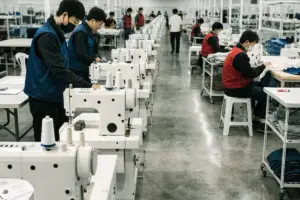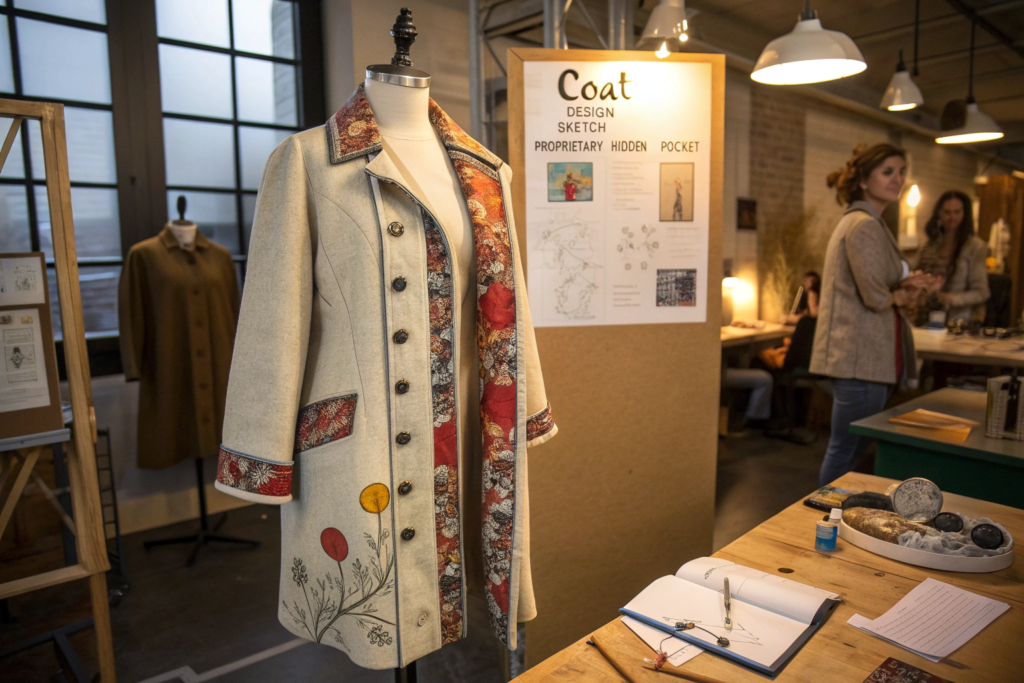
I once watched a brand owner cry at a trade show. She had spent a year developing a beautiful, minimalist silk slip dress. It was her signature. It was selling well. Then she walked past a competitor’s booth and saw an almost identical dress for 40% less. The competitor had simply bought one of her dresses online, ripped the seams, copied the pattern, and sourced a cheaper, lower-quality silk. The silhouette was identical. From ten feet away, the dresses were indistinguishable. The brand owner had built her signature on a simple silhouette, and the silhouette alone was not defensible. That was the day she learned that a signature style cannot be just a shape. It must be a system of irreproducible details.
To brilliantly develop a signature apparel style that cheap competitors cannot easily copy, you must embed your design with defensible complexity in three layers. Layer one is the "Mechanical Moat": a proprietary construction technique, such as a seamless bonding process or a hand-finished seam, that requires specialized machinery or labor training that low-cost factories cannot access or replicate efficiently. Layer two is the "Material Moat": a custom-milled fabric, a bespoke trim, or a unique dye treatment that is exclusive to your brand through a supply agreement or minimum order quantity barrier. Layer three is the "Semantic Moat": a distinctive, recognizable brand element that is eligible for trademark protection, such as a signature stitch color, a unique button shape, or a specific placement of a logo. The combination of these three layers makes copying your product economically unviable for a fast fashion competitor who relies on speed and commodity materials.
A simple design is a gift to your competitors. A complex, defensible design is a barrier. The goal is not to make your product impossible to copy. Anything can be copied with enough time and money. The goal is to make the cost of copying exceed the profit margin of the copyist. When the knockoff costs more to produce than it can sell for, the copyist moves on to an easier target. I want to share the exact strategies our most successful brand partners at Shanghai Fumao use to build signature styles that stay signature.
What Is a “Mechanical Moat” and How Can Proprietary Construction Stop a Low-Cost Factory Copy?
A performance outerwear brand we work with developed a "zero-stitch" seam sealing technique for their rain jackets. Instead of sewing and then taping the seams, they use a proprietary ultrasonic welding machine that bonds the fabric panels at a molecular level. The seam is completely flat, waterproof, and has no stitch holes. A fast fashion competitor tried to copy the look by using a standard taped seam. The tape added bulk, and the stitch holes leaked. The copy was visually similar but functionally inferior. The brand’s customers, serious hikers and cyclists, immediately recognized the difference. The brand’s signature was not just the look of the seam. It was the performance of the seam, and that performance was locked inside a machine that few factories in the world possess.
A mechanical moat is a construction technique that requires specific, often expensive, machinery or highly specialized manual skills that are not available to the average low-cost factory. Ultrasonic bonding, laser-cut raw edges with a sealed finish, fully felled hand-stitched seams, and 3D-knitted seamless constructions are all examples of mechanical moats. These techniques cannot be replicated on standard sewing lines. The fast fashion factory that attempts to copy them must either invest in the specialized equipment, which defeats their low-cost model, or produce an inferior imitation that fails to perform. The mechanical moat protects your design by embedding it in a manufacturing capability that is as exclusive as the design itself.
The key is that the mechanical moat must be visible or demonstrable to the customer. A hidden seam that no one ever sees is not a marketing asset. A signature seam finish that is proudly displayed when the customer tries on the garment becomes part of the brand story.
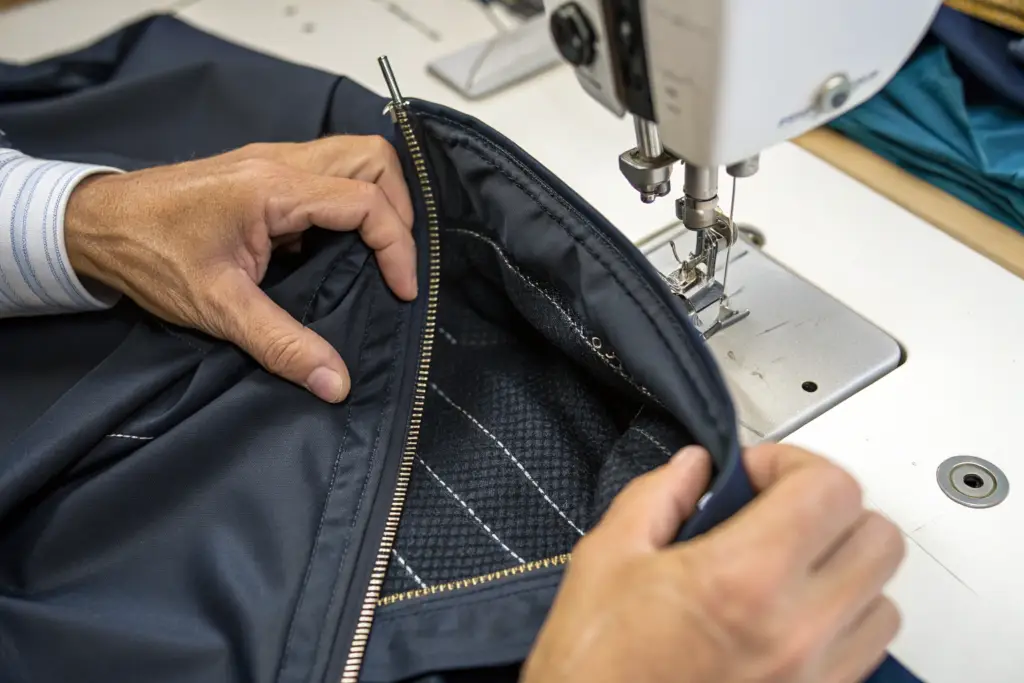
Why Is “Ultrasonic Bonding” or “Seamless 3D Knitting” Almost Impossible for Standard Sweatshops to Replicate?
Ultrasonic bonding machines cost $15,000 to $50,000 and require specialized training to operate and maintain. A standard sweatshop operates with $200 sewing machines and easily replaceable labor. The capital investment for ultrasonic bonding is a barrier they cannot cross. Similarly, 3D knitting machines cost upwards of $100,000 and require advanced programming skills. The fast fashion model relies on generic, widely available technology. By choosing a production method that sits outside that generic technology pool, you lock the copyists out.
How Can a “Signature Seam Finish” Become a Registered Design Element?
In some jurisdictions, a distinctive, non-functional seam finish that serves as a brand identifier can be protected under design patent or trade dress law. For example, a specific contrast topstitching pattern on a jean pocket is functional and generic. But a unique, decorative seam that serves no structural purpose, and is consistently used across a brand’s collection, can acquire distinctiveness. You should consult with an intellectual property attorney to determine if your seam finish qualifies for design patent or trade dress protection.
What Are “Material Moats” and How Do Custom-Milled Fabrics and Bespoke Trims Create Exclusivity?
A women’s knitwear brand we work with developed a signature "confetti" yarn. It is a marled wool-cashmere blend with tiny, colorful neps spun into the yarn during the carding process. The yarn is custom-spun for them by a specialist mill in Italy, and they have an agreement that the mill will not sell that exact blend to any other brand. The visual effect of the confetti yarn is striking and immediately recognizable. A competitor tried to copy the look by printing confetti dots onto a standard grey sweater. The result was laughably bad. The depth, texture, and softness of the custom yarn could not be faked with a surface print. The brand’s signature was literally woven into the fabric itself.
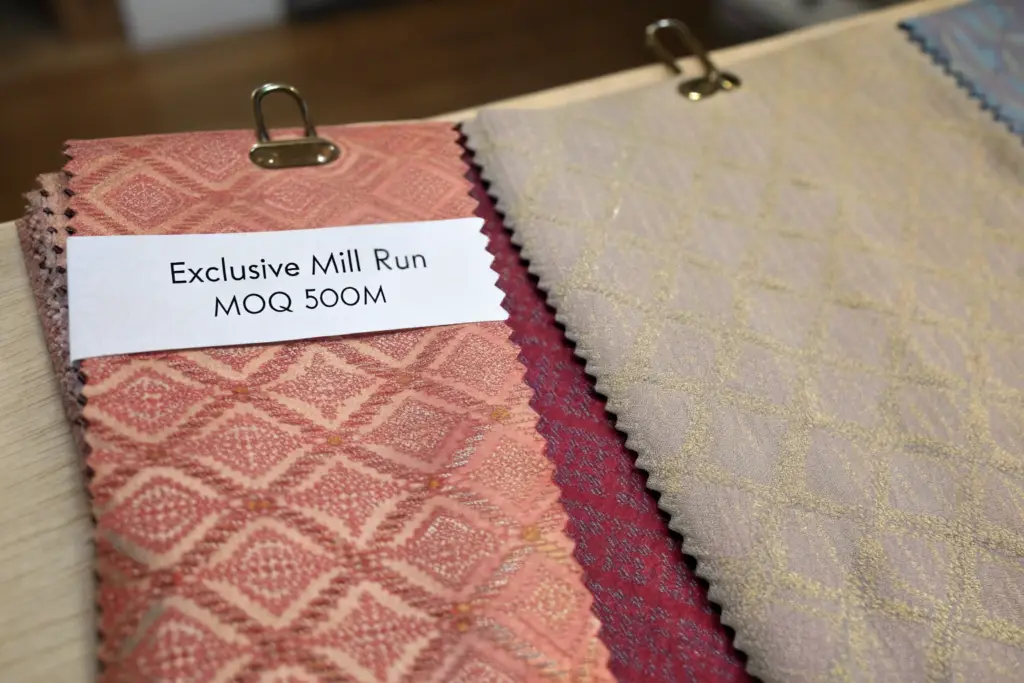
A material moat is an exclusive, custom-developed material that cannot be purchased off the shelf by a competitor. It could be a custom-milled fabric with a unique weave, weight, or fiber blend. It could be a custom-dyed color created with a proprietary recipe. It could be a bespoke trim, a custom-shaped button, a specially engraved zipper pull, or a unique embroidered patch. The exclusivity is protected by a supply agreement with the mill or trim supplier, or by the simple economics of minimum order quantities. A fast fashion copyist cannot order 100 meters of a custom fabric when the mill requires a 500-meter minimum. The MOQ barrier protects the brand’s material exclusivity. The customer who buys the original garment experiences a quality that is impossible to replicate in a generic commodity fabric.
The material moat is the strongest defense because it is the hardest to fake. A print can be copied with a photograph. A silhouette can be copied with a pattern. But a physical material, with its specific weight, drape, and texture, is a tangible, physical object that must be manufactured. The copyist cannot manufacture it without access to the same mill and the same supply chain.
How Can a Supply Agreement with a Mill Legally Protect Your Custom Fabric Design?
A supply agreement can include an exclusivity clause. You agree to purchase a minimum annual volume of the fabric, and the mill agrees not to sell that specific article number to any other brand. This is common with premium mills who value long-term relationships over one-off sales. The agreement should specify the fabric article, the exclusivity period, and the geographic territory. It is a legally binding contract that gives you a commercial monopoly on that specific material.
Why Are Custom-Shaped Corozo Buttons or Engraved Zipper Pulls Economically Unviable for a Small-Volume Copyist?
Custom buttons require a mold. The mold costs $500 to $2,000 to produce. The minimum order quantity for the buttons is typically 2,000 to 5,000 pieces. A copyist who only wants to produce 200 knockoff garments cannot economically justify the mold cost or the button MOQ. They will be forced to use a generic button, which immediately distinguishes their copy from the original. The custom trim is a small detail that delivers a large barrier.
How Can Trademarked “Semantic Moats” Like Signature Stitch Colors or Logo Placements Legally Block Copycats?
I remember a premium denim brand that built a global recognition on a single, simple detail: a small, red "R" embroidered on the back pocket. It was not the brand name. It was a symbol. When a fast fashion brand started putting a red "R" on their own pockets, the denim brand sued for trademark infringement. They won. The red "R" was a registered trademark, a semantic moat that had been legally fortified. The fast fashion brand had to remove the stitch from thousands of units. The cost of the legal defeat far outweighed any profit they had made on the copy.
A semantic moat is a distinctive, non-functional brand element that is protected by trademark law. This could be a specific color of thread used for a decorative stitch, a particular placement of a logo, a unique pattern of stitching, or a distinctive button shape that functions as a brand identifier. The key is that the element must be consistently used across the brand’s products and heavily marketed so that consumers associate it with the brand. Once trademark protection is granted, the brand can legally block competitors from using a confusingly similar element. A cease and desist letter backed by a registered trademark is a powerful deterrent to fast fashion copyists who operate on thin margins and cannot afford legal battles.
The semantic moat is the legal layer of the defense. The mechanical moat makes copying hard. The material moat makes copying expensive. The semantic moat makes copying legally dangerous. Together, they create a comprehensive defense that cheap competitors cannot easily penetrate.
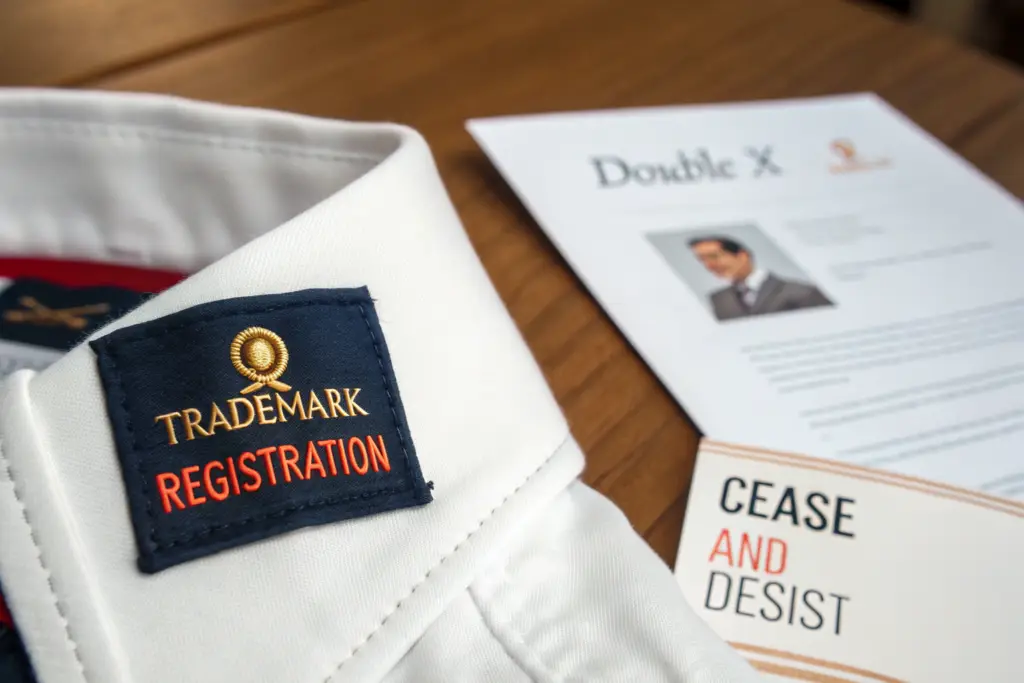
What Specific Visual Brand Elements Have Been Successfully Trademarked in Fashion History?
Burberry’s check pattern. Christian Louboutin’s red sole on shoes. Levi’s tab device on the back pocket. These are all non-functional visual elements that have been granted trademark protection because they have acquired distinctiveness through long use and heavy marketing. A smaller brand can pursue similar protection for a unique signature stitch color or a distinctive placement of a decorative element.
How Do You Send a “Cease and Desist” Letter That Actually Stops a Competitor’s Production?
The letter must be specific. It must identify the infringing product, cite the trademark registration number, and state the specific legal basis for the claim. It must demand that the competitor cease production and sales within a specific timeframe, typically 7 to 14 days. It should be sent by a law firm specializing in intellectual property. The credibility of a law firm letterhead alone is often enough to stop a small copyist. The threat of a costly legal battle is usually sufficient.
Conclusion
A signature apparel style that cannot be easily copied is not a single stroke of genius. It is a layered defense system. The mechanical moat uses specialized production techniques that low-cost factories cannot replicate. The material moat uses exclusive fabrics and trims protected by supply agreements and MOQ barriers. The semantic moat uses trademark-protected visual elements that provide a legal basis to block copyists. A competitor might be able to copy one of these layers. It is nearly impossible for them to copy all three.
The brand owner who cried at the trade show had built her signature on a simple silhouette, a single, easily copied layer. She rebuilt her brand with a custom fabric, a proprietary seam finish, and a signature stitch. Her next collection was copied, but the copies were so inferior that they actually drove customers to her original. The signature, properly defended, becomes a magnet, not a victim.
At Shanghai Fumao, we specialize in helping brands build these defensible signatures. We can source custom-milled fabrics with exclusivity agreements, produce bespoke trims with high MOQ barriers, and execute complex, specialized construction techniques that are beyond the capabilities of standard factories. We understand that a brand’s signature is its most valuable asset, and our job is to protect it.
If you are developing a signature style and want to build in these defenses from the beginning, we can help. At Shanghai Fumao, we can discuss custom fabric development, proprietary trim sourcing, and specialized construction options. Contact our Business Director, Elaine, at elaine@fumaoclothing.com. She can share examples of exclusivity agreements and arrange a consultation with our product development team. Build a signature that lasts. Build a signature that your competitors cannot touch.