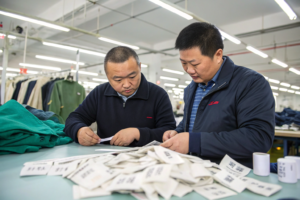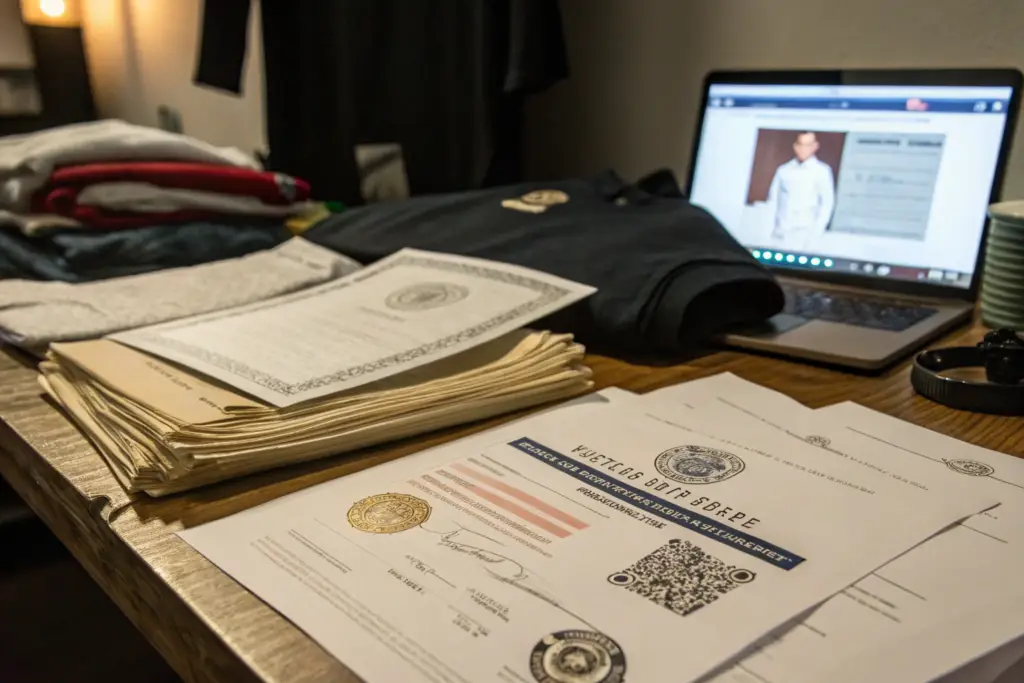
A few years ago, a brand owner from Manchester called me in a state of panic. He was sitting on a container of 3,000 organic cotton hoodies that had just been seized by UK Border Force. The reason? The GOTS certificate his previous supplier had provided was a complete forgery. Someone had taken a real certificate from a legitimate Indian factory, photoshopped their own name onto it, and changed the date. The document looked perfect on a PDF. But when the customs officer typed the certificate number into the public database, it came up as belonging to a different entity in a different city. The brand owner was facing destruction of the goods, a £12,000 fine, and a permanent record of importing falsely labelled textiles. He told me, "I thought a certificate was just a box to tick. I didn't know it was a weapon that could destroy my business."
Shanghai Fumao eliminates falsified certificate problems by providing only real-time verifiable certifications with active public database links, never relying on static PDF screenshots. We enforce a mandatory chain-of-custody Transaction Certificate system for organic claims, undergo direct audits from approved EU and US bodies like WRAP and SMETA, and empower clients with a self-verification protocol that allows them to independently confirm every document's authenticity before releasing payment.
Falsified certificates are not a rare horror story. They are a systematic fraud epidemic in the apparel sourcing world. The counterfeiters have become sophisticated. They copy logos, forge signatures, and generate fake QR codes that point to dummy websites they control. You cannot trust a document just because it looks official. You need a process that makes forgery impossible or instantly detectable. This article explains exactly how we have built that process, and how you can protect yourself even if you never work with us.
How Can a Buyer Independently Verify a Factory's Certifications?
A distributor in Seattle once told me his personal rule for supplier evaluation. He said, "I don't trust anything a supplier sends me. I only trust what I find myself." That rule saved him from a $28,000 disaster. He had received a shiny BSCI audit report from a prospective factory in another country. The report had a gold seal, a signature, and a long list of "no findings." Before signing the contract, he went to the audit body's public database. The factory was not listed. He called the audit firm directly. They confirmed the report number was fabricated. The factory had never been audited. The gold seal was a JPEG. This is the only correct mindset for verification. The supplier must give you the keys to verify, not just a picture of a locked door.
Independent verification means the supplier facilitates a process where the buyer checks the data at the source, without the supplier acting as an intermediary gatekeeper of the information.
What Is the Difference Between a Scope Certificate and a Transaction Certificate?
This distinction is where most organic fraud hides. A Scope Certificate (SC) proves a factory is certified to handle organic textiles, like a driving license. A Transaction Certificate (TC) proves a specific shipment of goods is actually organic, like the receipt for a specific journey.
A dishonest supplier can show you a valid Scope Certificate and claim the entire order is organic. But the Scope Certificate only means the facility is capable of making organic goods. It does not mean your specific 2,000 T-shirts are made from organic cotton. The cotton could be conventional, sprayed with a starch finish to feel organic, and you would never know until a consumer sends it to a lab. At Shanghai Fumao, we provide both documents, and we provide them in sequence. You get the SC to prove our facility is legitimate. But before we ship, you also get the TC number that matches your specific invoice and quantity. You then go to the GOTS public database and type that TC number in. You will see the full traceability chain: the farm, the ginner, the spinner, the knitter, and finally Shanghai Fumao as the garment manufacturer. If any link is missing, or the quantities do not match, the organic claim is void. We had a client from Berlin who did exactly this on a video call with our team. He read the TC number aloud, typed it in, and watched the screen populate with our factory name. He said, "Okay, I am satisfied. Let's proceed." That is the level of transactional transparency that makes falsification structurally impossible.
Why Should You Use the Audit Firm's Website, Not the PDF?
A PDF is a static image. It is the easiest digital file in the world to manipulate. Even the QR codes on PDFs can be faked to point to a counterfeit verification page that the fraudster controls. You must navigate to the audit firm's official website using a fresh browser window, not a linked QR code.
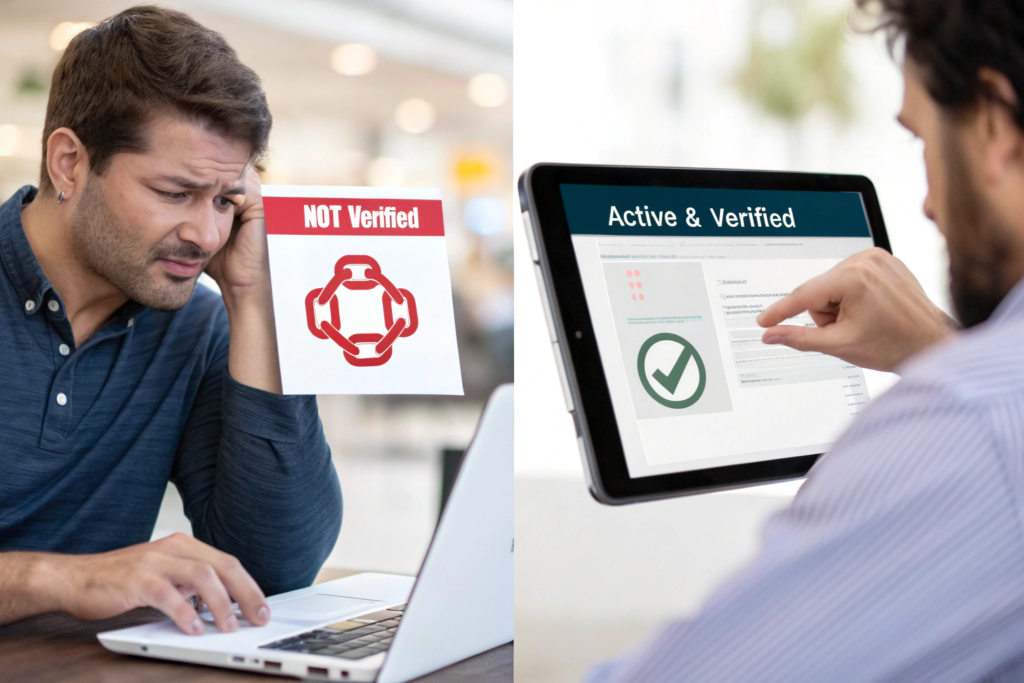
We hold a Platinum-level WRAP certificate. When you want to verify it, I do not send you a PDF. I give you our WRAP registration number and a direct link to the WRAP "Find a Certified Facility" search page. You type the number in yourself. You see our company name, our address, and the certificate's expiration date. You do this independently, while I wait on the call. A fake factory will give you excuses: "The database is down," or "We have a new certificate that is not updated online yet." These are lies. Major audit bodies like WRAP, SMETA, and GOTS maintain live, searchable databases specifically to prevent forgery. We also post our real audit reports on our own website for full transparency. A fake supplier will try to keep you inside the PDF illusion. We push you out to the independent source. This is the single most effective anti-fraud habit you can develop. Trust the database. Distrust the document.
What Types of Certificate Fraud Are Most Common in Apparel Sourcing?
Let me paint you a picture of the three most common fraud archetypes I have personally encountered in my career. The first is the "Clone Job." A factory in one region steals the certificate identity of a legitimate, audited factory in a different region. They change the name, but keep the certificate number. The buyer checks the number, sees it is "valid," but never notices the company name does not match the invoice. The second is the "Expired Ghost." A factory passes an audit once, lets it expire, and continues to use the old certificate for years. They show you the old date, sometimes photoshopped to look current. The third is the "Bait and Switch Audit." A factory owns one small, clean, audited showroom line for the photo, but 90% of production happens in an adjacent dirty, unauthorized building with no safety standards. These are not rare exceptions. They are standard operating procedure for the bottom tier of the market.
Understanding the specific mechanics of these frauds makes you much harder to fool. Each type has a specific, detectable signature. Once you know what to look for, the illusion breaks apart like a cheap magic trick.
How Does the 'Clone Certificate' Scam Actually Work?
The clone scam exploits the gap between a buyer's brief check and a thorough forensic verification. The fraudster finds a real, valid certificate from a different, often legitimate factory. They copy the certificate number, the audit body logo, and the formatting. They change only the company name, address, and the date.
The buyer receives the PDF. They might quickly check the certificate number on the audit body's site. The number pulls up a real, valid record. The buyer sees a green checkmark and stops investigating. They do not read the company name listed on the database record. They do not notice that the database shows "XYZ Garments Pvt Ltd in Coimbatore" while their invoice says "ABC Trading in Guangzhou." The certificate number is real, but it belongs to someone else. We once helped a US client investigate a potential supplier. The factory sent a SEDEX SMETA audit report. The audit number checked out on the SEDEX platform. But the registered company name was a completely different legal entity. The supplier claimed it was a "subsidiary relationship." We called the actual audited factory in Vietnam. They had never heard of the supplier. Their certificate had been stolen from a public filing on a tendering website. To prevent this clone scam, we always insist that our clients cross-reference three data points simultaneously: the certificate number, the registered legal entity name, and the physical factory address. All three must match exactly on the independent database. If even one field is different, walk away. No honest factory has a mismatch problem.
What Is a 'Four-Pillar' Audit and Why Do Fakes Only Show Two?
A genuine ethical audit usually covers four pillars: Labor Standards, Health & Safety, Environment, and Business Ethics. A typical fake audit report, or an incomplete one, will only address the first two: Labor and Safety. The fraudster hopes you do not know the difference.
The Environment pillar checks wastewater treatment, chemical storage, and waste disposal. The Business Ethics pillar checks anti-bribery policies, transparent record-keeping, and subcontracting transparency. These two pillars are expensive and difficult to pass. A factory dumping toxic dye water into a river cannot pass the Environment pillar. A factory that sub-contracts your order to a hidden sweatshop cannot pass the Business Ethics pillar. When you ask for a SMETA audit, specifically ask for the "4-Pillar" version. If the supplier hands you a "2-Pillar" report and claims it is "fully equivalent," they are either hiding environmental violations or unethical subcontracting. Our Shanghai Fumao facility undergoes the full 4-Pillar SMETA audit with an approved third-party firm. We publish the audit summary, including any non-conformances and our corrective actions, not just the shiny pass page. A brand in Amsterdam specifically asked for the Business Ethics section of our SMETA report. We sent it immediately. It showed our documented policy against bribery and our formal subcontracting control procedure. The brand's compliance officer told us that 60% of potential suppliers fail this specific filter because they cannot produce a genuine 4-Pillar report. This is a powerful screening tool for anyone building a responsible brand.
How Does Factory Ownership Affect the Trustworthiness of Documents?
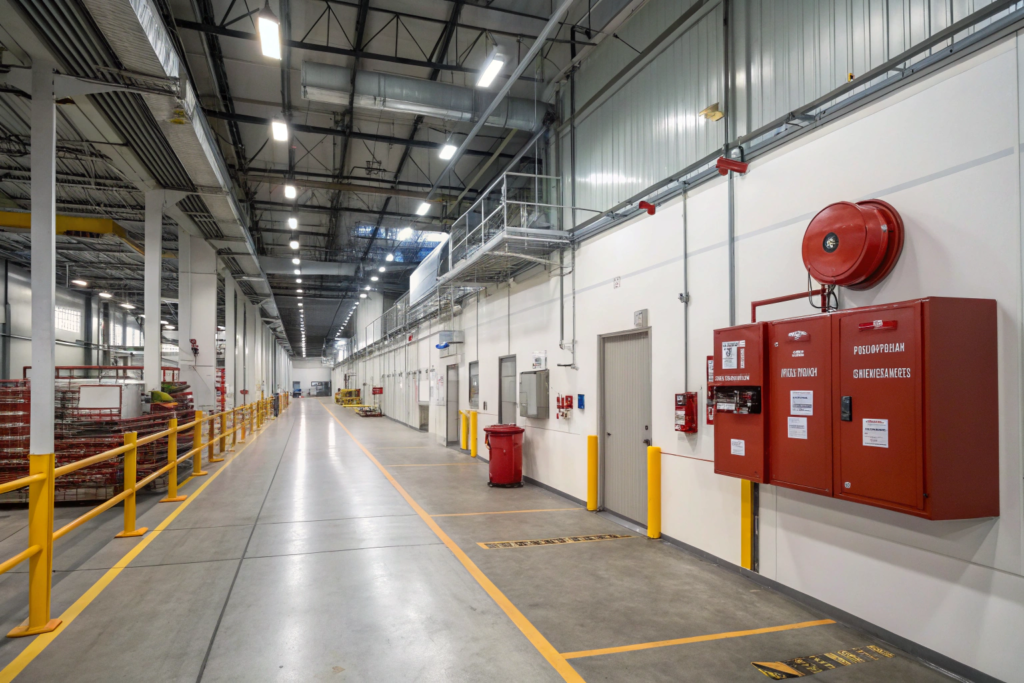
There is a structural reason why trading companies are the primary source of falsified certificates. A trading company does not own the means of production. They cannot get a genuine WRAP or SMETA audit in their own name because there is no physical facility to audit. So they are forced to either rent certificates, forge them, or borrow them from a partner factory without disclosing the relationship. A genuine manufacturer, on the other hand, has a physical address where auditors arrive unannounced, check fire exits, interview workers privately, and test the wastewater. The ownership structure of the entity you are dealing with directly dictates the probability of document fraud.
Factory ownership creates a permanent, physical accountability that a virtual trading desk can never replicate. The walls, the fire alarms, the chemical storage rooms all exist and can be inspected by an unannounced stranger at any time. This reality disciplines the entire certification ecosystem.
Why Can't Trading Companies Easily Get Their Own Audits?
To obtain a WRAP or SMETA audit, the auditing firm needs a physical factory address with a defined number of workers, a specific production process, and machine inventory. A trading company office is typically a small commercial room with five desks, laptops, and sample racks. There are no sewing lines, no cutting tables, no chemical storage, and no workers making garments.
The audit body cannot certify a trading office as a garment factory. So the trading company has two dishonest options. Option one: they forge the document entirely. Option two: they show you the audit certificate of a factory they buy from, but they present it as their own. This is misrepresentation. If you sign a contract with "Trading Co. Ltd" but the audit certificate belongs to "Actual Factory Co. Ltd," your contract has no legal protection regarding the audit claims. If a labor abuse scandal breaks, "Trading Co. Ltd" will disappear, and you will be left holding the liability with no recourse to the actual factory. Our registration at Shanghai Fumao is a genuine industrial and commercial manufacturing license. The name on our WRAP certificate, our business license, and our bank account is the same legal entity. This alignment is a fundamental trust signal. Ask any supplier: "Does the name on the audit certificate exactly match the name on the sales contract and the bank account?" If the names diverge, you are dealing with a reseller, and the certificate is essentially meaningless for your legal protection.
How Do Unannounced Audits Prevent Pre-Arranged 'Show' Setups?
A genuine certification requires that the audit body reserves the right to conduct unannounced or semi-announced audits. A pre-arranged audit gives the factory weeks to prepare a "show." They can temporarily fix safety violations, hide underage workers, and clean up chemical spills just for the day of the inspection.
We operate on a continuous compliance footing, not an "audit day" footing. Our fire exits are never blocked. Our first aid kits are never empty. Our chemical inventory logs are updated daily. We do this because we know an unannounced WRAP audit could happen at any time during the certification cycle. In one cycle, an auditor arrived at 8:30 a.m. without any prior phone call. He walked straight into our dormitory area, checked the living conditions, and interviewed employees during their shift change. Because our compliance is genuine and continuous, we passed. A factory running a fake certificate operation cannot survive an unannounced audit. Their "clean" show is a temporary movie set that collapses the moment a stranger walks in without a script. When you evaluate a factory's certifications, ask: "Is this audit result valid for unannounced visits?" If the certificate only came from a fully pre-announced, single-day visit, it carries less weight. Continuous, surprise-inspection-ready compliance is the gold standard for trust.
How to Build a Foolproof Supplier Verification Protocol
A venture-capital-backed brand owner in London once shared his own "Supplier Trust Scorecard" with me. He had been burned twice, once on a fake organic certificate and once on a hidden subcontracting chain. He decided to turn his painful experience into a systematic protocol that his entire sourcing team now follows before onboarding any new factory. His rule was simple: "We don't pay a single dollar until the factory passes our independent verification protocol, not their self-submitted documents." He told me this protocol had rejected 14 out of 17 potential suppliers in the first year. The three that passed, including us, became his long-term strategic partners. This is the right way to approach sourcing. You need a method, not a gut feeling.
A foolproof protocol removes emotion and salesmanship from the equation. It replaces a charming sales pitch with a cold, evidence-based checklist. Every step in this protocol is designed to catch a specific known fraud pattern.
What Are the 5 Steps to Verify a Factory Before Sending a Deposit?
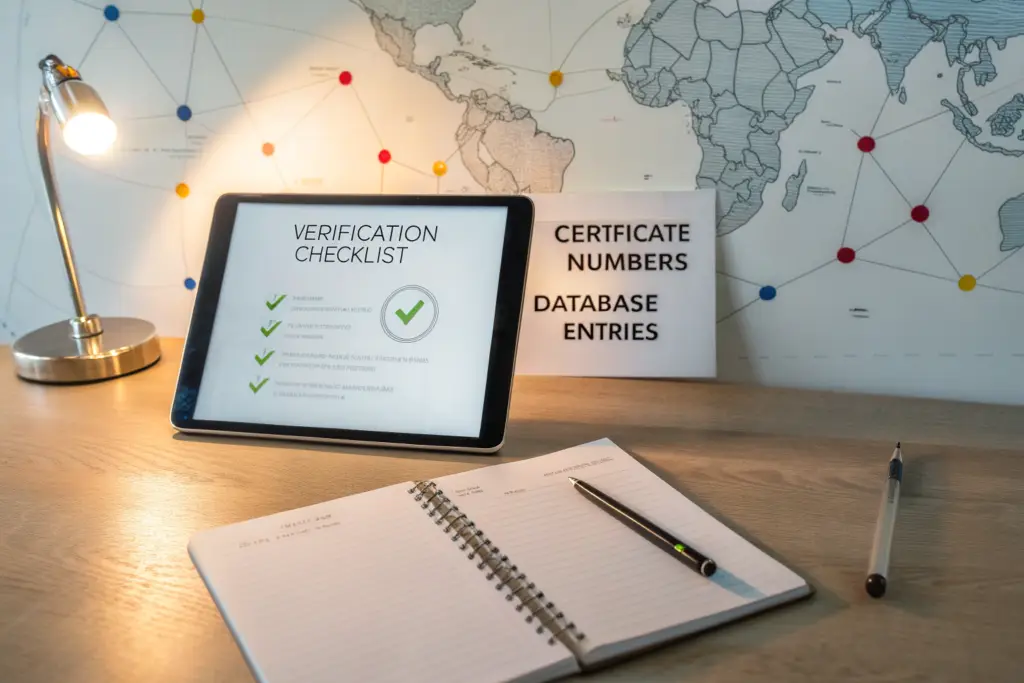
I have distilled the verification process into five concrete, sequential steps. You should execute these yourself, not through the supplier's lens. Here is the protocol we recommend and that we follow ourselves when auditing our own raw material vendors.
| Step | Action | Red Flag Indicator |
|---|---|---|
| 1. Business License Check | Request the full business registration. Look for "Manufacturing" in scope. | Scope says "Trading" or "Consulting" only. |
| 2. Live Video Walkthrough | Schedule a real-time video call. Ask to see specific machines and fire exits. | Pre-recorded loop, poor connection, or refusal to show certain areas. |
| 3. Certificate Database Cross-Check | Take the audit number. Go to the official audit body website. Type it in. | Number not found, or name/address mismatch. |
| 4. Transaction Certificate Verification | For organic claims, demand the TC number for your specific order batch. | Supplier only shows Scope Certificate; TC "not available yet." |
| 5. Independent Reference Call | Ask for contact details of two current clients. Speak to them directly. | Supplier provides only written testimonials or refuses direct contact. |
A tech startup founder in Austin used this exact protocol with us last year. He spent 45 minutes on a video call walking through our cutting floor, our QC inspection table, and our fabric storage room. He asked to see the fire extinguisher inspection tags. He read the date stamps aloud. He then took our WRAP number and verified it on his own laptop while I waited on the phone. Finally, we connected him with a current client in Chicago who confirmed our delivery performance and quality consistency. After completing all five steps, he said, "I've never felt this confident before sending a wire transfer." He sent the deposit that same afternoon. This protocol is free. It requires only your time and a disciplined, skeptical mindset. A legitimate factory will welcome every single step. A fraud will resist, delay, or make excuses at step two.
Should You Use Third-Party Inspection Before Paying the Balance?
Absolutely. Third-party inspection is the ultimate verification of physical reality, not just paperwork. All the certificates in the world cannot guarantee that the actual 1,000 shirts sitting in a warehouse match your quality standard. Only a human inspector with a clipboard and an AQL chart can verify that.
We mandate this step in our own payment terms, not because we distrust ourselves, but because we want our clients to have external, undeniable proof before they release the 70% balance. You hire an agency like SGS, Intertek, or Bureau Veritas. You give them your approved sample and a detailed checklist. The inspector goes to our facility. They count the cartons. They pull random samples based on the AQL table. They check the logo placement, the stitching, the color shading, and the measurements. They write a report with photos and a pass/fail recommendation. You read that report. If it says pass, you pay. If it says fail, we fix the problem before you pay a single additional dollar. A brand owner in Melbourne used Intertek for his first order of 800 organic cotton dresses. The inspector found that the shade of the natural wood buttons was slightly lighter than the approved trim card. It was a subtle difference, perhaps acceptable to some. But the inspector flagged it. We held the shipment, replaced all 800 sets of buttons with the correct shade, and re-inspected. The delay was five days. The client later told us this moment was when we earned his trust for life. The third-party inspection is your physical fact-check. It converts the abstract promise of "quality" into an empirical, photographed, verified reality. Do not skip this step. It is your strongest financial lever.
Conclusion
Falsified certificates are an epidemic because they exploit a fundamental asymmetry: the supplier has the physical goods and the documents, and the buyer has only trust and a wire transfer form. We dismantle that asymmetry at Shanghai Fumao by refusing to play the PDF game. Every certification we hold, from WRAP Platinum to SMETA 4-Pillar to GOTS, is verifiable by you, independently, on the official database of the issuing body, without any intermediary filter from us. We have walked through the specific mechanics of clone fraud, the critical distinction between scope and transaction certificates, the structural reason genuine factory ownership makes document fraud impossible, and a step-by-step protocol you can use to test any supplier, including us. The thread connecting all these defenses is radical transparency. An honest factory has nothing to hide behind a locked PDF. A fraudulent one fears the live video call and the independent database search more than anything else.
We invite you to stress-test us. Don't take my word on any certification claim. Send an email to our Business Director, Elaine, at elaine@fumaoclothing.com. Ask for our latest WRAP certificate number and our GOTS scope certificate. Then go verify them yourself on the independent platforms while we wait. Request a live video walkthrough of our production floor during working hours. Ask to speak to a current client. Put us through the five-step protocol. We will pass every test because our compliance is structural, not cosmetic. Let us earn your trust through verifiable evidence, not a polished sales pitch. Your brand deserves a supply chain that can withstand a forensic audit, not just a quick glance at a logo.