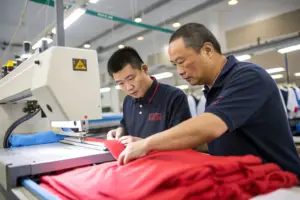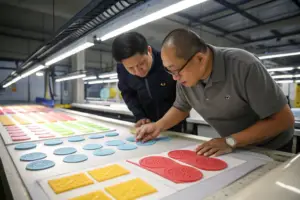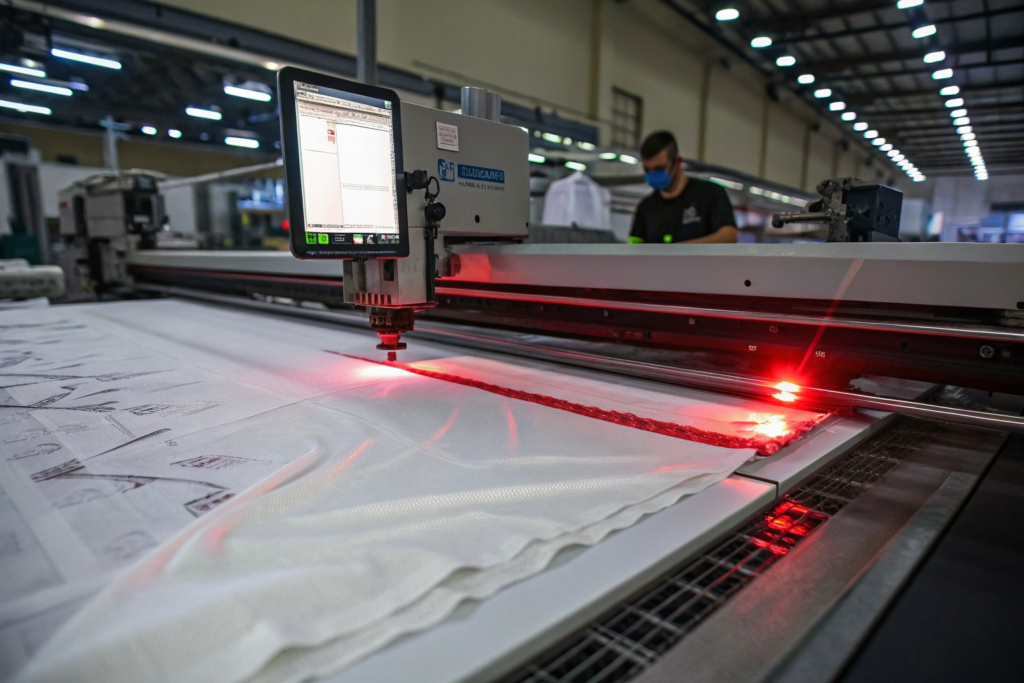
I stood on our cutting room floor five years ago watching a skilled cutter navigate a hand-knife around a complex pattern piece for a silk chiffon dress. He had 30 years of experience. His hands were steady. But the fabric shifted. The blade caught a loose thread. The piece was ruined. That single slip cost us $45 in fabric and 15 minutes of lost time. Multiply that by a 500-unit production run, and the cost of human imprecision was thousands of dollars per order. That was the day I decided to invest in our first fully automated laser cutting machine. The change was immediate and dramatic. The cut pieces came out identical to the digital pattern, piece after piece, with a tolerance of 0.1 millimeters. The fabric edges were perfectly sealed. There were no frayed threads, no shifted layers, no human errors. Today, I would not accept a precision garment order without laser cutting. The technology is not a luxury. It is the foundation of consistent quality.
Fully automated laser cutting technology is absolutely essential for precision apparel manufacturing because it eliminates the three variables that cause cutting room errors: human hand variance, fabric movement during cutting, and mechanical blade drift. A laser cutter uses a focused beam of light guided by a CAD file. It cuts with a positional accuracy of 0.1 millimeters, regardless of the complexity of the pattern or the slipperiness of the fabric. The laser simultaneously seals the cut edge with heat, which prevents fraying on delicate synthetics and silks. For precision garments, fitted dresses, tailored suits, performance activewear, a deviation of even 2 millimeters at the cutting stage can compound into a fit failure on the finished garment. Laser cutting eliminates this deviation. It also operates at speeds impossible for human cutters, processing complex patterns in seconds rather than minutes. The result is a cutting room that delivers identical, flawless pieces to the sewing line, every single time.
Precision in garment manufacturing does not start at the sewing machine. It starts at the cutting table. If a piece is cut 2 millimeters too wide, the sewing operator can sew it perfectly, and the garment will still be wrong. The cutting room is where precision is either locked in or lost forever. I want to share exactly how laser cutting works, why it outperforms traditional methods, and how Shanghai Fumao uses it to deliver the precision our brand partners demand.
How Does Laser Cutting Achieve a 0.1mm Tolerance That Is Impossible with Hand Knives or Die Presses?
A performance activewear brand we work with had a persistent problem with their compression leggings. The panels were cut using a traditional die press. Over time, the steel dies dulled slightly. The dull blades pulled and stretched the fabric instead of cutting it cleanly. The panels were inconsistent. The sewing operators struggled to align the edges. The finished leggings had twisted inseams and uneven compression. We switched the entire line to laser cutting. The laser beam never dulls. It never pulls the fabric. The cut panels came out exactly the same shape every time. The inseam twisting problem disappeared. The brand's return rate for fit issues dropped by 60%.
Laser cutting achieves 0.1mm tolerance because the cutting tool, a beam of light, has no physical mass that can wear down, bend, or drag against the fabric. A hand knife is guided by a human hand, which introduces wobble and inconsistency. A die press uses a physical metal blade that dulls with every cut, gradually distorting the cut shape. The laser beam is generated by a galvanometer-controlled mirror system that redirects the beam thousands of times per second with sub-micron accuracy. The beam diameter is typically 0.1mm to 0.3mm, smaller than the width of a human hair. It vaporizes the fabric along the exact path defined by the CAD file. There is no physical contact with the fabric, so there is no pulling, no dragging, and no fabric shifting. The result is a cut edge that matches the digital pattern with near-perfect fidelity, regardless of fabric type or pattern complexity.
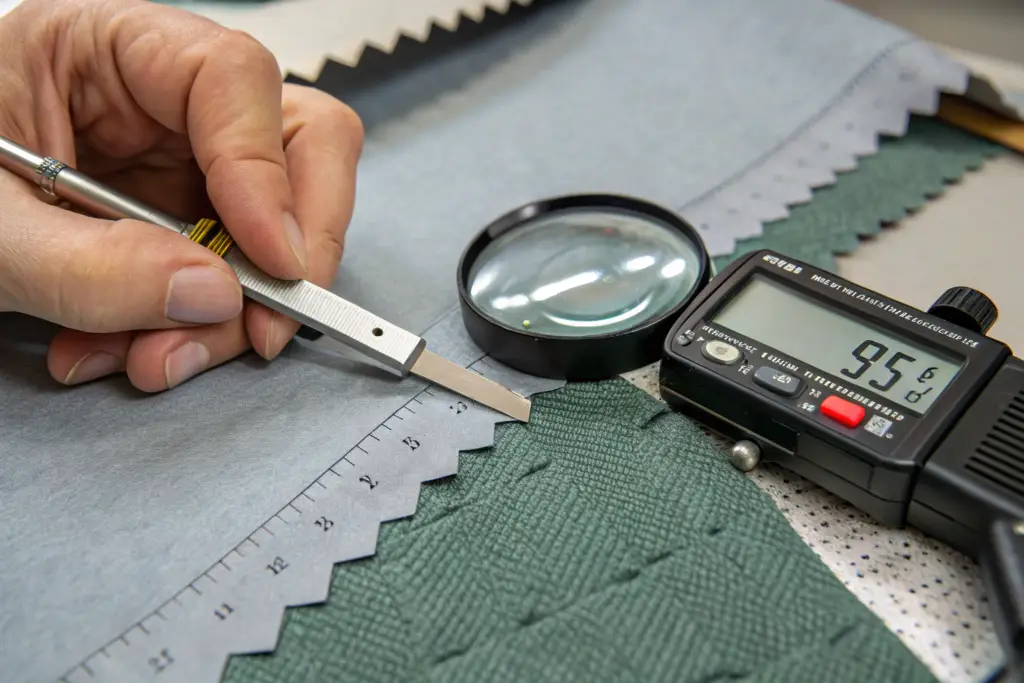
The tolerance is not a theoretical capability. It is a measurable, verifiable outcome. We regularly measure laser-cut pieces against the digital pattern using digital calipers and optical comparators. The deviation is consistently below 0.1mm. This level of precision is simply unattainable with manual or mechanical cutting methods.
Why Does the Laser Beam's Lack of Physical Contact Eliminate Fabric Pulling and Distortion?
A physical blade cuts by wedging apart the fabric fibers. This wedging action creates lateral force that pushes and pulls the fabric, especially on lightweight, slippery, or stretchy materials. A silk chiffon under a hand knife moves like water. A spandex blend under a die press stretches before it cuts. The laser beam does not push. It does not pull. It vaporizes. The fabric experiences zero lateral force during the cutting process. This is why laser cutting is the superior method for delicate silks, fluid rayons, and high-stretch performance fabrics that are nearly impossible to cut precisely with physical blades.
How Does the Galvanometer-Controlled Mirror System Maintain Precision at High Speeds?
The galvanometer system uses tiny, ultra-lightweight mirrors that are moved by electromagnetic motors. These mirrors can reposition the laser beam thousands of times per second. Because the mirrors have almost no inertia, they can instantly change direction without overshooting or vibrating. This allows the laser to cut sharp corners and intricate curves at high speed without deviating from the programmed path. The system is similar to the technology used in laser eye surgery. The combination of lightweight mirrors and precise electronic control is what makes the speed and accuracy possible.
What Intricate Pattern Geometries Can Only Be Cut by Laser and Not by Traditional Methods?
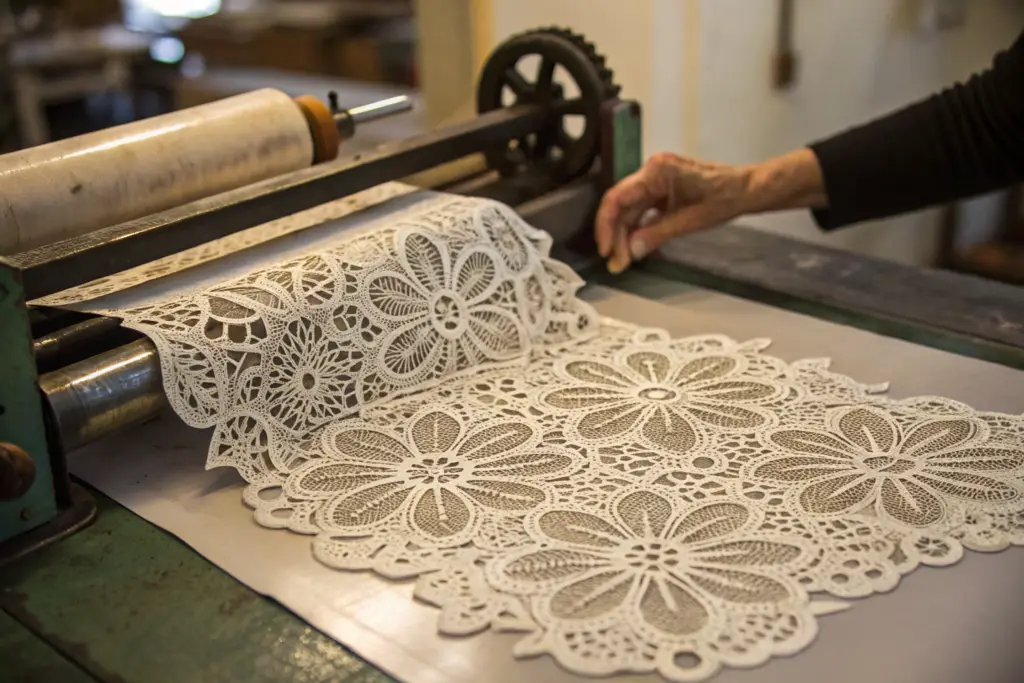
A high-end lingerie brand we manufacture for wanted to incorporate a delicate, scalloped eyelash lace edge directly into the main body panels of their garments. The pattern was incredibly intricate, with tiny, sharp points and curves. A traditional die press could not handle the detail. The metal blades could not be sharpened finely enough to cut the tight internal radii without leaving rough edges or crushing the delicate lace. A hand knife was completely out of the question for such a complex, repetitive pattern. Laser cutting was the only viable solution. The laser beam, with its 0.1mm diameter, navigated the tight curves perfectly. The cut lace panels looked like they had been produced by a magical, impossibly precise pair of scissors. The collection was a commercial and critical success, largely because of the unique, intricate detailing.
Laser cutting enables pattern geometries that are simply impossible with traditional physical cutting methods. Intricate filigree patterns, sharp internal corners, tiny perforations, and micro-slits for ventilation can all be programmed into the CAD file and executed by the laser with perfect repeatability. A physical blade, whether hand-guided or pressed, has a finite turning radius. It cannot cut a perfectly sharp internal corner. A laser beam can. This opens up design possibilities that were previously unachievable. It allows designers to incorporate laser-cut lace effects, precise geometric cutouts, and functional micro-perforations directly into garment panels without any post-cutting finishing work. The laser simultaneously seals the edges of these intricate cuts, preventing fraying and eliminating the need for manual edge finishing.
The design freedom is a competitive advantage. A brand that can offer unique, laser-cut details offers something that fast fashion copycats cannot easily replicate. The technology enables a level of craftsmanship that stands out in a crowded market.
What Is "Laser Etching" and How Does It Replace Appliqué for Brand Logos on Performance Wear?
Laser etching uses a lower power setting to remove only the surface of the fabric, changing its texture or color without cutting all the way through. This creates a tonal, textured logo that is embedded into the fabric itself. Unlike an appliqué patch, which adds weight, can peel, and creates a sweaty patch on performance wear, an etched logo is weightless, permanent, and breathable. It is the premium solution for subtle branding on activewear.
Why Are "Sealed Seams" from Laser Cutting a Critical Advantage for Synthetic Summer Sheers?
Synthetic fabrics like polyester chiffon and nylon organza fray aggressively when cut with a physical blade. The cut edges must be finished, which adds bulk and labor. The laser beam simultaneously cuts and seals the edge by melting the synthetic fibers together. The cut edge is permanently sealed and will never fray. This is a critical advantage for summer sheers, where lightweight, clean-finished edges are essential to the garment's quality and appearance.
How Does Automated Laser Cutting Drastically Reduce Material Waste and Increase Production Speed?
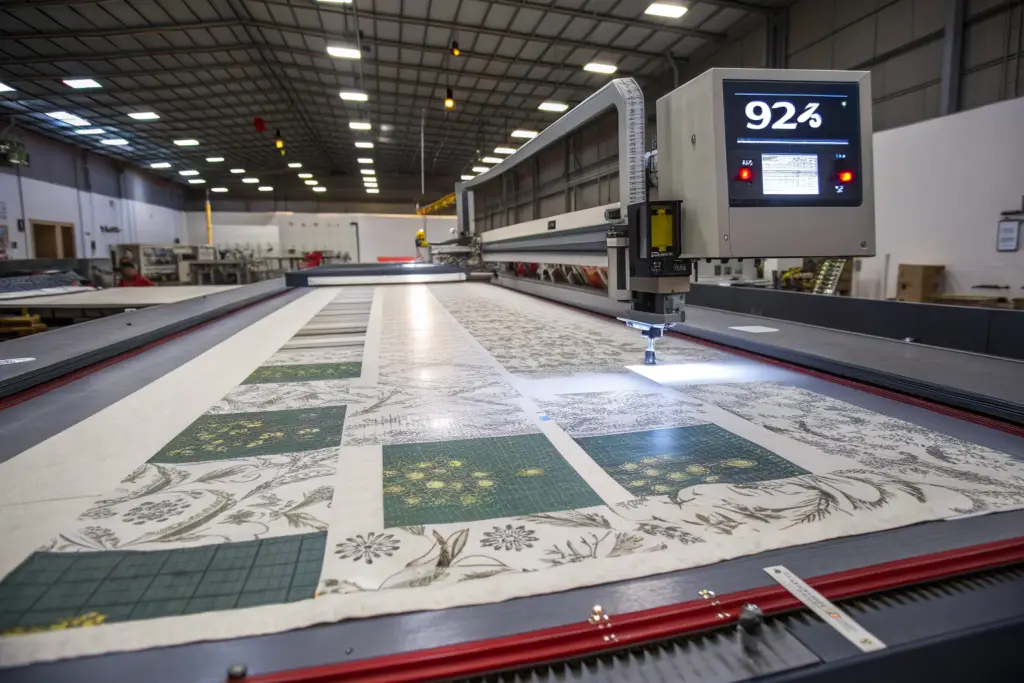
Before laser cutting, our average marker efficiency, the percentage of fabric actually used for pattern pieces, was around 82%. The remaining 18% was waste. With the laser system's computer-controlled nesting algorithm, we now achieve 92% efficiency. On a 5,000-meter fabric order, that 10% improvement saves 500 meters of fabric. At an average cost of $4 per meter, that is $2,000 in savings per production run. The laser pays for itself not just in quality, but in material economics.
Automated laser cutting reduces material waste by using advanced CAD algorithms to nest pattern pieces together with a precision that human marker makers cannot match. The software analyzes the shapes of every piece and finds the most efficient arrangement, rotating pieces fractionally and interlocking complex curves to minimize dead space between pieces. The laser also reduces the buffer space needed between pieces because it does not require the clearance of a physical blade. The combined effect is a fabric utilization rate that exceeds traditional methods. The production speed is also dramatically faster. A laser cutter can process a complex pattern in seconds that would take a human cutter minutes. This speed compresses lead times and allows the factory to respond faster to demand. The combination of higher material yield and faster throughput makes laser cutting a powerful economic advantage.
The waste reduction is not just a cost saving. It is a sustainability win. Less fabric in the scrap bin means less textile waste going to landfill. Brands that market their sustainability credentials can use laser-cut efficiency as a verified data point in their environmental impact reporting.
How Does the CAD Nesting Algorithm Achieve a 10-15% Higher Marker Efficiency Than a Human Cutter?
A human marker maker uses experience and visual judgment to arrange pattern pieces. They work with a limited set of rotations and often miss opportunities to interlock complex curves. The CAD algorithm uses computational geometry to test thousands of possible arrangements in seconds. It can rotate a piece by 0.1 degrees to fit perfectly into a gap. It can analyze the trade-off between marker length and fabric width to find the absolute optimal layout. This level of computational optimization is beyond human capability. The resulting marker squeezes significantly more pattern pieces out of the same fabric area.
Why Is the "Sealed Edge" Critical for Reducing Rework in the Sewing Room?
A frayed cut edge is a problem waiting to happen in the sewing room. The loose threads catch on machinery, tangle, and cause seam defects. The sewing operator must handle the piece carefully to prevent further fraying. The sealed edge from laser cutting eliminates fraying entirely. The pieces are clean, stable, and easy to handle. They feed through sewing machines smoothly. This reduces the defect rate in the sewing room and eliminates the need for edge-finishing operations on synthetic fabrics.
Conclusion
Fully automated laser cutting technology is not just a faster way to cut fabric. It is a fundamental upgrade to the precision, design capability, and economic efficiency of a garment factory. The 0.1mm tolerance ensures that every piece matches the digital pattern, eliminating the fit failures caused by cutting variance. The ability to execute impossible geometries opens up creative possibilities that differentiate a brand. The material savings and speed improvements create a leaner, more profitable production process.
The $45 piece of silk ruined by a hand knife five years ago was not an isolated incident. It was a symptom of a cutting process that had reached its limits. The investment in laser technology removed that variability and built a foundation of precision that flows through every subsequent stage of manufacturing. The sewing line gets better pieces. The quality control team finds fewer defects. The brand receives garments that fit their specification.
At Shanghai Fumao, laser cutting is integrated into our standard production workflow for precision garments. We use it for delicate silks, high-stretch synthetics, complex patterns, and any order where the brand's fit consistency is non-negotiable. We have seen the impact on our brand partners' return rates, customer satisfaction, and production efficiency.
If you are developing a collection that demands precision cutting, or if you have experienced fit issues caused by cutting variance, we can help. At Shanghai Fumao, we will review your pattern specifications and recommend the optimal cutting method for your fabric and design complexity. Contact our Business Director, Elaine, at elaine@fumaoclothing.com. She can provide a sample report showing the tolerance measurements from a recent laser-cut production run. Let's build your garments on a foundation of laser-guided precision.