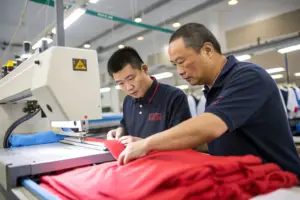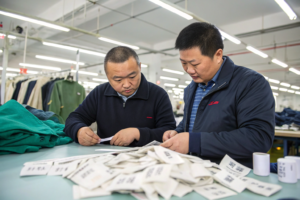
I once stood in a factory in Dhaka that had passed a paper audit with flying colors. The documents were perfect. The payroll records showed legal wages. The safety certificates were current. But when I asked to see the worker dormitories, the manager's face changed. The dormitories were in a separate building, unmarked, with locked fire exits and overcrowded rooms. The factory was a "double-book" operation. It maintained a clean, audited facility for the brands that required compliance, and a hidden, unaudited facility for the brands that did not. One of those brands was about to sign a major contract with a European retailer. I warned them. They pulled out. Two months later, the hidden facility had a fire. No one died, but the brand that stayed in was exposed on the front page of a major newspaper. Their reputation was destroyed. The audit was not just a formality. It was the only thing that separated them from disaster.
Strict and rigorous factory compliance audits heavily protect your clothing brand reputation because they are the only verifiable defense against the hidden, reputation-destroying risks that lurk in opaque supply chains. A genuine social compliance audit, such as a SEDEX SMETA 4-Pillar or a BSCI audit, does not just check for fire extinguishers. It verifies that workers are paid legal wages, that overtime is voluntary, that the building is structurally safe, and that no forced or child labor is used. For the brand, this is not just an ethical obligation. It is a legal and financial shield. If a scandal breaks, the brand that can produce a recent, clean, third-party audit report will survive the media storm. The brand that cannot produce evidence of due diligence will be held responsible for the factory's sins. The audit report is the brand's insurance policy against the unpredictable horrors of a complex global supply chain.
Compliance audits are not a bureaucratic burden. They are a strategic asset. In an era where a single viral video of a sweatshop can erase millions of dollars in brand equity overnight, the audit is the brand's first and strongest line of defense. I want to share exactly how these audits work, what they actually verify, and how Shanghai Fumao uses them to protect our brand partners.
What Are the Specific Hidden Liabilities That a SEDEX or BSCI 4-Pillar Audit Uncovers That a Paper Certificate Misses?
I reviewed a paper audit once that showed a factory paid its workers exactly the legal minimum wage. The payroll records were flawless. The timesheets were all signed. A subsequent unannounced audit told a different story. The auditor interviewed workers privately outside the factory gates. Several workers reported that they were paid the legal wage on the books, but were forced to hand back a portion of their salary in cash to the supervisor each month as a "processing fee." They were also charged illegal recruitment fees that kept them in debt bondage. The paper audit had verified the documents. The unannounced 4-pillar audit verified the truth.
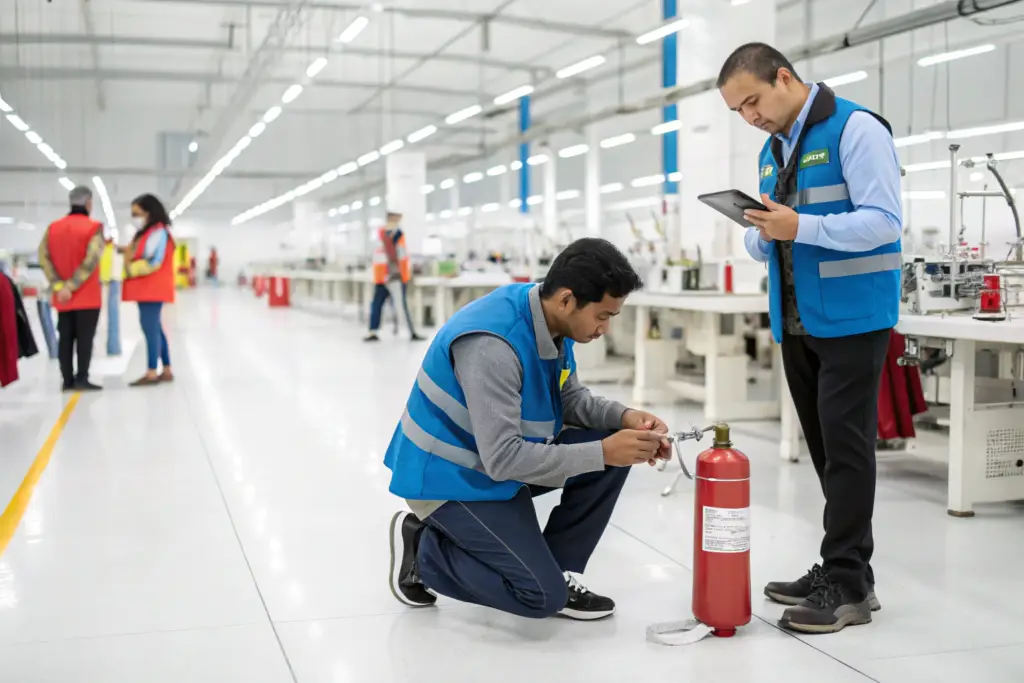
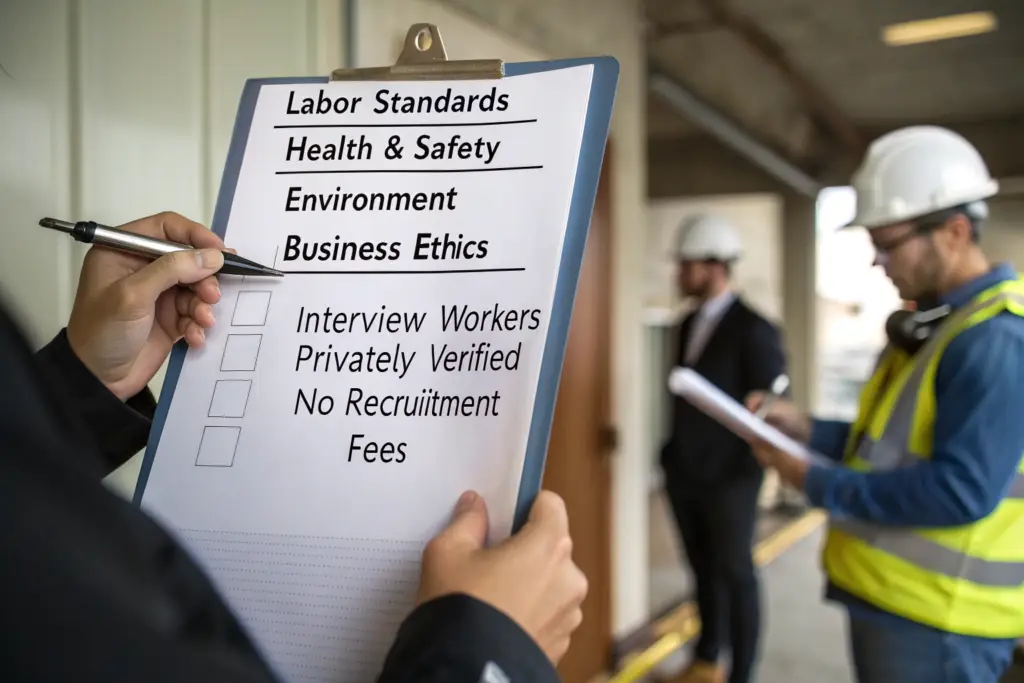
A SEDEX SMETA 4-Pillar or a BSCI audit uncovers hidden liabilities that a paper certificate cannot detect because it includes mandatory off-site, private worker interviews and a review of indirect employment practices. The four pillars are Labor Standards, Health and Safety, Environment, and Business Ethics. The Labor pillar checks for forced labor indicators like retained identity documents, excessive recruitment fees, and restrictions on freedom of movement. The Health and Safety pillar checks for structural building integrity, adequate fire exits, and chemical handling protocols. The Environment pillar checks for proper wastewater treatment and chemical storage. The Business Ethics pillar checks for bribery and corruption. A paper certificate might confirm that a fire extinguisher exists. A 4-pillar audit confirms that the extinguisher is inspected monthly, that the workers know how to use it, and that the fire exit behind it is not locked during working hours.
The private worker interview is the single most powerful tool in the auditor's arsenal. It is the moment when the factory's true treatment of its workforce is revealed. A factory that has nothing to hide will encourage its workers to speak freely. A factory that has a lot to hide will try to control the interview process, or refuse it altogether. The brand should demand the unredacted worker interview summaries.
How Does an Unannounced "Semi-Anounced" Audit Differ from a "Fully Announced" Desk Audit in Detecting Forced Labor?
A fully announced audit gives the factory weeks to prepare. Documents can be falsified. Workers can be coached. The worst violations can be temporarily hidden. A semi-announced audit gives the factory a window of perhaps two weeks, but not a specific date. This makes it much harder to stage a fake operation. The auditors can arrive when the factory is in normal operation. An unannounced audit provides no warning at all. It captures the factory in its most natural state. Forced labor indicators, such as locked dormitories or withheld passports, are almost exclusively detected during unannounced or semi-announced audits.
Why Are "Worker Interviews" Conducted Off-Site the Single Most Powerful Tool for Verifying Ethical Practices?
Inside the factory, workers may fear retaliation from supervisors if they speak honestly. Off-site interviews, conducted in a neutral location like a community center or a cafe, remove this fear. Workers can speak freely about their actual wages, working hours, and treatment. The auditor asks specific, non-leading questions and looks for consistency across multiple interviews. This process reveals the lived reality of the workers, which may be completely different from the documented reality.
How Does a "Transparent" Factory Use Audit Reports as a Powerful B2B Marketing Asset?
A brand owner once told me she won a $50,000 contract with a major department store because she was the only vendor who proactively provided her factory's full audit report. The other vendors said, "We are compliant," but provided no evidence. She put our SEDEX report on the table. The buyer reviewed it, nodded, and said, "This makes my job much easier." The audit report closed the deal. It was not a secret document to be guarded. It was a competitive advantage.
A transparent factory uses its audit reports as a powerful B2B marketing asset by proactively sharing them with potential brand partners before they are asked. The factory's website should display the current audit status, the auditing body, the date of the last audit, and the grade achieved. A "Compliance" page that lists certificate numbers and expiration dates, and offers a download of the latest audit summary, immediately differentiates the factory from competitors who offer vague assurances. For the brand, this transparency is a powerful tool in their own sales process. They can show the factory's audit report to their retail buyers, demonstrating that their supply chain has been independently verified. In a market where every brand claims to be "ethical," the brand that provides a third-party audit report provides proof. Proof wins contracts.
The audit report is not a secret to be hidden. It is a credential to be displayed. A factory that is proud of its compliance will publish its results. A factory that hides its results is signaling that the results are not good. The brand that partners with the transparent factory inherits that transparency for their own marketing.

How Should You Structure a "Compliance" Page on Your Factory Website to Instantly Satisfy a Corporate Buyer's Due Diligence?
The page must include the audit type (e.g., SEDEX SMETA 4-Pillar), the date of the last audit, the grade or result, the certificate number, and a link to download a sanitized summary of the findings. It should also list any other relevant certifications, such as GOTS, OEKO-TEX, or WRAP, with the same level of detail. A corporate buyer should be able to complete their initial due diligence in under two minutes on this page.
What Is the "Annual Improvement Plan" and How Does It Signal a Commitment to Long-Term Worker Welfare?
An Annual Improvement Plan is a document that the factory publishes each year, summarizing the findings from the last audit and the specific corrective actions taken. It might state, "2024 Finding: Dormitory ventilation insufficient. 2025 Action: Installed additional exhaust fans in all dormitory rooms." This document signals that the factory does not just pass audits; it uses them as a tool for continuous improvement. This is a powerful signal to brands that the factory is a long-term partner.
What Immediate Action Plan Must a Brand Have If Their Factory Fails a Critical Safety or Labor Audit?
A brand partner of ours once received a notification that their factory had failed a fire safety audit. The fire exits were adequate, but the emergency lighting system was not functional. The brand did not panic. They did not immediately cancel their order. They reviewed the Corrective Action Plan the factory submitted within 48 hours. The plan stated that the emergency lighting would be repaired within one week, verified by a follow-up inspection. The brand approved the plan, the factory fixed the lights, and the production continued without delay. The brand did not abandon the factory. They managed the failure professionally.
If a factory fails an audit, the brand must not react with immediate cancellation unless the violation is severe and intentional. The correct response is to demand a Corrective Action Plan (CAP) within 48 hours. The CAP must identify the root cause of each non-compliance, propose a specific corrective action, name the person responsible, and provide a clear deadline for completion. The brand reviews the CAP and decides whether the proposed fixes are credible and timely. If the violations are serious, such as forced labor or life-threatening safety hazards, the brand must immediately suspend production and consider terminating the relationship. If the violations are procedural or minor, the brand should work with the factory to resolve them, using the CAP as the accountability document. A factory that submits a credible CAP and fixes the issues promptly has demonstrated a commitment to improvement. A factory that deflects, delays, or blames the auditor is a high-risk partner.
The audit failure is a test of the factory's integrity. The factory's response to the failure tells the brand more about the factory than a clean audit ever could. A factory that owns its mistakes and fixes them is a factory worth keeping.
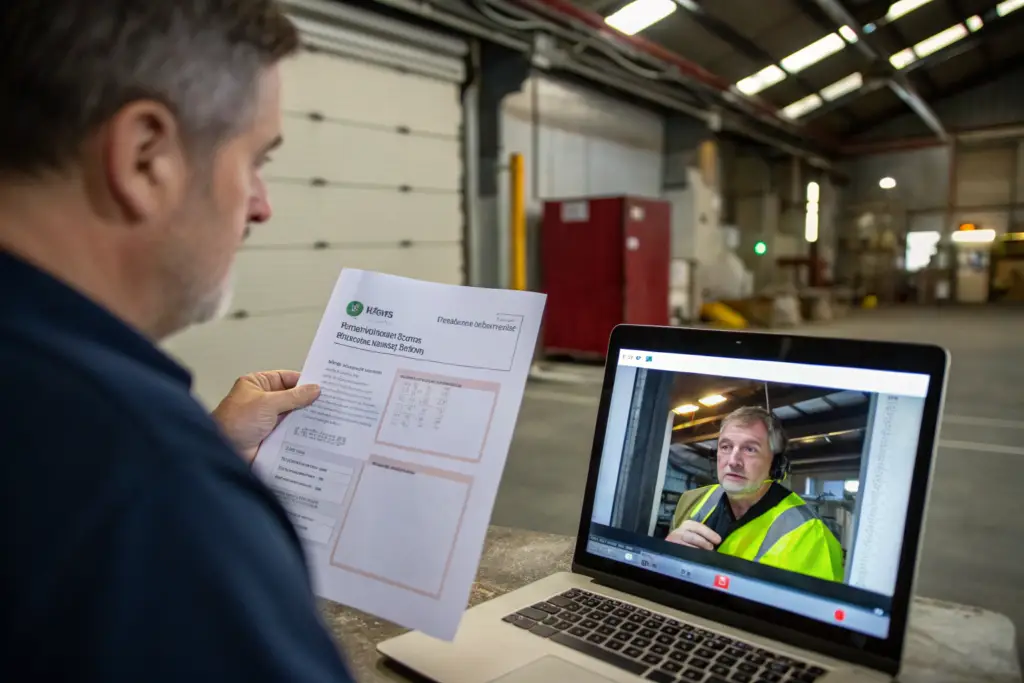
What Is a "Corrective Action Plan" (CAP) and What Are the Non-Negotiable Deadlines for Life-Threatening Safety Violations?
A CAP is a structured document that lists each non-compliance, the root cause, the corrective action, the responsible person, and the completion date. For life-threatening safety violations, such as locked fire exits or lack of fire alarms, the deadline for corrective action is immediate. Production should be halted until the fix is verified. For less critical issues, a deadline of 14 to 30 days is standard. The CAP must be signed by the factory owner, creating a legal and ethical commitment.
How Should You Communicate an Audit Failure to Your Wholesale Buyers Without Damaging Your Relationship?
Transparency with boundaries. You inform your buyers that a routine audit identified some issues at the factory, that a Corrective Action Plan has been implemented, and that production is proceeding under close monitoring. You do not need to share the gory details unless the violation directly affects product quality or delivery. The message is: "We found a problem, we are fixing it, and our oversight system is working." This builds confidence, not fear.
Conclusion
Strict and rigorous factory compliance audits are not an optional extra. They are the foundation of a resilient, defensible brand reputation. In a world where consumers and regulators demand transparency, the brand that can produce a clean, third-party audit report is protected. The brand that relies on a paper certificate is vulnerable. The 4-pillar audit, with its off-site worker interviews and unannounced verification, reveals the hidden liabilities that destroy brands. The transparent factory uses these audits as a marketing asset, sharing them proactively. The responsible brand manages audit failures with a structured CAP, not a panicked cancellation.
The hidden factory in Dhaka that I saw was a tragedy waiting to happen. The brands that pulled out protected themselves. The brand that stayed in was exposed. The difference was not luck. It was the willingness to look beyond the paper certificate and demand a real, rigorous audit. That audit saved reputations, and possibly lives.
At Shanghai Fumao, we welcome the most rigorous audits. We have passed SEDEX SMETA 4-Pillar audits with flying colors. Our worker interviews are conducted transparently. Our compliance documents are available to our brand partners. We invest in worker welfare, structural safety, and environmental responsibility because we know these are not costs. They are the foundation of a stable, reliable manufacturing partnership.
If you are evaluating a new factory, or if you want to verify the compliance of your current supply chain, we can share our audit reports and our approach to continuous improvement. At Shanghai Fumao, we will provide our latest SEDEX audit summary, our Annual Improvement Plan, and our Corrective Action Plan template. Contact our Business Director, Elaine, at elaine@fumaoclothing.com. She can schedule a call to walk you through our compliance infrastructure. Protect your brand. Insist on a real audit. Trust the evidence, not the promise.