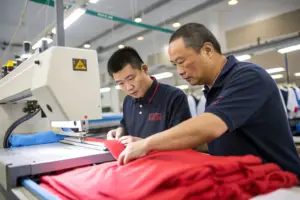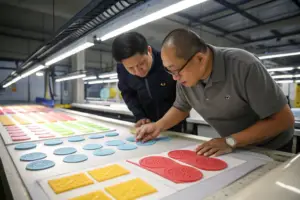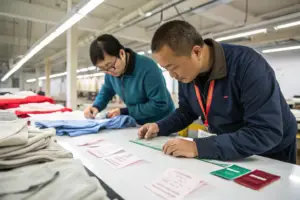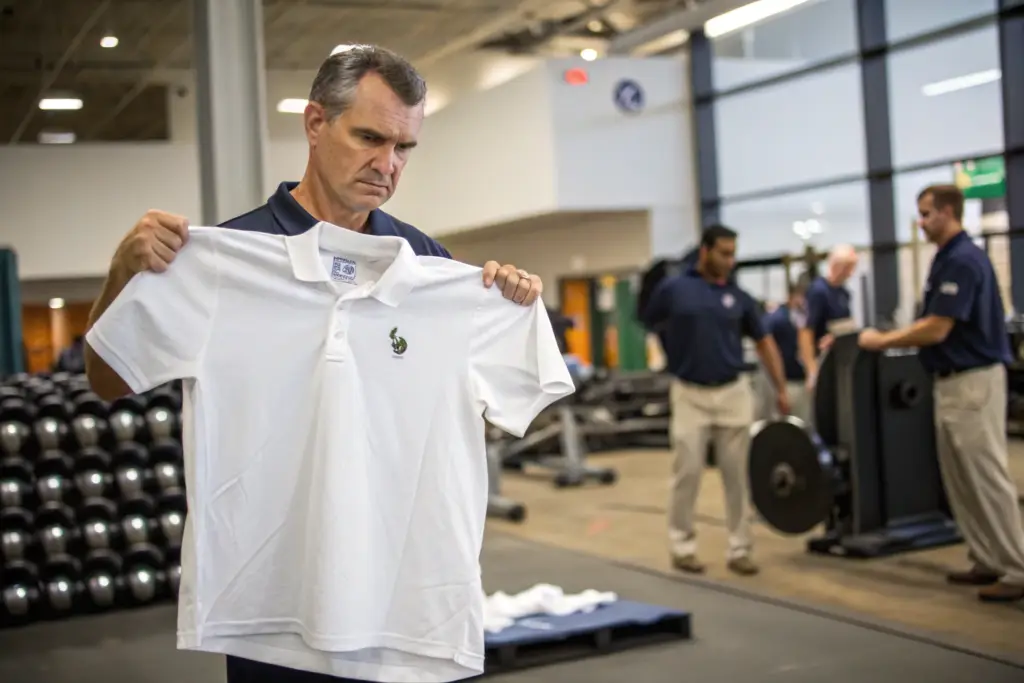
A CEO of a fast-growing fitness chain in Arizona called me on a Thursday afternoon. He was furious. He had just received 2,000 custom logo polo shirts for his gym staff. The embroidery looked perfect in the box. But after exactly two industrial laundry cycles, the logo started puckering. The fabric around the embroidery shrank at a different rate than the thread. His trainers looked sloppy. His brand looked cheap. He had to pull all 2,000 units from circulation. He lost not just the $18,000 he paid the previous supplier, but also the trust of his franchise owners who now questioned his operational judgment. He told me, "I don't have time to become a textile engineer. I just need the damn logo to stay flat." That is the CEO burden in a nutshell. You are not buying shirts. You are buying a risk-free visual representation of your entire company.
CEOs trust Shanghai Fumao for custom logo apparel because we treat branding as a precision engineering discipline, not a printing afterthought. We eliminate the "logo failure" risk through structured pre-production testing, enforce strict color consistency across multi-year repeat orders, and provide a single-point-of-contact accountability model that protects the executive’s time and the company’s visual reputation at scale.
A CEO’s psychology is different from a purchasing manager’s. A purchasing manager wants the lowest unit cost and a checkbox delivery date. A CEO wants zero embarrassing surprises. They want to order the same polo shirt three years later and have it match the previous batch perfectly. They want to hand out a jacket at a corporate retreat and see the logo sit straight on every single chest. I understand this because I have worked directly with over 50 CEOs and founders over the past decade. This article is about why they keep coming back, and why they fire suppliers who treat their brand symbol like just another cheap print job.
What Makes Custom Logo Embroidery Look Premium and Last Long?
I once sat in a boardroom with the CEO of a luxury real estate firm in Miami. He placed two polo shirts on the table. Both had his company’s crest embroidered on the chest. One crest looked like a three-dimensional royal badge, sharp and rich, with the gold thread catching the light. The other looked flat, slightly fuzzy, and the fabric around it was rippled like a wave. He asked a question I have never forgotten: "Why does this one make my brand look like a billion dollars, and this one makes it look like a flea market giveaway?" The answer lay in what you cannot see: the backing, the density, and the tension.
Premium embroidery is not just a digital file sent to a machine. It is a mechanical decision process that starts before the first needle puncture. The difference between a luxury logo and a cheap one is invisible to the naked eye but devastating to the garment structure over time.
How Does Stitch Density Impact the Perceived Value of Your Brand?
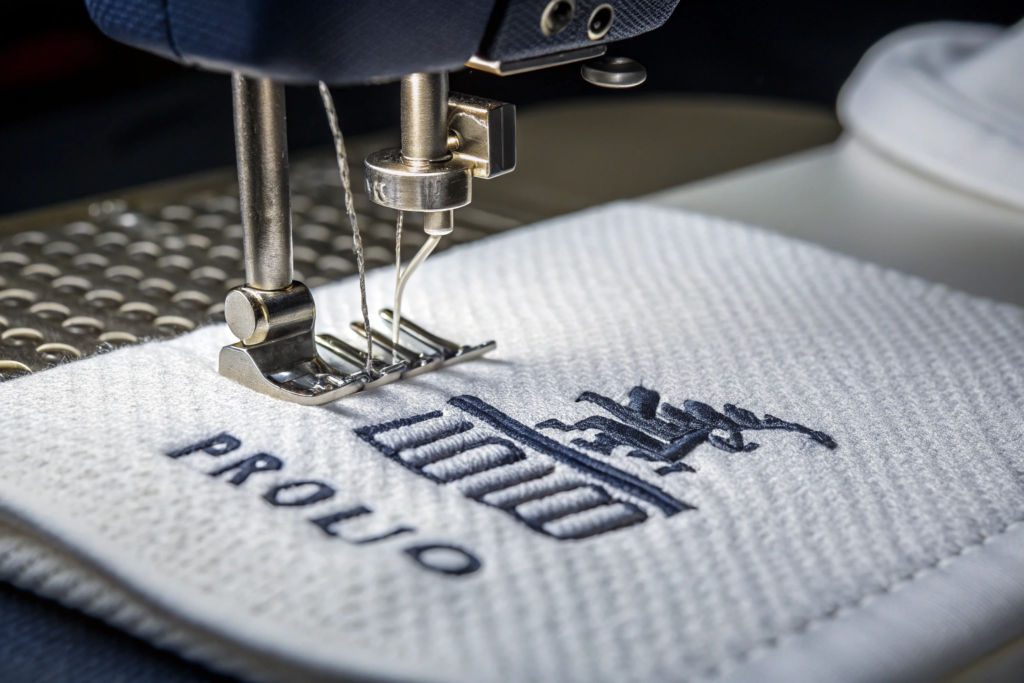
Stitch density is the number of stitches packed into a given area. A low-density logo saves thread, but it exposes the background fabric. It looks sparse and cheap. A high-density logo creates a solid, raised badge that screams luxury.
At Shanghai Fumao, we default to a minimum of 6,000 to 8,000 stitches for a standard left-chest logo, depending on design complexity. A cheap contractor might run the same design at 3,500 stitches to cut their cost and speed up the machine. For the Miami real estate firm, their crest had a fine arch of text and a delicate architectural line drawing. A low-stitch count would have broken the serifs on the letters and made the building outline look like a jagged blob. We used a high-density digitizing software to map the stitch angles. We layered the underlay stitching to build a stable platform. The gold metallic thread was a special Madeira poly-neon that resists fraying. The result was a crest that felt like a heavy, solid badge. The CEO later told me his clients kept touching the logo at open houses. That tactile reaction translates into a perception of high net worth competence. You cannot afford a logo that looks like a cheap iron-on transfer, and density is the number one factor that controls that perception.
Why Does Backing Material Prevent Fabric Puckering?
Puckering is the CEO’s number one visual enemy. You see it when the fabric around the embroidery pulls in, creating a distorted, wrinkled halo. It happens because the embroidery thread does not stretch, but the knit fabric does. When the fabric tries to relax after the hoop tension releases, it bunches up against the rigid stitches.
The fix is not in the thread. It is in the backing. We use a two-layer backing approach for knits and performance fabrics. First, a tear-away stabilizer goes under the fabric to hold the tension during the actual sewing. But critically, we add a specific weight of cut-away backing. This backing stays permanently attached to the inside of the garment, fused by the stitches. It acts as a permanent rigid skeleton that prevents the knit from ever contracting and bunching up. For the Arizona fitness chain CEO who had the laundry failure, his previous supplier had used only a cheap tear-away backing that disintegrated in the wash. Once the stabilizer washed out, the fabric puckered instantly. We switched his polo program to a permanent cut-away backing and increased the stitch count slightly to anchor it better. After 50 industrial wash tests in our lab, the logo remained perfectly flat. The CEO sent me a one-line email: "You saved my brand." Permanent backing costs less than a penny per garment and is the difference between a uniform that lasts two years and a uniform that lasts two washes.
How to Maintain Brand Color Consistency Across Multiple Orders
The CEO of a national burger chain once showed me a wall in their head office. It was a "shame wall," he joked, but he was not really joking. Pinned to the wall were eight different "company red" T-shirts from eight different orders over four years. No two were exactly the same. One was slightly orange. One was too burgundy. One had faded to pink after five washes. He told me his franchisees had started buying random red shirts from local suppliers because they had lost faith in the "official" uniform. Brand fragmentation had begun from a single inconsistent dye lot.
Color consistency is the hardest technical promise to keep in apparel manufacturing. Fabric absorbs dye differently based on humidity, water pH, and even the cotton crop origin. A brand’s signature red, navy, or forest green is its emotional anchor. When the shade drifts, the customer suspects a counterfeit, or a drop in quality. CEOs trust us because we treat color as a measured scientific variable, not an artistic guess.
What Is a Delta-E Tolerance and Why Should You Care?
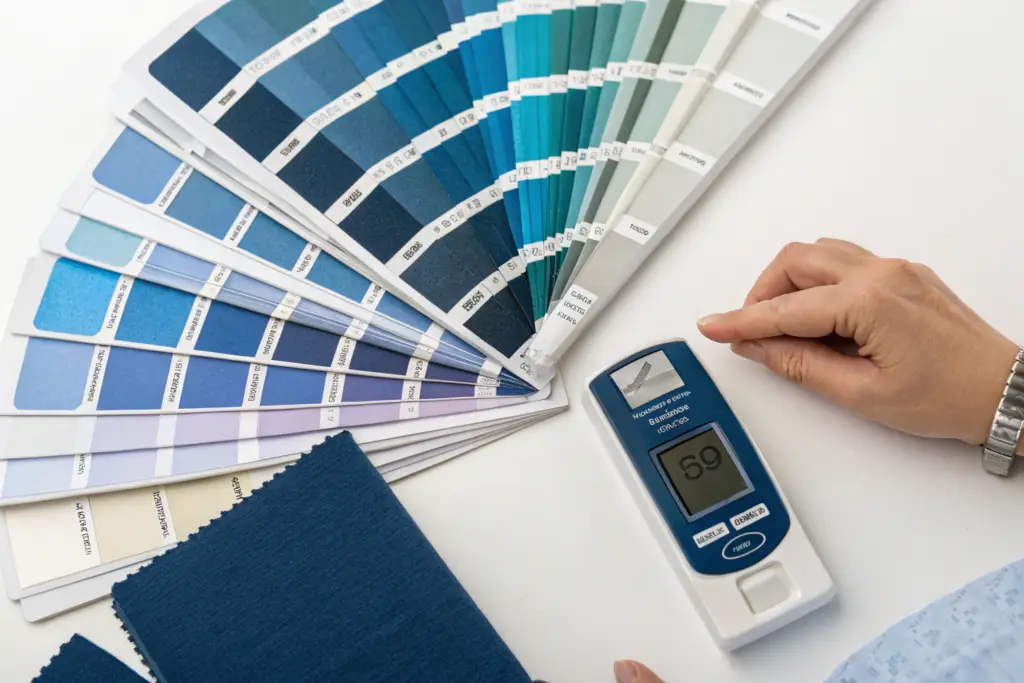
Delta-E is a single number that represents the mathematical distance between two colors. A Delta-E of zero means the colors are identical. A Delta-E of 1.0 is a barely perceptible difference to a trained eye. A Delta-E above 2.5 is a visible failure that will anger a marketing director.
We use a spectrophotometer to read every incoming dye lot against the original approved lab dip standard. For the burger chain’s red, we established a strict tolerance: Delta-E must be below 1.5 under D65 daylight and TL84 store lighting. If a bulk fabric roll reads a Delta-E of 1.8, we do not cut it. We send it back to the dye house for re-work. Many cheaper factories set the tolerance at 2.5 or even ignore it entirely, shipping whatever comes out of the dye bath. For a CEO, this invisible number is a shield against the "shame wall." You should not need to know the spectrophotometer science. But you should know that your factory owns the machine and uses it on every single roll. Last year, a batch of our royal blue pique arrived with a Delta-E of 2.1 against the standard. My QC team held it. The delay was three days. The client, a large corporate uniform program, never even knew there was a problem. They just commented on "how consistent the blue looks compared to last time." That is the point. The crisis should die in the factory, not on the CEO’s desk.
Can We Match Fabric Color to Your Existing Brand Pantone Guide?
Yes, but with an important asterisk. Pantone codes are designed for ink on paper, not dye on cotton. A Pantone color on a coated paper swatch will never look exactly identical on a textured, matte cotton fabric. The surface reflection is different.
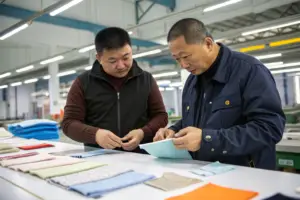
We bridge this gap by creating a physical lab dip process specifically for textile interpretation. You provide the Pantone code or a physical color swatch. Our dyeing partner creates three small fabric swatches: one exact match attempt, one slightly lighter, one slightly heavier in tone. We ship these physical samples to you. The CEO or the brand director touches them, takes them outside into natural light, checks them under office fluorescent light. A physical lab dip is an empirical object. A JPEG on a screen is not. For a software company CEO ordering branded hoodies in a specific "Slack purple," the JPEG looked perfect. The lab dip under natural light had a slightly brown undertone. We caught it, adjusted the red/blue dye ratio, and re-submitted until the physical match was perfect. The CEO trusted us because we did not just say "yes, we can do Pantone." We showed the messy, iterative, physical reality of textile dyeing before cutting 2,000 hoodies. A CEO respects that level of honest, pre-emptive problem-solving.
Why Do Busy CEOs Hate Managing Multiple Supplier Contacts?
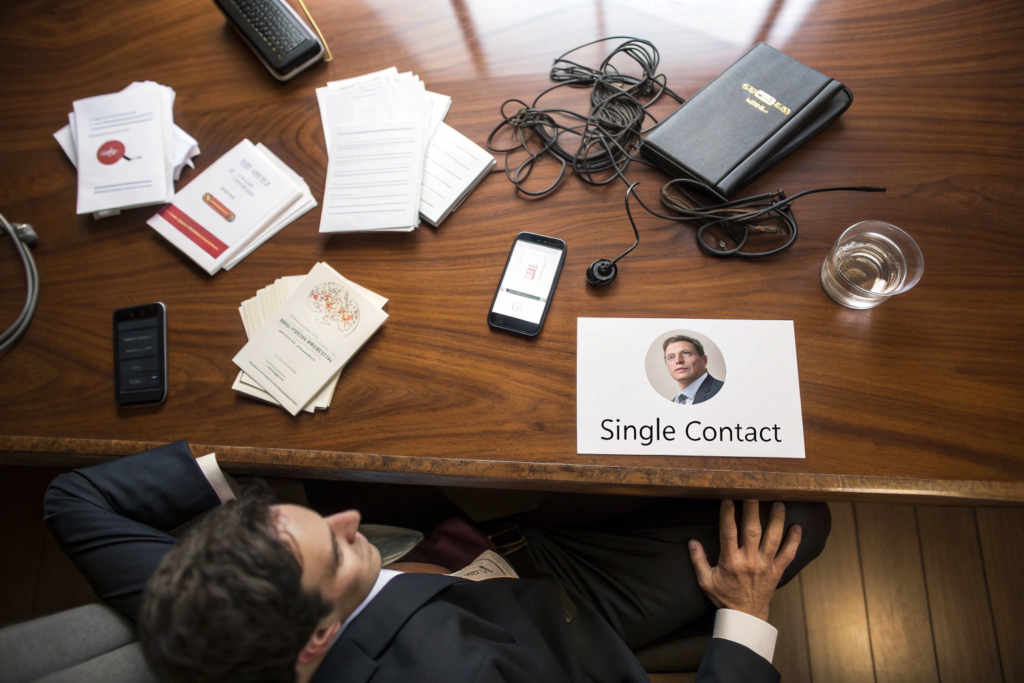
In 2022, a CEO of a wellness brand in Colorado nearly cancelled her entire merchandise line. She was not upset about the product quality. She was exhausted by the process. She had six different numbers on her phone: a fabric guy, a trim guy, an embroidery subcontractor, a shipping agent, a customs broker, and the initial sales rep who had gone silent after the order was placed. When a zipper broke on a sample, she played text ping-pong between three people, none of whom took ownership. She told me, "I don't want six partners. I want one throat to choke." That phrase is aggressive, but it captures the executive need for radical accountability.
Time is the CEO’s most finite resource. Every minute spent resolving a supplier’s internal communication breakdown is a minute stolen from strategy, sales, and leadership. The single-point-of-contact model is not just a customer service perk; it is a structural commitment that aligns with how top-level executives operate.
How Does the RACI Model Apply to Custom Apparel Production?
In business management, RACI stands for Responsible, Accountable, Consulted, and Informed. In a bad supply chain, the client becomes the default "Responsible" person for coordinating everything. In a trusted partnership, the factory takes the "Accountable" role.
At Shanghai Fumao, every CEO client is assigned one dedicated Business Director, like Elaine. Elaine is not a chatbot. She is a senior supply chain professional. When you send her a brief for a custom logo jacket, she becomes internally Accountable for the entire project. She consults the pattern maker, the fabric sourcing desk, the embroidery digitizer, and the logistics coordinator. You are Informed with a single weekly update, usually a 60-second video showing your goods on the production floor. You are not playing project manager for six strangers. In the case of the Colorado wellness CEO, we onboarded her complete uniform program: yoga pants, zip-up jackets, and sweat-wicking tees. She sent one email with her logo file and a mood board. Elaine sent back a consolidated tech pack, a single invoice with all costs broken down clearly, and a Gantt chart with three check-in points. The CEO texted me after delivery: "I felt like I was your only client." That level of curated attention scales trust. It removes the "supplier noise" from the CEO’s mental bandwidth.
Can a Single Contact Handle Complex Technical and Logistics Issues?
A fair question is whether a single point of contact becomes a bottleneck. It does not if they are empowered and experienced, rather than just a forwarding messenger. A good account director has enough technical knowledge to answer 80% of questions instantly and the authority to pull in a specialist for the other 20% within hours.
We hire our client-facing directors with a minimum of ten years in garment manufacturing. They understand thread tension, container loading, and customs HS codes. For a tech CEO in Austin who ordered 1,000 custom-branded softshell jackets for a company offsite, a critical zipper pull color issue came up. The original metallic grey pull was out of stock globally. Elaine did not just email the problem and wait. She simultaneously sourced three alternative YKK zipper pull colors from our inventory, took a phone photo of them against the jacket fabric, and sent a two-line email with the options and her recommendation. The CEO replied from his car in 30 seconds: "Option B." The production did not miss a beat. If a different factory had sent a generic "zipper delay" email from an info@ email address, the CEO would have had to dig into the supply chain himself. The single-contact model transforms the supplier from a remote vendor into a trusted internal department of the CEO’s own company.
Is DDP Delivery the Only Way to Avoid Hidden Import Costs?
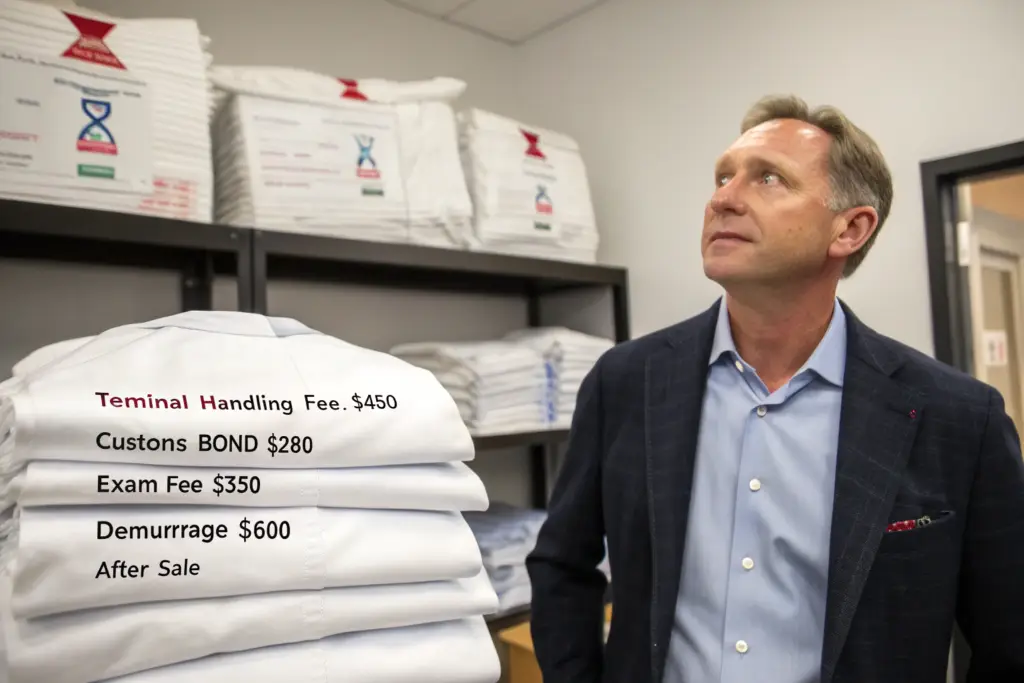
A biotech CEO in San Diego ordered 500 custom lab coats embroidered with his company’s DNA helix logo. He got a great unit price from a factory he found online. The goods arrived at the port of Los Angeles. Then came the "arrival notice" from a freight forwarder he had never heard of. Terminal handling fee: $450. Customs bond: $280. Exam fee: $350. Demurrage because he did not clear it fast enough: $600. The final cost was 40% higher than he had budgeted. He told me he felt scammed, not because the factory lied, but because they did not tell him about the "after-sale" costs. He was a genius in biology, not in Incoterms.
CEOs want a single, final price that matches the bank transfer exactly. They do not want a "logistics surprise" that blindsides their finance controller. Delivered Duty Paid shipping is the mechanism that transfers the entire logistics headache from the brand owner to the manufacturer.
What Hidden Fees Do FOB Shipping Quotes Typically Conceal?
FOB (Free On Board) is the most common "headline price" you will see on a marketplace. It sounds cheap because it only covers the journey from the factory floor to the ship’s rail in Shanghai. Everything after that is your problem.
Here is a breakdown of what a typical FOB quote hides versus what our DDP service covers:
| Cost Category | FOB (Your Responsibility) | DDP (Shanghai Fumao Responsibility) |
|---|---|---|
| Ocean Freight | You pay the shipping line | Included in the unit price |
| Insurance | You pay or risk loss | Included via our marine cargo policy |
| US Customs Bond | You must purchase | Handled by our broker |
| Import Duties & Tariffs | You pay at port | Calculated and paid by us |
| Destination Port Fees | Unpredictable, you pay | Paid by our forwarder |
| Last-Mile Trucking | You arrange separately | Arranged door-to-door |
For the San Diego biotech CEO, all the hidden fees he paid were standard FOB destination charges. When he migrated his order to Shanghai Fumao, I gave him one DDP price per lab coat. That price was higher than the raw FOB factory price he originally paid, obviously, because it included the real costs of compliance and delivery. But the final invoice matched the quote to the penny. No phone calls from angry freight forwarders. No demurrage. He told me the "extra" cost was cheaper than his lost time and the ulcer-inducing stress. For a CEO, a predictable all-in price is far more valuable than a cheap fake price that balloons out of control.
Does DDP Shipping Also Speed Up the Overall Lead Time?
Yes, paradoxically, by removing friction points. When a shipment is FOB, there is a handover gap at the port. The factory does not care once the container is on the water. The buyer’s forwarder often spends days collecting correct paperwork. A missing signature or an incorrect HS code adds a week of delay.
Because we operate DDP, the logistics chain is vertically controlled. Our forwarder has a standing instruction to pre-clear customs while the ship is still at sea. The paperwork is filed 48 hours before the vessel docks. When the San Diego lab coats shipped, the container moved from the port to the client’s receiving dock in 4 days after vessel arrival. The previous FOB shipment had taken 12 days to clear the same port. This speed-to-market advantage is critical for CEOs planning a product launch, a company retreat, or a seasonal uniform refresh. DDP is not just a financial safety net; it is a time-compression tool. It removes the waiting days where nobody takes ownership of a floating container. We own the container from our loading bay to your warehouse door. That singular ownership compresses the timeline and keeps your schedule intact.
Conclusion
CEOs trust Shanghai Fumao for custom logo apparel because we solve the problems that wake them up at 3 a.m. Not the theoretical problems, but the specific, expensive nightmares: the logo that puckers after three washes, the "company red" that turns orange on the next order, the six different phone numbers that no one answers, and the port invoice that blows the budget. We have engineered the entire process, from stitch density and backing material to spectrophotometer color matching and DDP logistics, around the psychology of a leader who simply needs the uniform to be a silent, flawless asset, not a constant project. A CEO’s brand is their legacy. Every employee wearing that logo is a mobile billboard for their competence. When that billboard looks crisp, consistent, and premium, trust in the leadership grows. When it looks cheap or inconsistent, that trust erodes.
We treat your logo like it is our own company crest. That is not a marketing slogan. It is a mechanical and procedural commitment evidenced by permanent backing, color delta-E tolerance enforcement, RACI-model accountability, and locked-in all-inclusive delivery. You run your company. Let us run the uniform supply chain so that every single piece that arrives reinforces the quality you spent decades building. If you want to experience the relief of a single predictable cost, a single accountable expert, and a logo that stays flawless for the lifetime of the garment, reach out to our Business Director, Elaine, at elaine@fumaoclothing.com. Send her your logo and let her show you how we translate a JPEG into a physical badge of trust.