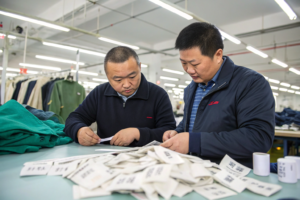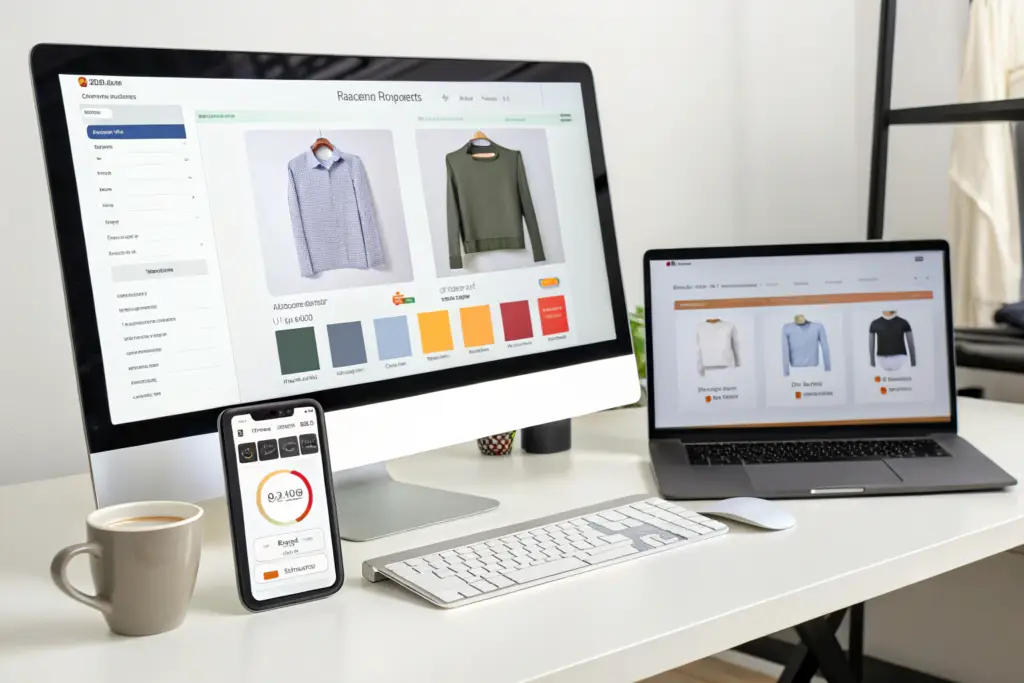
The deposit is paid. The Purchase Order is signed. And then... the black hole opens. You email the sales rep: "How is my order looking?" Three days later: "Production proceeding normally." What does that even mean? You are 7,000 miles away. Your entire season's inventory is in the hands of people you have never met. That feeling of helplessness is what keeps brand owners up at night. I heard from a buyer in Atlanta who had a 12,000 unit order of women's wear dresses. The factory kept saying "on schedule." When the ship date arrived, the factory admitted they were only 60% packed. The container sailed half empty. She lost $80,000 in sales for a key retail weekend.
Tracking your order after production starts should not rely on email ping-pong. At Fumao, we provide a structured visibility protocol that includes weekly live photo reports from the cutting table and sewing floor, milestone alerts when fabric hits specific stages, and a shared digital production calendar. You see exactly what we see.
Transparency is not a "nice to have." It is a risk management tool. At Shanghai Fumao, we treat your order like an open book. Our Project Manager model exists precisely because we know that communication efficiency is the difference between a smooth launch and a cash flow crisis. Let me walk you through exactly how you can track your garment order from the first cut of fabric to the container seal, without having to ask "What's happening?" every three days.
What Weekly Visual Updates Should You Expect from Your Factory?
Words in an email are cheap. "We are cutting now" could mean they cut the sample yesterday and the bulk is still sitting in a warehouse. You need visual proof. Not polished marketing photos, but raw, candid shots from the factory floor that show the actual fabric and trims for your order.
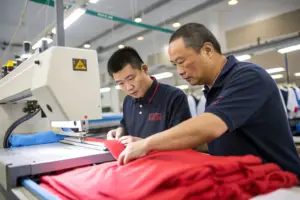
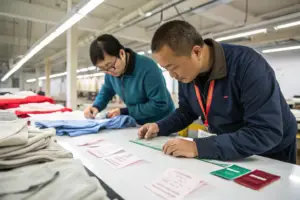
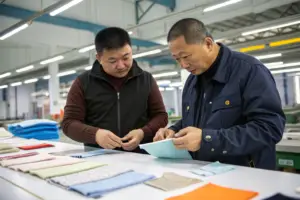
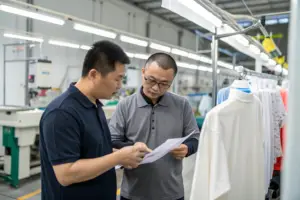
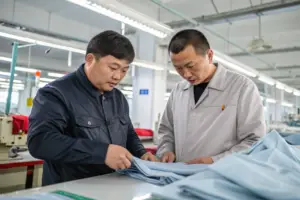
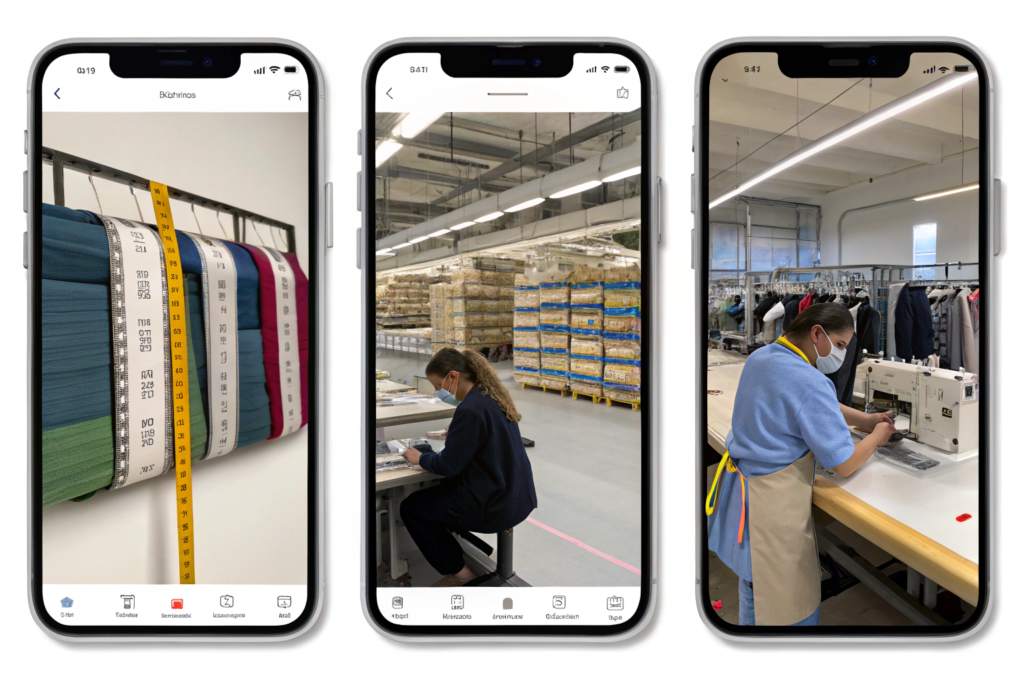
Every Tuesday, your dedicated Project Manager at Fumao sends a "Live from the Floor" email. This contains 6-10 candid smartphone photos showing your specific production batch. You see the roll labels on the fabric being cut, the bundles on the sewing line with your trim card attached, and the finished goods being pressed.
This is not an automated camera feed. It is a human being walking the line with a phone. I remember a project for a men's wear brand where the client noticed in a Tuesday photo that the pocket placement on a woven shirt looked slightly lower than the approved sample. They zoomed in on the photo, measured the pixels against the placket, and flagged it. We checked the physical garment. The pocket was off by half an inch. We corrected the marker on the spot, saving 2,000 units from being sewn incorrectly. That catch happened because the client had eyes on the floor. That is the power of visual tracking.
How Does a "Live from the Floor" Photo Differ from a Staged Sample Photo?
A staged sample photo is taken in a lightbox. Everything is perfect. A "Live from the Floor" photo is taken under fluorescent factory lights with a phone. It shows the reality. You might see a loose thread on the floor or a stack of fabric in the background. That is the point. It is verifiable.
Here is what you should look for in these weekly photos:
- The Trim Card: Every bundle of cut pieces on the sewing line should have a paper "trim card" attached. This card lists the style number, size, and color. If you zoom in, you can verify it matches your PO.
- The Fabric Roll Label: When we show cutting, we photograph the end of the fabric roll with the mill label visible. This proves we are using the correct lot and shade.
- The Line Layout: You can see if the line is full of your apparel or if it looks sparse (which might indicate delays).
This practice aligns with modern supply chain visibility best practices. It eliminates the "trust me" dynamic and replaces it with "here is the evidence."
What Should You Look for in a Cutting Table Photo?
The cutting table photo is the most important update you will receive in the first 30 days. This is where the fabric becomes pieces. Once cut, mistakes are expensive to fix.
When you receive a cutting table photo, look for three things:
- Marker Paper on Top: There should be a long sheet of paper covering the fabric stack. This is the marker. It has the pattern outlines printed on it. A clean marker means precise cutting.
- Fabric Alignment: Look at the edge of the stack. Is it neat and straight? If the edges are jagged or wavy, the spreading machine was not tensioned correctly. This can cause twisted seams later.
- Shade Banding Stickers: If the order uses multiple rolls of fabric, each panel should have a small numbered sticker indicating which roll it came from. This ensures that all parts of a single garment come from the same dye lot.
We have had clients who use these photos to update their own internal teams. The marketing manager sees the photo of the cut panels and knows it is safe to schedule the product photoshoot for six weeks from now. This kind of production tracking synchronizes the entire business.
What Digital Tools and Platforms Do We Use for Order Tracking?
Email is a terrible project management tool. Attachments get lost. Threads get buried. "Reply All" becomes a nightmare. For complex apparel orders with multiple SKUs, colors, and sizes, you need a single source of truth. You need a place where the schedule lives and breathes.
Fumao uses a combination of cloud-based spreadsheets and instant messaging platforms (WeChat for Business) to keep clients informed. You receive a link to a secure, view-only Production Dashboard that updates in real-time as major milestones are completed. This dashboard tracks the status of fabric, trims, sewing output, and packing.
This is not a complex ERP system you need to learn. It is a simple grid. Rows are your SKUs (e.g., Style #101 - Blue - Medium). Columns are the production stages. When a stage is complete, the Project Manager updates the cell from "Pending" to "Complete." You can check it at 3:00 AM your time without waiting for an email. For clients who prefer mobile, we use WeChat. It allows for instant voice memos, quick video clips of fabric draping, and photo sharing. This dual approach—structured dashboard for data, WeChat for conversation—covers all the bases of digital supply chain management.
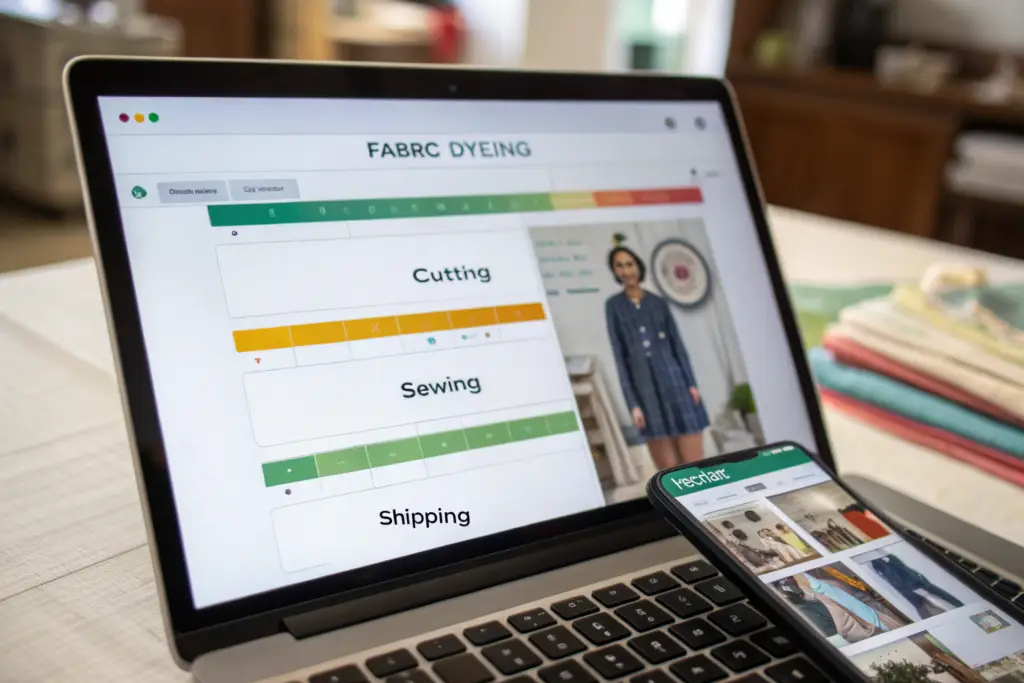
Time zones kill productivity. When you say "Next Friday," do you mean Friday in New York or Friday in Shanghai? A shared digital calendar removes this ambiguity entirely.
At the start of production, our Project Manager creates a shared Google Calendar or Outlook Calendar invite for key milestone dates:
- Lab Dip Approval Deadline
- Fabric In-House Date
- Cutting Start Date
- Sewing Completion Date
- Ex-Factory Date (Container Loading)
These dates are visible to both teams. If a date shifts by even one day, the calendar invite is updated with a note explaining why. For example: "Fabric arrival delayed 2 days due to port congestion in Ningbo. New Cutting Start Date: Oct 14."
This transparency allows large company buyers and distributors to manage their own warehouse labor schedules and marketing calendars. It prevents the surprise of "Oh, the goods are arriving next week? I have no staff to unload!"
What Information Is Included in the Weekly Written Summary?
While photos are great, numbers tell the story. Every weekly update from our Project Manager includes a brief written summary with specific data points.
A typical weekly summary for a men's wear shirt order looks like this:
| Metric | This Week's Status | Notes |
|---|---|---|
| Fabric Cutting | 100% Complete | 8,500 panels cut. Yield: 98% efficiency. |
| Sewing Output | 3,200 units finished | Line #3 running at 800 units/day. On target. |
| Quality Audit | AQL 1.5 Passed | In-line check of collars shows 99% first-quality. |
| Trims Inventory | Buttons: OK. Labels: Low. | Care label order arriving tomorrow. No impact. |
| Projected Ship Date | Nov 10 (On Schedule) | Container booking confirmed. |
This summary takes the Project Manager 15 minutes to write. It saves the client 2 hours of anxiety and email writing. This is the B2B service standard that we believe should be normal in apparel manufacturing.
How Do We Track Trims and Accessories Separately from Fabric?
You can have 10,000 yards of perfect fabric, but if the customizable logo zipper pulls are stuck in customs, you have nothing to ship. Trims are the forgotten stepchild of production tracking. Many factories track fabric meticulously but treat trims as an afterthought.
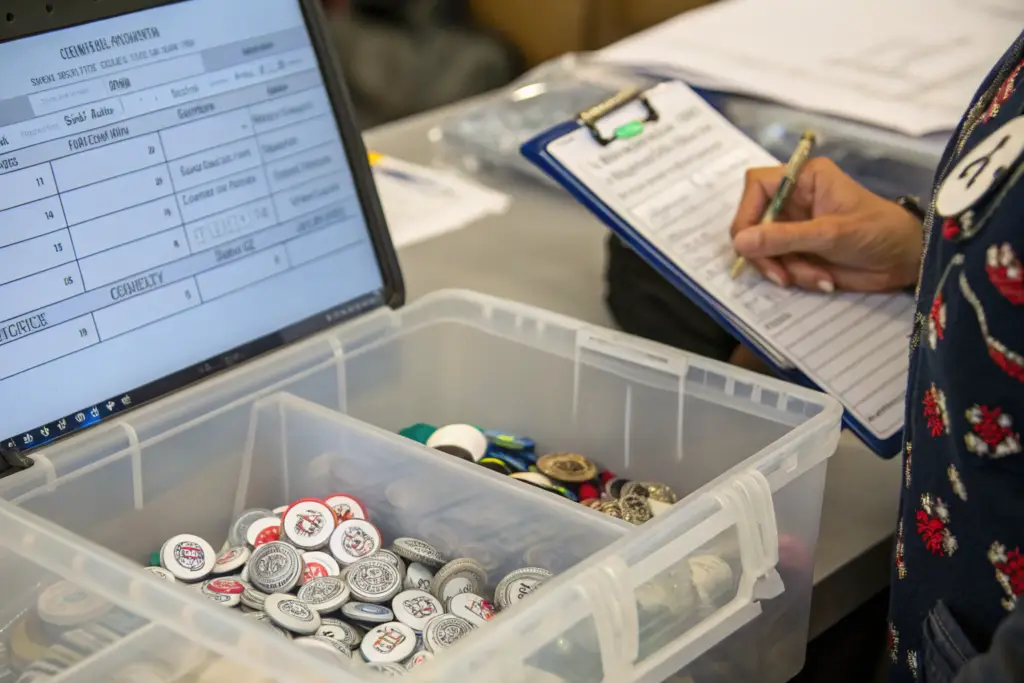
At Fumao, trims are tracked on a separate but parallel timeline. Our Project Manager maintains a "Trim Tracker" spreadsheet that lists every component: main labels, care labels, hang tags, buttons, zippers, and thread. Each line item has a PO date, an expected delivery date, and a "Received" status.
I recall a near-disaster with a kids' wear order. The brand had a specific requirement for enamel buttons with their logo. The button vendor was in a different city. Our Trim Tracker showed the buttons were due to arrive on October 1st. On October 3rd, they were not here. The Project Manager flagged it immediately. She called the vendor. The vendor had lost the purchase order. Because we caught it with a 10-day buffer before sewing started, we were able to rush a new batch via express courier. The buttons arrived on October 8th. Sewing started on October 9th. The shipment sailed on time. Without that separate trim tracking, the factory would have cut the fabric and then realized the buttons were missing, leaving 5,000 units of clothes unfinished for two weeks.
What Happens When a Trim Component Is Delayed?
Delays happen. The key is mitigation. Our Trim Tracker uses a color-coded system:
- Green: Received and inspected.
- Yellow: In transit (tracking number provided).
- Red: Overdue (action required).
If an item goes "Red," the Project Manager has a specific escalation protocol:
- Day 1 of Delay: Contact vendor for revised delivery date. Notify client if the delay threatens the critical path (usually the sewing start date).
- Day 3 of Delay: Source alternative local vendor for a stop-gap supply if the item is generic (e.g., black thread). For branded items, we explore splitting the shipment: air freight a partial quantity to start sewing, sea freight the remainder.
- Day 5 of Delay: If no resolution, we adjust the production schedule and inform the client of the new ex-factory date.
This proactive approach to inventory management in manufacturing ensures that a $0.05 missing label does not hold up a $50,000 shipment.
How Are Custom Labels Verified Before Being Sewn In?
Labels are a legal requirement and a branding element. A misspelled care instruction or a wrong fiber content can get your shipment seized by US Customs.
Before any label is sewn into a garment, our Project Manager performs a "Label Audit." This involves:
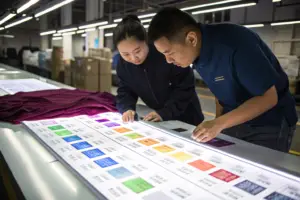
- Artwork Comparison: Placing the bulk label next to the approved PDF artwork under a magnifying glass.
- Content Verification: Checking that the fiber content (e.g., "100% Organic Cotton") matches the mill certificate and the GOTS certification.
- Tracking Number Check: Ensuring the RN (Registered Identification Number) or CA (Care Label) number is correct for your brand.
We take a photo of this audit and include it in the weekly update. For clients sourcing men's wear or kids' wear with specific compliance needs, this photo is gold. It proves due diligence. It protects against the pain point of falsified certificates or documentation errors.
How Does Tracking Continue Through DDP Shipping and US Customs?
The garment is finished. It is in a carton. But it is not yours yet. The journey from our loading dock to your warehouse is where many tracking systems go dark. You get a Bill of Lading number and you are left to refresh the shipping line website, trying to decipher if "Discharged" means it is on a truck or sitting in a pile of 5,000 containers.
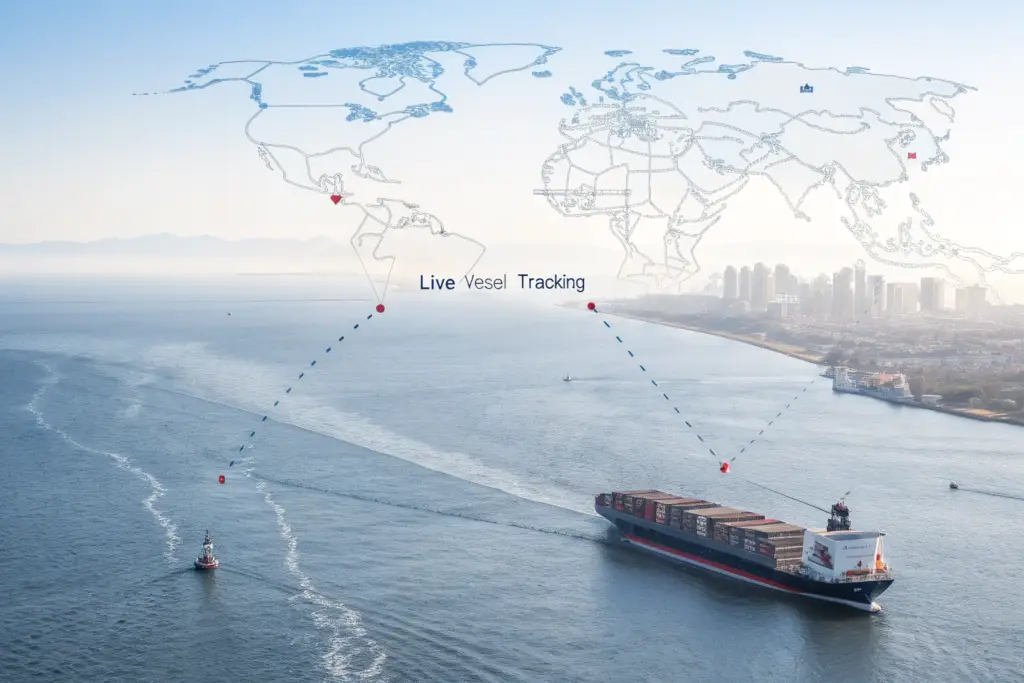
With our DDP shipping model, tracking does not stop at the factory gate. We provide end-to-end visibility through our freight forwarder's portal. You receive the vessel name, voyage number, and a live tracking link for the ocean transit. Once the container hits the port, you receive updates on Customs clearance status and the final trucking delivery appointment.
This is the final piece of the reliable delivery puzzle. For DDP mode shipments, we are financially responsible for the goods until they are signed for at your door. Therefore, our logistics team monitors the container like a hawk. They know the exact cut-off times for port free days. They pre-clear Customs electronically while the ship is still in the Pacific Ocean. This is why our clients rarely face the delayed shipments and demurrage fees that plague FOB buyers.
What Information Do You Receive During Ocean Transit?
Once the container is sealed and on the vessel, the waiting begins. But you do not wait in the dark. Here is the standard information flow for a Fumao DDP shipment:
| Milestone | Information Provided | Method |
|---|---|---|
| Vessel Departure | Vessel Name / Voyage Number / ETA Los Angeles | Email with Tracking Link |
| Mid-Transit (Day 10) | Vessel Position Map (Screenshot) | WeChat / Email |
| 2 Days Before Arrival | ISF / Entry Summary Filed Confirmation | |
| Day of Arrival | Customs Clearance Status (Hold or Release) | Email (Immediate) |
| Truck Pickup | Carrier Name / PRO Number / Delivery Appointment |
This level of detail allows you to plan your receiving team's schedule. You know the truck is coming on Thursday between 9 AM and 12 PM. You are not surprised by a phone call from a driver who is lost in your parking lot. This is the essence of global logistics visibility.
How Are Customs Exams Handled in the Tracking Process?
A Customs exam is the biggest variable in importing. It can take 3 days or 3 weeks. If you are tracking on your own, you just see "Customs Hold" and panic. Our system demystifies the process.
We classify exams into three types and communicate the likely delay:
- VACIS / X-Ray Exam: Non-intrusive. Usually cleared in 1-2 days. Low impact.
- Tailgate Exam: They open the back of the container and look at the first few cartons. Usually cleared in 3-5 days. Medium impact.
- Intensive Exam: They pull the container to a Centralized Examination Station (CES) and unload everything. This is a 7-14 day delay.
If an exam occurs, our Project Manager sends an immediate notification with the "Exam Type" and the "Estimated Release Date." We also provide the documentation required by CBP to expedite the release, such as the fabric mill certificates and the packing list. This transparency prevents the inefficient communication that often occurs when a shipment gets stuck.
Conclusion
Tracking your order after production starts should not feel like you are shouting into a void. It should feel like you have a window into the factory floor and a partner who is watching the container every mile of the way. The tools and processes we use at Shanghai Fumao—the weekly live photos, the digital production calendar, the Trim Tracker, and the DDP shipment visibility—are all designed to replace anxiety with actionable information.
When you can see the fabric being cut, the seams being sewn, and the vessel crossing the ocean, you can make better business decisions. You can schedule your marketing with confidence. You can manage your warehouse labor efficiently. You can sleep at night. The case studies we have seen, from the Atlanta brand that lost $80,000 due to vague updates to the menswear brand that caught a pocket placement error from a Tuesday photo, all point to the same conclusion: visibility is not just a convenience; it is a competitive advantage.
We built our Project Manager model and our tracking protocols specifically to address the pain points of US buyers—the silence, the delays, the falsified updates. At Shanghai Fumao, we want you to know as much about your order's status as we do. It is the only way to build a B2B partnership that lasts beyond a single season.
If you are tired of chasing answers and want to experience true production transparency, let's discuss how our tracking system can support your next collection of men's wear, women's wear, or kids' wear.
Please reach out to our Business Director, Elaine, for a demonstration of our Production Dashboard and weekly reporting format. Email Elaine at: elaine@fumaoclothing.com.