Here is a harsh truth I learned from a buyer in Seattle last year. She spent eighteen months developing a beautiful line of women's wear made from recycled ocean plastic. The story was perfect. The branding was on point. The pre-orders from boutiques were strong. Then the fabric supplier in another country had a "production issue." The delivery date slipped by nine weeks. By the time the sustainable clothing arrived, the marketing campaign had expired. The boutiques had filled their racks with other brands. Her "eco-friendly" collection ended up in a clearance sale, killing her margins and her morale.
Sourcing sustainable clothing with guaranteed delivery requires a dual focus: verifying the authenticity of eco-certifications AND ensuring the factory has the supply chain discipline to meet deadlines. At Fumao, we combine certified sustainable material sourcing with our "Production Upon Sample Approval" workflow. This means your organic cotton or recycled polyester order is not just ethical; it is punctual.
Sustainability is no longer a niche marketing angle. It is becoming a baseline expectation for North America and Europe consumers. But "green" apparel that arrives late is just expensive dead stock. At Shanghai Fumao, we have spent the last three years building a network of certified mills that can deliver eco-friendly fabric without the endless delays that plague new supply chains. Let me show you exactly how to navigate this space without getting burned by empty promises.
What Eco-Friendly Fabric Certifications Should US Buyers Trust?
Walk through any fabric market in Asia, and everyone will tell you their polyester is "recycled" and their cotton is "organic." Words are cheap. Paper certificates can be photoshopped. As a company owner, you need to know which logos actually carry legal weight and third-party verification. Relying on the wrong certification can get you fined for greenwashing and damage your brand reputation permanently.
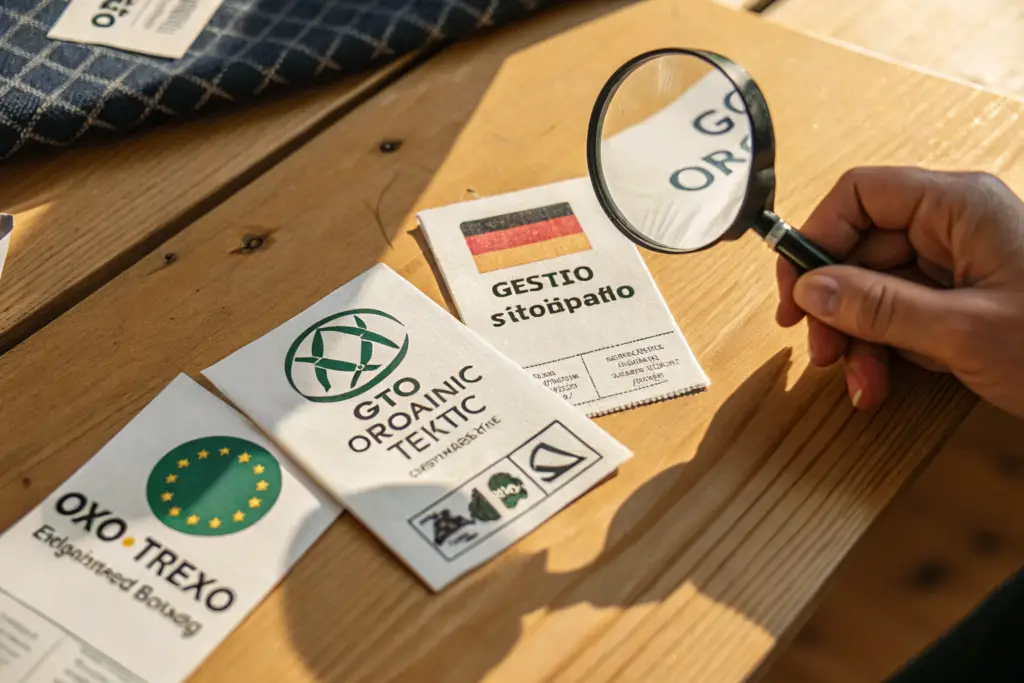
The most trusted certifications for the US market are GOTS (Global Organic Textile Standard) for organic fibers, GRS (Global Recycled Standard) for recycled content, and OEKO-TEX Standard 100 for chemical safety. These standards require annual audits of the entire supply chain, from the farm or recycling facility to the finished garment.
Last year, a men's wear client wanted to launch a line of "100% Organic Cotton" T-shirts. They had a quote from a factory in India offering a very low price. Before they placed the order, we helped them verify the GOTS certificate number on the official GOTS public database. The certificate had expired six months earlier. The factory was still using the logo illegally. Had the client shipped those clothes to the US with a GOTS hangtag, they could have faced a customs hold and a fine. We helped them switch production to our facility, where we sourced from a GOTS-certified mill in Jiangsu with a valid, active scope certificate.
How Can You Verify a Supplier's GOTS or GRS Certification?
You do not need to be a detective, but you do need to do five minutes of homework. Every legitimate GOTS or GRS certificate has a unique license number or scope certificate number printed directly on the document.
Here is the simple verification checklist we use for every eco-friendly fabric order:
- Check the Database: Go to the GOTS or Textile Exchange (for GRS) website. Enter the certificate number. Verify the company name matches the factory name exactly.
- Check the Expiry Date: Certificates are valid for one year. If the date is old, the material is not certified.
- Check the Scope: Look at the "Product Categories" listed on the certificate. A mill might be certified for woven fabric but not for knitwear. If you are making a sweater, the knit certification must be listed.
At Shanghai Fumao, we provide a copy of the mill's valid scope certificate with every pre-production sample. We encourage clients to verify it themselves. Transparency builds trust.
What Is the Difference Between BCI Cotton and GOTS Organic Cotton?
This is a common source of confusion. Better Cotton Initiative (BCI) cotton is not organic cotton. BCI is a mainstream program that teaches farmers to reduce water and pesticide use. It is a good step toward sustainable agriculture, but it allows the use of synthetic pesticides and GMO seeds.
GOTS Organic Cotton prohibits GMO seeds and synthetic pesticides entirely. It also covers the processing stage. This means the dyes and finishes used on the fabric must also be non-toxic.
Here is a comparison table to help you decide which to spec for your apparel brand:
| Feature | BCI Cotton | GOTS Organic Cotton |
|---|---|---|
| GMO Seeds | Allowed | Prohibited |
| Synthetic Pesticides | Reduced Use (IPM) | Prohibited |
| Chemical Dyes/Finishes | Not Regulated | Strictly Regulated (OEKO-TEX level) |
| Traceability | Mass Balance (Mixed) | Physical Segregation Required |
| Cost Premium | Low (5-10%) | Moderate to High (15-30%) |
For a brand making specific eco-friendly claims, GOTS is the only one that provides full supply chain integrity.
How Does Sustainable Sourcing Impact Production Lead Times?
There is a myth that eco-friendly clothing always takes longer to produce. This myth comes from the early days of sustainable fashion when supply chains were fragmented and mills were small. Today, that is no longer true—if you work with the right clothing manufacturer.
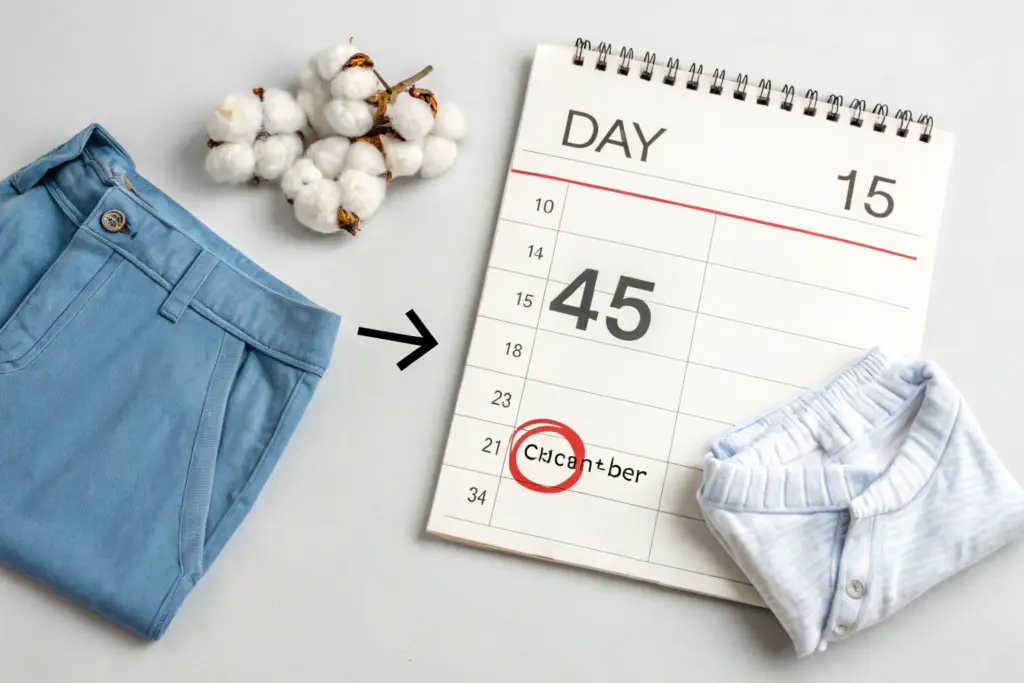
Sustainable sourcing does add time if you are starting from scratch with a new mill. However, by using pre-vetted, GOTS and GRS certified supply chain partners, Fumao maintains standard lead times of 60-75 days. The key is inventory management of certified greige fabrics.
We keep a buffer stock of the most popular sustainable fabric bases: 100% GOTS Organic Cotton Jersey, 50/50 Recycled Polyester/Cotton Fleece, and Recycled Nylon Spandex for activewear. Because these greige rolls are already in our warehouse, we bypass the 3-4 week wait for the mill to spin the yarn. When you approve the lab dip, we just send the roll to the dye house with the eco-friendly dye recipe. This is how we offer competitive pricing and reliable delivery on sustainable orders that match our conventional production speed.
Why Is the Availability of Eco-Friendly Trims a Hidden Delay?
You have the perfect organic fabric. But what about the buttons? The zipper? The thread? If you put a conventional plastic button on an organic cotton shirt, you undermine the entire sustainability story. And worse, sourcing those eco-friendly trims often causes massive delays if not managed proactively.
Eco-friendly trims have longer lead times. A customizable logo button made from Corozo nut (a natural, sustainable alternative to plastic) takes 25 days to produce versus 15 days for a plastic button. Recycled polyester zipper tape takes 20 days.
Our Project Managers address this by:
- Parallel Sourcing: The trim order is placed the same day as the fabric dye order.
- Vendor Consolidation: We use trim suppliers who specialize in sustainable garment accessories and stock common eco-materials.
If you wait until the fabric is ready to think about the trims, you will add three weeks to your delivery date. This is where the Project Manager role becomes essential for guaranteed delivery.
How Do You Balance Cost and Speed with Recycled Polyester?
Recycled Polyester (rPET) is the workhorse of sustainable apparel. It is used in everything from activewear leggings to outerwear puffer jackets. The price of rPET has come down significantly, but it is still 10-15% more expensive than virgin polyester.
The speed issue depends on the color. If you want White or Black rPET, we can get it in 7-10 days. These colors are run continuously at the mill. If you want a specific seasonal shade like "Sage Green" or "Burnt Orange," the dyeing process for rPET is more sensitive. It requires a slightly longer processing time in the dye machine to ensure color uptake is even.
We are transparent about this with our B2B clients. If speed is the absolute priority for a rare style, we recommend choosing a stock color of rPET. If the specific color is non-negotiable, we build in an extra 5-7 days to the timeline. This is the kind of nuanced conversation that helps large company buyers plan accurately.
What Is the Role of DDP Shipping in Sustainable Supply Chains?
Sustainability does not stop at the factory door. How the garment travels from China to the US also has an environmental footprint. But for a busy brand owner, the more immediate concern is: "Will it get here without a customs disaster?" This is where DDP mode intersects with sustainable sourcing.
DDP shipping reduces the carbon footprint of inefficiency. By guaranteeing a single, consolidated shipment that clears customs smoothly, DDP prevents the waste associated with split shipments, air freight emergencies, and returned goods. It is the most reliable way to ensure your sustainable apparel arrives intact and on schedule.
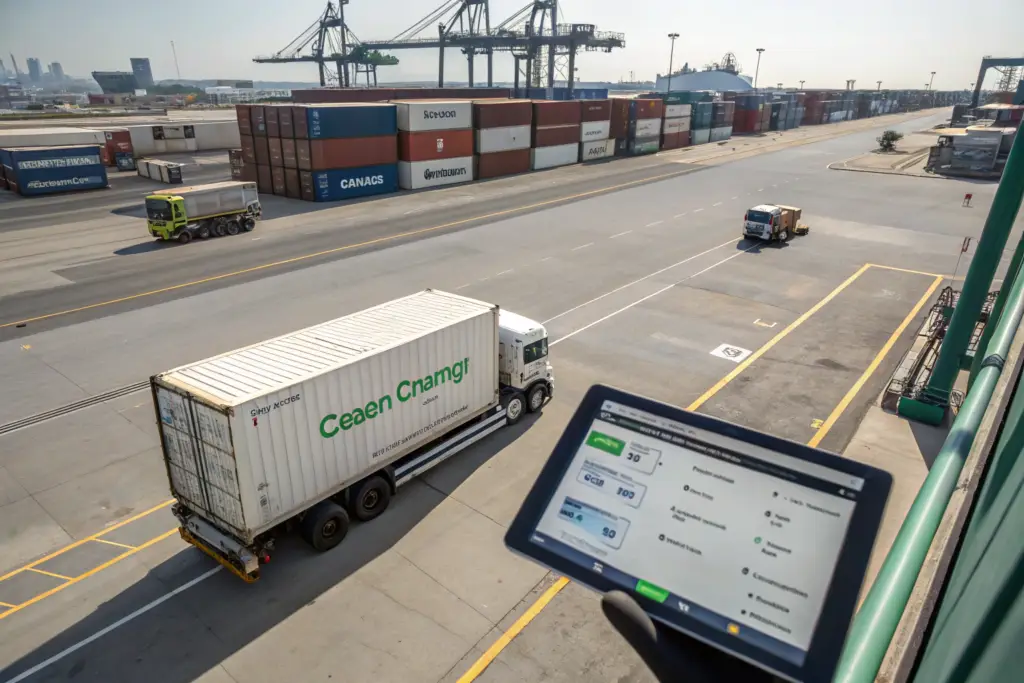
Consider the alternative: FOB shipping with a messy paperwork trail. If a shipment of organic kids' wear gets flagged by CBP because the organic certification is missing, the container sits at the port. The brand panics and air freights a replacement order. Air freight has a carbon footprint roughly 50 times higher than ocean freight. That single act of "saving the season" wipes out any environmental good done by using organic cotton. Our DDP service, managed by our logistics team, ensures the paperwork is pristine. The container moves from vessel to truck seamlessly, arriving at your warehouse without the need for wasteful expediting.
How Can You Avoid Air Freight Emergencies with Sustainable Orders?
Air freight is the enemy of both profit margins and sustainability goals. Yet, it is the most common "solution" when a factory misses the boat. We avoid air freight through two specific tactics related to sustainable orders.
First, Buffer Stock of Labels: Sustainable garments require specific hangtags and care labels (e.g., "GOTS Certified"). If these labels are missing or wrong, the goods cannot ship. We order these 30 days before shipping, not 7 days. We use local vendors near our factory to avoid express courier fees from overseas.
Second, Pre-Clearance Documentation: For DDP shipments, we submit the ISF (Importer Security Filing) and the organic certificates to US Customs before the vessel sails. This allows CBP to review the documentation while the ship is crossing the ocean. By the time the ship docks in Los Angeles, the entry is often already conditionally released.
Here is a timeline comparison showing how we prevent the air freight trap:
| Phase | Reactive Factory (High Risk) | Fumao DDP Process (Low Risk) |
|---|---|---|
| 30 Days Before Sail | Still cutting fabric | Certificates uploaded to CBP |
| 14 Days Before Sail | Rushing to find labels | Container booking confirmed |
| Vessel Departure | Incomplete docs filed | Clean docs filed |
| US Arrival | Customs Hold (5-7 days) | Immediate release for delivery |
This process protects the integrity of your sustainable clothing supply chain.
Does DDP Mode Offer Better Visibility for Ethical Compliance?
Yes. Visibility is the cornerstone of both ethical compliance and delivery guarantees. With DDP, we control the freight forwarder. This means we can provide a single tracking link that shows the garment from our loading bay to your receiving dock.
For clients sourcing women's wear or men's wear with specific ethical requirements, this chain of custody is critical. If an auditor asks, "Where were these goods at all times?", we have the answer. The supply chain transparency provided by a controlled DDP model ensures that the goods were not transshipped through a non-compliant country or mixed with non-certified goods in a third-party warehouse. This level of control is increasingly important for large company buyers who must comply with the Uyghur Forced Labor Prevention Act (UFLPA) and other import regulations.
How Do We Ensure Consistent Quality in Recycled Fabrics?
Recycled fabrics have a reputation problem. In the early days of sustainable fashion, recycled polyester felt scratchy. Recycled cotton was weak and pilled easily. That is no longer the reality with premium suppliers, but the stigma remains. And if a factory uses cheap, low-grade recycled material, the problem is very real.
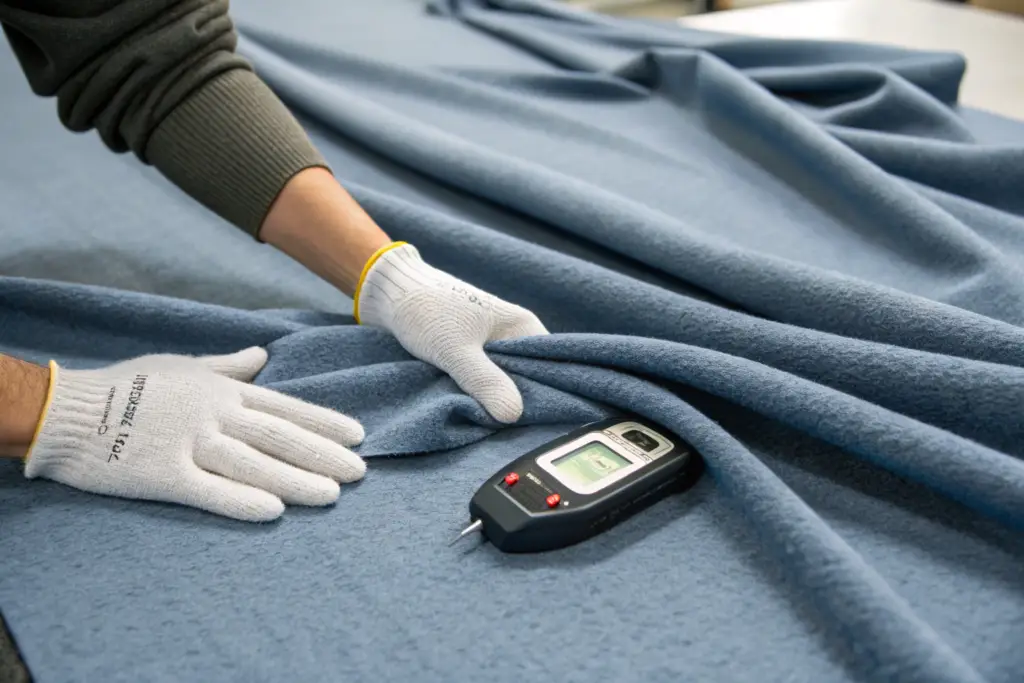
Fumao ensures consistent quality in recycled fabrics by sourcing exclusively from GRS-certified mills that use mechanical or chemical recycling processes designed for apparel. We perform additional lab tests on every batch to verify tensile strength, pilling resistance, and colorfastness match our conventional fabric standards.
A distributor of activewear came to us two years ago after a disaster with recycled leggings. The fabric from their previous supplier was so weak that the seams were tearing out during the first wear. The return rate was 25%. When they moved production to us, we sourced a high-tenacity recycled nylon from a mill that uses a specific textile recycling technology. We tested the elongation and recovery in our lab. The new leggings had a return rate of under 2%. The brand owner was able to confidently market the top quality of their eco-friendly line.
What Tests Do You Run on Recycled Polyester and Nylon?
The testing protocol for recycled synthetics is slightly different than for virgin fibers. We focus on three key areas that are historically weak points.
- Pilling Resistance (ASTM D3512): Recycled fibers can be shorter than virgin fibers. Short fibers stick out of the yarn and tangle into little balls (pills). We run the fabric through a Random Tumble Pilling Tester for 60 minutes. The surface must score a 3.5 or higher (on a scale of 1-5) to pass.
- Seam Slippage (ASTM D434): This tests how easily the fabric tears away from the stitching. Because recycled yarn can sometimes be more brittle, this is a critical test for woven garments like trousers and skirts.
- Colorfastness to Light (AATCC 16): Recycled polyester sometimes fades faster in sunlight. We test it under Xenon arc lamps to ensure it meets the 40-hour standard for apparel.
These tests are not just about quality assurance. They are about ensuring the guaranteed delivery is not undermined by a batch of fabric that fails at the last minute, requiring a re-cut and a delayed shipment.
How Do You Handle Shade Variation in Natural and Recycled Blends?
Natural fibers like organic cotton absorb dye differently than recycled polyester. When you blend them (e.g., a 60% Organic Cotton / 40% Recycled Poly fleece), getting a consistent, solid color across the entire batch is a technical challenge. The cotton drinks the dye quickly. The polyester resists it.
Our dye house specialists use a two-step dyeing process for blends. They dye the polyester portion at high temperature first. Then they cool the bath and dye the cotton portion. This ensures both fibers reach the target shade. We also do a "Full Roll Shading" check. Instead of just checking the end of the roll, we unroll the first three yards and check the color against the middle and the end of the roll. This prevents "tail-to-tail" shading where the color drifts from one end of the fabric roll to the other. This level of detail ensures that the left sleeve matches the right sleeve on every single garment in the order.
Conclusion
Sourcing sustainable clothing is a statement about your brand's values. But a statement means nothing if the product never makes it to the rack on time. The intersection of eco-friendly materials and guaranteed delivery is where most supply chains fail. They either have the green credentials but lack the operational discipline, or they have the speed but rely on cheap, conventional materials.
At Shanghai Fumao, we have worked hard to close this gap. We treat sustainability as a core sourcing competency, not a marketing afterthought. By pre-vetting our GOTS and GRS certified mills, managing the longer lead times of eco-friendly trims, and leveraging our DDP logistics expertise, we provide a path for US brands to do good and do well financially. The case studies from our floor—whether it was the Seattle brand's nine-week delay with another factory or the activewear brand's 25% return rate—prove that the "green premium" is only worth paying if the quality and timing are right.
You should not have to choose between protecting the planet and protecting your cash flow. With the right clothing manufacturer, you can have both. If you are developing a sustainable line of men's wear, women's wear, or kids' wear and you need a partner who treats delivery dates as sacred as organic certifications, we are ready to help.
To discuss your sustainable sourcing requirements and get a realistic production timeline, please contact our Business Director, Elaine. She can walk you through our certified supply chain and show you how we deliver eco-friendly fashion on time, every time. Email Elaine at: elaine@fumaoclothing.com.