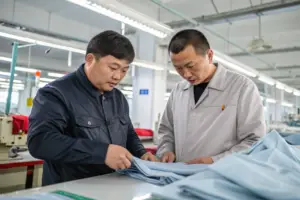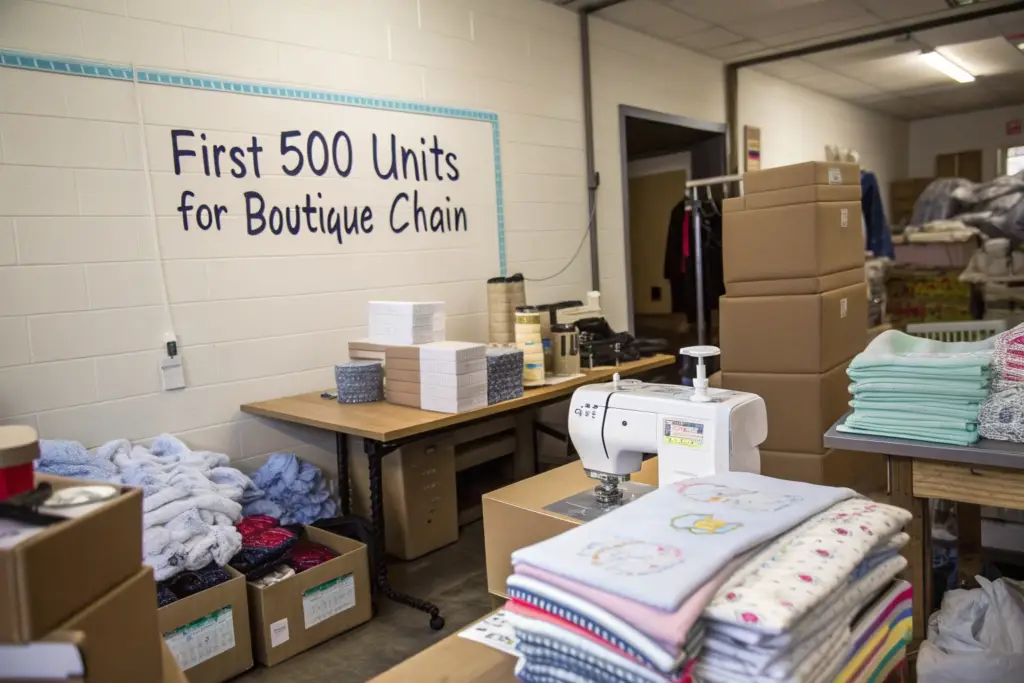
When you started your kids' wear brand, you probably did it out of your garage. Maybe you printed the first few onesies yourself. You sold them on Etsy or at a local market. The margins were great. The customers loved the custom touch. Now you have a problem. A good problem. You landed a wholesale account with a regional boutique chain. They want 500 units of your signature dress in three sizes and two custom colors. Suddenly, your garage operation is a liability. I see this moment happen all the time with the US brands we work with here at Shanghai Fumao. The excitement of the big order turns into a panic about how to actually deliver it.
The most common challenges when scaling a custom kids' wear brand revolve around three core issues: maintaining safety compliance with complex sizing grades, managing the cash flow squeeze of larger fabric orders, and keeping the unique "custom" feel when production volumes increase tenfold. If you do not solve these three points, scaling up will actually make you less profitable than staying small.
Scaling is not just about making more of what you already make. It is about changing how you make it. Kids' wear is the hardest category in apparel to scale because the margin for error is so small. A half-inch mistake on a men's shirt is barely noticeable. A half-inch mistake on a toddler's neckline is a safety recall. Let me walk you through the specific roadblocks I have helped other American brands navigate when they moved from being a small shop to a real player in the wholesale kids' market.
How to Maintain Consistent Sizing and Fit Across Larger Kids' Wear Orders?
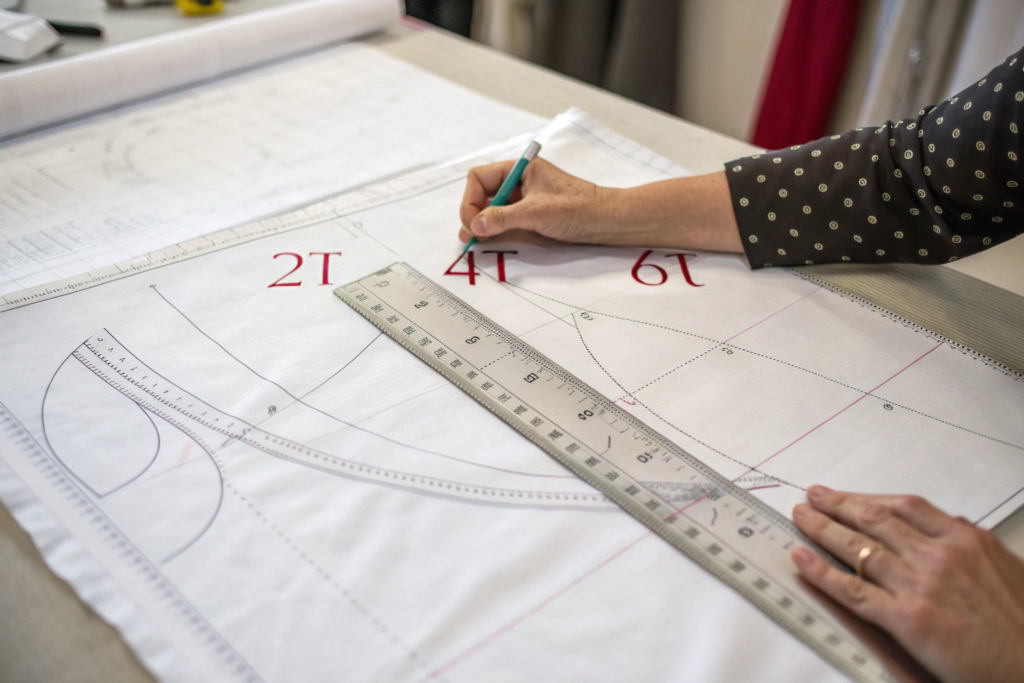
Kids do not grow like adults. That sounds obvious, but it is the root of the biggest scaling headache. An adult size chart is linear. A kid's size chart is a rollercoaster. You have different proportions for infants, toddlers, and tweens. A client of mine from Portland learned this the hard way. She had a bestselling hoodie in sizes 2T to 5T. She simply "graded" the pattern up to a size 12 for her older customers. When the samples arrived, the hood wouldn't fit over the child's head. The 2T head circumference is massive compared to the body. A 12-year-old's head is proportionally smaller. She had to scrap the entire first production run. That mistake cost her about $4,200 in wasted fabric and labor.
Consistent fit during scaling requires a technical "grade rule" library specific to the children's demographic. You cannot rely on the factory's default adult grading. You must provide a size set sample or a detailed measurement chart that accounts for the rapid and non-linear growth phases of children. The factory must also understand the specific compliance rules for drawstrings and flammability that change as the size increases.
Why Do Toddler and Tween Grade Rules Differ So Much?
The body shape changes. A toddler has a round belly and short limbs. A tween is starting to elongate. If you use the same grading percentage between sizes, the garment will distort. Here is a simple comparison we use at Shanghai Fumao to train our pattern makers on US kids' wear.
| Measurement Point | Toddler Grade (2T to 4T) | Tween Grade (8 to 10) | Common Mistake When Scaling |
|---|---|---|---|
| Chest/Bust | +1 inch per size | +2 inches per size | Using the toddler chest grade for tweens makes the shirt too tight. |
| Armhole Depth | +0.25 inch per size | +0.5 inch per size | Failing to drop the armhole results in restricted movement for older kids. |
| Neck Opening | Minimal change (0.25") | Moderate change (0.5") | Over-sizing the toddler neck can create a choking hazard warning from CPSC. |
| Pant Rise | Longer front rise for diaper room | Shorter, more adult-like proportion | Keeping the "diaper room" cut for a size 8 looks baggy and unsellable. |
How to Use "Fit Samples" to Prevent a $5,000 Production Error?
Before you cut 1,000 units of a new size, you need a "Fit Approval Sample." This is non-negotiable. At Shanghai Fumao, we do not just send a size Medium for approval. We send the smallest size and the largest size in the range. This is called a "Jump Size" approval. If the size 2T fits the model and the size 12 fits the model, we can mathematically trust the grades in between. But you must use a real child or a dress form that meets ASTM D6829 standards. Last spring, a client in Austin sent us a pattern graded for a slim fit. The size 8 sample looked great on a slim child. But the size 4 sample wouldn't go over the head of a standard 50th percentile toddler mannequin. Because we caught it at the sample stage, we only lost two days of sewing time instead of two months of production time. The cost of a fit sample is around $150 including shipping. The cost of a container of unsellable inventory is $15,000.
What Are the Safety Compliance Hurdles for Growing Kids' Apparel Lines?
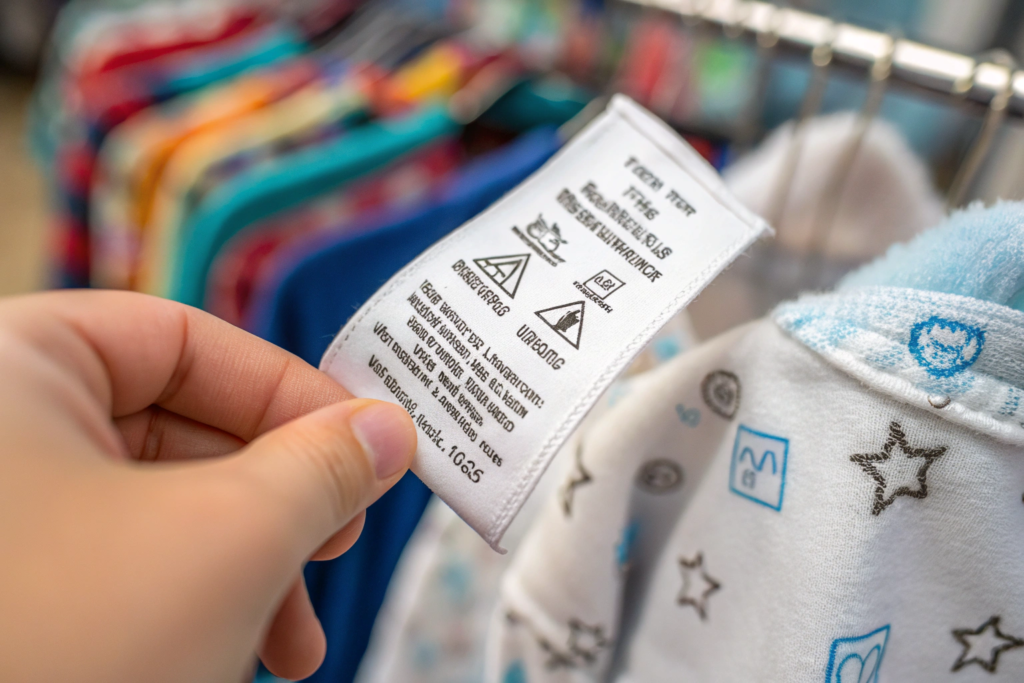
This is where the garage brand dies. When you sell 20 onesies on Instagram, nobody asks for a Children's Product Certificate (CPC). When you sell 2,000 onesies to a wholesale buyer, they will demand it. And if you do not have it, customs will seize the shipment. I have a client from Chicago who makes beautiful bamboo pajamas. She almost lost her entire business because her first supplier used a decorative trim that did not pass flammability testing. The fabric was fine. The thread was not. She had to recall 600 units. That is a hard conversation to have with a boutique owner who has already paid for the order.
Scaling a kids' wear brand means building a compliance infrastructure. You must understand the specific requirements for lead content, phthalates, and flammability based on the garment type. Pajamas have different rules than playwear. The size of the garment also triggers different regulations. A size 12M sleepsack is tested differently than a size 5T nightgown.
What is the Difference Between 16 CFR Part 1610 and 1615/1616?
This is the most confusing part for new brand owners. You need to know which fire safety standard applies. Getting this wrong means your product is misbranded and illegal to sell in the US.
| Regulation | Applies To | Requirement |
|---|---|---|
| 16 CFR Part 1610 | General Wearing Apparel (Playwear, Dresses, Tops) | Must meet Class 1 or 2 flammability. Most normal fabrics pass. |
| 16 CFR Part 1615/1616 | Children's Sleepwear (Sizes 9 months to 14) | Must be flame resistant OR Tight-fitting (with specific label). |
| CPSIA Section 101 | All children's products (Ages 12 and under) | Total Lead Content in surface coating < 90 ppm. |
If you make a loose-fitting bamboo nightgown, it must pass the flame resistance test of 16 CFR Part 1615. That often requires chemical treatment which ruins the hand-feel of bamboo. The workaround is to make it "Tight-Fitting" according to the exact dimensional specs in the regulation and label it: "For child's safety, garment should fit snugly. This garment is not flame resistant." At Shanghai Fumao, we have a specific cut file for "Snug Fit" pajamas just to help brands avoid the expensive flame-resistant testing.
How to Build a Reliable CPC (Children's Product Certificate) Process?
You cannot fake this. You need a third-party lab. When scaling, you should budget for two types of testing.
- Component Testing: You test the fabric, the zipper, the snap, and the print once a year. This is cheaper per order if you use the same materials all year.
- Finished Product Testing: You test the actual sewn garment in the specific color and size. This is required for certain standards like sleepwear.
Here is a workflow we implement for our wholesale clients:
- Step 1: Supplier provides a bill of materials with Oeko-Tex Standard 100 certification for all trims.
- Step 2: We send a pre-production sample to a US-based lab like CPSC-accepted laboratory.
- Step 3: We hold the bulk shipment at the port until the "Pass" report is in hand.
- Step 4: We provide a PDF CPC for you to sign and issue.
This process adds about 10-14 days to your timeline. But it saves you from a CPSC recall that could bankrupt you.
How to Manage Cash Flow and Inventory When Scaling Custom Kids' Wear?
Custom kids' wear is a cash flow killer if you are not careful. Why? Because you have more SKUs than an adult brand. An adult brand sells a shirt in Small, Medium, Large. That is 3 SKUs. A kids' brand sells that same shirt in 2T, 3T, 4T, 5T, 6, 7, 8, 10, 12. That is 9 SKUs. You just tripled your inventory investment before you added a second color. I worked with a brand owner from Denver who had a beautiful design. She wanted to offer it in three colors and all nine sizes. That was 27 SKUs. Her manufacturer (not us at the time) had a minimum order quantity of 200 pieces per color. She was looking at a $45,000 order. She did not have the cash. We had to restructure her entire go-to-market strategy.
Managing cash flow during scaling requires a strategic reduction of SKUs and a negotiation with your factory on "Cut-Make-Trim" (CMT) versus Full Package pricing. You also need to understand the true cost of carrying "dead stock" in kids' sizes that don't sell as fast as the core toddler sizes.
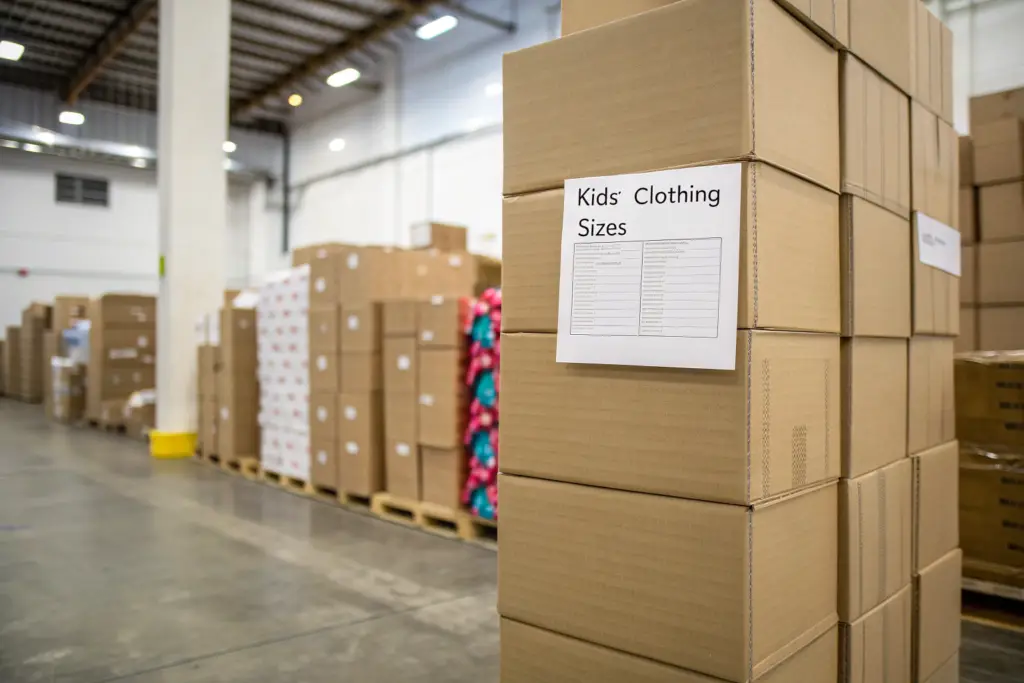
What is the "Toddler Heavy" Inventory Strategy for Cash Preservation?
Look at your sales data. I bet 60-70% of your units sold are in the toddler range (2T-5T). This is because toddlers grow fast and are messy. Parents buy them more clothes. The tween sizes (8-12) sell slower because kids wear uniforms to school or just want hoodies.
The Strategy:
- Core Cut (Toddler 2T-5T): Run these in all 4 sizes. This is where you put your volume.
- Ratio Cut (Youth 6-8): Run these at 50% of the toddler quantity.
- Test Cut (Tween 10-12): Run these at 25% of the toddler quantity.
Here is how this looks in a real purchase order at Shanghai Fumao.
| Size | Quantity Ratio | Why? |
|---|---|---|
| 2T | 1.0x | High demand, quick sell-through. |
| 3T | 1.0x | Core toddler size. |
| 4T | 1.0x | Core toddler size. |
| 5T | 1.0x | End of toddler phase. |
| 6/7 | 0.5x | Kindergarten/1st Grade. Slows down. |
| 8/10/12 | 0.25x | Slowest mover. Sell as a set or bundle. |
This ratio means you buy fewer units in the larger sizes. You might "stock out" of size 10 faster. That is okay. It is better to lose that one sale than to be stuck with 150 units of size 10 you have to liquidate at a loss.
How to Use "Blank" Stock and Custom Printing to Defer Investment?
You do not need to custom cut and sew every single garment to offer a custom look. This is a technique we use for brands targeting the custom logo and school spirit market.
Step 1: Invest in Blank Stock.
We manufacture high-quality blank T-shirts and sweatshirts in basic colors (Navy, Red, Heather Grey) for you. Because these are "open stock" items, the minimum order quantity is lower and the price per unit is lower. You keep this inventory in the USA.
Step 2: Local Embellishment.
When an order comes in for "Sunshine Preschool - 25 Hoodies," you pull 25 blanks and use a local screen printer or embroidery shop.
Step 3: Factory Customization for Volume.
Once the design proves popular and you need 500 pieces, then we do the full custom cut-and-sew with that logo integrated. This shifts your cash flow from "speculative production" to "demand-driven production." This is how we helped a client launch a line of custom camp shirts. They sold the idea first, collected pre-orders, and only then did we cut the fabric. Their cash was not tied up in a warehouse for six months.
How to Preserve "Custom Quality" When Production Volumes Increase?
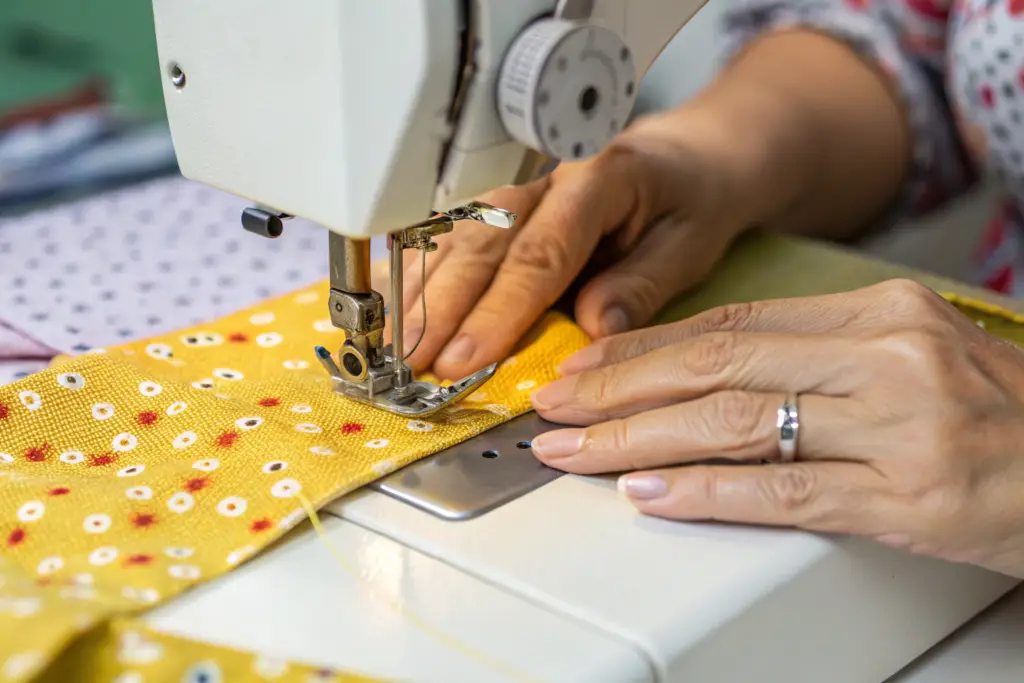
There is a fear I hear from every brand owner: "If I go to a big factory, will my clothes look cheap?" The answer depends entirely on the factory's quality control system and the clarity of your "Quality Standard." The hand-sewn sample you made in your studio has a charm. It has perfect little topstitching. When you scale, the machines are faster. The operators are working on hundreds of units. If you do not have a "Sealed Sample," you will get a different product than what you imagined.
Preserving custom quality at scale is about creating an objective, measurable standard that can be repeated by 50 different sewing operators. It means moving from "I'll know it when I see it" to "Stitch count per inch: 10-12." It also means implementing a third-party or in-line inspection process that catches the 5% error rate before it becomes a 100% return rate.
What is a "Golden Sample" and Why Does It Protect Your Brand?
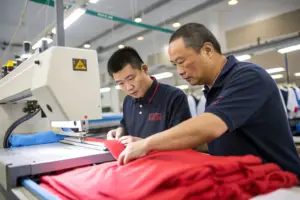
In manufacturing, the "Golden Sample" is the holy grail. It is the physical garment that you, the brand owner, have signed off on. It is kept in a locked cabinet in our factory office. Every single garment that comes off the line is visually compared to this sample by a quality checker.
The Process at Shanghai Fumao:
- Pre-Production Sample (PP Sample): Made with actual bulk fabric. You check fit and construction. You send it back with notes (e.g., "Shorten sleeve by 0.5 inch").
- Counter Sample: We remake it with your corrections. You sign this one.
- Golden Sample: This signed sample is bagged and tagged.
Then, during bulk production, if a line worker sews the collar 1/8th of an inch too wide, it might not be obvious. But if the QC holds it next to the Golden Sample, the difference is clear. We reject that piece on the spot. Without a Golden Sample, the standard drifts. By the end of the 500-piece run, the collar is half an inch wider. That is how "custom quality" disappears.
How to Implement an "Acceptable Quality Limit" (AQL) for Kids' Wear?
Even with a Golden Sample, no production run is 100% perfect. Machines break. Thread tension slips. You need a statistical method to decide if a shipment is acceptable or not. We use the AQL Standard (ISO 2859-1).
For kids' wear, we recommend a stricter standard than adult clothing because children's skin is more sensitive and safety risks are higher.
| Defect Type | Example in Kids' Wear | Recommended AQL Level |
|---|---|---|
| Critical Defect | Sharp needle fragment in garment; Drawstring violation. | 0% Allowed. If 1 unit in 1,000 has this, the whole lot fails. |
| Major Defect | Broken seam on armhole; Staining visible on front; Zipper fails to close. | AQL 1.5 (Stricter than standard 2.5) |
| Minor Defect | Loose thread not trimmed; Slight shade variation inside sleeve. | AQL 4.0 (Standard) |
We use a third-party inspection service to pull a random sample of 200 pieces from a 5,000-piece order. They count the defects. If there are 7 Major Defects in 200 pieces, that exceeds the AQL 1.5 limit. We then sort and repair the entire 5,000 pieces before shipping. It costs us time, but it saves you the reputation hit of sending a faulty dress to a mom who bought it for her daughter's birthday.
Conclusion
Scaling a custom kids' wear brand is a battle on three fronts: technical fit, legal compliance, and financial discipline. The fit issues will kill your reviews if the grade rules do not match the actual bodies of children. The compliance issues will get your shipment stopped at the port if you forget the drawstring rules or CPC requirements. The inventory issues will strangle your cash flow if you try to offer every size in every color right out of the gate.
The brands that succeed in this space are the ones who treat the back-end operations as seriously as they treat the front-end design. They understand that a beautiful Instagram feed means nothing if the size 4 dress doesn't fit over the kid's head. They know that saving money on a factory that cuts corners on safety testing is actually the most expensive decision they can make.
At Shanghai Fumao, we have walked dozens of US brands through this exact transition from small batch to full-scale wholesale. We have seen the patterns that work and the mistakes that cost money. Our five production lines are set up to handle the specific nuances of kids' wear—the small seams, the tight turns, and the rigorous safety checks. We understand that a children's brand is personal. It is about trust.
If you are looking at a big order for the upcoming season and feeling that mix of excitement and fear, let us help you build a plan that protects your cash and your quality. You can reach out to our Business Director, Elaine, who handles all our US kids' wear accounts. She can walk you through our CPC documentation process and our tiered sizing strategy. Her email is elaine@fumaoclothing.com. Let's make sure your next big step is a profitable one.